
Madrid
Madrid Opus Dei boys' private school with strong Spanish domestic university pipeline.
Type
Day
Ages
3–18
Curriculum
Spanish National
Qualifications
Bachillerato
Ratio
—
The Verdict
Editor's commitment
Right for
Madrid families wanting a 1966-founded Catholic day school for boys, ages 3–18, with Spanish National curriculum and bilingual Spanish-English teaching.
Wrong for
Families wanting co-education, boarding or a non-confessional ethos; Retamar is a Catholic boys' day school in Madrid, teaching in Spanish and English.
Watch out for
The Spanish National curriculum and Madrid base point squarely at Spain's domestic university route, not an explicitly international pathway; the school does not publish one here.
Ranking breakdown
Retamar · #1231 of 1591
Composite score 57.0. 8 weighted criteria.
By criterion
Academic Outcomes
Weight 20%
#1084
of 1529 scored
University Placement
Weight 16%
#1089
of 1529 scored
Prestige & Heritage
Weight 12%
#1200
of 1571 scored
Alumni Network
Weight 12%
#1029
of 1530 scored
Facilities
Weight 12%
#1182
of 1534 scored
Transparency & Communications
Weight 8%
#1241
of 1532 scored
Peer & Industry Review
Weight 10%
#1445
of 1548 scored
Admissions Selectivity & Demand
Weight 8%
#888
of 1529 scored
Peer & Industry Review
How Retamar is regarded in the sector
55
Credible · medium confidence
Retamar is generally positioned within Madrid's cluster of single-sex, values-based schools alongside Gaztelueta, Tajamar and Los Sauces, with which it is routinely grouped in Spanish press discussions of Opus Dei-linked education rather than compared to the international/British curriculum schools (King's College, British Council) that dominate expat rankings. Its academic standing is most visibly evidenced through repeated inclusion in El Mundo's annual '200 Mejores Colegios' national ranking, a benchmark Spanish families and rival heads treat as the de facto league table in the absence of GSG or ISI-style reviews for Spain. University-facing reputation is anchored in strong feeder ties to Universidad de Navarra and CUNEF, both Opus Dei-adjacent institutions, alongside steady placement into Complutense, ICADE and IE University. Independent education press coverage is thin compared to Anglo-international schools in Madrid, since outlets like WhichSchoolAdvisor focus on the British-curriculum market; Retamar's profile is instead shaped by domestic Spanish media and Catholic-education networks rather than international benchmarking bodies, limiting cross-border peer visibility despite solid domestic academic regard.
Editors' overview
Retamar is a long-established Madrid boys’ day school, founded in 1966, with a clear identity: Catholic formation, Opus Dei influence, and the Spanish National curriculum delivered in Spanish and English. This is not a vague “international” proposition. It is a domestic private school with a defined moral framework and a strong fit for families who want seriousness, structure and a traditional view of education. Its market position is clear: parents choosing Retamar are not buying cosmopolitan flexibility; they are buying order, conviction and continuity from ages 3–18.
What puts Retamar on a shortlist is that clarity. Many schools try to satisfy every constituency and end up with a blurred character. Retamar does the opposite. It serves families who want boys educated in a single-sex environment, within a Catholic setting, and prepared first for Spain rather than for a global carousel of school systems. In Madrid, that is a distinct offer. For parents targeting Spanish domestic university routes, and who value discipline, pastoral oversight and a school culture with moral seriousness, Retamar has a precise appeal. The bilingual element in Spanish and English adds practical value, but this is not an Anglo school in Spanish clothing; the centre of gravity remains firmly Spanish.
The school will suit a boy who thrives with clear expectations, adult authority and a coherent ethos. It fits students who do well in environments that prize routine, application and collective standards over self-invention. Boys who want a campus defined by traditional Catholic formation, high structure and a settled peer culture will find a strong match. Boys who want a progressive, informal or socially mixed atmosphere will not. Nor will it suit families uneasy with a school identity tied closely to Opus Dei. That is not a footnote here; it is part of the proposition.
In market terms, Retamar stands as a conviction school in a capital full of mixed messaging. Its strength lies in being unmistakable. For the right family, that is a major advantage: no confusion about values, no ambiguity about educational direction, and a straight path through 15 years of schooling in one institution. Put bluntly, Retamar belongs on the shortlist for parents who want a boys’ school in Madrid with strong internal discipline, Catholic purpose and a direct Spanish university-facing trajectory.
Academic Performance
Retamar’s strongest academic calling card is its domestic university track record. The school itself foregrounds admission outcomes into Spain’s most selective courses and universities rather than publishing a broad dashboard of aggregate exam data. That tells parents something important. This is a school oriented towards high-stakes Spanish progression, not one competing on glossy data releases or international benchmarking theatre. For families targeting medicine, engineering, economics or law within Spain, that focus matters more than branding language. It also places Retamar in a distinct peer group: not the internationally mobile schools selling multiple exit routes, but the hard-edged local independents judged by where boys go next.
There is, though, an opacity problem. Retamar does not publish the kind of detailed external examination breakdown that would allow a clean comparison with the most transparent academic schools: no public aggregate university entrance profile, no full distribution data, and no easily auditable headline set such as average marks across a cohort. That does not mean weak outcomes; it means parents must ask harder questions. In this market, schools with serious academic confidence publish more. Retamar’s reputation points to strong performance in the top slice of the cohort and a solid pipeline into demanding Spanish degrees, but the public evidence base remains too controlled. Relative to peers, that places it in the bracket of academically respected but statistically under-disclosed schools, rather than the data-rich leaders.
Facilities
Retamar’s facilities matter less for spectacle than for function. The key asset is the school’s extensive outdoor provision: substantial playing fields and open space that give boys room for daily sport, fixtures and the kind of regimented physical routine this school values. In a dense capital-city market where many private schools operate on constrained plots or split sites, that is a real competitive advantage. For families who care about football, athletics and a campus life built around movement rather than corridor traffic, Retamar sits in a stronger bracket than many academically focused urban peers. The grounds also support the school’s wider culture: ordered, supervised and tradition-bound, not improvised or loose.
Indoors, the picture is more mixed. Retamar has the core teaching and sports infrastructure a serious independent school needs, but it does not trade on flashy capital projects or premium-design facilities in the way newer international competitors do. Parents looking for black-box theatres, cutting-edge maker spaces, architect-led libraries or the glossy “innovation hub” language common elsewhere will need to ask for specifics. This is a campus whose physical offer reads as solid rather than theatrical. Against direct peers in the conservative private sector, that is enough. Against Madrid schools selling high-spec educational theatre as part of the package, it is a less compelling facilities story.
Families seeking broad international cachet, social diversity or a more open institutional culture will not treat Retamar as top-table prestige
Prestige
Retamar carries real prestige in one specific lane: the upper-tier Madrid conservative-Catholic private market. This is not mass-market name recognition and it is not the kind of prestige built on international brand machinery. It is insider prestige — strongest among families who value social continuity, doctrinal confidence and a high-control school culture for boys. In that circle, the name has weight. The school’s association with Opus Dei sharpens that standing rather than diluting it: for supporters, it signals seriousness, standards and a clear moral hierarchy; for detractors, it narrows the appeal. Either way, it marks Retamar out. Prestige here rests less on public glamour than on belonging to a recognisable Madrid network of professional, affluent, status-conscious families who want a school aligned with their convictions.
We rate that prestige as strong but bounded. Strong, because the school has a settled reputation, a loyal parent constituency and a credible route into selective Spanish higher education, which remains the currency that matters in this segment. Bounded, because its standing does not travel far beyond that ecosystem. Families seeking broad international cachet, social diversity or a more open institutional culture will not treat Retamar as top-table prestige. Nor does the school help itself by keeping academic disclosure too tight. In prestige terms, opacity caps authority. Retamar still reads as *established, serious and socially well placed* — but not as a universally coveted school across the whole Madrid market.
What makes Retamar distinctive is not innovation, breadth or international optionality
Communications
Retamar’s parent communication works best when the message is directional rather than dialogic. Schools with a high-control culture tend to communicate in a top-down way: clear notices, firm expectations, calendar discipline and close behavioural follow-through. That model suits families who want institutional authority, not endless consultation. In Retamar’s case, the school’s identity gives those communications internal coherence. Parents are not left guessing what the school stands for, how boys are expected to behave, or where responsibility sits. That clarity is a strength. It cuts friction, supports consistency between home and school, and reinforces the conviction-driven atmosphere parents are buying into. For day-to-day operations, that is efficient and, for the target constituency, reassuring.
The weakness is breadth and transparency. We have not seen the kind of parent-facing public communication that signals an unusually open school: detailed publication of outcomes, expansive explanation of decision-making, or a strong culture of institutional self-scrutiny shared outward. Retamar communicates standards and expectations well; it communicates scrutiny of its own performance less well. That distinction matters. Parents who value tight pastoral oversight and direct instruction will rate the school’s style effective. Parents who want a more open-book relationship, with fuller data and a stronger sense of two-way exchange, will find it controlled. In plain terms, communication here looks disciplined and purposeful, but not generous.
Uniqueness
What makes Retamar distinctive is not innovation, breadth or international optionality. It is the tightness of the proposition. Few schools hold together, over a full 15-year span, a boys-only setting, explicit Catholic formation and a social environment shaped so clearly by one moral and cultural worldview. That coherence brings advantages for the right student. Boys get a school life with very little ambiguity: expectations are plain, behaviour is monitored closely, and the line between school, family and values is kept deliberately short. For some families, that produces exactly what they want from education — consistency, adult authority, and a peer group drawn from homes making a similar choice.
The gain for students is a strong sense of belonging inside a high-control culture that does not waste energy on identity confusion or institutional mixed messages. Teachers and families are pulling in the same direction; that makes pastoral management cleaner and academic focus easier to sustain. The trade-off is just as clear. Retamar offers less room for experimentation, dissent or social range than a broader-church independent school. Boys who benefit from firm boundaries, routine and a conviction-driven community can do very well here. Boys who need ideological looseness, wider cultural variety or more space to test authority will find the atmosphere constraining. That sharp fit — powerful for some, wrong for others — is exactly what makes the school unusual.
Its market position is clear: parents choosing Retamar are not buying cosmopolitan flexibility; they are buying order, conviction and continuity from ages 3–18
Student Profile
The boy who fits Retamar is comfortable inside a rule-bound institution and does not need school to feel informal, negotiable or socially loose. He takes correction without drama, copes well with hierarchy, and works best when adults set the tone firmly. This is a strong match for students who value routine, punctuality, external standards and a peer culture with a clear common centre. It will also suit boys from families who want school and home pulling in the same moral direction across the full 3–18 journey. The social profile tilts towards families choosing the school very deliberately, not drifting in by accident, and that tends to produce a more cohesive pupil body than at broader-church independents.
The weaker fit is just as easy to identify. A boy who needs space for open ideological debate, resists institutional authority, or wants a more mixed social and cultural atmosphere will chafe here. So will students who prefer co-education, a softer pastoral style, or a school identity built around self-expression rather than collective norms. Retamar rewards self-discipline, respect for structure and a willingness to accept that school sets non-negotiable boundaries. For the right pupil, that can be stabilising and highly effective. For the wrong one, it will feel constraining from the outset.
In market terms, Retamar stands as a conviction school in a capital full of mixed messaging
Co-curricular strengths
Arts & sport, on a separate axis
Overall 6.4/10
Scored 0-10 from the school's own published evidence. This axis is editorial-only — it does not feed the main WTS ranking.
Sports
8.5/10
Drama
7/10
Dance
4/10
Music
7/10
Visual Arts
5.5/10
Strengths
- +Founded with Opus Dei backing and San Josemaria Escriva's involvement, Retamar has more than 60 years of continuous operation in Pozuelo de Alarcon, giving it institutional stability rare among newer Madrid private schools.
- +Retamar has been authorised to teach the International Baccalaureate since 1978, giving pupils an internationally recognised exit qualification alongside the Spanish Bachillerato.
- +The school reports a 100% pass rate for its 2025 Bachillerato cohort of 159 students, with an average general-part PAU grade of 8.3, indicating consistent university-entry outcomes.
- +Primary pupils receive 18 hours of English instruction per week, and the school states 85% of 2025 leavers reached C1 or C2 English level, reflecting a heavy bilingual emphasis.
- +The school offers a complete pathway from Early Years through to Higher Vocational Training (FP), ensuring pedagogical continuity across the whole schooling journey.
Considerations
- −Education is mixed only at the Early Years stage; from Primary onward the school applies differentiated, boys-only teaching, which rules it out for families wanting co-education throughout, or for daughters past infant age.
- −The school's educational approach is explicitly inspired by the spirit of Opus Dei, combining academic excellence with Christian values formation, a defined religious ethos that will not suit secular or other-faith families seeking a neutral framework.
- −The school sits in Pozuelo de Alarcon, a western satellite municipality of Madrid rather than the city centre, meaning families based centrally face a meaningful daily commute.
- −Most quoted academic and language-proficiency figures (pass rates, C1/C2 percentages) originate from the school's own marketing and admissions pages rather than an independent inspectorate, so they should be read as self-reported rather than externally audited.
Availability
Primary entry gate & tests
Academic Record / CAM Rules (Boys)
Parent reviews
Have you sent your child here?
Voice reviews carry the strongest trust badge — we transcribe them for you to tidy up before they go live. Prefer to type? A written review is fine too.
Add your voice
In 60 seconds, tell other parents: what's the best thing about Retamar, and what surprised you when your child joined?
We ask for a Google sign-in so every review has a real face behind it — no anonymous drive-by attacks on schools, and no faked positive reviews. Your email is never shown publicly.
Send this profile to a friend
International parents rely on word-of-mouth. Share this review with someone weighing the same decision.
Schools with places
Similar schools to Retamar with places available now.
American School of Madrid
Madrid · Spain
- 2026-27
- WAITPOOLSpace-dependent
- 2027-28
- PLACES OPENRolling
King's College, Soto de Viñuelas
Madrid · Spain
- 2026-27
- WAITPOOLSpace-dependent
- 2027-28
- PLACES OPENRolling
Availability first, then country, area, curriculum, price, co-curricular
Consider also
Also worth looking at alongside Retamar.
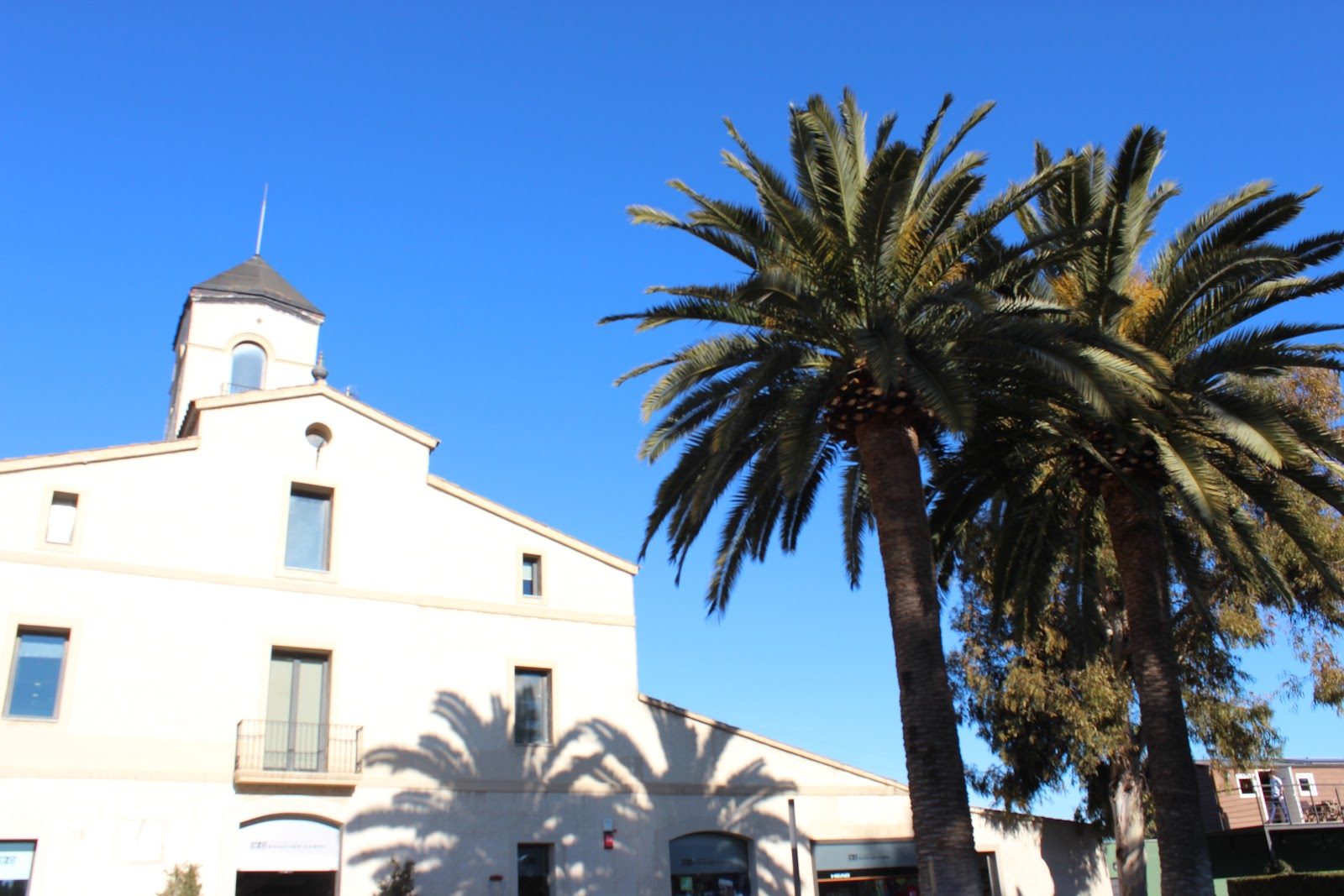
ES International School of Barcelona
Barcelona · Spain
An American diploma earned between classrooms and clay courts at the Sanchez-Casal tennis academy outside Barcelona.
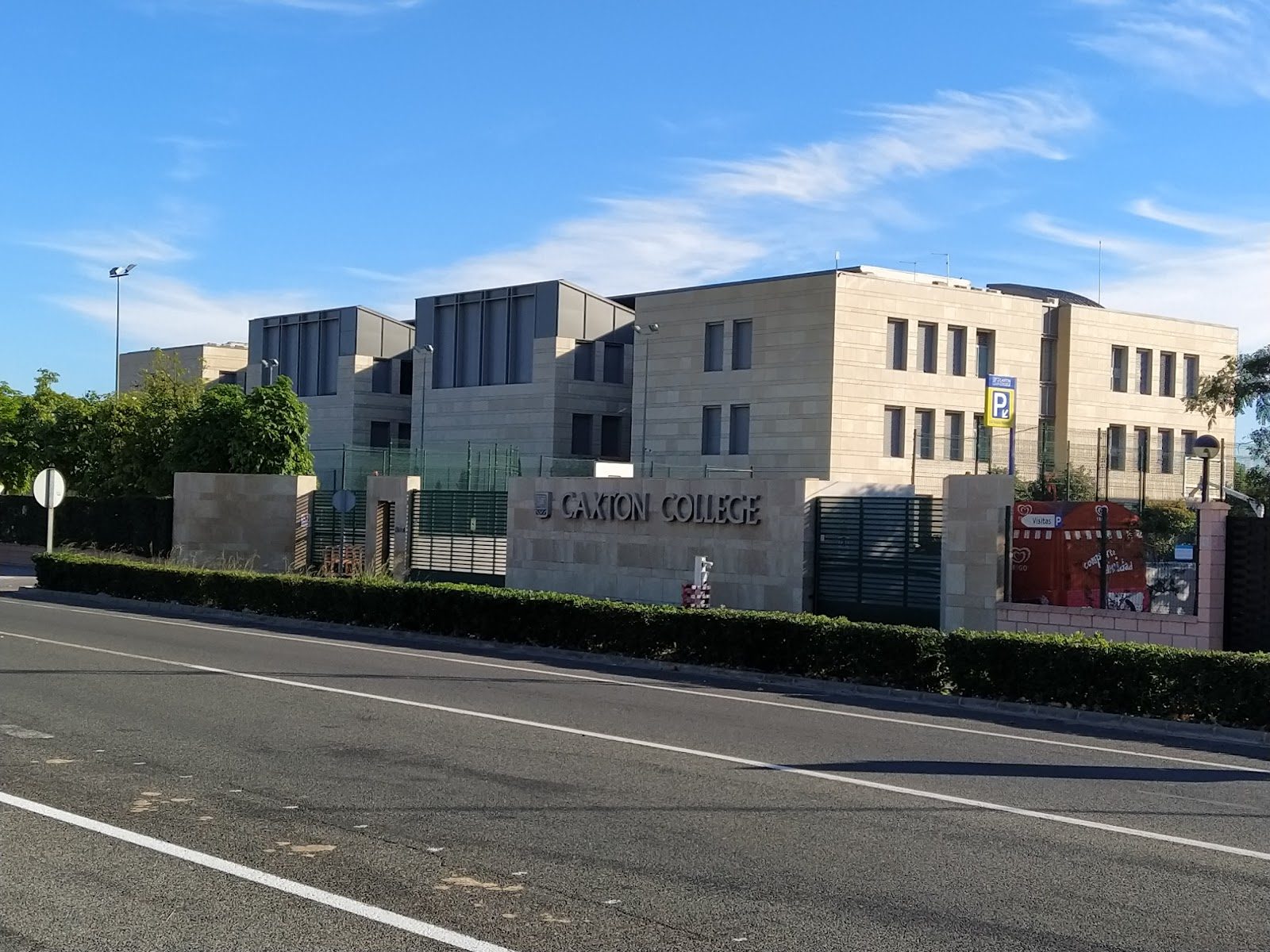
Caxton College
Puçol · Spain
On Valencia's coast between mountains and sea, a family-run British school pairs A-Levels with native Spanish literary strength.
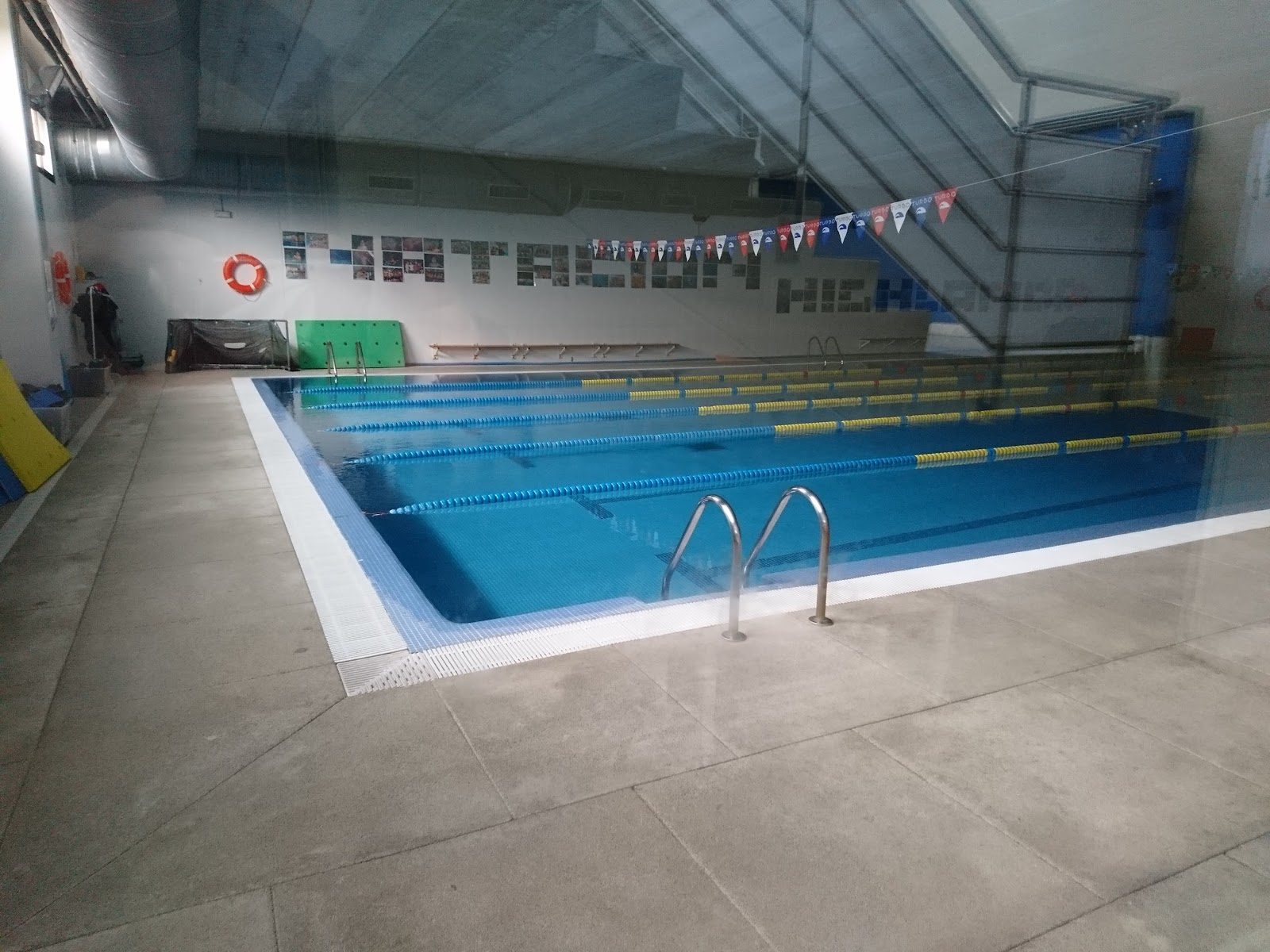
Highlands School Madrid
Madrid · Spain
In La Moraleja's green belt, a Cambridge-accredited trilingual campus pairs British rigour with a public-speaking programme built into daily lessons
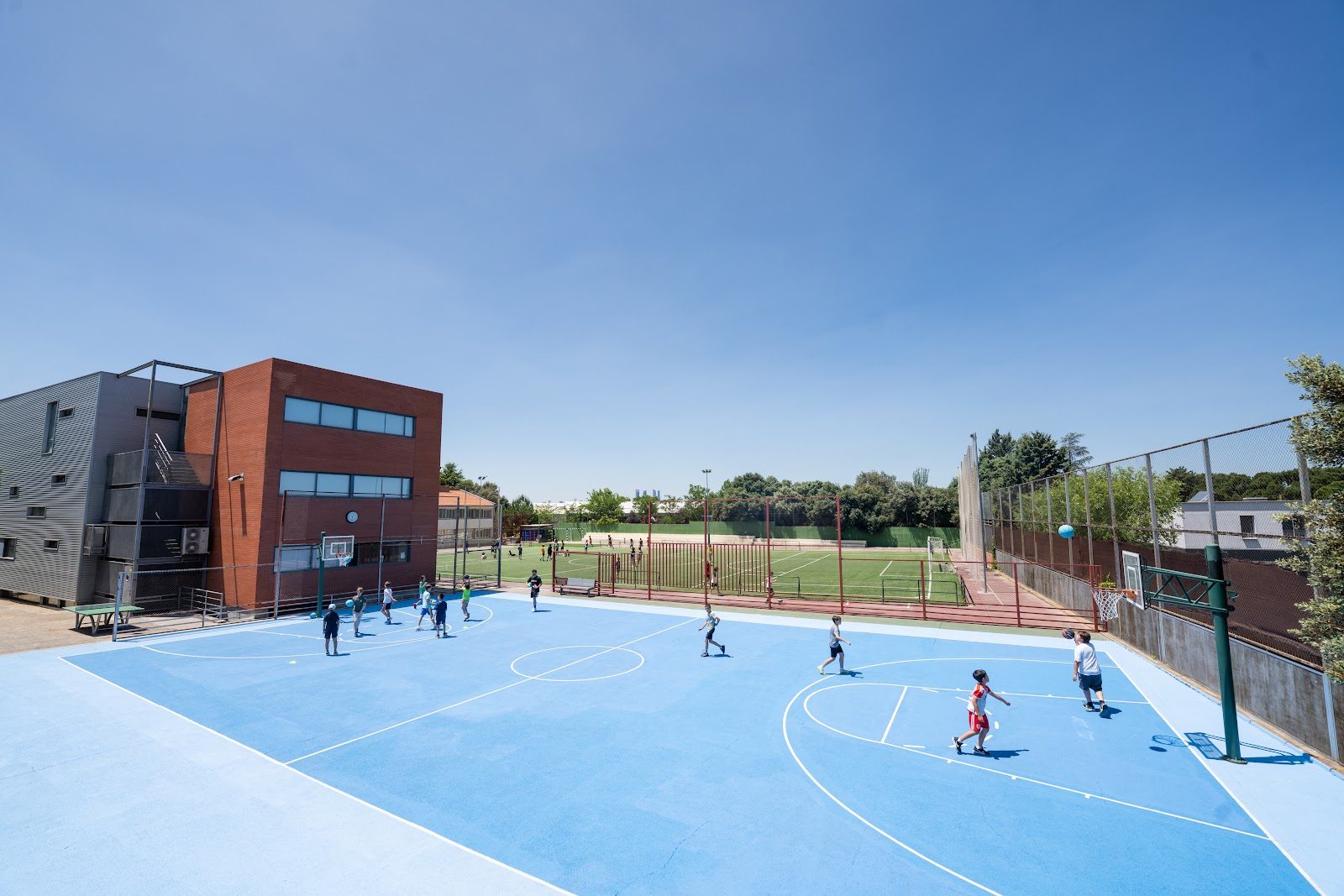
Colegio Base
Madrid · Spain
Rooted in the Institucion Libre de Ensenanza since 1962, this La Moraleja campus runs three Baccalaureate tracks under one roof.
Same country and curriculum — closest matches within ±10 points either way