
Beijing
Beijing National Day School
In Haidian's academic engine room, a 2011 reform scrapped fixed classes for build-your-own timetables of 300-plus electives.
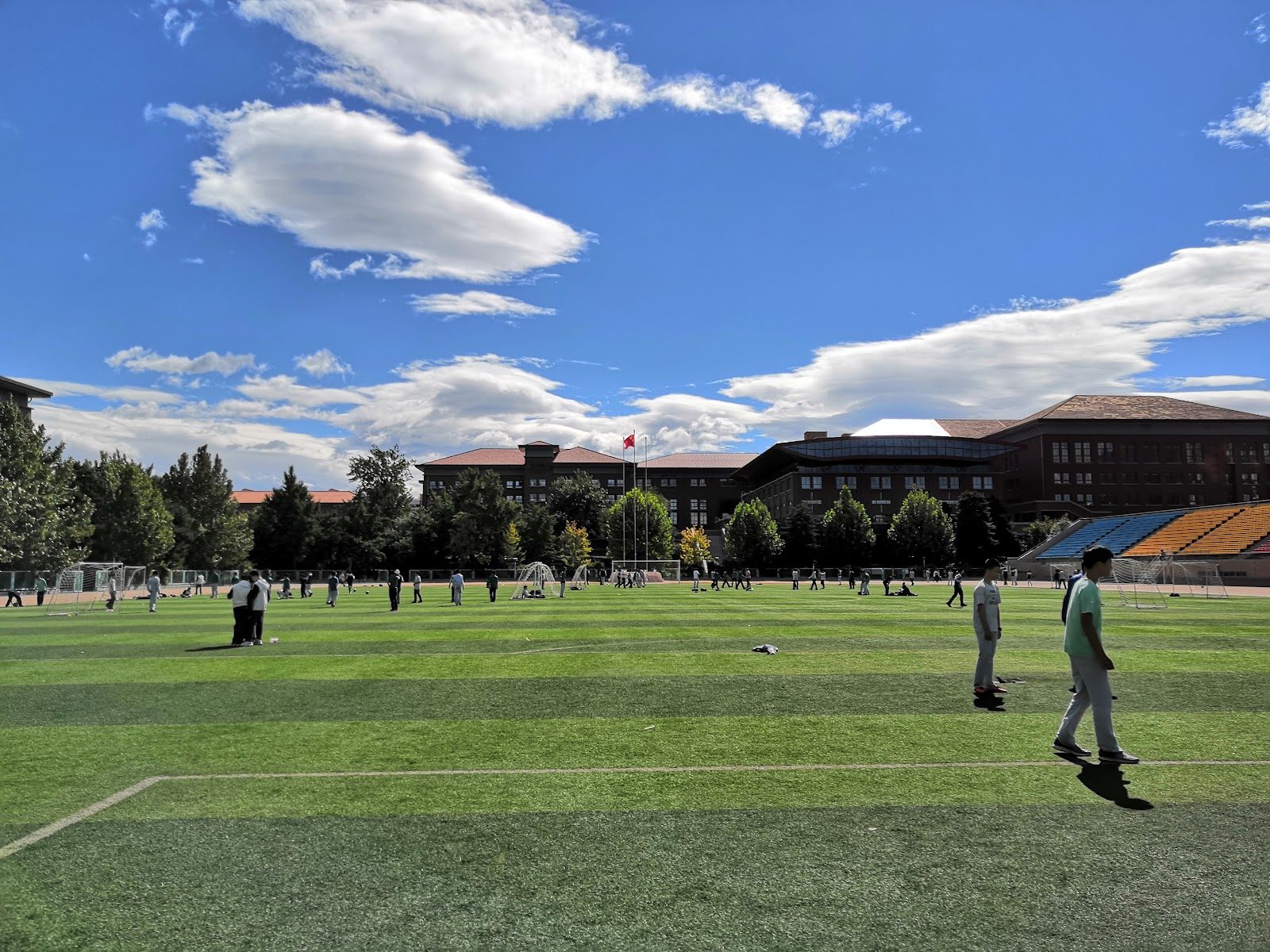
Photo © Guanwei Li (Thomas) via Google Maps
Type
Day + Boarding
Ages
15–18
Curriculum
Chinese National
Qualifications
Gaokao
Ratio
—
The Verdict
Editor's commitment
Right for
Sixth-formers aged 15–18 who want a public Haidian school, Chinese National curriculum, and the option of boarding at a 1952 institution.
Wrong for
Families seeking a full international curriculum, younger entry below 15, or a school outside Beijing’s state system and Ministry of Education framework.
Watch out for
The school advertises national and international courses, yet publishes no aggregate exam outcomes; parents need hard results before buying the rhetoric.
Peer & Industry Review
How Beijing National Day School is regarded in the sector
64
Respected · medium confidence
Within China, Beijing National Day School (Beijing No. 11 High School) is widely regarded as a flagship reform school, frequently referenced in Ministry of Education and Beijing Municipal Education Commission discussions as a model for its 'course selection, no fixed classroom' student-centred pedagogy pioneered under former principal Li Xiyu. Domestic education press (China Education Daily, Sanlian Lifeweek features) treat it as a benchmark alongside Renmin University High School and BHSF for Beijing's top-tier public schools. It is a consistent top performer in Beijing gaokao results and Tsinghua/Peking University admission counts, and its international division has built a reputation for solid Ivy League, Oxbridge and top-30 US placement, though it is less frequently profiled by Western outlets like WhichSchoolAdvisor or Good Schools Guide, which focus more on international/private schools than elite Chinese public institutions. Its standing rests more on domestic peer recognition, policy citation and university admission outcomes within China than on Western independent-school press coverage, reflecting its identity as a public, gaokao-anchored institution with a growing but secondary international pathway rather than a globally marketed international school.
Editors' overview
Beijing National Day School sits in Haidian’s most competitive education district and trades on one decisive distinction: it broke the standard Chinese high-school model in 2011. The reform replaced fixed homeroom-style classes with student-built timetables and a catalogue of 300-plus electives. That matters more than any slogan. In a system built on lockstep progression, Beijing National Day School gives older teenagers room to assemble an academic week around strengths, gaps and interests. The school’s own language — “a school open for everyone” — points to a layered course structure with differentiated, classified and specialised provision. For parents, the headline is clear: this is a Chinese National curriculum school that injects unusual flexibility into the final secondary years, with teaching in Mandarin and English and boarding as part of the offer.
What is special here is not polish; it is structure. The school was founded in 1952 and carries the institutional weight that comes with a long state-school history in Beijing. Its public identity ties that history to ambition in science, innovation and student self-direction. The website foregrounds robotics, scientific exploration, drama, lectures and clubs, and the phrase that recurs is choice. That has real force. It gives the place intellectual voltage. *It also raises the stakes for the student.* A build-your-own timetable only works for teenagers who can manage freedom, plan ahead and recover from weak choices. Parents looking for tightly supervised, uniform progression should read that carefully. This model rewards initiative; it does not compensate for its absence.
In market terms, Beijing National Day School belongs on a shortlist for families who want a serious, high-performing Chinese school without the deadening rigidity that defines much of the sector. It is for students aged 15–18 who want breadth inside a demanding domestic framework, and who gain energy from a high-pressure, high-option environment. The best fit is the self-propelled pupil: academically strong, organised, comfortable making decisions, and eager to move between disciplines rather than sit inside a single preset track. It will also suit students who want access to a large, idea-rich campus culture rather than a narrow exam factory. For the hesitant, the dependent or the chronically disorganised, the same freedom can turn into drift. For the right student, though, this is a rare piece of educational engineering in Beijing: public, established, and built to let able teenagers do more than march in step.
Academic Performance
The school does not publish aggregate external exam results in the public domain. No average gaokao scores, no university placement tables, no subject-by-subject outcomes, and no comparative data against other Haidian heavyweights. That is a real weakness in the public case. For a school with an overtly ambitious academic identity, results reporting is strikingly opaque. Parents can infer seriousness from the institutional setting, the breadth of the course structure and the prominence given to science activity, robotics and high-level academic programming. They cannot verify exam strength from published headline numbers, because the school does not disclose them.
Relative to peers, that puts Beijing National Day School in an unusual position. The most sought-after academically selective schools in this part of Beijing trade on hard outcomes as much as on reputation. Here, the reputation is doing more work than the data. The website points to a timetable built around choice, layered provision and intellectual range, which marks the school out from more mechanised exam factories. That model can produce first-rate outcomes for disciplined students who use the freedom well. It also makes performance harder to summarise in one neat metric. The school’s standing in Haidian gives it serious academic credibility; its refusal to publish consolidated examination results stops us placing it with precision among the district’s top performers.
Facilities
The school does not publish the kind of facilities inventory that top international schools now treat as standard: no campus map, no square metre counts, no dedicated page breaking down laboratories, libraries, performance venues, sports provision or boarding houses. That lack of disclosure matters. Parents can see two site addresses and a campus culture built around clubs, ceremonies, lectures, drama and science activity, but they cannot audit the physical plant with any precision. What does come through is a school built to support choice at scale: if you run 300-plus electives, maintain robotics activity at global competition level and stage major student events, you need a large timetable infrastructure, specialist teaching rooms and spaces that stay busy beyond the core academic day. This is function-first provision, not a polished showroom.
Against peer schools in Beijing’s top academic tier, the picture is mixed. On educational use, the facilities platform looks serious and high-capacity: enough space, staffing and specialist rooms to sustain an unusually complex programme and a dense extracurricular culture. On transparency, it lags. Many rival schools give parents a cleaner read on sports halls, science labs, arts studios and residential provision; Beijing National Day School does not. The public-facing impression is of a campus geared to work rather than display — practical, hard-driven and institutionally confident — but without the published detail that would let families judge whether the sports and boarding experience matches the academic ambition.
Relative to peers, that puts Beijing National Day School in an unusual position
Prestige
Beijing National Day School carries real prestige in the part of Beijing where school status matters most. This is a district-level public secondary school under the Haidian District Education Committee, and that alone places it inside one of the country’s most scrutinised academic ecosystems. Its reputation rests less on glossy branding than on institutional standing, selective demand and the confidence to run a model that departs from the standard senior-secondary script. The school’s own framing leans hard into talent development, science education and student agency; the public record of robotics success adds substance. A school offering more than 300 electives inside a state-school framework does not read as ordinary. It reads as high-status, intellectually ambitious and confident enough to break formation.
That said, its prestige is stronger as a matter of standing than of transparent proof. The school does not publish the hard outcome tables that would let parents measure its academic power against Haidian’s most data-rich competitors. That weakens the public case. Even so, schools do not earn this degree of name recognition in Beijing through marketing alone. They earn it through a long accumulation of results, demand and influence, and through a culture that attracts families who want more than drill. The verdict: genuinely prestigious, with a profile built on seriousness, selectivity and educational clout rather than polished disclosure. The cachet is substantial. The transparency is not.
Many rival schools give parents a cleaner read on sports halls, science labs, arts studios and residential provision; Beijing National Day School does not
Communications
Parent communication is active but tightly channelled. The website functions first as a noticeboard and second as a portrait of school life: admissions consultation dates, transfer enquiries, project tenders, news items, student features, alumni pages, FAQs, a cloud platform link, a WeChat account and dedicated user routes for students, current parents, staff and alumni. That is a workmanlike setup with clear audience sorting. It tells parents where to go and what the school wants them to know. It does not offer the richer parent-information architecture common at fee-charging international schools: no published leadership messages, no detailed parent handbook, no transparent academic reporting pages, and no obvious archive of policy documents in public view. For a school of this stature, that public interface is serviceable rather than expansive.
The communication style also reveals the institution’s priorities. News flow centres on honours, ceremonies, science activity, drama, student voice and organisational notices. Parents get a steady stream of campus signals and a strong sense of momentum. They get less of the hard explanatory material that helps families judge how the school runs day to day. That makes communication effective for community identity and event awareness, but less convincing on accountability. The inclusion of direct phone contact and segmented portals counts in its favour; the thin public disclosure on outcomes, routines and operational detail counts against it. Verdict: competent, controlled and institution-first — enough to keep current families informed, not enough to satisfy parents who want deep transparency.
Uniqueness
What sets Beijing National Day School apart is not a glossy “innovation” label but a structural break with the standard Chinese senior-school pattern. The school built a timetable around student choice on a scale few domestic schools match, with 300-plus electives and a course system that spans layered, classified, integrated and specialised provision. That matters because it changes the pupil’s job. Students do not just keep up; they assemble, balance and justify an academic programme of their own. In a sector dominated by uniform pacing and fixed routes, that is genuinely unusual, high-stakes and intellectually liberating.
The gain for students is twofold. First, breadth: a scientifically minded pupil can still keep drama, clubs, lectures or cross-disciplinary study in play rather than collapsing into a single exam lane. Second, ownership: the school’s design forces teenagers to make decisions early, live with consequences and learn how to use institutional freedom well. That is excellent training for university-style study and for adult self-management. It also creates a sharper divide between students who thrive and students who drift. This is not a school that carries the hesitant by the hand. It gives able adolescents a rare degree of agency inside a demanding public-school environment, and that agency is the point.
Beijing National Day School carries real prestige in the part of Beijing where school status matters most
Student Profile
The students who fit here are the ones who do not need constant corralling. This school suits self-propelled, high-agency teenagers who can handle a timetable with 300-plus electives without turning choice into chaos. They need stamina as much as intelligence: the setting rewards pupils who can plan, prioritise, recover from mistakes and keep working in a demanding peer group. A student who likes building an academic week, joining clubs, taking part in drama, lectures or science activity, and moving between interests with purpose will have room to work here. A passive child waiting to be directed will not.
There is also a clear cultural fit. The school’s public life gives heavy weight to honours, scientific exploration, robotics, ceremonies and student initiative, so the strongest match is a pupil who is comfortable in a competitive, idea-dense environment and does not resent high expectations. This is not the right place for families who want heavy hand-holding, soft pacing or a narrow pastoral cocoon. It is better for students who gain confidence from autonomy and who can hold their own in a fast-moving, status-conscious academic culture. The best candidates are not just bright; they are organised, resilient and ready to use freedom well. For the right teenager, that mix is electrifying. For the wrong one, it is exposing.
What sets Beijing National Day School apart is not a glossy “innovation” label but a structural break with the standard Chinese senior-school pattern
Co-curricular strengths
Arts & sport, on a separate axis
Overall 9.22/10
Scored 0-10 from the school's own published evidence. This axis is editorial-only — it does not feed the main WTS ranking.
Sports
9.3/10
Drama
9.2/10
Dance
9/10
Music
9.3/10
Visual Arts
9.3/10
Strengths
- +Authorized by the Beijing Municipal Education Committee to enroll foreign students since 2006, with an International Department offering Cambridge A-Level, AP and the IB Diploma Programme (IB-authorized 27 March 2013).
- +Large, well-resourced site of roughly 156,000 sq m, one of the biggest school campuses in Beijing, and the international programme reports a 1:6 teacher-to-student ratio with over 70 foreign staff.
- +Long-established public institution founded in 1952 with a history of educational reform, giving it deep institutional roots in the Haidian district's academic ecosystem.
- +Recognised for two decades as a Beijing Model School for Sports, and its Golden Sail Orchestra and Chorus have won multiple first prizes at state and city level.
- +Mainstream Chinese-track graduates have a strong record of entry into elite Chinese universities, and international-track graduates have gained places at Western universities including Cambridge and Princeton in recent years.
Considerations
- −The school is fundamentally a Chinese national-curriculum public school; expatriate and international families access it mainly through a separate International Department rather than the main student body.
- −Published, verifiable tuition figures for the International Department are not publicly listed; prospective families must contact the admissions office directly for current fee rates.
- −Enrolment is very large, with reports of around 4,000 to 5,000 students across two campuses, meaning class sizes and pastoral attention differ from smaller boutique international schools.
- −Entry to the International Department involves a formal written test, interview, health certificate and visa processing, an added administrative layer compared with many purely international schools.
Availability
Primary entry gate & tests
Beijing Zhongkao Exam
Gallery
Photo © Guanwei Li (Thomas) via Google Maps
Photo © Lei Chen via Google Maps
Photo © Lei Chen via Google Maps
Photo © Lei Chen via Google Maps
Photo © Lei Chen via Google Maps
Photo © Lei Chen via Google Maps
Photo © Ao Tong via Google Maps
Parent reviews
Have you sent your child here?
Voice reviews carry the strongest trust badge — we transcribe them for you to tidy up before they go live. Prefer to type? A written review is fine too.
Add your voice
In 60 seconds, tell other parents: what's the best thing about Beijing National Day School, and what surprised you when your child joined?
We ask for a Google sign-in so every review has a real face behind it — no anonymous drive-by attacks on schools, and no faked positive reviews. Your email is never shown publicly.
Send this profile to a friend
International parents rely on word-of-mouth. Share this review with someone weighing the same decision.
Schools with places
Similar schools to Beijing National Day School with places available now.
Yew Chung International School of Beijing
Beijing · China
- 2026-27
- WAITPOOLSpace-dependent
- 2027-28
- PLACES OPENRolling
Beanstalk International Bilingual School
Beijing · China
- 2026-27
- WAITPOOLSpace-dependent
- 2027-28
- PLACES OPENRolling
Harrow International School Beijing
Beijing · China
- 2026-27
- WAITPOOLSpace-dependent
- 2027-28
- PLACES OPENRolling
Canadian International School of Beijing
Beijing · China
- 2026-27
- WAITPOOLSpace-dependent
- 2027-28
- PLACES OPENRolling
Availability first, then country, area, curriculum, price, co-curricular
Consider also
Also worth looking at alongside Beijing National Day School.
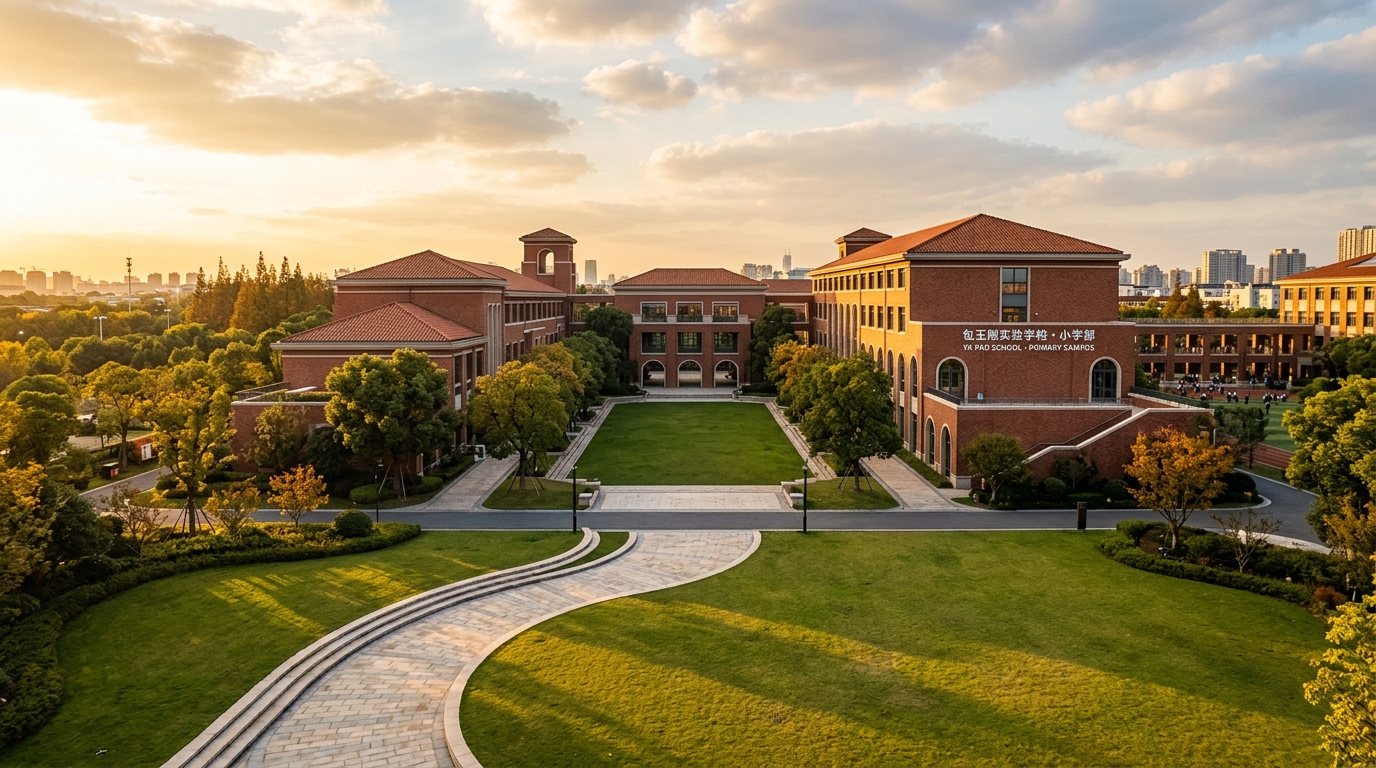
YK Pao School
Shanghai · China
Mandarin-English immersion anchors an IB and IGCSE track, with senior boarders housed in a Tudor-style village in Songjiang.
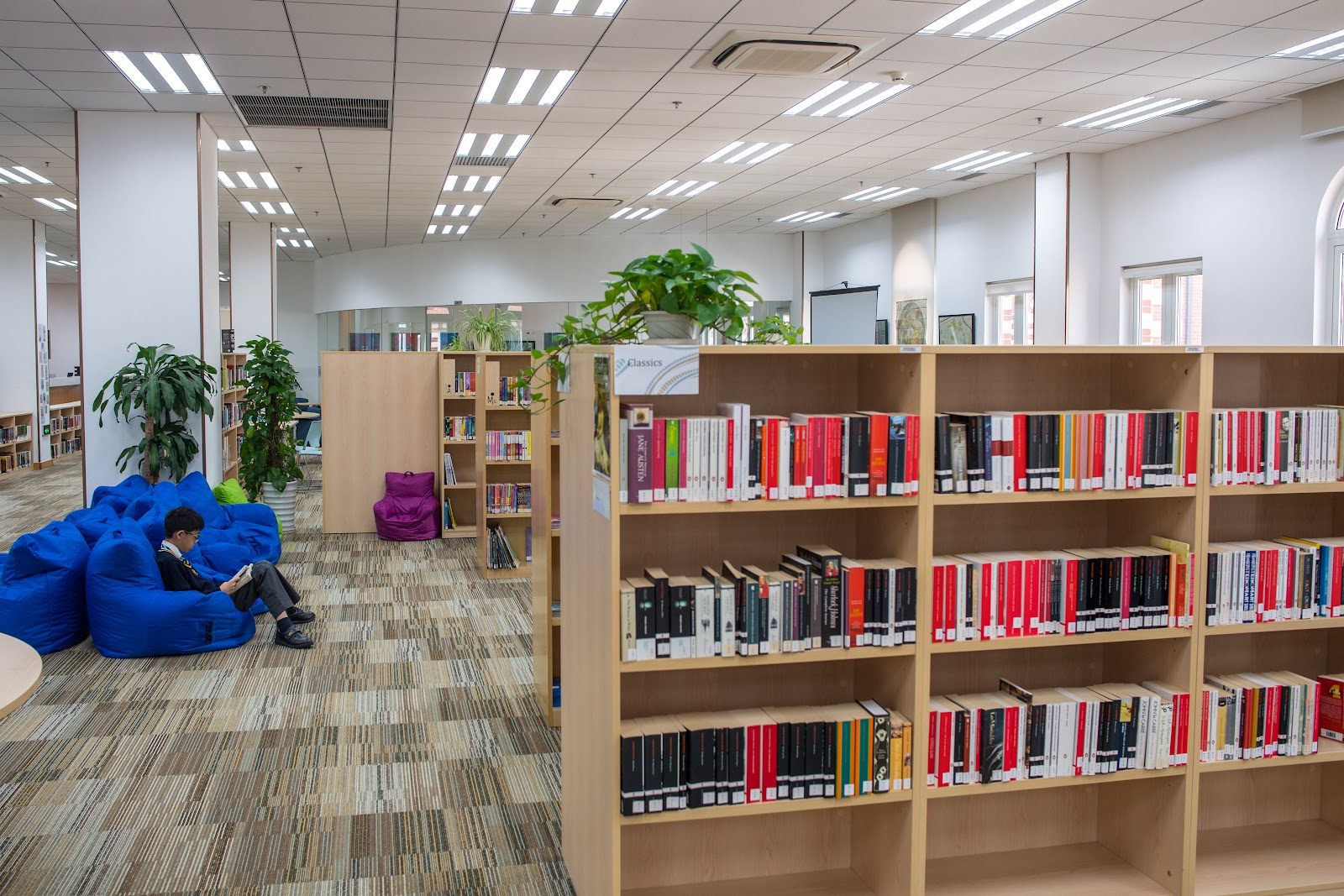
Wellington College International Shanghai
Shanghai · China
Rooted in an 1859 British foundation, this Pudong riverside campus channels house spirit into IB scores averaging 37 points.
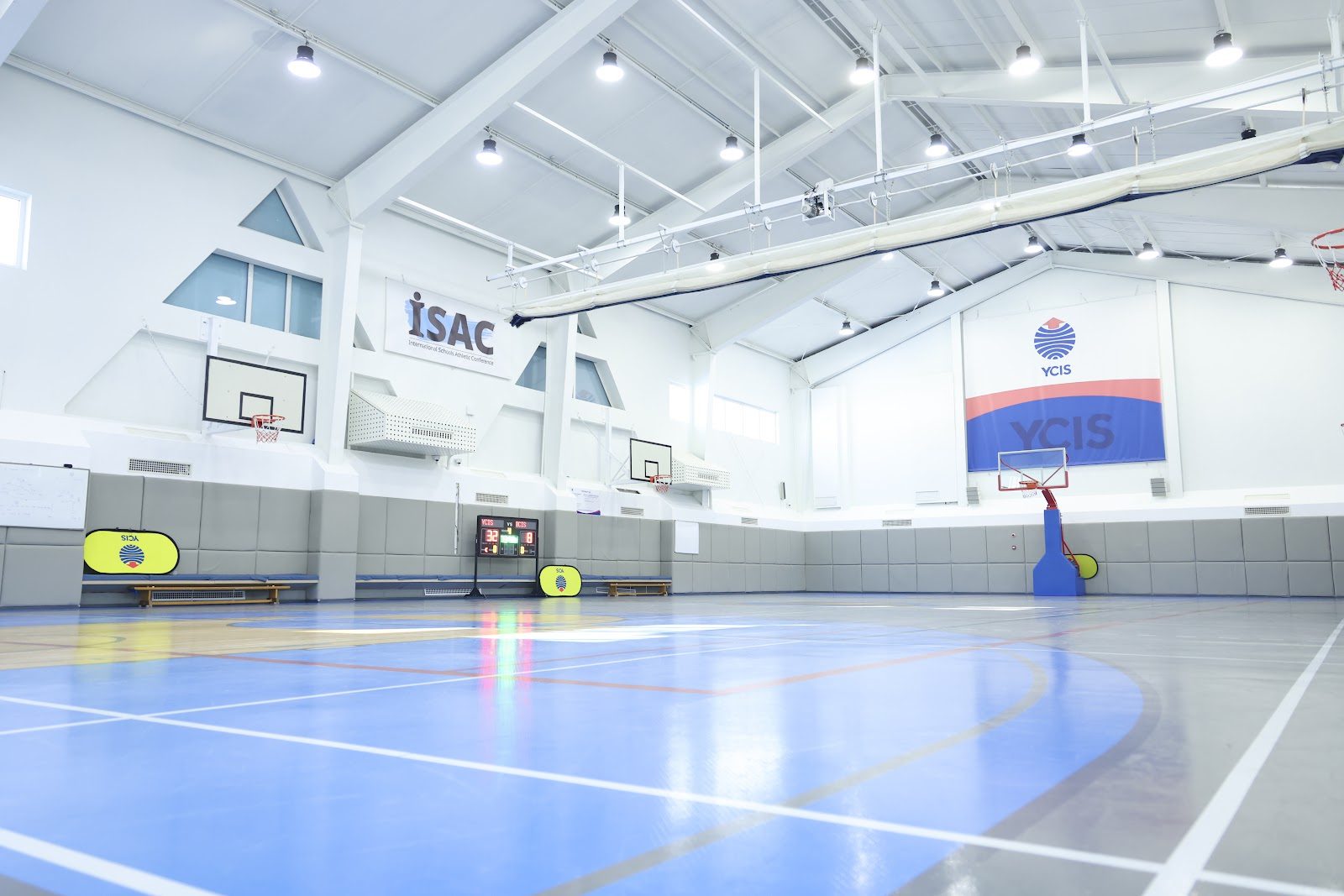
Yew Chung International School of Beijing
Beijing · China
Every classroom pairs a Western and a Chinese teacher, threading bilingual learning through a parkland Chaoyang campus.

UWC Changshu China
Changshu · China
On an island in Kuncheng Lake, mainland China's first UWC pairs the IB diploma with mandatory Mandarin study and a student-run Zhixing service programme.
Same country and curriculum — closest matches within ±10 points either way