
Florida
From a 1978 tennis academy to 600 acres of AP classrooms, drawing student-athletes from 60-plus countries.

Photo © IMG Academy via Google Maps
Type
Boarding + Day
Ages
10–19
Curriculum
US High School Diploma · Advanced Placement
Ratio
1:12
The Verdict
Editor's commitment
Right for
Serious student-athletes aged 10–19 who want boarding in Bradenton, 600 acres, AP courses, and a 1:12 student-teacher ratio.
Wrong for
Families wanting a conventional school before sport; IMG Academy is a secular boarding-and-day operation built around athletic performance, not broad school life.
Watch out for
SACS CASI and FCIS accreditation give academic legitimacy, but the public pitch fixates on sport; the school does not publish aggregate AP results.
Ranking breakdown
IMG Academy · #970 of 1591
Composite score 63.4. 8 weighted criteria.
By criterion
Academic Outcomes
Weight 20%
#1514
of 1529 scored
University Placement
Weight 16%
#1332
of 1529 scored
Prestige & Heritage
Weight 12%
#92
of 1529 scored
Alumni Network
Weight 12%
#454
of 1529 scored
Facilities
Weight 12%
#2
of 1529 scored
Transparency & Communications
Weight 8%
#1326
of 1529 scored
Peer & Industry Review
Weight 10%
#4
of 1529 scored
Admissions Selectivity & Demand
Weight 8%
#1326
of 1529 scored
Peer & Industry Review
How IMG Academy is regarded in the sector
92
Top-tier · medium confidence
IMG Academy occupies a distinct niche apart from traditional peer prep schools: it is judged less by groups like the Good Schools Guide or WhichSchoolAdvisor, which rarely profile it, and more by sports-recruiting press. MaxPreps, 247Sports and ESPN routinely rank IMG's football, basketball and track programs among the nation's best, and its national football team has repeated top-five MaxPreps rankings, driving Division I coaches to treat IMG as a premier recruiting pipeline. College coaches and recruiting analysts cite the caliber of competition and coaching (many former NFL/NCAA staff) as reasons top recruits transfer in for a final year. Conversely, mainstream education press, including New York Times and Sports Illustrated features, has questioned academic rigor and the compressed schedule that prioritizes training over classroom depth, a critique traditional boarding schools voice informally when comparing IMG to academically selective peers like Andover or Exeter. Its national visibility stems from athletic outcomes and Endeavor's media reach rather than conventional academic league tables.
Award

Elite Sport 80
World's Top School · The Global Ranking
IMG Academy is featured on our Global Top 80 ranking at #1. This seal is available for the school's marketing team to use on their website, prospectus and social channels.
- Maria Sharapova — Professional Tennis Player
- Andre Agassi — Professional Tennis Player
- Serena Williams — Professional Tennis Player
Editors' overview
IMG Academy occupies a category of its own: a boarding school built around elite sport, not a conventional school with strong teams. The scale is hard to ignore — more than 600 acres, a stated 1:12 student-teacher ratio, average classes of 12, and a boarding school operation tied to year-round coaching, camps and college recruiting. The academic offer is straightforward: a US High School Diploma with AP courses, taught in English. The selling point is not intellectual breadth or pastoral intimacy. It is total immersion for student-athletes who want training, competition and school on one campus, under one timetable, with serious athletic intent and single-minded focus.
What sets IMG apart is concentration. Few schools can match the depth of sport-specific infrastructure across baseball, basketball, football, golf, lacrosse, soccer, swimming, tennis, track and field, volleyball and wrestling, alongside mental performance, nutrition support and access to NCSA recruiting services. The school also claims its student-athletes fill approximately 25% of all college freshman roster spots annually. That figure captures IMG’s market position: this is not an all-rounder’s school, and it does not pretend to be. It is a high-pressure proving ground for families who view sport as a primary route into higher education, and who want a direct pipeline into US college athletics rather than a conventional independent-school experience.
That clarity is why IMG belongs on a shortlist. For the right child, it offers something rare: *an unapologetically professional environment* where academic study and athletic development are organised towards the same end. For the wrong child, it will feel narrow. Parents looking for a broad liberal education, understated campus life or a school where sport sits alongside many equal priorities will find better fits elsewhere. IMG suits disciplined, ambitious students aged 10 to 19 who already define themselves through sport, tolerate competition well, and want daily life structured around training load, performance and recruitment. In that niche, it is a formidable specialist and a relentless machine.
An Elite Sport 80 school
IMG Academy occupies rank one on the Elite Sport 80 because no other school in the world matches the sheer breadth and depth of its elite-athlete output. The Bradenton, Florida campus is not a school with a sports programme; it is a full 600-acre high-performance village that happens to include an accredited academic school. Over four decades it has trained more than four thousand professional athletes, and in any given year Grand-Slam draws, PGA Tour leaderboards, NFL Combine rosters, NBA Draft rooms and Olympic sprint finals will all contain IMG alumni.
The specialisms are tennis (the original Bollettieri academy), golf, football, basketball, baseball, lacrosse and track and field. Each sport runs a full-time coaching staff, sports-science lab, video-analysis suite and physiotherapy team on-site, so a fourteen-year-old tennis player receives the same daily support ecosystem as a Tour professional.
The notable alumni list reads like a modern sports encyclopaedia: Serena Williams and Venus Williams, Andre Agassi, Maria Sharapova, Jim Courier and Kei Nishikori in tennis; Paula Creamer in golf; Alex Rodriguez, Freddie Freeman and Xander Bogaerts in baseball; Ronda Rousey in combat sports; and a rolling roster of Premier League, NFL and NBA professionals developed through the residential programme.
International openness is central to the model: IMG is essentially designed for overseas families. Roughly 80 nationalities are represented on campus in any given year, boarding is standard, ESL support is embedded, F-1 student visas are handled in-house, and admissions is a rolling non-selective academic process paired with a sport-specific evaluation. There is no residency, federation or citizenship gate. Fees are correspondingly high — full-time residential tuition sits well above US$90,000 per year — but for a family relocating specifically to convert a talented junior into a professional athlete, no other institution offers the same complete package. Academic accreditation, NCAA compliance, boarding house pastoral care and a full college-recruiting service round out the offer, and IMG runs a discreet financial-aid programme for a small number of overseas athletes each intake.
Academic Performance
Academic performance is the point where IMG turns opaque. The school offers a US High School Diploma with AP courses, but it does not publish aggregate AP results, mean scores, pass rates, matriculation-grade distributions or any other exam data that would let parents judge academic strength against serious college-preparatory peers. That matters. In a school built around elite sport, external benchmarks are the clearest test of whether the classroom keeps pace with the training ground. Here, that benchmark is missing from public view. Families therefore buy into an academic model on trust, not on disclosed outcomes — a material gap for an institution of this scale and price bracket.
That does not make the academics weak; it makes them hard to verify. The small classes and low staffing ratio point to conditions that can support individual attention, and the AP offer gives able students access to recognised rigour. But compared with academically led boarding schools that publish exam profiles in detail, IMG sits in a different category. Its competitive edge lies in athlete development, recruitment infrastructure and schedule design for student-athletes, not in forensic academic transparency. Parents who need published evidence of top-end academic performance will find IMG frustratingly uninformative. Parents whose main objective is college sport placement, with academics organised to remain viable and credible alongside heavy training, will read that trade-off more coldly — and more realistically.
Facilities
Facilities are the clearest part of the IMG proposition. This is not a school with good sports provision; it is a sports training complex that also runs a school. The campus spans more than 600 acres, and the breadth matters as much as the scale: dedicated provision across baseball, basketball, football, golf, lacrosse, soccer, swimming, tennis, track and field, volleyball and wrestling, plus golf technology and club fitting, adult programmes, event space and a hotel on site. Add mental performance and nutrition coaching, and the physical plant starts to look less like a boarding school than a high-output performance campus. Against peer schools, that puts IMG in a different bracket. Even strong US boarding schools with serious athletics rarely offer this level of sport-specific infrastructure across so many disciplines on one site.
The trade-off sits in plain view. Families choosing IMG are paying for facilities built for constant training load, recruitment visibility and athlete development, not for the sort of balanced campus portfolio that leading all-round schools use to signal equal commitment to arts, scholarship and quieter extracurricular life. We have not seen a comparably detailed public account of libraries, laboratories, studios or performing-arts spaces, and that omission is telling. At IMG, the sports estate is the headline and the selling point. For committed student-athletes, that is a major competitive advantage. For anyone wanting a more rounded physical environment, it is a narrowing choice.
IMG Academy occupies a category of its own: a boarding school built around elite sport, not a conventional school with strong teams
Prestige
IMG’s prestige is real but specialised. In mainstream independent-school terms, it does not carry the old-world cachet of a storied academic boarding school, nor the intellectual prestige that rests on published examination strength. Its status comes from a different source: dominance in elite youth sport. Within that world, IMG holds serious international clout. The campus scale, the concentration of coaching, the breadth of sports on offer and the integration of recruiting services give it a profile that few schools can match. The school’s own claim that its student-athletes fill approximately 25% of college freshman roster spots each year is the clearest statement of that reach. Parents paying for IMG are buying access to a powerful sporting ecosystem, not social polish or scholarly distinction.
That distinction matters when rating prestige. For a family targeting high-level sport and US college recruitment, IMG sits near the top of the market: *high-status, high-visibility, high-pressure*. Coaches, recruiters and ambitious sporting families know the name. For a family measuring prestige by academic selectivity, discreet tradition, or broad cultural influence beyond athletics, the brand lands differently. IMG is prestigious in the way a top conservatoire or national training centre is prestigious: intensely respected by insiders, less universal outside its field. That makes it formidable in its lane and narrower than schools whose status travels across academia, arts, public life and old-boy networks.
Parents who need published evidence of top-end academic performance will find IMG frustratingly uninformative
Communications
IMG communicates like a large sports business that also runs a school. The public-facing channels are busy, transactional and built to move families towards action: apply, book, request consultation, start a chat, call us. That has strengths. Key pathways are easy to find, live chat hours are explicit, and admissions sits inside a broader service structure that also covers camps, coaching and recruiting. For time-pressed parents, that makes first contact efficient and hard to miss. The weakness is tone and hierarchy. The site pushes commercial prompts, promotional language and cross-selling at almost every turn, so core school information competes with camps, memberships, hotel stays and events. For a family trying to judge daily school life, that is noisy and less than elegant.
Effectiveness therefore depends on what a parent needs. If the question is practical — how to enquire, who to contact, how to enter the funnel — IMG does this well. If the question is interpretive — what academic oversight looks like, how boarding routines work in practice, how the school communicates progress, concerns or pastoral issues once a child is enrolled — the public picture is thinner. We have not seen the same level of detail on parent communication rhythms that top boarding schools publish as standard. That does not block access; it leaves parents with a sales-led first impression. For a brand operating at this scale, with families arriving from 60-plus countries and a stated reach into 35 sports, that imbalance is striking.
Uniqueness
IMG’s uniqueness lies in its refusal to split school from sport. At most boarding schools, athletics supports the wider education. Here, athletics sets the tempo, and the school is built to serve that reality. The model reaches far beyond strong teams and good coaching: training, conditioning, mental performance, nutrition, recruitment and academic scheduling sit inside one system. Add a post-graduate pathway, online coaching and the NCSA recruiting platform, and the operation starts to look less like a school with extras than a full-service athletic pipeline. The school’s own headline claim — student-athletes filling approximately 25% of college freshman roster spots each year — captures the scale of that ambition. Few institutions offer that degree of integration, and fewer still do it across such a wide spread of sports.
For students, that brings obvious advantages and obvious limits. The right child gets a singularly focused environment where every part of the week supports performance, progression and visibility to colleges. Serious athletes benefit from peers who share the same priorities, from staff who understand recruitment mechanics, and from a campus culture with little patience for drift. That can be transformative for disciplined teenagers who want sport to drive their next step. It can also be constricting. Students who want to reinvent themselves, test interests outside athletics, or keep sport in proportion will find the institutional logic too narrow. IMG is unique because it turns adolescence into a performance programme. For the right student, that is a formidable advantage.
For a family targeting high-level sport and US college recruitment, IMG sits near the top of the market: high-status, high-visibility, high-pressure
Student Profile
The fit is narrow and clear. IMG suits students who already organise their identity around sport and can tolerate a regime built on repetition, scrutiny and competition. Many will have arrived with serious ambitions in one discipline rather than a casual taste for school teams. They need stamina for long days, comfort with coaching feedback, and the self-discipline to keep academic work moving alongside heavy training demands. The international pull matters too: the school draws families from 60-plus countries, so students who adapt quickly, live well with difference and do not need a small, intimate social world will fare better. This is a high-intensity peer group, full of teenagers who are measuring progress, chasing selection and thinking about the next level early.
The students who thrive here are single-minded, resilient and realistic. They do not need a broad menu of identities to try on; they already know what they are there to do. That focus can be galvanising for ambitious athletes who want daily life arranged around performance. It can also be unforgiving. Students who need spaciousness, breadth, or a campus culture where sport shares equal billing with arts, ideas and low-stakes adolescence will feel pinned into one lane. IMG works for young people who draw energy from structure, hierarchy and visible ambition — and who can live with a community where excellence is admired, comparison is constant and drift earns little patience.
IMG is prestigious in the way a top conservatoire or national training centre is prestigious: intensely respected by insiders, less universal outside its field
Co-curricular strengths
Arts & sport, on a separate axis
Overall 4.58/10
Scored 0-10 from the school's own published evidence. This axis is editorial-only — it does not feed the main WTS ranking.
Drama
3.2/10
Dance
3/10
Music
3.5/10
Visual Arts
3.5/10
Strengths
- +Combines a full US high school diploma and AP curriculum with sport-specific training across more than a dozen disciplines, including tennis, golf, baseball, basketball, football and soccer.
- +Operates on a purpose-built 500-plus acre campus in Bradenton, Florida, with professional-grade facilities used by both students and visiting professional athletes.
- +Long track record of alumni who reached elite professional or collegiate levels, including tennis players developed from the original Nick Bollettieri Tennis Academy lineage.
- +Offers postgraduate and international boarding pathways, making it a recognised route for overseas athletes seeking US college recruitment exposure.
- +Small class sizes are paired with structured academic support blocks designed to accommodate heavy training and travel schedules.
Considerations
- −Boarding tuition is among the highest in the US private school sector, and total annual costs including sport-specific fees can add substantially to the base figure.
- −The academic curriculum, while AP-inclusive, is structured around accommodating athletic training, which can narrow depth in non-sport-related extracurriculars compared to traditional prep schools.
- −Admission for competitive sport programs depends heavily on athletic evaluation, meaning academically strong but athletically average applicants have limited entry routes.
- −Large total enrolment across multiple sport academies means the intimate, small-school culture found at some boarding schools is not the norm here.
Gallery
Photo © francis meram via Google Maps
Photo © IMG Academy via Google Maps
Photo © IMG Academy via Google Maps
Photo © IMG Academy via Google Maps
Photo © IMG Academy via Google Maps
Photo © IMG Academy via Google Maps
Photo © IMG Academy via Google Maps
Parent reviews
Have you sent your child here?
Voice reviews carry the strongest trust badge — we transcribe them for you to tidy up before they go live. Prefer to type? A written review is fine too.
Add your voice
In 60 seconds, tell other parents: what's the best thing about IMG Academy, and what surprised you when your child joined?
We ask for a Google sign-in so every review has a real face behind it — no anonymous drive-by attacks on schools, and no faked positive reviews. Your email is never shown publicly.
Send this profile to a friend
International parents rely on word-of-mouth. Share this review with someone weighing the same decision.
Schools with places
Similar schools to IMG Academy with places available now.
Pine Crest School
Fort Lauderdale · United States
- 2026-27
- CLOSEDRegular cycle closed
- 2027-28
- OPENS SOONOpens Sept '26
Ransom Everglades School
Miami · United States
- 2026-27
- CLOSEDRegular cycle closed
- 2027-28
- OPENS SOONOpens Sept '26
Availability first, then country, area, curriculum, price, co-curricular
Consider also
Also worth looking at alongside IMG Academy.
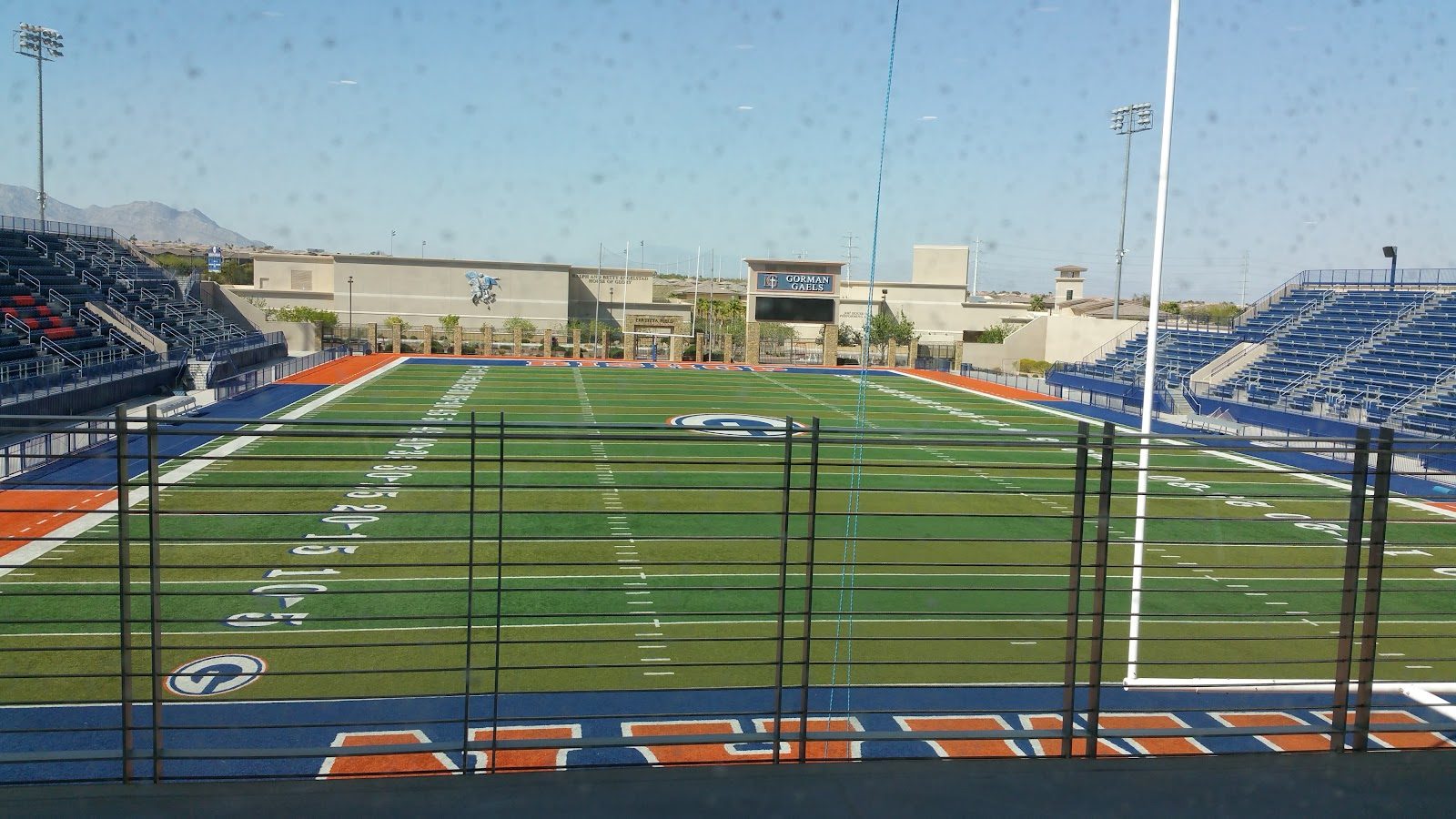
Bishop Gorman High School
Las Vegas, NV · United States
In Summerlin's desert suburbs, a Catholic college-prep whose football dynasty has claimed four national titles and 15 state crowns.
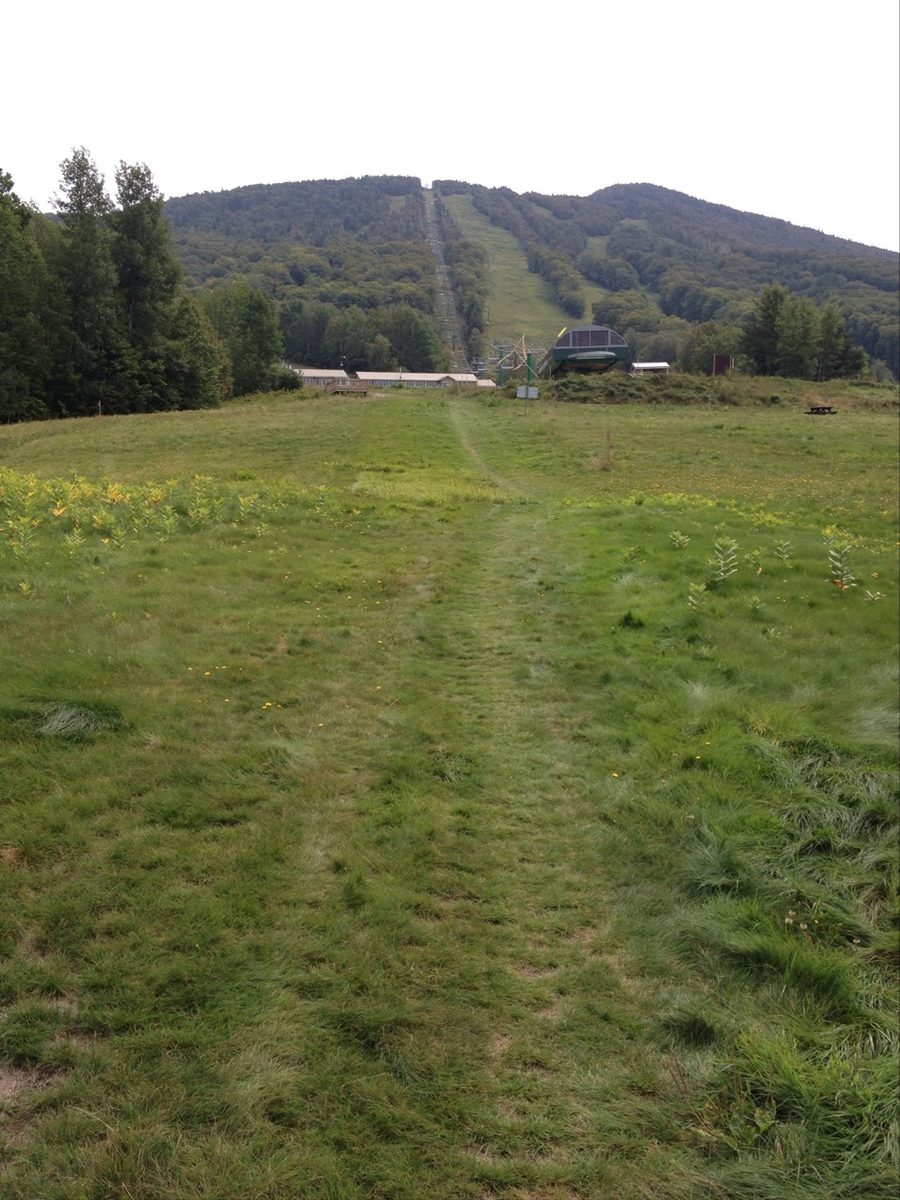
Burke Mountain Academy
East Burke, VT · United States
America's first ski-racing academy, tucked at the base of a Northeast Kingdom peak, has sent dozens of graduates to the Winter Olympics since 1970.

St. John Bosco High School
Bellflower, CA · United States
A Salesian all-boys brotherhood in Bellflower pairs three national football titles with dual-enrollment STEM pathways.
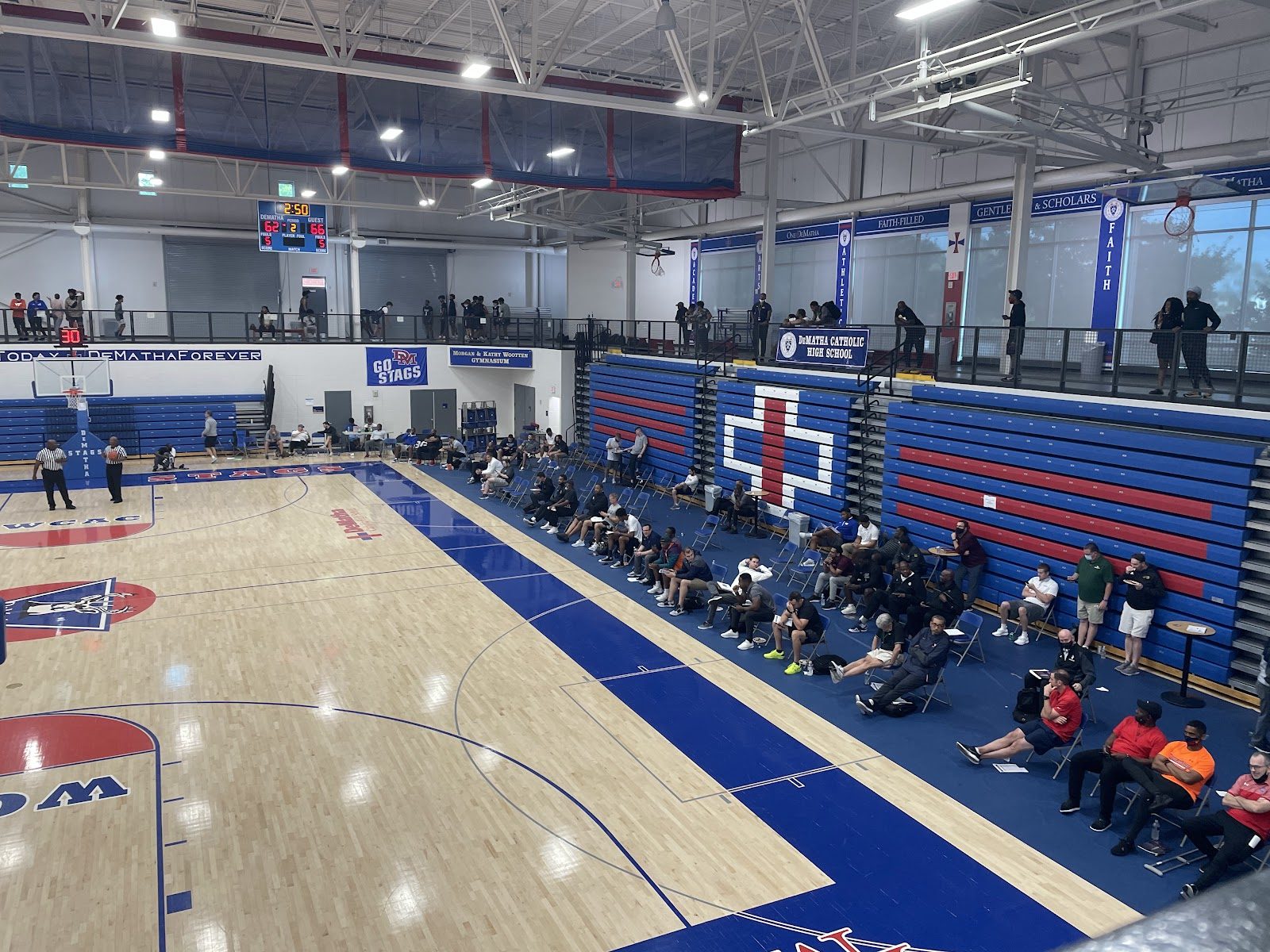
DeMatha Catholic High School
Hyattsville, MD · United States
A Hyattsville boys' Catholic prep where a 1965 upset of an unbeaten NY power built a basketball dynasty alongside rigorous AP study.
Same specialism, country and curriculum — closest matches within ±10 points either way