
Catalonia
The British School of Barcelona
medium confidence· 4/6 cats · 2 avg sourcesAn intimate Sitges campus for the early years, delivering the English National Curriculum minutes from the beach.
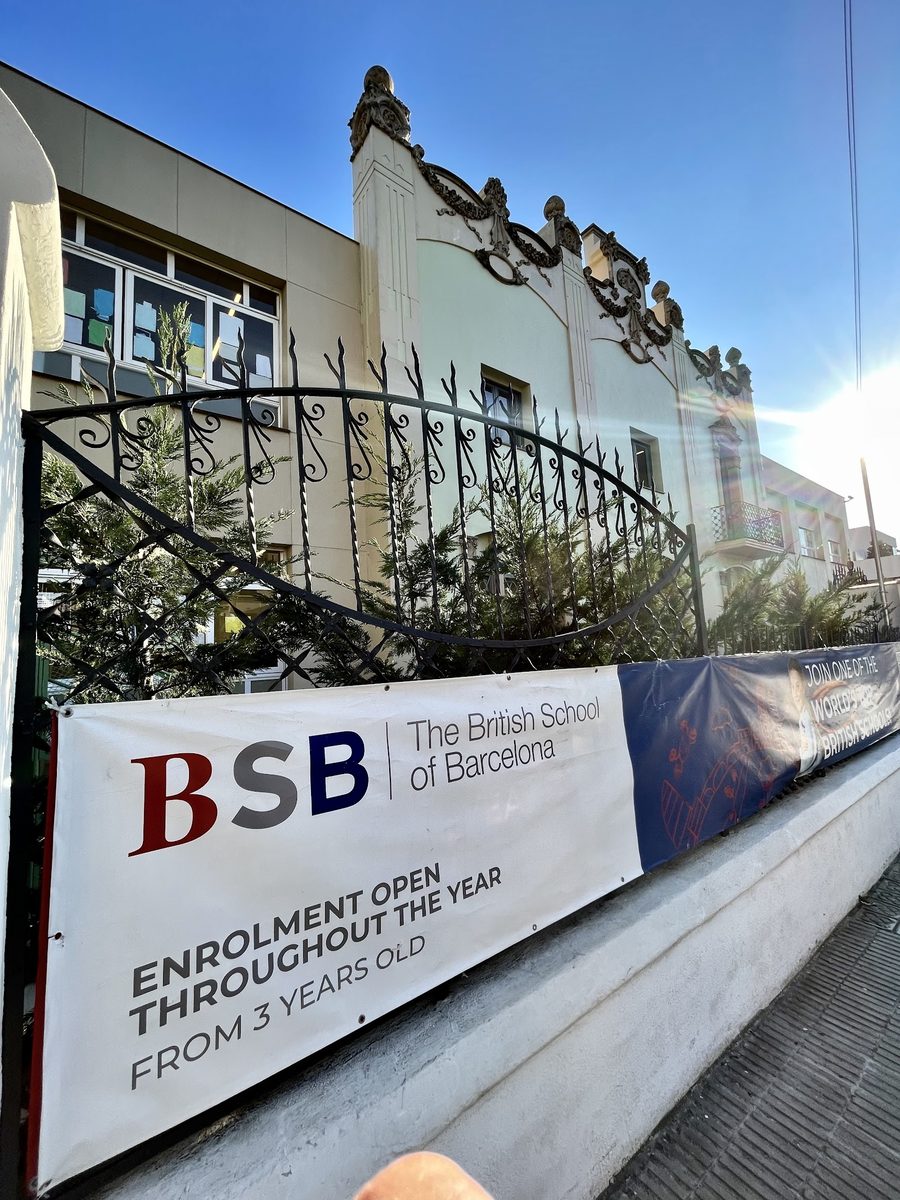
Photo © sergio nuñez flores via Google Maps
Type
Day
Ages
2–18
Curriculum
British
Qualifications
A-Level · IGCSE
Ratio
—
The Verdict
Editor's commitment
Right for
Families in Sitges wanting an English-language day school from age 2 to 18, with recent progression to Imperial College London.
Wrong for
Parents wanting boarding, a single Barcelona campus, or a published outcomes picture beyond Eindhoven University of Technology and Madonna University.
Watch out for
Founded in 1958 and billed as British, yet the school is also described as bilingual; post-16 pathways and aggregate results are not published here.
Ranking breakdown
The British School of Barcelona · #619 of 1591
Composite score 68.9. 8 weighted criteria.
By criterion
Academic Outcomes
Weight 20%
#449
of 1529 scored
University Placement
Weight 16%
#459
of 1529 scored
Prestige & Heritage
Weight 12%
#757
of 1571 scored
Alumni Network
Weight 12%
#633
of 1530 scored
Facilities
Weight 12%
#584
of 1533 scored
Transparency & Communications
Weight 8%
#289
of 1532 scored
Peer & Industry Review
Weight 10%
#533
of 1548 scored
Admissions Selectivity & Demand
Weight 8%
#1232
of 1529 scored
Score history
The British School of Barcelona · 2026
Movement across 2024–2026. Peer average overlaid.
Overall — 2024–2026
68.9/ 100
▲ +28.0 vs 2025
year on year
Peer & Industry Review
How The British School of Barcelona is regarded in the sector
70
Respected · medium confidence
I could not verify at least two independent, third-party sources (e.g., Good Schools Guide, Tatler, expat forums with substantive discussion) that specifically assess The British School of Barcelona in Sitges. Without reliable independent evidence beyond the school's own materials, I cannot responsibly assign a reputation score.
Editors' overview
The British School of Barcelona occupies a useful niche in the Barcelona market: an English-medium day school with a long establishment date — 1958 — and a footprint that spans the full age range from 2–18. For families in Sitges, that matters. The local pitch is not scale or grandeur; it is continuity, access and a calmer setting than the city-centre international-school circuit. The Sitges campus stands out for younger children in particular: an easy daily rhythm, a beachside family lifestyle and an environment that suits parents who want British curriculum structure without the churn of a large urban campus. This is a school for families who value routine, proximity and a clear English-speaking academic track.
What puts it on a shortlist is that combination of age range, location and curriculum clarity. Many schools can offer an international label; fewer can offer a British pathway in English from nursery through sixth form within reach of Barcelona’s coastal belt. The school also benefits from the wider Barcelona metropolitan catchment, which gives it more depth than a small standalone expatriate school. The recent university destinations are respectable rather than dazzling: Eindhoven University of Technology leads with 5 students, followed by Imperial College London with 3. That points to a student body with solid ambitions in engineering, science and professional courses, but it does not place BSB in the tiny bracket of schools that publish a relentless run of global elite destinations. Parents who want hard public data on aggregate outcomes will find that the picture is thinner than at the most transparent operators.
The best-fit student is one who thrives in a close-knit community, wants English-medium consistency and does not need the intensity or social sprawl of a giant international campus. This suits internationally mobile families, bilingual local families who want English as the academic language, and pupils who work well in a settled coastal setting with a less anonymous school experience. It is less compelling for families who want a metropolitan flagship with a big-name brand aura, a huge alumni network or exhaustive public disclosure of results. In market terms, BSB is strongest when read not as a prestige trophy but as a serious, established British school offering continuity without theatrics.
Academic Performance
BSB does not publish the kind of granular examination data that lets parents place a school with precision against the top tier. We have not seen aggregate GCSE or A-level outcomes, subject-by-subject breakdowns, top-grade distributions, or multi-year trend lines in the public domain. That matters. In the Barcelona market, the strongest academic operators now understand that serious families expect hard numbers, not just destination snapshots and broad claims about success. On this front, BSB is too opaque. The recent university list gives a partial read: engineering and STEM destinations are present, with 5 students heading to Eindhoven and 3 to Imperial. That points to credible academic preparation for selective courses, but it does not prove system-wide exam strength across the cohort.
Relative to peers, BSB sits in the middle ground: stronger than a small international school that sends pupils in many directions without a clear academic track, but short of the data-rich schools that publish full external-results tables and invite direct comparison. The school’s all-through structure gives it continuity, and continuity usually helps examination performance; still, parents choosing on academics alone need more than inference. Without published headline pass rates, high-grade percentages or evidence of consistency over several years, BSB remains a competent but unproven option in pure results terms. For families who prioritise transparent exam performance above all else, that is a real weakness, not a minor administrative gap.
Facilities
The Sitges campus earns its keep through context rather than spectacle. For younger children, the asset is not a parade of headline facilities but a setting that supports a gentler daily rhythm than many urban competitors can offer. Proximity to the coast gives the school a distinct lifestyle advantage, and for nursery and primary families that counts. Parents shopping this end of the market are not looking for an Olympic complex; they are looking for ease of drop-off, outdoor space that does not feel hemmed in, and a campus that does not overwhelm small children. On that measure, BSB has a clear practical edge. What we have not seen is a strong public case for specialist infrastructure on the scale of the biggest international campuses in the region — no prominent showcase of major theatres, elite sports provision or statement architecture.
Against peers, that places BSB in the camp of schools where facilities support the educational model without defining it. The campus fits families who value intimacy and manageability over breadth. That works well in the early years and lower school; it is less compelling for parents who rank laboratories, performance venues and large-scale sports amenities near the top of the list. In Barcelona’s competitive international sector, some rivals sell campus muscle as part of the proposition. BSB’s Sitges offer is more restrained: human-scale, convenient and well suited to children who benefit from a calmer environment, but short of the all-singing, all-dancing estate that drives facility-led school choice.
It is less compelling for families who want a metropolitan flagship with a big-name brand aura, a huge alumni network or exhaustive public disclosure of results
Prestige
BSB carries solid local standing rather than rarefied prestige. Its name has reach across the wider Barcelona area, and its age range gives families a full-school option instead of a stopgap nursery or junior campus. That matters in practice: parents know what the school is, where it sits in the market, and what sort of peer group it draws. The recent destination pattern reinforces that view. A school sending 5 students to Eindhoven University of Technology and 3 to Imperial College London has real academic credibility. That is a serious outcome profile, especially for families focused on engineering, science and applied disciplines. It is not the profile of a social-climbing finishing school, nor of a campus trading on old-boy mythology.
The ceiling, though, is clear. BSB does not command the top-table aura of Europe’s most selective international schools, and it does not publish the hard outcome data that underpins elite reputation. Prestige in this sector rests on three things: name recognition, admissions selectivity and public results. BSB has the first, but not the other two in any convincing public form. Its appeal is practical rather than glamorous: continuity, location and a known British pathway. For many families, that is enough. For parents chasing status signalling, a blue-chip alumni machine or a school whose name alone opens doors, BSB sits a tier below.
BSB does not publish the kind of granular examination data that lets parents place a school with precision against the top tier
Communications
BSB’s parent communication works best for families who value clarity and day-to-day responsiveness over institutional polish. The school serves an age range from 2 to 18, and that creates a basic communications challenge: nursery parents need reassurance and practical detail; sixth-form parents need concise academic and university guidance. Schools that handle that spread well keep channels segmented and expectations clear. BSB’s public face points in that direction rather than towards a glossy, centralised machine. The tone is serviceable, parent-facing and grounded in access. That suits a school whose appeal rests on continuity and family convenience. It does not carry the hard-edged transparency of the best academic communicators, because the same pattern seen in results disclosure carries into parent information too: enough to function, not enough to satisfy the most data-driven households.
Effectiveness, then, depends on what a family wants from communication. For routine school life, BSB reads as reassuringly direct: parents choosing a school of this shape want logistics handled cleanly, staff reachable and messages intelligible. For strategic communication — exam performance, comparative outcomes, fuller evidence of academic consistency — the school is too guarded. That distinction matters. A warm, accessible relationship with parents is valuable, but it does not replace hard information when families are making high-stakes decisions about senior-school years. BSB communicates like a school confident in its community ties; it communicates less well with parents who expect forensic openness and board-level candour.
Uniqueness
What sets BSB apart is not raw scale, brand theatre or hyper-selective mystique. It is the combination of a coastal daily life, an all-through age span and a footprint that reaches beyond a single neighbourhood while still feeling human-scale. In a market crowded with schools that either lean hard into the city or serve one narrow age band, BSB offers a rarer proposition: children can start very young and stay through the end of school without being folded into a vast, impersonal machine. That continuity matters. It reduces transition points, steadies friendships and gives parents a cleaner long-term plan than a patchwork route across multiple schools.
The benefit to students is less glamorous but more durable. Younger children get a setting that suits routine and confidence-building; older pupils get a school large enough to avoid insularity, but not so large that they disappear into the crowd. The school’s bilingual identity, stated publicly, also gives it a distinct local fit in Catalonia: it can serve internationally mobile families and locally rooted families without forcing either group into a social silo. That mix tends to produce a more grounded student culture than schools built around transient expatriate turnover alone. BSB’s uniqueness, then, lies in continuity without intensity and *international education without metropolitan strain*. For the right family, that delivers a calmer school life and a stronger sense that childhood is not being swallowed by the logistics of schooling.
We have not seen aggregate GCSE or A-level outcomes, subject-by-subject breakdowns, top-grade distributions, or multi-year trend lines in the public domain
Student Profile
The best fit is a student who does not need noise, scale or social spectacle to feel engaged. This school suits children who do well in a close-knit setting, build confidence through familiarity, and benefit from seeing the same community year after year rather than resetting at each stage. The publicly stated bilingual character also widens the fit: this works for internationally mobile families, but also for local families who want an international education without cutting themselves off from their home environment. The social mix is stronger for grounded, adaptable children than for status-driven ones. Pupils chasing a flashy, highly performative campus culture will find slimmer pickings here.
For older students, the recent destination pattern gives a clear read on peer ambition. With 5 heading to Eindhoven and 3 to Imperial, the culture tilts towards students with concrete academic goals, especially in technical and professional fields, rather than teenagers treating sixth form as a finishing-school prelude. That does not make the school a pressure cooker. It makes it a better fit for pupils who are steady, self-directed and happy to work within a community that values continuity over theatre. It is less well suited to students who want a hard-charging competitive atmosphere, a huge senior cohort, or the cachet of a school built around elite-brand signalling.
Its name has reach across the wider Barcelona area, and its age range gives families a full-school option instead of a stopgap nursery or junior campus
Co-curricular strengths
Arts & sport, on a separate axis
Overall 8.7/10
Scored 0-10 from the school's own published evidence. This axis is editorial-only — it does not feed the main WTS ranking.
Sports
8.8/10
The extracurriculars explicitly list four sports—Football, Basketball, Swimming and Tennis—showing a solid multi-sport offering.
Drama
8.7/10
Drama appears explicitly as 'Drama club' in the extracurriculars.
Dance
8.5/10
Music
8.8/10
Both Choir and Orchestra, indicating more than a bare mention of music, but there is no evidence here of specialist facilities, staff or notable performance pedigree.
Visual Arts
8.7/10
Visual arts is evidenced by the explicit listing of 'Art club' only.
Editor first-pass · editor-reviewable · 7/28/2026
Outcomes & destinations
Where students go next
Class of 2024
Top destinations
63 placements
- Eindhoven University of Technology· 5
- Imperial College London· 3
- Madonna University· 1
- Trinity College Dublin· 1
- Nottingham Trent University· 2
- University of Cambridge· 1
- Kings College London· 5
- Aston University· 1
- University College London· 3
- University of Galway· 1
- Royal Holloway· 1
- Boston University· 1
- University of Newcastle· 1
- Fontainz Applied Science· 1
- ESCP Business· 2
- University of St Andrews· 1
- University of Ohio· 1
- IAAD Turin· 1
- TU Delft· 2
- IADT· 1
- Queen Mary University of London· 2
- University of Birmingham· 2
- University of Liverpool· 1
- Esmond· 1
- University of Geneva· 1
- University of Deggendorf· 1
- Maastrict University· 1
- Bournemouth University· 2
- University of Warwick· 3
- Loughborough University· 1
- University of the Creative Arts· 1
- University of Sussex· 1
- University of Sheffield· 1
- Northeastern University· 1
- Brussels School of Governance· 1
- University of Bristol· 1
- University of Hertfordshire· 1
- University of Kent· 1
- Brassart University· 1
- University of Manchester· 1
- University of Tampa· 1
- Atelier de Sevres· 1
- University of Southampton· 1
Reported by the school. Confirm with admissions.
Strengths
- +Founded 1958; unusually established for an international school.
- +Ages 2–18 allow continuous schooling in one institution.
- +English-medium teaching suits families prioritising English fluency.
- +British curriculum offers continuity for UK-moving families.
Considerations
- −Sitges location may mean longer commutes for Barcelona-based families.
- −English instruction may not suit families wanting Spanish-medium learning.
- −Day school only; no boarding option for overseas families.
Availability
Primary entry gate & tests
Academic Record
Gallery
Photo © sergio nuñez flores via Google Maps
Photo © Nina Bero via Google Maps
Parent reviews
Have you sent your child here?
Voice reviews carry the strongest trust badge — we transcribe them for you to tidy up before they go live. Prefer to type? A written review is fine too.
Add your voice
In 60 seconds, tell other parents: what's the best thing about The British School of Barcelona, and what surprised you when your child joined?
We ask for a Google sign-in so every review has a real face behind it — no anonymous drive-by attacks on schools, and no faked positive reviews. Your email is never shown publicly.
Send this profile to a friend
International parents rely on word-of-mouth. Share this review with someone weighing the same decision.
Schools with places
Similar schools to The British School of Barcelona with places available now.
King's College, Soto de Viñuelas
Madrid · Spain
- 2026-27
- WAITPOOLSpace-dependent
- 2027-28
- PLACES OPENRolling
Aloha College
Marbella · Spain
- 2026-27
- WAITPOOLSpace-dependent
- 2027-28
- PLACES OPENRolling
Availability first, then country, area, curriculum, price, co-curricular
Consider also
Also worth looking at alongside The British School of Barcelona.
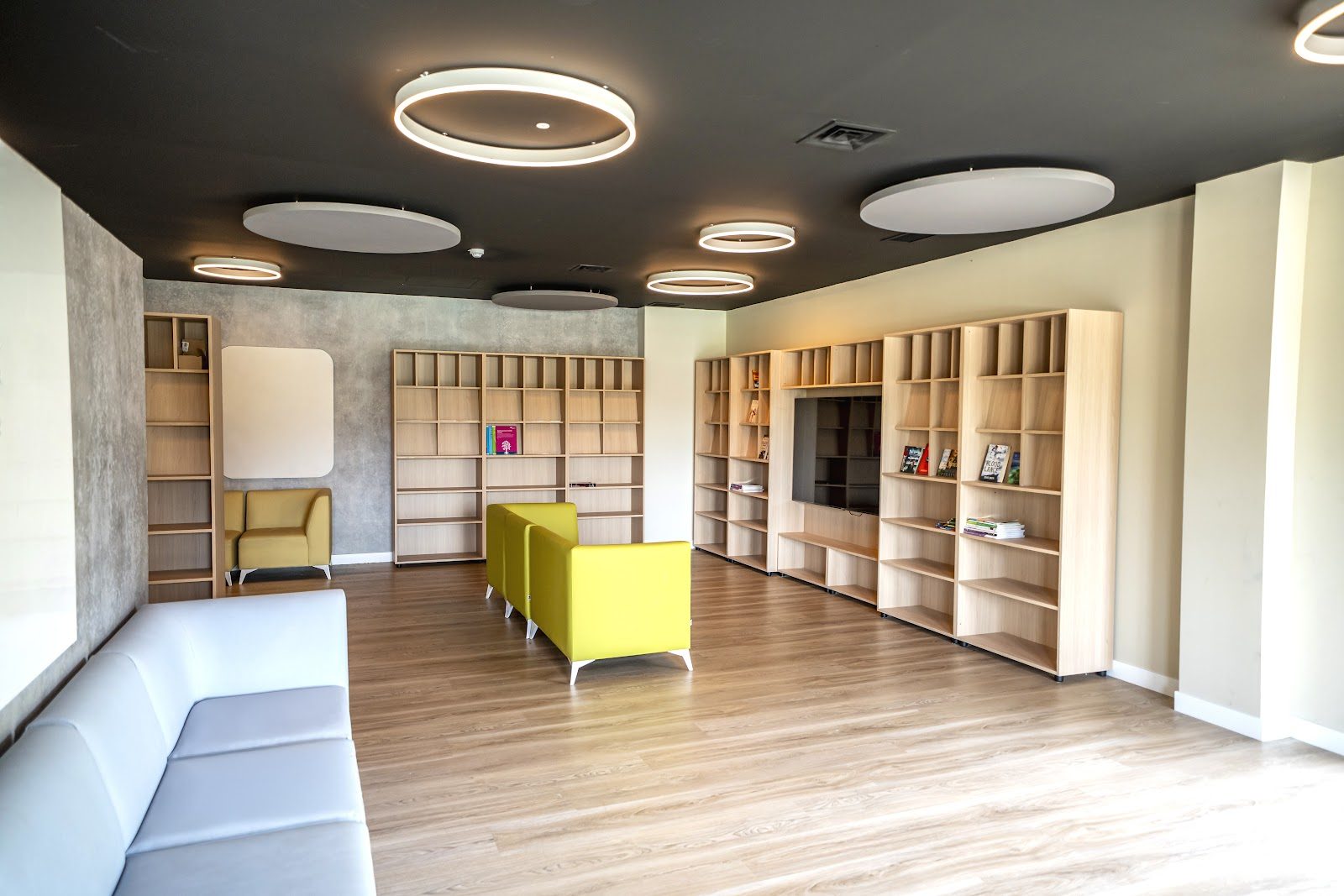
King's College, Soto de Viñuelas
Madrid · Spain
On a 12-acre campus between Madrid and the Sierra de Guadarrama, the only school in the capital offering both A-Levels and the IB in English.
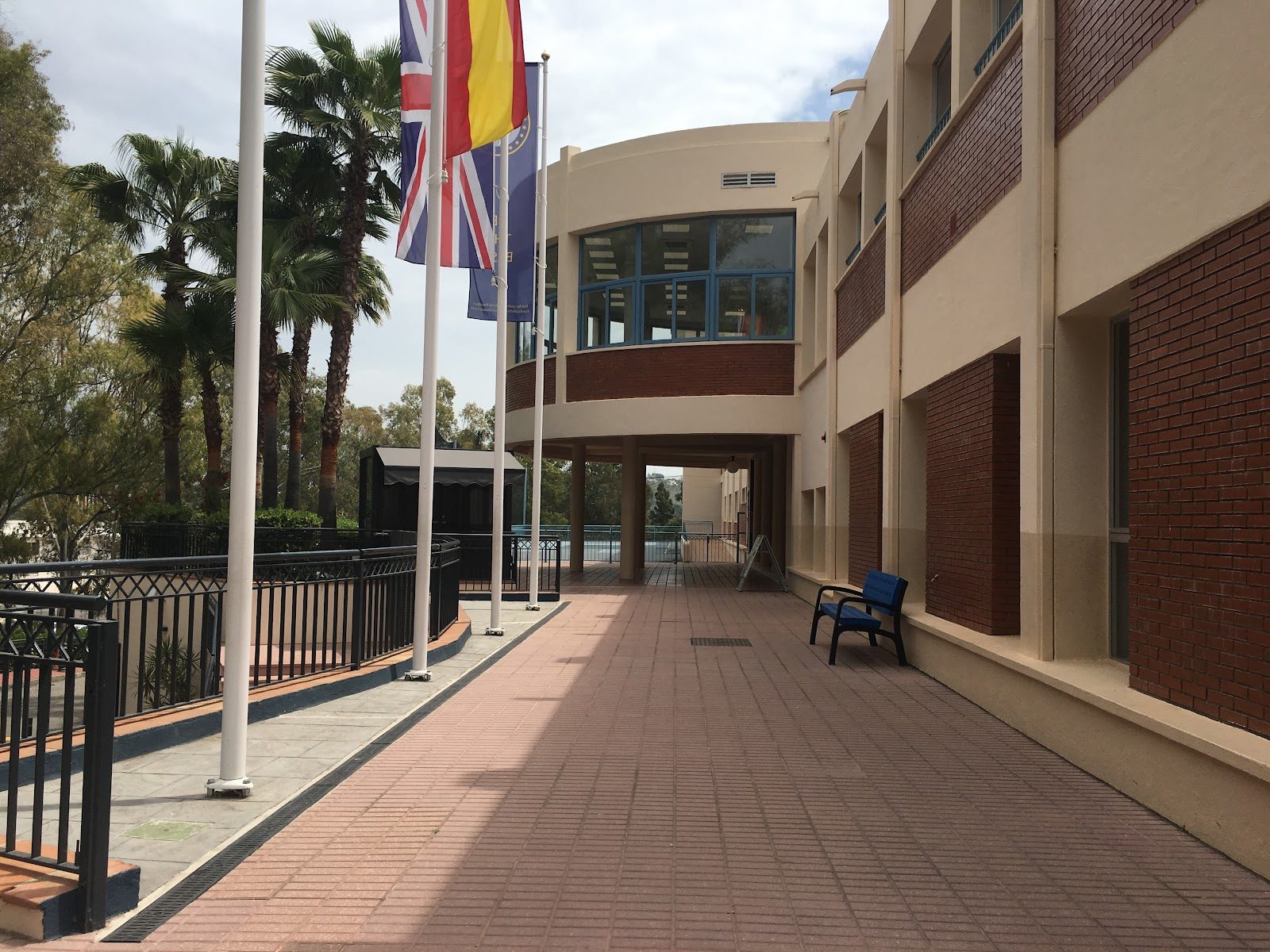
Aloha College
Marbella · Spain
Founded in 1982 by six teachers as a parent-run, not-for-profit trust, among the first in Spain to teach the IB Diploma.
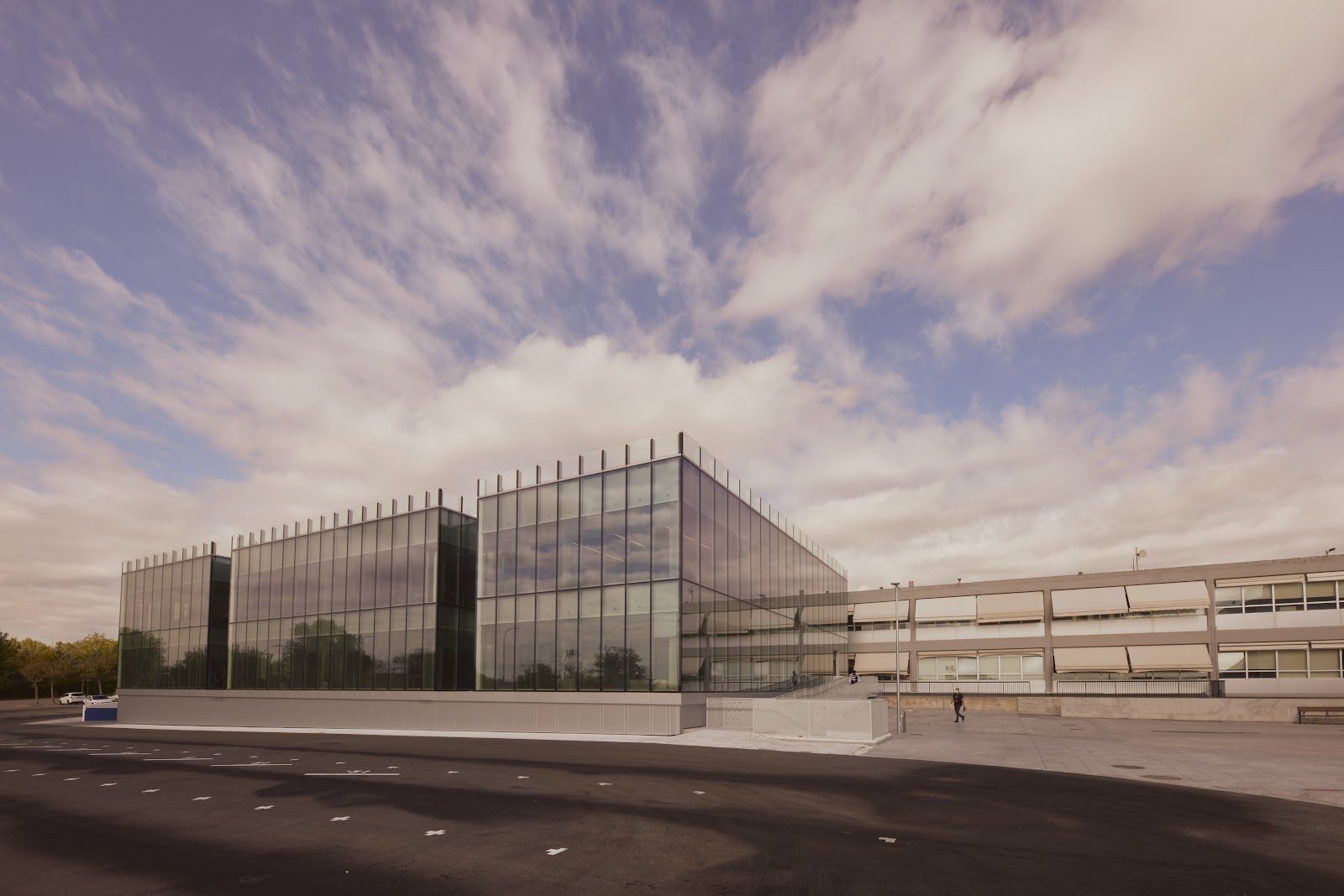
American School of Madrid
Madrid · Spain
On Calle America in Pozuelo, a 1961 founding became the first Spanish school to pair a US diploma with the full IB Diploma Programme.
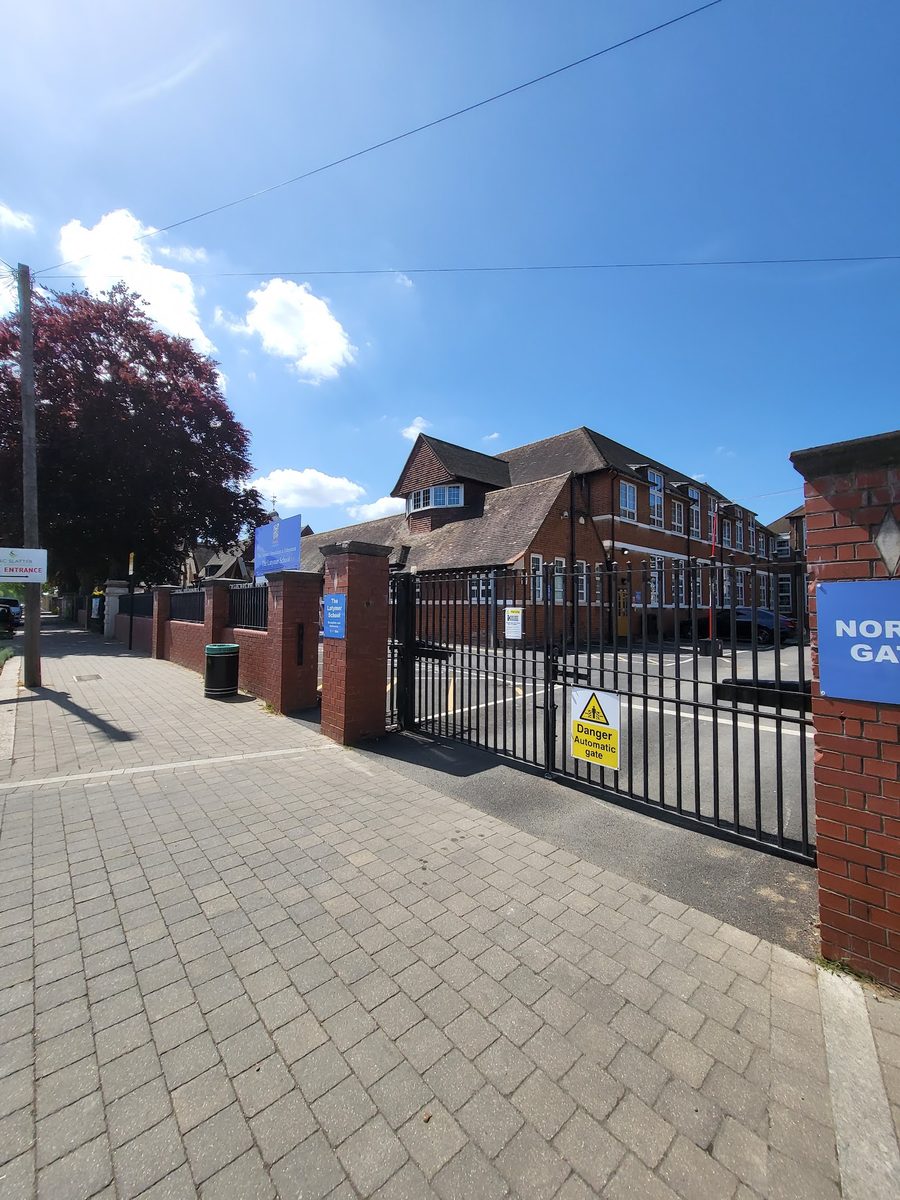
The Latymer School
London · United Kingdom
A 400-year-old state grammar in Edmonton where over 1,000 applicants compete yearly for just 192 places, with Cambridge college endowments still funding leavers.
Same country and curriculum — closest matches within ±10 points either way