
Banten
Deutsche Internationale Schule Jakarta
medium confidence· 4/6 cats · 1.5 avg sourcesFounded in 1957 by German doctors escaping the tropics, this Serpong campus preps students for tuition-free German universities.

Photo © Deutsche Schule Jakarta via Google Maps
Type
Day
Ages
3–18
Curriculum
German Abitur
Ratio
—
The Verdict
Editor's commitment
Right for
Families targeting the German Abitur and tuition-free German universities, with German, English and Indonesian taught on a Serpong campus.
Wrong for
Parents who want British or IB pathways, boarding, or a religious ethos; this is a non-religious day school for ages 3–18.
Watch out for
The average annual day fee is IDR 225,920,000, and the school's strongest external stamp is Excellent German School Abroad, not a broader Anglo brand.
Ranking breakdown
Deutsche Internationale Schule Jakarta · #1420 of 1591
Composite score 51.5. 8 weighted criteria.
By criterion
Academic Outcomes
Weight 20%
#1370
of 1529 scored
University Placement
Weight 16%
#1359
of 1529 scored
Prestige & Heritage
Weight 12%
#1426
of 1571 scored
Alumni Network
Weight 12%
#1082
of 1530 scored
Facilities
Weight 12%
#1422
of 1533 scored
Transparency & Communications
Weight 8%
#1415
of 1532 scored
Peer & Industry Review
Weight 10%
#1216
of 1548 scored
Admissions Selectivity & Demand
Weight 8%
#1308
of 1529 scored
Peer & Industry Review
How Deutsche Internationale Schule Jakarta is regarded in the sector
63
Respected · medium confidence
I could not locate at least two independent third-party sources (e.g., Tatler, Good Schools Guide, specialist education press, alumni-network coverage, or expat forums) discussing Deutsche Internationale Schule Jakarta's reputation. Available information appears limited to the school's own materials or unverifiable directory listings, which do not meet the evidentiary bar for scoring.
Editors' overview
Deutsche Internationale Schule Jakarta sits in Serpong, not central Jakarta, and that matters: this is a school chosen with intent, not convenience. Founded in 1957, it is one of the older international schools in the market, with a clear academic line through to the German Abitur and a strong practical attraction for the right family: direct preparation for Germany’s tuition-free public universities. That is a distinctive proposition in a city where many international schools sell Anglo-American pathways at far higher long-term cost. The school is day-only, non-religious, and teaches in German, English and Indonesian, which gives it a sharply defined identity rather than the generic international blend many competitors fall into.
Its market position is specialist rather than mass-market. The average annual day fee across ages 3 to 18 is IDR 225,920,000, which places it in the premium bracket, but the point of the purchase is not luxury. It is access to a German academic route, delivered in a school accredited as an Excellent German School Abroad, with AKS Australia+ also listed. Parents looking for broad-brush international branding, glossy sports infrastructure or a socially dominant expat scene will find stronger contenders elsewhere. Parents who want academic coherence, language depth and a credible route into German higher education will put DIS Jakarta on the shortlist fast. The school’s BSD community location in South Tangerang also gives it a more contained campus setting than many city schools, which will suit families who value focus over buzz.
The student who thrives here is not hard to identify. This school suits children from German, German-Indonesian and internationally mobile families who can work comfortably in a multilingual environment and who benefit from a structured, serious academic culture. It also suits parents who think beyond school and towards university financing, mobility in Europe and long-term linguistic capital. Students wanting a loose, highly personalised course menu or an overtly Anglo sixth-form culture will find the fit too narrow. Students who value order, academic continuity and a clear destination in the German system will find something rarer: a school in Indonesia with a precise educational purpose, not a vague international gloss.
Academic Performance
The school does not publish aggregate Abitur results, average grades, university placement data or any year-on-year outcomes data in the public domain. That is a real weakness. In a market where premium schools ask parents to trust an academic proposition, serious schools publish hard results. DIS Jakarta asks families to infer performance from its academic structure and from the fact that it runs a full school through to external leaving examinations, but inference is not evidence. For parents comparing selective European pathways with IB or A level competitors, that lack of disclosure leaves DIS Jakarta in an opaque position. It may deliver strong outcomes; it does not prove them publicly.
Relative to peers, that puts the school in a specialist rather than benchmark-driven category. The German Abitur is a demanding qualification with a clear university route, and families already committed to that system will value the pathway more than headline score marketing. Families shopping across Jakarta’s premium international sector, though, will find rivals more forthcoming with exam statistics and destination lists. The result is a school whose academic case rests on institutional coherence, not published performance metrics. That suits parents who already know the German system and want serious continuity. It gives less comfort to families who want clean comparative data before committing to fees averaging IDR 225,920,000 a year.
Facilities
The school’s key facility advantage is not spectacle but containment. A single Serpong campus gives preschool through secondary pupils one site and one routine, which matters for families who value continuity over constant inter-campus movement. That makes the physical offer coherent and purpose-built in a way many city schools are not. The trade-off is obvious: parents hunting for the showpiece infrastructure of Jakarta’s biggest premium campuses — cavernous theatres, elite aquatics centres, or sports complexes built to impress on open day — will find stronger hardware elsewhere. DIS Jakarta’s public profile points instead to a full educational campus that covers the essentials across the age range, with enough breadth to support daily school life rather than a luxury version of it.
Against peers, that places the school in the serious but unspectacular category for facilities. The campus in the BSD community benefits from space and separation from the city centre, which gives pupils a more self-contained school environment than many urban rivals can offer. That is a practical strength. It also means the school competes less on visible amenity and more on fit: families buying this school are not paying the average annual fee of IDR 225,920,000 for a resort campus. They are paying for a focused, all-through setting tied to a specific academic destination. For some families that is disciplined prioritisation. For others it will read as a thin return on premium fees if facilities matter as much as academics.
Deutsche Internationale Schule Jakarta sits in Serpong, not central Jakarta, and that matters: this is a school chosen with intent, not convenience
Prestige
DIS Jakarta carries niche prestige, not broad social cachet. In Jakarta’s international-school hierarchy, that matters. This is not the school parents choose for brand visibility at embassy parties or for the comfort of a familiar Anglo-American status ladder. Its standing comes from something narrower and more durable: a direct, disciplined route into the German education system and, beyond that, into German public universities. For families who value that route, the school has real credibility. For families outside that orbit, the name carries less weight than the city’s better-known British and IB competitors. Prestige here is functional, not performative; intellectual, not glamorous.
That is why the rating lands in the upper-middle tier rather than the top echelon. The school benefits from long institutional continuity and from official German quality recognition, both of which matter in a specialist market. It also asks parents to pay an average of IDR 225,920,000 a year for a proposition whose outcomes are not published in aggregate. That limits prestige fast. Elite schools convert reputation into visible results, influential alumni networks, and a degree of local social magnetism. DIS Jakarta does not make that case in public. Its status rests instead on serious academic intent, clear system loyalty and a university pathway with hard practical value. That is respectable prestige, but not dominant prestige.
That is a distinctive proposition in a city where many international schools sell Anglo-American pathways at far higher long-term cost
Communications
Parent communication looks serviceable rather than exemplary. The school has a clear public identity, a straightforward website, and an easy-to-understand age range, which helps families grasp the basics fast. That said, the public-facing communication does not do enough to convert interest into confidence. Key decision-making information is thin where premium schools need to be explicit: academic outcomes are not laid out in a way that answers hard parental questions, and the school does not use communication to close that credibility gap. For a school charging an average IDR 225,920,000 a year, that is a serious omission. Good communication at this price point means more than listing programmes and contact details; it means publishing the evidence that supports the school’s claims.
The tone also feels functional, not expansive. That will suit families already committed to this educational route, who need logistics, clarity and continuity more than glossy storytelling. It gives less to parents comparing multiple international options and looking for forensic transparency on results, destinations, daily school life and pastoral systems. The school communicates enough to support an informed enquiry, but not enough to dominate a shortlist on openness alone. In editorial terms, that places DIS Jakarta in the competent but restrained bracket: clear on identity, weaker on proof, and less persuasive than the strongest operators in the market.
Uniqueness
What marks DIS Jakarta out is precision. Many international schools promise “global” education and deliver a generic English-medium blend. This school does something narrower and more useful for the right family: it anchors children in a national system with a clear end point and a hard-edged practical payoff. A pupil who stays the course does not just pick up international-school polish; they gain direct familiarity with how German schooling works, how expectations build across the years, and how to operate in more than one linguistic and cultural frame at once. That gives students a form of educational mobility that is concrete rather than cosmetic. In Indonesia, that is rare.
The benefit to students is not glamour but traction. Children grow up in a setting where the academic route, the cultural references and the university horizon all line up, which reduces the drift that weaker “international” models produce. For German and German-Indonesian families, that continuity is deeply valuable. For non-German families, it offers access to a European pathway that carries real economic logic, given Germany’s tuition-free public universities. The school’s premium average fee of IDR 225,920,000 a year buys entry into that system, not a lifestyle brand. That makes DIS Jakarta unusually purposeful, tightly defined and, for students who fit it, more strategically useful than broader but less disciplined competitors.
That is why the rating lands in the upper-middle tier rather than the top echelon
Student Profile
The best fit is a child who does not need a school to entertain them into learning. DIS Jakarta suits students who respond to structure, routine and clear academic expectations, and whose families value cultural continuity over social theatre. German and German-Indonesian households sit at the centre of that profile, but the school also works for internationally mobile families who want their children anchored in a European system rather than the generic international circuit. Pupils who cope well here tend to be self-possessed, linguistically agile, and comfortable moving between home, school and national identities without much fuss. Children who need constant choice, heavy hand-holding or a big-brand social scene will find the environment too narrow and too exacting.
This is also a school for pragmatic families. Parents paying an average of IDR 225,920,000 a year are not buying flash; they are buying alignment between schooling and a specific higher-education destination. That shapes the peer group. Expect families who think in long horizons, care about discipline, and place real value on academic seriousness and multilingual competence. The social atmosphere reads contained rather than flashy: fewer status games, more quiet purpose. For the right student, that produces security and momentum. For the wrong one, it can feel constraining, with too little room for reinvention or for the looser, more expressive culture found in broader-market international schools.
The average annual day fee across ages 3 to 18 is IDR 225,920,000, which places it in the premium bracket, but the point of the purchase is not luxury
Co-curricular strengths
Arts & sport, on a separate axis
Overall 8.44/10
Scored 0-10 from the school's own published evidence. This axis is editorial-only — it does not feed the main WTS ranking.
Sports
9.2/10
Drama
8.5/10
Dance
7.5/10
Music
9/10
Visual Arts
8/10
Editor first-pass · editor-reviewable · 7/30/2026
Strengths
- +One of very few schools in Indonesia offering the full German Abitur, recognised for university entry across Germany and the EU.
- +Small cohort sizes typical of German Auslandsschulen abroad allow close teacher attention across primary through secondary years.
- +Accredited as a German school abroad under the ZfA (Zentralstelle fur das Auslandsschulwesen) framework, tying it to German state curriculum standards.
- +Located in the planned township of Bumi Serpong Damai (Serpong), offering a quieter, more spacious campus setting than central Jakarta.
- +Multilingual exposure with German as the primary instructional language alongside English and Indonesian language provision.
Considerations
- −Serpong location is a considerable commute for families based in central or south Jakarta, a factor for daily day-school logistics.
- −Small overall enrolment, typical of niche national curriculum schools abroad, means limited breadth of extracurricular and elective options compared to larger international schools.
- −German-language immersion and Abitur pathway may disadvantage non-German-speaking families or those seeking an English-medium IB/A-level route.
- −As a candidate-tier, lower-profile school in this ranking system, independent inspection data and outcome statistics are less publicly documented than at larger international schools in Jakarta.
Availability
Primary entry gate & tests
Academic Record
Gallery
Photo © Deutsche Schule Jakarta via Google Maps
Photo © Deutsche Schule Jakarta via Google Maps
Photo © Deutsche Schule Jakarta via Google Maps
Photo © Deutsche Schule Jakarta via Google Maps
Photo © Deutsche Schule Jakarta via Google Maps
Parent reviews
Have you sent your child here?
Voice reviews carry the strongest trust badge — we transcribe them for you to tidy up before they go live. Prefer to type? A written review is fine too.
Add your voice
In 60 seconds, tell other parents: what's the best thing about Deutsche Internationale Schule Jakarta, and what surprised you when your child joined?
We ask for a Google sign-in so every review has a real face behind it — no anonymous drive-by attacks on schools, and no faked positive reviews. Your email is never shown publicly.
Send this profile to a friend
International parents rely on word-of-mouth. Share this review with someone weighing the same decision.
Schools with places
Similar schools to Deutsche Internationale Schule Jakarta with places available now.
Green School Bali
Abiansemal · Indonesia
- 2026-27
- WAITPOOLSpace-dependent
- 2027-28
- PLACES OPENRolling
Jakarta Intercultural School
Jakarta · Indonesia
- 2026-27
- WAITPOOLSpace-dependent
- 2027-28
- PLACES OPENRolling
Availability first, then country, area, curriculum, price, co-curricular
Consider also
Also worth looking at alongside Deutsche Internationale Schule Jakarta.
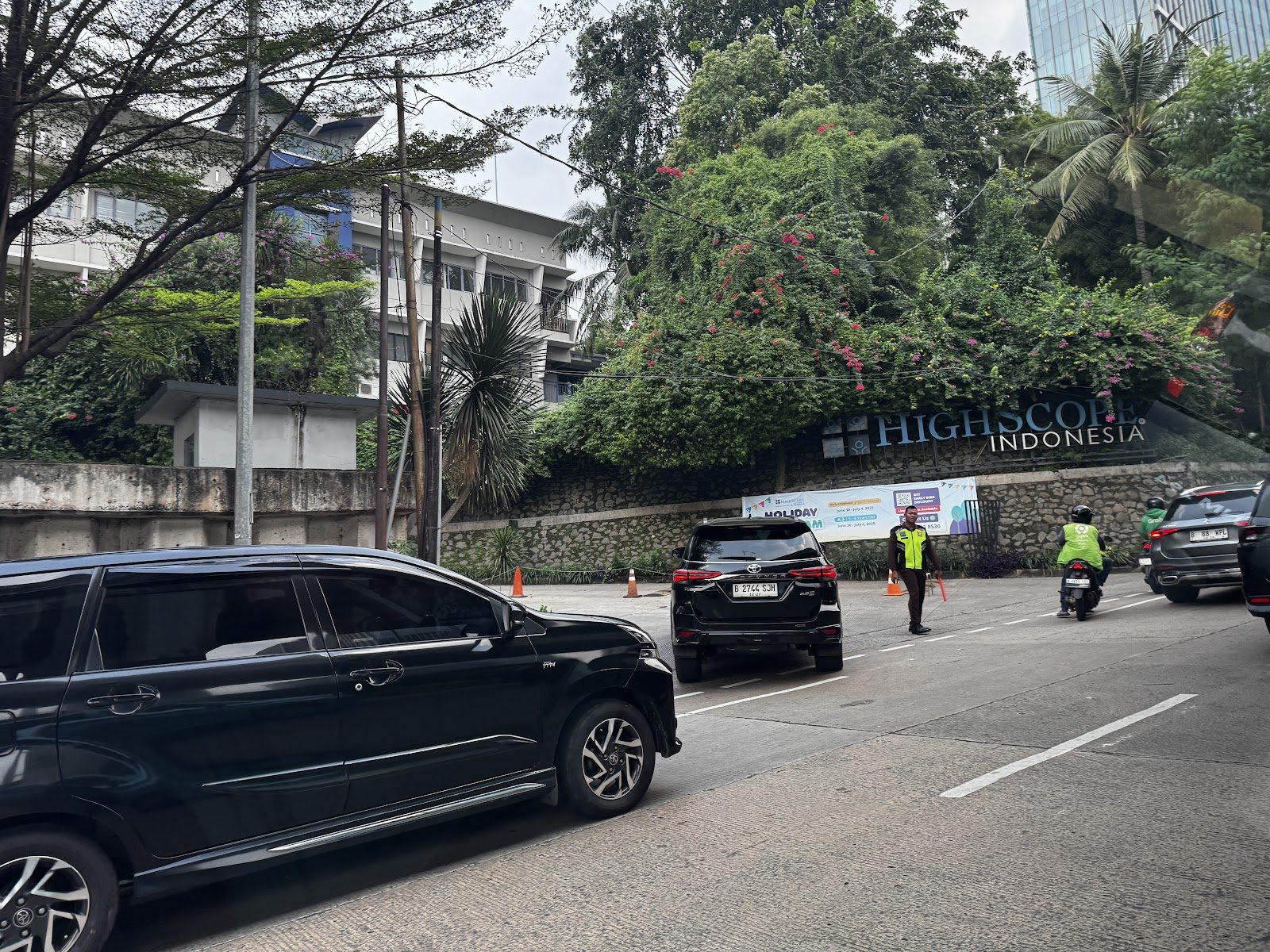
HighScope Indonesia TB Simatupang
Jakarta · Indonesia
Rooted in the 1962 Perry Preschool research, this Cilandak school pairs dual-language learning with three specialized high school majors.
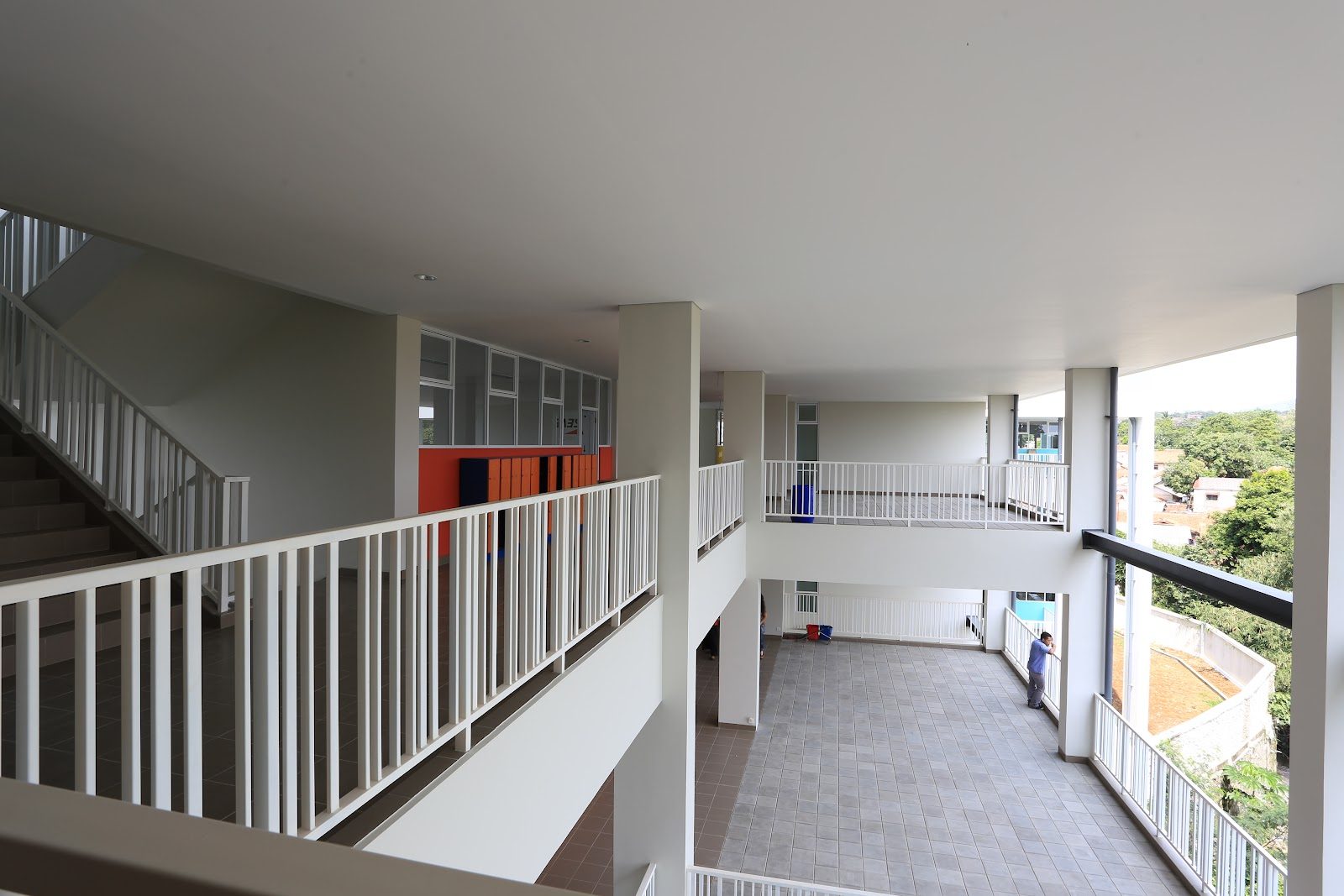
Sekolah Bogor Raya
Bogor · Indonesia
Set beside Bogor's lakeside estate, an SPK school braids the full IB continuum, Cambridge IGCSE and worship across five faiths.
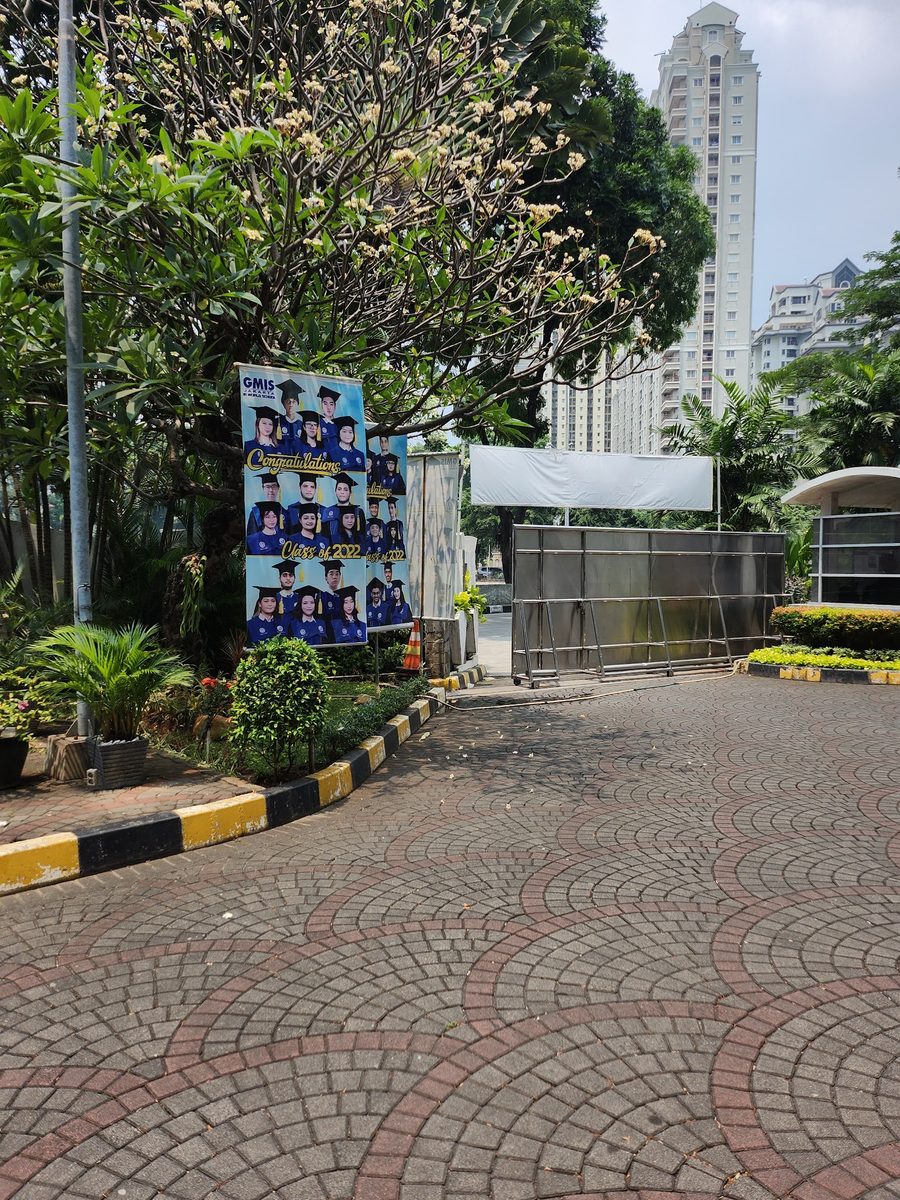
Gandhi Memorial Intercontinental School
Jakarta · Indonesia
Indonesia's oldest international school, where Gandhian ethics meet Pancasila values under an IB banner in central Jakarta.
Lycée Français Louis-Charles Damais
Jakarta · Indonesia
Named for a French scholar entranced by gamelan, this Cipete campus pairs Baccalaureate rigor with Javanese roots.
Same country and curriculum — closest matches within ±10 points either way