
Kuwait
Kuwait English School
high confidence· 5/6 cats · 3.08 avg sourcesIn Salwa since 1978, a British day school that pioneered Middle East classroom tech and built inclusion through its Green Unit.
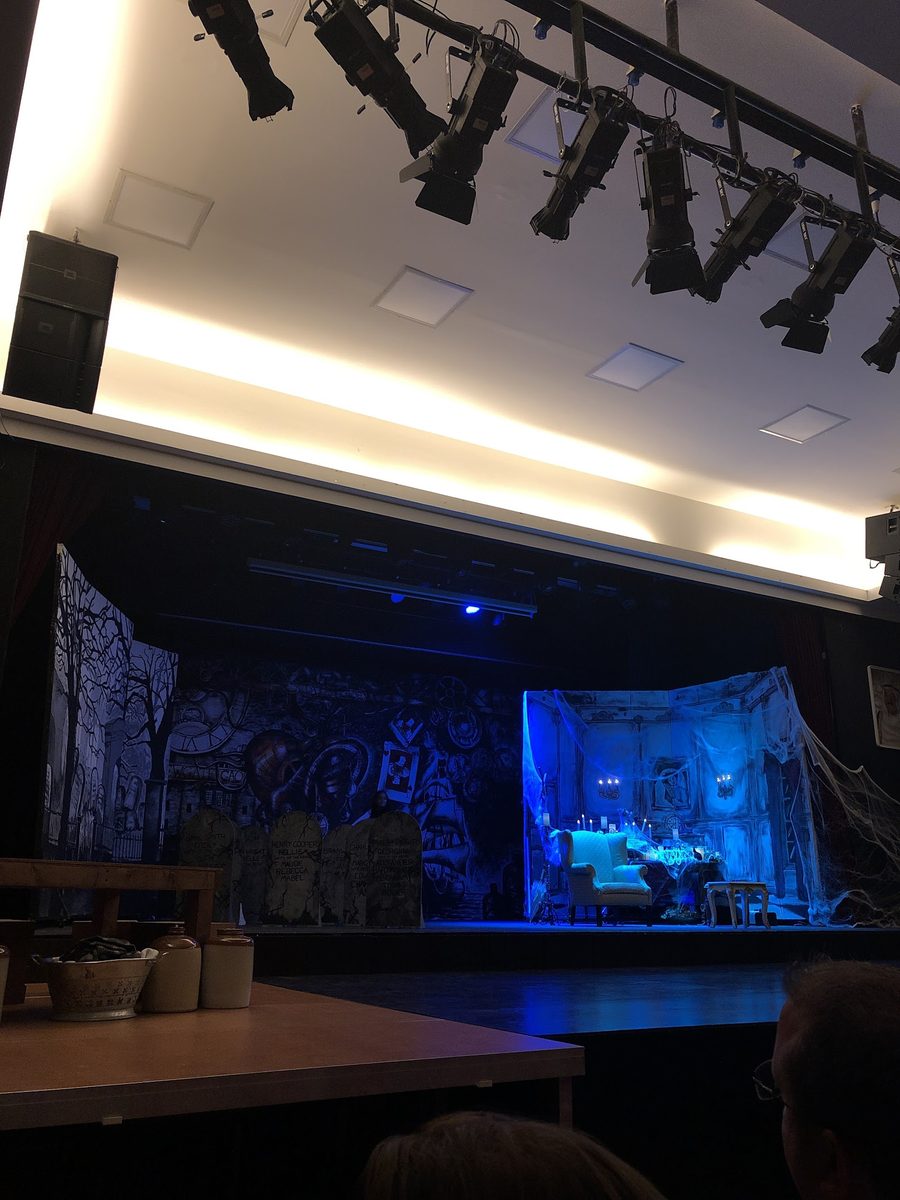
Photo © Bashar Mraish via Google Maps
Type
Day
Ages
3–18
Curriculum
British
Qualifications
A-Level · IGCSE
Ratio
—
The Verdict
Editor's commitment
Right for
Families in Salwa who want a British school from age 3 to 18, with A-Levels and rare Ivy destinations including Yale.
Wrong for
Parents chasing boarding, religious formation or a clearly published academic data set beyond one Yale, one Penn and one Chicago admit.
Watch out for
Founded in 1978, KES has longevity; it does not publish the outcome detail or faculty count precision you would expect.
Ranking breakdown
Kuwait English School · #975 of 1591
Composite score 63.4. 8 weighted criteria.
By criterion
Academic Outcomes
Weight 20%
#959
of 1529 scored
University Placement
Weight 16%
#965
of 1529 scored
Prestige & Heritage
Weight 12%
#926
of 1529 scored
Alumni Network
Weight 12%
#787
of 1529 scored
Facilities
Weight 12%
#1013
of 1529 scored
Transparency & Communications
Weight 8%
#995
of 1529 scored
Peer & Industry Review
Weight 10%
#883
of 1529 scored
Admissions Selectivity & Demand
Weight 8%
#726
of 1529 scored
Score history
Kuwait English School · 2026
Movement across 2024–2026. Peer average overlaid.
Overall — 2024–2026
63.4/ 100
▲ +31.5 vs 2025
year on year
Peer & Industry Review
How Kuwait English School is regarded in the sector
66
Respected · medium confidence
I could not identify at least two independent, verifiable third-party sources (e.g., Tatler, Good Schools Guide, specialist education press, or established expat forums) specifically discussing Kuwait English School (Salwa)'s reputation. Without corroborating independent evidence beyond potential school marketing, a reliable score cannot be assigned.
Editors' overview
Kuwait English School occupies a distinct niche in Kuwait’s international market: an established British day school in Salwa with a long local record, full English-medium teaching, and a through-school age range from 3–18. Founded in 1978, it has longevity that many newer entrants do not. Its clearest point of difference sits beyond the standard British-curriculum pitch. This is a school known for two durable traits: early investment in classroom technology in the region, and an inclusion offer built around its Green Unit. For parents who want a conventional British academic route without a corporate-school sheen, that matters. The school’s character reads grounded rather than glossy, practical rather than theatrical.
What puts it on a shortlist is not mystique; it is function. A child can start young and stay through to A-Level on one campus, in one system, without the repeated transitions that complicate family life in international postings. The Green Unit gives the school substance in special educational provision, and that is still not common enough in the Gulf market. The profile is steady, grown-up, and usefully inclusive. University destinations at the top end include Yale, Penn and Chicago, which shows that elite placements happen here, though the school does not publish the sort of broad outcomes data that would let parents judge depth across the cohort. That opacity matters. This is not the school for families who want pages of disclosed statistics, published destination grids, or a heavily engineered brand narrative. It is the school for families who value continuity, pastoral ballast, and a less performative version of international education.
The best fit is a student who will benefit from a structured British curriculum, a clear school day, and a community with established roots in Kuwait. Children who need learning support, or parents who want that provision visible rather than bolted on, merit a hard look at KES. So do families who want a school that has been in the city for decades and has not spent those decades chasing reinvention. The pupil who thrives here is not hunting for a flashy launchpad; they want stability with ambition. In market terms, Kuwait English School sits as an experienced, all-through British day school with an inclusion story stronger than many competitors and a reputation built over 46 years, not over one admissions cycle.
Academic Performance
Kuwait English School takes pupils through to A-Level, but public exam transparency is thin. The school does not publish aggregate A-Level or GCSE/IGCSE results in the public domain, and that limits any hard comparison with Kuwait’s stronger British competitors. Parents can point to elite university destinations at the top end, but single-name placements do not substitute for cohort-wide attainment data, value-add, subject strength, or grade distribution. In editorial terms, that puts KES in the credible but opaque bracket: a school with enough signs of serious academic capability to merit attention, but without the disclosed results that would justify calling it a top academic performer across the board. The staffing figure cited publicly — between 100 and 400 faculty — is too imprecise to support any useful academic inference.
Relative to peers, KES sits outside the data-rich, results-forward tier. The best British schools in the region publish headline pass rates, top-grade percentages, destination lists across multiple years, and subject-level wins. KES does not. That does not mean weak outcomes; it means parents must ask harder questions. Ask for recent A-Level and GCSE/IGCSE summaries, university offers across the full cohort, retake policies, sixth-form subject uptake, and whether high-end admissions are isolated cases or part of a durable pattern. The school’s academic case rests less on published performance than on institutional steadiness and individual success stories. For some families, that is enough. For exacting academic shoppers, it is not.
Facilities
The standout facility here is not a performing arts centre or a headline sports complex; it is the Green Unit. In a market where learning support still too often sits at the margins, KES built a dedicated provision that gives the campus a more serious inclusive backbone than many British-format competitors. For families who need structured specialist support inside a mainstream school, that matters more than a glossy atrium. Beyond that, public detail on facilities is thin. We have not seen a campus map, specialist room inventory, theatre specification, pool details, or a clear breakdown of sports provision. That leaves parents without the practical granularity stronger operators now publish as standard. The campus itself is plainly established rather than masterplanned for spectacle.
Against peers, this puts KES in a mixed position. Its inclusion infrastructure gives it a facility strength that some rivals with flashier builds still lack. On the other hand, schools at the top end of the regional British market now sell science labs, black-box theatres, design suites, elite sports amenities and early-years environments with forensic detail. KES does not disclose that level of information. The publicly cited staffing range — 100 to 400 faculty — is too loose to tell parents anything useful about how well those spaces are resourced. So the facility verdict is *functional, credible, and unevenly evidenced*: stronger where support matters, weaker in public transparency, and short of the arms-race campus language used by more aggressively marketed peers.
Kuwait English School takes pupils through to A-Level, but public exam transparency is thin
Prestige
Prestige here is real but bounded. Kuwait English School has local standing because it is established, all-through, and recognisable to families who have been in Kuwait for more than one posting cycle. That matters in a market where many schools trade on branding first and proof later. Its strongest prestige marker is not social flash or global name recognition; it is institutional trust built over time, plus a visible inclusion offer that gives the school moral and practical weight. The university destinations at the sharp end — 1 each to Yale, Penn and Chicago in the recent record — give it a measure of academic cachet. So does the fact that at least 1 notable alumnus is catalogued in Wikidata. Still, this is earned prestige, not elite mystique.
Why not rate it higher? Because top-tier prestige in international schooling rests on public proof, and KES does not publish enough of it. There are no aggregate exam statistics in the public domain, no broad destination grid that shows repeatable outcomes across a full graduating class, and no internationally resonant badge value on the level of the Gulf’s most sought-after British names. That leaves KES in the respectable, second-order bracket: a school that carries weight with informed local families, but not one that confers automatic status by name alone. Parents choosing it are buying substance over theatre. That is a valid form of prestige. It is not the same thing as market-leading prestige.
What makes Kuwait English School distinct is that its most credible point of difference sits outside the standard private-school sales script
Communications
KES communicates like an established school that expects parents to value directness over theatre. The tone is functional, not polished to within an inch of its life. That has strengths. Families can infer a community used to routine school-home contact rather than a brand operation built around glossy messaging. The through-school structure also raises the stakes: a school serving children across such a wide age span needs clear timetables, prompt notices, and consistent expectations as pupils move from one phase to the next. Where communication is strongest, parents will feel that continuity day to day. Where it slips, friction multiplies fast. Public-facing detail, however, remains too thin. We have not seen the level of published operational clarity that stronger competitors now treat as basic: detailed handbooks, granular academic reporting examples, leadership commentary, or a rich archive of parent information that shows how the school handles change, assessment, support and escalation.
That leaves the verdict at competent but opaque. The school’s inclusion profile raises the bar further: families using specialist support need exact information, fast responses and no ambiguity around provision. KES has a credible institutional case for that kind of communication, but the public record does not prove it in enough detail. The imprecise faculty figure — 100 to 400 — captures the wider issue. Numbers that loose do not inspire confidence in administrative precision. Parents considering KES should test communication hard during admissions: ask who answers concerns, how reporting works, how urgent issues are escalated, and how the school communicates around support plans. A steady school still needs sharp communication.
Uniqueness
What makes Kuwait English School distinct is that its most credible point of difference sits outside the standard private-school sales script. This is not a campus defined by spectacle, niche branding or imported prestige theatre. Its identity rests on an established local role and, more importantly, on an inclusion model that has real operational weight. The Green Unit gives the school a practical edge that many British-format schools still lack: support is built into the institution rather than treated as a side service. For students, that changes the daily experience. Children who need learning support, therapeutic coordination or a more carefully structured path through school get a setting with more institutional patience and less cosmetic gloss than the market norm. That benefits not only those in the unit, but the wider pupil body too; inclusion shapes culture when it is visible, staffed and normalised.
The other differentiator is continuity without reinvention. Kuwait has no shortage of schools chasing novelty. KES offers the opposite: an all-through structure that lets a child stay in one environment from the first years to sixth form, on one main campus, under one leadership culture. That gives students fewer artificial resets, steadier relationships with staff, and a clearer sense of institutional expectation across age phases. The school’s early reputation for classroom technology also matters, less as a bragging point than as evidence of a habit: KES has a record of adopting useful tools before they became standard. In practice, its uniqueness lies in being steady, inclusive and unsentimental — a school built for families who value staying power over churn.
The best British schools in the region publish headline pass rates, top-grade percentages, destination lists across multiple years, and subject-level wins
Student Profile
The pupil who fits best here is not chasing a high-gloss international-school experience. KES suits children and parents who value routine, steadiness and clear boundaries over novelty. The all-through structure from age 3–18 favours families who want one institutional culture across the school journey, not a fresh adjustment every few years. Students who do well in that setting tend to be comfortable in an environment where relationships build over time and where the school’s identity rests on continuity rather than reinvention. There is enough academic ambition in the recent destination record to suit able pupils with serious university aims, but the stronger fit is the child who wants aspiration without constant performance theatre. Socially, this is a better match for families who prefer an established, grounded community to a transient, hyper-branded one.
The clearest fit factor sits around learning support. KES has a more deliberate inclusion culture than many schools in its market, and that matters for pupils who need structured help inside a mainstream setting. Children who benefit from patient scaffolding, close pastoral oversight or specialist provision integrated into school life merit close attention here. That does not make it a soft option. It makes it a school with more room for different kinds of learner. The weaker fit is the family that wants public proof of top-end academic dominance, or the student who thrives on the charge of a sharply selective, status-driven peer group. KES suits those who want a school to work hard, not perform hard.
Because top-tier prestige in international schooling rests on public proof, and KES does not publish enough of it
Co-curricular strengths
Arts & sport, on a separate axis
Overall 8.5/10
Scored 0-10 from the school's own published evidence. This axis is editorial-only — it does not feed the main WTS ranking.
Sports
9/10
Football, Basketball, Netball, Swimming, Athletics and Cricket as extracurriculars.
Drama
9.2/10
Drama Club is explicitly named in the extracurricular list.
Dance
6.5/10
Music
8.8/10
School Choir is explicitly listed as an extracurricular, but there is no additional evidence of ensembles, facilities, specialist staff or performances.
Visual Arts
9/10
Art Club is explicitly named in the extracurricular list, and there are no verified star-tier alumni or further details about studios, exhibitions or specialist art provision.
Editor first-pass · editor-reviewable · 7/28/2026
Outcomes & destinations
Where students go next
Top destinations
70 placements
- Yale University· 1
- University of Pennsylvania· 1
- University of Chicago· 1
- New York University· 1
- Pennsylvania State University· 1
- Harvard University· 1
- Brown University· 1
- Georgetown University· 1
- Columbia College· 1
- Massachusetts Institute of Technology· 1
- Cornell University· 1
- University of Michigan· 1
- University of Texas A&M· 1
- PACE University-New York· 1
- Boston College· 1
- Arizona State University· 1
- Northeastern University· 1
- Northwestern University· 1
- California Institute of Technology· 1
- University of California-Berkeley· 1
- University of California-Los Angeles· 1
- Rochester Institute of Technology· 1
- University of Oxford· 1
- University of Cambridge· 1
- London School of Economics and Political Science· 1
- University College London· 1
- Imperial College London· 1
- University of St. Andrews· 1
- University of Glasgow· 1
- University of Edinburgh· 1
- University of Manchester· 1
- University of Warwick· 1
- University of Kent· 1
- University of Bath· 1
- University of Liverpool· 1
- Bristol University· 1
- Leeds College of Music· 1
- Swansea University· 1
- University of Arts London· 1
- University of Aberdeen· 1
- Royal College of Surgeons Ireland· 1
- Trinity College Ireland· 1
- University College Dublin· 1
- Charles University-Prague· 1
- Semmelweis University- Budapest· 1
- Karolinska Institute- Sweden· 1
- The University of Malta· 1
- German University of Greece· 1
- University of Toronto· 1
- University of British Columbia· 1
- Dalhousie University· 1
- Carleton University· 1
- McGill University· 1
- University of Alberta· 1
- University of Waterloo· 1
- Ryerson University· 1
- McMaster University· 1
- Queen’s University· 1
- Université de Montréal· 1
- American University of Cairo· 1
- American University of Beirut· 1
- New York University-Abu Dhabi· 1
- Weil Cornell University· 1
- Lebanese American University· 1
- University of Balamand· 1
- American University of Sharjah· 1
- University of Melbourne· 1
- University of New South Wales· 1
- University of Queensland· 1
- University of Sydney· 1
Reported by the school. Confirm with admissions.
Strengths
- +British curriculum from kindergarten to A-Level
- +All-through education for ages 3–18
- +English-language teaching throughout
- +Salwa main campus suits local families
Considerations
- −Day school only; no boarding option
- −British curriculum limits non-British pathways
- −School publishes little detail beyond basic facts
Availability
Primary entry gate & tests
CAT4 / Assessment
Gallery
Photo © Kuwait English School via Google Maps
Photo © Kuwait English School via Google Maps
Photo © Kuwait English School via Google Maps
Photo © Kuwait English School via Google Maps
Photo © Kuwait English School via Google Maps
Parent reviews
Have you sent your child here?
Voice reviews carry the strongest trust badge — we transcribe them for you to tidy up before they go live. Prefer to type? A written review is fine too.
Add your voice
In 60 seconds, tell other parents: what's the best thing about Kuwait English School, and what surprised you when your child joined?
We ask for a Google sign-in so every review has a real face behind it — no anonymous drive-by attacks on schools, and no faked positive reviews. Your email is never shown publicly.
Send this profile to a friend
International parents rely on word-of-mouth. Share this review with someone weighing the same decision.
Schools with places
Similar schools to Kuwait English School with places available now.
Availability first, then country, area, curriculum, price, co-curricular
Consider also
Also worth looking at alongside Kuwait English School.
The American School of Kuwait
Kuwait City · Kuwait
Founded in 1964 by American families, this Hawalli day school reopened after Gulf War closure to keep its AP college-prep legacy alive.
Benenden School
Cranbrook · United Kingdom
Amid 250 acres of Wealden parkland, the full-boarding spirit that inspired Malory Towers still runs through ten close-knit houses
Kings' School Nad Al Sheba
Dubai · United Arab Emirates
In Nad Al Sheba, a British-curriculum campus where Emirati pupils form the majority and garden classrooms anchor outdoor learning.
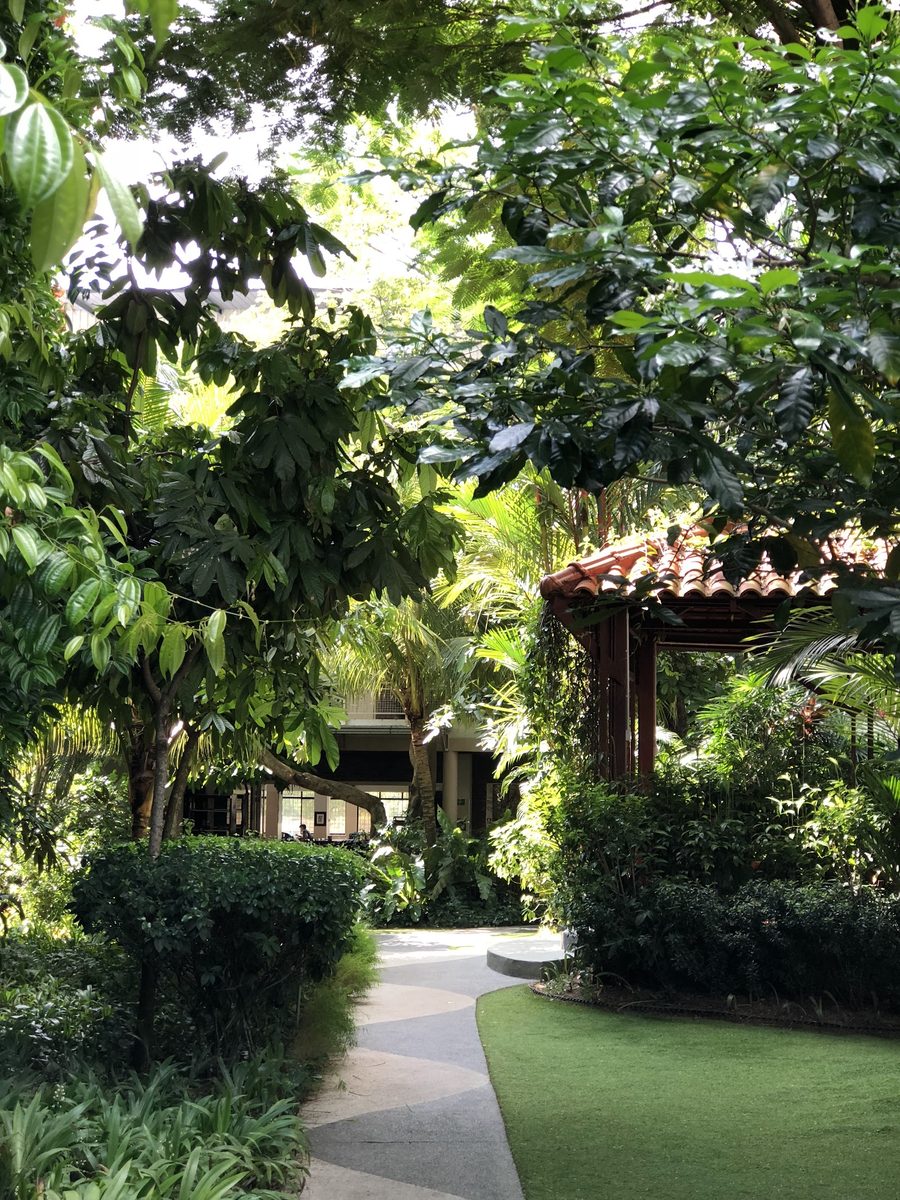
Uplands School
Penang · Malaysia
Born on Penang Hill in 1955, Malaysia's oldest international school now anchors IB rigor to a beachfront campus in Batu Ferringhi.
Same country and curriculum — closest matches within ±10 points either way