
Busan
Korea Science Academy of KAIST
Korea's only national gifted-science school, running an ungraded, research-driven curriculum with direct KAIST credit transfer from its Busan campus.
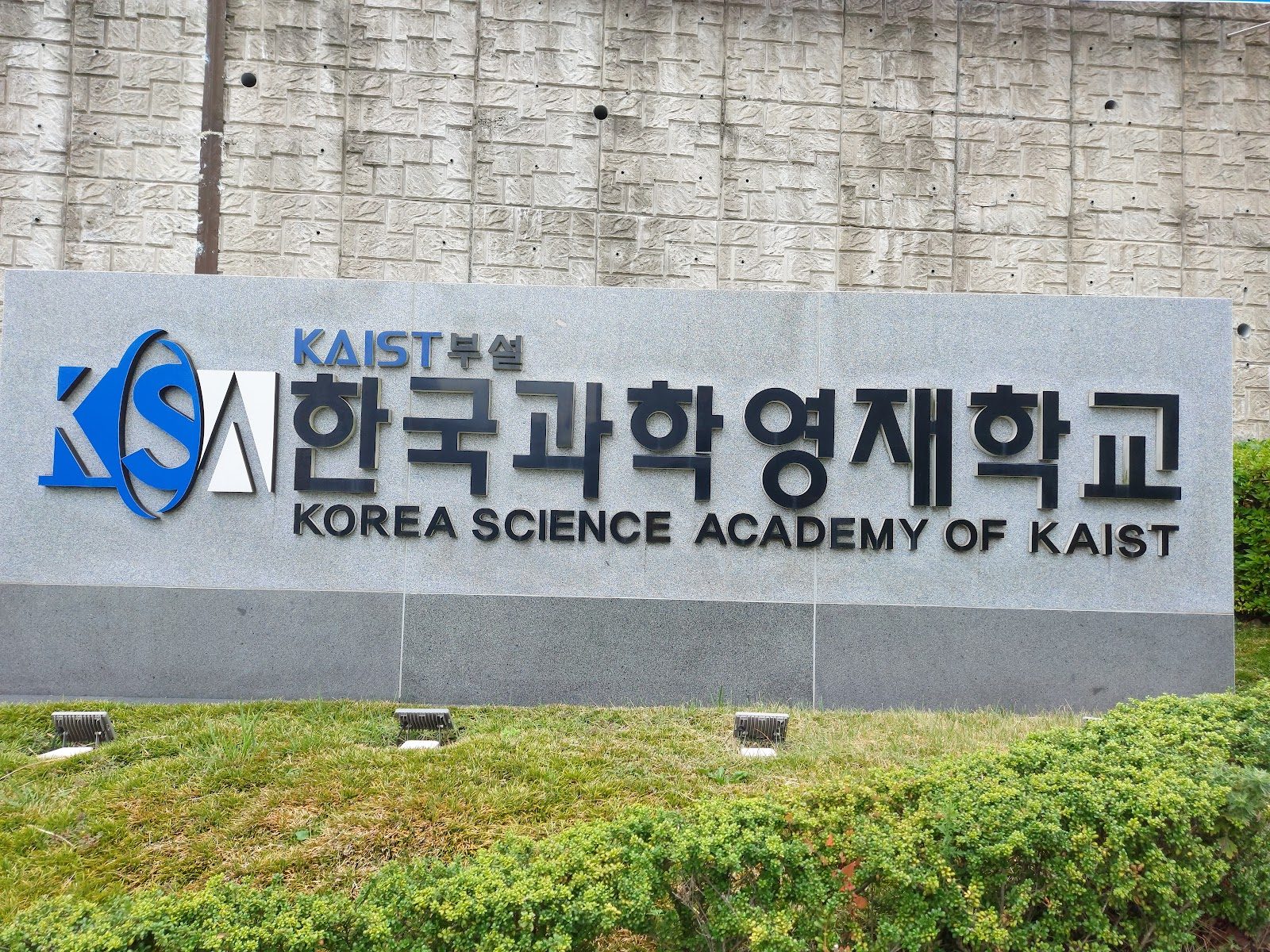
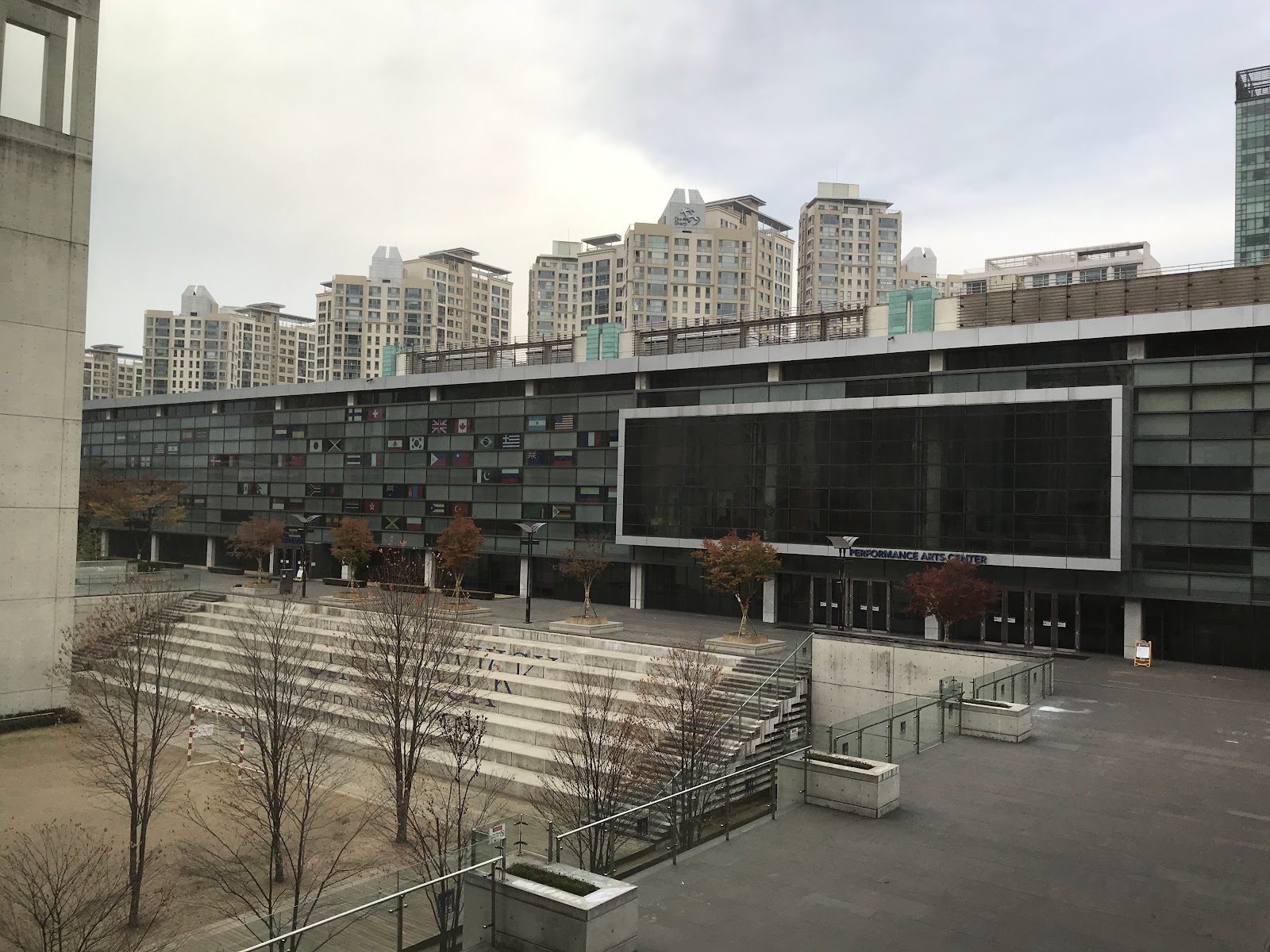
Photo © shissdo via Google Maps
Type
Boarding
Ages
15–18
Curriculum
Korean
Qualifications
Korean national gifted-track curriculum · KAIST research pathway
Ratio
—
The Verdict
Editor's commitment
Right for
Serious young scientists aged 15–18 who want boarding in Busan, average classes of 20, and an ungraded Korean curriculum with research at the centre.
Wrong for
Families wanting a conventional exam-driven high school: this 1991-founded national gifted-science school runs in Korean and English, not a broad generalist model.
Watch out for
KSA is boarding-only, highly specialised, and the school does not publish aggregate academic outcomes on its public front end; parents must probe hard.
Ranking breakdown
Korea Science Academy of KAIST · #160 of 1591
Composite score 75.4. 8 weighted criteria.
By criterion
Academic Outcomes
Weight 20%
#31
of 1529 scored
University Placement
Weight 16%
#24
of 1529 scored
Prestige & Heritage
Weight 12%
#212
of 1571 scored
Alumni Network
Weight 12%
#785
of 1530 scored
Facilities
Weight 12%
#569
of 1533 scored
Transparency & Communications
Weight 8%
#1019
of 1532 scored
Peer & Industry Review
Weight 10%
#250
of 1548 scored
Admissions Selectivity & Demand
Weight 8%
#5
of 1529 scored
Peer & Industry Review
How Korea Science Academy of KAIST is regarded in the sector
76
Strong · medium confidence
Within Korea's small circle of science academies, KSA is consistently bracketed with Seoul Science High School as the top tier, the two schools most cited by education ministry officials and by Chosun Ilbo/JoongAng Ilbo annual science-high-school rankings. Its unique status as the only school whose top students can graduate early and enter KAIST without sitting the CSAT gives it distinct standing among university admissions offices; KAIST, POSTECH and Seoul National University routinely list it among their highest-yield feeder schools for STEM faculties. International Science and Mathematical Olympiad medal tables, tracked by rival academies and Olympiad coaching networks, regularly show KSA students among Korea's national team, reinforcing peer respect. Independent Anglophone guides (WhichSchoolAdvisor, Good Schools Guide International) cover it only briefly given its domestic boarding-school model, but note its research-intensive, KAIST-affiliated curriculum as a differentiator from mainstream Korean hagwon-driven schools. Coverage remains narrowly academic/STEM rather than broad press acclaim, reflecting its specialised mission rather than a general prestige deficit.
Award
Elite Science & Research 58
World's Top School · The Global Ranking
Korea Science Academy of KAIST is featured on our Global Top 58 ranking at #1. This seal is available for the school's marketing team to use on their website, prospectus and social channels.
Award
Elite Computing & AI 60
World's Top School · The Global Ranking
Korea Science Academy of KAIST is featured on our Global Top 60 ranking at #2. This seal is available for the school's marketing team to use on their website, prospectus and social channels.
Award
Elite Mathematics 60
World's Top School · The Global Ranking
Korea Science Academy of KAIST is featured on our Global Top 60 ranking at #35. This seal is available for the school's marketing team to use on their website, prospectus and social channels.
Editors' overview
Korea Science Academy of KAIST sits in a category of its own. It is Korea’s only national gifted-science high school, founded in 1991, boarding, and tied directly to KAIST. That combination matters. This is not a conventional Korean academic high school with a science emphasis bolted on. It is a specialist institution built for mathematically and scientifically exceptional teenagers, with an ungraded, research-driven Korean curriculum and instruction in Korean and English. The school’s public structure points in one direction: advanced study, laboratory work, academic festivals, research publication, international exchange, and sustained project activity. The attraction is obvious for the right family: serious intellectual ambition, high-octane science culture, and a campus organised around students who want more than textbook mastery.
What sets KSA apart is the depth of its research infrastructure at school level. The site foregrounds R&E programmes, final research presentations, joint presentations of outstanding work, international academic conferences, exchange schemes, teacher exchanges, and international collaborative research. That is a stronger signal than the generic “STEAM” language many schools trade on. KSA trains pupils in the habits of early-stage scientific work: asking viable questions, handling failure, presenting findings, and living with open-ended problems. The KAIST relationship adds another layer of market value, including direct credit transfer, which few schools can match. For a parent comparing elite options in Korea or wider Asia, that makes KSA a clear outlier: a school with a narrow mission, a coherent design, and no interest in being all things to all children.
There are limits, and they are important. This is not a broad liberal education in the international-school sense. Families looking for a balanced arts-heavy programme, a conventional graded structure, or a softer academic tempo should look elsewhere. Selectivity is central to the school’s identity, and the social environment will be intense. With an average class size of 20 and a boarding model, students do not get much room to hide from pressure, competition, or the demands of communal living. Publicly available outcomes data are less useful than they should be; the school and Wikipedia point to elite university destinations, but no aggregate admissions breakdown or equivalent whole-cohort performance data are published here. Parents therefore need to buy into the model itself, not just a headline outcomes story.
KSA belongs on a shortlist for a very specific student: academically fearless, science-led, comfortable with abstraction, and energised by peers who think at the same speed. The ideal candidate wants full-immersion boarding intensity, relishes research over routine worksheet success, and does not need hand-holding. This is a school for teenagers who want to build things, test ideas, write papers, attend conferences, and move early towards university-level science. It will suit the student who finds ordinary top schools too slow, too general, or too constrained. For that child, KSA offers rare academic concentration and a formidable peer group. For everyone else, it will feel narrow, hard, and unforgiving.
An Elite Science & Research 58 school
Korea Science Academy of KAIST, in Busan, South Korea, sits at rank one on the Elite Science & Research 58 because it is the only nationally funded gifted science high school in the country, formally affiliated with KAIST since 2009, and its exit data proves the pipeline works: more than 90 percent of graduates go on to Seoul National University, KAIST, POSTECH or an overseas university, with several accepted every year by Harvard, Yale, Princeton, Stanford, Caltech, Cambridge and Oxford.
The specialism is mentored original research built into every year of school. Students join year-long Research and Education groups of one faculty mentor and three students, culminating in at least twenty days of on-site domestic research during summer vacation with interim and final presentations. In grade 12, every student produces a graduation thesis, choosing between Individual Research and the KAIST High School Research Program; HRP students contact KAIST professors directly to design a research plan, then work under that advisor from the first semester through a six-week residential research intensive inside actual KAIST laboratories the summer before graduation. That structure sits alongside a competitive-science culture with genuine depth: in 2025 the school's Flare Team won the Grand Prize in the CanSat aerospace competition for a GPS-independent satellite-tracking design.
Named individual alumni achievements beyond graduation are still emerging into public record, so the strongest evidence is recent, verifiable competition results carrying the school's name directly: Choi Jae-young, a second-year KSA student, won gold at the 37th International Biology Olympiad in Vilnius in 2026, one of four Korean students to sweep every gold medal that year.
International openness is real but narrow. KSA recruits a small international cohort annually; applicants must hold non-Korean nationality and be able to communicate in Korean or English, with instruction conducted in Korean day to day. Boarding is standard for the whole cohort. Admitted international students receive a full scholarship covering tuition and board, with personal costs (uniforms, visa, flights) running to roughly $4,500 across three years, and further waivers for top performers. International applications typically close many months before the following year's entry, so families should contact the school's international admissions office at least a year ahead. This suits a genuinely bilingual, research-driven science prodigy rather than a soft-landing international school choice.
An Elite Computing & AI 60 school
Korea Science Academy of KAIST, in Busan, South Korea, sits at rank two on the Elite Computing & AI 60 because it is the country's only national, university-affiliated science gifted school and its informatics pipeline now delivers the strongest result in Korean Olympiad history. In August 2025, at the 37th International Olympiad in Informatics in Sucre, Bolivia, the entire four-student Korean delegation won gold medals for the first time since the country began competing in 1992, and that team included a KSA second-year student. No hedging is needed on that anchor fact: it is a national first, not an incremental placing.
The specialism runs through the school's Mathematics and Informatics Science Department (수리정보과학부), which deliberately fuses mathematics and computer science into one faculty so that algorithmic thinking is taught alongside pure math rather than bolted on as an elective. A required Informatics course sits in the second-year core curriculum for domestic students, with adapted sequencing for international entrants, and pupils feed into KAIST itself through dedicated High-school Research Programs at KAIST, overseas training placements, and creative research activities including formal R&E projects. Because KSA answers to KAIST's own Board for Gifted Education rather than the Ministry of Education, its AP-style elective range in advanced STEM subjects is unusually deep for a Korean secondary school.
Notable alumni are still emerging as named public figures in computing specifically, so the fairer evidence is competition record: more than 90% of graduates proceed to Seoul National University, KAIST, POSTECH or universities abroad, with several admitted most years to Harvard, Yale, Princeton, Stanford, Caltech, Cambridge and Oxford, and the 2025 all-gold IOI sweep stands as the clearest recent proof of the pipeline's strength.
International openness is real but narrow: KSA selects roughly fifteen foreign-national students a year through document review followed by a mathematics and science test and interview, requires communication ability in Korean or English, and excludes applicants holding Korean citizenship. Boarding is mandatory and, for admitted international students, room and board plus most academic programs including tuition are provided free of charge, though a Korean immigration certificate is required at application. Deadlines fall around February for the following year's intake, so families should begin the process at least a year ahead. For a family seeking a genuinely elite, KAIST-embedded computing and Olympiad training environment rather than a Western-style AP/IB computer science track, KSA is worth the visa paperwork.
An Elite Mathematics 60 school
Korea Science Academy of KAIST, in Busan, South Korea, sits at rank thirty-five on the Elite Mathematics 60. It is one of the country's eight gifted-science high schools, but the only one that is a national institution, and its enrollment is regarded as most selective among Korean high schools, which is often regarded as top 3 with SSHS and GSHS. The clearest anchor is alumnus Gyujin Oh, who won an individual IMO gold medal for Korea in 2008 as a KSA student, then received his PhD in mathematics in 2022 from Princeton University and is now a Ritt Assistant Professor at Columbia University working in number theory and its related areas.
The specialism is embedded in the formal architecture, not bolted on for a handful of stars. Beyond mandatory level-based mathematics, elective courses provide advanced placement and post-advanced placement courses such as Multivariable Calculus, Vector Calculus, Linear Algebra, Elementary Number Theory, and Differential equations, and math and science have been taught in English since 2010. Graduation research is for 6 credits, obtainable through individual work or the KAIST High School Research Program, and qualifying students can enroll and study at KAIST in their 6th semester, with up to 25 students allowed to study at KAIST before finishing secondary school — a university-integration depth rare among secondary institutions.
Gyujin Oh anchors the alumni case: an IMO gold medalist turned Columbia number theorist trained under advisors Christopher Skinner and Akshay Venkatesh. Beyond individual medalists, the destination data is striking: more than 90% of alumni attend SNU, KAIST, Postech or college abroad, and several students have been annually accepted by Harvard, Yale, Princeton, Stanford, Caltech, Cambridge, Oxford, and others, evidencing consistent cohort-wide strength rather than isolated brilliance.
International openness runs through a dedicated non-Korean-national admissions track. Eligibility requires students to have nationality other than Korean, those with Korean nationality are not eligible, and applicants must be capable of communication in Korean or English. KSA applies a two-stage process of document evaluation, math and science test, and interview, with no application fee, selecting about fifteen international students in the documented cohort. Room and board are provided free of charge, and most KSA programs are offered free, though families should budget for personal expenses and flights. Boarding is standard and compulsory. Current visa arrangements and fee schedules are not detailed in public English-language materials, so overseas families should contact KSA directly. For a family able to relocate a mathematically exceptional early-teen into a Korean-language, boarding, KAIST-linked environment, KSA is a credible under-the-radar route into elite pure-mathematics training — start the non-Korean-national dossier at least a full year ahead of the intended intake.
Academic Performance
KSA’s academic standing rests less on published school-wide examination data than on selectivity and destination patterns. The school does not publish aggregate external exam results in the public domain, and that is a real gap for parents trying to benchmark it against other elite schools with cleaner score reporting. What is public points instead to an institution operating at the sharp end of Korean science education: Wikipedia places it among the country’s gifted science high schools, calls it the only national school in that group, and states that more than 90% of alumni move on to SNU, KAIST, POSTECH or universities overseas. It also cites annual admits to Harvard, Yale, Princeton, Stanford, Caltech, Cambridge and Oxford. Those claims fit the school’s profile, but they are not a substitute for cohort-wide results tables.
Relative to peers, KSA sits in a rarefied niche rather than the broader market of academically strong international schools. The useful comparison set is Seoul Science High School, Gyeonggi Science High School and other Korean gifted-science institutions, not mainstream AP or IB schools. On that terrain, KSA reads as hyper-selective, research-first and heavily oriented towards top STEM progression. The formal KAIST tie strengthens that position. Parents still need to accept a basic fact: this is a school with a formidable academic reputation and opaque published performance metrics. If you want neat comparative exam dashboards, KSA does not provide them. If you want a school judged by the calibre of its intake and university destinations, it ranks near the top.
Facilities
The campus infrastructure is built around science work rather than school theatre. The public site points parents to a dense ecosystem: a library, dedicated health and counselling spaces, a student growth centre, a Dream Design Center, an invention and engineering strand under creative convergence design, and a full R&E programme culminating in final presentations and joint showcases of top projects. Add the on-site guest facility, the substantial list of school regulations and information-disclosure pages, and you get a school that runs like a serious research institution in miniature, not a polished all-purpose college-prep campus. The average class size of 20 helps here: specialist spaces matter more when teaching is discussion-led, project-based and academically relentless.
Against peer schools, KSA’s advantage lies less in glamour than in functional alignment. Many strong Asian schools can point to modern labs, maker spaces and a good auditorium. Fewer build an entire visible structure around research papers, academic festivals, collaborative projects, international conference participation, exchange programmes and publication-style presentation. That gives KSA a hard-edged scientific coherence that mainstream international schools rarely match. The trade-off is breadth. Families hunting for expansive arts venues, major sporting infrastructure or resort-style campus extras will find the public picture thin. KSA’s facilities read as purpose-built, intellectually intense and unapologetically narrow. For its target student, that is a strength, not a flaw.
Korea Science Academy of KAIST sits in a category of its own
Prestige
KSA carries top-tier academic prestige within South Korea because it sits in a category few schools can enter and fewer still can sustain. It is the country’s only national gifted-science high school, attached to KAIST rather than operating as a standalone selective school with a science label. That institutional position matters. It gives KSA a serious scientific identity, stronger signalling power for universities and researchers, and a credibility that extends beyond ordinary high-school competition. Wikipedia’s claim that more than 90% of alumni progress to SNU, KAIST, POSTECH or universities abroad reinforces that standing, as do the named annual admits to Harvard, Yale, Princeton, Stanford, Caltech, Cambridge and Oxford. Parents should read that as evidence of elite progression value, not as a complete outcomes dashboard.
The prestige also rests on design, not just destinations. KSA foregrounds research activity, international conferences, exchanges, collaborative projects, and formal presentation of student work. That gives it intellectual cachet that exam-driven schools do not match. In the Korean context, where many strong schools still trade on test preparation and rank, KSA offers something narrower and more rare: a pipeline into advanced science culture at school age. The price of that prestige is obvious. This is high-pressure, high-status education for a very small slice of students, and its reputation depends on maintaining that exclusivity. For families who want broad polish or easy comparability, the school is a poor fit. For families chasing the sharpest STEM peer group in the country, it sits near the summit.
It will suit the student who finds ordinary top schools too slow, too general, or too constrained
Communications
Parent communication is functional, dense and unmistakably institutional. The website carries a full public-service spine: notices, school news, media reports, English-language notices, academic calendars, admissions contacts, parent bulletin boards, information-disclosure pages, rules, meal information, health and counselling pages, and a direct complaints or suggestions channel. Contact routes are explicit, with multiple admissions numbers and a main switchboard published. That matters at a school with a high-pressure internal rhythm and a student body living on campus. Parents do not need glossy storytelling; they need current logistics, policy clarity and a clear route to the right office. On that test, KSA communicates with bureaucratic seriousness and a strong preference for documentation over charm.
The weakness is equally clear. This is not elegant communication. The site is crowded, administrative and built for people who already know how Korean school systems work. For international families, that creates friction. There is an English portal, but the public-facing structure still reads as domestically oriented rather than globally parent-friendly. We have not seen a polished, consolidated parent communications model that pulls academics, pastoral matters, boarding life and strategic updates into one clean, readable stream. Instead, KSA offers a hard-edged information archive. For current families who value precision and process, that works. For prospective families, especially those outside Korea, it demands patience and confidence in navigating complexity. The communication is effective for operations, weaker for accessibility and narrative coherence.
Uniqueness
What makes KSA different is structural, not cosmetic. This is the only national school in Korea’s gifted-science high-school tier, and it operates in formal partnership with KAIST rather than borrowing university branding from a loose affiliation. That gives students access to something rare in school education: a pipeline that treats advanced science not as enrichment but as the school’s organising principle. The site’s architecture makes that plain — R&E, final research presentations, joint showcases of top work, international academic conferences, exchange programmes, teacher exchanges, and international collaborative research. Many schools advertise innovation. KSA builds daily life around it. The result for students is *early immersion in real scientific practice*: formulating questions, sustaining long projects, presenting findings in public, and working with peers who can keep pace.
That focus brings clear advantages and clear costs. The advantage is exceptional intellectual concentration. Students get a peer group selected for scientific aptitude, a timetable shaped by research rather than routine coverage, and a route into university-level expectations before graduation. The formal KAIST tie, including direct credit transfer, sharpens that edge further. The cost is narrowness. KSA does not aim to produce rounded generalists with equal attention to every domain; it trains a small cohort for high-pressure STEM acceleration. For the right teenager, that is transformative. For the wrong one, it is constricting.
On that terrain, KSA reads as hyper-selective, research-first and heavily oriented towards top STEM progression
Student Profile
The right student for KSA is not just bright. They need to be exceptionally fast-thinking, science-first and comfortable working without the reassurance of a conventional ladder of grades and routine classroom praise. This is a school for teenagers who enjoy difficult mathematics, open-ended experiments, research discussion and the company of equally driven peers. The average class size of 20 points to a setting where weak preparation and passive habits are exposed quickly. Students who need repeated external prompting, broad extracurricular distraction, or a gentler academic culture will struggle. Students who thrive on intellectual contest, independent work and technical depth will find their tribe.
Temperament matters as much as ability. KSA suits adolescents who can live productively inside a high-pressure peer culture, handle criticism without melodrama, and keep going when a project stalls or fails. The public shape of school life — research presentations, conferences, exchange programmes, collaborative work, residence life and direct connection to KAIST — demands maturity, self-management and stamina. This is not for the faint-hearted, and it is a poor match for students who want anonymity or a broad, balanced school identity built equally around arts, sport and social ease. It is a strong match for the teenager who already thinks like a young scientist: curious, obsessive, resilient and happy being surrounded by people who are just as sharp.
If you want a school judged by the calibre of its intake and university destinations, it ranks near the top
Co-curricular strengths
Arts & sport, on a separate axis
Overall 5.8/10
Scored 0-10 from the school's own published evidence. This axis is editorial-only — it does not feed the main WTS ranking.
Sports
6.5/10
Drama
5.5/10
Dance
4/10
Music
6.5/10
Visual Arts
6.5/10
WTS 300 badge
Korea Science Academy of KAIST is one of the World's Top 300 Schools. Claim your listing to add it to your site →
Strengths
- +One of only eight state-designated gifted science high schools in Korea, and the only one with formal national institute status under KAIST since 2009.
- +Around 97% of faculty hold a doctorate in mathematics or science, per the school's own published overview.
- +Domestic tuition has been fully waived since 2023, with students paying only dormitory and meal costs.
- +All students, domestic and international, live in on-campus dormitories, and international admits receive a full scholarship covering tuition and board.
- +Curriculum is delivered in partnership with KAIST, including lectures by KAIST professors and access to KAIST's High School Research and Honors Programs.
Considerations
- −Admission is described as among the most selective of any Korean high school, regularly ranked alongside Seoul Science High School and Gyeonggi Science High School as the toughest to enter.
- −The academic programme is narrowly focused on mathematics and science for gifted students, offering little breadth in humanities, arts or vocational tracks.
- −Instruction and daily school life run on a Korean curriculum and largely in Korean, which is a real barrier for expat families whose children are not already fluent.
- −International applicants must hold no Korean citizenship and still cover flights, uniforms and personal expenses of roughly USD 4,500 over three years despite the tuition/board scholarship.
Availability
Primary entry gate & tests
Document Review + Camp Exam
Gallery
Photo © Jaehyeon Seo via Google Maps
Photo © 신형식 via Google Maps
Photo © 이소민 via Google Maps
Photo © 이소민 via Google Maps
Photo © 김정태 via Google Maps
Photo © Jinsuk Kim via Google Maps
Photo © Sena Nugraha via Google Maps
Parent reviews
Have you sent your child here?
Voice reviews carry the strongest trust badge — we transcribe them for you to tidy up before they go live. Prefer to type? A written review is fine too.
Add your voice
In 60 seconds, tell other parents: what's the best thing about Korea Science Academy of KAIST, and what surprised you when your child joined?
We ask for a Google sign-in so every review has a real face behind it — no anonymous drive-by attacks on schools, and no faked positive reviews. Your email is never shown publicly.
Send this profile to a friend
International parents rely on word-of-mouth. Share this review with someone weighing the same decision.
Schools with places
Similar schools to Korea Science Academy of KAIST with places available now.
Seoul Foreign School
Seoul · South Korea
- 2026-27
- WAITPOOLSpace-dependent
- 2027-28
- PLACES OPENRolling
North London Collegiate School Jeju
Jeju · South Korea
- 2026-27
- WAITPOOLVacancy-dependent
- 2027-28
- PLACES OPEN
Korea International School
Seongnam · South Korea
- 2026-27
- WAITPOOLSpace-dependent
- 2027-28
- PLACES OPENRolling
Chadwick International
Incheon · South Korea
- 2026-27
- CLOSEDStandard route closed
- 2027-28
- OPENS SOONInfo mid-Oct '26 / dates TBC
Availability first, then country, area, curriculum, price, co-curricular
Consider also
Also worth looking at alongside Korea Science Academy of KAIST.
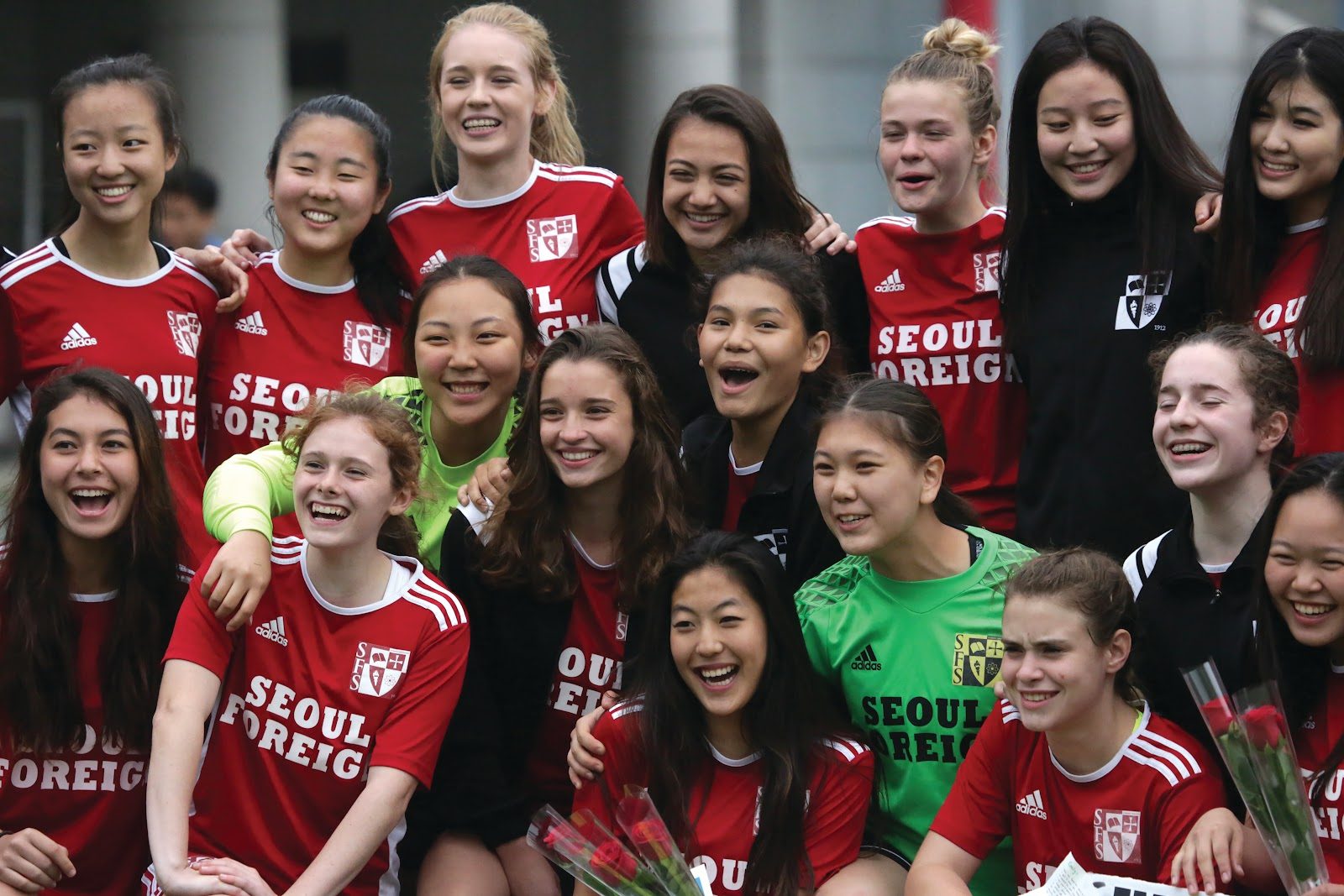
Seoul Foreign School
Seoul · South Korea
Founded in 1912 beside Yonsei University, first in Korea to adopt the IB, blending British, American and Clan-house traditions.
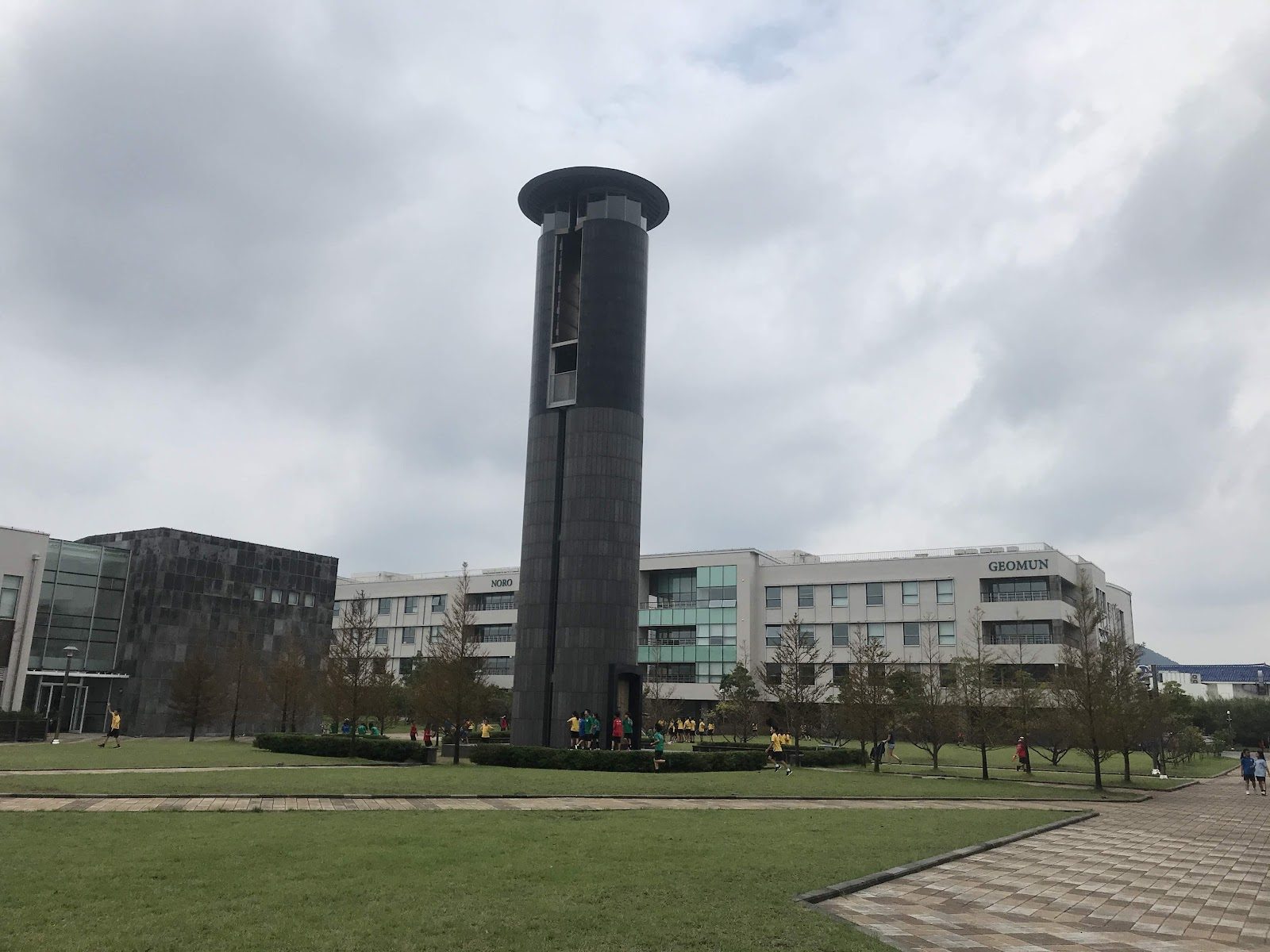
North London Collegiate School Jeju
Jeju · South Korea
Founding school of Jeju's Global Education City, blending a 170-year London pedigree with strong IB results and seven boarding houses.
Korea International School
Seongnam · South Korea
In Seongnam's Pangyo tech corridor, a dual IB-American track anchors a curriculum built around 24 Advanced Placement courses.
Chadwick International
Incheon · South Korea
One school, two continents: this Songdo campus mirrors a 1935 California founder, pairing IB rigor with mandatory outdoor-education expeditions.
Same country and curriculum — closest matches within ±10 points either way