
Gyeonggi Province
In Seongnam's Pangyo tech corridor, a dual IB-American track anchors a curriculum built around 24 Advanced Placement courses.
Photo © Michael Jang via Google Maps
Type
Day
Ages
3–18
Curriculum
IB · American
Ratio
7:1
The Verdict
Editor's commitment
Right for
Families in Seongnam who want a day school for ages 3–18 with IB plus an American track and a 7:1 ratio.
Wrong for
Parents chasing boarding, a religious ethos, or a single-curriculum school; Korea International School is non-religious, day-only, and dual-track.
Watch out for
The average annual day fee is $31,752, and IBO accreditation does not fix the usual dual-pathway question: which route fits your child best.
Ranking breakdown
Korea International School · # of 1591
Composite score 74.4. 8 weighted criteria.
By criterion
Academic Outcomes
Weight 20%
#260
of 1529 scored
University Placement
Weight 16%
#59
of 1529 scored
Prestige & Heritage
Weight 12%
#369
of 1571 scored
Alumni Network
Weight 12%
#231
of 1530 scored
Facilities
Weight 12%
#188
of 1534 scored
Transparency & Communications
Weight 8%
#288
of 1532 scored
Peer & Industry Review
Weight 10%
#322
of 1548 scored
Admissions Selectivity & Demand
Weight 8%
#760
of 1529 scored
Score history
Korea International School · 2026
Movement across 2024–2026. Peer average overlaid.
Overall — 2024–2026
74.4/ 100
▲ +37.3 vs 2025
year on year
Peer & Industry Review
How Korea International School is regarded in the sector
63
Respected · low confidence
Korea International School (Seongnam) is consistently listed among the top handful of international schools in South Korea alongside Seoul Foreign School and Seoul International School, and appears in ISC Research and Good Schools Guide International type directories covering the Korean international school market. It has a solid alumni base feeding into competitive US/UK universities and is well regarded in expat parent forums (e.g., Facebook expat groups, InterNations threads on Seoul-area schooling), but it lacks the broader specialist press coverage (Tatler, Sunday Times School of the Year) or globally recognized alumni profile that would place it in the top tier.
Evidence sources
Editors' overview
Set in Seongnam’s Pangyo tech corridor, Korea International School has a clearer academic identity than many “international” schools that try to be all things at once. The proposition is straightforward: an English-medium day school for ages 3 to 18, founded in 2000, with a dual IB-American structure and a strong applied-learning bent. The school traces its Pangyo campus to 2006 and says it now houses 1,200 students there. The standout operational number is the 7:1 student-teacher ratio, which points to real access to adults rather than mass-market scale. IBO accreditation matters here too: it gives the IB side of the offer formal weight rather than leaving it as a decorative label.
What puts KIS on a serious parent shortlist is the combination of academic range and institutional focus. The school’s own account is explicit about inquiry-based, transdisciplinary teaching, makerspaces and a strong STEM emphasis, and that fits its location in South Korea’s most strategically placed technology corridor. Plenty of schools talk about innovation; fewer tie that language to a coherent PK–12 campus structure, an established history in Korea, and a curriculum that spans both IB and American routes. The average annual day fee is $31,752, which places KIS in the premium bracket but not at the outer edge of international-school pricing for an all-through school of this type. If there is a weakness, it is disclosure: the school does not publish hard public data here on aggregate AP or IB results, university destinations by numbers, or cohort outcomes. Parents who want forensic outcome data will need to ask for it directly.
The right student for KIS is one who thrives in a structured, high-expectation environment and wants breadth without sacrificing academic seriousness. This suits internationally minded Korean families, expatriate families who want continuity in English, and students who are strong in STEM but do not want a narrow specialist school. It also suits children who benefit from close teacher attention, as the 3–18 age range and 7:1 ratio give the school room to know pupils properly across the full ladder. Less convincing for families seeking a loose, progressive atmosphere or a visibly arts-first identity: the school’s centre of gravity sits with applied learning, academic competence and deliberate ambition, not pastoral theatre. For the right child, that is a real strength.
Academic Performance
Korea International School has academic ambition, but its public exam disclosure is thin where it matters most. The school foregrounds applied learning, STEM, and partnerships and exchanges, yet it does not publish the hard outcome data that lets parents place it cleanly against direct competitors: no aggregate AP score profile, no full IB results summary, no subject-by-subject breakdowns, no cohort-level university destination table. That is a real weakness in a market where serious families compare schools on external benchmarks, not mission language. The presence of 24 AP courses points to breadth at the top end and signals a school aiming at selective university pathways, but course count is not result quality. Without published score distributions or pass rates, parents cannot judge how deeply that provision translates into attainment.
Relative to peers, KIS sits in the group of academically serious international schools that expect to be judged as high performers but do not make enough of the evidence public. That does not put it in the weak tier; it puts it in the opaque tier. The school’s low staffing ratio and long-standing college-going narrative support the case for strong academic support, and the dual-track structure gives able students multiple routes through senior school. Even so, schools that publish average IB points, top AP outcomes, and destination patterns hold the stronger hand in any like-for-like comparison. At KIS, the academic offer is clear. The proof is not.
Facilities
Korea International School’s facilities story centres on spaces built for doing, not display. The school puts real weight behind makerspaces, design thinking and applied learning, and that matters more than a glossy atrium or resort-style sports pitch. In a market where many international schools promise innovation and then deliver a standard classroom estate with a robotics club attached, KIS gives stronger signs of practical academic infrastructure. The reference to engineering workshops with MIT students also points to labs and project spaces that can support serious hands-on work rather than token STEM branding. For families prioritising science, technology and build-based learning, that is a meaningful advantage. Add the Pangyo campus’s 1,200-student scale and the picture is of a school large enough to sustain specialist rooms and co-curricular breadth without tipping into the anonymous mega-campus category.
Sport and activities also get credible backing. Membership in KAIAC and AISA only means something if a school has the courts, pool access, rehearsal space and staffing to field teams and groups across seasons; KIS lists a wide spread from cross country and swimming to orchestra, choir, Model United Nations and forensics. That breadth compares well with serious peer schools in Korea, though the school does not publish the kind of detailed facilities inventory that top operators use to prove the point. Parents can infer a well-equipped, academically functional campus. They cannot yet verify whether the arts and sports provision matches the stronger STEM story room for room.
Korea International School has academic ambition, but its public exam disclosure is thin where it matters most
Prestige
Korea International School carries solid regional prestige rather than old-money cachet or global-brand magnetism. Its status rests on three things: a long-established foothold in Korea’s international-school market, a campus in a high-achieving professional enclave, and a senior-school programme with real breadth, including 24 AP courses. That combination matters to ambitious local and expatriate families who want academic seriousness without buying into a school that trades on inherited mythology. The school also benefits from external institutional ties that sharpen its profile: WASC accreditation, CIS membership with accreditation in progress, and membership networks such as EARCOS, WLSA, KAIAC and AISA. None of that creates automatic elite standing, but it does place KIS inside the recognised architecture of international schooling in Asia.
I rate its prestige as strong but not untouchable. The school has enough substance to command respect, and the 7:1 staffing ratio adds weight because it signals resources, not just rhetoric. Yet prestige at the top end is built on public proof: standout IB or AP outcomes, heavily oversubscribed admissions, and destination data that hold up under scrutiny. KIS does not publish that evidence in a hard-edged way. That keeps it in the credible, serious, premium bracket rather than the rarefied one. Parents will find a school with standing, ambition and reach. They will not find a school whose prestige speaks for itself.
Korea International School’s facilities story centres on spaces built for doing, not display
Communications
Korea International School communicates in a polished, institutional register that does the core job well. The public-facing site is orderly, easy to navigate and clear about mission, values, safeguarding and co-curricular life. Parents can find the school’s stated priorities without wading through clutter, and the emphasis on student support and school-home partnership is explicit rather than buried. The strongest point is structure: key sections are sensibly grouped, and the school gives families a usable overview of how it thinks about learning, wellbeing and community. That matters in a large all-through school, where weak communication quickly turns into confusion. The weakness is not style but proof. The school talks fluently about growth, authenticity, service and innovation, but public communication stays at the institutional level when many parents want sharper operational detail.
That gap limits trust. KIS does not publish enough hard performance data, and that affects communications as much as academics: if a school offers 24 AP courses, parents also need clean reporting on outcomes, pathways and comparative results. The affiliations and partnership references add texture, but they do not answer the practical questions families ask when fees average $31,752 a year. How consistent is reporting across divisions? How much direct access do parents get to teachers and leaders? What does assessment communication look like in practice? The school does not answer those points publicly. My verdict: competent, controlled, and incomplete communication — strong on message discipline, weaker on candour, and short of the hard-edged transparency top-tier parents expect.
Uniqueness
What sets Korea International School apart is not a generic “global” pitch but a deliberate dual-track academic structure backed by unusual senior-course breadth. Few schools in Korea give families a genuine choice between IB and an American route while also offering 24 AP courses. That matters in practical terms. Students do not need to force themselves into a single mould at the point when university planning starts to bite. A child aiming for a broad liberal-arts trajectory, a selective US application profile, or a more internationally standardised pathway has room to build an academic programme that fits the target. The school’s long-running emphasis on inquiry, design thinking, makerspaces and applied learning gives that structure more than administrative value; it pushes students towards doing serious work, not just collecting credentials.
The other distinctive feature is cultural. KIS was founded to serve both Korean and international students, and that produces a different atmosphere from schools built around a transient expatriate population. For students, that mix can be demanding in the right way: higher academic pressure, stronger continuity, and classmates with roots in the country as well as outward-facing ambitions. Add the low staffing ratio and the result is a school that can combine scale with real adult access. The upside is clear: strong academic scaffolding, credible stretch for able students, and a community less socially weightless than many international schools. The trade-off is clear too. This is not a soft-focus, laissez-faire campus. It is built for families who want structure, seriousness and options.
Korea International School carries solid regional prestige rather than old-money cachet or global-brand magnetism
Student Profile
The best fit at Korea International School is a student who wants structure, pace and clear academic purpose. This is not the place for a child who needs a loose day, light demands or constant pastoral cushioning. It suits self-directed pupils who can handle expectation, meet deadlines and use close access to teachers well. The low 7:1 staffing ratio gives quieter, serious students room to be known without needing to fight for attention, and it also helps highly driven children who want regular feedback and stretch. The strongest fit is the child who likes building things, solving problems and learning by application rather than by passive recall; the school’s emphasis on design thinking, makerspaces and STEM gives that profile real traction.
Socially, KIS fits families who want an English-medium international education without the social drift that can mark transient expatriate schools. Its intake was built for both Korean and international students, and that mix tends to produce a community with higher academic voltage, firmer roots and less tolerance for coasting. Students who do well here are resilient, organised and comfortable in a setting where ambition is normal. Sixth-form pupils with a strong appetite for academic choice also benefit from the breadth of 24 AP courses. The weaker fit is the child whose main identity is artistic rebellion, relaxed experimentation or a soft-edged school culture. KIS has warmth, but its centre of gravity is disciplined aspiration.
Korea International School communicates in a polished, institutional register that does the core job well
Co-curricular strengths
Arts & sport, on a separate axis
Overall 8.1/10
Scored 0-10 from the school's own published evidence. This axis is editorial-only — it does not feed the main WTS ranking.
Sports
8.5/10
Basketball, Soccer, and Volleyball in extracurriculars.
Drama
8/10
Drama Productions, which is explicit evidence of drama.
Dance
7/10
Music
8.5/10
Jazz Band and Choir Ensemble in extracurriculars.
Visual Arts
8.5/10
Specialist art rooms, which implies some visual arts provision, but there is no explicit visual arts programme, club, exhibition, or department described.
Editor first-pass · editor-reviewable · 7/27/2026
WTS 300 badge
2025/26 editionKorea International School is one of the World's Top 300 Schools for 2025/26. Claim your listing to add it to your site →
Strengths
- +Offers a full IB continuum (PYP in elementary, MYP in middle school, and the IB Diploma Programme in Grades 11-12) alongside an American high-school diploma and AP courses, giving families a choice of pathway.
- +Accredited by the Western Association of Schools and Colleges (WASC), and is a Council of International Schools (CIS) member school currently pursuing full CIS accreditation.
- +Small class sizes of around 20 students, with foreign-language options including Korean, Spanish, Mandarin and French depending on grade level.
- +Located in Pangyo Techno Valley in Seongnam, a planned suburban tech and business district south of Seoul that is a major hub for the expat and multinational-employee community.
- +Follows a familiar American academic calendar (mid-August to mid-June) with a standard 8am-3pm school day plus after-school clubs and sports.
Considerations
- −Enrolment eligibility is restricted: entry to the Seongnam (Pangyo) campus is generally limited to foreign passport holders or Korean nationals who have lived abroad for an extended period, shutting out most local Korean families.
- −CIS accreditation is still in process rather than fully secured, so the school's accreditation portfolio is not yet as complete as some regional peers.
- −High-school admission is described as highly competitive, with waiting lists reportedly running from several months to well over a year at popular grade levels.
- −As a fee-charging international school in the Seoul metropolitan area, costs are a significant consideration for relocating families and should be confirmed directly with the school rather than assumed from third-party estimates.
Availability
Primary entry gate & tests
Academic Record
Gallery
Photo © Michael Jang via Google Maps
Photo © Waseem. Khardawi via Google Maps
Photo © Je Young Yoo via Google Maps
Photo © Charice Aruta via Google Maps
Photo © 무르익은하늘 via Google Maps
Photo © Lucy M via Google Maps
Photo © Lucy M via Google Maps
Photo © Zheila Lomibao via Google Maps
Parent reviews
Have you sent your child here?
Voice reviews carry the strongest trust badge — we transcribe them for you to tidy up before they go live. Prefer to type? A written review is fine too.
Add your voice
In 60 seconds, tell other parents: what's the best thing about Korea International School, and what surprised you when your child joined?
We ask for a Google sign-in so every review has a real face behind it — no anonymous drive-by attacks on schools, and no faked positive reviews. Your email is never shown publicly.
Send this profile to a friend
International parents rely on word-of-mouth. Share this review with someone weighing the same decision.
Schools with places
Similar schools to Korea International School with places available now.
Seoul Foreign School
Seoul · South Korea
- 2026-27
- WAITPOOLSpace-dependent
- 2027-28
- PLACES OPENRolling
North London Collegiate School Jeju
Jeju · South Korea
- 2026-27
- WAITPOOLVacancy-dependent
- 2027-28
- PLACES OPEN
Chadwick International
Incheon · South Korea
- 2026-27
- CLOSEDStandard route closed
- 2027-28
- OPENS SOONInfo mid-Oct '26 / dates TBC
Availability first, then country, area, curriculum, price, co-curricular
Consider also
Also worth looking at alongside Korea International School.
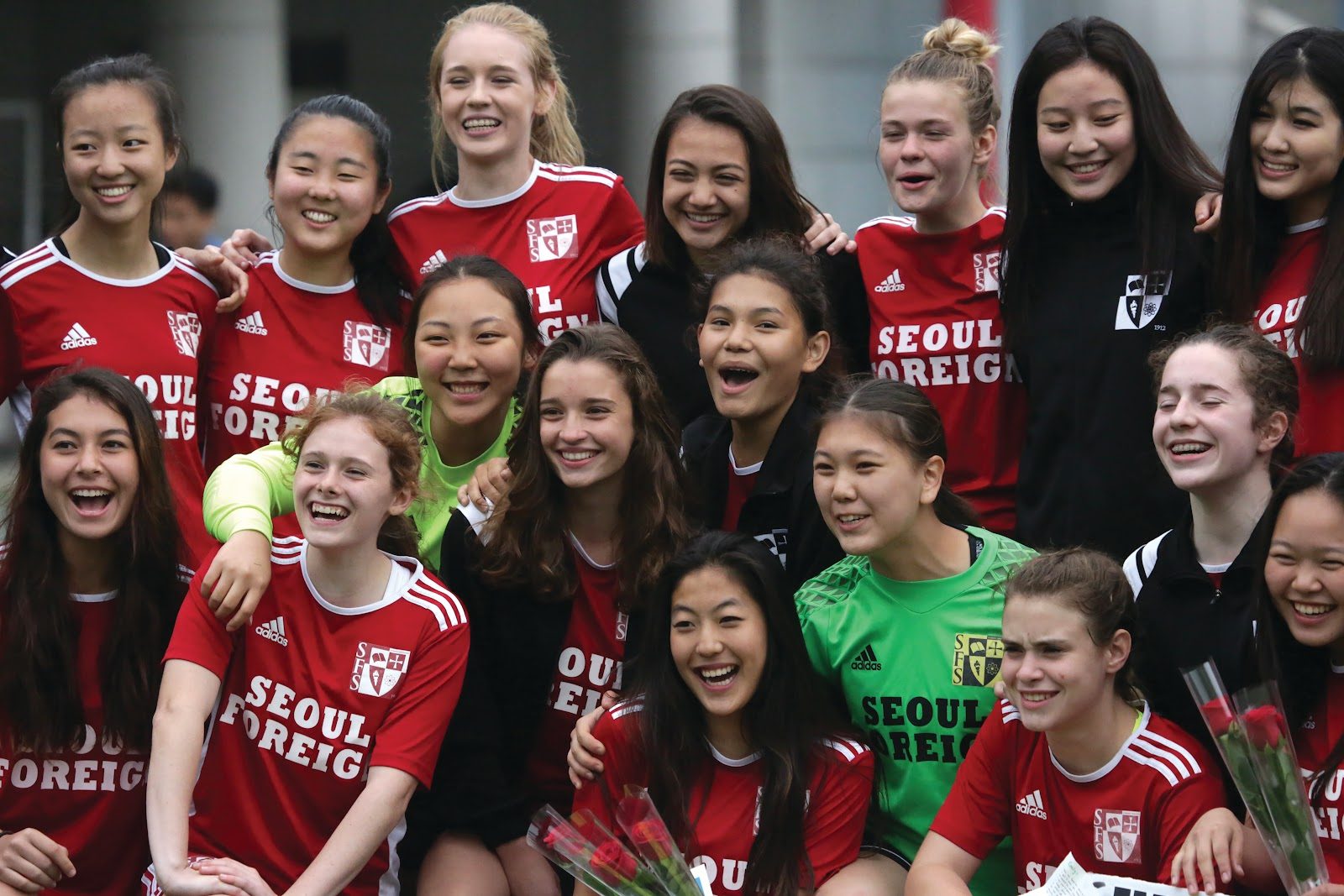
Seoul Foreign School
Seoul · South Korea
Founded in 1912 beside Yonsei University, first in Korea to adopt the IB, blending British, American and Clan-house traditions.
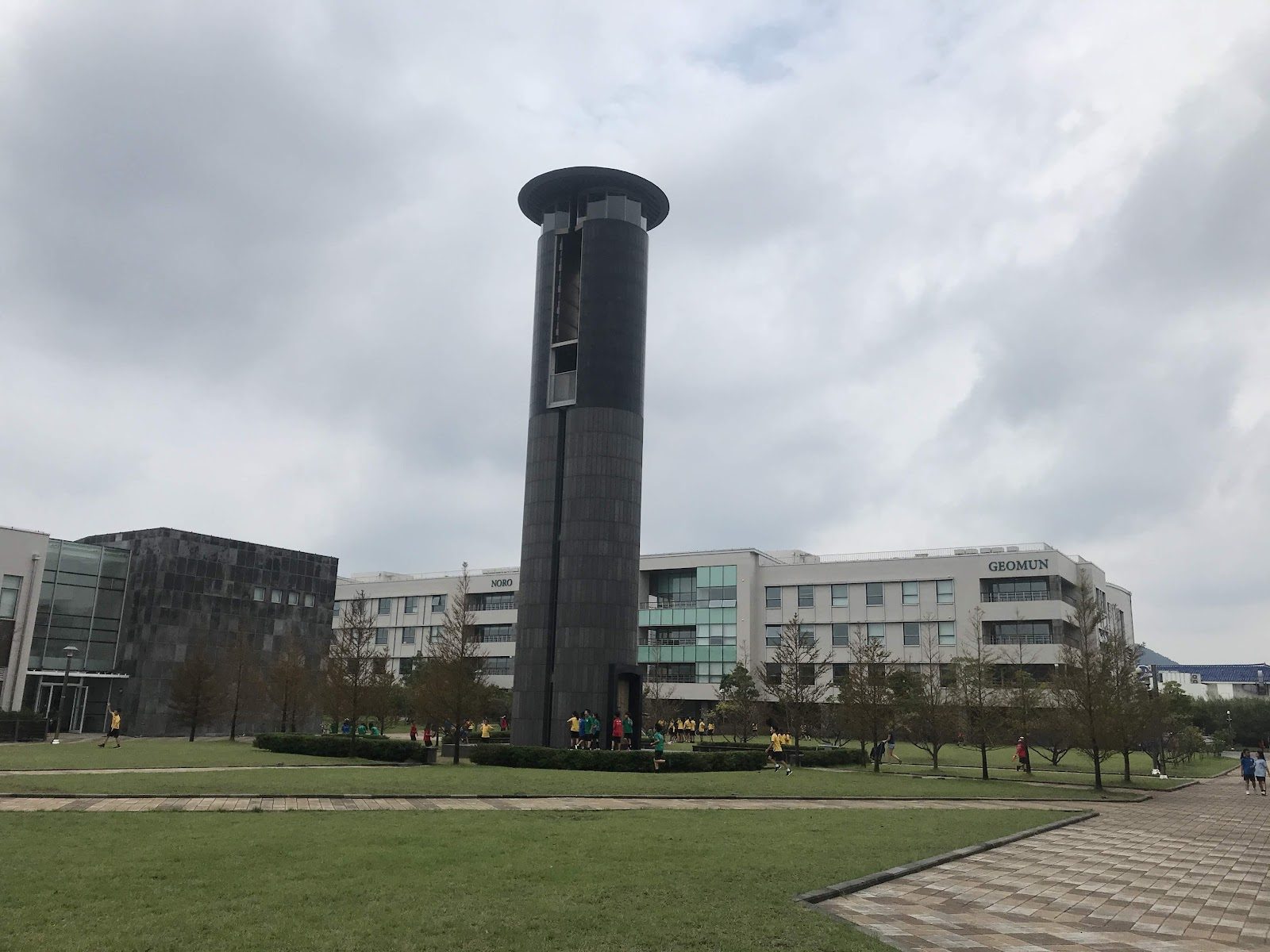
North London Collegiate School Jeju
Jeju · South Korea
Founding school of Jeju's Global Education City, blending a 170-year London pedigree with strong IB results and seven boarding houses.
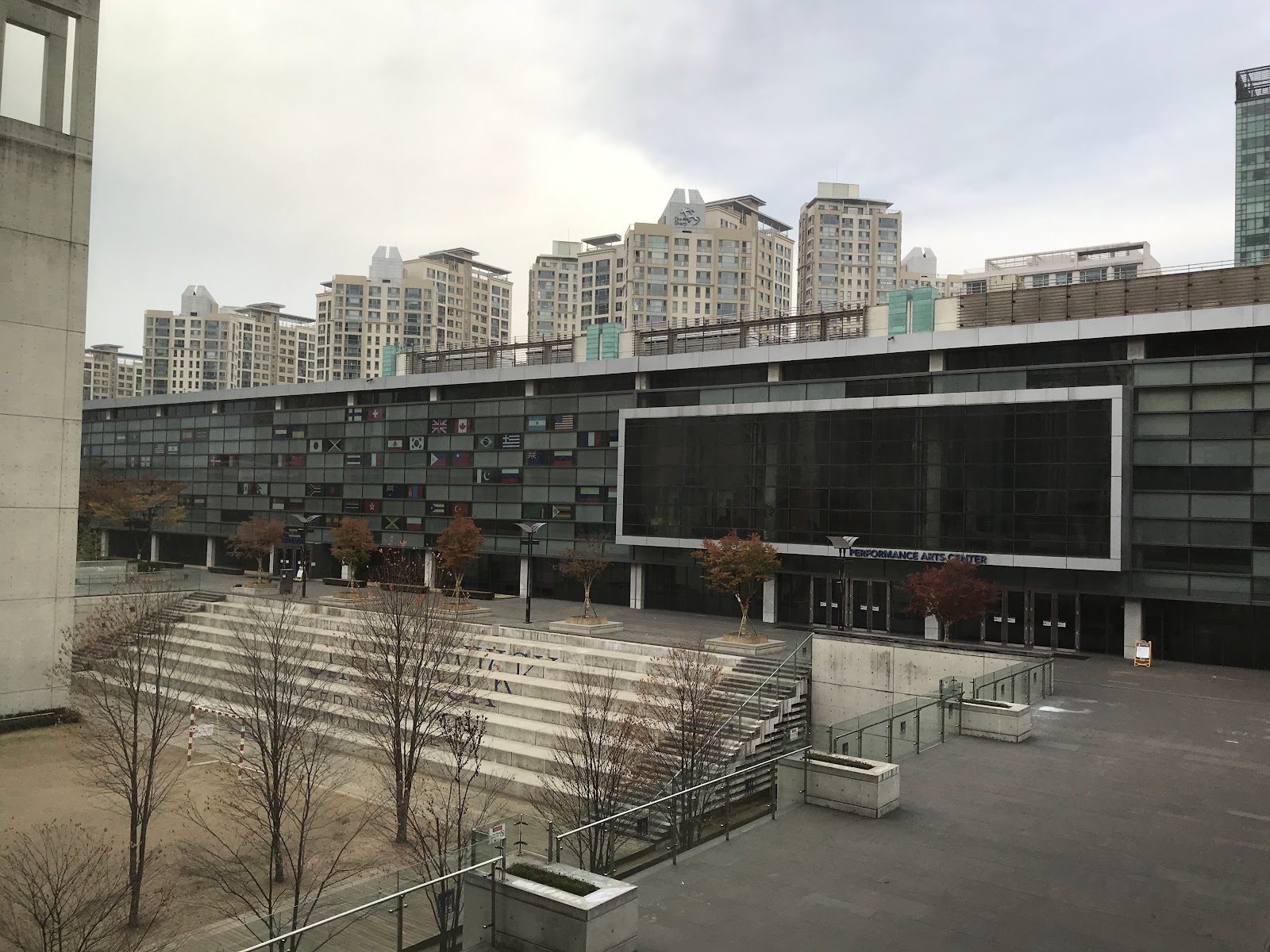
Chadwick International
Incheon · South Korea
One school, two continents: this Songdo campus mirrors a 1935 California founder, pairing IB rigor with mandatory outdoor-education expeditions.
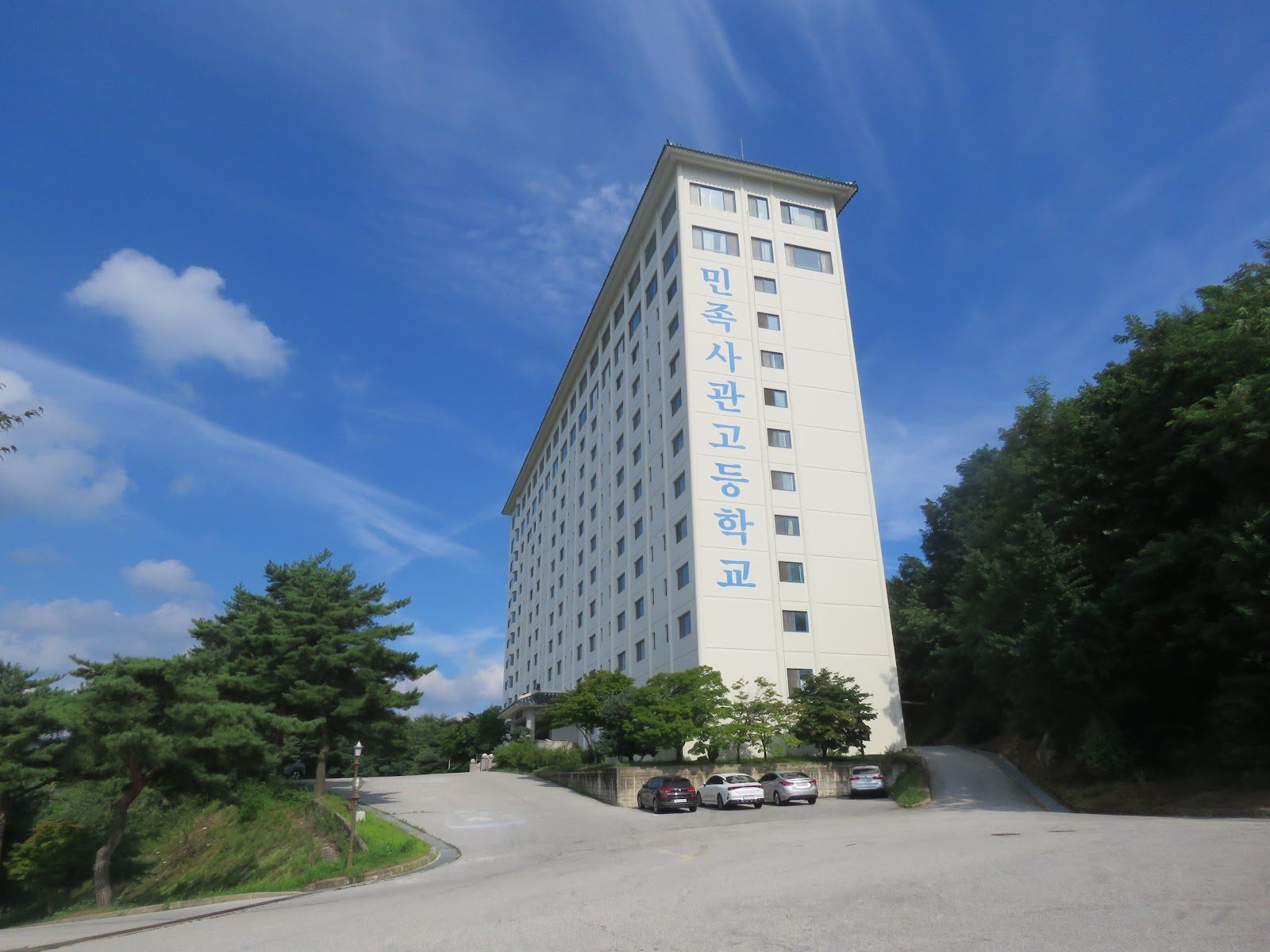
Korean Minjok Leadership Academy
Hoengseong · South Korea
On a Gangwon mountainside, hanbok-uniformed students hold English-only seminars, chasing an IB curriculum built to rival Eton.
Same country and curriculum — closest matches within ±10 points either way