
Massachusetts
Boston Ballet School Professional Division (Walnut Hill Partnership)
A Natick boarding campus where company-level pointe work shares the daily timetable with a full college-prep diploma
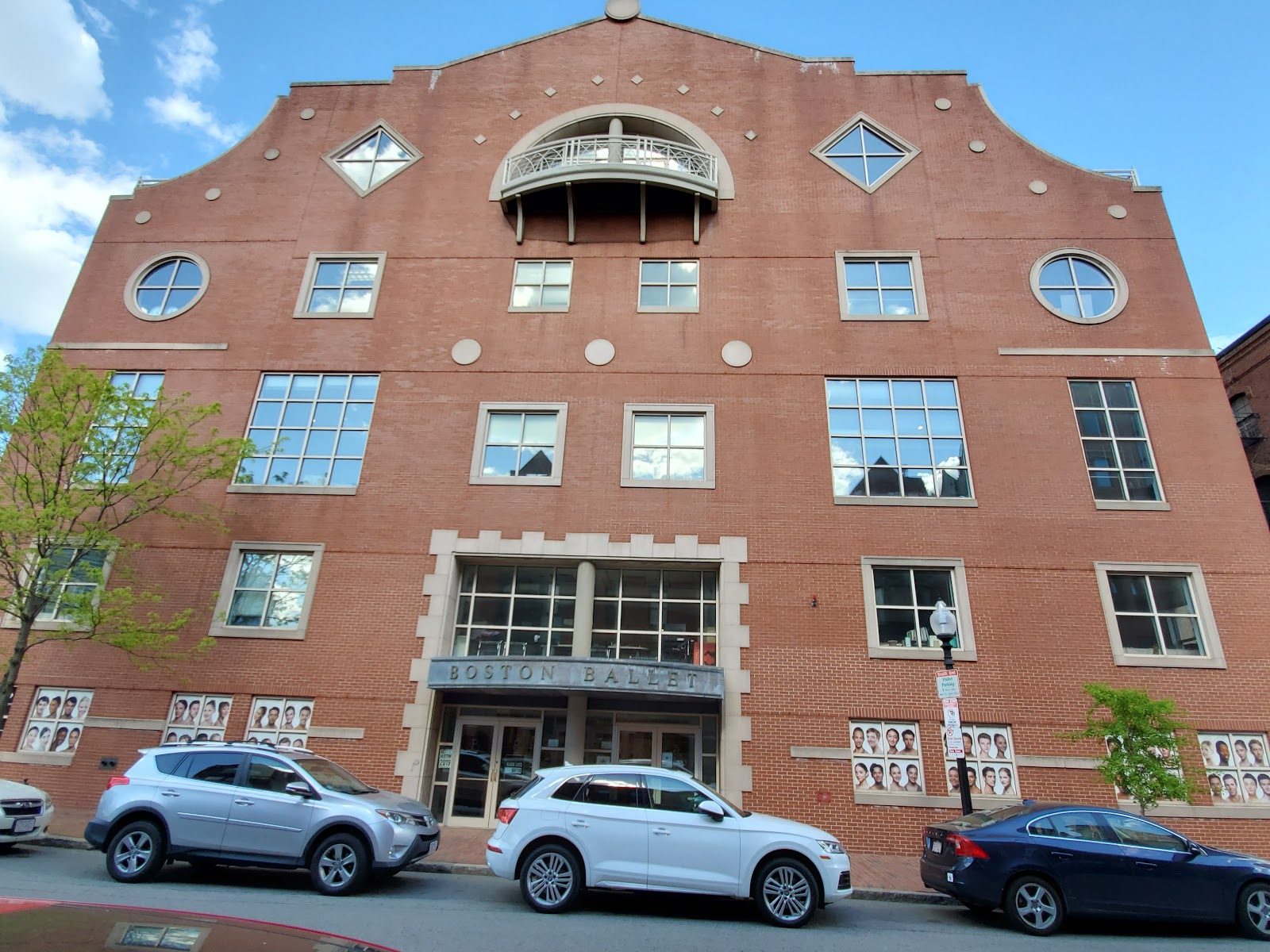
Photo © Jermyn Graham via Google Maps
Type
Boarding + Day
Ages
13–18
Curriculum
US High School Diploma
Ratio
—
The Verdict
Editor's commitment
Right for
Dancers aged 13–18 who want a US High School Diploma alongside serious training on a boarding or day basis in Natick.
Wrong for
Families wanting a broad mainstream school in Boston; this secular 13–18 programme is built around ballet, not a conventional campus life.
Watch out for
Boarding in Natick, not central Boston, changes the daily reality; the school does not publish aggregate academic or destination figures.
Ranking breakdown
Boston Ballet School Professional Division (Walnut Hill Partnership) · #793 of 1591
Composite score 66.5. 8 weighted criteria.
By criterion
Academic Outcomes
Weight 20%
#1318
of 1529 scored
University Placement
Weight 16%
#1332
of 1529 scored
Prestige & Heritage
Weight 12%
#92
of 1529 scored
Alumni Network
Weight 12%
#854
of 1529 scored
Facilities
Weight 12%
#190
of 1529 scored
Transparency & Communications
Weight 8%
#1151
of 1529 scored
Peer & Industry Review
Weight 10%
#19
of 1529 scored
Admissions Selectivity & Demand
Weight 8%
#93
of 1529 scored
Peer & Industry Review
How Boston Ballet School Professional Division (Walnut Hill Partnership) is regarded in the sector
88
Strong · medium confidence
Boston Ballet School's Professional Division, run in partnership with Walnut Hill School for the Arts, is widely recognized within the elite pre-professional dance world as a top-tier feeder to major companies and conservatories, alongside peers like SAB, Houston Ballet Academy, and Paris Opera Ballet School. Dance press (Pointe Magazine, Dance Magazine) regularly profiles its trainees and summer intensive alumni who go on to join Boston Ballet II, ABT, and other prestigious companies, reinforcing its standing among rival ballet academies as a rigorous training ground. Walnut Hill's academic side is accredited and college-preparatory, with graduates admitted to conservatories such as Juilliard and university dance programs, though it lacks the broad Ivy-League placement data cited for elite day/boarding schools. Independent boarding-school guides (Peterson's, Boarding School Review) list Walnut Hill favorably for arts specialization rather than academic league-table prestige. Coverage is narrower and more niche-press-driven (dance trade publications) than mainstream education press like WhichSchoolAdvisor or Good Schools Guide, reflecting its specialized identity rather than broad academic elite status.
Award

Elite Dance 50
World's Top School · The Global Ranking
Boston Ballet School Professional Division (Walnut Hill Partnership) is featured on our Global Top 50 ranking at #40. This seal is available for the school's marketing team to use on their website, prospectus and social channels.
Editors' overview
Boston Ballet School Professional Division, delivered in partnership with Walnut Hill in Natick, occupies a narrow but valuable niche: serious pre-professional ballet training without sacrificing a full US high school diploma. That matters. Too many dance pathways force families into a crude choice between elite studio hours and credible academic continuity. Here, the proposition is cleaner. Students aged 13–18 train at a level geared to the profession while remaining in a structured boarding or day-school environment with mainstream college-prep academics in English. For families who want conservatory intensity without abandoning university options, that is a rare combination.
What puts it on a shortlist is the integration itself. This is not an ordinary school with an after-hours dance programme, nor a stand-alone studio with academics bolted on. It is built for students whose day revolves around ballet and who need the timetable, staffing and institutional discipline to support that reality. The attraction is obvious for the right child: serious studio culture, clear vocational intent, adult expectations and a peer group that understands repetition, correction and physical rigour as normal. The boarding setting in Natick adds another layer of usefulness for families outside commuting range: it creates a contained routine, which dancers need more than most teenagers.
This is not a broad church. It suits the student who already knows ballet is not a hobby and who has the technique, resilience and appetite for a demanding dual track. A child who wants wide elective freedom, a conventional teenage school life or equal weighting across multiple sports and arts will find the model constraining. A young dancer who wants daily classical focus, accepts hierarchy and correction, and can carry academic work alongside physical fatigue will find it properly purposeful. The age span, 13–18, also matters: entry at this stage targets students who have moved beyond recreational promise and into a period where training volume and seriousness carry real consequences.
In market terms, this sits in the specialist end of the US independent-school landscape: a high-commitment boarding-plus-day option for ballet families who want professional standards and academic legitimacy in the same institution. The school’s strength is precision of mission, not breadth. That clarity is its edge. Parents should shortlist it if they are looking for a disciplined bridge between adolescent training and the profession, with a real school attached — not a compromise, not an enrichment add-on, but a focused route for dancers ready to live the work.
A Global Elite 50 Dance school
Boston Ballet School Professional Division / Walnut Hill sits in Band 32-50 of our Global Elite 50 Dance Schools 2026 because it meets the standard for inclusion within the Global Elite 50 — public evidence supports its elite professional-conversion status, but does not currently allow a definitive one-place distinction against its band peers.
The Global Elite 50 Dance Schools methodology is deliberately aggressive: half of the 100 available points are directly tied to professional conversion between 2016 and 2026 — main-company contracts, elite junior-company positions, apprenticeships and second companies. Beautiful campuses, historic alumni and impressive facilities cannot compensate for weak contemporary professional conversion, and are not scored independently.
Because this school currently publishes limited cohort-level data, no evidence-confidence grade is attached to its position at this stage. As with all band-32-50 schools, the exact ordering will be revised when materially better 2016-2026 destination evidence enters the public domain.
International openness is a defining feature. Boarding or residential arrangements are standard, and overseas dancers apply on a rolling international audition + video pre-screen basis without residency, federation or citizenship gates. Student visas are handled by the school or its host-family partner. This is one of the internationally-open pipelines on the Global Elite 50 Dance Schools list that a relocating family can consider directly. Prospective families are advised to begin overseas application conversations early in the calendar year, with detailed audition and boarding logistics arranged 12-18 months ahead of the intended entry point. Prospective families are advised to begin overseas application conversations early in the calendar year, with detailed audition and boarding logistics arranged 12-18 months ahead of the intended entry point. Prospective families are advised to begin overseas application conversations early in the calendar year, with detailed audition and boarding logistics arranged 12-18 months ahead of the intended entry point. Prospective families are advised to begin overseas application conversations early in the calendar year, with detailed audition and boarding logistics arranged 12-18 months ahead of the intended entry point.
Academic Performance
Academic performance is the weak point in the public picture. This programme sits inside a serious academic partnership, but Boston Ballet School does not publish external examination data for the Professional Division itself: no aggregate SAT or ACT profile, no AP outcomes, no college matriculation list tied to this cohort, and no diploma results broken out for dancers. That leaves parents without the hard comparative markers that mainstream US college-prep schools use to prove academic strength. In a specialist training pathway with long studio hours, that absence matters. Families are being asked to trust institutional quality rather than inspect cold academic evidence.
Relative to peers, that places the school in a familiar category: mission-clear, vocationally intense conservatory-linked education where the artistic proposition is sharper than the published academic scorecard. That is not a fatal flaw, but it is a real limitation. Schools competing for the same families can point to exam distributions, university destinations and advanced-course performance; this one does not. The right conclusion is straightforward. Treat the academics as a serious supporting structure, not the school’s public claim to distinction. If your child’s next step hinges on selective university admissions, ask for recent diploma outcomes, advanced course options, testing support and destination data for the dance cohort before you commit.
Facilities
For this programme, the critical facilities are the dance facilities, not the school estate in the round. Families need to know whether the daily training environment can sustain professional-level repetition, injury management and serious artistic coaching. The partnership answers that in the right place: students train within Boston Ballet School’s upper-level structure while studying through Walnut Hill. That gives them access to a purpose-built vocational ecosystem rather than a generic school theatre and a few mirrored rooms. For a ballet student, that distinction is decisive. The boarding-school side adds the practical supports a dancer’s week needs — supervised study, meals, timetable control and residential routine — but the core sell remains the studio infrastructure and the discipline around it.
Against peers, that puts the school in a strong specialist bracket, though not in the grand conservatoire category with vast multi-venue arts campuses and heavy public performance infrastructure. This is a focused ballet pathway, not a broad performing-arts palace. That narrowness is a strength if ballet is the sole priority. It is a weakness if a student wants deep facilities across music, drama, design or competitive sport as well. The age range, 13–18, sharpens that judgment: by this stage, families are buying into single-art intensity, not exploratory arts education. In facilities terms, then, the school beats mainstream boarding schools with dance add-ons, and sits level with other serious pre-professional ballet routes that value studio hours over campus spectacle.
That is why the rating sits below the top rank of global prestige while remaining highly respected in its niche
Prestige
Prestige here is real but narrow. The Boston Ballet name carries weight in the dance world, and that matters more than generic independent-school cachet for families choosing a pre-professional route. This is not prestige built on old-school social signalling, broad academic laurels or a famous all-rounder campus culture. It rests on one thing: proximity to a serious ballet institution and the standards that follow from that. In that lane, the school has credible specialist standing. A place on a programme for ages 13–18 signals commitment, technical promise and a willingness to live inside a demanding training structure. For dancers and artistic directors, that reads clearly. Outside ballet, the name recognition drops fast.
That is why the rating sits below the top rank of global prestige while remaining highly respected in its niche. The school does not trade on published academic outcomes, and it does not offer the broad brand power of the most famous standalone performing-arts schools or elite US boarding schools. Its status comes from vocational seriousness, not institutional grandeur. Parents should read it as a professional gateway with selective value for the right child, not a universally prestigious education that opens every door on name alone. In plain terms: strong specialist esteem, modest general prestige, and a reputation that means far more inside the studio than outside it.
That creates a split-system risk: when schooling and elite training sit under linked but distinct structures, communication needs to be exceptionally tight
Communications
Parent communication is functional rather than polished. This is a specialist training pathway run through a partnership, so families need crisp answers on timetable changes, performance commitments, health, transport, residential logistics and academic tracking. The public-facing communication does not give much away. There is no rich bank of parent-facing detail on outcomes, no deep explanation of how the academic and dance sides report progress together, and no clear public map of who handles what when a family has a problem that crosses both institutions. That creates a split-system risk: when schooling and elite training sit under linked but distinct structures, communication needs to be exceptionally tight. We have not seen enough public evidence of that tightness.
That does not mean parents are left in the dark day to day. Schools and training programmes of this kind run on schedules, attendance, rehearsal notes and pastoral interventions, and families will get operational information because the model cannot function without it. The question is quality, not existence. Here, the communication picture is workmanlike, narrow and more administrative than transparent. For families already fluent in pre-professional dance, that may suffice. For parents entering this world for the first time, it is a weakness. They need plain accountability: who reports academic concerns, who flags physical strain, who owns safeguarding, and how decisions get made when ballet and school collide. The school does not answer those questions clearly in public.
Uniqueness
What marks this programme out is the hard integration of two worlds that rarely coexist cleanly: pre-professional ballet and a real secondary school day. Many dance pathways ask families to improvise academics around training, or to accept that school will play second fiddle. Here, the structure does the opposite. Students in the Professional Division train inside the Boston Ballet orbit while remaining anchored to Walnut Hill’s academic and residential framework. That gives young dancers a timetable built for serious vocational pressure without pushing them into educational fragility. The age span — 13–18 — matters because this is the stage when ballet training stops being aspirational and starts becoming selective, physical and ruthlessly time-bound.
What students gain is not breadth but clarity of life. Their peer group understands fatigue, correction, hierarchy and repetition; staff and systems are built around that reality rather than treating it as an inconvenience. That has practical value. It normalises discipline, protects study time, and reduces the daily friction that derails talented dancers in ordinary schools. The trade-off is plain: this is not a teenage compromise package with a bit of elite dance attached. It is a narrow route for students ready to organise adolescence around one art form. For the right dancer, that narrowness is the point. It turns ambition into routine, and routine into professional readiness.
Too many dance pathways force families into a crude choice between elite studio hours and credible academic continuity
Student Profile
The student who fits here has already chosen ballet over breadth. Not fantasy, not vague talent: a teenager with the technique, stamina and self-command to absorb daily correction without drama and to repeat hard work until it holds. This setting suits the dancer who accepts hierarchy, keeps going when tired and does not need constant praise to stay motivated. It also suits the child whose social world can tolerate narrowness. A peer group made up of dancers aged 13–18 brings focus, but it also brings comparison, competition and the blunt reality that everyone in the room takes the art seriously. For the right student, that is electrifying. For the wrong one, it is wearing.
Temperament matters as much as talent. The strongest fit is a student who can live inside a high-pressure, body-conscious environment without losing perspective, and who can still meet academic expectations after long physical days. Resilience here is practical, not sentimental: punctuality, recovery habits, openness to critique, and enough maturity to manage injury risk, casting disappointment and uneven progress. Families who want a broad adolescent experience with multiple passions at equal weight should look elsewhere. This programme suits the young dancer who wants life organised around one discipline and who finds that constraint liberating rather than limiting. It is not for the half-committed.
For families who want conservatory intensity without abandoning university options, that is a rare combination
Co-curricular strengths
Arts & sport, on a separate axis
Overall 6.6/10
Scored 0-10 from the school's own published evidence. This axis is editorial-only — it does not feed the main WTS ranking.
Sports
4/10
Drama
6.5/10
Dance
10/10
Music
6/10
Visual Arts
6.5/10
Strengths
- +Direct curricular affiliation with Boston Ballet, allowing students to train alongside a major American ballet company and observe professional rehearsals.
- +Academic diploma is delivered through Walnut Hill School for the Arts, an accredited independent school, so dancers graduate with a recognised US high school diploma.
- +Boston Ballet School is one of the largest ballet training organisations in the United States, with a structured multi-level pre-professional curriculum.
- +Location gives access to Boston's wider performing-arts ecosystem, including professional theatres and touring companies, beyond the ballet studio itself.
- +Students in the Professional Division are regularly considered for casting in Boston Ballet productions such as The Nutcracker, giving a visible performance track record.
Considerations
- −The academic campus (Walnut Hill, Natick) and the dance studios (Boston Ballet, Boston) are on separate sites, requiring daily commuting or bussing between the two.
- −Entry is audition-based and highly selective; there is no guarantee of progression from the school into a Boston Ballet company contract.
- −Combined boarding, academic and dance training fees are substantial, and the program is not positioned as a broad liberal-arts education.
- −Curriculum breadth outside dance and core academics is limited compared to a conventional international or liberal-arts boarding school.
Gallery
Photo © Madeline Hsu via Google Maps
Photo © Jay Subramaniam via Google Maps
Photo © Madeline Hsu via Google Maps
Photo © Madeline Hsu via Google Maps
Photo © Madeline Hsu via Google Maps
Photo © Madeline Hsu via Google Maps
Photo © Jay Subramaniam via Google Maps
Parent reviews
Have you sent your child here?
Voice reviews carry the strongest trust badge — we transcribe them for you to tidy up before they go live. Prefer to type? A written review is fine too.
Add your voice
In 60 seconds, tell other parents: what's the best thing about Boston Ballet School Professional Division (Walnut Hill Partnership), and what surprised you when your child joined?
We ask for a Google sign-in so every review has a real face behind it — no anonymous drive-by attacks on schools, and no faked positive reviews. Your email is never shown publicly.
Send this profile to a friend
International parents rely on word-of-mouth. Share this review with someone weighing the same decision.
Schools with places
Similar schools to Boston Ballet School Professional Division (Walnut Hill Partnership) with places available now.
Boston University Academy
Boston · United States
- 2026-27
- CLOSEDRegular cycle closed
- 2027-28
- OPENS SOONOpens Sept '26
Belmont Hill School
Belmont · United States
- 2026-27
- CLOSEDRegular cycle
- 2027-28
- PLACES OPENApplication route live
Noble and Greenough School
Dedham · United States
- 2026-27
- CLOSEDRegular cycle
- 2027-28
- PLACES OPENJan 15 '27 Deadline
Middlesex School
Concord · United States
- 2026-27
- CLOSEDRegular cycle
- 2027-28
- OPENS SOONOpens 1 Sept '26
Availability first, then country, area, curriculum, price, co-curricular
Consider also
Also worth looking at alongside Boston Ballet School Professional Division (Walnut Hill Partnership).
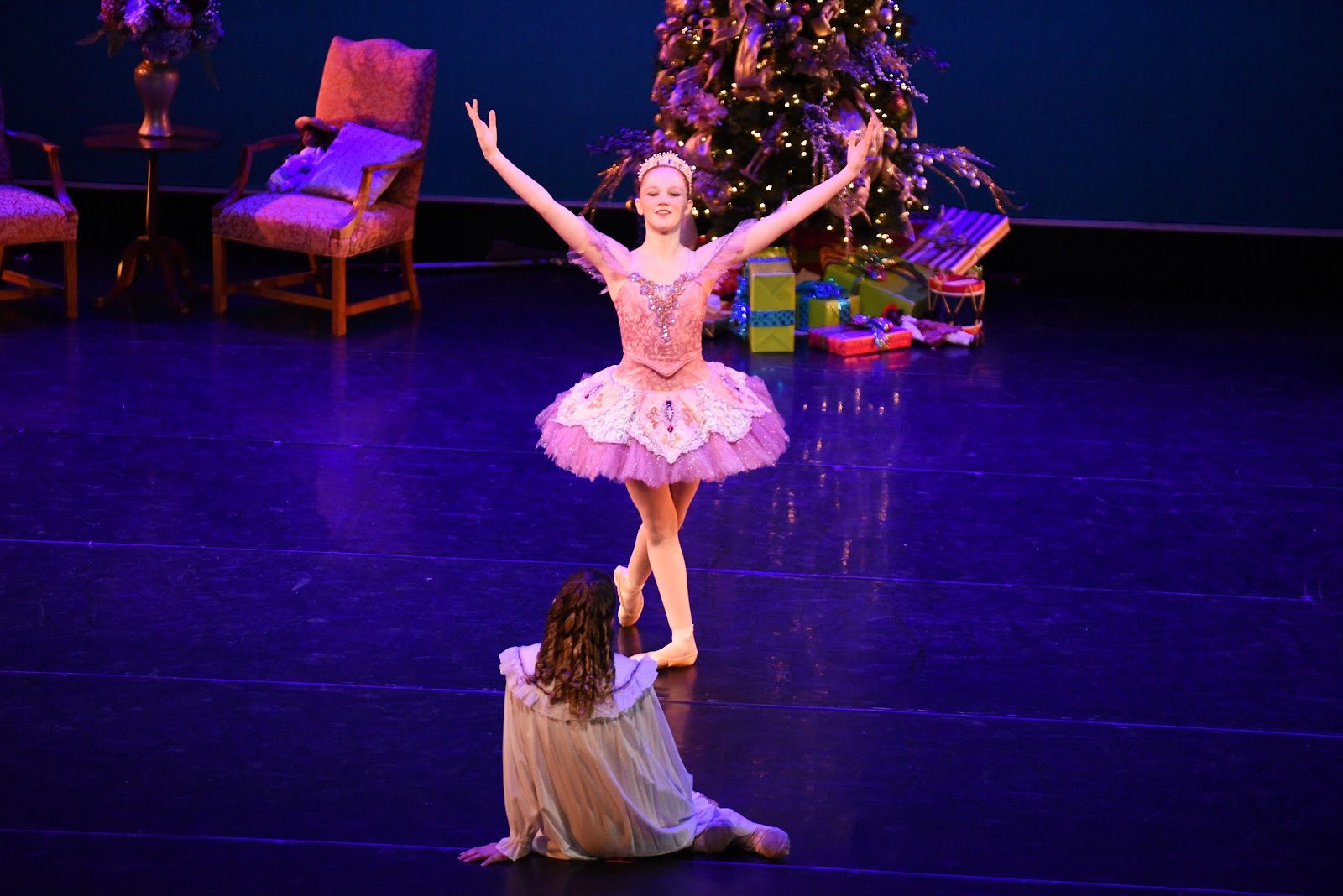
UNCSA School of Dance, High School
Winston-Salem, NC · United States
At the nation's first public arts conservatory, teenage dancers train daily alongside college company members bound for professional stages.
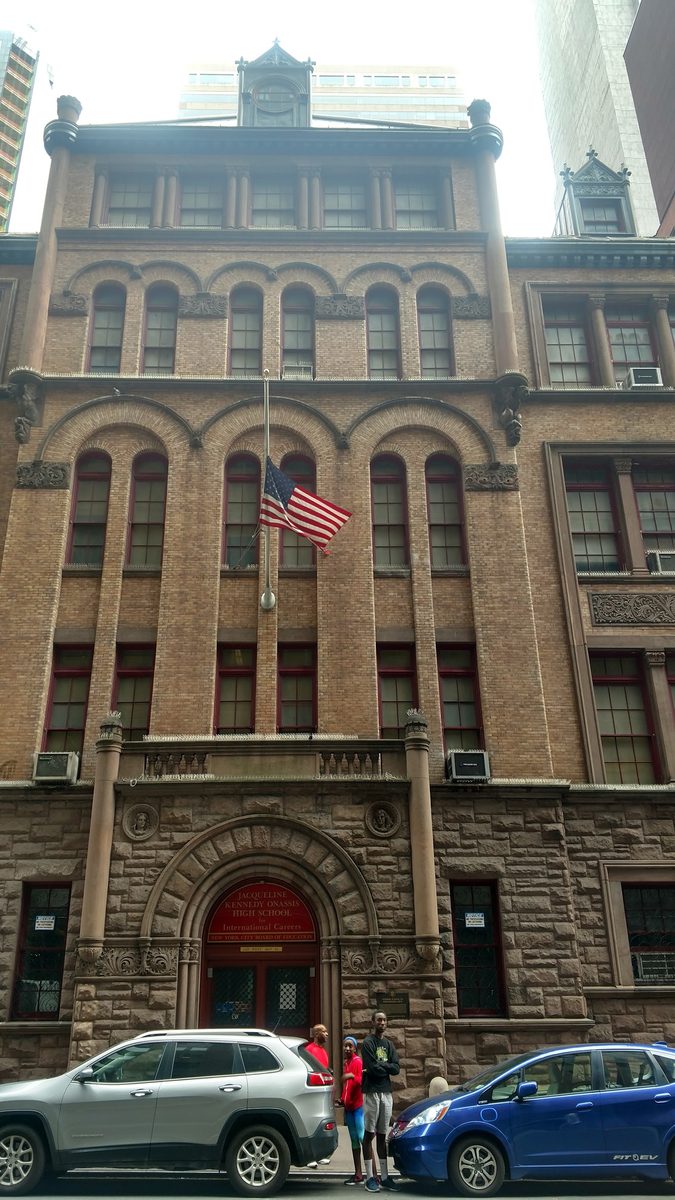
ABT Jacqueline Kennedy Onassis School
New York, NY · United States
Pre-professional ballet training on ABT's National Training Curriculum, feeding dancers straight into the company's own ranks

Houston Ballet Academy
Houston, TX · United States
Inside America's largest professional dance facility, Vaganova-rooted training pipelines students straight into Houston Ballet's company.

The Royal Ballet School
White Lodge, Richmond Park (Lower) / Covent Garden (Upper) · United Kingdom
A Grade I-listed royal hunting lodge in Richmond Park doubles as classroom and studio for GCSE-age dancers admitted on talent alone.
Same specialism, country and curriculum — closest matches within ±10 points either way