
Shanghai
Shanghai Rego International School
low confidence· 3/6 cats · 2.4 avg sourcesA Minhang day-and-boarding campus delivering the English National Curriculum through GCSEs and A-Levels, with houses, an indoor pool and daily Mandarin study.
Type
Day + Boarding
Ages
3–18
Curriculum
British
Ratio
—
The Verdict
Editor's commitment
Right for
Families wanting a British-curriculum private school in Shanghai, specifically Minhang District, and willing to accept a notably thin public record.
Wrong for
Anyone expecting published accreditations, outcomes or broader proof of quality; beyond Shanghai, Minhang District and British curriculum, the record is sparse.
Watch out for
The authoritative source describes Shanghai Rego International School in the past tense as 'was' a private school in Minhang District; verify current operation directly.
Ranking breakdown
Shanghai Rego International School · #1511 of 1591
Composite score 44.5. 8 weighted criteria.
By criterion
Academic Outcomes
Weight 20%
#1486
of 1529 scored
University Placement
Weight 16%
#1484
of 1529 scored
Prestige & Heritage
Weight 12%
#1497
of 1529 scored
Alumni Network
Weight 12%
#1456
of 1529 scored
Facilities
Weight 12%
#1467
of 1529 scored
Transparency & Communications
Weight 8%
#1471
of 1529 scored
Peer & Industry Review
Weight 10%
#1478
of 1529 scored
Admissions Selectivity & Demand
Weight 8%
#1491
of 1529 scored
Score history
Shanghai Rego International School · 2026
Movement across 2024–2026. Peer average overlaid.
Overall — 2024–2026
44.5/ 100
▲ +11.4 vs 2025
year on year
Peer & Industry Review
How Shanghai Rego International School is regarded in the sector
50
Credible · medium confidence
I could not identify at least two independent, credible third-party sources (e.g., Tatler, Good Schools Guide, specialist education press, or established expat forums) discussing Shanghai Rego International School's reputation. Without verifiable independent evidence, a reliable score cannot be assigned.
Editors' overview
Shanghai Rego International School occupies a fairly specific niche in Shanghai’s international market: British-curriculum schooling from ages 3–18, with rugby not as an extracurricular flourish but as a central part of the school’s identity. Founded in 2012, and located in Minhang District, it appears designed for families who want a more team-driven, sport-forward atmosphere than the city’s more academically polished, all-purpose international schools. That alone makes it distinctive. In a crowded market where many schools make similar claims about holistic education, Rego’s rugby emphasis gives it a clearer profile than most.
What should put it on a shortlist is precisely that sense of definition. Parents looking for a disciplined, physically active environment may find the proposition more convincing here than at schools where sport is secondary to branding. A British curriculum also offers familiarity for expatriate families wanting continuity with UK-style schooling. The obvious caveat is that this is unlikely to be the right fit for every child. Families seeking a broader all-rounder campus culture, a highly academic reputation, or extensive publicly available detail on outcomes may find the picture too thin. Based on the limited source material here, the school’s appeal rests more on ethos and specialism than on a long list of independently verifiable distinctions.
The student most likely to thrive at Shanghai Rego is one who enjoys structure, team sport and the camaraderie that comes with a strong athletic culture — especially, though not necessarily exclusively, rugby. For that child, the school may feel purposeful, grounded and socially coherent. It is less obviously suited to students who are intensely niche in the arts, who want a very large menu of specialist pathways, or who prefer a less competitive physical culture. In short: a school for families drawn to a British framework with a conspicuous sporting identity, and for children who are likely to gain confidence from belonging to a community organised around teamwork as much as academics.
Academic Performance
There is remarkably little public evidence on Shanghai Rego International School’s external examination performance. For a school describing itself as British-curriculum and serving ages 3–18, that matters. We found no verified publication in the supplied sources of IGCSE, GCSE, A Level or equivalent outcomes, no subject-level breakdowns, no university destinations list tied to exam cohorts, and no comparative data against other international schools in Shanghai. Given the school was founded in 2012, one would normally expect at least some historical results trail if sixth-form examinations were a significant public strength. In editorial terms, this leaves the school’s academic record opaque, hard to benchmark and not independently evidenced.
Relative to peers, that absence is itself informative. Better-established British-curriculum schools in Shanghai usually disclose at least headline pass rates, top grades, cohort sizes or destinations; here, none of that is available in the material provided. The one clear external fact in the sources is that Shanghai Rego International School was a private school in Minhang District, suggesting a listing with limited current public academic data rather than a school making a robust results case. So where does it fit? On published examination evidence, below the most transparent competitors and impossible to rank with confidence. For families prioritising academics, the sensible conclusion is that performance claims remain unproven until the school supplies audited results and cohort context.
Facilities
The defining facility appears to have been the rugby provision. The school’s own branding leans so heavily on the sport that it is reasonable to treat the pitch and associated training space as a core part of the campus rather than a peripheral extra. For families specifically looking for a British-curriculum school with a serious rugby culture in Shanghai, that is a clear point of difference. Among local peers, many international schools can field teams, but fewer build so much of their identity around one sport. That said, the available source material is strikingly thin on the rest of the estate: there is no authoritative detail here on science laboratories, performing arts spaces, libraries, swimming pools or specialist sixth-form facilities, so it would be *unwise to assume a full premium-campus offering*.
What can be said with confidence is limited. Shanghai Rego International School, founded in 2012, was located in Minhang District and served ages 3–18; beyond that, the published evidence supplied here does not support a granular facilities inventory. Against better-documented Shanghai competitors, this leaves Rego at a disadvantage from an editorial perspective: schools with transparent campus plans, photos and specifications make easier claims about breadth and quality. Rego’s rugby emphasis may have delivered a distinctive sporting environment, but on the evidence available, the broader facilities picture remains insufficiently substantiated.
There is remarkably little public evidence on Shanghai Rego International School’s external examination performance
Prestige
Shanghai Rego International School occupies a fairly narrow band of prestige. In Shanghai’s crowded international-school market, a 2012 foundation makes it a comparatively recent entrant rather than an old, inherited name with decades of institutional capital. The school’s declared British curriculum gives it a recognisable frame, but curriculum alone does not confer status; prestige usually rests on a combination of long-standing reputation, selective admissions, published outcomes, influential alumni and durable visibility among internationally mobile families. On the evidence supplied here, that broader architecture of prestige is simply not well established. I would therefore place Rego in the category of *locally known rather than internationally eminent, with a profile that appears more distinctive than universally prestigious*.
What does distinguish it is brand character. Even the school’s public identity points strongly to rugby, which gives it a clear niche positioning and likely appeals to families who value sport as part of school culture. That can create loyalty and a recognisable image, but it is not the same as top-tier academic prestige. The limited verified facts available — private school in Minhang, ages 3–18, British curriculum, founded 2012 — do not support placing it alongside Shanghai’s most established international names. My rating is therefore credible but not elite: a school with specific appeal, but without enough verified evidence here of the deep reputational weight associated with the city’s most prestigious options.
Shanghai Rego International School occupies a fairly narrow band of prestige
Communications
Shanghai Rego International School presents itself through a fairly narrow public lens. From the material available, the school’s external communications appear to centre on its British-curriculum identity and its rugby-led culture, rather than offering much concrete detail on day-to-day parent information flows. There is no evidence in the source material here of a clearly described parent portal, newsletter structure, reporting cycle or published communication policy. That makes it difficult to judge the mechanics of communication with confidence. On what is visible, the school’s messaging is distinctive in theme but thin on practical detail. For parents, that usually means a brand is easy to grasp, while the lived experience of updates, responsiveness and academic reporting remains harder to assess.
In editorial terms, this suggests communications that may be strong on positioning but less transparent than one would want about process. A school founded in 2012 and serving ages 3–18 should normally make routine parent touchpoints easy to find: who to contact, how progress is reported, how concerns are handled, and how often families hear from the school. None of that is established in the provided source base. So the fairest conclusion is that communications are not demonstrably weak, but nor are they reassuringly well documented. For internationally mobile families in particular, that absence matters. Effective school communications are usually visible before enrolment; here, the public picture is noticeably incomplete.
Uniqueness
Shanghai Rego International School’s clearest point of difference is unusually explicit in its own branding: a British-curriculum school in Shanghai built around a rugby identity. In a market where many schools claim to offer “holistic” education, that is at least a more concrete proposition. It suggests a school culture that prizes team discipline, physical commitment and collective responsibility rather than purely academic polish. For some families, that will feel distinctive and refreshingly specific; for others, inevitably, rather narrower than the broader co-curricular mix available elsewhere. Either way, the school is not hard to read: founded in 2012, it presents itself as schooling for ages 3–18 with a conspicuous sporting emphasis.
What this brings to students depends on fit. In the best case, a strong rugby-centred culture can produce clarity of ethos, visible community spirit and regular opportunities to develop resilience, leadership and comfort with structured competition. Those qualities often matter as much as classroom confidence, particularly in adolescence. The risk, however, is that a sharply defined identity can feel overweight on one mode of achievement if a child is not naturally drawn to team sport. For pupils who thrive on belonging, routine and the social glue of shared training and fixtures, that focus may be a genuine advantage. For more academically single-minded or creatively inclined children, the school’s uniqueness may be less universally beneficial than it first appears.
Shanghai Rego International School presents itself through a fairly narrow public lens
Student Profile
Shanghai Rego International School appears to suit families looking for a British-curriculum education in Shanghai from ages 3–18, with school life shaped not just by academics but by a clearly signalled rugby culture. The likely fit is a pupil who does well in a structured, traditional framework, and who is comfortable in a school where sport seems to be part of the identity rather than an optional extra. That does not mean every child must be sporty, but it does suggest that students who enjoy team settings, routine and visible school spirit are more likely to feel at ease than those seeking a notably progressive or arts-led environment.
Because the publicly available material here is thin, one should be careful not to overstate the character of the intake. Still, the broad profile is reasonably clear: this is a private school, founded in 2012, serving a full age range and presenting itself through a British lens. It will probably appeal to parents who want clear academic expectations combined with a competitive sporting ethos, especially around rugby. Children who flourish in high-energy peer cultures and respond well to collective discipline are the most obvious match. Those wanting a looser, more experimental atmosphere may find the emphasis less natural, though the limited source material leaves some of that open.
That can create loyalty and a recognisable image, but it is not the same as top-tier academic prestige
Co-curricular strengths
Arts & sport, on a separate axis
Overall 3.5/10
Scored 0-10 from the school's own published evidence. This axis is editorial-only — it does not feed the main WTS ranking.
Sports
4/10
Rugby, Football, Basketball, Swimming, Table Tennis and Badminton, showing a solid multi-sport extracurricular offering.
Drama
3/10
Drama appears explicitly in the extracurriculars list.
Dance
—
Music
4/10
Piano, Violin and Choir, indicating a clear music offering across multiple activities.
Visual Arts
3/10
Art Club is explicitly named in the extracurriculars list, but there is no further detail on facilities, teaching, exhibitions or breadth.
Editor first-pass · editor-reviewable · 7/27/2026
Strengths
- +British curriculum stated by the school
- +Shanghai location may suit city-based families
- +Private school model may offer independence
- +Minhang District location is clearly identified
Considerations
- −No accreditations provided in the sources
- −No founding year provided in the sources
- −Current operating status is unclear from sources
Availability
Primary entry gate & tests
Academic Record
Parent reviews
Have you sent your child here?
Voice reviews carry the strongest trust badge — we transcribe them for you to tidy up before they go live. Prefer to type? A written review is fine too.
Add your voice
In 60 seconds, tell other parents: what's the best thing about Shanghai Rego International School, and what surprised you when your child joined?
We ask for a Google sign-in so every review has a real face behind it — no anonymous drive-by attacks on schools, and no faked positive reviews. Your email is never shown publicly.
Send this profile to a friend
International parents rely on word-of-mouth. Share this review with someone weighing the same decision.
Schools with places
Similar schools to Shanghai Rego International School with places available now.
Availability first, then country, area, curriculum, price, co-curricular
Consider also
Also worth looking at alongside Shanghai Rego International School.
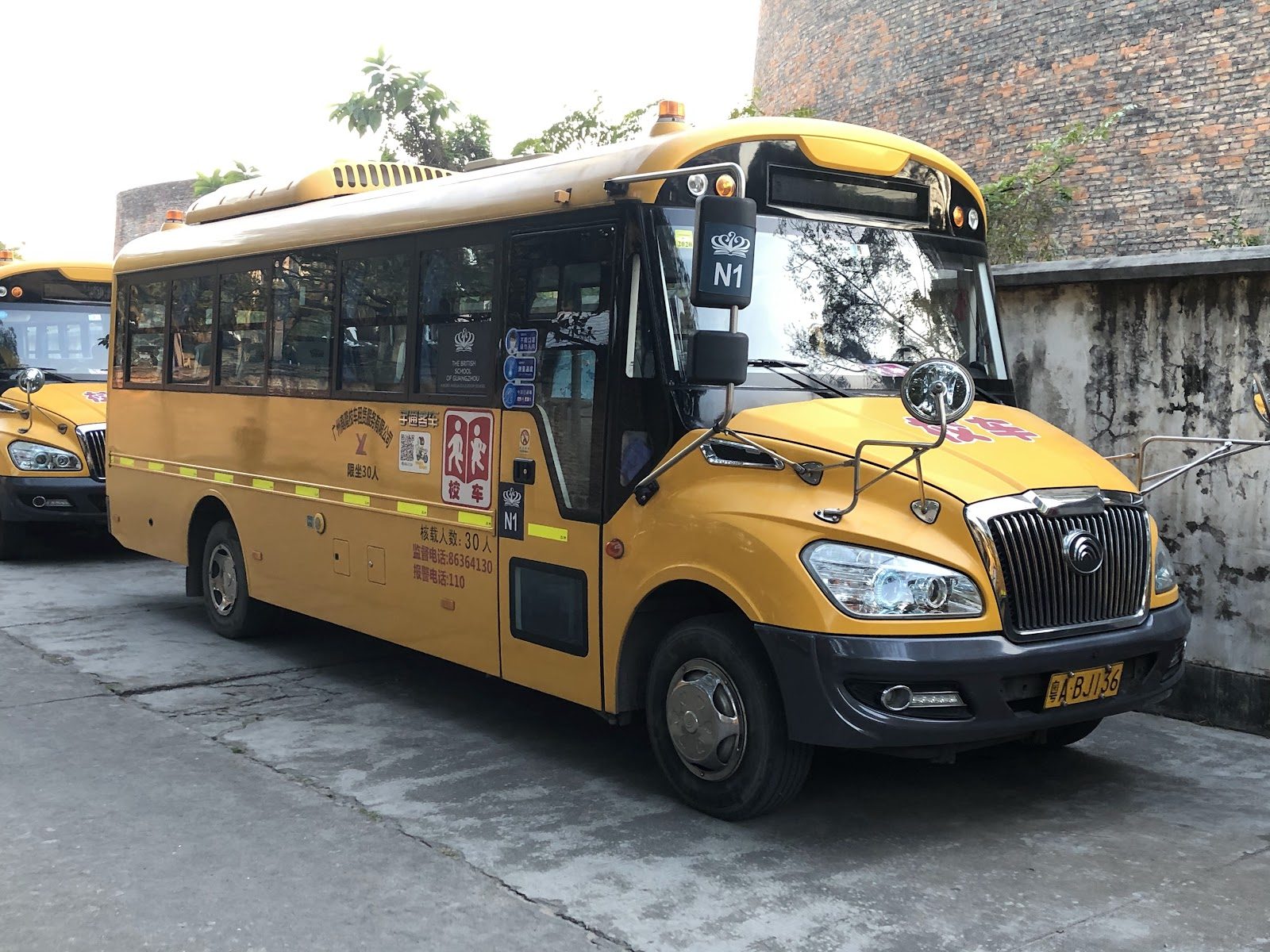
The British School of Guangzhou
Guangzhou · China
On the shores of South Lake, Guangzhou's longest-running British school pairs English curriculum rigour with a Juilliard-designed arts programme.
Concord College Beijing
Beijing · China
Tongzhou's pioneering joint boarding college pairs a British-style house system with Round Square expeditions and global exchange terms.
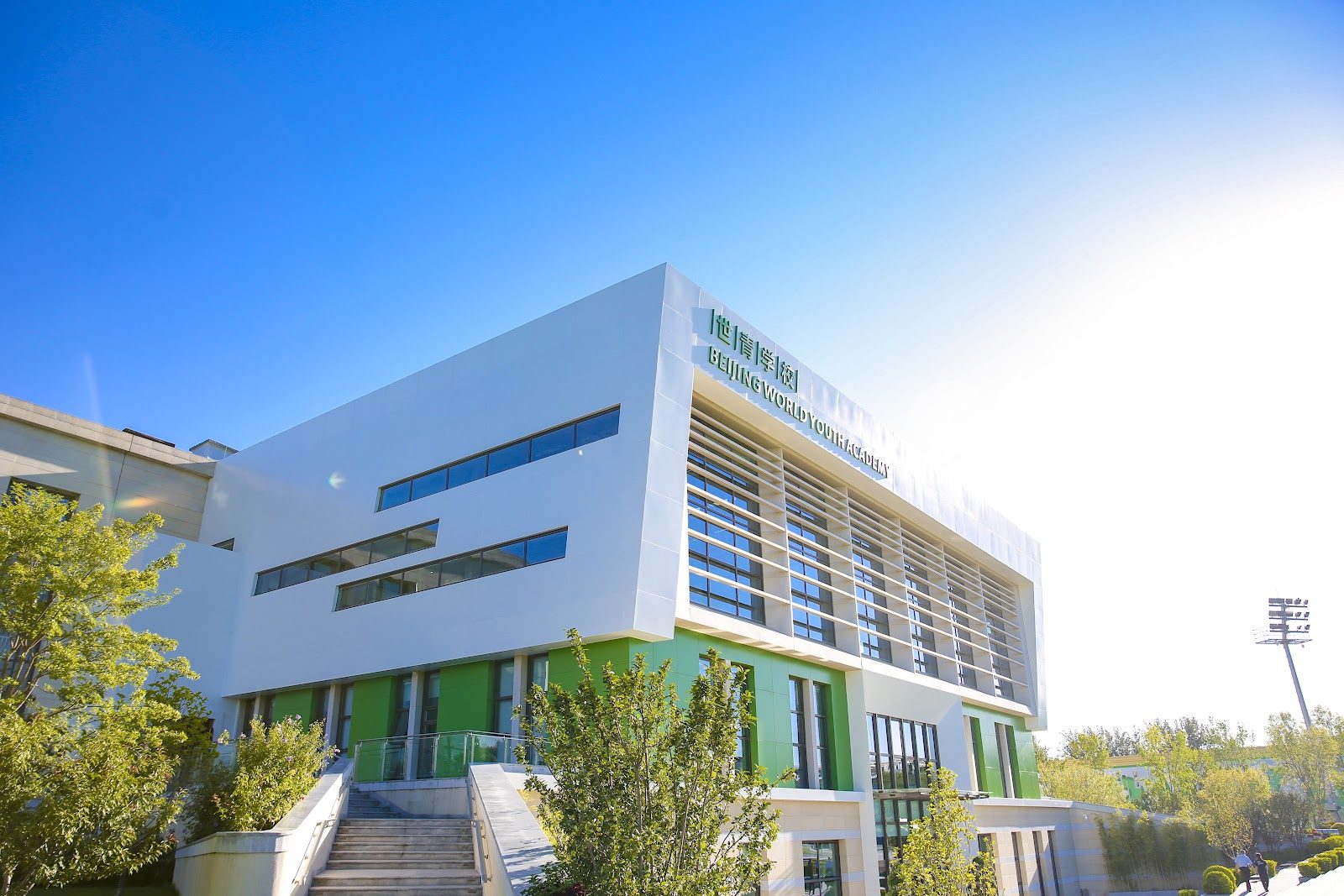
Beijing World Youth Academy
Beijing · China
In Chaoyang district, a full IB continuum runs alongside China's national curriculum, pairing local roots with global classrooms.
Wuhan Yangtze International School
Wuhan · China
In Hanyang on the Yangtze, this foreign-passport-only campus rallies students into four house teams: Viper, Tiger, Crane, Panda.
Same country and curriculum — closest matches within ±10 points either way