
District of Columbia
On the Cathedral Close, an all-girls campus blends weekly worship beneath Gothic vaults with a dedicated ethical-leadership curriculum.
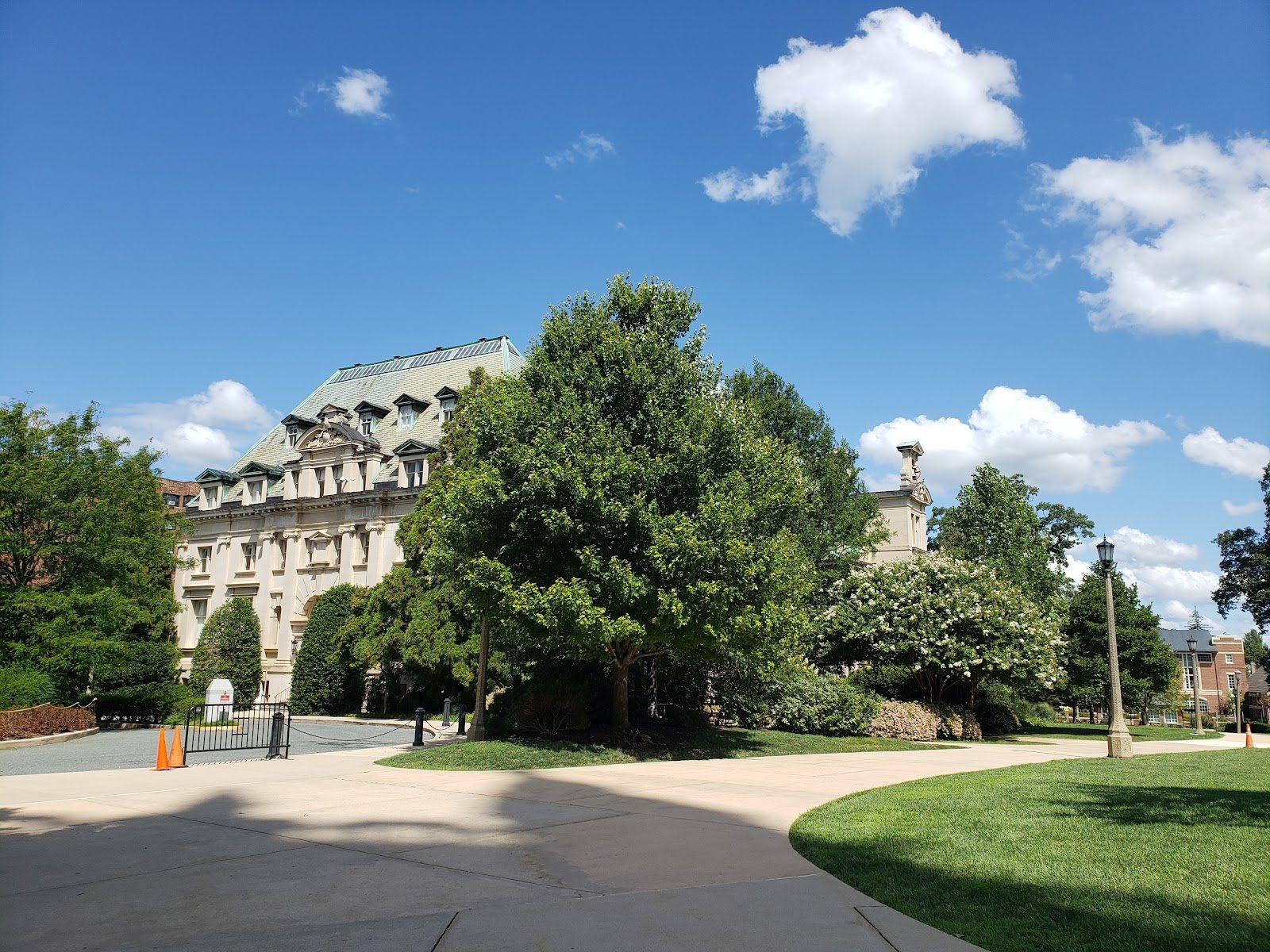
Photo © Chris Hale via Google Maps
Type
Day
Ages
9–18
Curriculum
American (US High School Diploma) · AP (Advanced Placement)
Ratio
7:1
The Verdict
Editor's commitment
Right for
Girls who will use a 7:1 student-teacher ratio, 14-pupil classes and a grades 4–12 all-girls setting on the Cathedral Close.
Wrong for
Families wanting co-education, boarding or a secular campus culture; NCS is day-only, Episcopal in origin, and serves ages 9–18.
Watch out for
The average annual fee is $55,000, and the school does not publish aggregate AP scores or university destination data here.
Ranking breakdown
National Cathedral School · #131 of 1591
Composite score 76.5. 8 weighted criteria.
By criterion
Academic Outcomes
Weight 20%
#208
of 1529 scored
University Placement
Weight 16%
#187
of 1529 scored
Prestige & Heritage
Weight 12%
#135
of 1571 scored
Alumni Network
Weight 12%
#81
of 1530 scored
Facilities
Weight 12%
#395
of 1534 scored
Transparency & Communications
Weight 8%
#204
of 1532 scored
Peer & Industry Review
Weight 10%
#283
of 1548 scored
Admissions Selectivity & Demand
Weight 8%
#229
of 1529 scored
Peer & Industry Review
How National Cathedral School is regarded in the sector
85
Strong · high confidence
National Cathedral School is consistently regarded as one of the top all-girls independent schools in Washington, D.C., frequently mentioned alongside Sidwell Friends and Georgetown Day in national private school rankings (e.g., Niche.com's top private high schools in DC/Maryland/Virginia lists) and covered in Washingtonian magazine's annual private school guides. Its alumni network includes notable figures in politics, media, and law, and it has strong name recognition in D.C.'s elite prep school circuit, though it is more regionally prominent than internationally referenced compared to boarding schools like Exeter or Groton.
Evidence sources
Editors' overview
National Cathedral School occupies a rare niche in Washington: an old-guard girls’ day school with real institutional weight, set on the Cathedral Close and shaped by the rhythms of the Washington National Cathedral. That setting is not decorative. Weekly worship under Gothic stone, a campus bound into one of the capital’s great ecclesiastical sites, and a school culture formed over more than a century give NCS a ceremonial seriousness that few American schools can match. Founded in 1900, it also carries the authority of age without drifting into museum-piece irrelevance. The academic structure is conventional American college-prep, with the US High School Diploma and AP courses, but the school’s distinguishing mark lies in the combination of intellectual pressure, public-facing confidence and a deliberate ethical-leadership strand.
This is an academically selective environment with the advantages affluent parents expect: a 7:1 student–teacher ratio, average classes of 14, and the social capital that attaches to a long-established Washington institution. The average annual day fee across the full ladder is $55,000, which places NCS firmly in the expensive top tier of the US day-school market. Parents are paying for more than teaching hours. They are buying access to a dense network of expectations, traditions and opportunities, along with a student body that is trained to speak, lead and perform in public. The alumni record reinforces that pattern: politics, public life, journalism and the arts all feature strongly. This is a school with real cultural reach.
Why shortlist it? Because NCS offers a very specific product and executes it with clarity: an all-girls education for ages 9 to 18 on a campus of unusual beauty and symbolism, with a strong college-preparatory core and a leadership ethos that is not bolted on as a slogan. For the right student, that mix is formative, high-minded and genuinely exciting. It suits girls who are academically ambitious, articulate, comfortable with tradition, and ready for a community that values poise, service and visible contribution. It is less suited to families who want a casual atmosphere, a stripped-back secular identity, or a school that hides its culture behind neutral branding. NCS has a clear centre of gravity; students who thrive there will want exactly that.
Academic Performance
NCS sits in a segment of the US independent-school market where raw academic quality is assumed and public exam disclosure is often selective rather than comprehensive. The school offers AP courses, but it does not publish a full set of aggregate external-results data in the public domain: no whole-school AP score profile, no average SAT or ACT figures, no distribution tables by score band. That limits hard comparison with peers and matters, because Washington’s top private schools compete on university destinations and academic culture as much as on exam numbers. In editorial terms, the results picture here is opaque by top-tier standards.
That said, the surrounding indicators point to a school with serious academic expectations. A low staffing ratio, small classes and a long-established college-preparatory structure give pupils the conditions for strong attainment, and the school’s reputation in Washington has never rested on soft academics. Relative to peers, NCS belongs with academically demanding girls’ schools whose graduates head for selective universities, but it does not give parents the clean data trail that some comparator schools now publish. For families comfortable judging by institutional standing, classroom conditions and destination patterns, that will suffice. For families who want hard external metrics before paying an average of $55,000 a year, the absence of published aggregates is a real weakness, not a footnote.
Facilities
The defining facility here is the Cathedral Close itself. Very few schools can use one of the country’s great ecclesiastical complexes as part of ordinary school life rather than as a backdrop for prospectuses. That gives NCS a ceremonial scale that peers cannot replicate: worship in the Cathedral, daily movement through an architecturally serious precinct, and access to grounds that carry institutional weight. For an all-girls day school, that setting functions as both campus and culture. It reinforces the school’s high-formality identity and gives public events, music, speaking and communal ritual a stage of unusual power. Against other top girls’ schools, that is a genuine differentiator. Many competitors have polished theatres, chapels or quads; few operate inside a national landmark.
What is less clear is the rest of the plant. We have not seen the kind of detailed public accounting that lets parents compare laboratories, sports provision, maker spaces, art studios or specialist performance venues line by line with rival schools. That does not mean weakness, but it does mean limited transparency. Parents choosing among fee-heavy independents expect clarity on where daily teaching, training and rehearsal actually happen. NCS wins decisively on setting and symbolic environment; on the granular facilities brief, the school leaves too much unstated. In benchmarking terms, that places it behind peers that publish harder detail on science, athletics and creative infrastructure, even when their campuses lack NCS’s rare architectural authority.
National Cathedral School carries real social and institutional prestige
Prestige
National Cathedral School carries real social and institutional prestige. Part of that comes from the obvious markers: an all-girls school on the Cathedral Close, embedded in one of the capital’s most symbolically charged settings, with a long-established place in Washington’s private-school hierarchy. Part comes from who it draws and forms. This is a school tied closely to the city’s professional and public-life elite, and that association has substance rather than gloss. The alumni floor alone is telling: 13 notable figures catalogued in Wikidata, with strong representation in politics, journalism and the arts. That pattern fits the school’s public character. NCS does not just educate for university admission; it educates for visible adulthood — the kind that demands fluency, composure and confidence in formal settings.
I rate its prestige highly because the brand rests on more than price, selectivity or pretty architecture. It has old Washington standing, a distinctive all-girls identity and a setting that confers ceremonial authority every week, not just on open-day tours. The school’s cachet is strongest in circles that value establishment legitimacy, female leadership and ease with institutions. That prestige is specific rather than universal. Families hunting for Silicon Valley cool, aggressive data transparency or a stripped-down modern image will find stronger status signals elsewhere. In the eastern seaboard independent-school world, though, NCS has serious name recognition and the kind of inherited credibility that newer schools cannot manufacture.
The average annual day fee across the full ladder is $55,000, which places NCS firmly in the expensive top tier of the US day-school market
Communications
NCS’s parent communications follow the school’s culture: formal, high-expectation and institutionally self-assured. A school woven into cathedral life and old Washington networks does not trade in chatty over-explanation; it communicates from a position of authority. For many families, that will feel efficient and reassuring. Parents who value structure, calendar discipline and clear behavioural standards tend to read this style as competence. The same approach can feel closed to families who want abundant operational detail, rapid-fire transparency or a more conversational tone. NCS asks parents to buy into the institution, not to negotiate every aspect of it.
Effectiveness, then, depends on fit. The school’s public voice is coherent and its identity is easy to grasp, which counts for a great deal. There is no confusion about the kind of community it runs or the standards it prizes. Where the communications case weakens is in practical disclosure. Elsewhere, the school leaves gaps on the hard comparative detail that fee-paying parents now expect, especially around measurable outcomes and day-to-day infrastructure. That matters because communications are not just about polish; they are about evidence. At an average annual fee of $55,000, parents are entitled to more than atmosphere and institutional confidence. NCS communicates culture exceptionally well. It communicates proof with less rigour than the strongest schools in its bracket.
Uniqueness
What separates NCS from other top girls’ schools is not just selectivity or polish, but the fact that the school operates inside a living cathedral precinct. That gives ordinary school life a liturgical frame and a public seriousness that few American schools can match. Assembly, worship, music, speaking and ceremony carry more weight when they unfold under the authority of the Close rather than in a purpose-built school chapel. Students absorb that atmosphere daily. The result is a culture that trains girls to handle formality, to occupy institutional spaces without self-consciousness, and to treat public contribution as normal rather than exceptional. The all-girls setting sharpens that further: leadership is not delegated, shared symbolically or diluted by co-ed dynamics; it is expected of girls, visibly and repeatedly.
That distinctiveness brings advantages and constraints. For the right student, it is deeply formative: she learns poise, voice and civic confidence in a setting that rewards composure and moral seriousness as much as academic performance. The ethical-leadership strand gains force because the wider environment keeps pressing the same message. This is a school for girls who want *high-church atmosphere without doctrinal pressure*, institutional confidence without gimmicks, and a community that takes adulthood seriously early. It is not a neutral backdrop. Families who want a more casual, anonymous or anti-ceremonial education will find NCS constraining. Families who value symbolism, visible standards and the discipline of belonging to something larger than themselves will find its $55,000 fee buys a school with a rare centre of gravity.
For the right student, that mix is formative, high-minded and genuinely exciting
Student Profile
The girl who fits best here is bright, verbally assured and comfortable being seen. NCS rewards students who can speak up in class, carry themselves in formal settings and handle a culture where contribution is public rather than private. The all-girls environment matters: leadership is not an optional extra, and girls who thrive on taking responsibility, chairing discussions, performing, serving and representing the school gain real traction. This is not the right setting for a student who wants to drift anonymously through the day. It suits the girl who likes standards, structure and collective ritual, and who reads those things as energising rather than oppressive. The low staffing ratio of 7:1 and average classes of 14 also favour students ready to be known well and pushed directly.
Social fit matters as much as academic fit. This school has a polished, high-expectation manner, tied to old institutional habits and a parent body paying an average of $55,000 a year for a very specific kind of education. Students who flourish here tend to have poise, resilience and a willingness to enter fully into a community that prizes judgement, service and visible engagement. Girls from families that value ceremony, adult authority and a strong communal identity will slot in faster than those who want a casual atmosphere or a detached, purely transactional school experience. For the right child, NCS is deeply shaping; for the wrong one, it is constraining and hard to fake.
In editorial terms, the results picture here is opaque by top-tier standards
Co-curricular strengths
Arts & sport, on a separate axis
Overall 8.98/10
Scored 0-10 from the school's own published evidence. This axis is editorial-only — it does not feed the main WTS ranking.
Sports
9.2/10
Highly active in ISL tournaments across lacrosse, tennis, and netball, utilizing modern indoor physical pavilions and field layouts.
Drama
8.8/10
Exceptional theatrical training centered around world-class campus theaters, running a pre-professional training model for acting and tech.
Dance
8.5/10
Highly dedicated formal dance curriculum running classical ballet, jazz, and modern composition inside custom studios.
Music
9.2/10
Outstanding musical depth; supports multiple jazz big bands, massive symphonies, and elite choirs with deep sacred choral traditions.
Visual Arts
9.2/10
Breathtaking visual studios producing top-tier design portfolios, digital multimedia creations, and fine art pieces.
Editor-verified · 8/6/2026
Notable alumni · Wikidata
13notable alumni
Includes
0 historic (born pre-1930) · 4 modern (born post-1970)manual-editorial:2026-08-02 How we source this
WTS 300 badge
National Cathedral School is one of the World's Top 300 Schools. Claim your listing to add it to your site →
Strengths
- +Founded in 1900 by philanthropist Phoebe Apperson Hearst and Bishop Henry Yates Satterlee, making it the oldest institution of the Protestant Episcopal Cathedral Foundation.
- +Very low student-teacher ratio of 8:1, supporting small class sizes across grades 4-12.
- +Sits on the 57-acre Cathedral Close alongside its brother school, St. Albans, and the coeducational Beauvoir elementary school, enabling shared facilities and some joint programming.
- +Alumnae network of more than 5,500 women living in 49 states and 34 countries, giving graduates access to an established global community.
- +Offers a full Advanced Placement program within the US high school diploma track, a recognised route to selective US and international universities.
Considerations
- −Tuition is high: $56,920 for 2025-2026, rising to $59,760 for 2026-2027, plus a technology/activity fee and a one-time new-student fee.
- −Single-sex girls-only school for grades 4-12, with no coeducational option for families who prefer mixed schooling through the senior year.
- −Admissions require SSAT or ISEE testing alongside transcripts, recommendations, essays and interviews, reflecting a competitive, application-heavy process typical of DC's top independent schools.
- −Curriculum is built around AP rather than IB, which may be a less familiar or transferable framework for internationally mobile families used to the IB Diploma.
Availability
Primary entry gate & tests
ISEE/SSAT + Interview (Girls)
Gallery
Photo © Brad Polak via Google Maps
Photo © Brad Polak via Google Maps
Photo © Brad Polak via Google Maps
Photo © GENER ZULUAGA TORO via Google Maps
Photo © marie m via Google Maps
Photo © Ilya Tikhaev via Google Maps
Photo © marie m via Google Maps
Photo © marie m via Google Maps
Photo © Joshua Taylor via Google Maps
Parent reviews
Have you sent your child here?
Voice reviews carry the strongest trust badge — we transcribe them for you to tidy up before they go live. Prefer to type? A written review is fine too.
Add your voice
In 60 seconds, tell other parents: what's the best thing about National Cathedral School, and what surprised you when your child joined?
We ask for a Google sign-in so every review has a real face behind it — no anonymous drive-by attacks on schools, and no faked positive reviews. Your email is never shown publicly.
Send this profile to a friend
International parents rely on word-of-mouth. Share this review with someone weighing the same decision.
Schools with places
Similar schools to National Cathedral School with places available now.
St. Albans School
Washington, D.C. · United States
- 2026-27
- CLOSEDRegular cycle
- 2027-28
- OPENS SOONOpens Sept '26
Maret School
Washington, D.C. · United States
- 2026-27
- CLOSEDRegular cycle closed
- 2027-28
- PLACES OPENCloses 6 Jan '27
Sidwell Friends School
Washington, D.C. · United States
- 2026-27
- CLOSEDRegular cycle
- 2027-28
- OPENS SOONOpens Aug '26
Availability first, then country, area, curriculum, price, co-curricular
Consider also
Also worth looking at alongside National Cathedral School.
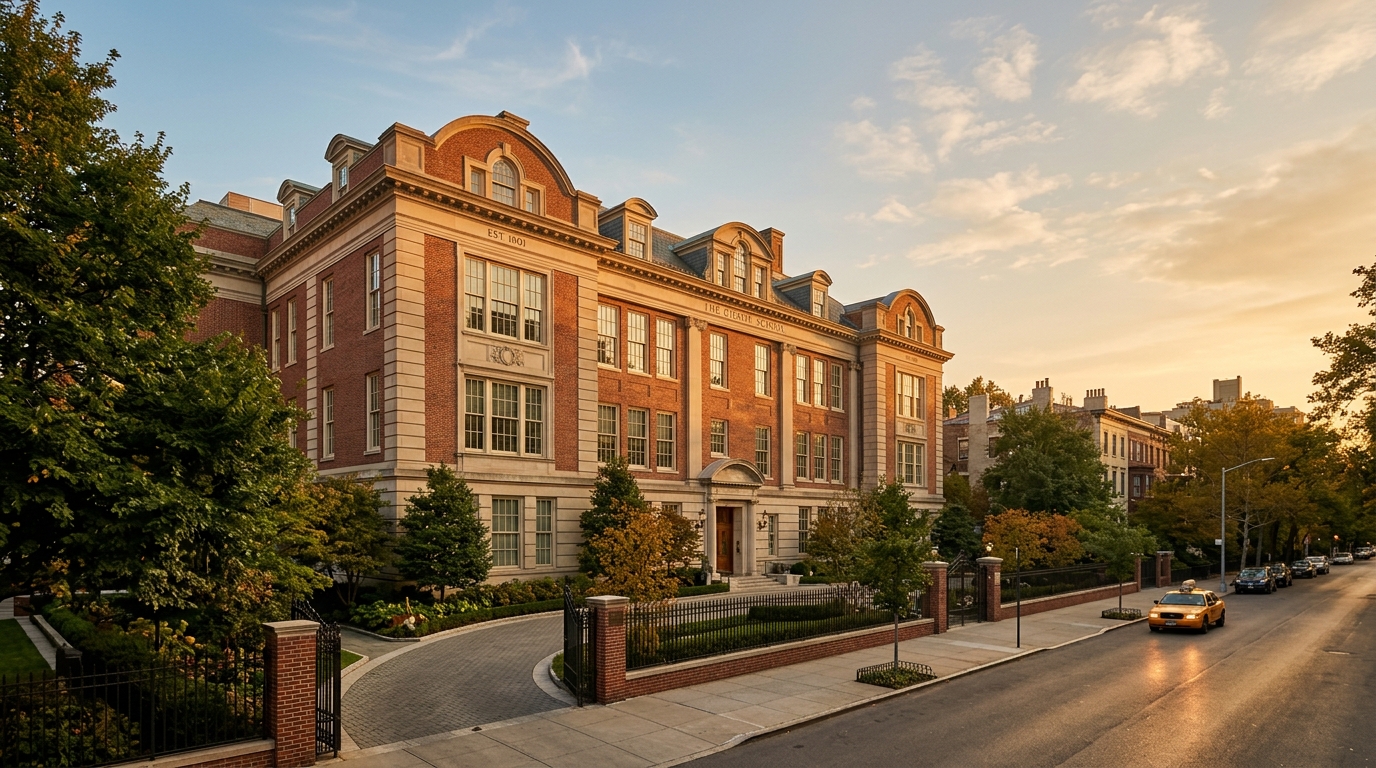
The Chapin School
New York City · United States
On the East River's edge, a K-12 girls' school where two years of Latin are compulsory and no valedictorian is named.
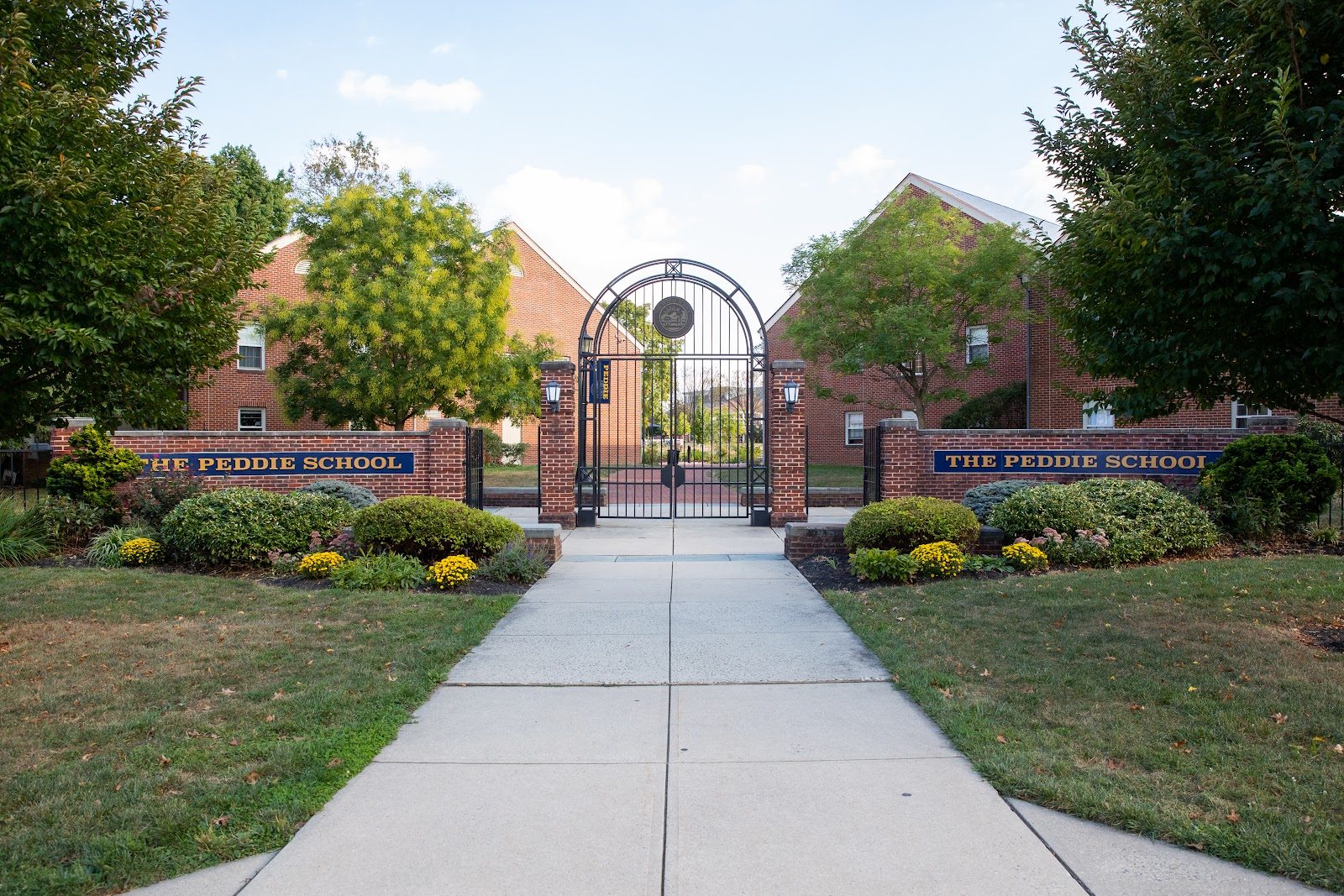
Peddie School
Hightstown · United States
Since 1864, a lakeside New Jersey campus builds signature tracks in research science and Shanghai-linked Asian studies.

The Spence School
New York City · United States
Since 1892 on Manhattan's Upper East Side, an all-girls institution built on research fellowships and a founder's progressive vision.
Hunter College High School
New York City · United States
A tuition-free CUNY-run gifted school on the Upper East Side, admitting by a single brutal exam and about 7 percent of applicants.
Same country and curriculum — closest matches within ±10 points either way