
Berkshire
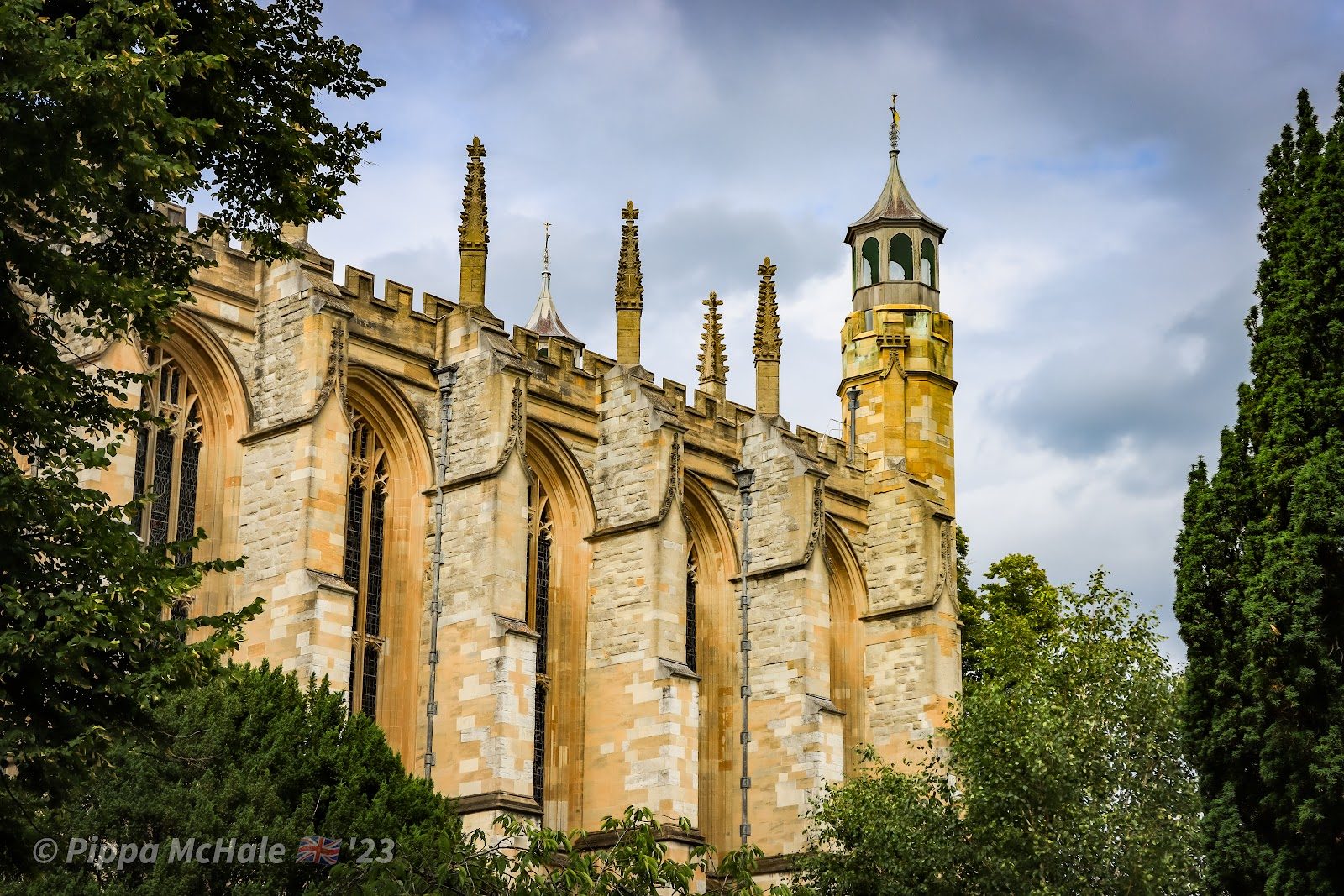
Across the Thames from Windsor Castle, a dual house-and-tutor system pairs daily pastoral care with rigorous scholarship.
Type
Boarding
Ages
13–18
Curriculum
British
Ratio
8:1
The Verdict
Editor's commitment
Right for
Boys aged 13–18 who want full boarding, Church of England ethos, and an 8:1 ratio with classes averaging 12.
Wrong for
Families wanting co-education, day schooling or anything beyond a British curriculum in English; Eton is boys-only, boarding-only, ages 13–18.
Watch out for
The average boarding fee is £53,000 a year, and ISI and HMC badges do not soften the intensity of England’s largest boarding school.
Ranking breakdown
Eton College · #1 of 1591
Composite score 83.4. 8 weighted criteria.
By criterion
Academic Outcomes
Weight 20%
#92
of 1529 scored
University Placement
Weight 16%
#59
of 1529 scored
Prestige & Heritage
Weight 12%
#4
of 1571 scored
Alumni Network
Weight 12%
#2
of 1530 scored
Facilities
Weight 12%
#125
of 1533 scored
Transparency & Communications
Weight 8%
#388
of 1532 scored
Peer & Industry Review
Weight 10%
#83
of 1548 scored
Admissions Selectivity & Demand
Weight 8%
#93
of 1529 scored
Score history
Eton College · 2026
Movement across 2024–2026. Peer average overlaid.
Overall — 2024–2026
83.4/ 100
▲ +12.1 vs 2025
year on year
Peer & Industry Review
How Eton College is regarded in the sector
98
Top-tier · high confidence
Eton College sits at the very apex of global school reputation, with WhichSchoolAdvisor concluding it "remains unrivalled as a traditional all-boys, all-boarding school delivering exceptional academic results and holistic personal development" while noting entry is now broadened by one of the sector's most generous bursary programmes. The Good Schools Guide's independent verdict is equally emphatic, calling it a school "so good that many people choose it despite its name, not because of it," and citing 2025 results of 94% grades 9-7 at GCSE. Spear's Schools Index and Tatler's 2026 Schools Guide both list Eton among the world's elite, and WhichSchoolAdvisor's Oxbridge data confirms it remains one of the most reliable feeder schools into Oxford and Cambridge. The only caveat sector commentators raise is Eton's enduring association with social elitism, though this is consistently framed as a legacy perception rather than a current failing.
Award

Elite Science & Research 58
World's Top School · The Global Ranking
Eton College is featured on our Global Top 58 ranking at #57. This seal is available for the school's marketing team to use on their website, prospectus and social channels.
Award
Elite Entrepreneurship, Economics & Finance 60
World's Top School · The Global Ranking
Eton College is featured on our Global Top 60 ranking at #20. This seal is available for the school's marketing team to use on their website, prospectus and social channels.
Editors' overview
Across the Thames from Windsor Castle, Eton trades on a setting and a history that no modern school can replicate, but its real distinction lies in structure. The dual house-and-tutor model gives boys two lines of adult oversight: boarding house life for day-to-day discipline and belonging, and tutorial attention for academic direction. That matters because this is a full boarding school for ages 13 to 18, not a softened hybrid. With a 8:1 student-teacher ratio and average classes of 12, teaching sits on the right side of intimate rather than industrial. The Church of England foundation still shapes the institution’s character, though parents choosing Eton are buying into a culture of high expectation, institutional confidence and old-school seriousness more than overt religiosity.
In market terms, Eton occupies the top end of British boarding: globally recognised, socially loaded and expensive. The average annual boarding fee across the full ladder is £53,000, which places it firmly in the elite-priced bracket even before extras. It is accredited by ISI and HMC, and the school declares a British curriculum taught in English. The school’s scale also matters. Wikipedia identifies it as the largest boarding school in England, which gives it breadth that smaller, more rarefied rivals cannot match: more houses, more institutional machinery and a deeper bench of peers. That scale cuts both ways. Some boys thrive in a place with this much tradition, competition and internal hierarchy; others get swallowed by it.
Why put Eton on a shortlist? Because few schools combine cultural weight, rigorous scholarship and a boarding system this developed. For the right child, the attraction is obvious: a boy who wants full immersion, can handle structure, and is energised by being surrounded by able, ambitious contemporaries. This is not a gentle school for a child who needs anonymity, looseness or constant emotional cushioning. It suits boys with stamina, intellectual appetite and the confidence to inhabit a place that knows exactly what it is. Parents who want pastoral care wrapped around serious academics will find a coherent proposition here; parents hunting for a relaxed, low-pressure adolescence should look elsewhere.
An Elite Science & Research 58 school
Eton College in Windsor, United Kingdom, sits at rank fifty-seven on the Elite Science & Research 58, anchored by a genuine if singular claim: Sir John Gurdon, who ranked last out of 250 boys in his year group in biology at Eton and was told by a schoolmaster that his ambition to become a scientist was 'quite ridiculous,' went on to win the 2012 Nobel Prize in Physiology or Medicine for his stem-cell work, and returned to address Eton's Scientific Society about that very journey. Lord Rayleigh, the school's earlier Nobel physicist, discovered argon and won the 1904 Physics prize.
Eton's science architecture is facilities-led rather than built around a formal mentored-thesis or symposium pipeline. Queen's Schools houses 29 laboratories across Biology, Chemistry and Physics, and the Saïd Foundation's STEM Centre added 12 remodelled labs and a rooftop project space where boys undertake scientific work 'that go beyond the scope of the curriculum,' supported by Masters' own research backgrounds. The Tony Little Centre for Innovation and Research in Learning (CIRL) is an award-winning research operation, but its focus is pedagogical research and teacher training, not pupil-authored original science. On competition results, Eton has produced individual British Physics Olympiad gold medallists, though the school itself notes it does not win golds annually — evidence of a strong general science department rather than an Olympiad factory.
Notable science alumni are historic rather than a contemporary pipeline: Gurdon (Nobel, 2012) and Rayleigh (Nobel, 1904) anchor the tradition, while most recent famous Etonians have made their names in politics and the arts rather than research science.
International openness is real but structured around the standard British boarding calendar. Entry is at 13+ via registration by the end of Year 5, the ISEB Pre-Test, and Common Entrance or King's Scholarship exams at 12/13; boarding is compulsory with no day option. Instruction is entirely in English with only light EAL/SEND support, so genuine fluency is expected on arrival. Overseas families pay an additional deposit of one term's fees on acceptance, plus an annual £3,000 UKVI Child Student Visa sponsorship charge; total fees for 2025/26 run to roughly £63,300 per year including VAT. Families should begin the process three to four years ahead of entry and view Eton as a rigorous, traditionally academic boarding school with strong science facilities — not a dedicated research-intensive STEM destination.
An Elite Entrepreneurship, Economics & Finance 60 school
Eton College in Windsor, England, sits at rank twenty on the Elite Entrepreneurship, Economics & Finance 60 on the strength of a single fact no other school on this list can match: John Maynard Keynes, the economist whose theories founded modern macroeconomics, was educated here before Cambridge. That intellectual pedigree is reinforced today by a pupil-run Investment Society that gives boys direct access to working financiers rather than textbook theory alone.
The formal curriculum is standard British A-Level Economics and Business provision, and it would be dishonest to relabel that as uniquely elite. What differentiates Eton is co-curricular depth: the Eton College Investment Society, which states its aim is to help students get real exposure to finance by working directly with leading professionals, has hosted John Armitage, founder of the hedge fund Egerton Capital, and Carmine Visconti, UBS's EMEA Head of TMT, discussing career routes into banking. A separate, pupil-run Entrepreneurship Society has brought in operators such as Frank Meehan, who worked on Spotify, Siri and Summly, to address aspiring young founders directly. Sitting above both is Eton Futures, a dedicated department that weaves employability and enterprise education into the timetable and was assessed under the Quality in Careers Standard in 2022.
The alumni roll in this field is genuinely load-bearing. Beyond Keynes, Old Etonians include Nick Wheeler, founder of the Charles Tyrwhitt shirt brand; Peter de Putron, founder of G-Research and De Putron Fund Management after a Wharton MBA; and Brent Hoberman, co-founder of lastminute.com, one of the defining businesses of the UK dot-com era.
International openness is real but structured around a distinctly British boarding model. Eton is full-boarding for roughly 1,341 boys aged 13-18, with entry via the Common Entrance Exam and an earlier assessment process, and international applicants are typically expected to demonstrate strong English proficiency alongside academic testing. Overseas families whose son requires a UKVI Child Student Visa pay an additional annual sponsorship charge of £3,000, plus a one-term fee deposit on acceptance. Annual fees run to roughly £63,300 including VAT. Registration for 13+ entry effectively begins years ahead of enrolment, so overseas parents targeting Eton for a future economics or finance-minded son should register formally by around age 10-11 and build IELTS or equivalent English preparation into that same multi-year runway.
Academic Performance
Eton’s academic reputation sits in the top tier of British independent schooling, but the school does not make public aggregate external exam results in the way many competitors do. That opacity matters. At this level, parents should expect clear year-on-year disclosure of GCSE and A-level outcomes, top-grade proportions and university destinations in enough detail to judge academic consistency rather than rely on reputation. Eton’s standing rests on a long-established record of serious intellectual ambition, selective intake and a culture that prizes scholarship as much as status. That places it among the country’s high-pressure academic heavyweights, even if the public data trail is thinner than a hard-nosed parent would want.
Relative to peers, Eton belongs in the same conversation as the strongest academically selective boarding schools in England, but it does not earn a free pass on evidence. Prestige is not a substitute for published results. For some families, that will be immaterial: the school’s tutorial structure, depth of subject provision and concentration of able boys already answer the question. For others, the missing aggregate numbers are a real weakness, because comparison at this end of the market depends on specifics. The conclusion is straightforward: academically formidable, plainly competitive, and still too reliant on inherited standing when a cleaner set of public examination data would strengthen the case.
Facilities
Facilities are one of Eton’s hardest advantages to match because the school combines the breadth of a large institution with the intimacy of house-based living. For a parent, the important point is not a single showpiece building but the underlying infrastructure that supports full residential life: boarding houses with their own social and pastoral identity, teaching spaces spread across a substantial estate, and the specialist rooms and venues needed for serious music, drama, sport and scholarship. That matters because many historic British boarding schools have character in abundance but thinner practical provision once you look past the façade. Eton does not have that problem. Its facilities are deep rather than decorative: built to sustain a demanding weekly rhythm, a dense extracurricular programme and a student body large enough to justify real breadth.
Against peer schools at the top of the English boarding market, Eton sits in the upper bracket for range and institutional capacity. Its scale gives boys more options, more specialist spaces and a wider internal ecosystem than smaller rivals with strong academics but tighter physical footprints. The trade-off is atmosphere. Some competitors feel more contained, quieter and easier to navigate; Eton’s estate and systems are expansive, tradition-heavy and less personal at first encounter. Families choosing it for facilities are buying into that model: not a boutique campus, but a high-functioning educational city built for full immersion. That is a serious strength, and for boys who flourish with variety and momentum, a decisive one.
In market terms, Eton occupies the top end of British boarding: globally recognised, socially loaded and expensive
Prestige
An Eton education carries *exceptional social and institutional prestige*. In Britain, the name functions as shorthand for establishment power, intellectual selection and elite network access. That prestige does not rest on branding alone. It comes from a rare combination of national visibility, historic continuity and a school structure built to produce self-command, polish and endurance. Wikipedia identifies Eton as the largest boarding school in England, and that scale matters: a large, fully residential community creates an alumni network with unusual reach and durability. For families who value doors opened by recognition alone, few school names travel further. In that narrow sense, Eton sits at the absolute summit of British school prestige.
The rating stays this high because the school’s reputation extends well beyond education into public life, culture and class signalling. That brings advantages and liabilities. The advantage is obvious: an Eton affiliation still carries serious weight in universities, professions and social circles that recognise old institutions and reward confidence. The liability is that the badge can overshadow the child. This is a school with a formidable aura, and boys who dislike scrutiny or recoil from inherited hierarchy will feel it. The fees reinforce the point: at an average of £53,000 a year, Eton sells not just schooling but entry into one of the most status-laden educational institutions in the country.
Against peer schools at the top of the English boarding market, Eton sits in the upper bracket for range and institutional capacity
Communications
Communication at Eton needs to do two jobs at once: keep parents informed about a boy’s academic and pastoral life, and translate a large, tradition-heavy institution into something legible. The school has structural advantages here. House-based living gives families a clear first point of contact for daily welfare, while the tutor system creates a second channel for academic oversight. That dual route is stronger than the single generic inbox model many large schools fall back on. It gives communication a natural shape: one conversation about how a boy is living, another about how he is working. In a school with an average fee of £53,000 a year, parents are entitled to expect that level of access and differentiation.
The question is how transparent that communication feels from the outside. Here Eton is less convincing. The school’s public voice carries the confidence of an institution long used to being listened to, but confidence is not the same as clarity. We have not seen the kind of detailed, routine public academic disclosure that would strengthen trust with hard-nosed parents who want clean evidence, not inherited assurance. That does not mean communication with individual families is weak; the internal pastoral architecture points the other way. It does mean the external information culture is controlled, institution-first and less open than the best schools now manage. Parents who value direct, granular reporting will want to test this carefully in conversation.
Uniqueness
What marks Eton out is not prestige alone but the way the institution is built. Most schools offer either strong house identity or close academic guidance; Eton hardwires both through its dual house-and-tutor structure. That gives each boy two distinct forms of scrutiny and support: one rooted in communal life, habit and conduct, the other in intellectual direction and personal academic expectations. Add the school’s exceptional scale and the result is an environment with unusual internal range: many peers, many subcultures, many routes to distinction, but also constant comparison. The low staffing ratio of 8:1 matters here because a large, status-heavy school can still keep boys known by adults rather than processed through a system.
The benefit for students is breadth with pressure. A boy can find his lane without escaping the institution’s demands; there is room for scholars, musicians, sportsmen and eccentric specialists, yet the culture still pulls hard towards self-command, competitive seriousness and public confidence. That combination is rare. Smaller schools can feel warmer but narrower. Other famous schools have tradition, but not this same concentration of scale, scrutiny and recognition. Eton gives students access to a formidable internal world that teaches them how to perform under watch, hold their ground among able contemporaries and operate inside a hierarchy without being flattened by it. For resilient boys, that is transformative. For less robust ones, it is unforgiving.
An Eton education carries exceptional social and institutional prestige
Student Profile
The boys who thrive at Eton are the ones who can absorb pressure without making a drama of it. This is a school for adolescents with thick skin, strong internal drive and enough social confidence to live among many able, competitive peers without losing their footing. The house-and-tutor structure gives close adult oversight, but it does not excuse passivity. A boy who waits to be carried, needs constant reassurance or shrinks from hierarchy will find the culture hard-edged and draining. A boy who likes standards, responds to challenge and can manage communal living with good humour has a far better chance of flourishing. The low staffing ratio of 8:1 helps, but it does not turn the place into a soft landing.
In temperament, the best fit is intellectually serious, self-organising and comfortable being measured. Eton suits boys who enjoy argument, can hold their own in company and want to test themselves in a setting with institutional gravity. It also suits those with enough independence to use a large school well: finding their people, taking opportunities and recovering quickly from setbacks. Families need to be realistic about personality. This is not for the faint-hearted, and it is no haven for boys who want to drift anonymously through adolescence. For resilient students, the scale, scrutiny and ambition can be galvanising. For fragile ones, the same qualities can be bruising.
Across the Thames from Windsor Castle, Eton trades on a setting and a history that no modern school can replicate, but its real distinction lies in structure
Co-curricular strengths
Arts & sport, on a separate axis
Overall 8.5/10
Scored 0-10 from the school's own published evidence. This axis is editorial-only — it does not feed the main WTS ranking.
Sports
9.8/10
Massive historic sporting grounds including an Olympic-standard rowing lake (Dorney Lake) and iconic internal games like the Wall Game.
Drama
9.5/10
The Farrer Theatre and Cränke black-box operate like professional West End venues with full-time professional technical staff.
Dance
4.5/10
Offered primarily as a movement asset within theatrical physical training rather than an independent classical track.
Music
9.9/10
Staggering musical pedigree; fields a world-famous chapel choir, multiple symphony orchestras, and extensive musical scholarships.
Visual Arts
8.8/10
Exceptional, heavily funded studio buildings running high-end silversmithing, printmaking, fine painting, and professional galleries.
Editor-verified · 8/7/2026
Official inspection
ISI report · 2024
Inspectorate
Independent Schools Inspectorate
The Government-approved inspectorate for English independent schools.
Latest report
12 November 2024
Routine Inspection
Report history
Verified · Independent Schools InspectorateSource-of-truth

WTS 300 badge
2025/26 editionEton College is one of the World's Top 300 Schools for 2025/26. Claim your listing to add it to your site →
Strengths
- +Eton is one of only three UK schools, alongside Radley College and Harrow, that remain all-boys and fully boarding, preserving a distinct house-based residential model.
- +The school allocated 10.06 million pounds to means-tested bursaries in 2024/25, with around 18% of boys receiving financial support and some paying no fees at all.
- +The Independent Schools Inspectorate rated Eton 'Excellent' in all categories in its 2021 inspection, and its 2024 inspection found safeguarding effective and all standards met.
- +Pupils can join more than 80 societies, from Model United Nations and Debating to MedSoc and the Engineering and Design Society, alongside a voluntary Combined Cadet Force.
- +The alumni network includes twenty British prime ministers as well as figures such as naturalist Sir Joseph Banks and polar explorer Captain Oates.
Considerations
- −Full boarding fees stand at 21,891 pounds per term, roughly 63,300 pounds a year including VAT, placing Eton among the most expensive schools in the UK.
- −As a single-sex, all-boys institution with full boarding only, there is no day-pupil or co-educational option for families who prefer either.
- −Entry at 13+ is highly competitive, with only around 260 places offered annually against far higher demand, and registration must be completed by roughly age 10.
- −Sixth Form entry at 16 is extremely limited, typically only 10 to 15 places, making late entry to the school exceptionally difficult for external candidates.
Availability
Primary entry gate & tests
13+ ISEB / 16+ Exams
(2029 13+ active)
Gallery
Photo © Flavio Bruno via Google Maps
Photo © Samuel Leung via Google Maps
Photo © Lynne Brady via Google Maps
Photo © Manuel Garcia via Google Maps
Photo © Sorin Petrof via Google Maps
Photo © Junior Milles via Google Maps
Photo © 黃聖松 via Google Maps
Recommended reading
Independent write-ups of this school from editorial outlets we trust.
- Eton CollegeGood Schools Guide
Parent reviews
Have you sent your child here?
Voice reviews carry the strongest trust badge — we transcribe them for you to tidy up before they go live. Prefer to type? A written review is fine too.
Add your voice
In 60 seconds, tell other parents: what's the best thing about Eton College, and what surprised you when your child joined?
We ask for a Google sign-in so every review has a real face behind it — no anonymous drive-by attacks on schools, and no faked positive reviews. Your email is never shown publicly.
What did they get brilliantly right? The music department was extraordinary — one-on-one composition tuition. What did they get wrong or under-deliver? Pastoral care in the lower school was patchy at best. Would you se…
Bob A. · Aug 2026
What did they get brilliantly right? Extraordinary chamber-music tradition; you play in a real quartet weekly from Y10. What did they get wrong or under-deliver? Instrumental teaching quality varied wildly by teacher. …
Beethoven L. · Aug 2026
Send this profile to a friend
International parents rely on word-of-mouth. Share this review with someone weighing the same decision.
Schools with places
Similar schools to Eton College with places available now.
St Mary's School Ascot
Ascot · United Kingdom
- 2026-27
- CLOSEDStandard route
- 2027-28
- PLACES OPEN11+ Active; 13+ Closed
Wellington College
Crowthorne · United Kingdom
- 2026-27
- CLOSEDStandard route
- 2027-28
- PLACES OPEN16+ Active; 13+ Std Closed; 13+ Late enquire
Availability first, then country, area, curriculum, price, co-curricular
Consider also
Also worth looking at alongside Eton College.
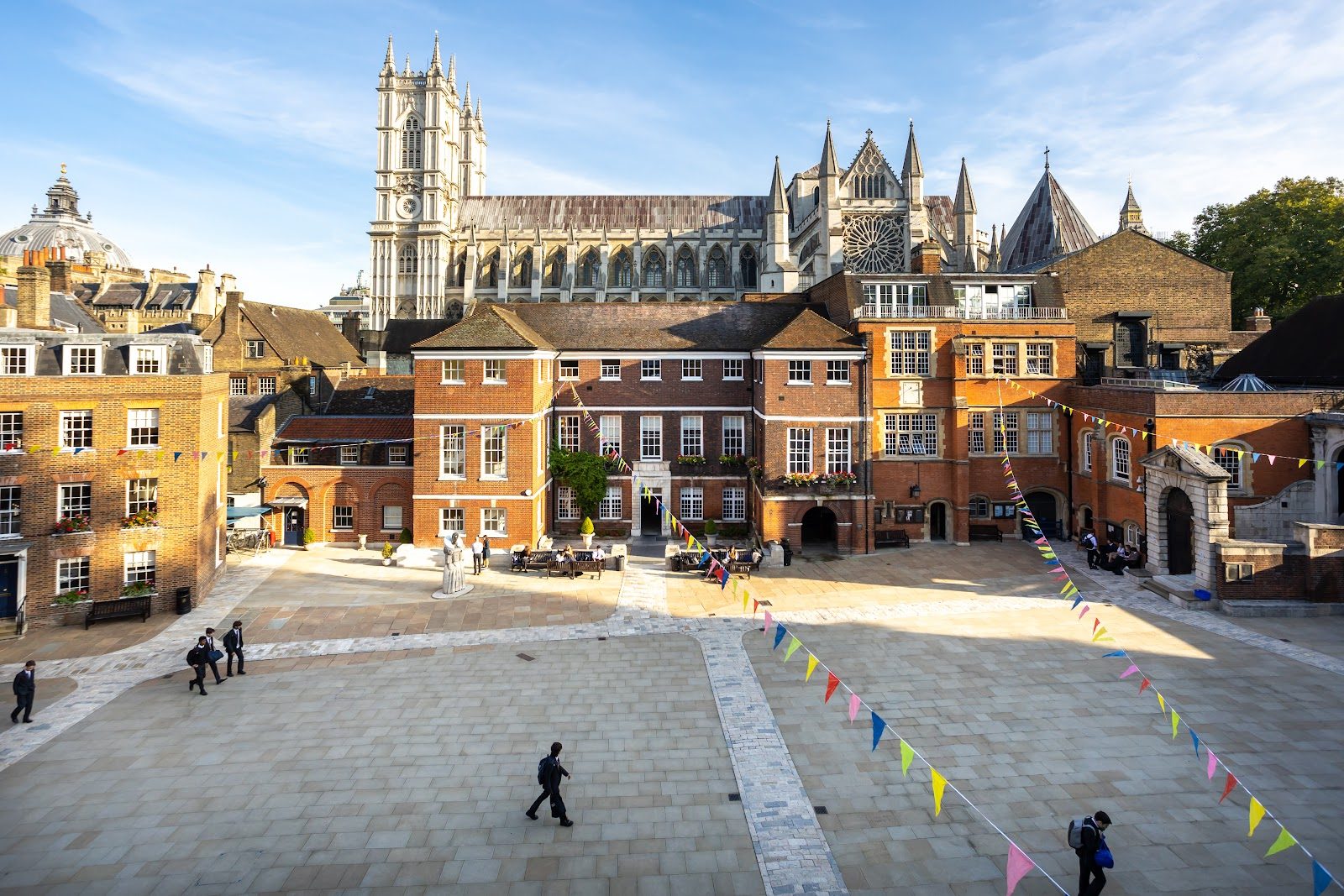
Westminster School
London · United Kingdom
Sandwiched between Parliament and the Abbey, its Latin prayers and ancient halls send close to half of leavers on to Oxford or Cambridge.
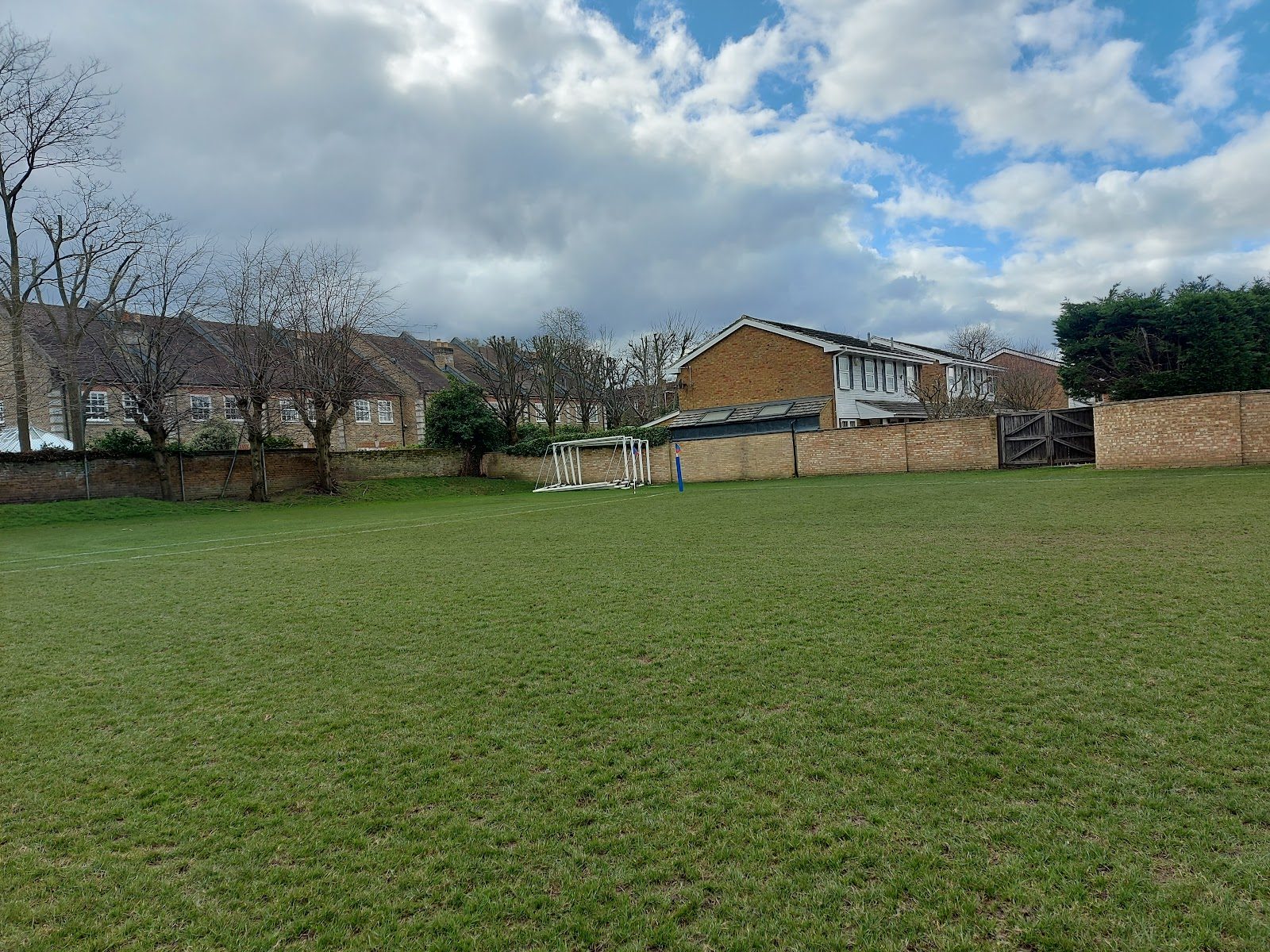
King's College School, Wimbledon
London · United Kingdom
Beside Wimbledon Common, a Royal Charter school where sixth-formers choose A-levels or the IB and rank among England's very best in both.
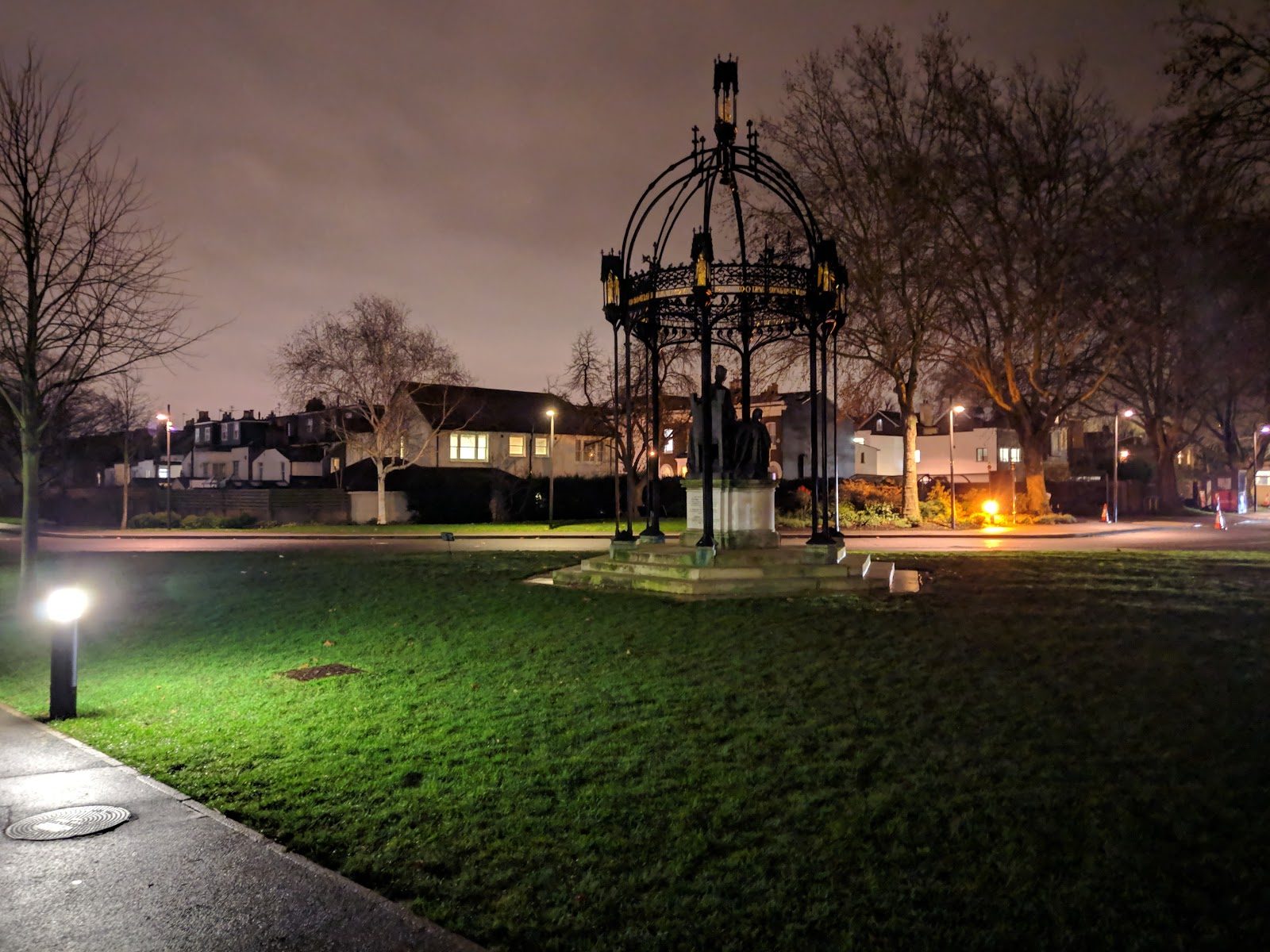
St Paul's School
London · United Kingdom
A 1509 founding charter to teach boys 'from all nacions and countres indifferently' still anchors this riverside Barnes campus on the Thames.
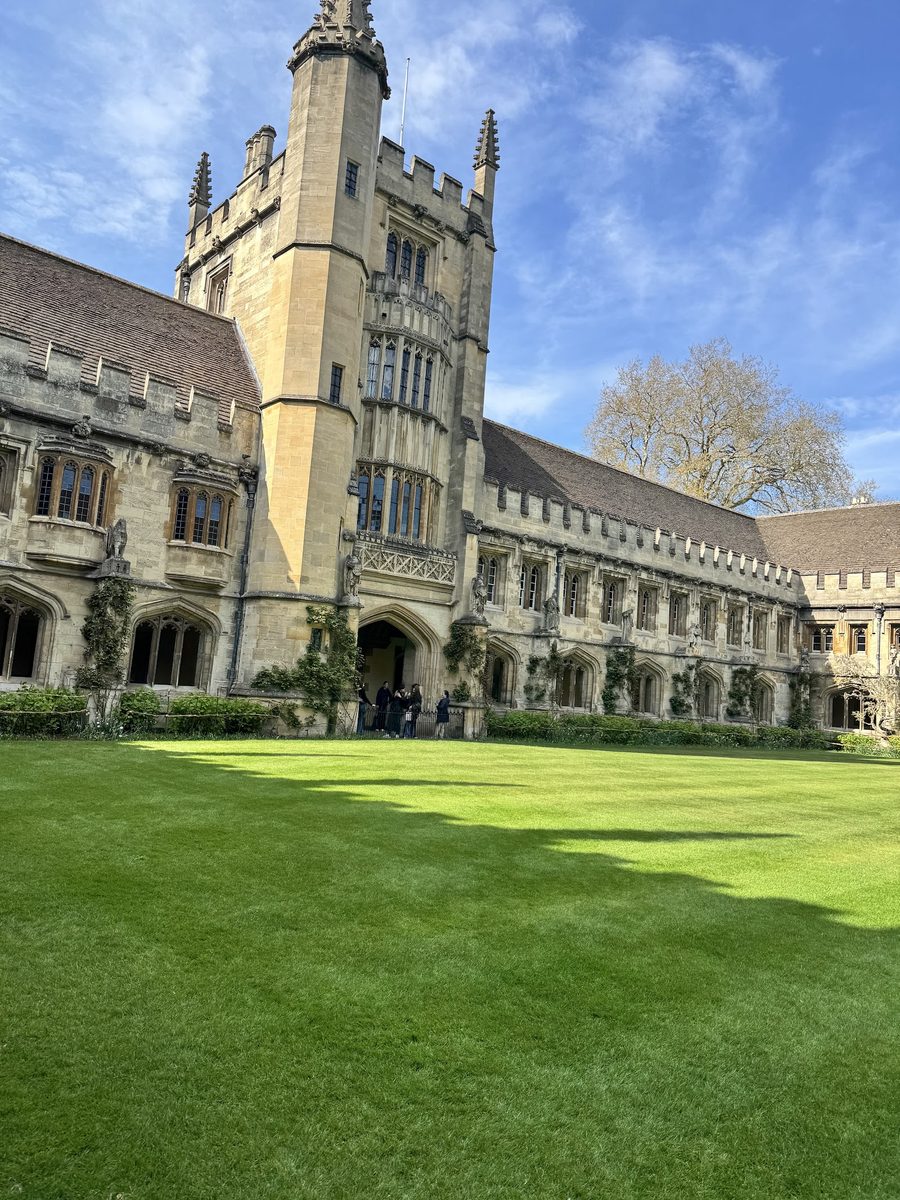
Magdalen College School
Oxford · United Kingdom
Educating Magdalen College's choristers since 1480, this Oxford day school is now opening its ancient choir stalls to girls for the first time.
Same country and curriculum — closest matches within ±10 points either way