
Uusimaa
The English School
high confidence· 5/6 cats · 2.75 avg sourcesFounded in 1945 by American Catholic nuns, it pioneered Finland's bilingual English-Finnish schooling model.
Type
Day
Ages
6–18
Curriculum
British
Qualifications
IGCSE
Ratio
—
The Verdict
Editor's commitment
Right for
Families wanting a non-religious day school in Helsinki, founded in 1945, teaching ages 6–18 in English and Finnish.
Wrong for
Anyone seeking boarding, a faith ethos, or education outside the school-declared British curriculum for ages 6–18.
Watch out for
English and Finnish instruction in a Helsinki day school sounds practical, but bilingual delivery does not suit every 6–18 learner.
Ranking breakdown
The English School · #687 of 1591
Composite score 66.7. 8 weighted criteria.
By criterion
Academic Outcomes
Weight 20%
#746
of 1529 scored
University Placement
Weight 16%
#736
of 1529 scored
Prestige & Heritage
Weight 12%
#734
of 1571 scored
Alumni Network
Weight 12%
#481
of 1530 scored
Facilities
Weight 12%
#933
of 1533 scored
Transparency & Communications
Weight 8%
#842
of 1532 scored
Peer & Industry Review
Weight 10%
#793
of 1548 scored
Admissions Selectivity & Demand
Weight 8%
#547
of 1529 scored
Score history
The English School · 2026
Movement across 2024–2026. Peer average overlaid.
Overall — 2024–2026
66.7/ 100
▲ +36.3 vs 2025
year on year
Peer & Industry Review
How The English School is regarded in the sector
67
Respected · medium confidence
I could not locate independent third-party sources (e.g., Tatler, Good Schools Guide, specialist education press, alumni network coverage) that specifically assess The English School in Helsinki's reputation. Available information appears limited to the school's own materials or general directory listings without substantive independent commentary.
Editors' overview
The English School occupies a useful niche in Helsinki: a long-established, non-religious day school that teaches in both English and Finnish and serves children from 6–18. The headline attraction is not glamour but structure. Although the school is described editorially as British-curriculum, its own site makes clear that it follows the Finnish National Curriculum while operating under a special educational task that allows more extensive provision in English and Finnish. That matters. For families who want serious English-medium schooling without stepping outside the Finnish system, this is a practical advantage, and in Helsinki it is a fairly distinctive proposition. Founded in 1945, it also has the weight of institutional memory that newer bilingual schools cannot easily imitate.
What is special here is the bilingualism with intent. The school says its English objectives exceed national requirements, while native Finnish speakers are offered a strong programme in Finnish and other students may study Finnish as a second language. In other words, this is not a token international stream with a bit of language decoration around the edges. It is designed for children who need to function properly in two linguistic worlds. That gives it real day-to-day usefulness for mixed-nationality families, returning expatriates, and internationally minded Finnish families who do not want their children cut off from local language and society. The split across two Helsinki sites — grades 1–6 at Mäntytie and grades 7–9 plus high school at Valimotie — suggests a school of reasonable scale rather than a boutique operation.
Why shortlist it? Because it offers a credible middle path between fully local schooling and a more expatriate-facing international model. Parents should, however, be clear-eyed: this is unlikely to suit families seeking an entirely British environment in the cultural sense, or those wanting the cachet of a highly selective, globally branded international school. Its appeal is more grounded than that. The English School should attract students who are academically steady, linguistically adaptable and comfortable moving between English and Finnish expectations. Children who thrive on community continuity, established routines and a strong sense of belonging are likely to do well here; those wanting a transient, ultra-cosmopolitan atmosphere may find it less compelling.
Academic Performance
The English School presents itself editorially as a British-curriculum school, but the school’s own description is more precise: it follows the Finnish National Curriculum, with a special bilingual English-Finnish remit and additional language provision. That matters when judging academic performance. There is no evidence in the supplied primary material of published GCSE, A-level, IB, or other international examination results, so any claim about external exam success relative to British schools would be speculative. Equally, the source material supplied here does not provide school-level matriculation outcomes, average grades, or university destinations. On the evidence available, this is a school best understood as a bilingual academic day school rather than an exam-results brand.
Relative to peers in Helsinki’s international and bilingual market, The English School appears distinctive for language intensity and clear in mission, but opaque on measurable outcomes. It serves ages 6–18, has operated since 1945, and runs across 2 Helsinki sites, which suggests institutional stability rather than a start-up profile. Still, families focused primarily on externally benchmarked results will find less hard data here than at schools that routinely publish diploma scores or matriculation statistics. The academic proposition seems to rest on bilingual fluency, continuity, and alignment with Finnish national standards — potentially *well suited to internationally minded local families* — but, from the material provided, it cannot be ranked confidently as a top performer on external examinations.
Facilities
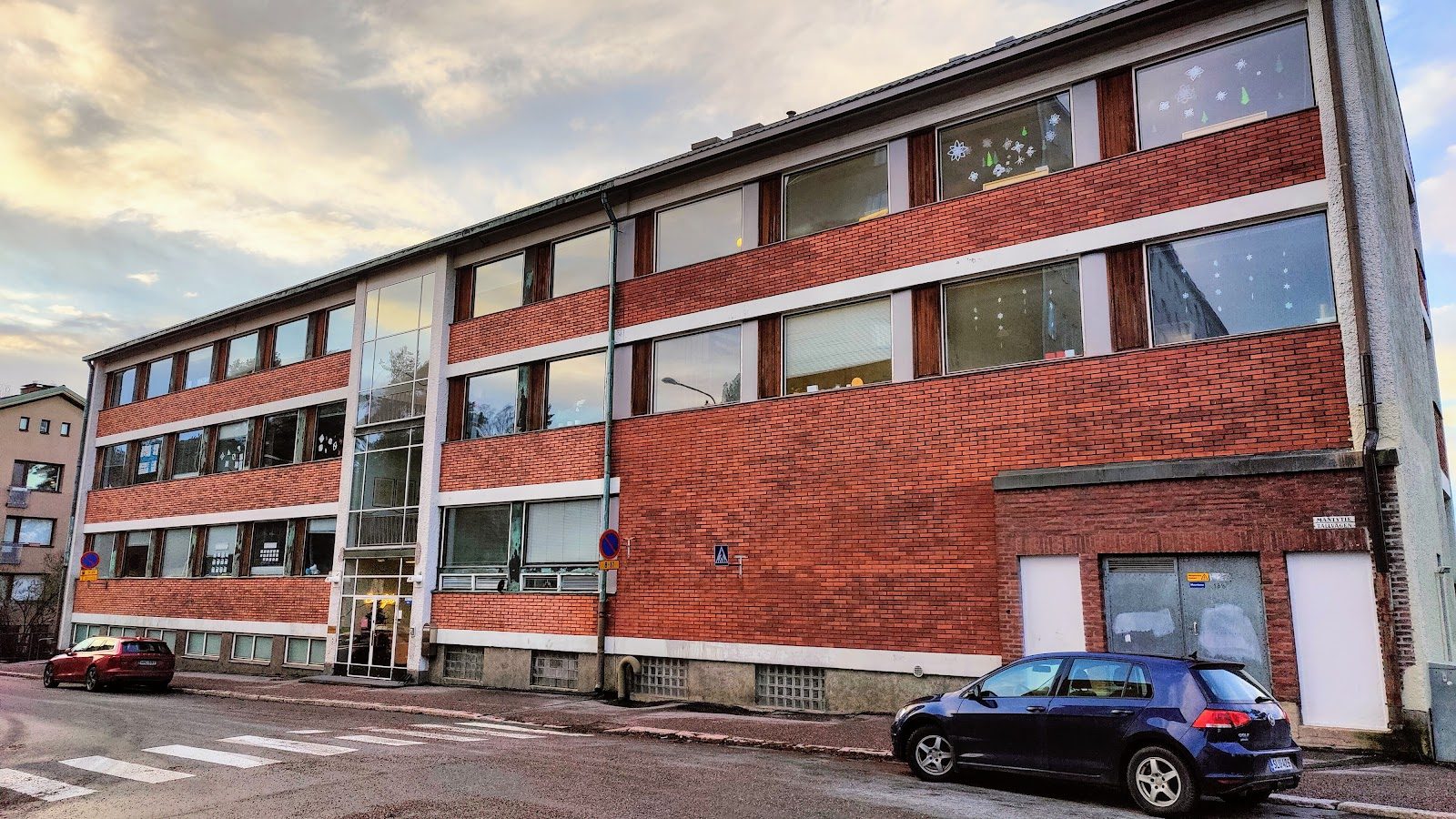
The English School operates across 2 Helsinki sites: Mäntytie for preschool and Grades 1–6, and Valimotie for Grades 7–9 and high school. That split-campus arrangement is the defining facilities fact here. It is practical rather than grand: younger and older pupils are housed separately, which can suit age-appropriate routines and safeguarding, but it also means the school does not offer the single, all-through campus experience some international families may expect. The school’s own material emphasises its bilingual English–Finnish educational model and community traditions more than any specialist estate, so there is no basis for claiming extensive theatres, elite sports infrastructure or large-scale boarding-style amenities. On available evidence, this looks like a functional urban campus setup, age-segmented rather than expansive, and *better understood as a city school than a flagship facilities play*.
Against Helsinki peers, that places The English School in a fairly clear bracket. Families choosing it are likely doing so for bilingual teaching and location, not for lavish grounds or unusually broad specialist provision. Compared with larger purpose-built international schools, its facilities profile appears more modest, with less visible emphasis on showcase assets. That is not necessarily a drawback: for a central day school, two distinct sites can be sensible and efficient. But parents focused on high-end sports complexes, major performing arts spaces or extensive campus amenities should note that these are not highlighted in the school’s published information.
The English School should attract students who are academically steady, linguistically adaptable and comfortable moving between English and Finnish expectations
Prestige
Prestige here is best understood as established local standing rather than elite international cachet. Founded in 1945, The English School has longevity few schools in Finland can match, and that matters: it is a familiar name in Helsinki, with a durable reputation among families seeking substantial teaching in both English and Finnish. Its special educational task granted by the Ministry of Education and Culture gives it a degree of official distinction, and the bilingual model is more than a label: the school says it follows the Finnish National Curriculum while providing more lessons in both languages, with English objectives exceeding national requirements. That makes it credible, purpose-built and unusually well defined in its niche.
Still, prestige should not be overstated. This is a day school for ages 6–18, not a grand embassy school or a selective old-world academy with obvious global brand power. Its status comes from consistency, history and clarity of mission, not from publicly vaunted rankings, marquee facilities or conspicuous exclusivity. For families in Helsinki who want a bilingual English-Finnish education with a long record and no religious character, it carries solid civic prestige and practical respectability. For globally mobile parents comparing headline-name international schools, however, its reputation is likely to read as serious rather than glamorous.
The English School operates across 2 Helsinki sites: Mäntytie for preschool and Grades 1–6, and Valimotie for Grades 7–9 and high school
Communications
The English School’s parent communications appear to be shaped by the practical realities of a bilingual day school spread across 2 sites: Mäntytie for preschool and Grades 1–6, and Valimotie for Grades 7–9 and high school. The school’s public-facing information is straightforward rather than polished. Its website states plainly that it follows the Finnish National Curriculum while providing an English-Finnish bilingual education under a special educational task from the Ministry of Education and Culture. That matters: parents are told, in clear terms, what the school is and is not. There is little sign of inflated rhetoric. Contact details are easy to find, including direct phone numbers for each campus and a general email address. This suggests a functional, accessible communications culture, especially for day-to-day parental queries.
Effectiveness, however, seems stronger on clarity than on depth. The messaging gives parents a usable overview of curriculum, language provision and school traditions, and it does so in a plain-speaking way that should reduce confusion for both Finnish-speaking and international families. The emphasis on annual events and student involvement also implies that communication is not only transactional but community-building. Still, based on the material provided, one cannot judge how frequently parents are updated, how detailed reporting is, or whether digital platforms are well used. So the verdict is reassuringly direct but only partially evidenced: good at establishing the school’s identity and practical points of contact, less clearly demonstrated in the finer mechanics of ongoing parent-school communication.
Uniqueness
What distinguishes The English School is not, in fact, a pure British model, despite the school-declared label. Its own materials state that it follows the Finnish National Curriculum, with a special educational task that allows more teaching in English and Finnish. That makes it a genuinely bilingual rather than nominally international proposition: pupils study in 2 languages within a national framework, from ages 6–18, and do so in a school founded in 1945 with unusually deep roots by local standards. For families in Helsinki, that combination is specific and useful. It offers access to English-medium learning without stepping outside the Finnish system, while also giving native Finnish speakers a stronger Finnish-language programme and other pupils the option of Finnish as a second language.
What this brings in practice is a rarely balanced form of linguistic development. Students are not simply immersed in English; they are expected to operate across English and Finnish with seriousness, which should suit internationally minded families who intend to stay in Finland as much as those wanting a broader anglophone education. The school’s traditions and whole-school events, as described by the school, also suggest a cohesive cross-age community rather than a loose collection of parallel sections. In a central Helsinki day-school setting, that creates something structurally distinctive: a long-established, non-religious school that is neither fully local nor conventionally international, but positioned between the two in a way that can be highly practical for the right child.
Against Helsinki peers, that places The English School in a fairly clear bracket
Student Profile
The English School will suit families looking for a bilingual day education rather than a fully expatriate bubble. The school teaches in English and Finnish, and its own description makes clear that it follows the Finnish National Curriculum while offering more teaching in both languages under its special educational task. In practice, that points to children who can cope with a genuinely mixed linguistic environment and parents who value integration into Finnish life as much as English-medium schooling. It is likely to work best for pupils who are adaptable, academically steady and comfortable moving between language tracks, whether as native Finnish speakers building strong English or as English-speaking children taking Finnish as a second language. The age span of 6–18 also suggests a continuous, all-through setting rather than a transient international school culture.
The profile is therefore fairly specific: bilingual-minded, community-oriented and likely to appreciate school traditions and whole-school events rather than a highly anonymous campus experience. With sites split between lower years and older students, and a history dating to 1945, it should appeal to families who want something established rather than fashionable. It may be less suitable for those seeking a pure British curriculum in the strict sense, or for students who would struggle with the demands of English-Finnish schooling. The best fit is a child who can manage structure, participate across age groups and thrive in a school that appears locally rooted as well as outward-looking.
What distinguishes The English School is not, in fact, a pure British model, despite the school-declared label
Co-curricular strengths
Arts & sport, on a separate axis
Overall 4/10
Scored 0-10 from the school's own published evidence. This axis is editorial-only — it does not feed the main WTS ranking.
Sports
5/10
Multiple sports—football, basketball, volleyball, floorball, cross-country running and swimming—showing a solid multi-sport extracurricular offering.
Drama
3/10
Drama appears explicitly as a 'Drama club' in the extracurricular list.
Dance
—
Music
5/10
Names both Choir and School orchestra, indicating more than a bare mention and suggesting structured musical participation, but there is no evidence of dedicated facilities, specialist staff or notable performances.
Visual Arts
3/10
Visual arts is evidenced by the explicit listing of an 'Art club', but there is no further detail on curriculum breadth, studios, exhibitions or specialist facilities.
Editor first-pass · editor-reviewable · 7/27/2026
Strengths
- +Established in 1945; long-standing Helsinki presence.
- +Day school only; no boarding disruption.
- +Ages 6–18 allow one-school continuity.
- +English and Finnish instruction suits bilingual families.
Considerations
- −British curriculum may not suit all families.
- −English and Finnish instruction can complicate adjustment.
- −Day-only model excludes families needing boarding.
Availability
Primary entry gate & tests
Academic Record
Parent reviews
Have you sent your child here?
Voice reviews carry the strongest trust badge — we transcribe them for you to tidy up before they go live. Prefer to type? A written review is fine too.
Add your voice
In 60 seconds, tell other parents: what's the best thing about The English School, and what surprised you when your child joined?
We ask for a Google sign-in so every review has a real face behind it — no anonymous drive-by attacks on schools, and no faked positive reviews. Your email is never shown publicly.
Send this profile to a friend
International parents rely on word-of-mouth. Share this review with someone weighing the same decision.
Schools with places
Similar schools to The English School with places available now.
Availability first, then country, area, curriculum, price, co-curricular
Consider also
Also worth looking at alongside The English School.
International School of Helsinki
Helsinki · Finland
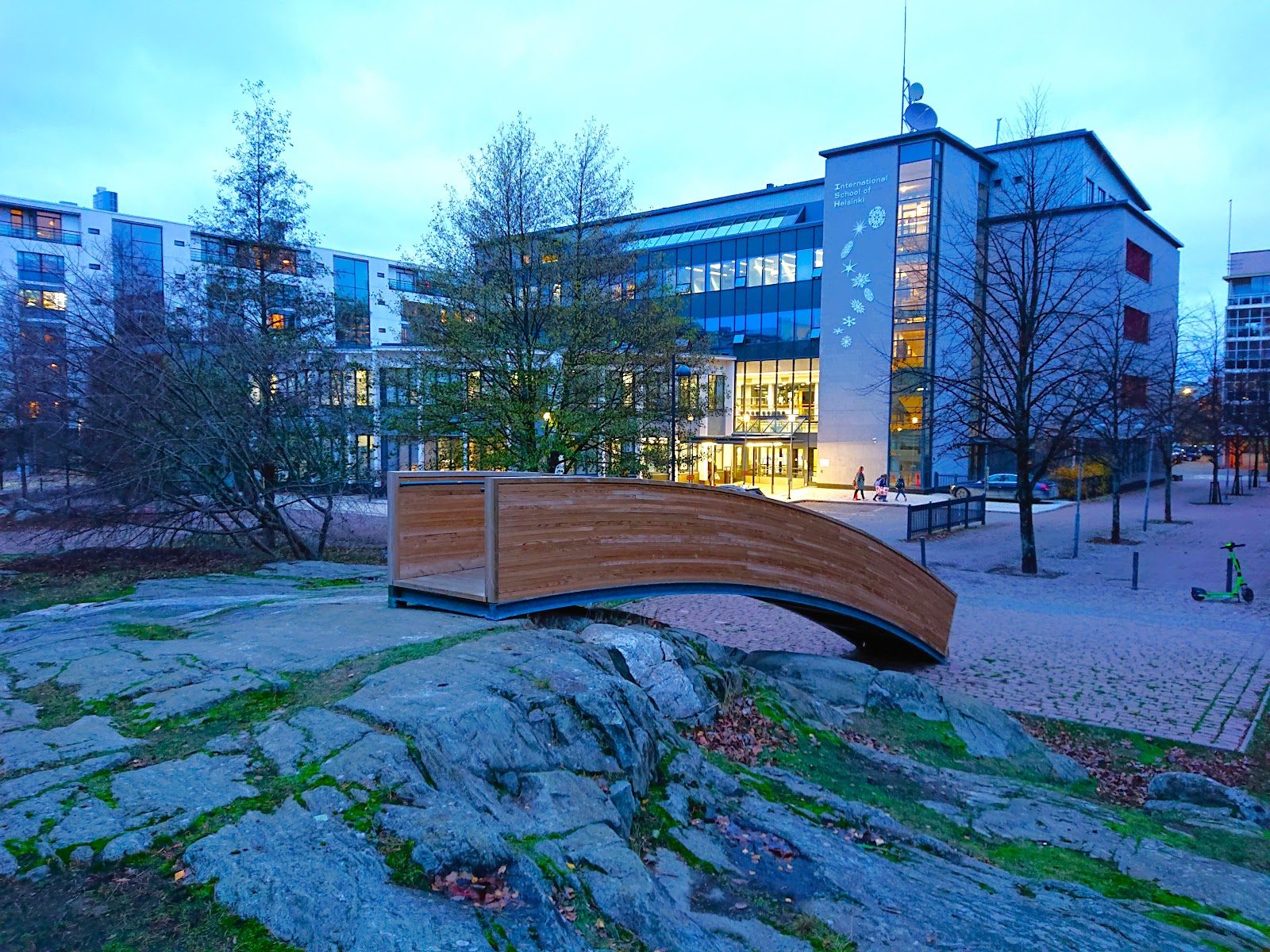
Founded in 1963 and based in Helsinki, it became Finland's first school fully authorized across all three IB programmes.
Shrewsbury School
Shrewsbury · United Kingdom
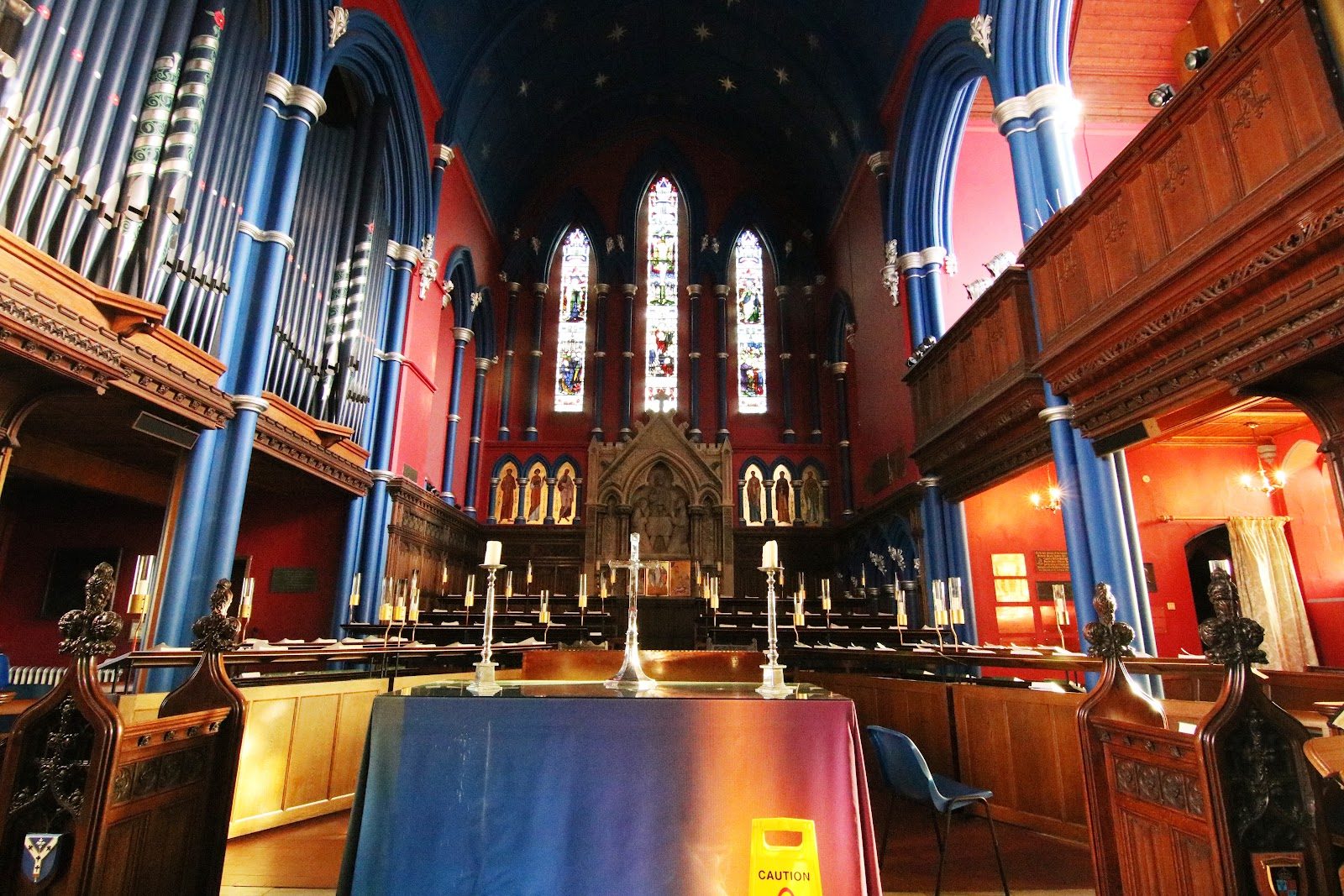
Curled inside a loop of the River Severn, twelve boarding houses keep alive a rowing tradition dating to 1866.
The Sultan's School
Muscat · Oman
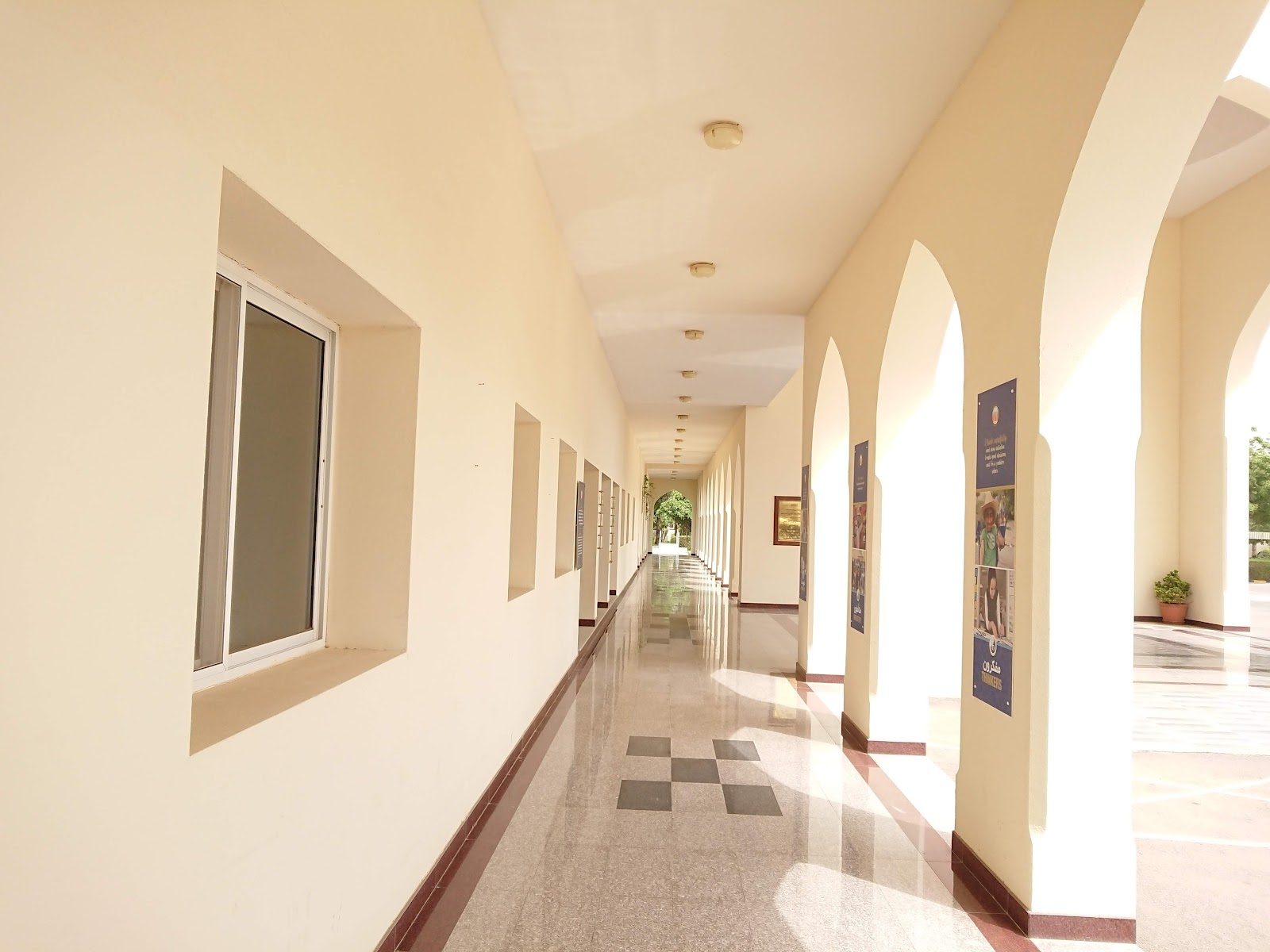
Royally chartered in 1977, this Muscat day school fuses British academics with Arabic and Islamic studies to mould future Omani leaders.
Swiss International Scientific School Dubai
Dubai · United Arab Emirates
The largest Swiss school outside Switzerland, running a bilingual IB continuum along Dubai Creek in French or German.
Same country and curriculum — closest matches within ±10 points either way