
Gyeonggi Province
Hankuk Academy of Foreign Studies
Born from a rare city-university pact, this rural Yongin campus once split students into language majors from English to Japanese and Chinese.
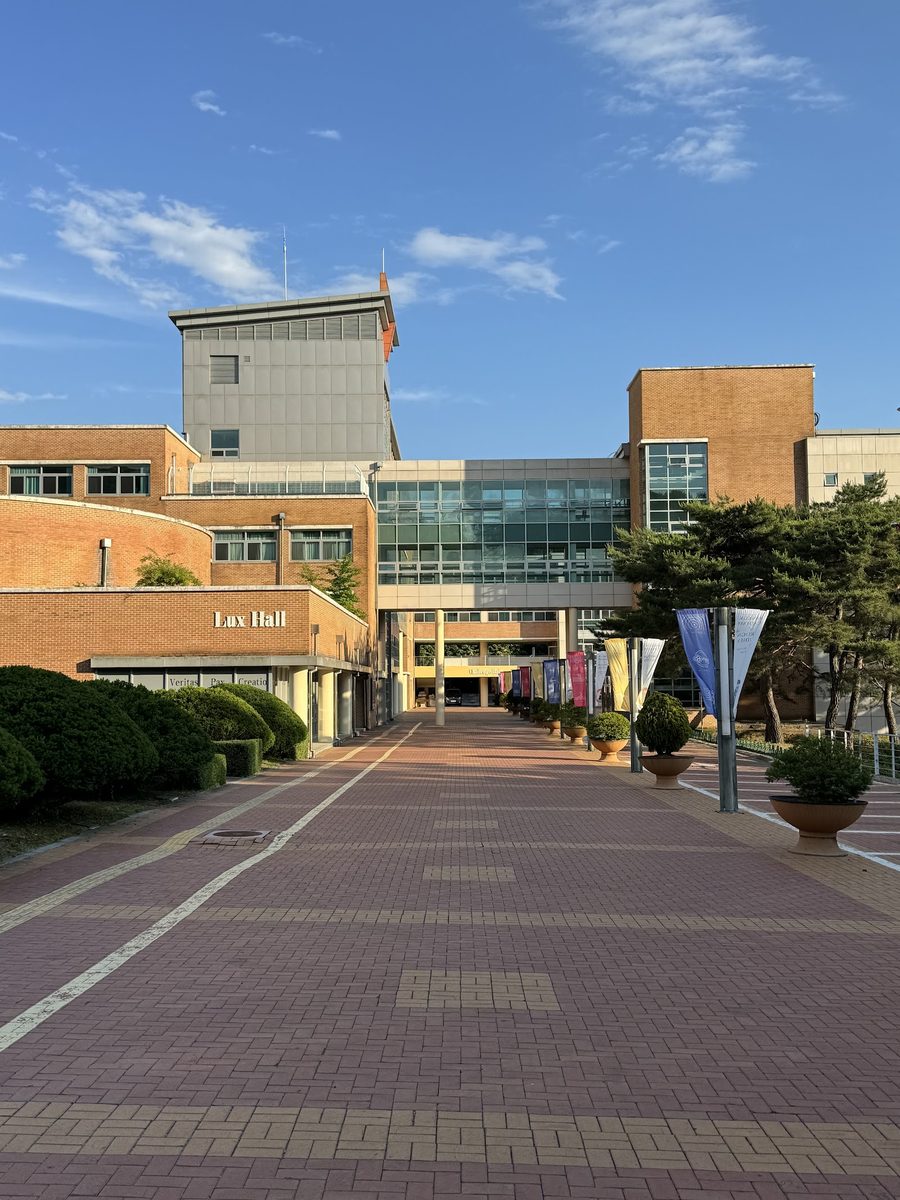
Photo © YoonJae Nam via Google Maps
Type
Boarding & Day
Ages
15–18
Curriculum
International
Qualifications
IB Diploma · AP
Ratio
—
The Verdict
Editor's commitment
Right for
Ambitious 15–18-year-olds who want English-medium study at a private boarding and day school founded in 2005 in Yongin.
Wrong for
Families wanting a broad all-round brief; Hankuk Academy of Foreign Studies is an international, English-medium school built around foreign studies.
Watch out for
The school does not publish curriculum detail beyond 'International'; for a selective private boarding school in Yongin, that opacity is a weakness.
Ranking breakdown
Hankuk Academy of Foreign Studies · #354 of 1591
Composite score 71.3. 8 weighted criteria.
By criterion
Academic Outcomes
Weight 20%
#209
of 1529 scored
University Placement
Weight 16%
#219
of 1529 scored
Prestige & Heritage
Weight 12%
#296
of 1571 scored
Alumni Network
Weight 12%
#721
of 1530 scored
Facilities
Weight 12%
#857
of 1533 scored
Transparency & Communications
Weight 8%
#1151
of 1532 scored
Peer & Industry Review
Weight 10%
#533
of 1548 scored
Admissions Selectivity & Demand
Weight 8%
#22
of 1529 scored
Peer & Industry Review
How Hankuk Academy of Foreign Studies is regarded in the sector
70
Respected · medium confidence
Within Korea, HAFS is consistently grouped with Daewon Foreign Language High School as the two benchmark 'foreign language special-purpose' high schools, a pairing repeated in JoongAng Ilbo and Chosun Ilbo coverage of SPHS admissions and in Ministry of Education debates over whether such schools should retain elite status. Domestic university admissions offices, particularly at Seoul National University, Korea University and Yonsei, list HAFS among the top public feeder schools for their early-admission cohorts, a pattern reflected in annual SNU enrollment breakdowns cited by Korean press. Internationally, HAFS graduates' regular placement at US Ivy League and UK Russell Group universities has made it a reference point in Korean-language college-counseling forums and expatriate education blogs, though it receives little direct coverage from Western outlets like Good Schools Guide or WhichSchoolAdvisor, which focus on international rather than domestic Korean schools. Its reputation is thus strongest as a nationally elite, exam-and-Olympiad-driven feeder school rather than as a globally networked international school, with peer recognition concentrated in Korean education journalism and university admissions data rather than Western independent-school review circles.
Editors' overview
Hankuk Academy of Foreign Studies occupies a rare niche in South Korea: a 2005-founded, academically selective school for ages 15–18 that combines boarding with day provision on a rural Yongin campus. Its defining distinction is structural, not cosmetic. The school was created through a city-university collaboration, a highly unusual foundation model in Korea, and that origin still matters. It gives HAFS a sharper institutional identity than many prestige schools that rely on reputation alone. The editorial tagline points to another defining feature: the school once divided students into language majors, from English to Japanese and Chinese. That foreign-studies DNA still gives HAFS its intellectual edge, its serious international intent, and a stronger sense of purpose than generic “global” schools with little more than English-medium branding.
For parents building a shortlist, HAFS earns attention for three reasons. First, it sits at the top end of Korea’s high-attainment secondary market, with a public reputation for selectivity and strong university admissions outcomes. Second, it offers a boarding environment in a country where high-pressure academic life is often fragmented across school, tutoring and home; for the right student, that residential structure delivers discipline with direction and a more coherent daily rhythm. Third, it is not a broad church. HAFS has a defined academic character: scholarly, competitive, exacting. Families who want warmth, breadth and pastoral looseness ahead of academic intensity will find stronger fits elsewhere. Families who want ambition, structure and a peer group that takes study seriously will put it near the top of the list.
The school suits a student who actively wants an intellectual contest. The strongest fit is a teenager aged 15–18 who thrives in a selective cohort, values English-medium study, and is motivated by languages, humanities and internationally oriented academic work. This is not the place for a child who needs constant hand-holding or who resists pressure. It is for the student energised by high standards, earned prestige and a campus culture where achievement carries social weight. In market terms, HAFS sits as a national prestige option with a specialist identity: not merely a strong Korean boarding school, but one built around foreign-studies ambition from the start.
Academic Performance
HAFS carries a national reputation for elite academic performance, but the school does not publish the examination data that would let parents test that claim properly. We have not seen aggregate scores, distribution tables, subject-by-subject results, or university placement breakdowns issued in a form that permits serious comparison with Korea’s top specialist and international-facing schools. That opacity matters. A school asking families to trust its high-pressure academic model needs to show external outcomes with precision. Public claims of strong admissions success and high selectivity count for something, but they are not a substitute for disclosed results.
Relative to peers, HAFS sits in the top tier of Korean academic prestige on reputation and admissions cachet, especially among schools that channel ambitious students towards overseas universities and language-heavy study. That standing places it above ordinary college-preparatory schools and into competition with the country’s most demanding selective institutions. The missing piece is proof in numbers. Without published examination data, parents cannot judge whether HAFS merely attracts strong students or adds exceptional academic value. For a school with such a hard-edged scholarly identity, that gap is conspicuous. The market position is clear; the quantitative evidence is not.
Facilities
Facilities are not the public story here, and that itself tells parents something. We have not seen a published facilities profile with the level of detail serious comparison requires: no clear inventory of laboratories, arts spaces, theatres, specialist sports provision or residential amenities. For a school with elite domestic standing and a residential model, that silence is a weakness. The campus matters more in a boarding school than in a day school; parents need to know how students live as well as how they study. At minimum, HAFS benefits from being a full secondary campus rather than an urban cram-school bolt-on, and that gives it a more coherent daily environment than many Korean academic high performers. Beyond that, the school does not disclose enough.
Against peer schools, that places HAFS in an unusual position: high-status academically, opaque physically. Top Korean selective schools and strong international boarding schools do not need to flaunt luxury, but they do need to show parents the practical assets that support long study hours and adolescent life. Science rooms, language facilities, library quality, sports access, boarding-house standards and common spaces all affect student experience. At HAFS, those basics are not documented in public with enough precision. That does not mean the facilities are weak. It means the school asks families to buy into a demanding residential education without showing the full setting in which that education happens. In this section, HAFS ranks as *under-explained rather than under-equipped*.
First, it sits at the top end of Korea’s high-attainment secondary market, with a public reputation for selectivity and strong university admissions outcomes
Prestige
HAFS sits in the top bracket of Korean secondary-school prestige. That rating rests on two hard facts from the public record: extreme selectivity and a powerful record in university admissions. In Korea, prestige at school level does not grow out of glossy campuses or imported branding. It comes from who gets in, how hard the academic culture runs, and which institutions take its graduates seriously. On that measure, HAFS holds real weight. The school’s foreign-studies identity sharpens that status further. It is not merely an exam factory with a fashionable international label; it has a distinct academic signature that marks it out from generic high-performing schools.
The source of that prestige also defines its limits. HAFS carries earned cachet inside a competitive national market, but the school does not publish the outcome data that would let outsiders separate myth from measurable performance. That weakens the case for treating it as untouchable. Prestige here is strong, but not mysterious: it rests on selectivity, serious academic reputation and an institutional model rare in the Korean system. For families in Korea, that combination gives HAFS elite standing. For international families comparing schools across borders, the name carries less automatic recognition than a global brand or a centuries-old British independent school. In plain terms: high prestige domestically, more limited signalling power internationally.
Families who want ambition, structure and a peer group that takes study seriously will put it near the top of the list
Communications
HAFS does not communicate with parents at the standard an elite selective school should meet. The public-facing picture is thin where families need precision most: academic outcomes, campus life, and the practical detail of student support. That matters more here because the school asks parents to accept a demanding, high-control environment with real stakes for adolescent life. A school of this type needs disciplined, regular, decision-useful communication: clear calendars, boarding routines, assessment reporting, university guidance processes, welfare channels and named points of contact. We have not seen that level of disclosure in the public domain. The result is a trust us model, and that is weak.
That does not mean communication inside the school is poor. Highly selective Korean schools often run on tight internal systems and direct parent contact once a student is enrolled. But for a family trying to judge fit before entry, HAFS is opaque, institution-first and less legible than it should be. The website does not do enough heavy lifting for international parents or for domestic families comparing top-tier options with sharper parent information habits. At a school serving ages 15–18, communication is not a cosmetic extra; it is part of the pastoral contract. HAFS communicates its status and seriousness clearly. It communicates the lived mechanics of the school far less well. That imbalance leaves parents with prestige, but not enough operating detail.
Uniqueness
HAFS is unusual because its identity grows out of a structural idea, not a branding exercise. The school was formed through a collaboration between government and a university, a rare arrangement in Korean secondary education and the clearest reason it has a sharper profile than many high-status competitors. Add the foreign-studies remit and you get a school built around specialism with teeth. This is not an all-purpose prestige campus trying to cover every taste. Its older model of dividing students into language majors gave it an intellectual centre of gravity that many “global” schools never develop. Even where the internal structure has evolved, that original design still matters: it creates a student body that treats languages, international affairs and academic competition as core business, not enrichment.
What that brings to students is a more defined peer culture. Ambitious teenagers do not just find strong classmates; they find a community organised around disciplined study and outward-looking academic interests. In a market crowded with schools chasing status through exam pressure alone, HAFS offers a more distinctive proposition: prestige tied to subject identity. That can be galvanising for the right student. It gives able linguists and internationally minded pupils a clearer sense of purpose than a generic elite high school. The trade-off is plain. Students who want looseness, experimentation or a softer adolescent experience will find the culture narrower and harder-edged than they want. For the student who wants seriousness with a defined academic lens, that focus is the school’s real advantage.
Without published examination data, parents cannot judge whether HAFS merely attracts strong students or adds exceptional academic value
Student Profile
The right student for HAFS is not just bright, but self-propelling. This school suits teenagers who draw energy from competition, tolerate scrutiny, and do not need constant reassurance to keep working. The best fit is a pupil with real stamina for dense academic routines and a genuine appetite for languages, humanities and internationally inflected study. Socially, the school will suit students who are comfortable being surrounded by other high achievers and who do not crumble when excellence is normalised. A child who needs room to drift, reinvent themselves weekly, or keep academics at arm’s length will find the culture tight, demanding and not for the faint-hearted.
There is also a personality question. HAFS fits students who accept structure as a tool rather than an insult, and who can live constructively within an institution that carries status and expects students to live up to it. The strongest candidates are disciplined without being brittle: ambitious, but able to cope when they are no longer the undisputed star of the class. For internationally minded families, the attraction lies in a peer group shaped by serious scholarly intent rather than vague global branding. For others, the same profile will feel narrower than they want. This is a school for adolescents who want to be stretched hard between 15–18, and who measure school less by comfort than by intellectual traction.
HAFS sits in the top bracket of Korean secondary-school prestige
Co-curricular strengths
Arts & sport, on a separate axis
Overall 7.3/10
Scored 0-10 from the school's own published evidence. This axis is editorial-only — it does not feed the main WTS ranking.
Sports
7/10
Drama
7.5/10
Dance
6.5/10
Music
8/10
Visual Arts
7.5/10
Strengths
- +Founded in 2004 as the first Korean high school created through a formal partnership between a city government and a university, giving it direct institutional ties to Hankuk University of Foreign Studies.
- +Officially designated as an on-campus testing site by the College Board and ACT Inc., allowing students to sit the PSAT, SAT, AP and ACT exams without travelling off campus.
- +Was the first school in South Korea to run the Global Assessment Certificate (GAC) programme, an international curriculum built around critical thinking and research skills for overseas university preparation.
- +Widely described in Korean and international press as the country's most selective and academically rigorous boarding school, with a strong record of college placements.
- +Recent graduates have secured places at highly selective overseas universities, including a 2025 Early Decision acceptance to Harvard reported by Korean media.
Considerations
- −By charter, at least 30 percent of each incoming class must be reserved for Yongin City residents, which structurally limits open places available to outside or international applicants.
- −The school's academic structure is split: only the smaller English-major/international track follows a US-style curriculum with AP courses, while other language-major classes are built around Korea's domestic CSAT-focused system, so 'international' education is not uniform across the student body.
- −The campus sits on a rural 53,000 sq m site in the northern part of Yongin, some distance from the international districts and amenities of central Seoul.
- −The school's administrative identity has shifted several times (foreign language high school, then Independent Private High School), reflecting a Korean domestic regulatory framework rather than a stable, internationally benchmarked school model, and detailed English-language fee and admissions data is limited.
Availability
Primary entry gate & tests
Document + Interview
Gallery
Photo © Jong doo Choi via Google Maps
Photo © 꿈돌이 via Google Maps
Photo © 꿈돌이 via Google Maps
Photo © 육성우 via Google Maps
Photo © 꿈돌이 via Google Maps
Photo © 꿈돌이 via Google Maps
Photo © 꿈돌이 via Google Maps
Parent reviews
Have you sent your child here?
Voice reviews carry the strongest trust badge — we transcribe them for you to tidy up before they go live. Prefer to type? A written review is fine too.
Add your voice
In 60 seconds, tell other parents: what's the best thing about Hankuk Academy of Foreign Studies, and what surprised you when your child joined?
We ask for a Google sign-in so every review has a real face behind it — no anonymous drive-by attacks on schools, and no faked positive reviews. Your email is never shown publicly.
Send this profile to a friend
International parents rely on word-of-mouth. Share this review with someone weighing the same decision.
Schools with places
Similar schools to Hankuk Academy of Foreign Studies with places available now.
Availability first, then country, area, curriculum, price, co-curricular
Consider also
Also worth looking at alongside Hankuk Academy of Foreign Studies.
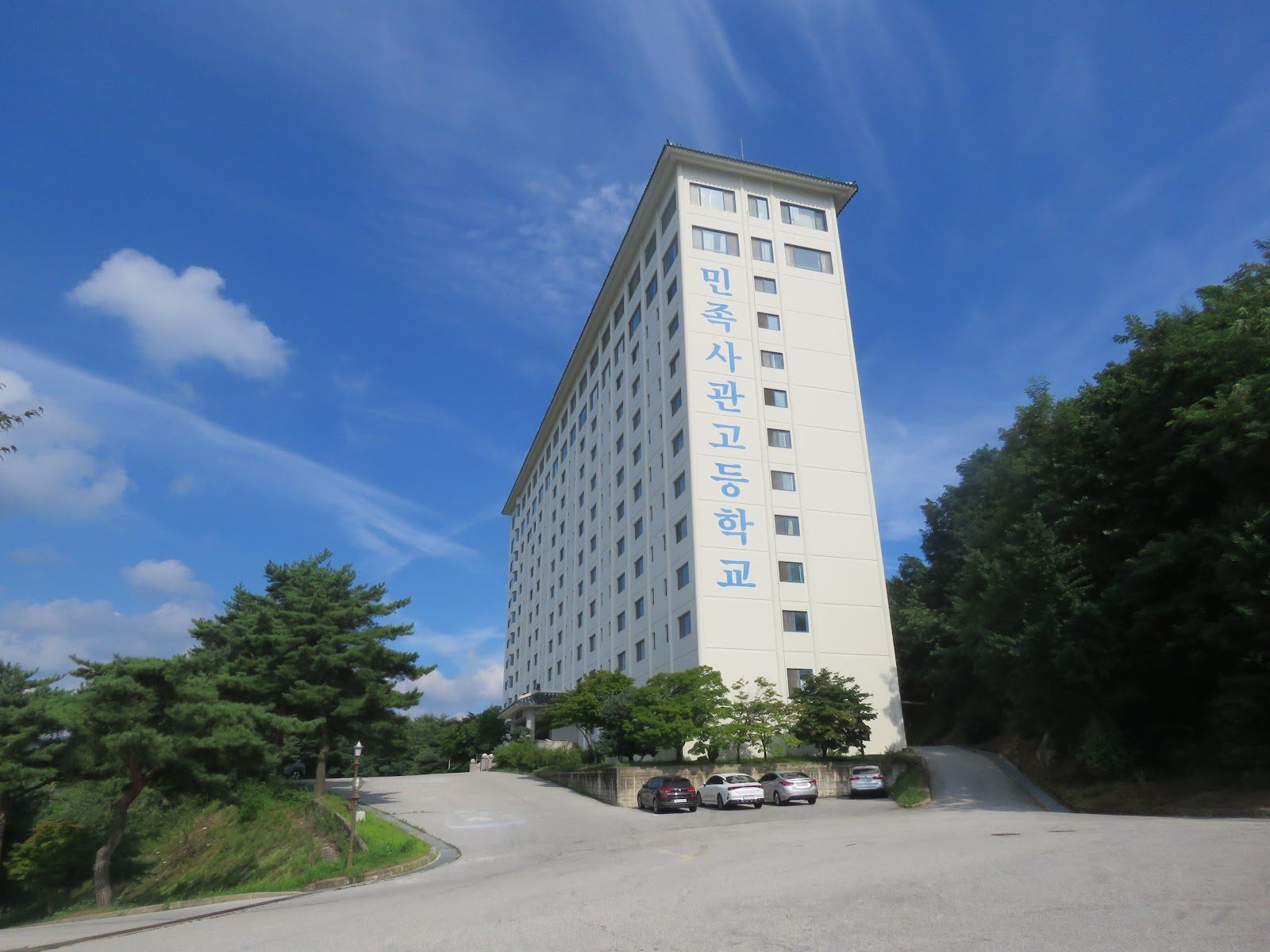
Korean Minjok Leadership Academy
Hoengseong · South Korea
On a Gangwon mountainside, hanbok-uniformed students hold English-only seminars, chasing an IB curriculum built to rival Eton.
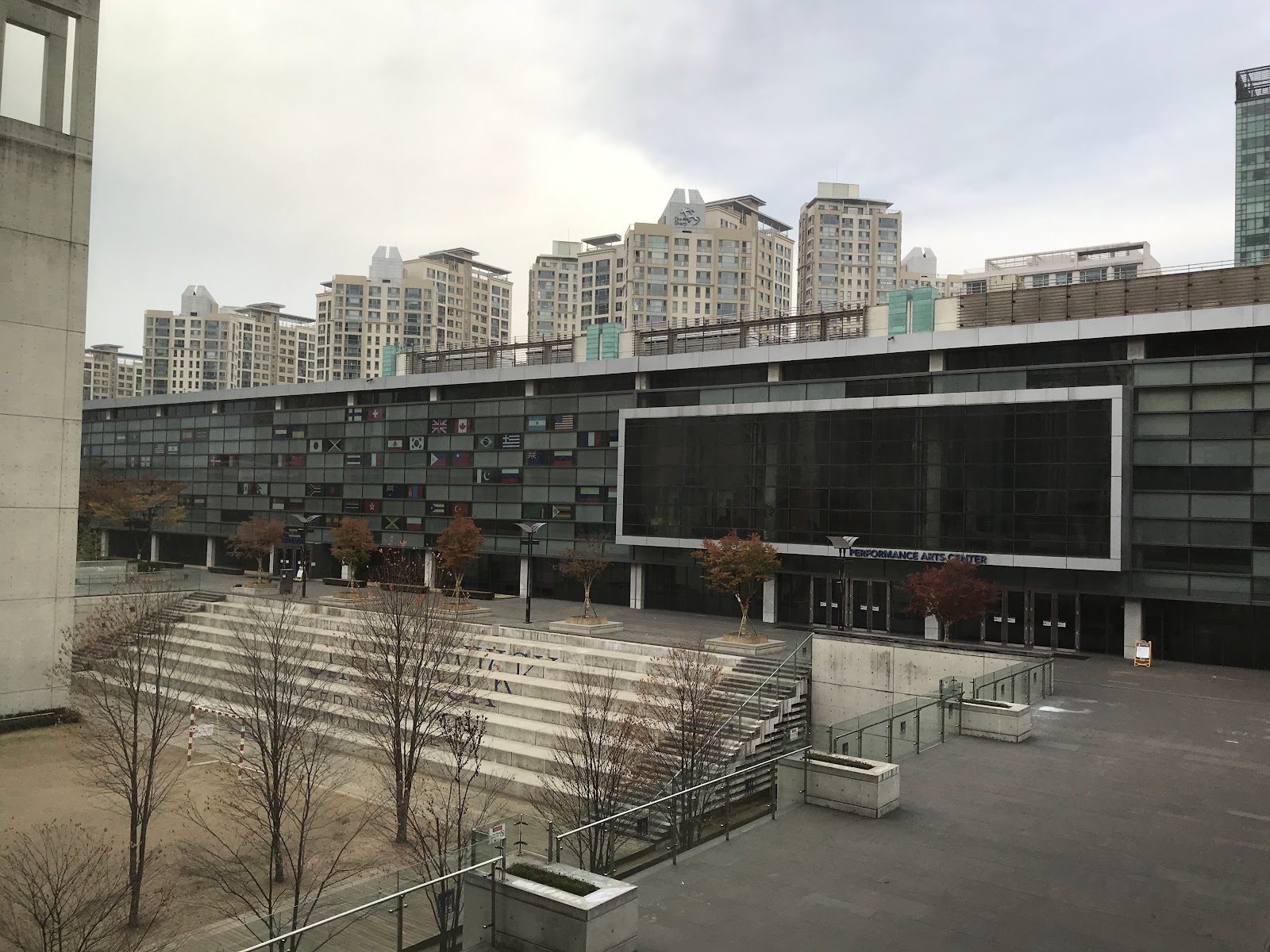
Chadwick International
Incheon · South Korea
One school, two continents: this Songdo campus mirrors a 1935 California founder, pairing IB rigor with mandatory outdoor-education expeditions.
Korea International School
Seongnam · South Korea
In Seongnam's Pangyo tech corridor, a dual IB-American track anchors a curriculum built around 24 Advanced Placement courses.
Seoul Foreign School
Seoul · South Korea
Founded in 1912 beside Yonsei University, first in Korea to adopt the IB, blending British, American and Clan-house traditions.
Same country and curriculum — closest matches within ±10 points either way