
New York
The Hewitt School
high confidence· 6/6 cats · 2.75 avg sourcesFounded the year women won the vote, this Upper East Side girls' school requires every student, K-12, to build robots.

Photo © The Hewitt School via Google Maps
Type
Day
Ages
5–18
Curriculum
American (US High School Diploma) · AP (Advanced Placement)
Ratio
6:1
The Verdict
Editor's commitment
Right for
Girls aged 5–18 who want a serious K–12 education in Manhattan, with AP on offer, a 6:1 ratio and robotics for every student.
Wrong for
Families wanting co-education, boarding or religious formation; Hewitt is a non-religious girls' day school with average classes of 12.
Watch out for
At an average $69,990 a year, this 1920 Upper East Side school sells intimacy and access; parents need to decide if 6:1 justifies it.
Ranking breakdown
The Hewitt School · #1025 of 1591
Composite score 60.2. 8 weighted criteria.
By criterion
Academic Outcomes
Weight 20%
#1137
of 1533 scored
University Placement
Weight 16%
#1089
of 1529 scored
Prestige & Heritage
Weight 12%
#1102
of 1580 scored
Alumni Network
Weight 12%
#681
of 1530 scored
Facilities
Weight 12%
#1159
of 1540 scored
Transparency & Communications
Weight 8%
#1043
of 1547 scored
Peer & Industry Review
Weight 10%
#1002
of 1564 scored
Admissions Selectivity & Demand
Weight 8%
#887
of 1529 scored
Peer & Industry Review
How The Hewitt School is regarded in the sector
68
Respected · medium confidence
The Hewitt School is a well-known independent all-girls K-12 school on Manhattan's Upper East Side, frequently mentioned alongside other elite NYC private schools (Nightingale-Bamford, Chapin, Spence, Brearley) in press coverage from outlets like The New York Times and New York Magazine's private school rankings/guides. It has a respected regional reputation among NYC private-school circles and college placement counselors, with solid college matriculation outcomes cited in admissions guides like Niche and Private School Review, but it doesn't carry the same top-tier national or international name recognition as Spence or Brearley in specialist education press.
Evidence sources
Editors' overview
Every student at Hewitt, from kindergarten through Grade 12, builds robots. That single requirement tells you a great deal about the school’s priorities: this is a girls’ school that treats technical fluency as part of a liberal education, not a specialist extra for a select few. In a crowded Manhattan market, that gives Hewitt a clear edge. Founded in 1920 on the Upper East Side, it pairs an American high school diploma with AP courses and keeps the academic environment intentionally small, with a 6:1 student-teacher ratio and an average class size of 12. Parents paying an average annual fee of $69,990 are buying intimacy, individual attention and a school that puts girls’ leadership at the centre of its case for itself.
The school’s own language is full of leadership, courage and the education of women, but the more useful distinction is structural: Hewitt is a compact K–12 girls’ school in New York that has built a through-school identity around close teaching relationships and an insistence that girls engage directly with engineering and hands-on problem-solving. That matters. Plenty of schools talk about preparing girls to lead; fewer hardwire that ambition into the timetable from the first years onward. The non-religious setting will suit families who want a mission-driven school without a faith framework, and NAIS accreditation places it squarely within the established American independent-school world.
Hewitt belongs on a shortlist for families who want a serious, high-touch education in a girls-only setting and who value a school with a defined point of view. This is not the choice for parents chasing a vast campus, a sprawling co-ed social scene or public exam data the school does not publish here. It is for bright girls who will relish being known well, taught in small groups, and pushed to combine academic work with technical confidence and leadership. The best fit is a student who is intellectually ambitious, comfortable in a small community, and keen on a school that treats courage and competence as daily habits rather than branding.
Academic Performance
Hewitt does not publish aggregate AP outcomes, average scores, score distributions, SAT or ACT profiles, or college-matriculation tables in the public domain excerpted here. That creates an opaque picture of external academic performance. For a school charging an average annual fee of $69,990, parents have grounds to expect harder evidence than mission language. In that respect, Hewitt sits behind the most transparent New York independents, which put at least some exam or university-destination data into circulation. The school’s case therefore rests less on published measurable outcomes and more on its small-scale, teacher-intensive model and the intellectual shape of the programme.
That does not place Hewitt in a weak academic bracket; it places it in a hard-to-verify one. A girls’ school with a 6:1 staffing ratio, tiny classes and an all-through structure has the ingredients for strong results, but ingredients are not results. Relative to peers, Hewitt fits the group of selective independent schools that trade on reputation, relationships and programme design rather than public scoreboards. Some families accept that without complaint. Others will regard the lack of disclosed external benchmarks as a material gap and press for AP performance, university destinations and subject-by-subject outcomes before treating the academic case as proven.
Facilities
Hewitt’s defining facility story is not acreage or spectacle. It is the infrastructure that supports a deliberately hands-on education inside a compact urban school. The clearest example sits in the robotics requirement that runs through the whole school: that demands dedicated design and making space, storage, equipment, and staff who can run technical work as a core entitlement rather than an occasional club. In a girls’ school, that matters. Many peers still treat engineering as an add-on; Hewitt builds it into daily school life. The school also trades hard on New York itself as an extension of campus, with a strategic emphasis on immersive and collaborative learning beyond the building. That broadens what “facilities” means here: less self-contained estate, more city access.
Against peer independents, that is a sharp but narrow proposition. Families will not find the sprawling grounds, theatre complexes, field houses or championship-sport infrastructure that larger day schools advertise. Hewitt’s advantage lies elsewhere: small-scale, teacher-proximate spaces suited to seminar teaching, close supervision and practical project work. For some parents, that reads as intellectually focused and efficient. For others, it will feel constrained, especially at an average annual fee of $69,990. In facility terms, Hewitt beats larger rivals on coherence and educational fit; it loses on breadth, spectacle and the kind of campus abundance that many premium schools use to justify their price.
Every student at Hewitt, from kindergarten through Grade 12, builds robots
Prestige
Hewitt carries real social and educational cachet within Manhattan’s independent-school world, but it sits in a specific tier of prestige rather than the absolute summit. The school draws status from three things: a long-established girls’ school identity, a highly intimate teaching model, and a clear institutional point of view about female leadership. In a market crowded with grander names, Hewitt’s advantage is not scale, athletic spectacle or published results. It is disciplined distinctiveness. A 6:1 student-teacher ratio and classes averaging 12 signal a level of access and attention that wealthy families recognise immediately as premium. The average annual fee of $69,990 places it firmly in the expensive end of the market, and price itself functions as a filter.
Why not rate it higher? Because top-tier prestige in New York rests not only on selectivity, history and parent-network appeal, but also on external visibility: headline university destinations, public academic data, major facilities, and the sort of institutional aura that extends well beyond a school’s own community. Hewitt does not publish that evidence here. Its prestige therefore reads as insider prestige rather than universal renown: strong among families who know the girls’ school landscape, less dominant for those chasing the city’s most brand-heavy independents. For parents who value a high-touch, intellectually serious girls’ education with a defined ethos, that is enough. For families buying prestige first and programme second, it is not.
In a crowded Manhattan market, that gives Hewitt a clear edge
Communications
Hewitt communicates with parents through a tight, idea-driven institutional voice. The public messaging is coherent: girls’ education, courage, leadership, real-world learning and an insistence that school extends beyond the building. That coherence matters because it tells parents what the school values and what it will prioritise when decisions get made. The tone is polished and confident, with none of the slack sprawl that weaker school communications fall into. Small-school dynamics also work in its favour. In a community with an average class size of 12 and a student-teacher ratio of 6:1, parents can expect communication to run through relationships as much as through systems: direct contact with teachers, faster feedback, and less bureaucratic fog than at larger independents.
The limit is clarity on outcomes. Hewitt articulates mission and educational philosophy with real precision, but it is less strong where hard proof matters most. Parents get a vivid sense of institutional intent; they do not get much published evidence of what that produces in external results. That imbalance affects communication quality because effective school communication is not only about tone, warmth or values. It is also about disclosure. On that measure, Hewitt is selective, even guarded. Families who want close contact, thoughtful framing and a school that knows exactly what it stands for will find the communication assured. Families who want dashboards, comparative data and public academic reporting will find it incomplete.
Uniqueness
Hewitt’s real distinction is not that it talks about girls’ leadership. Many schools do that. Its distinction is that it makes technical making universal. Requiring every student, from the first school years through graduation, to build robots turns engineering from an optional niche into part of the school’s core definition of an educated girl. That is structural, not decorative. In a girls’ school context, it also carries a clear corrective force: pupils do not wait for permission to enter technical spaces, because the timetable has already placed them there. The benefit is practical as well as symbolic. Students build fluency with design, iteration, failure, troubleshooting and public presentation long before subject choices harden into identities.
The second point of difference lies in how the school uses its setting. Hewitt’s published vision puts weight on “reimagining where school happens”, with New York treated as a working part of the educational model rather than backdrop. That produces a more outward-facing education than one confined to a self-contained campus. Combined with the school’s 6:1 staffing ratio and very small teaching groups, the result is a high-accountability, high-contact environment where pupils are known closely and pushed to connect ideas with action. For the right student, that brings unusual confidence: not just the confidence to speak, but the confidence to make, test, revise and lead. For families who want a broad girls’ education with real technical teeth, that is a serious differentiator.
Plenty of schools talk about preparing girls to lead; fewer hardwire that ambition into the timetable from the first years onward
Student Profile
The best fit at Hewitt is a girl who wants to be known closely and has no interest in hiding in the back row. This is a school for students who can handle attention, scrutiny and frequent participation without retreating. The small teaching groups and 6:1 staffing ratio create a high-accountability environment: teachers will notice effort, curiosity, drift and avoidance very quickly. Girls who thrive here will enjoy close adult relationships, take feedback directly and move comfortably between academic discussion and practical work. The robotics requirement matters because it filters for temperament as much as interest. A student does not need to arrive as a future engineer, but she does need tolerance for trial, error, iteration and visible problem-solving. Perfectionists who freeze when work gets messy will find that hard.
Socially, Hewitt suits girls who are intellectually engaged, verbally confident and open to a school with a strong institutional point of view about women’s leadership. It will reward independence, seriousness and a willingness to test ideas in public. It is less suited to students who want anonymity, a huge peer pool or a more detached, low-pressure experience. Nor is it the obvious choice for families who measure fit through athletic scale, campus buzz or a broad co-ed social scene. Hewitt works best for girls who want a purposeful, hands-on education and who will treat a demanding, intimate school community as fuel rather than friction.
Hewitt belongs on a shortlist for families who want a serious, high-touch education in a girls-only setting and who value a school with a defined point of view
Co-curricular strengths
Arts & sport, on a separate axis
Overall 8.46/10
Scored 0-10 from the school's own published evidence. This axis is editorial-only — it does not feed the main WTS ranking.
Sports
7.8/10
Drama
8.7/10
Dance
8.5/10
Music
8.5/10
Visual Arts
8.8/10
Editor first-pass · editor-reviewable · 8/2/2026
Strengths
- +Strong humanities and writing emphasis
- +Intimate K-12 community
- +Confidence-building all-girls environment
- +Prime Upper East Side location
Considerations
- −Limited campus space and facilities
- −Smaller peer group than larger schools
- −Urban setting may not suit everyone
Availability
Primary entry gate & tests
ISEE/SSAT + Interview
Gallery
Photo © The Hewitt School via Google Maps
Photo © The Hewitt School via Google Maps
Photo © The Hewitt School via Google Maps
Photo © The Hewitt School via Google Maps
Photo © The Hewitt School via Google Maps
Photo © The Hewitt School via Google Maps
Photo © The Hewitt School via Google Maps
Photo © The Hewitt School via Google Maps
Photo © The Hewitt School via Google Maps
Parent reviews
Have you sent your child here?
Voice reviews carry the strongest trust badge — we transcribe them for you to tidy up before they go live. Prefer to type? A written review is fine too.
Add your voice
In 60 seconds, tell other parents: what's the best thing about The Hewitt School, and what surprised you when your child joined?
We ask for a Google sign-in so every review has a real face behind it — no anonymous drive-by attacks on schools, and no faked positive reviews. Your email is never shown publicly.
Send this profile to a friend
International parents rely on word-of-mouth. Share this review with someone weighing the same decision.
Schools with places
Similar schools to The Hewitt School with places available now.
Poly Prep Country Day School
Brooklyn · United States
- 2026-27
- CLOSEDRegular cycle closed
- 2027-28
- OPENS SOONOpens Sept '26
Marymount School of New York
New York City · United States
- 2026-27
- CLOSEDConfirmed full
- 2027-28
- PLACES OPENApplications opened 1 Aug '26
The Browning School
New York City · United States
- 2026-27
- CLOSEDConfirmed full
- 2027-28
- OPENS SOONOpens 25 Aug '26; appointments from 8 Sep
The Buckley School
New York City · United States
- 2026-27
- CLOSEDConfirmed full
- 2027-28
- OPENS SOONOpens post-Labor Day '26
Availability first, then country, area, curriculum, price, co-curricular
Consider also
Also worth looking at alongside The Hewitt School.

Germantown Friends School
Philadelphia · United States
Rooted in an 1845 Quaker meeting in historic Germantown, where juniors design a month-long independent study of their own.
Poly Prep Country Day School
Brooklyn · United States
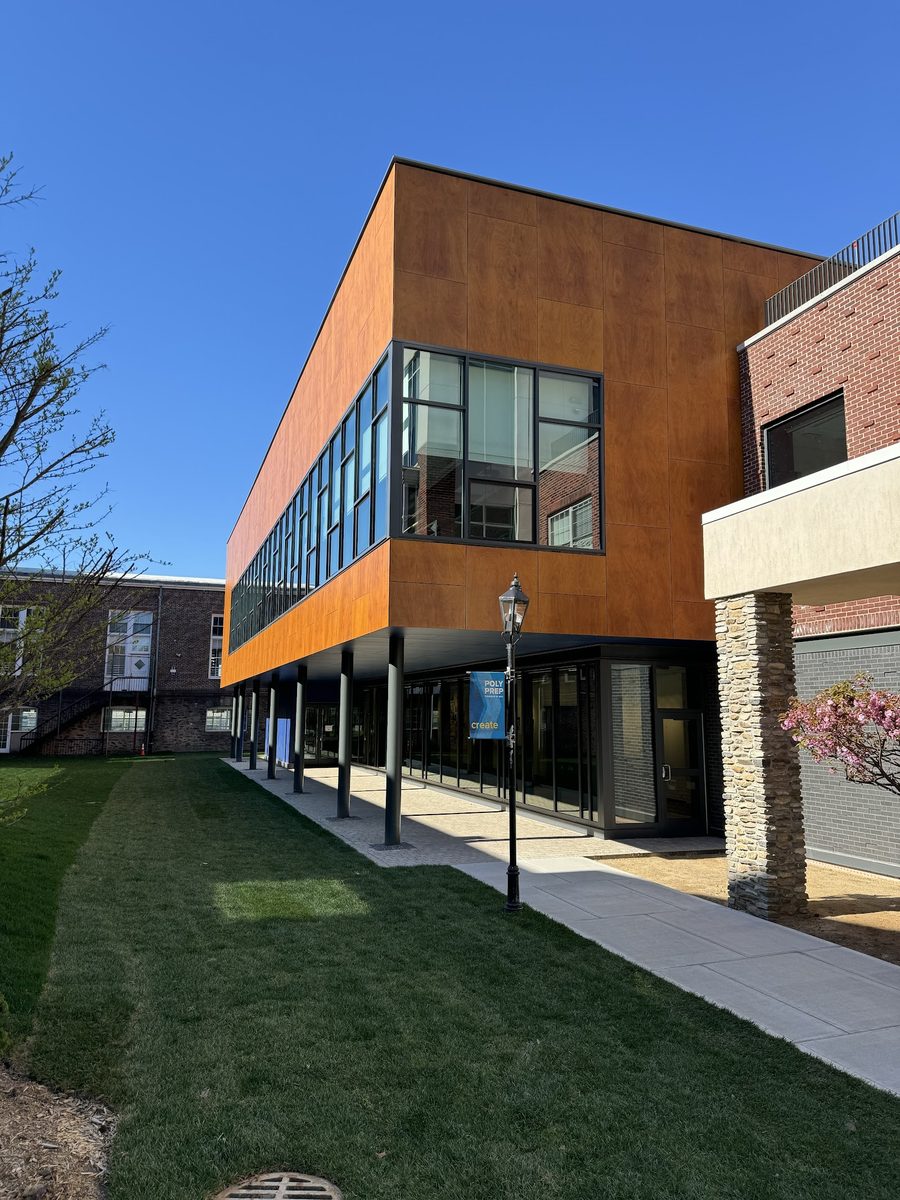
Founded in 1854 as Brooklyn's first boys' school, this day school pairs a Prospect Park mansion with a 25-acre Dyker Heights campus.

Marymount School of New York
New York City · United States
On Fifth Avenue, landmark mansions give way to Bloomberg terminals and classrooms inside the Met.
Boston University Academy
Boston · United States
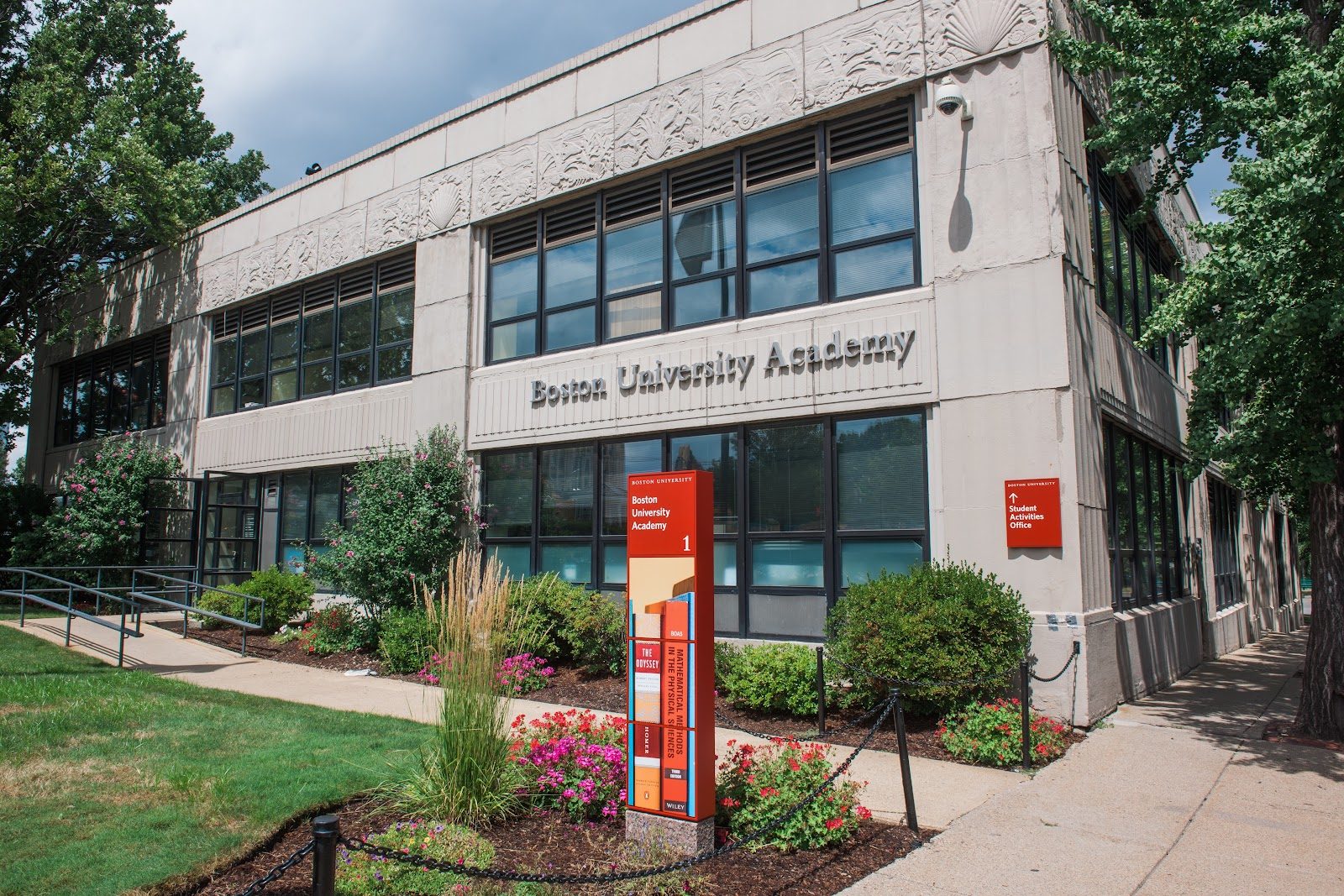
Upperclassmen trade study halls for Boston University lecture halls, banking college credit before graduation.
Same country and curriculum — closest matches within ±10 points either way