
California
Oakwood School
low confidence· 2/6 cats · 2.67 avg sourcesA 1951 Dewey-inspired experiment in progressive education, still pairing relational pedagogy with a hands-on CalArts arts partnership in North Hollywood.
Type
Day
Ages
5–18
Curriculum
American
Qualifications
AP
Ratio
8:1
The Verdict
Editor's commitment
Right for
Families who want a non-religious American day school, founded in 1951, with an 8:1 ratio and progressive, arts-centred teaching.
Wrong for
Parents who want religious formation, boarding, or a conventional, exam-drilled American school rather than Oakwood’s Dewey-rooted 5–18 model.
Watch out for
The average annual fee is $52,690, and Oakwood’s 1951 philosophy puts autonomy and democratic participation at the centre.
Ranking breakdown
Oakwood School · #910 of 1591
Composite score 62.2. 8 weighted criteria.
By criterion
Academic Outcomes
Weight 20%
#449
of 1529 scored
University Placement
Weight 16%
#459
of 1529 scored
Prestige & Heritage
Weight 12%
#678
of 1571 scored
Alumni Network
Weight 12%
#1412
of 1530 scored
Facilities
Weight 12%
#848
of 1534 scored
Transparency & Communications
Weight 8%
#551
of 1532 scored
Peer & Industry Review
Weight 10%
#467
of 1548 scored
Admissions Selectivity & Demand
Weight 8%
#489
of 1529 scored
Peer & Industry Review
How Oakwood School is regarded in the sector
71
Respected · medium confidence
Within the Los Angeles independent-school circuit, Oakwood is most often discussed alongside Crossroads School as the progressive counterweight to more academically competitive institutions such as Harvard-Westlake; rival heads and admissions directors tend to position it as the 'values and arts' school rather than a pure prestige play. University admissions staff who receive its graduates generally describe well-rounded, socially engaged applicants rather than a concentrated pipeline into a narrow band of highly selective colleges, consistent with its non-hierarchical philosophy. Independent education commentary, where it surfaces, tends to note the school's genuine commitment to diversity and arts integration as a differentiator, while flagging that its limited public data disclosure makes it harder to benchmark against peer-reviewed league tables. It rarely appears in national newspaper rankings of top prep schools, showing up more consistently in regional Los Angeles coverage of independent education than in national industry press.
- Jack Black — Actor/Musician, Entertainment
- Fiona Apple — Musician, Entertainment
- Rashida Jones — Actress, Entertainment
Editors' overview
Oakwood occupies a distinct niche in Los Angeles independent education: a progressive, arts-literate day school founded in 1951 that still takes John Dewey’s core premise seriously — education as lived experience, not rote delivery. Its philosophy is unusually explicit. Oakwood wants students to “grapple meaningfully with ideas”, discover links across disciplines, and grow into independent moral thinkers. That gives the school a clear centre of gravity: not old-school academic drill, not glossy Westside status performance, but a deliberately relational model that prizes autonomy, dignity, community and public-mindedness. For parents weary of schools that talk about the whole child while running on competition and anxiety, Oakwood offers a more humane, thoughtful proposition.
What marks Oakwood out is the consistency of that mission. The arts are not decorative here; they sit alongside sciences, humanities and athletics as part of the school’s founding rationale. The school’s own language keeps returning to passion, self-knowledge, risk-taking in learning and respect for young people’s feelings and thoughts. That is not standard college-prep boilerplate. Add the 1:8 student-teacher ratio and you get a school built for close adult attention and high-touch teaching. The payoff for the right family is substantial: serious intellectual work in a culture that still protects curiosity, voice and emotional safety. The trade-off is just as clear. Families seeking a highly conventional, rule-bound, explicitly exam-driven environment will find Oakwood’s progressive stance less comfortable.
It belongs on a shortlist for parents who want an American curriculum in English, non-religious, day-school format, with genuine emphasis on arts, discussion, belonging and student agency from ages 5–18. Oakwood fits children who are bright, expressive and motivated by engagement rather than fear; children who thrive when adults know them well; and children who want room to test ideas, make things, speak up and revise their thinking. It also suits students with a strong artistic identity who do not want to sacrifice academic ambition. The best match is a young person drawn to independence of thought, creative intensity, moral seriousness and joyful learning — not a child who wants anonymity, relentless rank-ordering or a narrow definition of success.
Academic Performance
Oakwood does not publish aggregate AP, SAT or ACT performance, nor any equivalent school-wide exam profile. That leaves parents without the clean benchmarking data many US independents now provide, and it makes direct comparison with results-led Los Angeles peers harder than it needs to be. The absence matters. In a crowded market, serious schools publish enough external data to show where their students land academically; Oakwood puts its public weight elsewhere. That does not read as academic weakness on its own, but it does mean families seeking a hard-edged outcomes picture will find the public record thin.
Where Oakwood fits, then, is less in the camp of schools trading on raw score culture and more among progressive independents that measure success through student growth, college destinations, portfolio strength and the quality of classroom work. Its low staffing ratio of 1:8 supports that model, and the school’s own philosophy points to depth, independence and intellectual seriousness rather than exam display. For the right student, that can produce substantial academic development. For a parent trying to rank schools by external metrics, it is frustratingly opaque. Relative to transparent college-prep competitors, Oakwood asks families to trust the educational model more than the published numbers.
Facilities
Oakwood’s public case for itself puts unusual weight on what happens in rooms rather than on headline architecture. The important facilities, then, are the ones that support its stated mix of arts, sciences, humanities and athletics across two campuses, plus the practical separation between younger and older pupils. That split matters: it gives the school scope to build age-appropriate spaces instead of forcing a single-site compromise. The secondary campus on Magnolia Boulevard and the elementary campus on Moorpark Street point to a school organised for developmental stages, not spectacle. Against Los Angeles independents with grander landholdings, Oakwood does not compete on acreage or showpiece estate appeal. It competes on fit-for-purpose, student-centred environments tied to a hands-on educational model.
The strongest inference from the school’s philosophy and structure is that arts spaces carry real weight here, not token status. A school that foregrounds creative, intellectual and physical development, and gives the arts equal billing, needs studios, performance and making spaces that are in constant use. That puts Oakwood in solid company among progressive LA peers, though without the public-facing facilities detail that top-tier competitors now publish in depth. We have not seen a full inventory of specialist labs, theatres, athletic venues or design spaces, and that lack of specificity limits any harder facilities verdict. So the balance is clear: Oakwood offers serious educational infrastructure for an intimate day school, but not a publicly documented catalogue of arms-race amenities. The facilities story is coherent, not exhaustive.
That puts Oakwood in solid company among progressive LA peers, though without the public-facing facilities detail that top-tier competitors now publish in depth
Prestige
Oakwood carries real niche prestige in Los Angeles independent education, but not the lacquered, old-guard variety that families buy for instant social signalling. Its status rests on something narrower and more durable: a long-established progressive identity, a serious commitment to the arts, and a teaching model built around close adult attention. In a market crowded with schools that advertise excellence in interchangeable language, Oakwood has a recognisable educational point of view. That matters. So does the 1:8 staffing ratio, which signals resource intensity and reinforces the sense that this is a high-touch, deliberately intimate school rather than a mass-market college factory. For families who value intellectual independence, strong teacher-student relationships and an arts-literate culture, Oakwood holds genuine cachet.
Its prestige still has limits, and they are clear. Oakwood does not trade on public exam-score dominance, inherited East Coast-style institutional grandeur or a highly visible brand of elite athletic power. Nor does it publish the kind of aggregate outcomes data that turns reputation into hard comparison. That keeps its standing more insider than universal. Among families who know the Los Angeles independent scene well, Oakwood has strong name recognition and a clear identity. Among parents chasing overt status hierarchy, it carries less force than schools with bigger public result profiles or more traditional prestige markers. The rating, then, is high but specialised: respected, culturally serious, and strongest with families who want substance over theatre.
Oakwood communicates its purpose exceptionally well; it communicates institutional proof points less fully
Communications
Oakwood’s parent communications carry the same voice as its educational philosophy: clear in values, serious about community, and more interested in explaining how the school thinks than in selling polish. The public-facing structure is tidy and purposeful. Parents get dedicated navigation for admissions, tuition and financial assistance, transport, calendars, summer provision, parent connection and a specific parents-and-guardians area, alongside named leadership pages and direct campus phone lines for both sites. That matters because schools with split campuses and a relationship-heavy model need clean practical communication, not mystique. Oakwood gives families obvious entry points and does not bury the basics under branding language. The tone is adult. It treats parents as participants in a school community, not as consumers to be dazzled.
Effectiveness is strong at the philosophical and organisational level, and less strong on hard operational transparency. Oakwood states its educational aims in full, with unusual precision, and that gives parents a coherent read on what the school will and will not prioritise. Families who care about ethos, student experience and communal life get a sharply defined message. Families who want granular public detail on outcomes, facilities or measurable performance get less. That gap matters in parent communication too: a school cannot claim openness while leaving key comparative data unpublished. So the verdict is mixed in a useful way. Oakwood communicates its purpose exceptionally well; it communicates institutional proof points less fully. For mission-aligned parents, that is enough. For data-driven ones, it is not.
Uniqueness
Oakwood’s distinctiveness starts with conviction. Plenty of schools borrow the language of child-centred education; Oakwood was built around it and still states it plainly: independence of thought, intellectual integrity, respect for young people’s feelings and thoughts, and preparation for life in a democratic society. That combination gives the school a clear moral centre. It does not treat character as an assembly theme bolted onto academics. It ties intellectual work to empathy, service, humility and responsibility, and it gives community life real educational weight. For students, that brings a form of schooling that is more personal and more demanding than standard progressive branding: they are expected to think for themselves, speak responsibly, listen to disagreement and take increasing ownership of their choices.
The other point of difference is the way Oakwood links that philosophy to daily practice across arts, academics and athletics, backed by a 1:8 staffing ratio and a two-campus structure. The school’s own language insists on passion, risk-taking, self-knowledge and learning from mistakes. That matters. Many schools celebrate achievement; fewer build room for experimentation without turning every setback into damage. At Oakwood, students get a high-trust, relationship-heavy education that protects voice and creative seriousness while still asking for mastery. The gain for the right child is substantial: stronger self-possession, deeper engagement, and an education that values public-mindedness as much as personal success. The limit is clear too. This is not a natural fit for families who want a more impersonal, compliance-driven model.
Oakwood wants students to “grapple meaningfully with ideas”, discover links across disciplines, and grow into independent moral thinkers
Student Profile
Oakwood suits children who want to participate, not hide. The school’s philosophy prizes independence of thought, intellectual integrity, autonomy, respect for others and active communal life, so the best fit is a student who will use discussion, feedback and close teacher relationships well. Expect classrooms that reward curiosity, articulation and a willingness to grapple with ideas in public. This is a strong home for the child who is verbally alive, artistically committed or deeply reflective — and for the student whose confidence grows through being known well by adults. The low 1:8 ratio reinforces that intimacy. Students who thrive here tend to value process as well as outcome, and to recover productively from mistakes rather than collapse under them.
The less comfortable fit is just as clear. Oakwood does not suit the student who wants anonymity, blunt external pressure or a narrow, rank-driven definition of achievement. It asks young people to take increasing responsibility for themselves, for one another and for the wider community; that demands maturity, not just raw ability. Children who resist collaboration, dismiss the arts, or want school reduced to test performance will find the culture constraining in the wrong way. By contrast, students with strong inner engines — including those who care about justice, creative work, performance, making, debate or service — have room to build a serious, self-aware identity rather than just compile credentials.
For parents weary of schools that talk about the whole child while running on competition and anxiety, Oakwood offers a more humane, thoughtful proposition
Co-curricular strengths
Arts & sport, on a separate axis
Overall 8.34/10
Scored 0-10 from the school's own published evidence. This axis is editorial-only — it does not feed the main WTS ranking.
Sports
7.3/10
Drama
8.6/10
Dance
8.5/10
Music
8.5/10
Visual Arts
8.8/10
Strengths
- +Founded in 1951 by parents including Robert and Jessica Ryan and Sidney Harmon, the school originated as a response to a perceived need for a richer, more progressive education, making it one of the older independent schools in Los Angeles.
- +The school consists of two campuses: an elementary school in Studio City and a secondary school in North Hollywood, giving each age group a purpose-built site rather than a single shared building.
- +The school's student-teacher ratio is 9:1, according to U.S. News data, suggesting relatively small class groupings.
- +The school is a National Association of Independent Schools (NAIS), Western Association of Schools and Colleges (WASC), California Association of Independent Schools (CAIS) member, giving it recognised third-party accreditation.
- +Notable alumni include Chris Pine, Noah Wyle, Todd Haynes (film director), Elizabeth McGovern (actress), Lily-Rose Depp, Zoey Deutch, and Alex Ebert, a Golden Globe and Grammy-winning musician, indicating a strong track record of graduates entering the arts.
Considerations
- −The acceptance rate of Oakwood School is 15%, which is lower than the national average of 81%, making places genuinely competitive rather than a formality.
- −Tuition is set at K-6: $45,990 and 7-12: $55,070, plus a separate application fee of $150, placing Oakwood firmly in the upper tier of LA day-school costs.
- −Oakwood is a day school only, with no boarding option, so relocating families must secure independent housing within commuting range of North Hollywood or Studio City.
- −Its alumni base is heavily weighted toward entertainment-industry names, reflecting a distinct Los Angeles, celebrity-adjacent social culture that will not appeal to every incoming family.
Availability
Primary entry gate & tests
ISEE/SSAT + Interview
Parent reviews
Have you sent your child here?
Voice reviews carry the strongest trust badge — we transcribe them for you to tidy up before they go live. Prefer to type? A written review is fine too.
Add your voice
In 60 seconds, tell other parents: what's the best thing about Oakwood School, and what surprised you when your child joined?
We ask for a Google sign-in so every review has a real face behind it — no anonymous drive-by attacks on schools, and no faked positive reviews. Your email is never shown publicly.
Send this profile to a friend
International parents rely on word-of-mouth. Share this review with someone weighing the same decision.
Schools with places
Similar schools to Oakwood School with places available now.
Head-Royce School
Oakland · United States
- 2026-27
- CLOSEDRegular cycle
- 2027-28
- OPENS SOONOpens Sept '26
The Webb Schools
Claremont · United States
- 2026-27
- CLOSEDRegular cycle closed
- 2027-28
- PLACES OPENPortal live
The Branson School
Ross · United States
- 2026-27
- CLOSEDRegular cycle
- 2027-28
- OPENS SOONOpens Sept '26
Crystal Springs Uplands School
Hillsborough · United States
- 2026-27
- CLOSEDRegular cycle
- 2027-28
- OPENS SOONOpens Sept '26
Availability first, then country, area, curriculum, price, co-curricular
Consider also
Also worth looking at alongside Oakwood School.
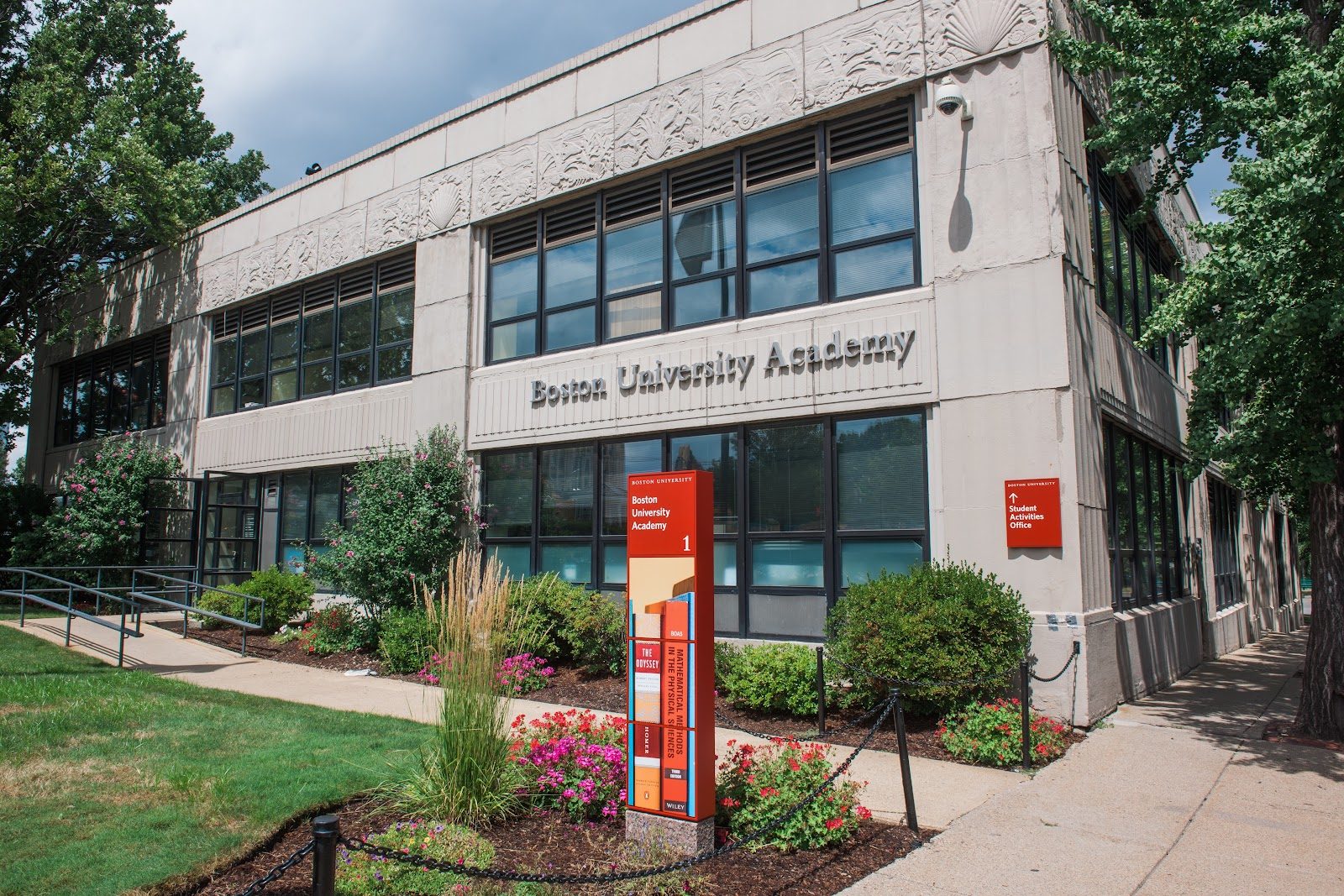
Boston University Academy
Boston · United States
Upperclassmen trade study halls for Boston University lecture halls, banking college credit before graduation.

The Browning School
New York City · United States
Manhattan's only K-12 all-boys day school, expanding onto East 64th Street after nearly 140 years on the Upper East Side.
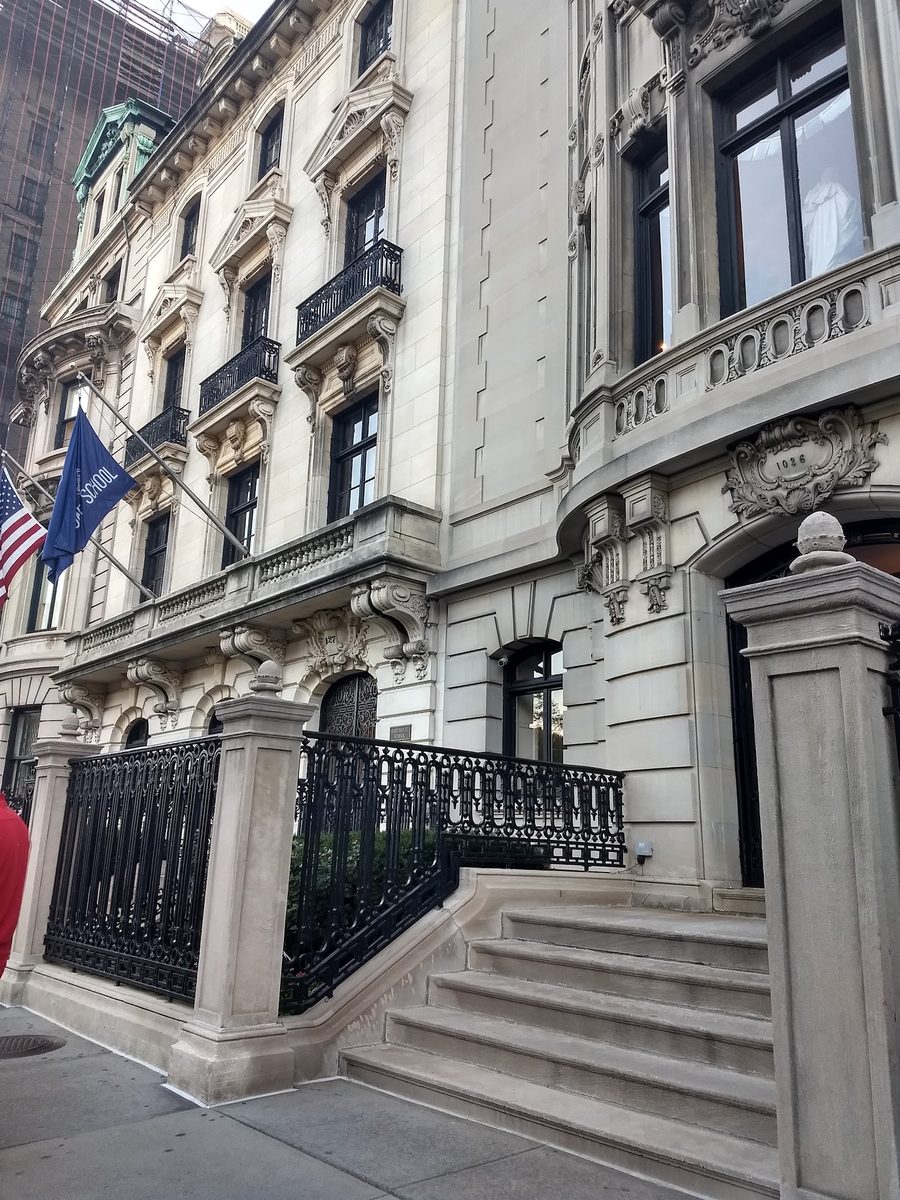
Marymount School of New York
New York City · United States
On Fifth Avenue, landmark mansions give way to Bloomberg terminals and classrooms inside the Met.

Greenwich Academy
Greenwich · United States
Connecticut's oldest all-girls school pairs single-sex grounding with coeducational upper-school classes shared alongside Brunswick's boys.
Same country and curriculum — closest matches within ±10 points either way