
Somerset
Methodist-founded and Taunton's oldest school, where a 570-seat theatre and weekend outdoor pursuits rival the classroom for pupils' attention.
Type
Both
Ages
2–18
Curriculum
British
Qualifications
A-Level · GCSE
Ratio
1:8
The Verdict
Editor's commitment
Right for
Families wanting a British 2–18 school with boarding, Methodist roots and a 1:8 ratio, plus serious stage time beyond lessons.
Wrong for
Parents chasing a secular or purely academic hothouse; Queen’s College, founded in 1843, gives equal billing to wellbeing and co-curricular life.
Watch out for
ISI and HMC reassure, but the school does not publish headline GCSE or A-level outcomes here; inspect results before paying boarding fees.
Ranking breakdown
Queen’s College · #930 of 1591
Composite score 63.4. 8 weighted criteria.
By criterion
Academic Outcomes
Weight 20%
#1003
of 1529 scored
University Placement
Weight 16%
#965
of 1529 scored
Prestige & Heritage
Weight 12%
#854
of 1571 scored
Alumni Network
Weight 12%
#544
of 1530 scored
Facilities
Weight 12%
#933
of 1533 scored
Transparency & Communications
Weight 8%
#905
of 1532 scored
Peer & Industry Review
Weight 10%
#1216
of 1548 scored
Admissions Selectivity & Demand
Weight 8%
#943
of 1529 scored
Peer & Industry Review
How Queen’s College is regarded in the sector
63
Respected · medium confidence
Within the West Country's tight cluster of independent schools, Queen's College was generally regarded as a solid, second-tier boarding option rather than a peer of Taunton School, Wellington School or Millfield in scale or national profile. Its 2020 merger into the Taunton School group was widely read by the independent schools press, including commentary in outlets such as the Good Schools Guide and TES, as part of a broader pattern of consolidation among smaller boarding schools facing falling rolls and financial strain - a trend also seen among comparable Methodist and Woodard foundation schools elsewhere in England. Sector commentators framed the merger as pragmatic rather than reputational failure, but it removed Queen's College from independent league tables and ISC data as a standalone entity. University destinations before the merger were unremarkable rather than exceptional, with no distinct Oxbridge or Russell Group pipeline verifiable in public admissions commentary, reinforcing its standing as a solid but non-selective regional school rather than a nationally benchmarked feeder.
Editors' overview
Queen’s College occupies a clear niche in the South West market: an all-through independent school in Taunton, founded in 1843, with both day and boarding provision, Methodist roots and a broad British curriculum from age 2 to 18. The distinctive point is not academic selectivity alone; it is scale of opportunity within a school that still runs on close adult attention, with a stated student–teacher ratio of 1:8. This is Taunton’s oldest school, and it trades on that civic position well. Parents looking for a school with deep local standing, strong pastoral intent and enough infrastructure to keep pupils fully occupied will find a serious contender here.
What lifts Queen’s above the crowded “rounded education” pitch is the breadth of life beyond lessons. The school pushes hard on performing arts, outdoor education and an unusually full co-curricular menu of over 100 activities. The editorial tagline gets to the point: a 570-seat theatre and weekend outdoor pursuits compete with the classroom for attention, and that is a strength, not a distraction, for the right child. This is a school for pupils who need more than a narrow academic track: children with restless energy, genuine stage ambition, outdoor appetite or a strong need for variety will have room to move. Families who want a purely scholarly, austere atmosphere may find Queen’s too expansive in its priorities.
Its market position is therefore straightforward: Queen’s sells a full-spectrum school life in a county town setting, with pastoral care and confidence-building given equal billing with results. The school talks a great deal about wellbeing, kindness and individual support; the all-through structure gives that claim substance, since continuity from nursery to sixth form matters to many families. The best fit is the pupil who wants to do a lot, not just achieve a lot — a child who will use the theatre, sports provision, clubs, trips and boarding life rather than treat them as decorative extras. For parents, the shortlist case is strong: historic local stature, high-contact teaching, serious co-curricular range and a school culture built to produce confident, busy, well-supported young people.
Academic Performance
Queen’s does at least put exam outcomes in public view: it maintains dedicated pages for GCSE results and A level results, which is more than can be said for schools that bury attainment behind open-day rhetoric. That said, the claim of “outstanding results” needs harder backing than a slogan. We have not seen aggregate headline measures here — no published run of top-grade proportions, no comparative trend data, no destination breakdown beyond the broad line that many pupils progress to leading universities and further education. For parents trying to place Queen’s against sharply academic South West competitors, that gap matters. A school asking families to trust its academic strength should publish the numbers cleanly and consistently.
Where does that leave Queen’s relative to peers? In editorial terms, this sits in the credible but opaque bracket rather than the results-dominant one. The school’s own emphasis falls on expert teaching, individual support and a broad pupil experience, not on a relentless public drumbeat about league-table performance. That does not weaken the academic case; it does define it. Queen’s reads as a school that aims for solid to strong external results within a full-spectrum education, rather than a hothouse built around grade extraction. Parents who want forensic evidence of top-end performance will need the school to provide it directly.
Facilities
Facilities are one of Queen’s stronger selling points, and the balance is clear: this is not a campus defined by one showpiece science block or a single elite sports complex, but by breadth across daily school life. The standout asset is the theatre, a serious venue rather than a token school hall, and it gives performing arts unusual weight in the institution’s pecking order. Add the school’s dedicated dance operation, sports facility hire, residential hire and camps offer, and the picture is of a site built for constant use rather than occasional display. The outdoor education strand also matters here. Many peers advertise adventure and enrichment; fewer make it visible enough that families can treat it as part of the school’s real operating rhythm. At Queen’s, it reads as embedded rather than decorative, which will suit pupils who need movement, variety and stage time as much as desk work.
Against comparable independent schools in the South West, Queen’s facilities profile sits in the well-resourced all-rounder bracket. It has more cultural infrastructure than schools whose co-curricular offer leans heavily on pitches and little else, and more operational range than prep-only campuses with narrower specialist provision. The school also advertises over 100 activities, which gives the physical estate practical significance: facilities exist to be used. What we do not get is a crisp public account of laboratories, libraries, maker spaces or elite training amenities, so the academic-specialist side of the campus stays less sharply defined. For families prioritising performing arts, outdoor provision and a busy, full-spectrum pupil day, Queen’s competes well.
The school pushes hard on performing arts, outdoor education and an unusually full co-curricular menu of over 100 activities
Prestige
Queen’s has solid regional prestige rather than national cachet. In the South West independent market, Taunton carries weight as a school town, and Queen’s benefits from being the town’s oldest school and an established name across day and boarding families. Its membership of HMC gives it institutional credibility; that matters to parents reading the field and trying to separate serious schools from ambitious pretenders. The low staffing ratio of 1:8 also signals a level of resource that parents associate with established independent schools, not budget operations. Add a theatre on a scale many competitors cannot match, more than 100 activities, and a visible commitment to outdoor education and pastoral care, and the school earns a reputation for full-service independent schooling rather than a thin academic offer wrapped in glossy language.
That said, prestige here rests more on breadth, continuity and local standing than on elite academic mystique. Queen’s does not read as a status-obsessed destination school in the mould of the country’s most selective names, and the public academic case lacks the hard statistical clarity that top-tier prestige schools publish without fuss. For some families, that trims the lustre. For others, it is the point: Queen’s offers a confident, well-established education with strong infrastructure and a recognisable identity, without the social theatre or exam-drill intensity that defines more rarefied rivals. The result is a school with genuine standing and clear market respect, but not the highest rung of British independent-school prestige.
Parents who want forensic evidence of top-end performance will need the school to provide it directly
Communications
Queen’s communicates with parents through a standard independent-school mix: admissions pages, open-event booking, prospectuses, term-date and fee pages, policy pages, contact forms, virtual tours, news updates and clearly signposted routes into prep, senior, sixth form, boarding and international entry. The structure is practical. Families can find the right doorway without much digging, and the navigation does a competent job of separating audiences who need different information. That matters in an all-through school with multiple entry points. The school also gives visibility to safeguarding, wellbeing and inspection-related content, which signals a properly run operation rather than one hiding behind image. The admissions machinery looks orderly and serviceable, not especially distinctive.
The weakness is depth and proof. Queen’s talks in confident, values-led language about care, ambition and academic strength, but public communication leans hard on assurance and less hard on evidence. There is plenty of invitation, warmth and broad promise; there is less hard comparative data, less granular explanation of outcomes and less of the forensic clarity strong parent communication requires once families move beyond first impressions. The co-curricular offer is quantified at 100 plus activities, which is memorable and useful; other core claims are left more soft-edged. So the verdict is mixed: communication is accessible, polished and operationally sound, but not yet fully transparent where demanding parents will want precision.
Uniqueness
What marks Queen’s out is the way it gives equal institutional weight to three things many schools force into a hierarchy: academics, pastoral care and pupil activity. At Queen’s, the co-curricular life is not an after-hours add-on bolted to the timetable for prospectus effect. It sits near the centre of the school’s identity, with over 100 activities spanning performing arts, outdoor education, robotics and Model United Nations. That breadth matters because it changes the texture of a child’s week. Pupils with surplus energy, strong practical instincts or a tendency to disengage in narrowly classroom-led schools get more routes in. The all-through structure strengthens that advantage: children do not need to reinvent themselves at each stage, and staff can build a long, detailed understanding of how a pupil learns, socialises and copes.
The other distinctive feature is cultural rather than structural. Queen’s is Methodist-founded, explicit about kindness and care, and serious about pupil wellbeing without sounding therapeutic or lax. That creates a school character that is warm but busy, ambitious without swagger and more interested in producing grounded young people than polished self-advertisers. For students, that brings a real benefit: permission to be multi-dimensional. A child can be on stage, outdoors, in a club and still taken seriously in the classroom. In a market crowded with schools selling a generic “rounded education”, Queen’s has a clearer offer: a full-throttle school life with enough adult support to stop breadth turning into drift.
The admissions machinery looks orderly and serviceable, not especially distinctive
Student Profile
Queen’s suits pupils who want a busy, outward-facing school life and have the appetite to use it. The natural fit is not the child who wants to keep their head down, do the minimum beyond lessons and disappear home. It is the pupil who signs up, turns up and keeps moving: into rehearsals, fixtures, clubs, trips, outdoor activity and the social traffic that comes with an all-through school. Children who gain confidence from being known by staff, and who benefit from close adult oversight rather than sink under it, fit well here. So do students whose strengths run across more than one lane: the child who is academic but restless, sporty but not single-track, creative but not niche. With over 100 activities and a low 1:8 staffing ratio, Queen’s has room for multi-track students.
The best match is a family that values visible pastoral structure and does not sneer at schools that talk about kindness. Queen’s is not built for hard-edged social competition or sixth-form swagger. It reads as a place for pupils who need encouragement to participate, enough structure to stay organised and a culture that rewards contribution as much as pure rank order. That does not make it soft. A child who resists involvement, dislikes communal expectations or wants a narrow, exam-first atmosphere will find better fits elsewhere. Queen’s works best for energetic generalists, committed performers, keen joiners and pupils who flourish when school feels full rather than sparse.
The other distinctive feature is cultural rather than structural
Co-curricular strengths
Arts & sport, on a separate axis
Overall 8.48/10
Scored 0-10 from the school's own published evidence. This axis is editorial-only — it does not feed the main WTS ranking.
Sports
8.2/10
Competes honorably in regional independent tournaments across rugby, hockey, and swimming on a historic UK campus.
Drama
8.7/10
Home to the spectacular Queen's Theatre, running complex mainstage seasons and industry stagecraft tutorials.
Dance
8.7/10
Highly dedicated formal dance curriculum running classical ballet, jazz, and modern composition inside custom studios.
Music
8.6/10
Exceptional choral and instrumental setups supporting advanced jazz combos and traveling vocal ensembles.
Visual Arts
8.2/10
Technical fine arts focus housed within custom studio environments, prioritizing portfolio development and digital media.
Strengths
- +Award-winning boarding provision alongside flexible day places.
- +Music, dance and drama all sit in the elite band on our co-curricular scoring.
- +On-site Queen's Theatre gives performing arts real physical weight.
- +All-through structure from Nursery to Sixth Form on a 36-acre campus.
- +International Pre A Level Programme and EAL support widen access for overseas families.
Considerations
- −Methodist foundation may not suit families wanting a secular environment.
- −English-medium, British-curriculum focus means no IB or dual-curriculum pathway.
- −Academic reputation rests more on breadth and wellbeing than on headline exam outcomes.
- −Smaller scale than Taunton neighbours may limit some specialist provision.
Availability
Primary entry gate & tests
Written Exams + Interview
Gallery
Parent reviews
Have you sent your child here?
Voice reviews carry the strongest trust badge — we transcribe them for you to tidy up before they go live. Prefer to type? A written review is fine too.
Add your voice
In 60 seconds, tell other parents: what's the best thing about Queen’s College, and what surprised you when your child joined?
We ask for a Google sign-in so every review has a real face behind it — no anonymous drive-by attacks on schools, and no faked positive reviews. Your email is never shown publicly.
Send this profile to a friend
International parents rely on word-of-mouth. Share this review with someone weighing the same decision.
Schools with places
Similar schools to Queen’s College with places available now.
Availability first, then country, area, curriculum, price, co-curricular
Consider also
Also worth looking at alongside Queen’s College.
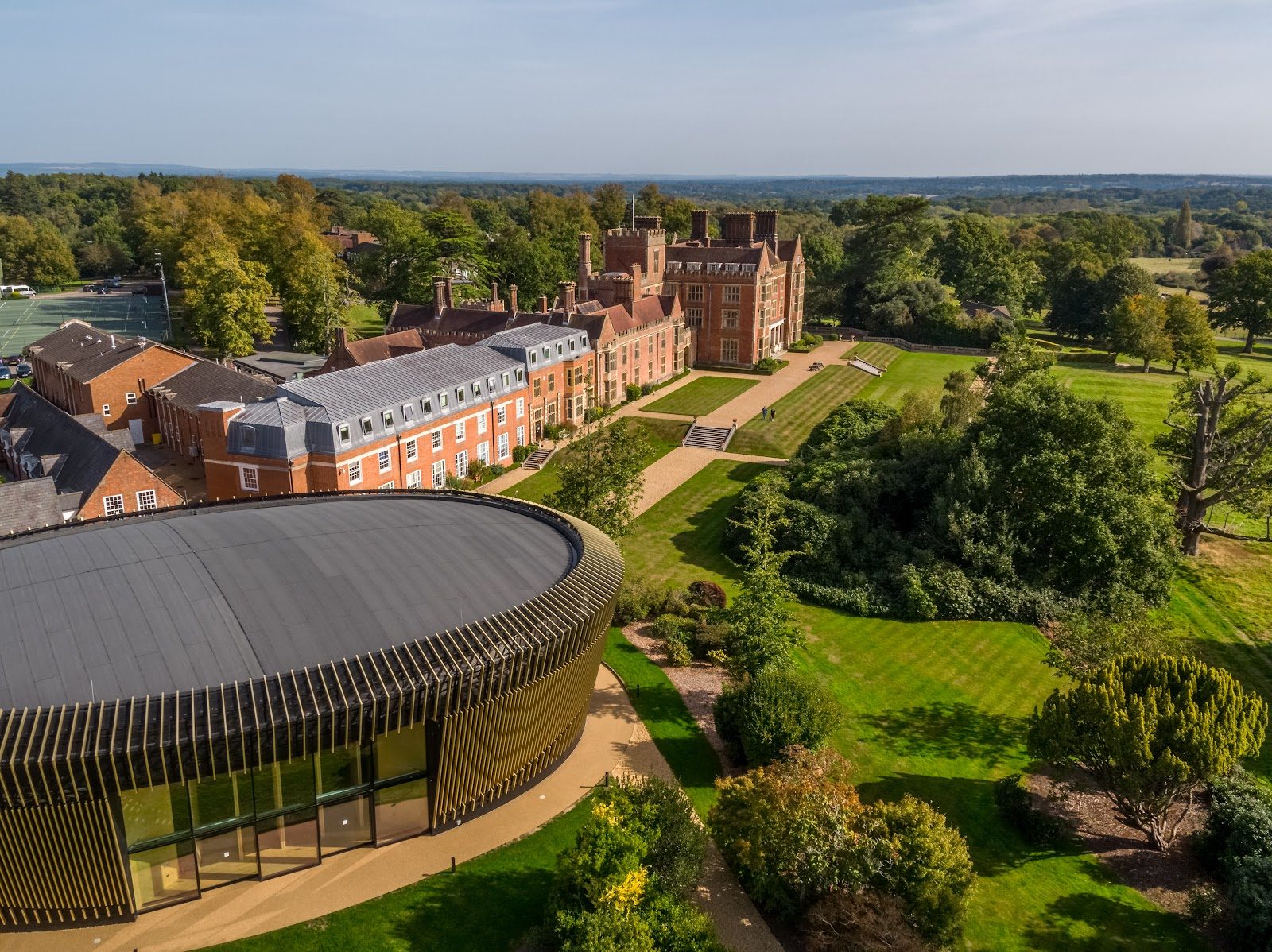
Benenden School
Cranbrook · United Kingdom
Amid 250 acres of Wealden parkland, the full-boarding spirit that inspired Malory Towers still runs through ten close-knit houses
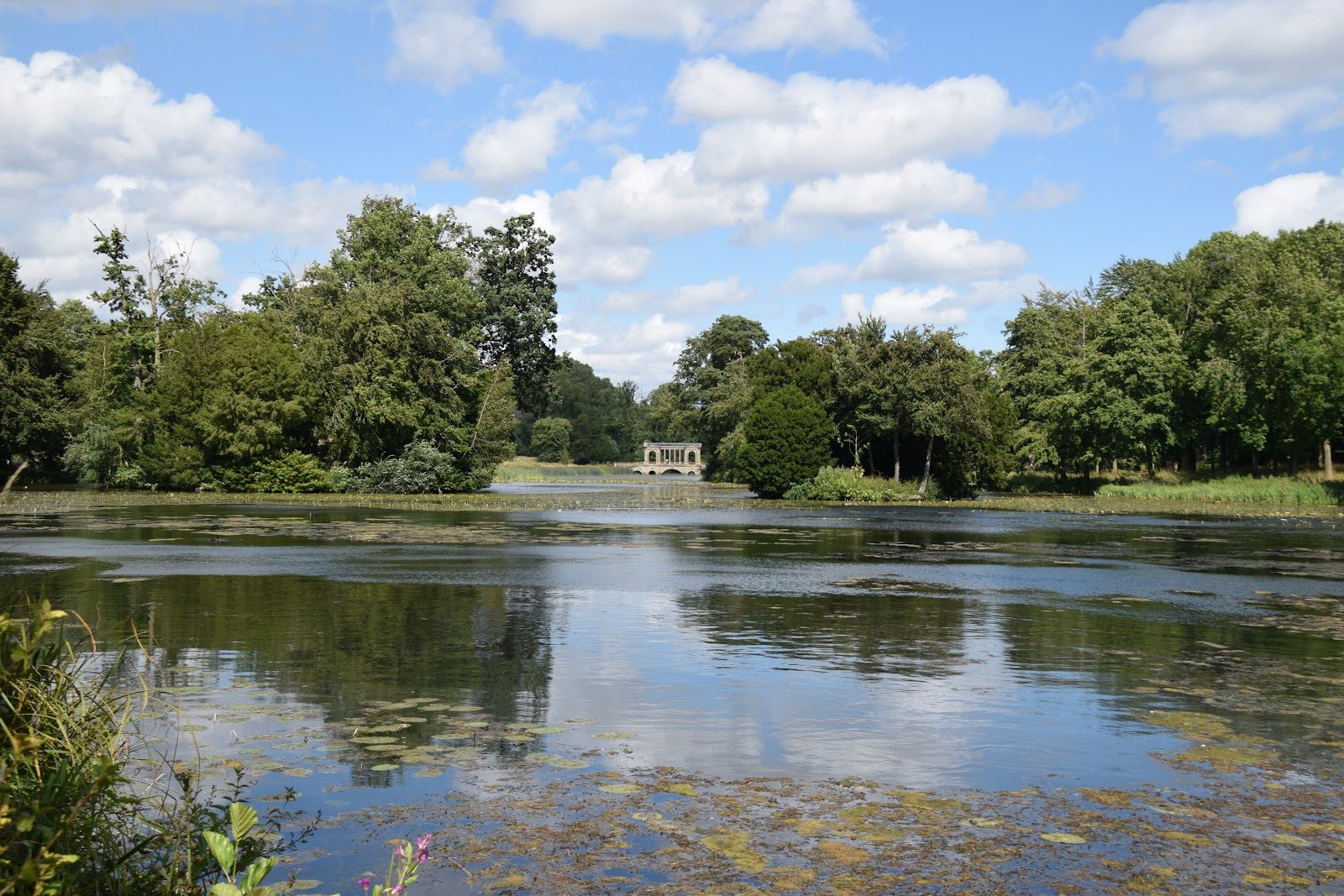
Stowe School
Stowe · United Kingdom
Boarders learn inside a Grade I neoclassical mansion set within an 18th-century landscape garden that shaped English garden design.
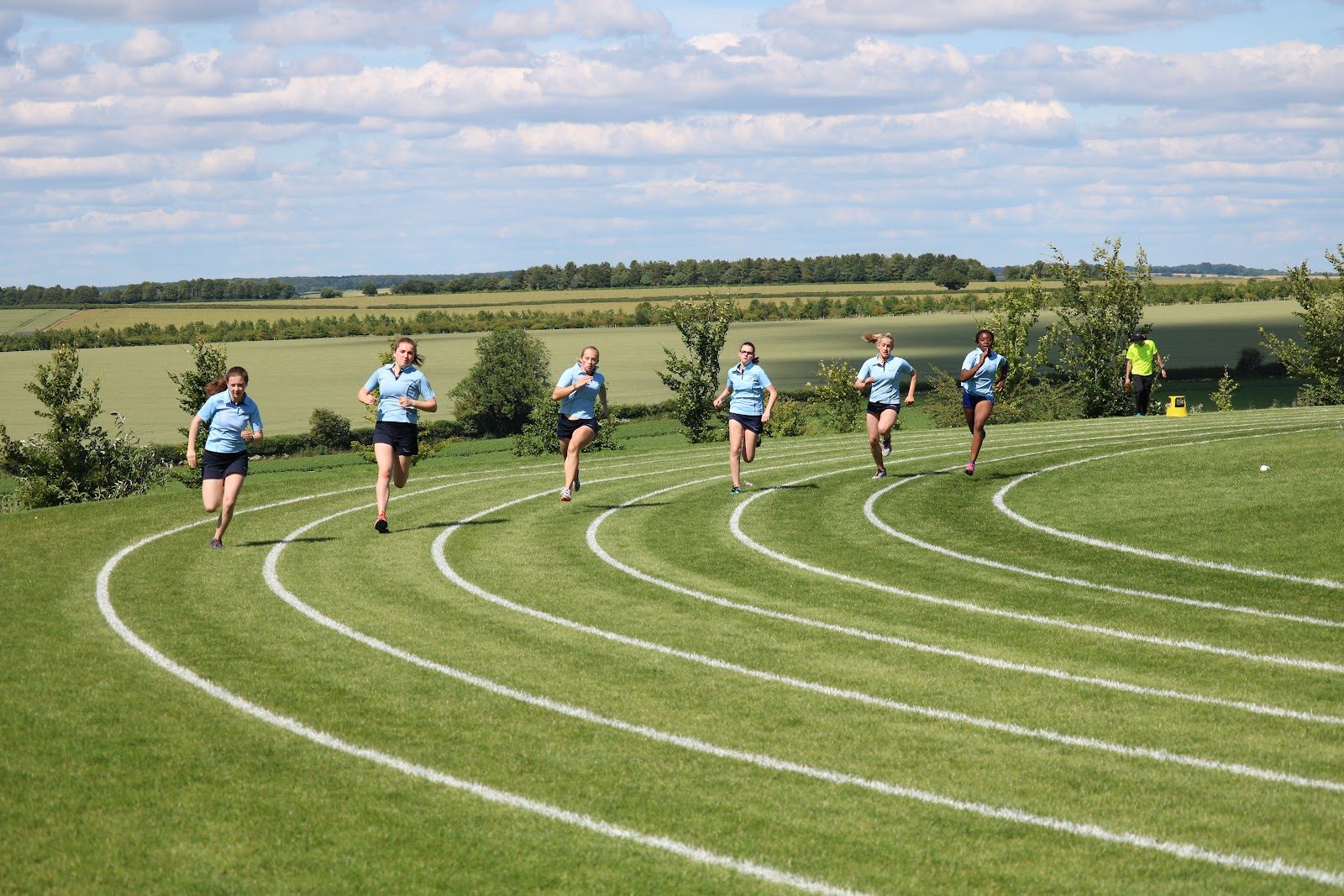
St Swithun's School
Winchester · United Kingdom
Perched above Winchester's chalk downs, this girls' school pairs cathedral choir tradition with a serious grounding in the sciences.
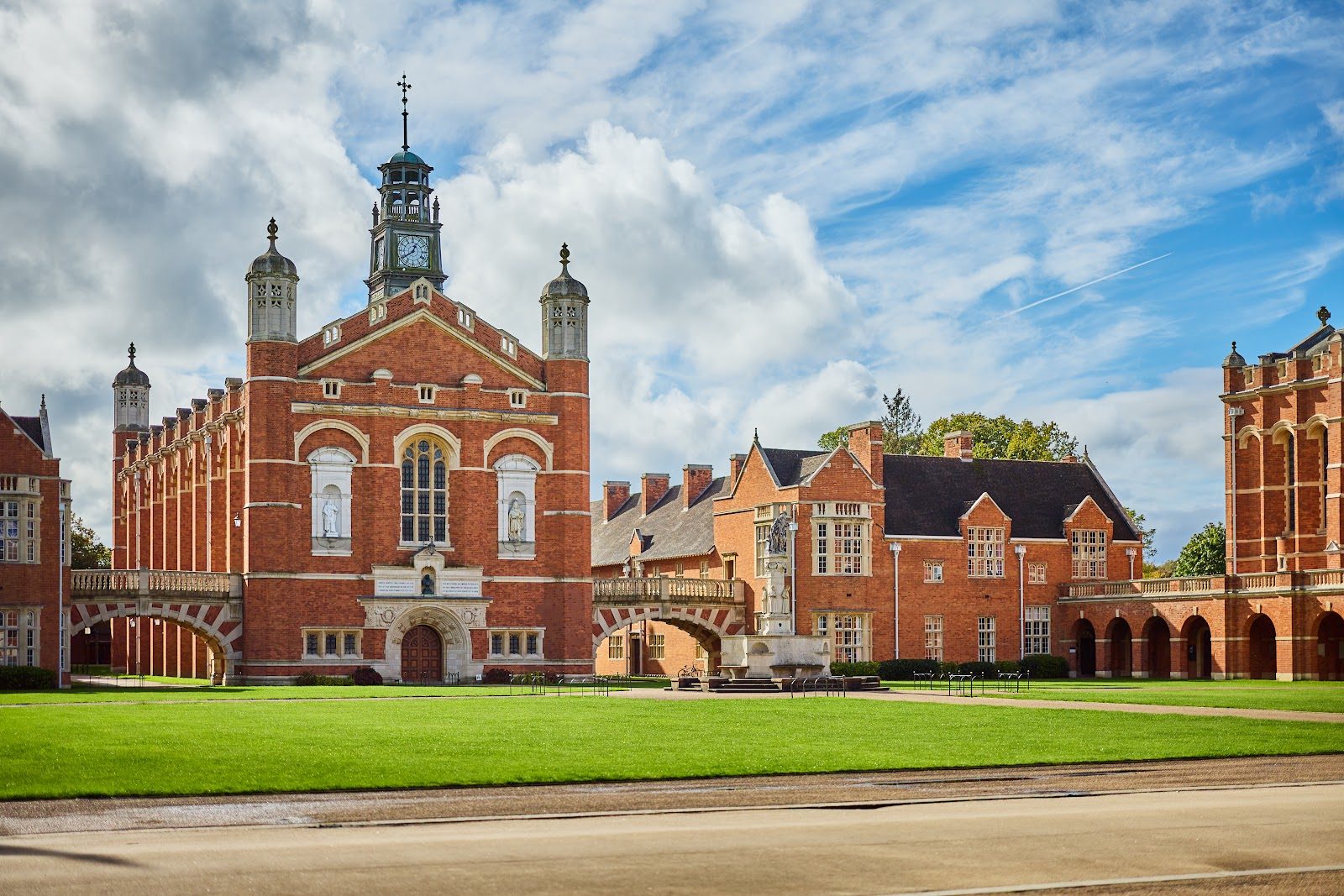
Christ's Hospital
Horsham · United Kingdom
Tudor bluecoat uniforms unchanged since 1552 meet a bursary scheme that funds most pupils, set across 1,200 acres of Sussex countryside.
Same country and curriculum — closest matches within ±10 points either way