
Seocho-gu
In Seoul's Banpo district, a Dulwich campus pairs British day schooling with IB averages some six points above the global mean.
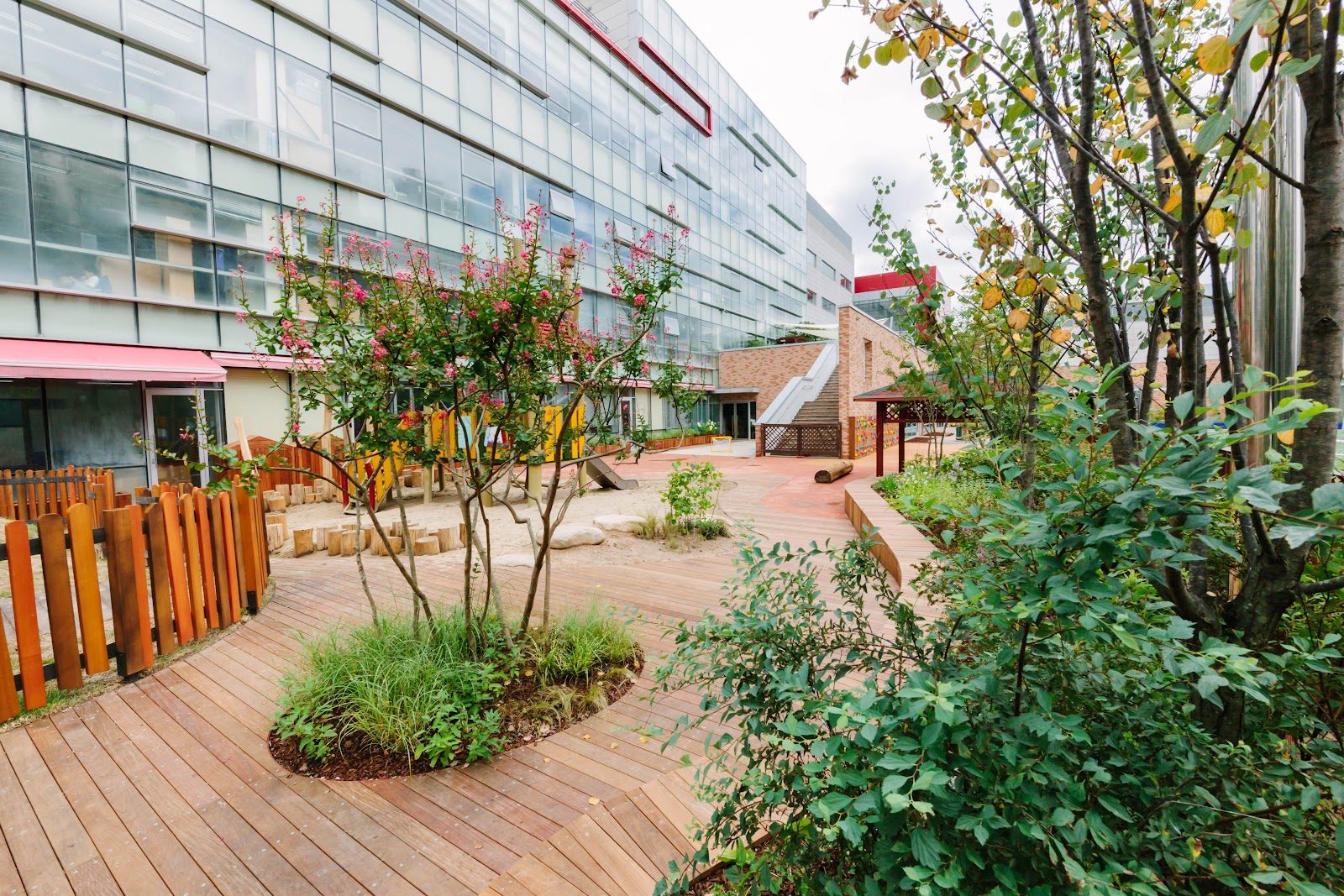
Photo © Dulwich College Seoul via Google Maps
Type
Day
Ages
3–18
Curriculum
British · IB
Qualifications
IGCSE · IB Diploma
Ratio
—
The Verdict
Editor's commitment
Right for
Families in Banpo wanting English-medium British schooling through to the IB, with IB World School status and a 2010-founded campus.
Wrong for
Parents wanting boarding, Korean-medium teaching or a bargain; this is a day school for ages 3–18 at an average 42,093,333 KRW.
Watch out for
Around 700 students and 200 staff make this a compact Dulwich campus, but the school publishes no aggregate IB average here.
Ranking breakdown
Dulwich College Seoul · #268 of 1591
Composite score 72.7. 8 weighted criteria.
By criterion
Academic Outcomes
Weight 20%
#92
of 1529 scored
University Placement
Weight 16%
#59
of 1529 scored
Prestige & Heritage
Weight 12%
#912
of 1571 scored
Alumni Network
Weight 12%
#1013
of 1530 scored
Facilities
Weight 12%
#125
of 1533 scored
Transparency & Communications
Weight 8%
#62
of 1532 scored
Peer & Industry Review
Weight 10%
#221
of 1548 scored
Admissions Selectivity & Demand
Weight 8%
#991
of 1529 scored
Peer & Industry Review
How Dulwich College Seoul is regarded in the sector
65
Respected · low confidence
Dulwich College Seoul is part of the well-regarded Dulwich College International network, which is frequently referenced in expat education press and forums (e.g., ExpatFinder, International School Parent guides) as a solid choice among Seoul's international schools alongside Seoul Foreign School and Korea International School. However, independent specialist press coverage (Tatler, Good Schools Guide) specific to this Seoul campus is limited compared to flagship Dulwich campuses in London, Singapore, or Shanghai, suggesting a respected but not top-tier regional reputation.
Evidence sources
Editors' overview
In Banpo, where access, commute and peer group matter as much as curriculum, Dulwich College Seoul has a clear proposition: British day schooling from age 3 to 18, capped by the IB, on a campus with around 700 students and 200 staff. That scale is one of its selling points. It is big enough to feel like a full school, not a boutique start-up, but still small by the standards of many capital-city internationals. The Dulwich name brings recognition, but the more important point is practical: this is an established school, opened in 2010, with a continuous nursery-to-Year 13 ladder in English and accreditations that parents recognise — IB World School, COBIS and FOBISIA. The fee level is unequivocally premium: an average annual day fee of KRW 42,093,333 across the full age range.
What puts it on a shortlist is the combination of a British foundation and an IB end point. That dual structure suits families who want ordered early schooling, then a senior phase with broader academic range than a narrow terminal qualification. In Seoul, that is a serious advantage. The school’s own market position sits in the upper tier of the city’s international sector: expensive, Anglophone, and aimed at internationally mobile families who want a school with brand recognition and a coherent 3–18 route. The public numbers also imply unusually dense adult provision for a school of this size: 200 staff for 700 students is a strikingly well-resourced staffing picture, even allowing for non-teaching roles. What the school does not publish here is the finer-grained evidence that hard-nosed parents will want next — class sizes, teacher turnover, destination lists and aggregate IB outcomes — so due diligence still matters.
The child who fits Dulwich College Seoul is one who will thrive in a structured, ambitious English-medium environment and whose family values continuity over improvisation. This is not the obvious choice for parents seeking a local Korean educational atmosphere, a bargain international option or an overtly progressive free-form school. It is for families who want a polished, high-expectation international setting in Seocho’s Banpo district, with the reassurance of an established day-school model and recognised accreditation. For the right student — internationally minded, academically steady, comfortable in a sizeable expatriate-facing community — it has the shape of a very credible long-term school home.
Academic Performance
Dulwich College Seoul markets the appeal of a British-through-IB route, but the hard public evidence on outcomes is thinner than serious fee levels warrant. The school does not publish aggregate IB diploma results, average point scores, subject distributions or multi-year trends in the source material here. That opacity matters. In the top tier of international schooling, parents need more than a general promise of academic ambition; they need published proof of it. Without that, Dulwich sits in an awkwardly opaque position beside peers that put headline diploma averages, pass rates and university destinations into the public domain. The absence of disclosed exam data does not equal weak performance, but it does block any hard-edged comparison with Seoul rivals or with established IB schools elsewhere in Asia.
What can be said is structural rather than statistical. A continuous through-school model gives the academic programme coherence, and the staffing depth referenced elsewhere points to the capacity for support and subject breadth. Those are serious advantages for pupils aiming at selective university entry. But capacity is not the same as proof. Until the school publishes aggregate external results, its academic standing rests more on brand, scale and school design than on verifiable outcomes. For a school in this fee bracket, that is a meaningful weakness. Hard-nosed parents will ask for recent IB averages, score distribution, higher-level subject performance and destination patterns before treating it as a clear academic front-runner.
Facilities
Facilities are not documented in any useful depth in the school’s public-facing facts, and that gap matters more here than at cheaper schools. At this end of the market, parents expect a clear account of specialist teaching space, sports provision, arts rooms, libraries, laboratories and age-specific outdoor areas. Dulwich does not supply that detail in the source record here. What is clear is scale: a full through-school serving roughly 700 pupils with around 200 staff needs a campus built for breadth, not a converted stopgap. That points to a properly equipped school rather than a cramped city operation, but the absence of a published facilities inventory leaves parents without the hard detail needed to judge whether the site matches the fee level.
Against peer schools in Seoul’s premium international bracket, that lack of specificity is a weakness. Rivals at this level tend to itemise theatres, indoor sports halls, design spaces, science suites and dedicated early-years areas because facilities are part of the educational offer, not background scenery. Dulwich gains some credit from its established through-school footprint and the staffing depth implied by its headcount, which supports a well-resourced operational picture. But support staff and teaching adults are not the same thing as first-rate buildings. For now, the facilities case rests on inference, not proof. Parents touring the school need to inspect the sports spaces, performing arts rooms, labs and outdoor provision with unusually close attention.
Dulwich College Seoul markets the appeal of a British-through-IB route, but the hard public evidence on outcomes is thinner than serious fee levels warrant
Prestige
Dulwich College Seoul carries real cachet, but prestige here rests more on association and market position than on old local rootedness or publicly documented academic dominance. The strongest asset is the Dulwich name itself: for internationally mobile families, that brand signals a recognisable standard, a polished operating model and a peer group drawn from parents willing to pay at the top end of the market. In Seoul, that matters. International schools trade on trust, and a known name cuts through faster than a standalone campus ever can. The school’s fee level — an average annual day fee of KRW 42,093,333 — reinforces that status. This is expensive schooling bought by families who want social confidence as well as educational continuity.
That said, prestige is not the same as supremacy. The school has strong brand prestige, not automatic academic pre-eminence. The missing public detail on aggregate IB results and university destinations caps how far any serious editor can push the claim. Parents can infer selectivity of clientele and a well-resourced environment from the scale of the operation — around 700 pupils and 200 staff — but they cannot verify from published headline data that the school sits at the very top of the academic pack. So the rating lands in the upper tier: socially credible, commercially powerful, and well known among expatriate families, but short of the unquestioned prestige earned by schools that pair brand recognition with transparent results.
In the top tier of international schooling, parents need more than a general promise of academic ambition; they need published proof of it
Communications
Dulwich College Seoul communicates from a position of institutional confidence: a school at this price point, with a large staff body and an internationally mobile parent base, has no excuse for muddle. The basics are in place. The public-facing identity is coherent, the proposition is easy to grasp, and there is none of the amateurish clutter that plagues weaker international schools. Parents will read that as a sign of competent administration and a well-drilled central team. But polished presentation is not the same as strong communication. The school does not publish enough of the information that serious parents use to judge substance: aggregate exam outcomes, destination patterns, and the operational detail that answers practical questions before they need to be asked. For a school charging an average of KRW 42,093,333 a year, that is a real communications failure, not a minor omission.
So the verdict is mixed. Dulwich communicates brand, structure and reassurance effectively; it does not communicate evidence with the same rigour. That distinction matters. Parents choosing premium schooling do not just want to know the school’s tone and ethos; they want disclosure, precision and a habit of answering hard questions in public. On that measure, Dulwich is too controlled and insufficiently transparent. Day-to-day parent communication inside the school may be strong, but the published record does not prove it. Until the school shares more hard data, its communications remain slick at the surface and thinner than a top-tier school should allow.
Uniqueness
What sets Dulwich College Seoul apart is not novelty for its own sake, but a rarely tidy combination of ingredients that many international schools struggle to hold together: a full through-school structure, a recognised British frame in the lower and middle years, and an IB finish that widens options at the sharp end. For students, that brings continuity without academic narrowing. Children do not need to jump institutions before university preparation becomes serious, and older pupils reach the final stage with the habits of a school that has already known them for years. The other distinctive feature is market position: this is a Dulwich campus in a capital city district where family logistics and peer environment matter. That gives students a socially assured, internationally mobile cohort and the quiet confidence of a school that knows exactly which families it serves.
The scale also matters. This is not a tiny expatriate outpost and not an anonymous mega-campus either; it sits in the useful middle ground, with around 700 pupils and 200 staff. For students, that brings breadth without sprawl: enough people for subject choice, activities and friendship range, but still a school where individuals have a fair chance of being known. The staffing depth points to a well-backed operation with room for support beyond the bare minimum. The trade-off is equally clear. This is a premium, brand-led school with a highly specific audience, not a democratic cross-section of Seoul. Children who thrive here value structure, polish and a globally legible school identity.
What is clear is scale: a full through-school serving roughly 700 pupils with around 200 staff needs a campus built for breadth, not a converted stopgap
Student Profile
The students who fit best here are children comfortable in a high-expectation, internationally oriented peer group where confidence, routine and academic stamina count. This is not a school for families testing the waters of international education on a budget, and children will feel that social reality. Many classmates will come from globally mobile, professionally ambitious households that expect polish, reliability and forward planning. A pupil who thrives in that environment will value order, respond well to adult direction and cope easily with a campus culture shaped by premium fees and a recognised brand. A child who needs a loose, experimental atmosphere or a strongly local Korean identity will find the fit less natural.
The scale helps a certain type of student. In a community of around 700 pupils, children get more breadth of friendship and activity than they would in a tiny expatriate enclave, without the anonymity of a very large city school. The staff headcount — around 200 — also points to a well-supported setting, which will suit pupils who benefit from structure around them as much as freedom within it. Socially, this is a school for children who can move comfortably between cultures, read expectations quickly and hold their own among well-schooled, outward-facing peers. For the right student, that produces a confident, purposeful school life. For the wrong one, it can feel too polished and socially exacting.
Parents touring the school need to inspect the sports spaces, performing arts rooms, labs and outdoor provision with unusually close attention
Co-curricular strengths
Arts & sport, on a separate axis
Overall 8.9/10
Scored 0-10 from the school's own published evidence. This axis is editorial-only — it does not feed the main WTS ranking.
Sports
9/10
Drama
9/10
Dance
8.5/10
Music
9/10
Visual Arts
9/10
Editor first-pass · editor-reviewable · 7/30/2026
WTS 300 badge
Dulwich College Seoul is one of the World's Top 300 Schools. Claim your listing to add it to your site →
Strengths
- +Formally UK-affiliated as part of the Dulwich College International network and recognised as a British School Overseas, with links to Dulwich College London
- +Dual accreditation via Cambridge Assessment International Education for the IGCSE programme and status as an International Baccalaureate World School for the IB Diploma Programme
- +Solid recent IB Diploma outcomes: the Class of 2025 posted a average score of 36.5, far exceeding the global average of 30.58, with a 100% passing rate for our 19 candidates
- +Purpose-designed city campus just south of the Han River in the centrally located Seocho District, with facilities including a 25-metre indoor swimming pool, an indoor gymnasium, an outdoor sports field, a 250-seat auditorium, and a black box theatre
- +A genuinely international community of around 700 students aged 3 to 18 drawn from over 40 different countries
Considerations
- −Enrolment is legally restricted: eligible applicants must be the child of a parent who does not possess Korean nationality; a Korean national (including dual citizens) who has resided abroad for at least three years; or a child naturalised as Korean who may have difficulties continuing at a local school under applicable regulations, so Korean-national families without qualifying overseas history cannot apply
- −Admissions are academically selective, with assessments to ensure they can access the curriculum, including the Cognitive Ability Test (CAT4) and, for non-native English speakers, an English as an Additional Language assessment, plus a leadership interview before committee review
- −The senior pathway leads to IGCSE and then only the International Baccalaureate Diploma Programme (IBDP) in Year 12 and Year 13, with no parallel A-Level track for families who prefer that traditional British route
- −Fees are substantial: annual tuition between KRW 40,700,000 and KRW 44,800,000 depending on year group, plus a one-off Application Fee KRW 400,000, Capital Levy KRW 4,000,000 and Placement Deposit KRW 3,000,000, with bus transport charged separately
Availability
Primary entry gate & tests
Academic Record + Priority Lanes
Gallery
Photo © Dulwich College Seoul via Google Maps
Photo © Dulwich College Seoul via Google Maps
Photo © Dulwich College Seoul via Google Maps
Photo © Dulwich College Seoul via Google Maps
Photo © Dulwich College Seoul via Google Maps
Parent reviews
Have you sent your child here?
Voice reviews carry the strongest trust badge — we transcribe them for you to tidy up before they go live. Prefer to type? A written review is fine too.
Add your voice
In 60 seconds, tell other parents: what's the best thing about Dulwich College Seoul, and what surprised you when your child joined?
We ask for a Google sign-in so every review has a real face behind it — no anonymous drive-by attacks on schools, and no faked positive reviews. Your email is never shown publicly.
Send this profile to a friend
International parents rely on word-of-mouth. Share this review with someone weighing the same decision.
Schools with places
Similar schools to Dulwich College Seoul with places available now.
Availability first, then country, area, curriculum, price, co-curricular
Consider also
Also worth looking at alongside Dulwich College Seoul.
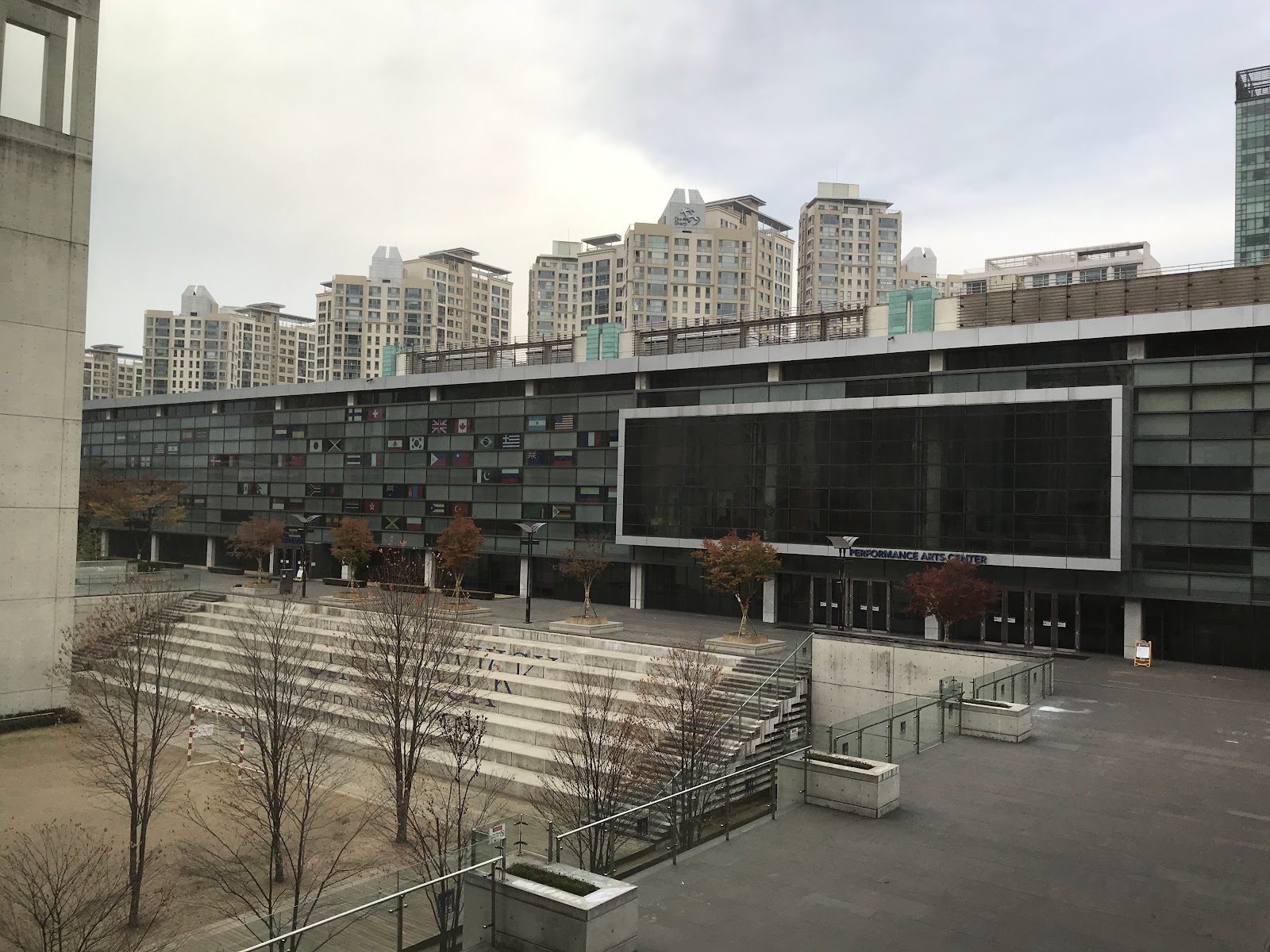
Chadwick International
Incheon · South Korea
One school, two continents: this Songdo campus mirrors a 1935 California founder, pairing IB rigor with mandatory outdoor-education expeditions.
Korea International School
Seongnam · South Korea
In Seongnam's Pangyo tech corridor, a dual IB-American track anchors a curriculum built around 24 Advanced Placement courses.
Korean Minjok Leadership Academy
Hoengseong · South Korea
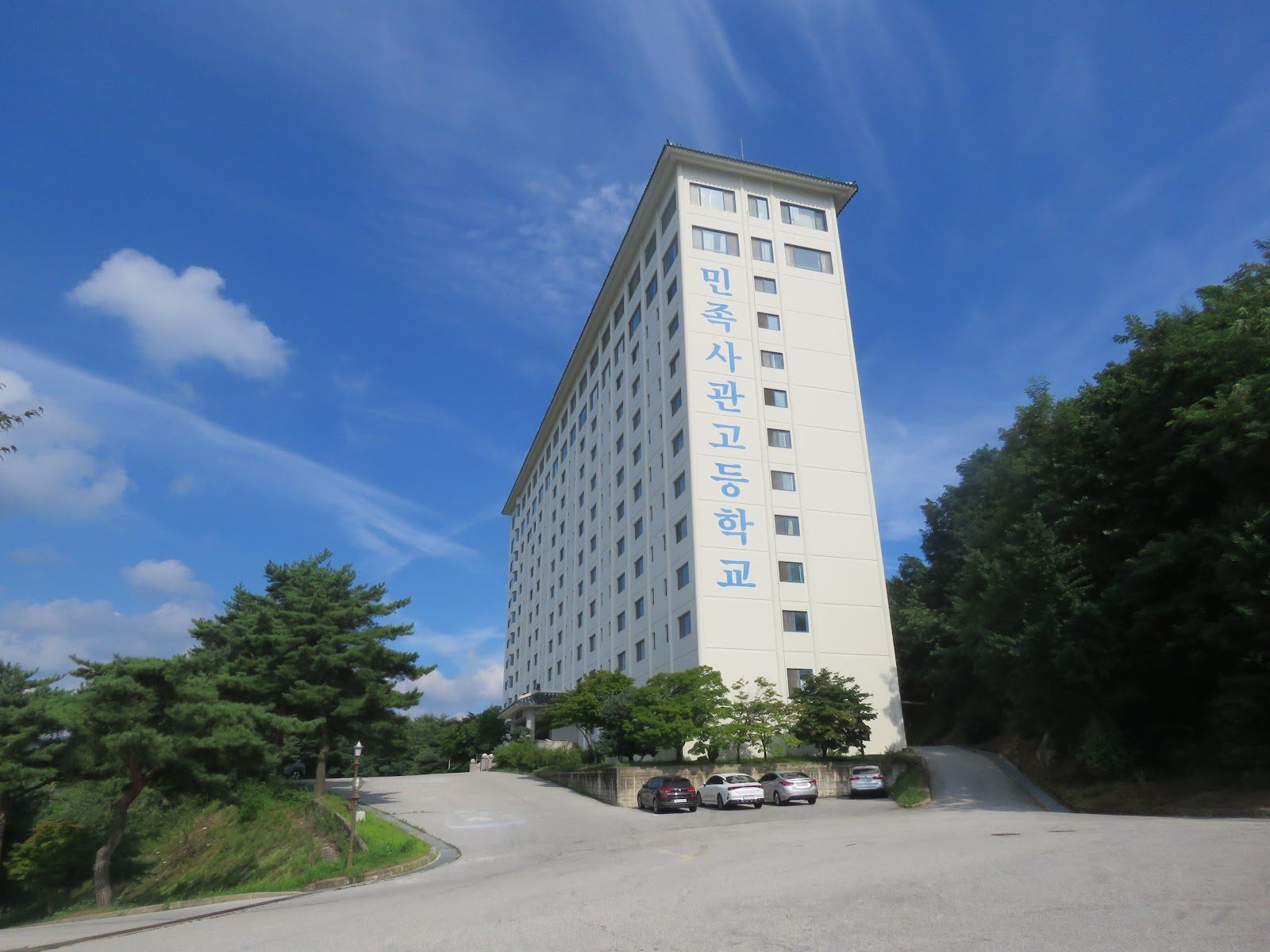
On a Gangwon mountainside, hanbok-uniformed students hold English-only seminars, chasing an IB curriculum built to rival Eton.
Seoul Foreign School
Seoul · South Korea
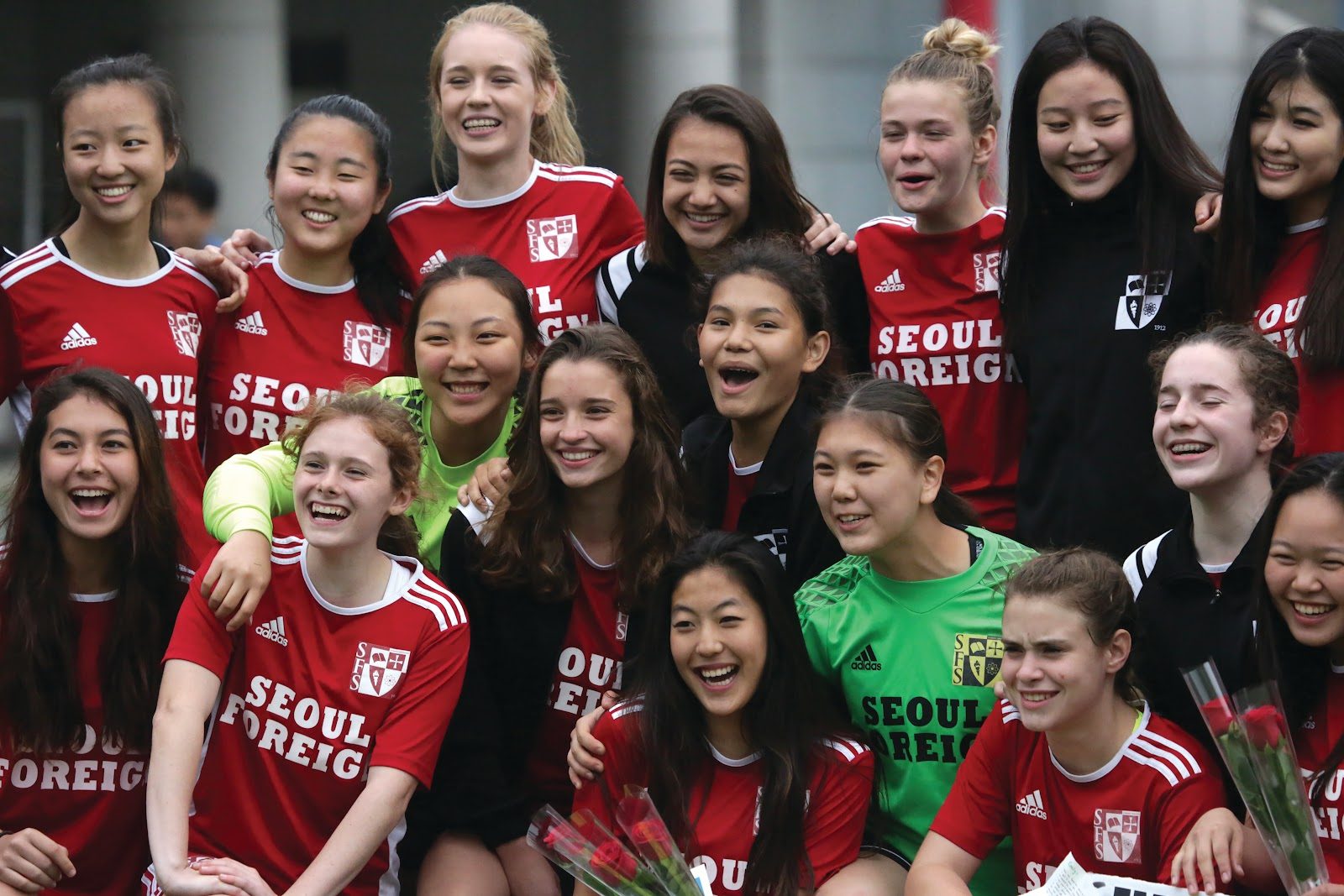
Founded in 1912 beside Yonsei University, first in Korea to adopt the IB, blending British, American and Clan-house traditions.
Same country and curriculum — closest matches within ±10 points either way