
Rio de Janeiro
Colégio Santo Agostinho-Leblon
Founded by Augustinian Recollect friars in 1946, this Leblon institution pairs Catholic tradition with consistently high Enem scores.
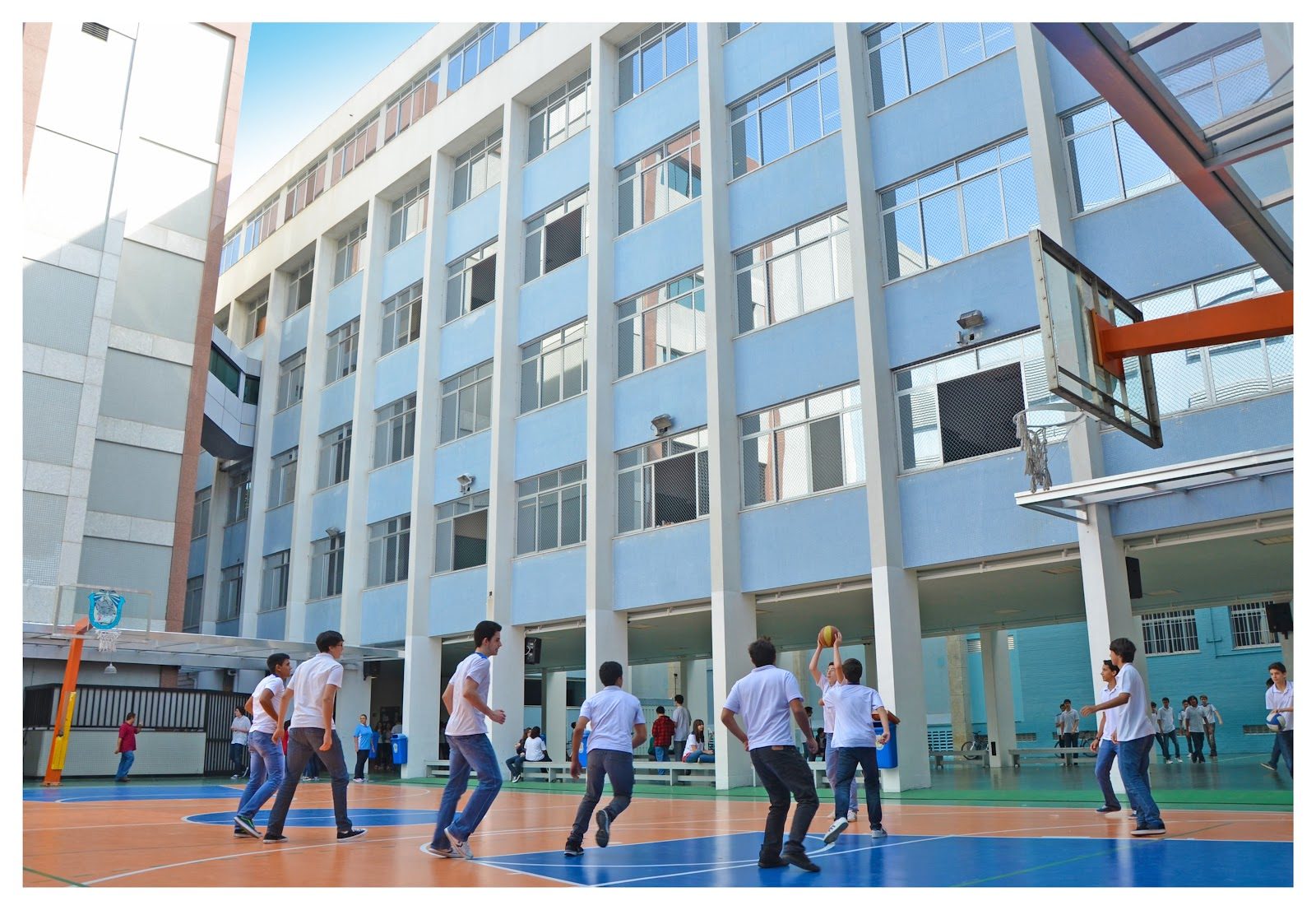
Photo © Colégio Santo Agostinho via Google Maps
Type
Day
Ages
6–18
Curriculum
Brazilian
Qualifications
ENEM · Brazilian national curriculum
Ratio
—
The Verdict
Editor's commitment
Right for
Families in Rio de Janeiro who want a Catholic day school in Leblon with Portuguese teaching and English in the mix.
Wrong for
Parents seeking boarding, a non-religious ethos, or an international curriculum beyond the Brazilian route for ages 6–18.
Watch out for
Founded in 1934 and run in the Augustinian tradition, it offers continuity; published outcome data beyond the Enem claim is absent.
Ranking breakdown
Colégio Santo Agostinho-Leblon · #1174 of 1591
Composite score 58.9. 8 weighted criteria.
By criterion
Academic Outcomes
Weight 20%
#1157
of 1529 scored
University Placement
Weight 16%
#1015
of 1529 scored
Prestige & Heritage
Weight 12%
#608
of 1571 scored
Alumni Network
Weight 12%
#1130
of 1530 scored
Facilities
Weight 12%
#1193
of 1533 scored
Transparency & Communications
Weight 8%
#1243
of 1532 scored
Peer & Industry Review
Weight 10%
#1373
of 1548 scored
Admissions Selectivity & Demand
Weight 8%
#760
of 1529 scored
Peer & Industry Review
How Colégio Santo Agostinho-Leblon is regarded in the sector
60
Respected · medium confidence
Santo Agostinho-Leblon is regarded primarily within Rio de Janeiro's own tier of traditional Catholic day schools (alongside Colegio Andrews, Sao Vicente de Paulo, and PUC-Rio-linked colegios) rather than in international independent-school circles. Its reputation rests on decades of strong placement in Brazilian vestibular and ENEM rankings, where Rio papers such as O Globo and Folha de S.Paulo periodically list it among the city's top private schools for approval rates at UFRJ, PUC-Rio, and federal medical courses. Because it is a national day school rather than an internationally accredited or boarding institution, it has little presence in Anglophone review outlets like the Good Schools Guide or WhichSchoolAdvisor, and it does not typically appear at international heads' conferences (IB, COBIS, Round Square). Within Brazil, Augustinian-network peer schools and Rio's private-school association treat it as a stable, academically rigorous, values-based institution, but external, independently sourced commentary beyond domestic league tables and alumni word-of-mouth is limited, meaning its elite standing is well established locally but not yet documented in global education press.
Editors' overview
Colégio Santo Agostinho-Leblon occupies a strong niche in Rio: a Catholic day school in one of the city’s most desirable neighbourhoods, with a long institutional history and a clear academic purpose. Founded in 1934, it offers Brazilian schooling for ages 6–18 in Portuguese and English, under Augustinian Catholic stewardship. What distinguishes it is not novelty but coherence. Parents looking for moral seriousness, institutional discipline and a school culture that values study as much as formation will find a recognisable proposition here. The Leblon address adds convenience and status; the religious identity adds structure.
This is a school for families who want a mainstream Brazilian academic pathway anchored by explicit values, not an experimental model or a loose progressive atmosphere. The attraction lies in the combination of Catholic tradition and strong Enem performance, which gives the school credibility where it matters in Brazil: university preparation. That will appeal to ambitious local families who want clear expectations, adult authority and a community with a defined ethical frame. It also suits children who do well in ordered environments and who benefit from consistency across pastoral, academic and behavioural life.
Why shortlist it? Because it offers something hard to fake: deep-rooted identity with academic relevance. Plenty of schools promise character and results; fewer have sustained both over decades. Families who want a secular or international-curriculum education should look elsewhere. Families who want a polished bilingual international school experience should also test whether this school’s priorities match their own. Colégio Santo Agostinho-Leblon earns shortlist status for parents who value Catholic continuity, serious academic intent and a school that knows exactly what it is.
Academic Performance
External results are the school’s strongest public proof point. In the most recent Enem tables we have seen, Colégio Santo Agostinho-Leblon sits at or near the top tier among private schools in Rio, with an average around 691.4. That is a serious academic marker in the Brazilian market, where league-table inflation and selective storytelling are common. The important point is not a single decimal place but the pattern: this school delivers consistently strong university-prep outcomes against direct local competitors. For parents comparing established Catholic and secular private schools in the south zone, Leblon belongs in the conversation with the city’s more academically credible names, not in the softer middle.
There are still limits to the public picture. The school does not publish the kind of granular outcome data that would let families test depth as well as headline performance: no full breakdown by subject, no distribution across the cohort, no university destination list in the public domain. That leaves parents with a clear but incomplete verdict. The Enem signal is impressive and hard to dismiss; the transparency around it is less complete than the strongest data-driven schools now offer. Even so, within its peer group, this is an academically high-performing school with results that carry real weight.
Facilities
The school’s facilities profile is urban and constrained by place. In Leblon, that means compact rather than sprawling: parents should not expect the acreage, athletics footprint or stand-alone specialist blocks that wealthier edge-of-city campuses can offer. What matters here is functional academic provision inside a dense neighbourhood setting. Classrooms, science spaces, library provision, chapels or worship areas, and courts for school sport are the facilities that count most in a school of this type; the public picture does not disclose enough detail on scale, refurbishment cycles or specialist equipment to judge them against the best-resourced Rio competitors. That opacity matters. Schools charging for high-status urban convenience still need to show parents exactly what students use day to day.
Against peers, Santo Agostinho-Leblon’s advantage lies less in spectacle than in fit. Families choosing an academically serious Catholic day school in a prime district often prioritise safety, order, accessibility and workable teaching spaces over theatrical architecture. On that measure, the school fits its market. The trade-off is clear: less campus grandeur, more tight, city-school practicality. If your benchmark is a vast multisport estate, major performing-arts complex or showpiece innovation centre, stronger options exist elsewhere. If your benchmark is a disciplined urban school where facilities support study and routine without distraction, this campus clears the bar, though it does not set a new one.
In the most recent Enem tables we have seen, Colégio Santo Agostinho-Leblon sits at or near the top tier among private schools in Rio, with an average around 691.4
Prestige
Prestige here rests on three things: address, brand lineage and outcomes. In Rio’s private-school market, a place in Leblon carries its own social signal; pairing that with the Santo Agostinho name gives the school standing with families who value old-guard respectability over novelty. This is not prestige built on glossy internationalism or celebrity branding. It is the established Catholic kind: recognised, durable and reinforced by a parent body that wants order, ambition and a familiar moral frame. That brings real cachet in the local market, even if it does not translate into global name recognition beyond Brazil.
What lifts the school above mere social polish is academic credibility. An Enem average around 691.4 turns reputation into something harder than anecdote. That score places the school in serious company among Rio’s private academic heavyweights and gives the Leblon campus a status that extends beyond parish loyalty or neighbourhood convenience. Still, this is a specific form of prestige. It is locally strong, not internationally expansive; institutionally solid, not culturally fashionable. Families seeking a school prized for overseas university pipelines, elite global branding or experimental pedagogy will not find it here. Families seeking a respected, demanding Catholic education with a reputation that holds weight in Rio will.
Santo Agostinho-Leblon’s distinctiveness lies in that refusal to blur its identity
Communications
Parent communication looks serviceable rather than exemplary. The school runs a conventional private-school model: central website, news and notices, admissions contact points, and a social-media presence that projects school life to current and prospective families. That covers the basics, but it does not amount to best-in-class transparency. We have not seen the depth of routine parent-facing information that marks out the strongest operators: detailed academic reporting frameworks, clear publication of leadership contacts, rich calendars, or a substantial archive of policy and student-life documentation. For a school with a serious institutional identity, that restraint feels deliberate. It communicates order and control, but not openness.
Effectiveness depends on what parents want. Families already comfortable with the school’s culture will read the tone as reassuringly formal and disciplined: announcements are curated, the message is consistent, and there is little of the frantic over-communication that clutters weaker schools. New families, or parents who want granular information before committing, face a thinner public picture. The school does not publish enough to let outsiders test how communication works in practice when issues arise, how frequently parents hear from teachers, or how much academic detail reaches home across the school year. That leaves a mixed verdict: competent, controlled, and institutionally coherent, but not conspicuously transparent.
Uniqueness
What sets Santo Agostinho-Leblon apart is not innovation but institutional conviction. Many urban private schools borrow the language of values; this one is built around a religious order with a settled view of authority, conduct and purpose. That gives students a school life with fewer mixed messages. Expectations sit in one frame: academic effort matters, behaviour matters, and moral formation is not treated as an optional extra. In a market crowded with schools trying to be everything at once, that clear internal logic stands out. So does the combination of a prime-zone day-school routine with exam performance around 691.4. That pairing is rare: social ease on one side, hard academic seriousness on the other.
For students, the benefit is coherence. Children who thrive on structure get a firm, legible culture rather than a diffuse one. Ambitious pupils get a school where study carries status, not embarrassment. Families with Catholic commitments get continuity between home belief and school life instead of polite dilution. There is a trade-off. Students who want loose boundaries, a highly individualistic ethos or a more exploratory educational style will find the environment too tightly drawn. Santo Agostinho-Leblon’s distinctiveness lies in that refusal to blur its identity. It knows its lane, stays in it, and serves its core constituency well.
Colégio Santo Agostinho-Leblon occupies a strong niche in Rio: a Catholic day school in one of the city’s most desirable neighbourhoods, with a long institutional history and a clear academic purpose
Student Profile
The student who fits here is comfortable with structure and does not need school to flatter individuality at every turn. This is a good home for children who respond to clear authority, steady routines and a culture where adults set the tone. Pupils who work best when expectations are explicit, homework is taken seriously and conduct has consequences will settle more easily than those who test boundaries for sport. The school’s strong public exam standing — with an Enem average around 691.4 — tells you something important about the peer group: academic effort carries status. In practical terms, that suits self-disciplined, upwardly mobile students and families who want school to feel purposeful from an early stage, not socially loose or emotionally over-negotiated.
It is also a natural fit for families who want religion to sit inside daily school life rather than at the decorative edge. Children from Catholic homes, or from households that value moral firmness and institutional order, will find fewer cultural contradictions here than in more secular or fashion-conscious schools. The less suitable profile is just as clear. A child who wants broad personal latitude, informal teacher-student dynamics or a free-form classroom culture will chafe. So will students whose strengths lie outside the academic mainstream if they need a school that publicly celebrates many routes to success with equal force. This is a school for pupils who can live inside a tightly drawn culture and use it well.
Founded in 1934, it offers Brazilian schooling for ages 6–18 in Portuguese and English, under Augustinian Catholic stewardship
Co-curricular strengths
Arts & sport, on a separate axis
Overall 7.46/10
Scored 0-10 from the school's own published evidence. This axis is editorial-only — it does not feed the main WTS ranking.
Sports
7.5/10
Drama
7.3/10
Dance
7.6/10
Music
7.8/10
Visual Arts
7.1/10
Strengths
- +Founded in 1946 by Augustinian Recollect friars, giving the Leblon campus nearly eight decades of continuous operation in Rio de Janeiro's Zona Sul.
- +Consistently ranks among Rio de Janeiro state's top-scoring schools on the Enem national exam, placing 7th in the state ranking in 2023.
- +Full day-school infrastructure includes science and computer labs, a library, sports courts, an auditorium and a chapel on a single Leblon site.
- +Offers a broad extracurricular menu -- reported to include robotics, music, multiple sports and theatre -- alongside the core Brazilian curriculum.
- +Located in Leblon, one of Rio's most established residential neighbourhoods, giving families easy access without a Barra da Tijuca commute.
Considerations
- −Enem ranking slipped from 7th to 10th place among Rio state schools between 2023 and 2024 as newer bilingual competitors have risen.
- −The school does not publicly disclose its tuition fee table; figures are only shared directly with parents at enrolment, limiting upfront cost transparency for relocating families.
- −Curriculum is Brazilian-only at this campus (the bilingual American and Canadian High School tracks are offered at the separate Novo Leblon/Barra da Tijuca unit, not at Leblon itself), so families wanting an international pathway here have limited options.
- −Reputation for strict discipline and a Catholic, values-based ethos may not suit families seeking a more progressive or secular day-school culture.
Availability
Primary entry gate & tests
Entrance Exam
Gallery
Photo © Colégio Santo Agostinho via Google Maps
Photo © Colégio Santo Agostinho via Google Maps
Photo © Colégio Santo Agostinho via Google Maps
Photo © Colégio Santo Agostinho via Google Maps
Photo © Colégio Santo Agostinho via Google Maps
Photo © Eventos sociais e Corporativos via Google Maps
Photo © Eventos sociais e Corporativos via Google Maps
Parent reviews
Have you sent your child here?
Voice reviews carry the strongest trust badge — we transcribe them for you to tidy up before they go live. Prefer to type? A written review is fine too.
Add your voice
In 60 seconds, tell other parents: what's the best thing about Colégio Santo Agostinho-Leblon, and what surprised you when your child joined?
We ask for a Google sign-in so every review has a real face behind it — no anonymous drive-by attacks on schools, and no faked positive reviews. Your email is never shown publicly.
Send this profile to a friend
International parents rely on word-of-mouth. Share this review with someone weighing the same decision.
Schools with places
Similar schools to Colégio Santo Agostinho-Leblon with places available now.
Availability first, then country, area, curriculum, price, co-curricular
Consider also
Also worth looking at alongside Colégio Santo Agostinho-Leblon.

Chapel School
São Paulo · Brazil
Founded in 1947 by Oblate priests for American Catholic families, this Sao Paulo day school runs American, Brazilian and IB diplomas side by side.

Graded - The American School of São Paulo
São Paulo · Brazil
Born in 1920 as a corporate venture of Citibank, Ford and GE, this Morumbi campus still sends seniors off with three diplomas at once.

Australian International School Sharjah
Sharjah · United Arab Emirates
The UAE's only full Australian Curriculum school, pairing Queensland's QCE/ATAR pathway with deep Emirati cultural grounding since 2005.
Loreto Kirribilli
Kirribilli · Australia
On Sydney Harbour since 1908, its chapel tower once guided sailors--now it anchors a top-performing Catholic girls' school.
Same country and curriculum — closest matches within ±10 points either way