
California
Since 1898, a Catholic Sacred Heart legacy on 63 acres in Silicon Valley, pairing seminar-style rigor with a 41-country school network.
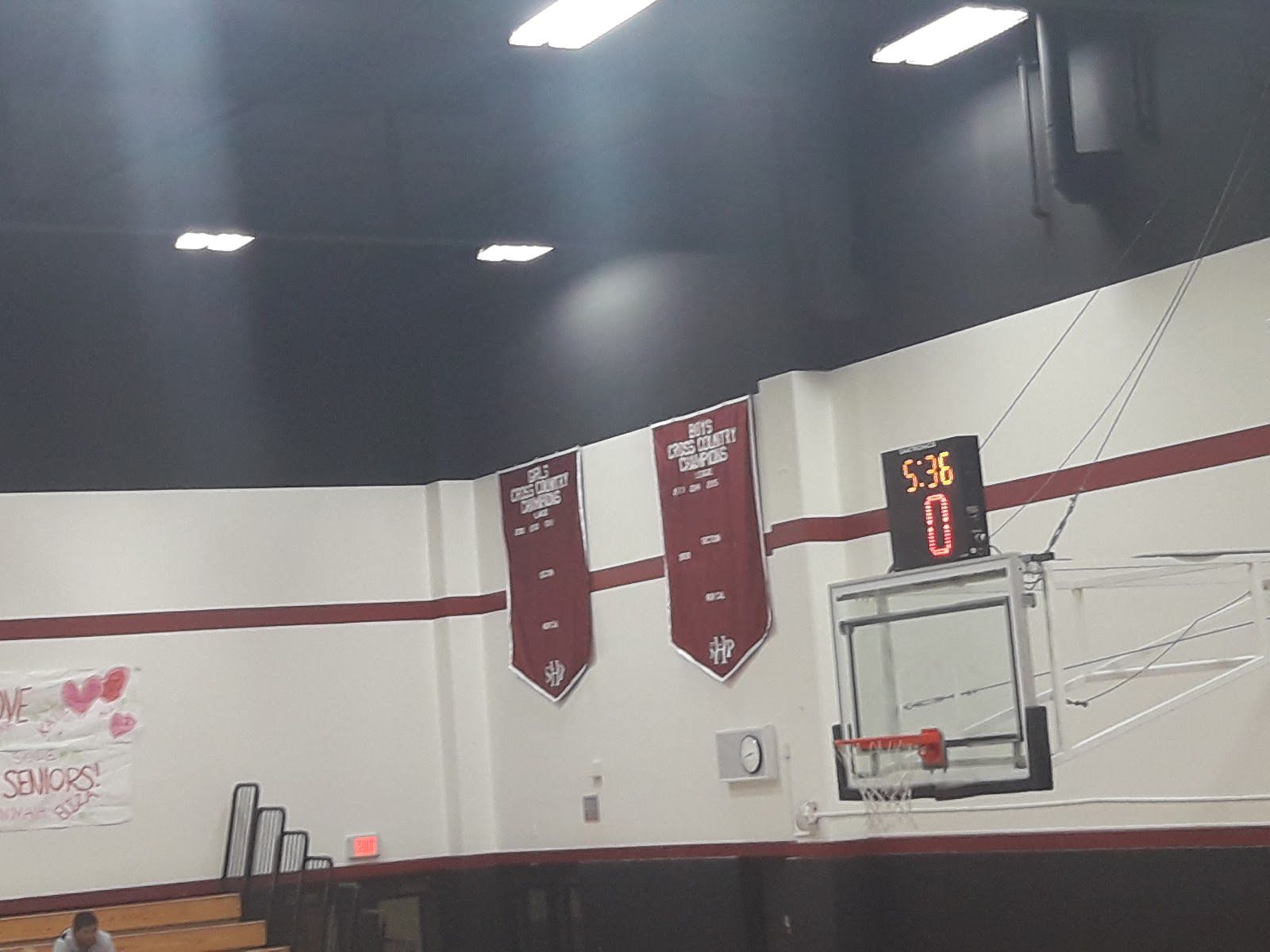
Photo © Johnny Y via Google Maps
Type
Day
Ages
3–18
Curriculum
American
Qualifications
AP
Ratio
1:9
The Verdict
Editor's commitment
Right for
Families wanting a Catholic day school, ages 3–18, with a 1:9 ratio and a 1898 Sacred Heart inheritance.
Wrong for
Parents after boarding, a secular ethos, or a cheaper Silicon Valley option; the average annual fee is US$53,787.
Watch out for
Accreditations CAIS, WCEA and WASC add assurance, but the school does not publish headline exam outcomes in the public domain.
Ranking breakdown
Sacred Heart Schools, Atherton · # of 1591
Composite score 75.4. 8 weighted criteria.
By criterion
Academic Outcomes
Weight 20%
#261
of 1533 scored
University Placement
Weight 16%
#263
of 1529 scored
Prestige & Heritage
Weight 12%
#293
of 1580 scored
Alumni Network
Weight 12%
#191
of 1530 scored
Facilities
Weight 12%
#37
of 1540 scored
Transparency & Communications
Weight 8%
#358
of 1547 scored
Peer & Industry Review
Weight 10%
#268
of 1564 scored
Admissions Selectivity & Demand
Weight 8%
#334
of 1529 scored
Peer & Industry Review
How Sacred Heart Schools, Atherton is regarded in the sector
75
Strong · medium confidence
Among Bay Area independent schools, Sacred Heart is treated as a credible, well-resourced peer to Menlo School, Castilleja and Harker rather than a clear leader among them; heads of rival schools tend to note its Network of Sacred Heart Schools affiliation as a point of distinction rather than a competitive threat. University admissions offices, particularly at Stanford and other West Coast selectives, view its applicant pool as strong but shaped heavily by regional advantage rather than exceptional differentiation. Independent education press coverage is modest compared with national boarding brands - it appears in regional 'best private schools' round-ups and Niche-style rankings but rarely in national broadsheet league tables, since it is a day school outside the systems (British, Ivy feeder mythology) that typically generate that coverage. Its most consistent external validation comes through the Sacred Heart network itself - conferences, shared accreditation standards, and cross-school benchmarking - rather than through independent press scrutiny.
Editors' overview
Sacred Heart Schools, Atherton occupies a clear niche in the Bay Area market: a long-established Catholic day school with serious academic intent, strong pastoral structure and unusual global reach. The core facts matter. It has operated since 1898, teaches in English, runs an American curriculum from age 3 to 18, and carries CAIS, WCEA and WASC accreditation. The school’s scale is substantial — 1,200 students, 800 families, 300 employees — but the published 1:9 student-teacher ratio points to close adult attention rather than anonymous scale. The differentiator is the Sacred Heart network itself: a 44-country heritage gives the school an international frame that many local independent schools cannot match. For families who want Catholic education without a narrow parochial feel, that combination has force.
What sets it apart is the blend of mission and polish. SHS is explicit about faith, service, leadership and formation of character; parents who want religion kept at arm’s length should look elsewhere. Yet this is not a convent-school relic. The offer is broad, well resourced and designed for modern affluent families: Montessori preschool, lower, middle and preparatory divisions, learning support, college counselling, exchange opportunities, libraries, farm and garden, athletics, sports medicine, music, theatre, dance and visual arts across a 63-acre campus. The school also benefits from being independent rather than diocesan, which gives it room to build a more expansive programme. Moral seriousness, institutional memory, high adult oversight and a polished sense of purpose run through the proposition.
Why shortlist it? Because it gives parents a rare three-part package: academic rigour, an intact Catholic ethos, and the social confidence of an established Peninsula institution. That matters in Silicon Valley, where many schools can deliver strong teaching, but fewer deliver a coherent philosophy of education. SHS does. The trade-off is equally clear. Families seeking a deliberately edgy, highly experimental, or fully secular environment will find the school too structured and too value-driven. This is a place for students who respond to clear expectations, community accountability and service with teeth, not for those who want maximum looseness or ideological neutrality.
The student who fits best here is bright, conscientious and open to participation beyond the classroom. A child who thrives in discussion, accepts guidance, and will use the school’s arts, athletics, service and leadership programmes in earnest will do well. So will internationally minded families who value the Sacred Heart connection but want a firmly local day-school base in Atherton. The school suits students who want scholarly discipline with pastoral steadiness; it suits families who see education as formation, not just credential gathering.
Academic Performance
Academic performance is the point where Sacred Heart Schools, Atherton turns frustratingly opaque. The public case for rigour is strong: seminar-style teaching, a substantial college counselling operation, transcript support, summer academics, departmental breadth, and named academic resources including libraries, learning support and creative inquiry. There is also an exchange programme, which adds intellectual range rather than pure résumé gloss. But none of that answers the central parental question: how students perform in external examinations. The school does not publish aggregate AP results, SAT or ACT profiles, matriculation breakdowns by selectivity band, or any comparable whole-cohort outcome data in the public domain. For a school operating in a hyper-competitive Peninsula market, that omission matters.
Relative to peers, this places SHS in the camp of academically ambitious independents that rely on institutional reputation and programme depth more than hard public score disclosure. Some competitors publish detailed testing and university destination data; SHS does not, and that weakens external benchmarking. That does not mark weak academics. It marks controlled transparency. Parents can infer a serious college-preparatory culture from the scale of provision and the school’s insistence on intellectual formation, but inference is not evidence. Families comparing top-tier Bay Area schools on outcomes should ask for AP distributions, mean standardised test scores, and university destination patterns across several graduating classes. Until then, SHS’s academic performance sits in the strong-but-unproven category rather than the data-secure one.
Facilities
Facilities are a serious asset here. The campus carries the range parents expect from a well-funded all-through independent: dedicated libraries, a farm and garden, visual arts studios, music, theatre and dance spaces, and a full athletics infrastructure with named facilities and fields, athletic performance provision and sports medicine. That matters because many peer schools talk about whole-child education while allocating most of their physical plant to academics and sport alone. SHS gives the arts proper room and treats student wellbeing and physical care as operational priorities, not decorative extras. The result is a campus that supports genuine programme breadth rather than timetable improvisation.
Against Bay Area peers, the strongest point is balance. Some competitors beat it on sheer specialist flash — a more conspicuous makerspace culture, a more overt STEM showcase, or sharper public detailing of laboratories and innovation suites — and SHS does not publish the kind of room-by-room facilities inventory that would settle every comparison cleanly. Still, the school’s 63-acre setting and the spread of provision across academics, arts, service and sport put it in the upper bracket of local day-school infrastructure. The farm and garden stand out because they add texture beyond polished conventional amenities, and the health services, counselling and after-school care reinforce a campus built for daily life, not prospectus theatre. Families wanting lavish but coherent facilities will find substance here.
What makes Sacred Heart Schools, Atherton distinctive is not Catholic identity on its own
Prestige
Sacred Heart Schools, Atherton carries real Peninsula prestige, but not the showy kind built on constant score-broadcasting or brand theatrics. Its status rests on three harder assets: social standing among established Bay Area families, the authority of a long-entrenched Catholic independent institution, and membership of a Sacred Heart network spanning 44 countries. That combination gives the school reach beyond its local market and a seriousness of identity that many polished independents lack. The community scale also matters: 1,200 students and 800 families make this a substantial institution, not a boutique school trading on scarcity alone. In practical terms, the name carries weight with families who value tradition, formation and a strong adult culture, and it sits comfortably in the upper tier of schools that shape Peninsula social and educational networks.
The limits of that prestige are clear. SHS does not build public authority through hard academic disclosure, so its reputation depends more on heritage, community confidence and programme breadth than on published outcome dominance. That weakens its standing with parents who equate prestige with exam data and elite admissions transparency. Still, the school’s Catholic identity, independent governance and visibly resourced all-through structure give it institutional heft. This is high-status, old-guard prestige with a modern operational gloss: confident, well-connected and durable, but not fully evidence-led in the way the most data-forward competitors are.
Academic performance is the point where Sacred Heart Schools, Atherton turns frustratingly opaque
Communications
Parent communication is broad, structured and plainly built for a large, involved community. The school runs a central News Hub and archive, a live calendar, admissions events and video, a virtual campus tour, division-specific admissions pages, and dedicated contact routes across academics, health, counselling, athletics, arts, alumni and advancement. That menu matters. It gives families multiple ways into the institution rather than forcing everything through one generic front desk. The site also names leadership and specialist functions, which signals a school that expects parents to engage with real departments, not just a polished marketing layer. For a community of 800 families and 300 employees, that level of communications architecture is not a luxury; it is a basic operational necessity, and SHS treats it that way.
Effectiveness is strongest on clarity of structure and weakest on candour about outcomes. Parents can find the school’s mission, values, events, support services and programme breadth without much friction, and the navigation reflects a well-drilled, administratively serious institution. The tone is high-control and mission-heavy, which suits families who want clear messaging and a stable adult culture. The limitation is familiar: the school communicates ethos and opportunity far better than it communicates hard performance data. That creates a managed public picture — strong on identity, thinner on evidence. In practice, SHS communicates like an experienced independent school that knows its audience well and keeps the machinery visible, but still withholds the academic data that would make that communication fully convincing.
Uniqueness
What makes Sacred Heart Schools, Atherton distinctive is not Catholic identity on its own. Plenty of schools can claim that. The differentiator is a Catholic school tied to a transnational Sacred Heart tradition while operating with the scale, finish and expectations of a top independent in Silicon Valley. The network matters because it gives students a frame beyond local competition: the school traces its heritage across 44 countries, and that widens the idea of what service, leadership and community mean. Add the school’s explicit commitment to faith, justice and the formation of character, and the result is a culture with real moral architecture. This is not values wallpaper. It is a school that asks students to connect intellect with responsibility, and to treat service as part of daily schooling rather than a seasonal add-on.
That brings clear advantages for the right child. Students get a more coherent sense of purpose than at many secular independents, where excellent provision can still sit inside a thinner institutional story. The all-through structure also helps: children can grow inside one ethos from early years to graduation, with exchange opportunities, leadership pathways and service work reinforcing continuity. The community itself is substantial — 1,200 students and 800 families — which gives breadth without the anonymous sprawl of a giant system. The trade-off is obvious. Students who resist shared expectations, faith language or adult-guided formation will find the culture too intentional and too values-led. For families who want education to shape character as well as performance, that intentionality is the point.
Sacred Heart Schools, Atherton carries real Peninsula prestige, but not the showy kind built on constant score-broadcasting or brand theatrics
Student Profile
The best fit is a student who accepts structure, reads social cues well and will take part rather than sit on the edges. This is not a school for the detached, the aggressively ironic or the child who wants to bargain with every expectation. It suits pupils who can handle a high-accountability adult culture, move comfortably between classroom demands and community obligations, and engage with faith language without constant resistance. Because the school serves a large family base and employs a substantial staff body, students also need the social steadiness to operate inside a well-organised institution rather than a loose, improvisational one. The Sacred Heart inheritance across 44 countries will also appeal to families who want a school with a wider frame than local status competition alone.
In temperament, the strongest candidates are conscientious, participatory and open to formation, not just achievement. A child who will use counselling, learning support, service, exchange, arts, athletics or clubs in earnest will get more from this place than a narrow grinder interested only in grades. The presence of Montessori in the early years and co-education through the older grades points to a student body shaped for continuity rather than reinvention at each stage. That brings advantages for children who value belonging and routine. It is less forgiving for students who crave anonymity, ideological distance from religion, or maximum personal looseness. The right student will find *clarity, care and pressure in useful proportions*.
Sacred Heart Schools, Atherton occupies a clear niche in the Bay Area market: a long-established Catholic day school with serious academic intent, strong pastoral structure and unusual global reach
Co-curricular strengths
Arts & sport, on a separate axis
Overall 8.56/10
Scored 0-10 from the school's own published evidence. This axis is editorial-only — it does not feed the main WTS ranking.
Sports
8.7/10
Drama
8.5/10
Dance
8.5/10
Music
8.5/10
Visual Arts
8.6/10
WTS 300 badge
2026/27 editionSacred Heart Schools, Atherton is one of the World's Top 300 Schools for 2026/27. Claim your listing to add it to your site →
Strengths
- +Founded in 1898 by the Society of the Sacred Heart, giving the school over a century of institutional continuity in Atherton, with archives covering 125 years of history.
- +The school belongs to a worldwide network, with Schools of the Sacred Heart found in 41 countries across six continents, including a 25-school U.S.-Canada province, giving access to exchange and cross-cultural programs.
- +Enrollment of roughly 1,194 students is paired with a student-teacher ratio of 7 to 1, and 98% of students go on to attend a 4-year college after graduation.
- +The upper school offers a deep course catalog with AP courses in 28 subjects, plus honors across departments, and Creative Inquiry, an interdisciplinary studio for student-driven projects.
- +Tuition assistance for students applying to grades 6 through 12 ranges between $5,000 and $57,000, indicating a meaningful financial-aid budget for qualifying families.
Considerations
- −Day tuition for the highest grade reaches roughly $59,565 a year according to Niche, placing the school among the priciest Bay Area day options for a family budgeting long term.
- −The acceptance rate of Sacred Heart Schools, Atherton is 25%, which is lower than the national average of 81%, ranking it among California private schools with low acceptance rates, so admission cannot be assumed even for strong applicants.
- −The school is explicitly Roman Catholic in affiliation and governed within that tradition, so families seeking a fully secular environment will find faith formation embedded in daily school life, even though non-Catholic students are admitted.
- −The school is day-only in one of the most expensive residential enclaves in the United States, with no boarding option, meaning relocating families must secure local housing near Atherton to attend.
Availability
Primary entry gate & tests
ISEE/SSAT + Interview
Gallery
Photo © Johnny Y via Google Maps
Photo © Johnny Y via Google Maps
Photo © Johnny Y via Google Maps
Photo © Stan Baginskis via Google Maps
Photo © Sacred Heart Schools, Atherton via Google Maps
Parent reviews
Have you sent your child here?
Voice reviews carry the strongest trust badge — we transcribe them for you to tidy up before they go live. Prefer to type? A written review is fine too.
Add your voice
In 60 seconds, tell other parents: what's the best thing about Sacred Heart Schools, Atherton, and what surprised you when your child joined?
We ask for a Google sign-in so every review has a real face behind it — no anonymous drive-by attacks on schools, and no faked positive reviews. Your email is never shown publicly.
Send this profile to a friend
International parents rely on word-of-mouth. Share this review with someone weighing the same decision.
Schools with places
Similar schools to Sacred Heart Schools, Atherton with places available now.
Menlo School
Atherton · United States
- 2026-27
- CLOSEDRegular cycle
- 2027-28
- OPENS SOONOpens 1 Sept '26
The College Preparatory School
Oakland · United States
- 2026-27
- CLOSEDRegular cycle
- 2027-28
- OPENS SOONOpens early Sept '26
San Francisco University High School
San Francisco · United States
- 2026-27
- CLOSEDRegular cycle
- 2027-28
- OPENS SOONOpens 28 Aug '26
Lick-Wilmerding High School
San Francisco · United States
- 2026-27
- CLOSEDRegular cycle
- 2027-28
- OPENS SOONOpens early Sept '26
Availability first, then country, area, curriculum, price, co-curricular
Consider also
Also worth looking at alongside Sacred Heart Schools, Atherton.
School for the Talented and Gifted
Dallas · United States
A Dallas ISD magnet in Oak Cliff pairs a 12-course AP mandate with interim electives like glass blowing and ballroom dance.
Brunswick School
Greenwich · United States
An all-boys Greenwich day school since 1902, building character alongside a coeducational bond with Greenwich Academy.
Nightingale-Bamford School
New York City · United States
On a quiet Carnegie Hill block, a century-old liberal-arts curriculum sends ninth graders to London to fuse literature, history, science and art into one capstone journey.
Brooklyn Technical High School
Brooklyn · United States
In Fort Greene, sophomores choose among 18 STEM majors inside the nation's largest single-campus high school.
Same country and curriculum — closest matches within ±10 points either way