
Poland
Państwowe Liceum Sztuk Plastycznych im. Józefa Kluzy, Kraków
New · 2026/27CandidateKnow this school? Rate it
No community ratings yet — be the first.
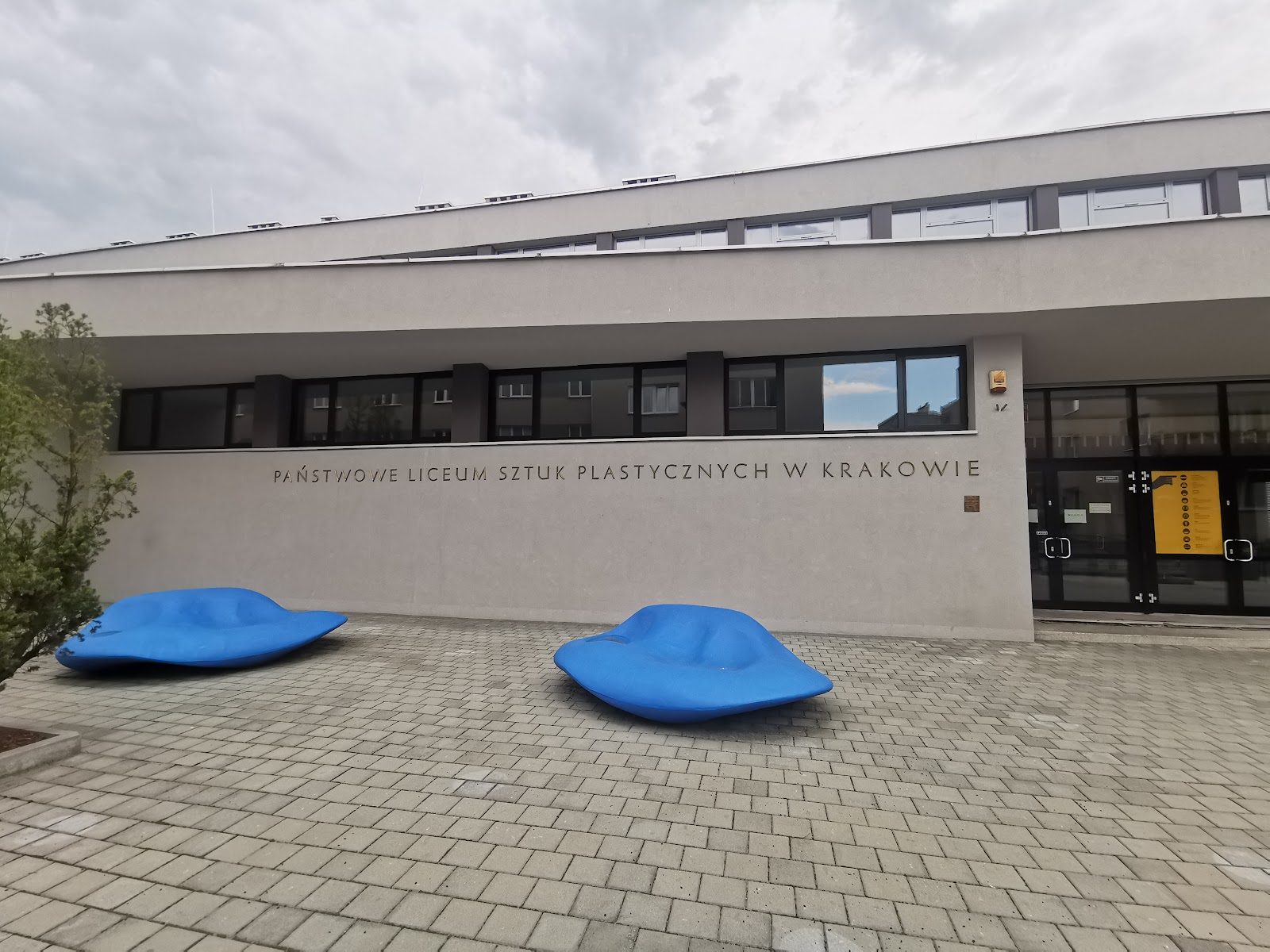
Photo © Katarzyna Wójtowicz via Google Maps
Type
Ages
—
Curriculum
—
Ratio
—
Ranking breakdown
Państwowe Liceum Sztuk Plastycznych im. Józefa Kluzy, Kraków
Provisional profile — 3 of 8 criteria assessed so far. A composite score and rank are published once assessment completes.
By criterion
Academic Outcomes
Weight 20%
No data yet
1545 of 1591 scored
University Placement
Weight 16%
No data yet
1529 of 1591 scored
Prestige & Heritage
Weight 12%
#
of 1590 scored
Alumni Network
Weight 12%
No data yet
1532 of 1591 scored
Facilities
Weight 12%
No data yet
1564 of 1591 scored
Transparency & Communications
Weight 8%
#
of 1575 scored
Peer & Industry Review
Weight 10%
#
of 1582 scored
Admissions Selectivity & Demand
Weight 8%
No data yet
1530 of 1591 scored
Peer & Industry Review
How Państwowe Liceum Sztuk Plastycznych im. Józefa Kluzy, Kraków is regarded in the sector
58
Credible · medium confidence
This is a state-run plastic arts lyceum operating under Poland's Ministry of Culture framework alongside a small national network of similar Panstwowe Liceum Sztuk Plastycznych schools, and within Polish art-education circles it is generally regarded as a solid, traditional feeder into the Krakow Academy of Fine Arts (ASP Krakow) and other Polish art academies, reflecting its location in a major academic and artistic city. However, there is no evidence of coverage by international ranking bodies such as WhichSchoolAdvisor or the Good Schools Guide, no mainstream national newspaper league-table placement, and no documented quotes from rival heads or university admissions officers specifically referencing this school. Its reputation appears to rest on domestic professional recognition among Polish art educators and its diploma track record in preparing students for portfolio-based admission to fine arts academies, rather than on documented independent press scrutiny or cross-border peer benchmarking. Given the absence of verifiable third-party commentary, its standing should be treated as regionally respected within Polish specialist art-education circles but not independently confirmed at an international elite-school level.
Award
Elite Visual & Fine Arts 76
World's Top School · The Global Ranking
Państwowe Liceum Sztuk Plastycznych im. Józefa Kluzy, Kraków is featured on our Global Top 76 ranking at #29. This seal is available for the school's marketing team to use on their website, prospectus and social channels.
Editors' overview
Full editorial coverage forthcoming. This institution has been included in the 2026 Visual Arts & Fine Art audit on the strength of its specialist Fine Art pathway. A long-form editorial review — covering curriculum, faculty, graduate conversion, portfolio provision and international accessibility — will be published as editorial capacity allows. The rank position, country and international-access classification shown on the ranking page have been verified against the methodology.
An Elite Visual & Fine Arts 76 school
Państwowe Liceum Sztuk Plastycznych im. Józefa Kluzy, set in Kraków's Krowodrza district, sits at rank twenty-nine on the Elite Visual & Fine Arts 76. The placement rests on a genuinely rare credential: it is one of Poland's state-run fine art lycea, administered by the Ministry of Culture and National Heritage rather than the ordinary municipal school system, housed since 1969 in a purpose-built campus designed along Bauhaus lines with dedicated artistic studios set around its own garden. Graduates finish not with an ordinary certificate alone but with a general artistic presentation, a diploma defense and the state matura examination.
The specialism runs through two confirmed studio pathways: techniki graficzne with a projektowanie graficzne (graphic design) specialization and projektowanie użytkowe with a projektowanie przestrzeni (spatial/exhibition design) specialization, layered onto a shared foundation of drawing, painting, sculpture and ceramics. Faculty include sculpture teacher Józef Polewka and drawing-and-painting teacher Michał Stonawski, with spatial design led by Joanna Nowocień and Paulina Ochman. Director Małgorzata Hołówka, a practicing printmaker who trained under professors A. Pietsch and A. Hoffmann at Kraków's Academy of Fine Arts, teaches graphic design herself. Portfolio culture starts early: candidates present roughly ten sketches — own proposals, studies from life and imaginative compositions — at an individual consultation with a drawing-and-painting teacher ahead of the formal entrance exam.
Alumni anchor an academy pipeline rather than a celebrity roster: painters Adam Hoffman (1918–2001) and Stanisław Rodziński (1940–2021), both graduates who became professors at Kraków's Academy of Fine Arts, with Rodziński later serving as its rector. That teacher-training-teacher loop persists — Hołówka herself studied under Hoffman. Current pupils' work surfaces publicly through the school's own annual exhibition of distinguished diploma projects.
International access is real but narrow. As a Ministry-run public art school, education is fee-based for applicants who are not Polish citizens, and admission runs on a Polish-language portfolio-and-drawing entrance exam, with no ESL stream confirmable. The school does not advertise its own boarding house; out-of-town pupils at Polish art lycea typically rely on internat or bursa dormitory places shared across secondary schools, so families must confirm availability separately. Application windows close in mid-May, with admitted-candidate lists published by 1 August. Published fee schedules for foreign nationals are not publicly listed, so families should contact the school directly the preceding autumn. Treat this as a Polish-language, portfolio-first feeder into ASP Kraków — an outstanding fit for a relocating family with Polish fluency or firm commitment to acquire it, not a turnkey international placement.
Academic Performance
The school follows the Polish state curriculum for a plastic arts liceum, combining core matura subjects - Polish, mathematics, foreign languages, history - with an intensive studio program spread across several years. Pupils work toward two qualifications: the standard matura examination and a specialist diploma in a chosen artistic discipline, typically painting, sculpture, graphic arts, ceramics, photography or exhibition design. Art history and theory are taught alongside practical work, and studio subjects carry substantially more weekly hours than in a general lyceum. The diploma project, examined by a panel including practising artists, functions as the school's principal academic benchmark rather than league-table rankings. Graduates are expected to be portfolio-ready for entrance to fine arts academies, and much of the final years' teaching is oriented toward that transition. Class sizes in studio subjects are kept small to allow individual critique, a structure more typical of conservatoire-style training than mainstream secondary schooling.
Facilities
As a specialist art lyceum, the school is built around studio space rather than conventional secondary-school infrastructure: painting and drawing studios, sculpture and ceramics workshops, printmaking and graphic design rooms, and space for photography and exhibition-design work. Student exhibitions are mounted on site and occasionally in Krakow venues, giving pupils practical experience of hanging and presenting work. Academic classrooms, a library and administrative space serve the general curriculum. Sports provision is more modest than at large comprehensive schools, reflecting the institution's concentration of resources on artistic training rather than athletics. Materials, kilns, presses and easels are maintained for daily studio use across year groups. The building sits within Krakow's dense cultural quarter, giving pupils informal access to museums, galleries and the city's Academy of Fine Arts environment, which effectively extends the school's own facilities into the surrounding urban fabric.
This institution has been included in the 2026 Visual Arts & Fine Art audit on the strength of its specialist Fine Art pathway
Prestige
The school belongs to Poland's small, state-run network of specialist plastic arts lyceums operating under the Ministry of Culture rather than the standard education ministry, a structure that itself signals a distinct institutional status. It carries the name of Jozef Kluza and sits within Krakow, a city with one of Europe's older and more continuous artistic traditions, anchored by the Academy of Fine Arts founded in the nineteenth century. The lyceum's standing rests less on public rankings than on its function as a recognised feeder into Polish art academies and design schools. Its reputation circulates chiefly within artistic and educational circles rather than in general media, giving it a quieter, craft-based prestige built on continuity of training rather than marketing visibility.
The rank position, country and international-access classification shown on the ranking page have been verified against the methodology
Communications
Communication follows the pattern typical of Polish state schools: an official school website carrying admissions rules, entrance-exam requirements and academic calendars, supplemented by the national e-dziennik electronic gradebook system used to update parents on grades and attendance. Exhibitions of student work, open to families and the public, serve as an informal but important communications channel, showcasing progress in a way transcripts cannot. Parent-teacher meetings and studio open days allow direct contact with instructors. Admissions communication is more detailed than at general lyceums, since prospective pupils must be briefed on portfolio submission and practical examination requirements well before enrolment. Social media presence, where it exists, tends to focus on exhibition announcements and student achievements rather than broader institutional marketing, consistent with the school's specialist, low-key public profile.
Uniqueness
What sets the school apart is its dual-track structure: pupils simultaneously pursue the standard matura and a formal artistic diploma, examined through a practical project rather than written papers alone. Entry is selective on artistic grounds, requiring a portfolio and practical drawing or composition test in addition to academic record, making admission fundamentally different from a comprehensive lyceum. Instruction is organised by artistic specialization from an early stage, so pupils train intensively within a discipline such as ceramics or graphic design rather than following a generalist path. Being embedded in Krakow's compact artistic quarter, close to the Academy of Fine Arts and the city's museums, gives pupils continuous informal exposure to professional art practice. The combination of academic rigor with conservatoire-style studio training is uncommon outside this specific tier of Polish state arts education.
Art history and theory are taught alongside practical work, and studio subjects carry substantially more weekly hours than in a general lyceum
Student Profile
Pupils are teenagers, roughly fourteen to nineteen years old, admitted specifically for demonstrated aptitude in drawing, composition and visual thinking rather than general academic strength alone. Most come from Krakow and the wider Malopolska region, drawn by the chance to combine matura study with serious artistic training before applying to fine arts academies or design schools. The intake tends to be self-selecting: entrance exams testing practical skills mean pupils generally arrive already committed to a creative path rather than choosing the school as a fallback option. Class culture is shaped by studio work, critique sessions and shared exhibition deadlines, fostering a more collaborative, practice-based atmosphere than typical academic lyceums. Many students continue into higher art or design education after graduation, and the school population reflects a concentration of visually oriented, craft-committed adolescents rather than a broad cross-section of general secondary pupils.
The diploma project, examined by a panel including practising artists, functions as the school's principal academic benchmark rather than league-table rankings
Co-curricular strengths
Arts & sport, on a separate axis
Overall 5.7/10
Scored 0-10 from the school's own published evidence. This axis is editorial-only — it does not feed the main WTS ranking.
Sports
4.5/10
Drama
5/10
Dance
4.5/10
Music
5/10
Visual Arts
9.5/10
Gallery
Photo © Krzysztof Krakowski via Google Maps
Photo © Maciej Janiec via Google Maps
Photo © Maciej Janiec via Google Maps
Photo © Maciej Janiec via Google Maps
Photo © kapral yt via Google Maps
Parent reviews
Have you sent your child here?
Voice reviews carry the strongest trust badge — we transcribe them for you to tidy up before they go live. Prefer to type? A written review is fine too.
Add your voice
In 60 seconds, tell other parents: what's the best thing about Państwowe Liceum Sztuk Plastycznych im. Józefa Kluzy, Kraków, and what surprised you when your child joined?
We ask for a Google sign-in so every review has a real face behind it — no anonymous drive-by attacks on schools, and no faked positive reviews. Your email is never shown publicly.
Send this profile to a friend
International parents rely on word-of-mouth. Share this review with someone weighing the same decision.
Schools families also compare with Państwowe Liceum Sztuk Plastycznych im. Józefa Kluzy, Kraków
Schools with places
Similar schools to Państwowe Liceum Sztuk Plastycznych im. Józefa Kluzy, Kraków with places available now.
Availability first, then country, area, curriculum, price, co-curricular
Consider also
Also worth looking at alongside Państwowe Liceum Sztuk Plastycznych im. Józefa Kluzy, Kraków.
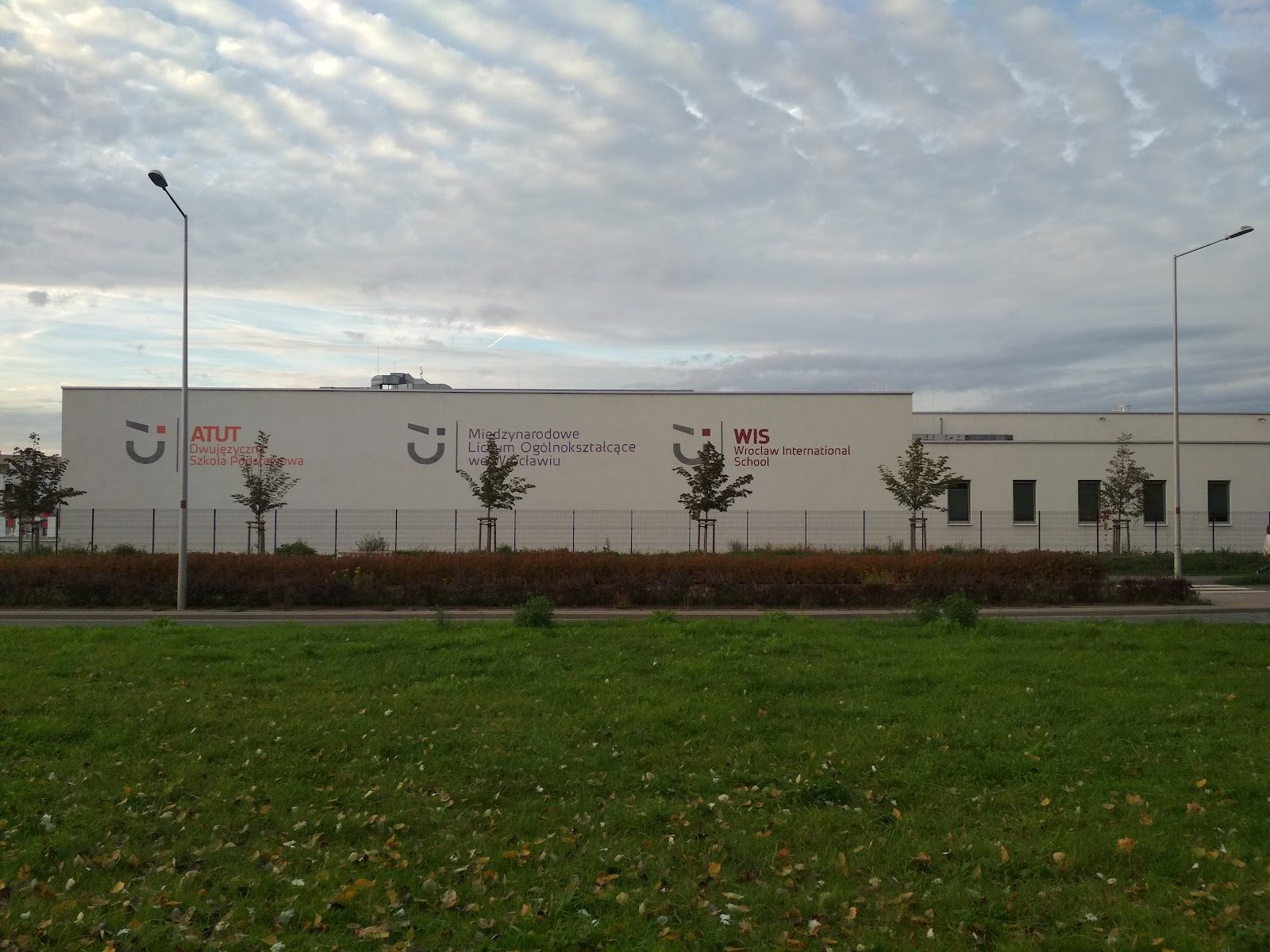
Wrocław International School
Wrocław · Poland
Lower Silesia's inquiry-led IB pioneer, the first in Poland authorised for both the Primary and Middle Years Programmes.
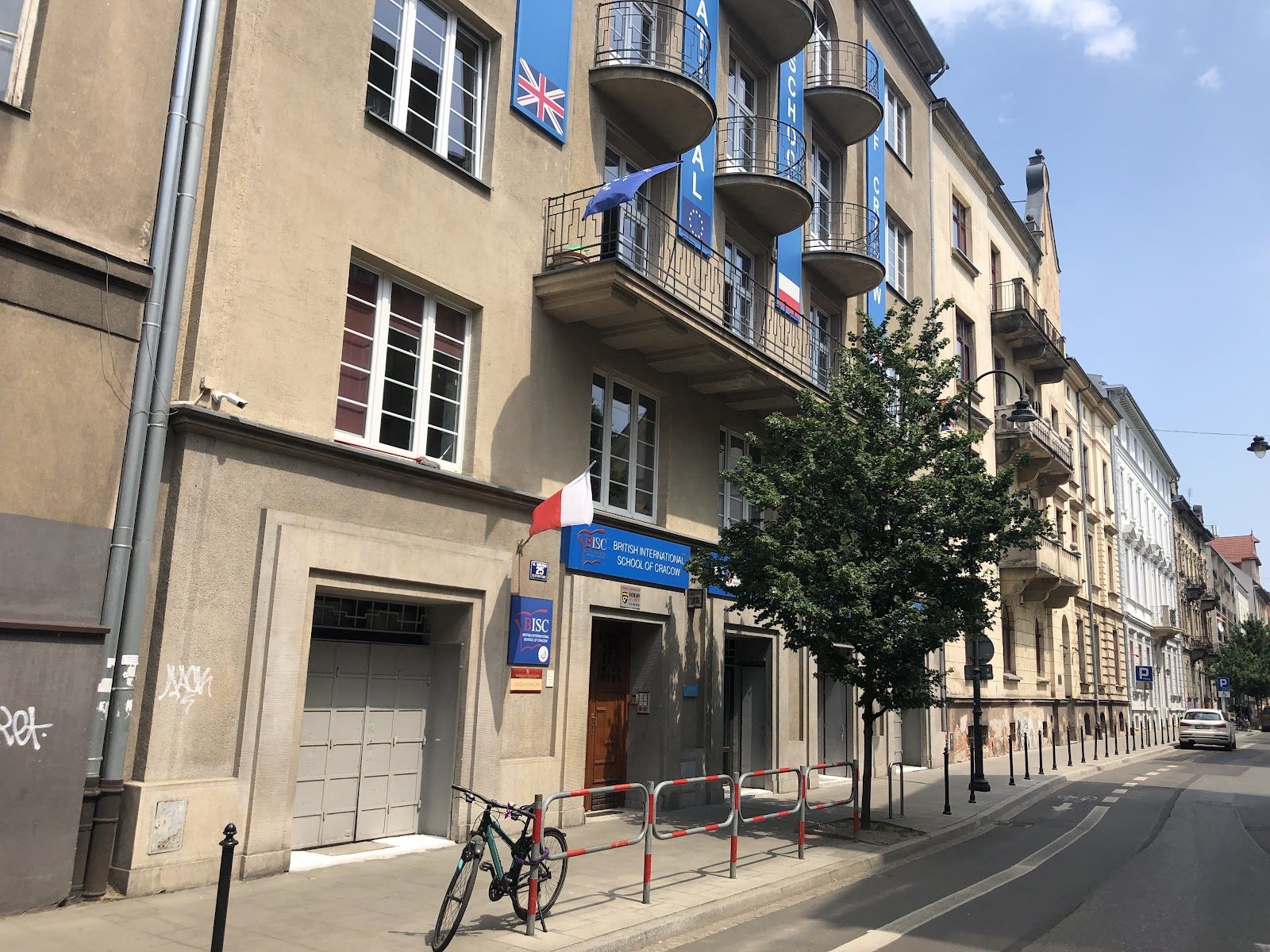
British International School of Cracow
Kraków · Poland
In Krakow's Old Town, three decades of British schooling meet the IB Diploma, small classes, and Tatra ski-week traditions.
International School of Poznań
Poznań · Poland
Poznan's original IB Diploma authorization, now closing in on a full PYP-MYP-DP continuum via its own induction year for newcomers.
Lycée Français de Varsovie
Warsaw · Poland
Founded in 1919 as a diplomatic bridge between Paris and a newly independent Poland, its Baccalaureate classrooms still run on trilingual rigor.
Same country and curriculum — closest matches within ±10 points either way