
Massachusetts
Founded in Boston in 1866, this Charles River campus pairs rigorous academics with hands-on EXCEL leadership training.
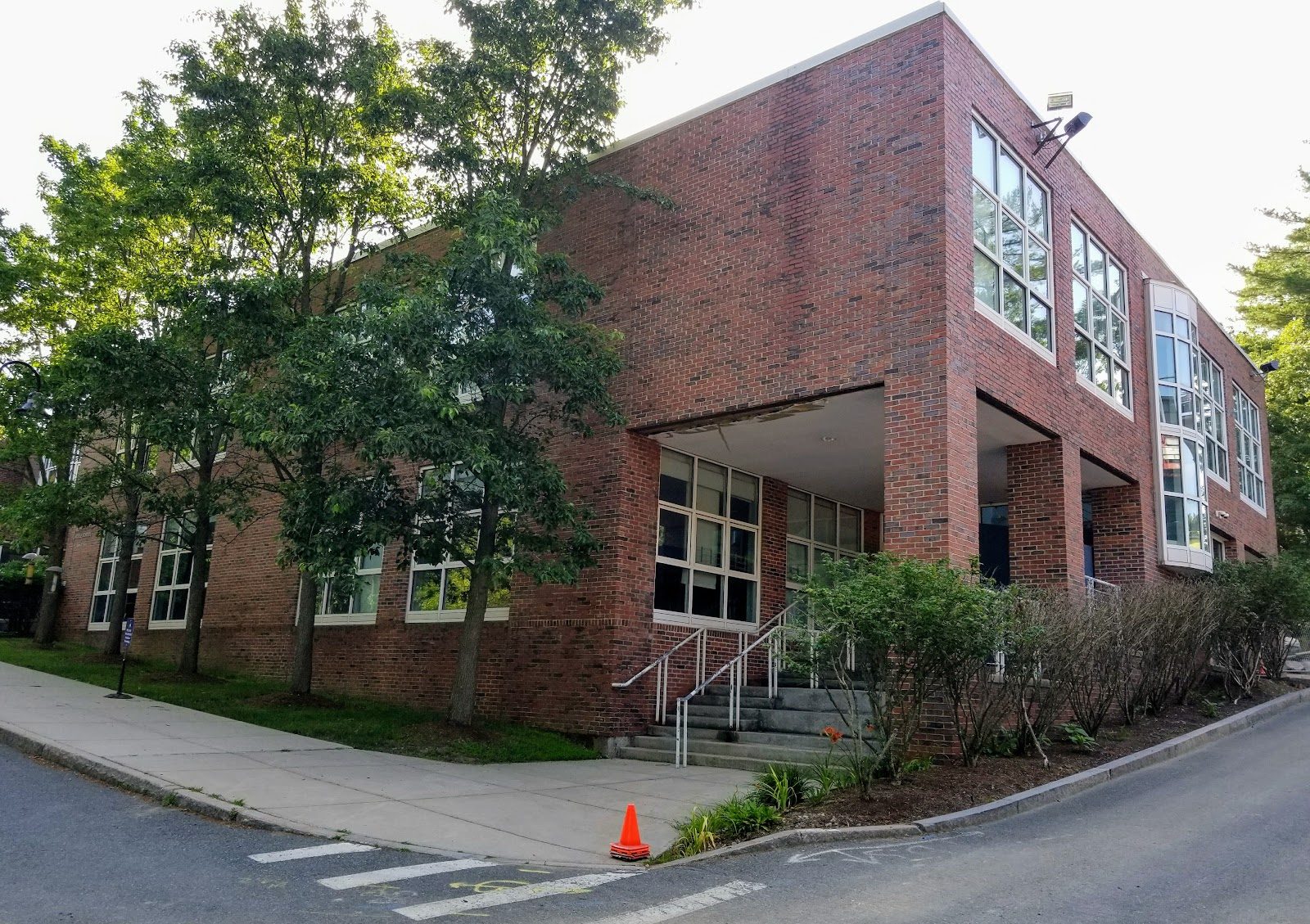
Photo © Anderson J-A via Google Maps
Type
Both
Ages
12–18
Curriculum
American
Qualifications
AP
Ratio
—
The Verdict
Editor's commitment
Right for
Families wanting a coeducational, nonsectarian grades 7–12 school on a 187-acre Charles River campus, with five-day boarding not full boarding.
Wrong for
Anyone wanting early years, a religious ethos or a true seven-day boarding model; Nobles stops at grades 7–12 and enrols 638.
Watch out for
This is expensive: average annual fees run at US$68,500 day and US$74,800 boarding, and NEASC and NAIS accreditation do not make it gentler.
Ranking breakdown
Noble and Greenough School · # of 1591
Composite score 77.3. 8 weighted criteria.
By criterion
Academic Outcomes
Weight 20%
#182
of 1529 scored
University Placement
Weight 16%
#187
of 1529 scored
Prestige & Heritage
Weight 12%
#135
of 1571 scored
Alumni Network
Weight 12%
#101
of 1530 scored
Facilities
Weight 12%
#188
of 1534 scored
Transparency & Communications
Weight 8%
#153
of 1532 scored
Peer & Industry Review
Weight 10%
#205
of 1548 scored
Admissions Selectivity & Demand
Weight 8%
#229
of 1529 scored
Score history
Noble and Greenough School · 2026
Movement across 2024–2026. Peer average overlaid.
Overall — 2024–2026
77.3/ 100
▲ +17.0 vs 2025
year on year
Peer & Industry Review
How Noble and Greenough School is regarded in the sector
88
Strong · high confidence
Nobles is consistently ranked among the top independent day schools in the Boston area and nationally by Niche.com and other school-ranking aggregators, and is frequently mentioned alongside elite peer schools like Milton Academy, Groton, and Belmont Hill in college-placement and secondary-school press coverage. Its extensive, high-profile alumni network (including business, arts, and political figures) receives regular independent media coverage, and it is a perennial benchmark institution in New England prep school circles as referenced in outlets like Boston Magazine's private school features.
Evidence sources
Editors' overview
A 187-acre campus on the Charles River gives Noble and Greenough a physical scale that few day schools near Boston can match, and the school uses it to reinforce a clear identity: academically demanding, outward-facing and serious about leadership. Founded in 1866 and based in Dedham, Nobles is a coeducational, nonsectarian American school for ages 12 to 18, with 638 pupils in grades 7 to 12. The distinctive feature is the combination of a traditional independent-school academic core with EXCEL, its hands-on leadership programme. That matters because plenty of strong US schools talk about character and service; fewer build structured leadership training into school life in a way parents can identify quickly.
This is an expensive school, even by US independent-school standards. The average annual day fee across the years it covers is US$68,500, and the average annual boarding fee is US$74,800. The boarding model also matters: this is five-day boarding, not full seven-day boarding, which suits families who want access to Boston and New England networks without sending a child into a fully residential institution. Accreditation by NEASC and NAIS places it squarely inside the established New England independent-school world. The alumni base adds weight: Wikidata alone records 57 notable former pupils across politics, finance, scholarship, journalism and sport. That breadth points to a school with real reach, not a niche local operation.
Why shortlist it? Because Nobles offers a high-pressure, high-opportunity version of the American private-school model on a large, well-sited campus, with enough boarding to widen its catchment and enough day-school culture to stay connected to family life. It will suit the student who wants rigorous academics, who likes the idea of leadership being taught rather than merely praised, and who can thrive in a competitive, self-directed environment. It is not the obvious choice for a child who needs a soft, intimate or highly sheltered atmosphere. It is for the student who wants stretch, expects talented peers and is ready to use a serious school platform well.
Academic Performance
Nobles sits in the US independent-school tier where families expect strong university placement and a demanding academic culture, but the school does not publish the kind of granular public results that would let parents benchmark it cleanly against exam-driven peers. There are no aggregate AP, SAT or ACT figures in the public domain on the sources here, and the school does not give a year-by-year results dashboard. That opacity matters. In markets where schools trade heavily on hard outcomes, the absence of published score data limits external scrutiny. It leaves parents judging academic strength through selectivity, reputation and destination patterns rather than through a forensic set of numbers.
That does not make Nobles academically weak; it places the school in a familiar American independent-school pattern where prestige carries more weight than disclosed metrics. Among strong New England schools, that can still translate into serious classroom standards, high-octane peer competition and ambitious post-secondary outcomes. The question is not whether pupils are stretched; they are. The question is how much proof the school offers to outsiders. On that front, Nobles is guarded, not transparent. Parents who want a school with publicly available headline exam statistics will find thinner evidence here than at many international schools built around IB or A-level reporting.
Facilities
The campus is the headline facility here. At 187 acres, Nobles has far more room than the cramped suburban norm for schools in the Boston area, and that changes daily life. A site on the Charles River gives it the kind of outdoor capacity many urban and near-urban peers cannot match: proper playing fields, space for full athletics provision, and enough physical separation for the school to avoid the hemmed-in feel that blights many academically strong day schools. For families comparing it with other high-end New England independents, that scale puts Nobles closer to the land-rich boarding-school model than to the compact commuter campus. It is a serious physical asset, not a decorative one.
The limitation is disclosure. The school does not publish, in the sources here, the kind of detailed facilities inventory that lets parents assess specialist provision room by room — no clear public breakdown of science labs, performing-arts spaces, design studios or boarding amenities. That leaves the campus itself doing a lot of the work in the school’s facilities case. Against direct peers, Nobles wins on space, setting and athletic potential; it is less persuasive on publicly documented specialist infrastructure. Parents who care most about breadth of land, outdoor life and a less compressed school day will find a strong offer. Parents who want forensic clarity on theatres, maker spaces or research-grade labs will need to ask harder questions.
In a crowded field of high-end American independents, that is genuinely distinctive
Prestige
Nobles carries real independent-school prestige in the Boston orbit and well beyond it. That standing rests on three things: age, selectivity and the kind of alumni footprint that signals durable influence rather than short-term visibility. A verified minimum of 57 notable alumni is not a trivial roll call for a school of this size. The spread matters as much as the count: public life, finance, scholarship, journalism, the arts and elite sport all feature. That breadth marks a school with established social reach, not a narrow academic hothouse and not a local school trading on old reputation alone. Among American independents, Nobles sits in the category parents recognise instantly: a name that carries weight in university counselling rooms, among employers and across New England professional networks.
The limit to that prestige is also clear. This is not one of the handful of US boarding schools with truly global brand recognition on the level of Andover, Exeter or Groton. Its reputation is stronger regionally than internationally, and families outside the US may need to do more homework to understand the name. That does not diminish its standing; it locates it accurately. Nobles offers serious cachet for families who value access to top-tier American circles, but it does not trade on a mass-market international aura. The result is a school with substantial, old-line credibility rather than celebrity gloss.
The distinctive feature is the combination of a traditional independent-school academic core with EXCEL, its hands-on leadership programme
Communications
Nobles communicates like a school that expects parents to keep up. The public-facing website is clean, legible and well organised, with the essentials easy to find: admissions, academics, student life, giving and contact routes. That matters more than design flourish at a school with a busy, high-expectation parent body. The school also benefits from being small enough for communication to matter at the individual level; in a community of 638, weak coordination shows quickly. There is no sign here of inflated mission-language or endless jargon. The tone is measured, institutional and confident. For many families, that reads as competence. For others, it reads as distance.
The limit is depth. The school does not publish the kind of detailed parent-information architecture that marks the best communicators: no clear public calendar ecosystem, no visible archive of newsletters, no obvious parent portal walkthrough, and no detailed outcomes dashboard that would anchor trust with hard information. That does not point to chaos; it points to a school that relies on internal communication and existing community fluency more than public transparency. For enrolled families, that can work well if messaging is prompt and direct. For prospective parents, it leaves blind spots. The communication style fits the institution: self-assured, selective and not over-explanatory. Families who want every process mapped out in advance will find it tight-lipped. Families comfortable with a more old-school independent-school approach will cope well.
Uniqueness
What sets Nobles apart is not a claim to leadership in the abstract but a school structure built to rehearse it. The distinguishing idea is EXCEL: leadership treated as a discipline with practical application, not a slogan attached to assemblies and service hours. In a crowded field of high-end American independents, that is genuinely distinctive. For students, the gain is direct. They are not only pushed to perform academically; they are asked to organise, lead, decide and account for those decisions in public. On a campus community of 638, that can sharpen self-possession early. It also raises the pressure. A school that trains students to step forward does not leave much room for passivity, and that makes Nobles a demanding social environment as well as an academic one.
The other point of difference is the blend of day-school immediacy with enough residential provision to widen the mix of backgrounds and ambitions. That combination can produce a culture that is less insulated than a pure commuter school and less sealed-off than a full residential campus. Students get access to a serious peer group without losing contact with ordinary family life and the professional world around Boston. Add the school’s old-network reach and broad alumni record — 57 notable former pupils even on a conservative public count — and the result is a school that trains students not only to excel inside its gates but to move comfortably in influential circles beyond them.
Nobles offers serious cachet for families who value access to top-tier American circles, but it does not trade on a mass-market international aura
Student Profile
The student who thrives at Nobles is academically ambitious, socially confident and willing to be visible. This is not a school for drifting through adolescence under light supervision. It suits pupils who can handle pace, scrutiny and a peer group full of able, motivated classmates. Because the school serves grades 7–12 and enrols only 638 students, there is limited room to hide: contribution matters, reputation travels fast, and students who take initiative gain ground quickly. The strongest fit is a young person who likes being stretched in class, can cope with adults expecting maturity, and does not need constant reassurance to keep performing. Children who prefer a quieter lane, or who are unsettled by comparison with high-achieving peers, will find the culture hard-edged.
The social fit matters as much as the academic one. Nobles will reward students who are organised, articulate and comfortable moving between the classroom, activities and leadership roles without much hand-holding. It will also suit families who want their child among driven, high-functioning contemporaries rather than in a deliberately sheltered environment. The school’s nonsectarian setting broadens its appeal, but the real divider is temperament, not background. Pupils with energy, self-command and a taste for responsibility will do well here. Pupils who need a gentler, more protective atmosphere need a different school. Nobles is not for the faint-hearted.
Founded in 1866 and based in Dedham, Nobles is a coeducational, nonsectarian American school for ages 12 to 18, with 638 pupils in grades 7 to 12
Co-curricular strengths
Arts & sport, on a separate axis
Overall 8.96/10
Scored 0-10 from the school's own published evidence. This axis is editorial-only — it does not feed the main WTS ranking.
Sports
9.3/10
Absolute ISL day athletic powerhouse; dominates regional fields across crew, ice hockey, and soccer on a beautiful 187-acre riverfront campus.
Drama
9/10
The modern Vinik Theatre complex provides a conservatory-style framework for staging high-production mainstage plays and musicals.
Dance
8.5/10
Popular choreographic development track explicitly integrated within their collaborative theater and musical networks.
Music
9/10
Outstanding chamber orchestras, wind ensembles, and choral troupes that routinely headline major New England youth music festivals.
Visual Arts
9/10
Sun-drenched studio spaces running advanced design pipelines, ceramics, and photography to build elite university portfolios.
Editor-verified · 8/6/2026
Notable alumni · Wikidata
57notable alumni
26 historic (born pre-1930) · 18 modern (born post-1970)wikidata:2026-07-28 How we source this
WTS 300 badge
2026/27 editionNoble and Greenough School is one of the World's Top 300 Schools for 2026/27. Claim your listing to add it to your site →
Strengths
- +Set on a 187-acre campus bordering the Charles River, originally landscaped by Frederick Law Olmsted, with a historic mansion ("the Castle") serving as the dining hall.
- +Long-established college-preparatory pedigree dating to 1866, with historical ties to Harvard and alumni such as astronomer Percival Lowell and architect Guy Lowell.
- +Was the single largest contributor of student-athletes to Harvard's varsity teams in the 2020-21 season, reflecting a strong athletic-to-Ivy pipeline.
- +Offers 14 Advanced Placement courses and reports that roughly 60 percent of faculty hold advanced degrees.
- +Coeducational and non-denominational today, having broadened from its narrower historical intake.
Considerations
- −Annual fees are substantial, with day tuition and five-day boarding both running in the low-to-high $60,000s depending on the year cited.
- −Admission is selective, with acceptance figures reported around 24 percent, making entry uncertain even for strong applicants.
- −Boarding is a small minority of school life: five-day boarders make up only a small fraction of the roughly 620-630 student body, so the residential community is limited compared with full boarding schools.
- −The school has a documented history as an exclusive, historically Episcopalian, Boston-elite institution that did not admit Black students until 1964 or girls until 1974, a legacy families may wish to weigh against its current diversity efforts.
Availability
Primary entry gate & tests
ISEE/SSAT + Interview
Gallery
Photo © Anderson J-A via Google Maps
Photo © Samuel Patz via Google Maps
Photo © Anderson J-A via Google Maps
Photo © Anderson J-A via Google Maps
Photo © Anderson J-A via Google Maps
Photo © Anderson J-A via Google Maps
Photo © John Paine via Google Maps
Photo © Nunya Business via Google Maps
Photo © Nunya Business via Google Maps
Parent reviews
Have you sent your child here?
Voice reviews carry the strongest trust badge — we transcribe them for you to tidy up before they go live. Prefer to type? A written review is fine too.
Add your voice
In 60 seconds, tell other parents: what's the best thing about Noble and Greenough School, and what surprised you when your child joined?
We ask for a Google sign-in so every review has a real face behind it — no anonymous drive-by attacks on schools, and no faked positive reviews. Your email is never shown publicly.
Send this profile to a friend
International parents rely on word-of-mouth. Share this review with someone weighing the same decision.
Schools with places
Similar schools to Noble and Greenough School with places available now.
Middlesex School
Concord · United States
- 2026-27
- CLOSEDRegular cycle
- 2027-28
- OPENS SOONOpens 1 Sept '26
Commonwealth School
Boston · United States
- 2026-27
- CLOSEDRegular cycle
- 2027-28
- OPENS SOONOpens 1 Sept '26
Concord Academy
Concord · United States
- 2026-27
- CLOSEDFull / No offers
- 2027-28
- OPENS SOONInstructions Avail 17 Aug '26
Buckingham Browne & Nichols School
Cambridge · United States
- 2026-27
- CLOSEDRegular cycle
- 2027-28
- PLACES OPENJan 10 '27 Deadline
Availability first, then country, area, curriculum, price, co-curricular
Consider also
Also worth looking at alongside Noble and Greenough School.
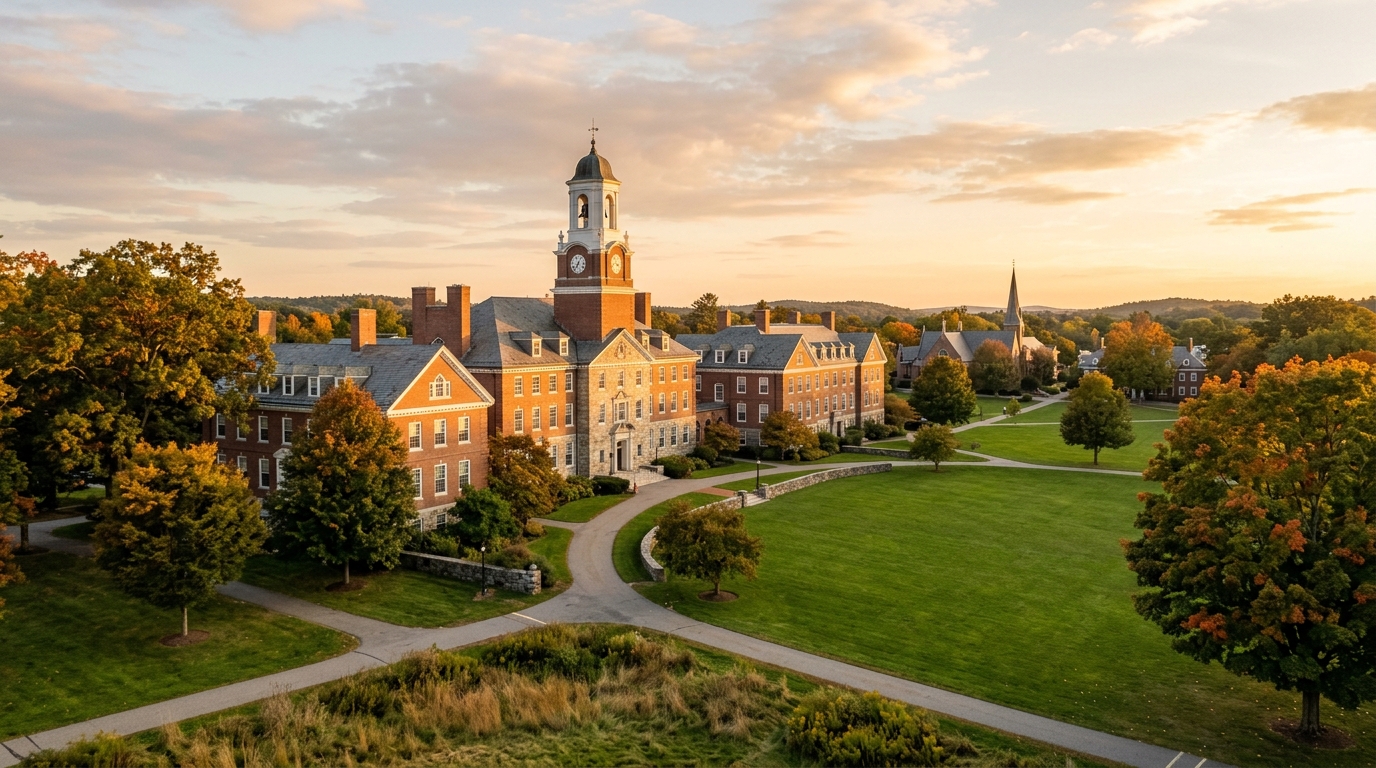
Middlesex School
Concord · United States
A secular alternative to New England's church-affiliated academies since 1901, on an Olmsted-designed campus in historic Concord.

Cate School
Carpinteria · United States
A century-old mesa-top boarding school above the Pacific, where equestrian roots meet inquiry-driven academic rigor.
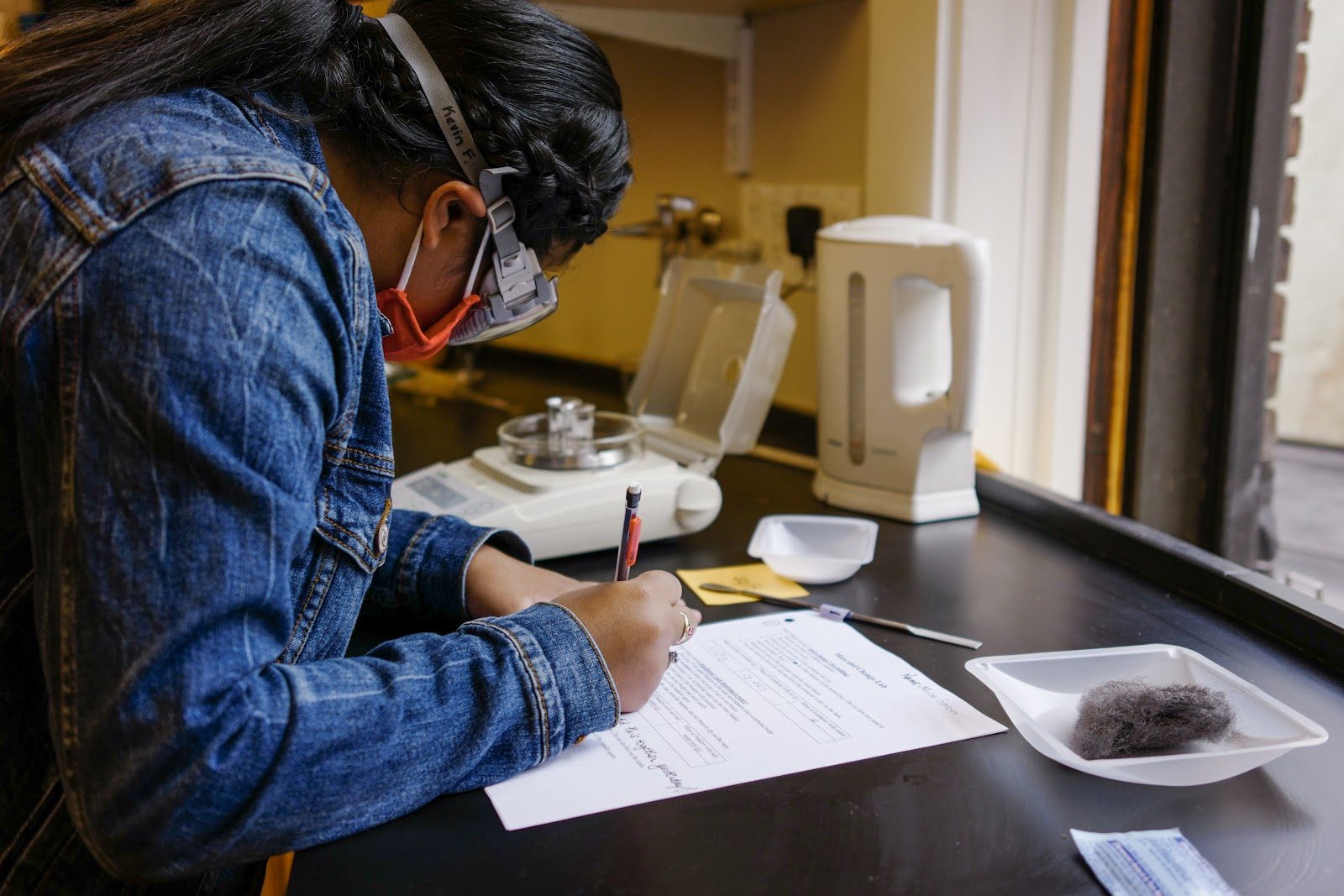
Commonwealth School
Boston · United States
In Back Bay brownstones, a 150-student cohort takes college-level seminars from set theory to Shakespeare
Concord Academy
Concord · United States
No class rank, no academic prizes, and mandatory arts study set apart this selective day-and-boarding school in literary Concord.
Same country and curriculum — closest matches within ±10 points either way