
New York
Millbrook School
low confidence· 2/6 cats · 2.8 avg sourcesIn the Hudson Valley, students run the only AZA-accredited zoo on any American high school campus.
Type
Both
Ages
14–18
Curriculum
American
Qualifications
US High School Diploma
Ratio
1:4
The Verdict
Editor's commitment
Right for
Teenagers aged 14–18 who want American schooling with serious adult trust: Millbrook’s 1:4 ratio and campus zoo are unusual assets.
Wrong for
Families wanting a day-only school, a religious ethos, or a larger, more anonymous campus culture; Millbrook is non-religious and both boarding and day.
Watch out for
NEASC and NAIS accreditation give baseline credibility, not automatic academic distinction; the school does not publish aggregate exam outcomes here.
Ranking breakdown
Millbrook School · # of 1591
Composite score 54.3. 8 weighted criteria.
By criterion
Academic Outcomes
Weight 20%
#1156
of 1529 scored
University Placement
Weight 16%
#1144
of 1529 scored
Prestige & Heritage
Weight 12%
#1037
of 1571 scored
Alumni Network
Weight 12%
#1270
of 1530 scored
Facilities
Weight 12%
#994
of 1534 scored
Transparency & Communications
Weight 8%
#1000
of 1532 scored
Peer & Industry Review
Weight 10%
#1372
of 1548 scored
Admissions Selectivity & Demand
Weight 8%
#1156
of 1529 scored
Peer & Industry Review
How Millbrook School is regarded in the sector
60
Respected · medium confidence
Millbrook sits within the Founders League athletic conference alongside Hotchkiss, Taft, Kent, Salisbury, Westminster and Loomis Chaffee, giving it regular competitive and admissions overlap with those schools, though it is rarely mentioned in the same breath academically. NYSAIS accreditation situates it among recognized New York independent schools rather than the top-tier national prep cohort (Andover, Exeter, Groton, Deerfield). Boarding-school guides and family advisors, including Good Schools Guide-style coverage, consistently single out the Trevor Zoo and environmental/agricultural curriculum as the school's distinguishing hook for a specific applicant profile, rather than praising overall academic rigor or Ivy placement rates. University admissions offices treat it as a known but modest-volume feeder, sending students to strong liberal arts colleges rather than functioning as an Ivy pipeline. It rarely appears in national league tables or independent education press rankings of leading US boarding schools, reflecting its smaller scale and regional rather than international reputation.
- Chevy Chase — Actor/Comedian
- Ian M. Cumming — Businessman, former CEO of Leucadia National
- Frelinghuysen family members — Politicians
Editors' overview
Millbrook School occupies a distinctive corner of the American boarding market: a small, co-educational school in the Hudson Valley with an unusually serious environmental spine. The headline feature is real, and rare: students run the Trevor-Lovejoy Zoo, the only AZA-accredited zoo on any American high school campus. That is not a gimmick. It feeds directly into school life through student curatorships, community service, conservation work and a visible strand of environmental stewardship. For families tired of schools that talk about purpose in the abstract, Millbrook offers something concrete and memorable. Founded in 1931, teaching in English, and operating with a striking 1:4 student-teacher ratio, it has the scale to deliver close adult attention and the confidence to build a culture around work, responsibility and participation.
The school’s market position rests on that combination of intimacy and substance. This is not a giant New England brand trading on size, spectacle or a conveyor belt identity. It is smaller, more personal and more idiosyncratic. The academic offer is American, with visible depth in signature programmes such as Advanced Science Research and the long-established Center for Entrepreneurial Studies, alongside arts, athletics and off-campus options. Saturday Morning Programming, service learning and faculty mentoring point to a school that expects students to do more than move from lesson to lesson. That will appeal to parents who want a school with real texture rather than polish alone. Millbrook is accredited by NEASC and NAIS, and the public-facing school information is clear about the breadth of student life; less clear on hard academic outcome data. The school publishes college matriculation information, but not the kind of aggregate attainment metrics that allow easy comparison with more numbers-driven competitors.
Why shortlist it? Because Millbrook offers a strong sense of place and a model of education that rewards initiative. Students who thrive here will not want anonymity, and they will not mind being needed. The best fit is a teenager aged 14 to 18 who values close relationships with teachers, is willing to contribute to a residential community, and wants school to extend beyond the classroom into research, service, the arts, sport or environmental work. A student drawn to hands-on learning, earned responsibility and a campus with its own internal life will find plenty to do. A student who wants a vast course catalogue, a high-gloss metropolitan feel or relentless public boasting about results will find stronger fits elsewhere. Millbrook earns its place on a shortlist through character, scale and purpose — and through a zoo that gives the school a daily seriousness few rivals can match.
Academic Performance
Millbrook does not publish the exam data that allow clean comparison with the strongest US boarding-school peers. We have not seen average SAT or ACT figures, AP score distributions, National Merit counts, or any other aggregate attainment set that would let a parent benchmark the school with confidence. That matters. In a market where many competitors trade on hard-edged academic transparency, Millbrook asks families to read quality through programme design, college matriculation lists and individual student profiles instead. That is a less rigorous public case than the one made by the most academically explicit schools in the Northeast.
That does not make the academic picture weak; it makes it opaque. The school’s own presentation points to serious academic intent through Advanced Science Research, the Center for Entrepreneurial Studies, Saturday programming, academic support and a conspicuously low 1:4 staffing ratio. Those are strong structural indicators of individual attention and intellectual range. They are not substitutes for external results. Relative to peers, Millbrook sits outside the camp of schools that publish enough data to dominate on exam metrics alone. Its academic standing rests more on educational texture, faculty access and post-school destinations than on brag-sheet numbers. For families comfortable judging a school by fit and substance rather than league-table shorthand, that is workable. For families who want cold comparators, Millbrook gives too little.
Facilities
The facility that defines Millbrook is the Trevor-Lovejoy Zoo. This is not a token animal enclosure bolted onto a school tour; it is a working, student-facing operation with its own history, student curators, volunteer programme, conservation action centre and academic role. Against peer boarding schools, that is genuinely rare territory. Plenty of schools market environmental awareness. Very few give pupils daily access to a living institutional asset that demands care, organisation and scientific seriousness. For the right student, the zoo carries more educational weight than a shinier theatre or a larger sports complex elsewhere. It also gives the campus an identity that is hard to counterfeit.
Beyond the zoo, the public picture is solid rather than extravagant. Named facilities include the Holbrook Arts Center, Warner Gallery, library, Casertano Dining Hall, athletic training provision, live-streamed sports infrastructure and dedicated learning spaces, alongside a campus map that points to a school with enough physical breadth to support a full residential routine. The strength here lies in coherent use, not spectacle. Millbrook’s facilities read as integrated with programme: arts spaces tied to exhibition and performance, athletics tied to regular competition, and environmental spaces tied to service and research. What the school does not advertise is the arms-race inventory some rivals push — vast STEM complexes, headline architectural statements or resort-style leisure kit. Families drawn to flashy abundance will find stronger contenders elsewhere; families who value purpose-built distinctiveness will not.
Millbrook School occupies a distinctive corner of the American boarding market: a small, co-educational school in the Hudson Valley with an unusually serious environmental spine
Prestige
Millbrook carries selective, niche prestige rather than the automatic social weight of the biggest American boarding names. In this market, that distinction matters. It does not trade on a famous old-school aura, vast alumni mythology or a public drumbeat of elite outcomes. Its standing comes from something harder to imitate: a *highly distinctive institutional identity* and a school culture built around contribution. The Trevor-Lovejoy Zoo gives Millbrook a profile that few rivals can match, and the school has the confidence to organise real student responsibility around it through curatorships, conservation work and service. Add the 1:4 staffing ratio, visible faculty mentoring and a broad menu of structured programmes, and the result is a school with serious internal substance, even if it lacks the instant-name recognition of the top-tier New England giants.
That is why the prestige rating sits below the most universally coveted US boarding schools but above generic independents with little to distinguish them. Among informed families, Millbrook has credible specialist cachet: small, intentional, and memorable. The school also benefits from clear evidence of activity across academics, arts, athletics and off-campus study, which gives its reputation breadth rather than a single-party trick. What holds it back from the highest prestige bracket is plain: weak public disclosure on aggregate academic outcomes and a brand that stays quietly underpowered outside well-informed circles. Millbrook’s value lies in earned regard, not glamour. For the right student, that matters more.
In a crowded independent-school market, that is genuinely singular
Communications
Millbrook’s parent communication has a clear strength: the school publishes a dense, well-maintained public calendar of school events, chapel talks, seasonal activities, parent FAQs, transport information, summer forms and practical handbooks. That matters more than glossy messaging. Parents need dates, logistics, routines and a reliable sense of how the term actually runs, and Millbrook gives that structure real visibility. The navigation also points to a school with many contact points rather than a single admissions façade: current-parent pages, a faculty and staff directory, visitor information, health and wellness guidance, and live links into athletics. For a residential school, that breadth counts as competent operational communication. It tells parents how the place functions, not just why they should admire it.
What Millbrook does less well is academic disclosure. The school communicates activity far better than outcomes. There is abundant evidence of programmes, student life and institutional rhythm, but not the aggregate attainment data many serious parents want when judging academic performance. That creates a two-speed picture: strong on day-to-day visibility, weaker on hard comparative evidence. The same pattern runs through the website’s architecture. It is rich, busy and full of internal life; it is not ruthlessly distilled for a time-poor parent who wants the key facts in 3 clicks. Effective overall, then, but with a definite bias toward immersion over precision. Families who value practical transparency will find plenty. Families who want forensic clarity on results will hit a wall.
Uniqueness
Millbrook’s uniqueness is not a branding flourish. It sits in the daily structure of the school. The Trevor-Lovejoy Zoo gives students a form of responsibility that even strong boarding schools cannot replicate: real animals, real routines, real consequences. The school says students serve as curators, volunteer in the zoo, engage in conservation work and connect that work to academics and community service. That makes the place unusually concrete. Teenagers do not just join clubs or decorate a résumé; they help run an institutional asset that carries external standards and public visibility. In a crowded independent-school market, that is genuinely singular.
What students gain from this is broader than an interest in animals. They learn to be useful, accountable and calm under pressure. The same pattern runs through other parts of the school: Advanced Science Research, the Center for Entrepreneurial Studies, Saturday Morning Programming, service learning, off-campus programmes, arts, athletics and faculty mentoring. Millbrook’s distinction lies in how these strands reinforce one another. The school asks students to participate seriously, not just attend. For the right teenager, that produces a high-engagement education with strong habits of initiative and follow-through. For the wrong one, it will feel demanding and inescapably communal. That is part of the point. Millbrook is not unique because it is eccentric; it is unique because it gives adolescents earned responsibility in a setting built to make that responsibility matter.
Against peer boarding schools, that is genuinely rare territory
Student Profile
The best Millbrook student wants school to feel active, demanding and communal. This is a place for teenagers who do not mind being known, who can handle close adult scrutiny, and who gain energy from participation rather than withdrawal. The school’s exceptionally low 1:4 staffing ratio points to constant contact with teachers and mentors; that suits students who will use support, ask questions and accept accountability. It also suits adolescents with more than one serious interest. A pupil who wants to combine research, sport, arts, service and campus responsibilities has room to do that here. A pupil who wants to drift anonymously through a large institution does not.
The strongest fit is a student with practical curiosity and a willingness to contribute beyond lessons. The zoo matters here, not just for animal enthusiasts but for any teenager drawn to work that is tangible, scheduled and shared with others. The same goes for student leadership, Saturday programming, service learning and off-campus options: Millbrook rewards initiative, stamina and follow-through. Socially, it fits pupils who can live constructively in a residential community and who do not treat school as a hotel. It is not a natural home for the status-conscious child chasing brand prestige, nor for the narrowly instrumental applicant who wants school reduced to grades and university outcomes. Millbrook suits students who value earned responsibility more than display.
Families drawn to flashy abundance will find stronger contenders elsewhere; families who value purpose-built distinctiveness will not
Co-curricular strengths
Arts & sport, on a separate axis
Overall 8.76/10
Scored 0-10 from the school's own published evidence. This axis is editorial-only — it does not feed the main WTS ranking.
Sports
9/10
Absolute alpine and field powerhouse; combines traditional competitive winter sports and ice hockey with its own on-campus Trevor Zoo facility, anchoring unique animal science tracks.
Drama
8.8/10
High-quality international theater tracker staging complex productions inside modern theater auditoriums.
Dance
8.5/10
Primarily used as an auxiliary physical conditioning element for stage movement rather than a dedicated discipline.
Music
8.5/10
Active symphonic bands and string ensembles supported by high-quality performance suites inside the music wing.
Visual Arts
9/10
Technical fine arts focus housed within custom studio environments, prioritizing portfolio development, photography, and sculpture.
Strengths
- +Trevor Zoo enables unusual on-campus animal science study.
- +Boarding and day options suit different family arrangements.
- +American curriculum offers a familiar US high-school pathway.
- +NEASC and NAIS affiliations provide recognised institutional accountability.
Considerations
- −Millbrook, New York location may feel remote internationally.
- −American curriculum may not suit IB or A-level families.
- −English-only instruction limits support for non-fluent students.
Availability
Primary entry gate & tests
ISEE/SSAT + Interview
Parent reviews
Have you sent your child here?
Voice reviews carry the strongest trust badge — we transcribe them for you to tidy up before they go live. Prefer to type? A written review is fine too.
Add your voice
In 60 seconds, tell other parents: what's the best thing about Millbrook School, and what surprised you when your child joined?
We ask for a Google sign-in so every review has a real face behind it — no anonymous drive-by attacks on schools, and no faked positive reviews. Your email is never shown publicly.
Send this profile to a friend
International parents rely on word-of-mouth. Share this review with someone weighing the same decision.
Schools with places
Similar schools to Millbrook School with places available now.
Poly Prep Country Day School
Brooklyn · United States
- 2026-27
- CLOSEDRegular cycle closed
- 2027-28
- OPENS SOONOpens Sept '26
Marymount School of New York
New York City · United States
- 2026-27
- CLOSEDConfirmed full
- 2027-28
- PLACES OPENApplications opened 1 Aug '26
The Browning School
New York City · United States
- 2026-27
- CLOSEDConfirmed full
- 2027-28
- OPENS SOONOpens 25 Aug '26; appointments from 8 Sep
The Buckley School
New York City · United States
- 2026-27
- CLOSEDConfirmed full
- 2027-28
- OPENS SOONOpens post-Labor Day '26
Availability first, then country, area, curriculum, price, co-curricular
Consider also
Also worth looking at alongside Millbrook School.

Germantown Friends School
Philadelphia · United States
Rooted in an 1845 Quaker meeting in historic Germantown, where juniors design a month-long independent study of their own.
Poly Prep Country Day School
Brooklyn · United States
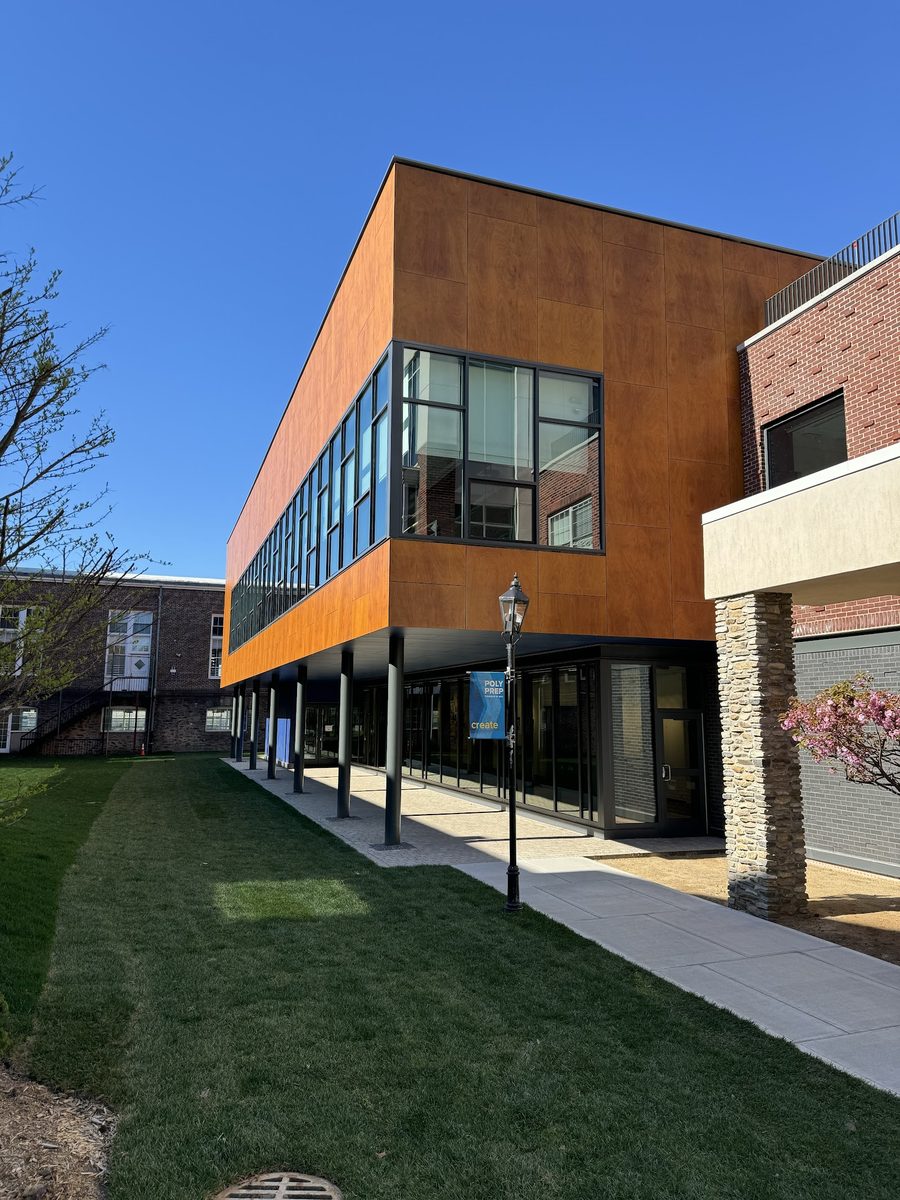
Founded in 1854 as Brooklyn's first boys' school, this day school pairs a Prospect Park mansion with a 25-acre Dyker Heights campus.
Marymount School of New York
New York City · United States
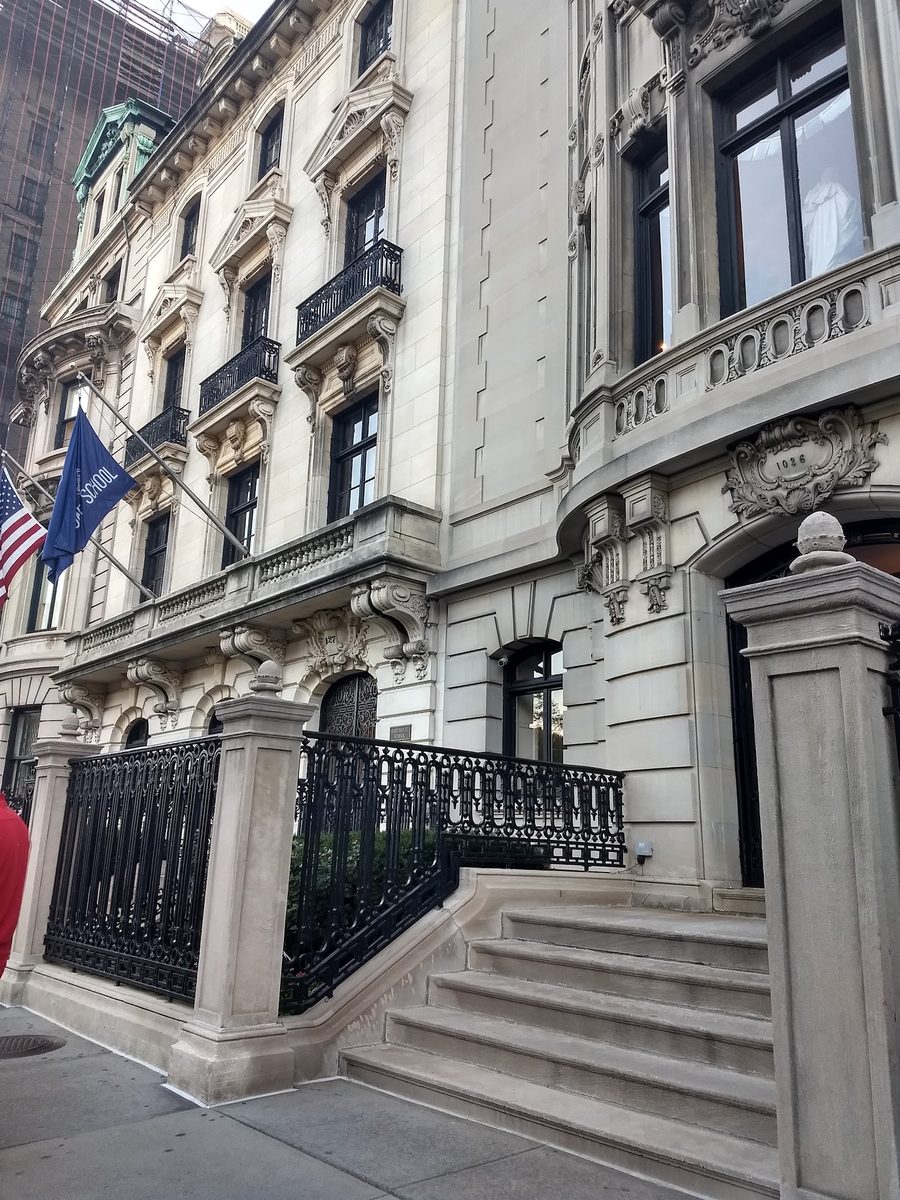
On Fifth Avenue, landmark mansions give way to Bloomberg terminals and classrooms inside the Met.
Boston University Academy
Boston · United States
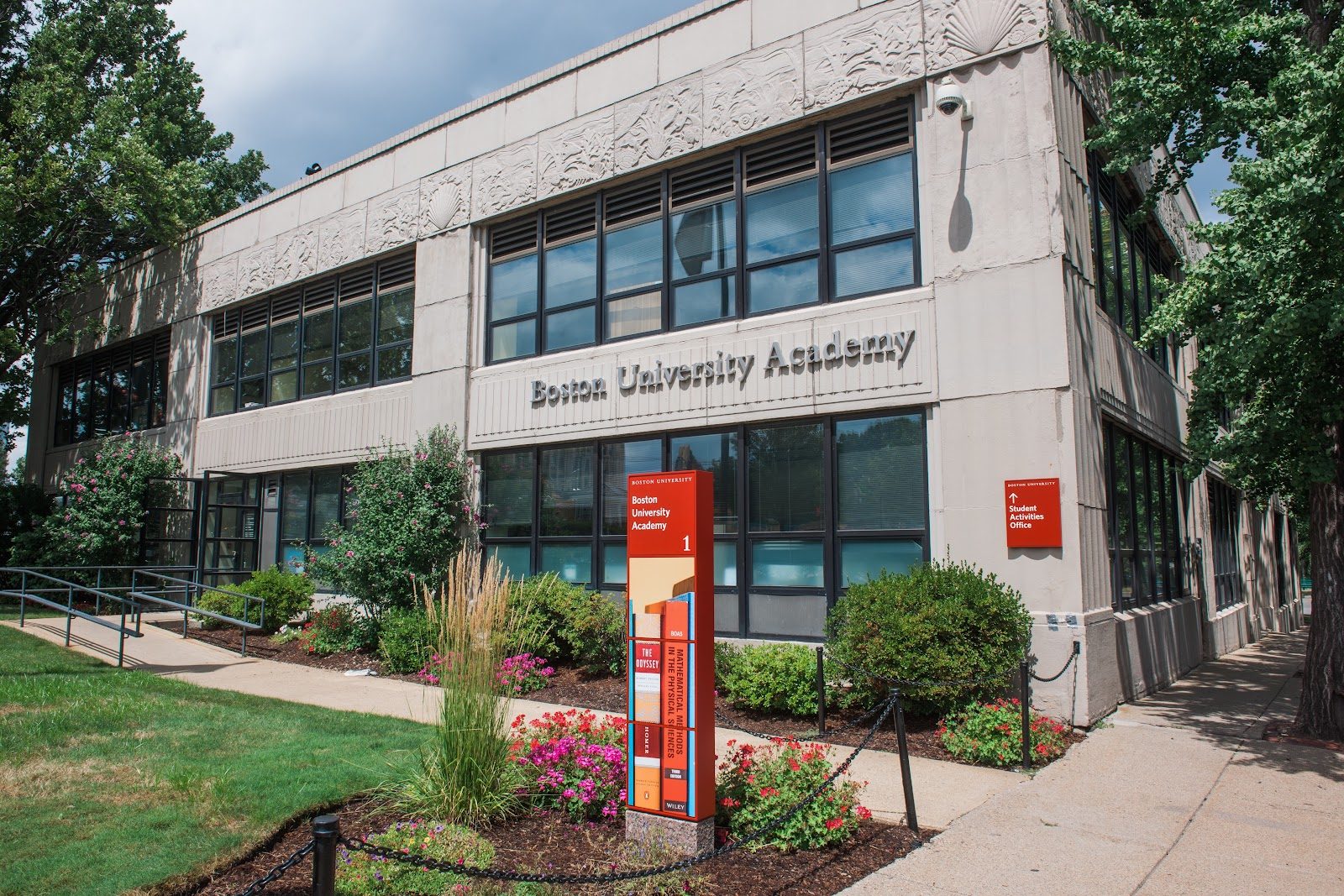
Upperclassmen trade study halls for Boston University lecture halls, banking college credit before graduation.
Same country and curriculum — closest matches within ±10 points either way