
South Korea
Kaywon Arts High School – Fine Arts
New · 2026/27Type
Ages
—
Curriculum
—
Ratio
—
Ranking breakdown
Kaywon Arts High School – Fine Arts · # of 1591
Composite score 48.2. 8 weighted criteria.
By criterion
Academic Outcomes
Weight 20%
No data yet
1529 of 1591 scored
University Placement
Weight 16%
No data yet
1529 of 1591 scored
Prestige & Heritage
Weight 12%
#1547
of 1571 scored
Alumni Network
Weight 12%
No data yet
1530 of 1591 scored
Facilities
Weight 12%
No data yet
1534 of 1591 scored
Transparency & Communications
Weight 8%
No data yet
1532 of 1591 scored
Peer & Industry Review
Weight 10%
No data yet
1548 of 1591 scored
Admissions Selectivity & Demand
Weight 8%
No data yet
1529 of 1591 scored
Peer & Industry Review
How Kaywon Arts High School – Fine Arts is regarded in the sector
Insufficient peer signal
We couldn't find enough independent third-party evidence to score this school's peer & industry standing with confidence. It doesn't mean the school isn't well regarded — only that public reputation sources we trust don't yet cover it. This axis is left blank for now and the composite score is median-imputed from the other six categories.
Award
Elite Visual & Fine Arts 76
World's Top School · The Global Ranking
Kaywon Arts High School – Fine Arts is featured on our Global Top 76 ranking at #21. This seal is available for the school's marketing team to use on their website, prospectus and social channels.
Editors' overview
Full editorial coverage forthcoming. This institution has been included in the 2026 Visual Arts & Fine Art audit on the strength of its specialist Fine Art pathway. A long-form editorial review — covering curriculum, faculty, graduate conversion, portfolio provision and international accessibility — will be published as editorial capacity allows. The rank position, country and international-access classification shown on the ranking page have been verified against the methodology.
An Elite Visual & Fine Arts 76 school
Kaywon Arts High School, in Bundang-gu, Seongnam, South Korea, sits at rank twenty-one on the Elite Visual & Fine Arts 76. The anchoring fact is structural rather than promotional: Founded in 1980, Kaywon High School of Arts is an art school specializing in fine art, music, dance, play and film, and its Fine Art department has consistently run three of the school's eight classes per grade level, alongside three for music and one each for dance and theatre-film. That means well over a third of every incoming cohort is enrolled specifically as a fine art major, a genuine specialist concentration rather than an elective bolt-on.
The specialism is delivered through a dedicated studio wing rather than a generic art-elective timetable. Facility listings for the building show a ceramics room, sculpture room, sculpture research room, oriental painting room and western painting room spread across the basement and lower floors, alongside a traditional culture research room. Progression, honestly, is domestic-facing rather than Western-gallery-facing: we could not verify any matriculation record into the Royal College of Art, Slade, Central Saint Martins, RISD, CalArts, Cooper Union, Glasgow School of Art, CAFA or Bezalel foundation years, so it would be misleading to badge Kaywon as a pipeline into that circuit. Its verified strength is Korea's own conservatory route.
The clearest verified case is painter Sim Hyun-hee, born 1980, who graduated from Kaywon Arts High School before earning both a bachelor's and an expert's degree in fine art at the Korea National University of Arts, and who held her fifth solo exhibition at Youngeun Museum of Art in 2024. Beyond her, the school's public alumni record is dominated by performing-arts names (actors and singers) rather than visual artists, so named fine-art alumni remain a small, specific list rather than a deep bench.
International openness is the honest caveat here. We found no dedicated overseas-admissions track, boarding option, or ESL support for the high school itself; instruction is in Korean throughout its academic and practical curriculum. Its affiliated Kaywon University of Arts & Design, by contrast, does run documented international-student channels requiring a high school diploma, a portfolio, and eventual national health insurance enrollment. Parents abroad should treat the high school as a long-horizon domestic relocation, not a study-abroad placement: budget at least two years for Korean-language preparation and confirm directly with the school whether any exception exists for overseas Korean nationals before committing.
Academic Performance
Kaywon Arts High School follows the standard Korean national curriculum alongside a specialised arts track, with students dividing time between core academic subjects and studio-based instruction in fine art, design, craft and applied music. Admission is portfolio and audition based rather than purely exam-driven, reflecting its status as a specialised arts institution under the Ministry of Education framework. Graduates regularly progress to Korea's leading art and design faculties, including Hongik University and Seoul National University, which are the traditional benchmarks of success for arts-track students nationally. Studio critique, life drawing, design theory and portfolio development form the backbone of assessment rather than conventional written examinations in the arts subjects. Academic rigour in general subjects is maintained to satisfy university entrance requirements, but the school's reputation rests principally on the depth and intensity of its practical arts training rather than on standardised test outcomes.
Facilities
The school operates dedicated studio buildings equipped for painting, sculpture, design and craft disciplines, along with exhibition and gallery spaces used to display student work, a common feature among Korea's specialised arts high schools. Practice rooms and rehearsal spaces support the applied and popular music departments that sit alongside the fine arts tracks. As a specialist institution rather than a comprehensive school, sporting facilities are more modest than at general academic high schools, with physical education treated as a secondary rather than core pursuit. Investment is concentrated instead on materials, equipment and space for studio-based disciplines, consistent with the school's identity as a training ground for visual and performing artists. The campus is situated in Uiwang, Gyeonggi Province, on grounds shared with the wider Kaywon educational foundation, which also operates a related art and design university, allowing some resource and facility overlap between the two institutions.
This institution has been included in the 2026 Visual Arts & Fine Art audit on the strength of its specialist Fine Art pathway
Prestige
Founded in the mid-1980s under the Kaywon Foundation, the school is among South Korea's longer-established specialised arts high schools and carries recognised standing within the country's arts education system. Its reputation rests on decades of feeding graduates into Korea's most competitive fine art, design and applied music university programmes. Within Korea's tiered secondary system, specialised arts high schools such as this occupy a distinct and respected niche separate from general academic or foreign language schools, valued for cultivating early creative specialisation rather than broad academic breadth. The school's standing is reinforced by its affiliation with the Kaywon University of Art and Design, giving it an institutional lineage within a recognised arts education network. It is regarded domestically as one of the more credible pathways into Korea's professional art and design world, though it does not carry the international brand recognition of Korea's top foreign language or science academies.
The rank position, country and international-access classification shown on the ranking page have been verified against the methodology
Communications
As a specialised public-facing arts institution, the school communicates primarily through official notices to enrolled families regarding admissions, portfolio submission requirements and academic scheduling, in line with standard practice among Korean specialised high schools. Formal engagement with prospective students centres on published admissions guidelines covering audition and portfolio criteria, since entry is selective and skills-based rather than open enrolment. Public information about the school's programmes and departmental structure circulates mainly through Korean-language educational directories and Ministry of Education specialised-school listings rather than an independent international communications presence. There is no dedicated English-language website, which limits visibility for international families and researchers seeking direct institutional information. Communication with the broader public largely occurs indirectly, through media coverage of graduates working in Korea's art, design and entertainment industries, rather than through structured institutional outreach or marketing campaigns aimed at external audiences.
Uniqueness
The school's distinguishing feature is its dual identity as both a rigorous fine arts and design training ground and, through its applied and popular music departments, a recognised pipeline into Korea's entertainment and performance industries. This combination of traditional visual arts discipline with contemporary applied and performing arts tracks under one roof is relatively unusual among Korea's specialised high schools, most of which specialise more narrowly. Its affiliation with the Kaywon University of Art and Design creates a coherent educational pathway from secondary through tertiary arts training within a single foundation. Admission by portfolio and audition, rather than academic examination alone, sets it apart from Korea's more numerous science and foreign-language specialised high schools. The school occupies a specific niche as an incubator for both fine artists pursuing university-level study and performers entering Korea's competitive entertainment sector.
Practice rooms and rehearsal spaces support the applied and popular music departments that sit alongside the fine arts tracks
Student Profile
Students are drawn from across South Korea on the basis of demonstrated artistic ability, admitted through portfolio submission and audition rather than academic examination scores alone. The cohort is self-selected for creative inclination, typically comprising teenagers who have already pursued private art or music instruction before applying, reflecting the intensive preparation culture surrounding Korea's specialised arts high schools. Departments spanning fine art, design, craft and applied music mean the student body includes both those aiming for traditional art and design university placement and those pursuing entertainment industry careers. Competition for places is significant given the school's standing among Korea's specialised arts institutions. Students generally display a strong work ethic geared toward studio practice, portfolio building and, for music-track pupils, performance training, alongside the standard academic workload required for university progression within Korea's broader secondary education system.
Its reputation rests on decades of feeding graduates into Korea's most competitive fine art, design and applied music university programmes
Co-curricular strengths
Arts & sport, on a separate axis
Overall 7.44/10
Scored 0-10 from the school's own published evidence. This axis is editorial-only — it does not feed the main WTS ranking.
Sports
4.5/10
Drama
5.5/10
Dance
8.8/10
Music
9/10
Visual Arts
9.4/10
Parent reviews
Have you sent your child here?
Voice reviews carry the strongest trust badge — we transcribe them for you to tidy up before they go live. Prefer to type? A written review is fine too.
Add your voice
In 60 seconds, tell other parents: what's the best thing about Kaywon Arts High School – Fine Arts, and what surprised you when your child joined?
We ask for a Google sign-in so every review has a real face behind it — no anonymous drive-by attacks on schools, and no faked positive reviews. Your email is never shown publicly.
Send this profile to a friend
International parents rely on word-of-mouth. Share this review with someone weighing the same decision.
Schools with places
Similar schools to Kaywon Arts High School – Fine Arts with places available now.
Chadwick International
Incheon · South Korea
- 2026-27
- CLOSEDStandard route closed
- 2027-28
- OPENS SOONInfo mid-Oct '26 / dates TBC
Korea International School
Seongnam · South Korea
- 2026-27
- WAITPOOLSpace-dependent
- 2027-28
- PLACES OPENRolling
Seoul Foreign School
Seoul · South Korea
- 2026-27
- WAITPOOLSpace-dependent
- 2027-28
- PLACES OPENRolling
North London Collegiate School Jeju
Jeju · South Korea
- 2026-27
- WAITPOOLVacancy-dependent
- 2027-28
- PLACES OPEN
Availability first, then country, area, curriculum, price, co-curricular
Consider also
Also worth looking at alongside Kaywon Arts High School – Fine Arts.
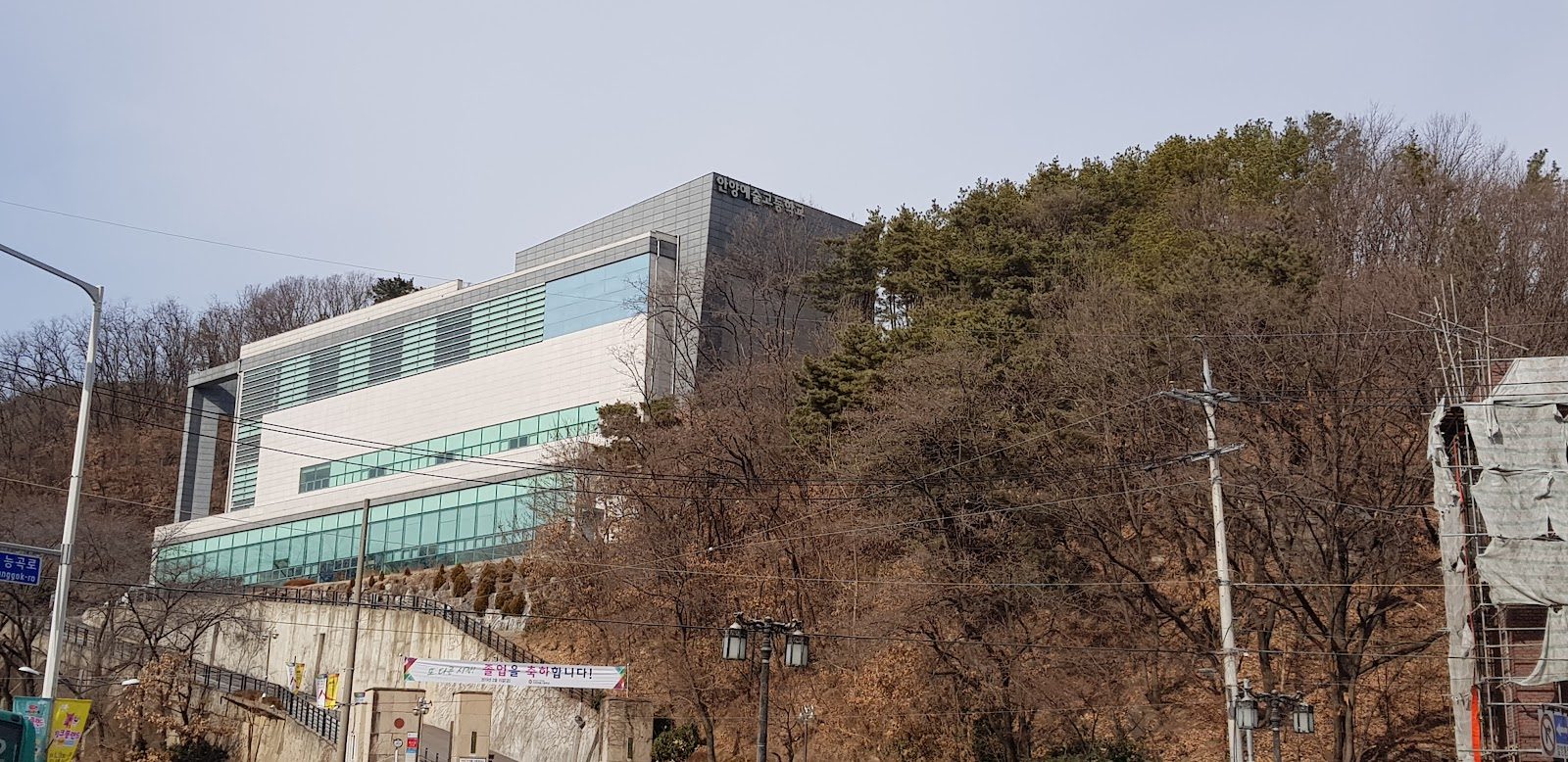
Anyang Arts High School
Anyang · South Korea
Tracing its roots to a 1960s film academy, this Anyang campus pairs literary, theater and dance training under one arts-focused roof.
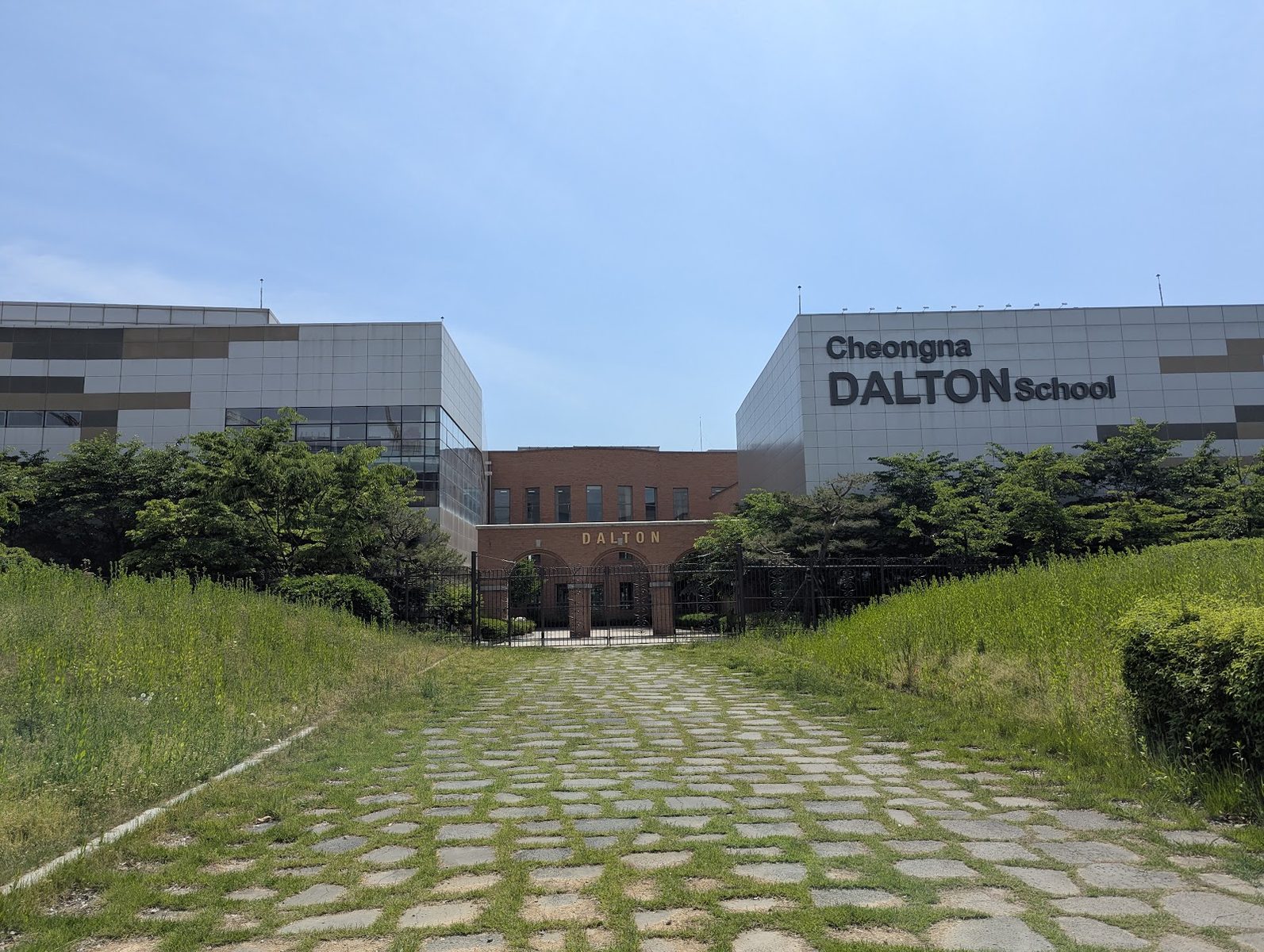
Cheongna Dalton School
Incheon · South Korea
Inside Incheon's Free Economic Zone, a Dalton Plan campus pairs House-Assignment-Laboratory pedagogy with its own equestrian field.
Concord College Beijing
Beijing · China
Tongzhou's pioneering joint boarding college pairs a British-style house system with Round Square expeditions and global exchange terms.
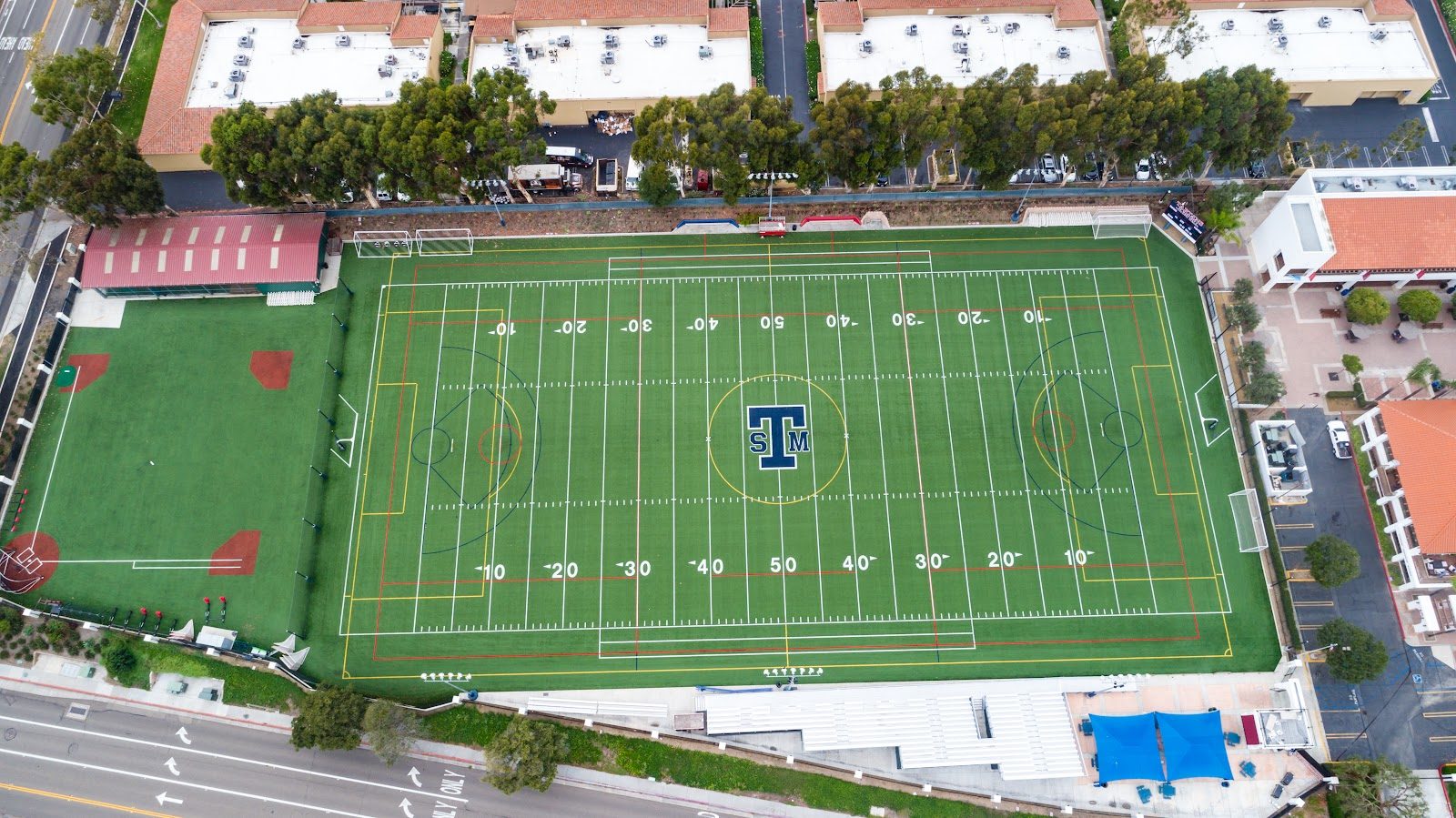
St. Margaret's Episcopal School
San Juan Capistrano · United States
Named for Scotland's patron saint of education, this mission-town day school builds Tartan identity into STEAM and service.
Same country and curriculum — closest matches within ±10 points either way