
California
JSerra Catholic High School
low confidence· 2/6 cats · 2.75 avg sourcesCalifornia's first lay-founded Catholic high school, pairing five professional magnet tracks with Trinity League athletic firepower.
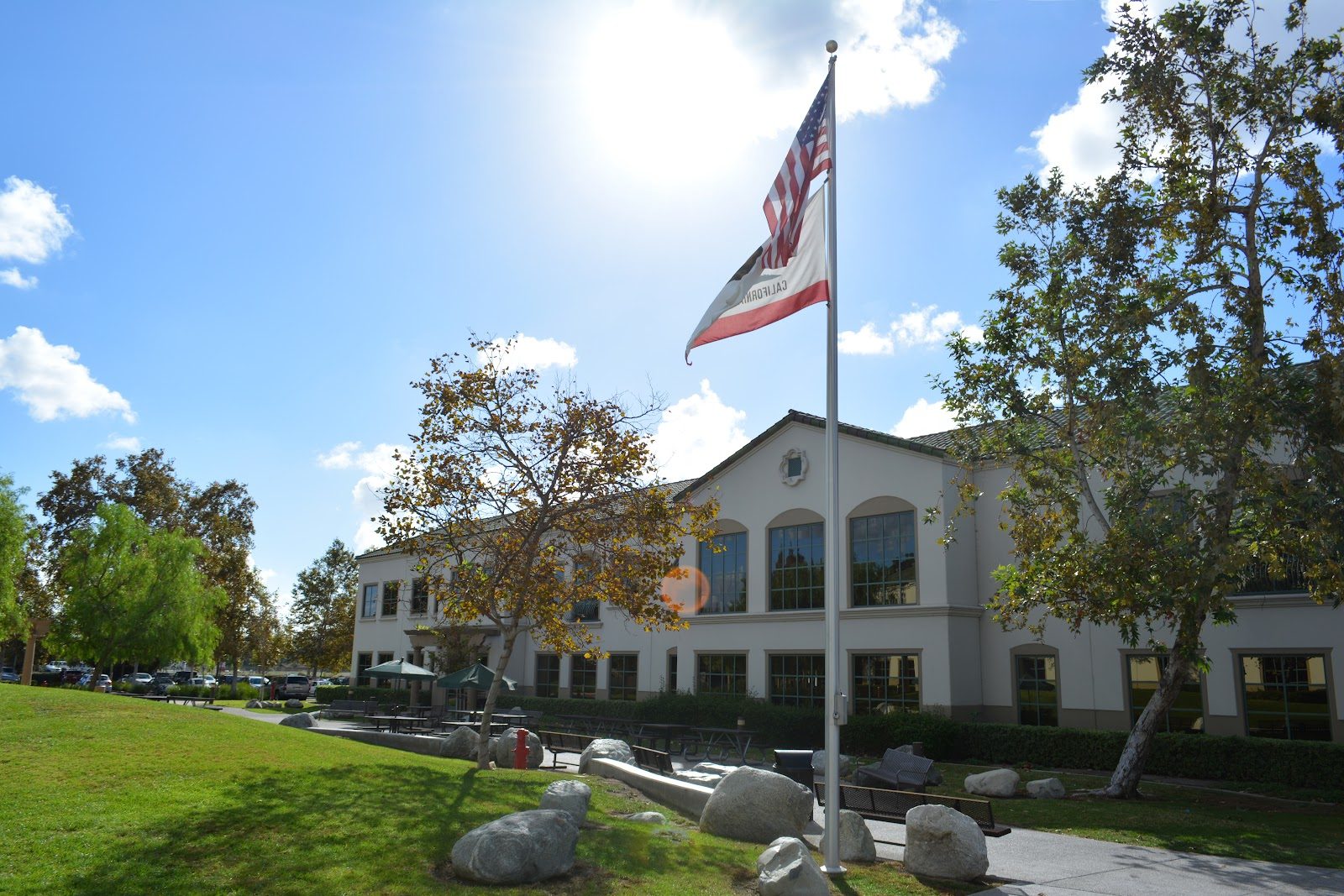
Photo © JSerra Catholic High School via Google Maps
Type
Day
Ages
13–18
Curriculum
American
Qualifications
AP · US High School Diploma
Ratio
1:12
The Verdict
Editor's commitment
Right for
Families wanting a Catholic day school with teeth: founded in 2003, grades 9–12, 1:12 staffing, 20-student classes and 28 varsity sports.
Wrong for
Parents seeking secular schooling, boarding or a broad age range beyond 13–18; JSerra is Catholic, day-only and fixed on high school.
Watch out for
At an average US$26,200 a year, you are buying clear priorities: faith formation, AP and honours courses, and Trinity League-level athletic intensity.
Ranking breakdown
JSerra Catholic High School · # of 1591
Composite score 52.8. 8 weighted criteria.
By criterion
Academic Outcomes
Weight 20%
#1084
of 1529 scored
University Placement
Weight 16%
#1089
of 1529 scored
Prestige & Heritage
Weight 12%
#1095
of 1571 scored
Alumni Network
Weight 12%
#1492
of 1530 scored
Facilities
Weight 12%
#994
of 1534 scored
Transparency & Communications
Weight 8%
#943
of 1532 scored
Peer & Industry Review
Weight 10%
#1372
of 1548 scored
Admissions Selectivity & Demand
Weight 8%
#1077
of 1529 scored
Peer & Industry Review
How JSerra Catholic High School is regarded in the sector
60
Respected · medium confidence
Within Southern California's Catholic school ecosystem, JSerra's standing is defined largely through its Trinity League membership alongside Mater Dei, Santa Margarita, Servite and St. John Bosco - a grouping regional outlets like the Orange County Register and MaxPreps consistently cite as the nation's most competitive high school athletic conference, which has raised JSerra's profile primarily as a sports power rather than an academic one. University admissions offices at nearby UC campuses and USC regard it as a steady, mid-tier feeder rather than a distinctive academic pipeline, with most graduates matriculating to UC/CSU schools and smaller numbers to USC and Notre Dame. It registers little in international independent-school press such as the Good Schools Guide or WhichSchoolAdvisor, both oriented toward UK markets, and it is absent from the small circle of American Catholic schools regularly discussed for academic distinction at bodies like NAIS. Its reputation among peers is therefore regional and athletic rather than national and academic.
- Griffin Canning — MLB pitcher, New York Mets
- Cole Irvin — MLB pitcher, Baltimore Orioles
- David Bote — MLB infielder, Chicago Cubs
Editors' overview
JSerra’s point of difference is plain: this is a Catholic day school in San Juan Capistrano that combines a conventional American college-prep structure with serious athletic heft and a more deliberate faith culture than many schools in its market. It serves grades 9 to 12 only, with about 1,250 students, a 1:12 student-teacher ratio and average classes of 20. That gives it a scale that supports breadth without tipping into anonymity. The school’s own language leans hard into “forming saints”, and the daily Mass, weekly all-school Mass, retreats, service and on-campus clergy confirm that religion sits at the centre of school life, not at the decorative edge. Parents who want Catholic formation to shape the week, rather than merely bless it, will put JSerra on the shortlist.
The other reason is range. JSerra offers 28 varsity sports, club athletics, award-winning arts programmes, Advanced Placement and honours courses, plus “distinctive pathways” for students who want a more directed route through school. The attraction is clear: this is a school for teenagers who want a high-structure, high-identity environment with room to compete, perform and lead. Trinity League athletic pedigree matters here; so does the school’s lay-founded status, which gives it a slightly different profile from older diocesan institutions. It is ambitious without being bohemian, and ordered without feeling small. The average annual day fee of $26,200 places it in the serious private-school bracket, but not at the stratospheric end of the California market.
The trade-off is just as clear. JSerra will not suit families looking for a loose, secular, or ideologically neutral experience. Its Catholic identity is assertive and woven through the day. Nor is this a school for students who need a huge menu of niche academic programmes published in forensic detail: the school points to strong outcomes, National Merit recognition and college acceptances, but it does not publish the kind of aggregate exam data that allows a hard external audit of academic performance. What it does offer, convincingly, is a whole-school culture with scale, discipline and visibility. The pupil who will want JSerra is the one who wants Friday-night sport, visible school spirit, adult oversight, faith in daily practice, and a mainstream American high-school experience sharpened by serious competition in the classroom, on stage and on the field.
Academic Performance
JSerra talks confidently about academic outcomes, but the public evidence stays selective rather than comprehensive. The school cites Advanced Placement and honours breadth, National Merit recognition, college acceptances and scholarship awards. That gives a clear sense of aspiration and a student body with a solid academic ceiling. What it does not publish is the harder comparative data that serious parents use to benchmark a college-prep school: no aggregate AP pass rates, no mean SAT or ACT profile in the public domain, no grade-distribution data, and no destination breakdown that separates headline admits from the full university list. In editorial terms, that leaves JSerra in the category of schools with credible signals but an opaque scorecard.
Relative to peers, that matters. In Southern California’s crowded private-school market, academically confident schools publish numbers when the numbers flatter them. JSerra instead asks parents to infer strength from programme design, selective distinctions and post-school outcomes. That is not nothing; the magnet pathways in medicine, engineering, business, law and humanities give able students a more directed academic route than the standard college-prep menu. For a pupil who wants structure, specialisation and strong adult oversight, that can be genuinely useful. For families hunting a data-rich academic proposition, JSerra is less satisfying. The verdict: serious enough to command attention, but not transparent enough to sit in the top tier of evidence-led academic performers.
Facilities
JSerra’s facility story centres on breadth for teenagers, not architectural theatre. The campus supports a full American high-school life: extensive athletic provision for its large varsity programme, dedicated arts spaces, worship built into the week, and specialist academic bases tied to the school’s magnet model. The standout practical advantage is that students do not have to choose between a serious sports culture and meaningful co-curricular infrastructure elsewhere on campus; both exist at scale. For parents comparing Orange County independents and Catholic peers, that matters. Plenty of schools can field teams or stage productions. Fewer can sustain 28 varsity sports while also giving the arts and faith life visible room. That makes JSerra more complete than narrowly academic college-prep schools and more purposeful than campuses that spread activity thinly across too many ambitions.
The caveat is that JSerra does not trade on showpiece extravagance. We have not seen the kind of publicly detailed facilities inventory that top-tier schools with exceptional laboratories, performing-arts centres or research-grade maker spaces use to press their advantage. The school’s own case rests on lived use rather than on a glossy catalogue of buildings. Against peers, that leaves JSerra with a campus that reads as well-equipped and hard-working rather than architecturally grand. For the right family, that is a strength: the facilities serve a disciplined, high-participation culture. For families chasing headline hardware and visibly elite specialist spaces, some competitors offer a more luxury-coded proposition.
For a pupil who wants structure, specialisation and strong adult oversight, that can be genuinely useful
Prestige
JSerra carries strong local prestige rather than old-money national cachet. In Orange County, the name has weight because the school has built a visible identity around two status markers parents recognise immediately: serious sport and an overt Catholic culture. The 28 varsity sports matter here. So do league titles, CIF-level success and college athletic commitments, because those are the currencies that travel quickly through Southern California parent networks. Add the school’s independent, lay-founded origin and you get a Catholic high school with a profile that feels more self-directed than parish-school conventional. That gives it a distinct market position: aspirational, organised, and highly legible to families who value school spirit, competition and religious formation in one package.
The limitation is plain. Prestige at the highest level in American private education rests on academic transparency, ultra-selective university placement, deep institutional history, or a national brand. JSerra does not publish the kind of hard outcome data that would lift it into that bracket, and its reputation rests more on presence than on published proof. The magnet tracks add an ambitious sheen, and the student body is large enough to generate momentum and visibility, but this is not a school whose status depends on intellectual mystique. Its prestige is earned on the ground: seen in community recognition, athletics, faith life and a confident all-round identity. That is real prestige, but it is regional prestige, not untouchable elite prestige.
The verdict: serious enough to command attention, but not transparent enough to sit in the top tier of evidence-led academic performers
Communications
JSerra communicates with parents in a way that mirrors the school itself: high-identity, high-frequency and tightly managed. The public-facing messaging is clear about priorities. Faith formation is not tucked into a values page; it sits at the centre of how the school explains daily life, with worship, retreats, service and spiritual mentorship treated as ordinary parts of the week. For current and prospective parents, that kind of consistency matters. It reduces ambiguity about the school’s expectations and culture. The website also does the practical work competently: core information is easy to locate, the tone is disciplined, and the school gives families a readable map of student life across academics, arts, leadership and its 28-sport athletic machine. Parents who want constant clarity about ethos and direction will find it here.
The limitation is depth. JSerra communicates culture better than evidence. It is strong at telling families what sort of school it is and what sort of child will thrive in it. It is weaker at publishing the hard performance data that turns confident messaging into full accountability. That matters because polished communication without comprehensive outcomes can feel carefully curated. The presence of a parent portal points to a more functional day-to-day communication system for enrolled families, but the public picture still prioritises identity over disclosure. Verdict: effective on mission, tone and community alignment; less effective if a parent wants forensic transparency before making an expensive decision.
Uniqueness
What sets JSerra apart is the combination of a muscular Catholic formation model with an unusually targeted academic structure. Many faith-based schools offer service, liturgy and a pastoral tone; JSerra goes further, building prayer and worship into the ordinary rhythm of the week and placing clergy and religious on campus as part of daily school life. That gives students a religious environment that is active rather than ceremonial. Alongside that, the school’s specialist pathways create more definition than the standard college-prep template. The magnet offer spans medicine, engineering, business and law, with a separate humanities route, giving teenagers a chance to test serious interests before university instead of treating high school as a generic holding pattern. For the right student, that is sharper than the usual broad-but-bland private-school menu.
The other distinctive feature is the scale of student life wrapped around that structure. A school running 28 varsity sports while also sustaining arts, leadership and service opportunities offers a high-participation culture in which students have multiple routes to status and belonging. That matters because it reduces the risk that identity sits only with the star athlete or the top academic. The House System adds another layer of internal community and mentorship, which strengthens the school’s deliberately engineered sense of attachment. In practice, JSerra gives students a more full-throttle secondary experience than many Catholic peers: faith with visibility, specialisation with direction, and co-curricular life with genuine scale.
What sets JSerra apart is the combination of a muscular Catholic formation model with an unusually targeted academic structure
Student Profile
The students who fit JSerra best are teenagers who want a structured, adult-led school life and do not resent scrutiny. This is a community built around visible expectations: worship in the weekly rhythm, service treated as duty rather than decoration, and a strong premium placed on conduct, commitment and participation. The right pupil will not treat religion as background wallpaper. They do not need to be deeply devout on day one, but they do need tolerance for a full-strength Catholic environment and comfort with an institution that asks students to engage, not just attend. Socially, it suits adolescents who like belonging to something legible — teams, houses, leadership groups, arts ensembles, service projects — rather than drifting through school as detached individuals.
It also suits energetic joiners. A campus running 28 varsity sports and multiple specialist pathways rewards students who want their interests organised and taken seriously. The natural JSerra student is competitive, schedule-tolerant and willing to operate inside a high-identity culture with plenty of school spirit. That does not mean every child needs to be an athlete; the same profile can fit a committed performer, an ambitious humanities student or a teenager drawn to medicine, engineering, business or law. The poor fit is just as clear: students who want a looser, more anonymous, ideologically neutral adolescence will chafe here. Independent-minded pupils can thrive, but only if they accept boundaries and do not mistake strong institutional culture for optional scenery.
The other distinctive feature is the scale of student life wrapped around that structure
Co-curricular strengths
Arts & sport, on a separate axis
Overall 8.8/10
Scored 0-10 from the school's own published evidence. This axis is editorial-only — it does not feed the main WTS ranking.
Sports
9/10
Drama
8.8/10
Dance
8.8/10
Music
8.8/10
Visual Arts
8.6/10
Strengths
- +Catholic formation includes daily and weekly Mass
- +Average class sizes just over 20
- +Broad AP and honours course selection
- +Co-educational day school for ages 13–18
Considerations
- −Catholic worship is woven into daily school life
- −No boarding option for international families
- −American curriculum only, no IB or A-levels
Availability
Primary entry gate & tests
Application + HSPT / records
Gallery
Photo © JSerra Catholic High School via Google Maps
Photo © Michelle Clyde, Realtor via Google Maps
Photo © Michelle Clyde, Realtor via Google Maps
Photo © JSerra Catholic High School via Google Maps
Photo © JSerra Catholic High School via Google Maps
Parent reviews
Have you sent your child here?
Voice reviews carry the strongest trust badge — we transcribe them for you to tidy up before they go live. Prefer to type? A written review is fine too.
Add your voice
In 60 seconds, tell other parents: what's the best thing about JSerra Catholic High School, and what surprised you when your child joined?
We ask for a Google sign-in so every review has a real face behind it — no anonymous drive-by attacks on schools, and no faked positive reviews. Your email is never shown publicly.
Send this profile to a friend
International parents rely on word-of-mouth. Share this review with someone weighing the same decision.
Schools with places
Similar schools to JSerra Catholic High School with places available now.
Head-Royce School
Oakland · United States
- 2026-27
- CLOSEDRegular cycle
- 2027-28
- OPENS SOONOpens Sept '26
The Webb Schools
Claremont · United States
- 2026-27
- CLOSEDRegular cycle closed
- 2027-28
- PLACES OPENPortal live
The Branson School
Ross · United States
- 2026-27
- CLOSEDRegular cycle
- 2027-28
- OPENS SOONOpens Sept '26
Crystal Springs Uplands School
Hillsborough · United States
- 2026-27
- CLOSEDRegular cycle
- 2027-28
- OPENS SOONOpens Sept '26
Availability first, then country, area, curriculum, price, co-curricular
Consider also
Also worth looking at alongside JSerra Catholic High School.
Canterbury School
New Milford · United States
On a Litchfield County hilltop, a lay-led Catholic school founded in 1915 on the radical idea that faith and Ivy League prep could coexist.
Millbrook School
Millbrook, NY · United States
In the Hudson Valley, students run the only AZA-accredited zoo on any American high school campus.
The Rivers School
Weston, MA · United States
On a Weston campus, a full music conservatory runs alongside AP-heavy academics for serious young musicians
Bullis School
Potomac · United States
On a 102-acre Potomac campus with its own accredited arboretum, entrepreneurship and STEM classrooms sit beside 32 varsity sports.
Same country and curriculum — closest matches within ±10 points either way