
Lima
Hiram Bingham International School
Peru's first school authorised across the full IB continuum, blending British house tradition with cohorts capped at fifty in Surco.
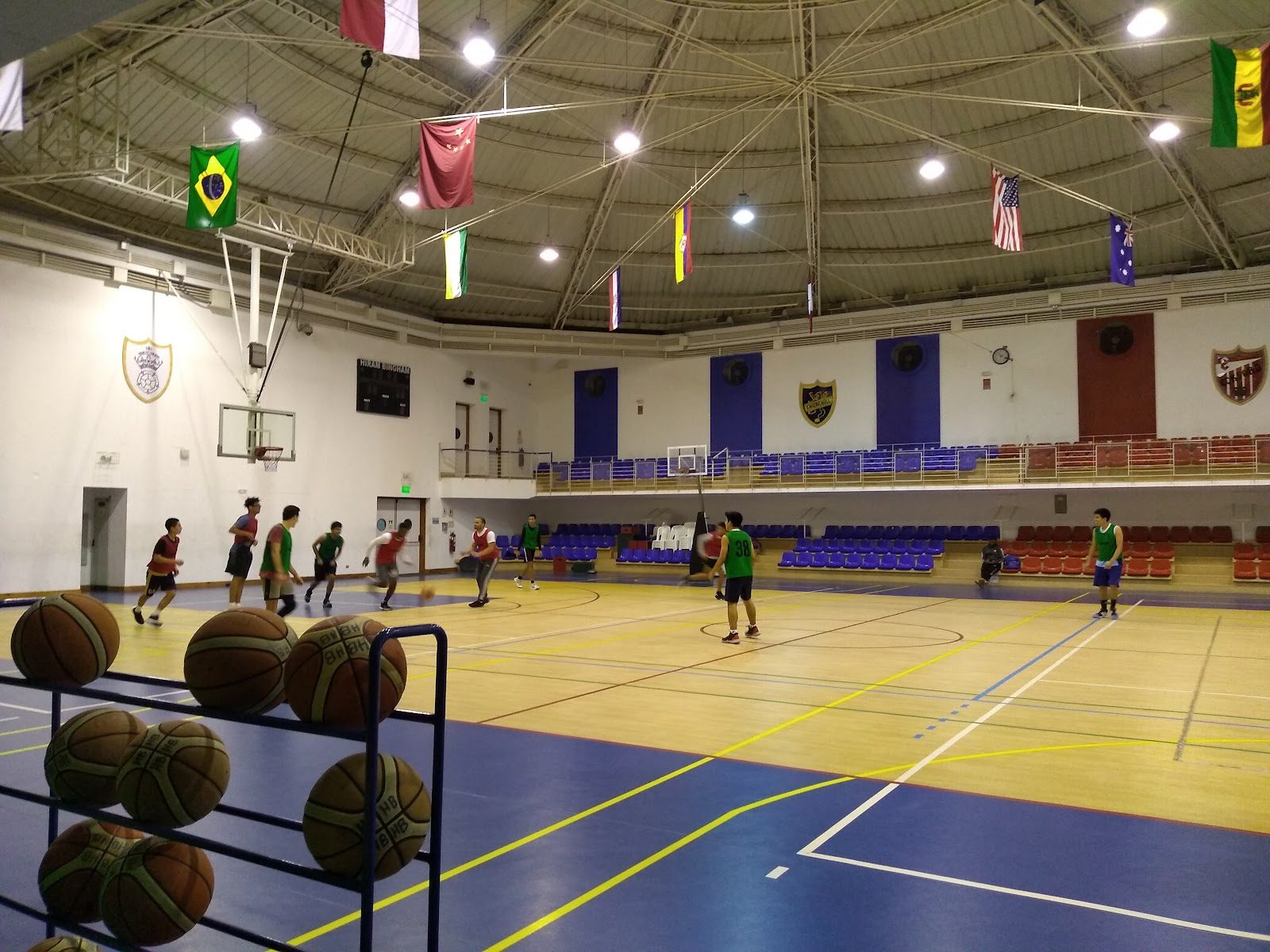
Photo © Bryan C. via Google Maps
Type
Day
Ages
3–18
Curriculum
Peruvian · IB
Qualifications
Peruvian national curriculum · IB Diploma
Ratio
—
The Verdict
Editor's commitment
Right for
Families in Lima who want a day school for ages 3–18 with Peruvian and IB pathways, taught in Spanish and English.
Wrong for
Parents seeking boarding, a religious ethos, or a single-system school; this Surco day school is secular and runs Peruvian plus IB.
Watch out for
Founded in 2013 and IB-accredited, it is young; British house styling and cohorts capped at fifty do not equal a long track record.
Ranking breakdown
Hiram Bingham International School · # of 1591
Composite score 57.7. 8 weighted criteria.
By criterion
Academic Outcomes
Weight 20%
#1084
of 1529 scored
University Placement
Weight 16%
#1164
of 1529 scored
Prestige & Heritage
Weight 12%
#1132
of 1571 scored
Alumni Network
Weight 12%
#1076
of 1530 scored
Facilities
Weight 12%
#994
of 1534 scored
Transparency & Communications
Weight 8%
#1099
of 1532 scored
Peer & Industry Review
Weight 10%
#1433
of 1548 scored
Admissions Selectivity & Demand
Weight 8%
#991
of 1529 scored
Peer & Industry Review
How Hiram Bingham International School is regarded in the sector
57
Credible · medium confidence
Hiram Bingham is regarded within Lima's private-school circuit as a solid, long-established bilingual option in La Molina, sitting alongside Markham College, Newton College, Colegio Roosevelt and San Silvestre in local rankings of academically serious institutions, though it does not command the same international name recognition as those flagship British/American schools. Its standing rests largely on verifiable structural credentials rather than third-party commentary: authorized IB World School status and Cambridge International examination results, which local families and counselors use as proxy benchmarks when comparing colegios. Coverage in Peruvian outlets (El Comercio school-ranking features, Peru21) tends to group it among Lima's respected mid-tier bilingual schools rather than singling it out for distinction. There is little independent international press presence -- no WhichSchoolAdvisor or Good Schools Guide entry could be confirmed -- and no verifiable record of rival heads' public commentary or named university admissions-officer statements about its graduates. University placement data is drawn from the school's own reporting (Peruvian universities plus some US/European destinations) rather than confirmed by receiving institutions, so claims of elite regard should be treated as reputational rather than documented.
Editors' overview
Hiram Bingham International School occupies a narrow, attractive niche in Lima: a small, bilingual day school in Surco with the full IB pathway from early years to sixth form. Founded in 2013, it lacks the historical weight and alumni network of Lima’s older institutions. In return, it offers something more controlled: cohorts capped at 50 and a scale that gives leadership little room to hide. For parents who want close oversight, clear lines of communication and a school where their child will not vanish into the machinery, that matters. The blend of Peruvian and IB curriculum also gives it a more hybrid academic identity than schools that commit to one track alone. Small by design, tight-knit and watchfully run, it sells intimacy rather than grandeur.
What puts Hiram Bingham on a shortlist is not mystique; it is structure. It is Peru’s first school authorised across the full IB continuum, which gives it a coherent academic spine from ages 3–18. That coherence counts for families who move internationally or who want one educational language carried through the whole school. The British house element adds a layer of belonging and internal competition without turning the school into a cultural imitation of England. This is also a secular school operating in Spanish and English, which broadens its appeal in Lima’s international and upwardly mobile local market. Ambitious without being sprawling, international without being rootless, it offers a compact version of the premium bilingual school model.
The trade-off is plain. A school founded in 2013 is still young, and young schools need to prove durability in outcomes, staff retention and institutional depth over time. Parents who care about inherited prestige, vast facilities or the social capital of a century-old name will look elsewhere. Hiram Bingham suits a different family: one that values access, pastoral visibility and a more curated peer group. The right student for this school is academically serious, comfortable working in two languages, and better served by a contained environment than by a large, impersonal campus. Children who thrive with attention, clear expectations and a strong sense of belonging will do well here; those who want anonymity, mass spectacle or endless subject sprawl will not.
Academic Performance
Academic performance is where Hiram Bingham still asks parents to take too much on trust. The school advertises the full IB pathway, but it does not publish the data that serious comparison requires: no aggregate Diploma average, no subject breakdowns, no score distribution, no pass-rate trend over multiple cohorts, and no university destinations list detailed enough to test academic traction. That leaves a frustratingly opaque picture. In a market where stronger schools use outcomes to substantiate their claims, silence counts against them. Small cohorts can produce volatile year-on-year results, but that is not a reason to withhold them; it is a reason to contextualise them carefully.
Relative to Lima’s established academic heavyweights and the region’s top IB operators, Hiram Bingham sits in the category of schools with unproven public outcomes. That does not mean weak results. It means results that are not in the public domain, and parents should treat that distinction seriously. Ask for the last 3 years of Diploma results, including cohort size, highest score, average score, pass rate and the share of students scoring above 35 and 40. Also ask for reading and maths attainment data in the lower years if the school tracks it. A school confident in its academic record provides those figures plainly. If Hiram Bingham can do that in admissions meetings, the case strengthens; until then, its academic standing remains hard to verify and less convincing than it needs to be.
Facilities
Facilities are not the school’s selling point. The public case rests on a well-kept, contained campus rather than on spectacle, specialist scale or capital-heavy wow factor. That matters in context: families comparing Hiram Bingham with Lima’s larger premium schools should not expect theatre-grade arts spaces, expansive sports infrastructure or the kind of multi-block campus that can absorb a huge co-curricular menu. The advantage of a smaller physical plant is oversight. Younger children are easier to monitor, movement around the site is simpler, and the environment can feel calmer and more controlled than at sprawling competitors. For parents who value order over grandeur, that is a real strength. For teenagers who want breadth, specialist kit and room to range, it is a constraint.
Against peer schools, this places Hiram Bingham in the compact, boutique end of the market. The school’s size supports intimacy, but it also sets a ceiling on what facilities can deliver. Science, arts and sport need to work hard within tighter limits, and parents should inspect them with care: laboratories, library depth, indoor sports provision, music practice rooms, drama space, shade, outdoor play, and sixth-form study areas. Ask what is dedicated and what is shared, and whether off-site venues fill gaps. In stronger peer campuses, facilities expand opportunity. Here, facilities serve the core school day efficiently, but they do not look like a headline advantage.
Hiram Bingham International School occupies a narrow, attractive niche in Lima: a small, bilingual day school in Surco with the full IB pathway from early years to sixth form
Prestige
Hiram Bingham does not trade on old-money prestige, national myth or entrenched alumni power. Its standing is new, narrow and earned case by case. In Lima’s hierarchy of private schools, that puts it below the names that carry instant recognition in boardrooms, embassy circles and multi-generational family networks. Prestige here rests less on inherited status than on a specific proposition: a controlled school environment, capped intakes and the full IB continuum under one roof. For some parents, that reads as modern and serious; for others, it lacks the social weight that still matters in Peru’s upper-tier school market. A cohort cap of 50 gives it exclusivity of scale, but exclusivity is not the same thing as prestige.
That distinction matters. The school has a carefully bounded appeal: families who want visibility, close management and an international-facing academic structure will value it more than families shopping for cachet. The British house overlay adds a touch of ceremony and identity, but it does not confer the deep institutional prestige that older schools accumulate over decades. Nor do the public academics, at present, do enough heavy lifting to elevate the brand. Without published outcomes, university destination depth or a long record of external distinction, Hiram Bingham remains a selective niche choice rather than a prestige leader. It has credibility and appeal. It does not yet have commanding status.
Founded in 2013, it lacks the historical weight and alumni network of Lima’s older institutions
Communications
Parent communication looks like one of the school’s stronger operational habits, because the model leaves little room for distance. In a contained school with cohorts capped at 50, families expect quick answers, named points of contact and a clear read on how children are doing. Hiram Bingham’s whole proposition depends on that level of access. A school built around visibility cannot afford slow, vague or bureaucratic parent contact. The house structure also gives communication another channel beyond the classroom: if it is used well, families get pastoral information with more continuity and context than they do in looser systems. That suits parents who want day-to-day reassurance, early intervention and adults who know their child beyond a timetable slot.
The weakness is formality. We have not seen the kind of published communications architecture that marks out the best-run schools: clear service standards for response times, detailed academic reporting templates, a strong public archive of calendars, handbooks or policy updates, or a transparent account of how concerns escalate if first-line communication fails. In practice, Hiram Bingham’s communications are probably most effective for families who value direct access and hands-on relationships, and less convincing for those who want institutional depth, exhaustive documentation and systems that function without personal chasing. In other words, the school reads as high-contact rather than high-system. That can feel reassuringly human. It can also become person-dependent.
Uniqueness
What marks Hiram Bingham out is not scale, heritage or public academic firepower. It is the combination of a full-school IB structure with a deliberately tight intake and a house system borrowed from British schooling. That mix is unusual in Lima. Many schools offer one international strand, or a large campus experience, or a local curriculum with imported branding around the edges. Hiram Bingham’s proposition is more tightly engineered. With cohorts capped at 50, students are harder to lose, easier to know and more visible to teachers and leaders. That changes the daily experience: stronger pastoral oversight, less room for social drift, and a clearer line between effort, behaviour and consequence. For children who need adults to notice quickly, this is a genuine advantage.
The house framework adds more than decoration if the school runs it properly. In a small school, houses can create cross-year ties, ritual and identity without the impersonality that bigger systems breed. Students get a school life with a bit more structure, competition and belonging than the campus size alone would generate. The trade-off is clear. A contained model produces community, but it also narrows anonymity, reinvention and sheer social breadth. Some pupils thrive in that watchful, close-grained environment. Others want a looser culture and a wider field. Hiram Bingham’s uniqueness lies in that compact design: international in framework, deliberately intimate in execution, and built for families who value oversight more than scale.
In return, it offers something more controlled: cohorts capped at 50 and a scale that gives leadership little room to hide
Student Profile
The best fit here is the child who benefits from being known. In a school with year groups capped at 50, students are visible fast: effort, conduct, friendship patterns and wobble points do not disappear into the background. That suits pupils who respond to adult attention, clear routines and a culture where teachers and leaders keep a close watch. It also suits families who want a high-accountability environment without the social sprawl of a large campus. The peer group will appeal more to steady, self-possessed children than to those who rely on anonymity to find their feet. Because the school works in Spanish and English, it also fits students who can operate comfortably across both, or who have the confidence to build that fluency quickly.
The less natural fit is the child who wants reinvention through scale. Students who crave a vast friendship pool, a huge menu of niche activities or the camouflage that comes with a bigger institution will hit the limits of this model. Nor is this the obvious choice for families chasing old-school status markers or a socially dominant crowd. Hiram Bingham suits contained strivers: children who are academically purposeful, socially manageable in a compact setting, and comfortable with a school life that is watchful, structured and harder to game. For the right student, that produces security and momentum. For the wrong one, it feels tight, exposed and over-observed.
For parents who want close oversight, clear lines of communication and a school where their child will not vanish into the machinery, that matters
Co-curricular strengths
Arts & sport, on a separate axis
Overall 8.52/10
Scored 0-10 from the school's own published evidence. This axis is editorial-only — it does not feed the main WTS ranking.
Sports
8.8/10
Drama
8.3/10
Dance
8.5/10
Music
8.5/10
Visual Arts
8.5/10
Strengths
- +Offers a dual pathway combining the Peruvian national curriculum with the IB Diploma Programme, giving students a recognised exit qualification for local or overseas university entry.
- +Located in La Molina, a residential district of Lima, giving it a defined community base among families settled in that part of the city.
- +Bilingual English-Spanish instruction is embedded throughout the school, a model well suited to both expatriate and Peruvian families seeking dual-language fluency.
- +The school's name and heritage reference Hiram Bingham III, giving it a distinct identity within Lima's Anglo-American school tradition.
- +As a day school with continuity from early years through to IB, it offers a single-institution journey without the disruption of switching schools at secondary level.
Considerations
- −Editorial ranking places it well outside Lima's most internationally prominent schools, so global name recognition and long-track-record IB outcomes are less established than at legacy institutions.
- −La Molina's location can mean a longer commute for families based in central or coastal Lima districts such as Miraflores, San Isidro or Barranco.
- −Publicly available data on fees, IB results and university placement is limited, making it harder for relocating families to benchmark the school against peers before committing.
- −As a day school only, it offers no boarding option for families relocating to Lima without settled housing arranged in advance.
Availability
Primary entry gate & tests
Academic Record
Gallery
Photo © raffo pineda orellana via Google Maps
Photo © pedro jose torres hernandez via Google Maps
Photo © Jorge Luis Echevarría via Google Maps
Photo © Dan Omura via Google Maps
Photo © Dan Omura via Google Maps
Photo © Dan Omura via Google Maps
Photo © Dan Omura via Google Maps
Parent reviews
Have you sent your child here?
Voice reviews carry the strongest trust badge — we transcribe them for you to tidy up before they go live. Prefer to type? A written review is fine too.
Add your voice
In 60 seconds, tell other parents: what's the best thing about Hiram Bingham International School, and what surprised you when your child joined?
We ask for a Google sign-in so every review has a real face behind it — no anonymous drive-by attacks on schools, and no faked positive reviews. Your email is never shown publicly.
Send this profile to a friend
International parents rely on word-of-mouth. Share this review with someone weighing the same decision.
Schools with places
Similar schools to Hiram Bingham International School with places available now.
Availability first, then country, area, curriculum, price, co-curricular
Consider also
Also worth looking at alongside Hiram Bingham International School.
Colegio San Silvestre
Lima · Peru
In Miraflores, girls inherit their house colours the way alumnae once inherited a curriculum built on British roots since 1932.
Newton College
Lima · Peru
From a lakeside Lima campus to its own Amazon rainforest field station, Peru's first IB school teaches the bilingual Diploma in both English and Spanish.
Colegio León Pinelo
Lima · Peru
In San Isidro, Peru's only Jewish day school threads Hebrew language and tradition through a trilingual, full IB continuum.
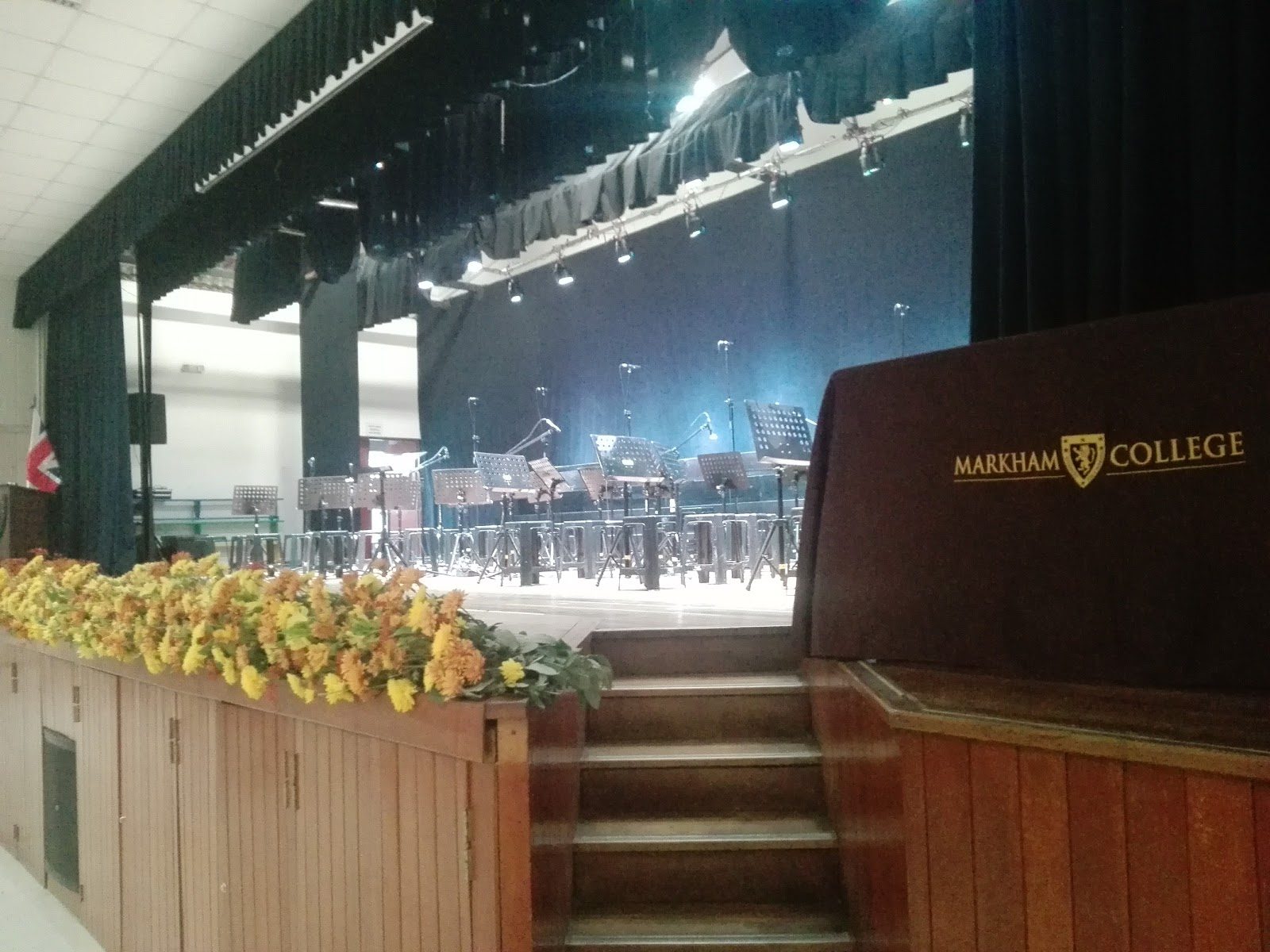
Markham College
Lima · Peru
Founded in 1946 by British expatriates, this Lima day school pairs house traditions with a bilingual IB-British curriculum.
Same country and curriculum — closest matches within ±10 points either way