
Singapore
Dulwich College (Singapore)
low confidence· 6/6 cats · 0 avg sourcesOn a Bukit Batok campus centred round a working pipe organ and a net-zero Greenhouse, British rigour meets IB breadth.
Photo © Dulwich College (Singapore) via Google Maps
Type
Day
Ages
3–18
Curriculum
British (IGCSE, A-Level) · IB (Diploma)
Ratio
—
The Verdict
Editor's commitment
Right for
Families wanting a 2014-founded day school in Singapore that runs British IGCSE and A-Level before the IB Diploma, not a single-track programme.
Wrong for
Parents after boarding, a religious ethos, or teaching in anything other than English; this is a non-religious 3–18 day school.
Watch out for
The campus sells breadth — a pipe organ, a net-zero Greenhouse, and 2026 IB results of 37.7 with four perfect scores — so test substance beyond the showcase.
Ranking breakdown
Dulwich College (Singapore) · # of 1591
Composite score 66.7. 8 weighted criteria.
By criterion
Academic Outcomes
Weight 20%
#587
of 1533 scored
University Placement
Weight 16%
#516
of 1529 scored
Prestige & Heritage
Weight 12%
#910
of 1580 scored
Alumni Network
Weight 12%
#742
of 1530 scored
Facilities
Weight 12%
#239
of 1541 scored
Transparency & Communications
Weight 8%
#358
of 1549 scored
Peer & Industry Review
Weight 10%
#792
of 1565 scored
Admissions Selectivity & Demand
Weight 8%
#1456
of 1529 scored
Peer & Industry Review
How Dulwich College (Singapore) is regarded in the sector
82
Strong · high confidence
Dulwich College (Singapore) sits firmly among the island's most consistently praised British-curriculum schools, with the Good Schools Guide noting that Tanglin Trust and Dulwich "consistently receive international praise and feature on lists of top British international schools". WhichSchoolAdvisor's review lauds a campus where "there's always something happening" across academics, Mandarin immersion, arts and sport, while the Good Schools Guide separately observes that the school's heritage "has enabled the school to quickly assimilate a strong reputation", singling out its Alleyn Theatre pipe organ and competitive sports culture. Its Dulwich College International network and Spear's Awards School of the Year nomination reinforce visibility beyond marketing channels. The main caveat is that its reputation, while strong and multi-sourced, is still partly inherited from the London parent brand rather than built on decades of independent Singapore-specific results history.
Editors' overview
A working pipe organ and a net-zero Greenhouse tell you more about Dulwich College (Singapore) than any mission statement does. This is a campus that puts real money into culture, performance and environmental infrastructure, and it gives the school a character that many polished international campuses lack. Founded in 2014 in Bukit Batok, it is a non-religious day school for ages 3–18, teaching in English and running a dual academic track of British qualifications through IGCSE and A-Level alongside the IB Diploma. That matters. Parents are not buying into a single-route school with one definition of success; they are buying breadth, with a distinctly British frame around it.
The headline academic number is strong: an average IB score of 37.7, with 4 perfect scores and 29 bilingual diplomas in the published 2026 results. Those figures place the school in the serious academic bracket. The more interesting point, though, is structural. Dulwich serves children from the early years through senior school on one site, with named phases — DUCKS, Junior School and Senior School — and it leans hard into the language of holistic and experiential education. Many schools say that. Dulwich backs it with visible programming and facilities, from Model UN to the arts infrastructure implied by that organ, and with a campus identity that is more cultivated than corporate. It is also part of a chain, and parents should recognise both sides of that: systems, polish and international mobility on one hand; less idiosyncrasy on the other.
Why put it on a shortlist? Because few Singapore schools combine British rigour, sixth-form optionality and a credible IB outcome profile in one package. For families who want flexibility at 16, that matters more than glossy talk about holistic education. The school suits students who will use a big, well-resourced day campus properly: children who like music, performance, debate, service, languages and the structured pressure of an academically ambitious environment. It is less compelling for families hunting for a stripped-back, exam-only school or a small, intimate setting with a strongly local character. Dulwich’s appeal lies in scale, resources and range — a high-spec, internationally mobile education with enough substance to justify its reputation.
Academic Performance
Dulwich College (Singapore) sits in Singapore’s top academic tier on the evidence that matters most publicly: the IB Diploma. An average of 37.7 points is not a decorative number; it places the school well above the global norm and in the company of the city’s stronger all-through international schools. The detail sharpens the picture. 4 perfect scores show that top-end attainment is real, not just a cohort lifted by a broad middle, while 29 bilingual diplomas point to serious linguistic strength rather than token multilingualism. This is a high-attaining outcome set with breadth as well as peaks.
There are limits to the transparency. The school foregrounds IB results, but we have not seen aggregate public data for its IGCSE or A-Level cohorts, so parents cannot make a clean three-route comparison inside the same school. That matters because Dulwich sells optionality in the senior years, and optionality is easier to judge when every route is reported with equal candour. Even with that caveat, the published diploma figures place the school in the serious competition bracket: strong enough for selective university pathways, and strong enough to stand comparison with premium British international peers in Singapore. The academic message is clear: this is not a warm-and-fuzzy school that happens to teach well; it is an ambitious school with results to prove it.
Facilities
The campus’s defining facilities are the ones with clear educational intent rather than generic luxury. The working pipe organ stands out because very few international schools build serious music infrastructure into the fabric of the site; this is not a token recital-hall gesture. The net-zero Greenhouse carries the same weight in a different direction: it gives environmental learning a physical home instead of leaving sustainability at poster level. Add the school’s phase-based all-through structure and the public signal from events such as Model UN, and the picture is of a campus built for active use, not just polished tours. Against Singapore peers, that puts Dulwich in the upper tier for specialist cultural and co-curricular provision. Many premium campuses offer theatres, sports halls and labs. Fewer have facilities with this much institutional character.
That distinction matters. In this market, top-fee schools can blur into one another through interchangeable glass, shade structures and multipurpose blocks. Dulwich has avoided that trap. Its best facilities give the school a recognisable internal life: music with seriousness, sustainability with real infrastructure, and enough room for an all-through community to operate without feeling improvised. We have not seen a full public inventory of sports or laboratory provision, so any claim of superiority there would be careless. On the evidence in public view, the campus is strongest where culture and purpose meet. That is a better marker of quality than another glossy atrium.
Dulwich College (Singapore) sits in Singapore’s top academic tier on the evidence that matters most publicly: the IB Diploma
Prestige
Dulwich College (Singapore) carries real prestige in the part of the market that values institutional polish, social confidence and a school name that travels well with internationally mobile families. The Dulwich brand does heavy lifting here, but brand alone does not sustain status in Singapore. This campus has the ingredients parents actually trade on: a serious academic climate, visible investment in the arts, a coherent all-through structure, and the kind of student-facing opportunities — Model UN is one public example — that build a high-functioning profile beyond exams. The published diploma outcome, with an average of 37.7 and 4 perfect scores, gives the school the academic credibility that premium families expect. Without that, prestige is décor. Here, it has substance.
That said, this is not untouchable, old-money prestige in the British domestic sense; it is modern international prestige built on fees, facilities, outcomes and network recognition. Some parents prize that. Others will find it too polished, with the trade-off that chain schools bring: consistency over eccentricity, systems over local texture. The school’s cultural markers matter. A working pipe organ and 29 bilingual diplomas tell parents that this is not a narrow results factory. They also tell you where Dulwich sits in the hierarchy: among Singapore’s high-status, globally legible schools, with enough academic and cultural capital to justify the reputation.
A working pipe organ and a net-zero Greenhouse tell you more about Dulwich College (Singapore) than any mission statement does
Communications
Dulwich communicates with parents in the manner of a well-drilled premium school: polished website, clear phase structure and a steady emphasis on student life as well as outcomes. The public-facing messaging is organised and easy to navigate. Parents can move quickly from admissions prompts to the head’s welcome, school sections and headline results without digging through clutter. That matters in a large all-through school, where weak navigation usually signals weak internal communication too. The choice to publish a headline diploma average, alongside 4 top scores and 29 bilingual diplomas, also tells parents that the school understands what families want answered early: academic credibility, not just smiling children and event photography.
The limits are visible too. The tone is heavily managed and brand-conscious, with repeated testimonial-style messaging and broad claims about putting students first. That gives a warm impression, but it does not always give a hard-edged picture of daily school life, pressure points or how the parallel senior pathways compare in practice. We have not seen equivalent aggregate public reporting for the other senior qualifications, and that leaves a communication gap at the point where families need precision. So the verdict is strong but not flawless: Dulwich communicates confidently and with institutional control, and parents will get a clear sense of ethos and structure. They get less candour on comparative route outcomes and fewer specifics than a truly transparent school would publish.
Uniqueness
What sets Dulwich College (Singapore) apart is not a single programme but a deliberate cultural mix: British institutional discipline, visible artistic seriousness and environmental infrastructure that goes beyond branding. Plenty of international schools promise “holistic” education. Dulwich gives that claim a concrete shape through a campus organised around artefacts and spaces that signal values in use, not on posters. A working pipe organ is an eccentric choice in the best sense: it tells students that music here has weight, history and standards. The Greenhouse does the same for sustainability. That combination is unusually coherent. It produces a school identity with more texture than the polished, interchangeable premium-campus model that dominates this market.
For students, that distinctiveness brings breadth with real internal logic. Children who thrive here get a daily message that intellectual life is not split into silos: performance, debate, service, languages and environmental thinking sit inside one institutional frame. The published outcome data reinforce that point. 29 bilingual diplomas are not incidental; they indicate that multilingualism has academic substance. The school’s phase structure also matters. Moving from DUCKS to Junior and then Senior School under one roof gives families continuity, but the stronger benefit is cultural: expectations build early and travel upwards. The trade-off is clear too. This is a high-spec, high-expectation school with a strong corporate spine. Students who want anonymity or looseness will find it constraining.
In this market, top-fee schools can blur into one another through interchangeable glass, shade structures and multipurpose blocks
Student Profile
The best fit is a child who wants a lot from school and can handle being known inside a high-expectation environment. Dulwich suits students who like structure, pace and adult-led opportunities, not children who need a loose, anonymous day. The public picture points to a community that prizes contribution as much as attainment: pupils who will join debates, performances, service projects and whole-school events rather than treating lessons as a transaction. The school’s own student voice leans hard on inclusion and purpose, and the published count of 29 bilingual diplomas gives that emphasis real academic weight. This is a good match for internationally minded families who want children to move comfortably between classrooms, stages, committees and mixed-age community life.
Socially, the school fits confident joiners and steady, engaged quieter pupils better than chronic coasters. A child does not need to be loud, but they do need to participate. The all-through model also favours families who value continuity and are willing to buy into one institutional culture for the long haul. Children with serious interests in music, languages or public-facing co-curricular life will find real room to grow here. Children who want a minimalist, exam-only education will not. Nor will those who bridle at polished systems and visible expectations. At its best, Dulwich serves the energetic all-rounder: academically ambitious, culturally alert and ready to use a big, well-run school rather than drift through it.
For students, that distinctiveness brings breadth with real internal logic
Co-curricular strengths
Arts & sport, on a separate axis
Overall 9.18/10
Scored 0-10 from the school's own published evidence. This axis is editorial-only — it does not feed the main WTS ranking.
Sports
9.2/10
Drama
9/10
Dance
9.5/10
Music
9.2/10
Visual Arts
9/10
Strengths
- +British curriculum plus IB Diploma at sixth form
- +Ages 3–18 allows continuity through school years
- +10:1 student-teacher ratio suggests more individual attention
- +English-medium teaching suits many international families
Considerations
- −Day school only; no boarding option
- −Founded 2014; shorter track record than older rivals
- −Average class size 20 may feel large to some
Availability
Primary entry gate & tests
Academic Record
Gallery
Photo © Dulwich College (Singapore) via Google Maps
Photo © Dulwich College (Singapore) via Google Maps
Photo © Dulwich College (Singapore) via Google Maps
Photo © Velochrome via Google Maps
Photo © Dulwich College (Singapore) via Google Maps
Photo © Min Htaw via Google Maps
Photo © siang hang lim via Google Maps
Photo © Dulwich College (Singapore) via Google Maps
Photo © Dulwich College (Singapore) via Google Maps
Parent reviews
Have you sent your child here?
Voice reviews carry the strongest trust badge — we transcribe them for you to tidy up before they go live. Prefer to type? A written review is fine too.
Add your voice
In 60 seconds, tell other parents: what's the best thing about Dulwich College (Singapore), and what surprised you when your child joined?
We ask for a Google sign-in so every review has a real face behind it — no anonymous drive-by attacks on schools, and no faked positive reviews. Your email is never shown publicly.
Send this profile to a friend
International parents rely on word-of-mouth. Share this review with someone weighing the same decision.
Schools with places
Similar schools to Dulwich College (Singapore) with places available now.
Overseas Family School
Singapore · Singapore
- 2026-27
- WAITPOOLSpace-dependent
- 2027-28
- PLACES OPENRolling
Singapore American School
Singapore · Singapore
- 2026-27
- WAITPOOLGrade-specific / Waitpools
- 2027-28
- PLACES OPENRolling
Tanglin Trust School
Singapore · Singapore
- 2026-27
- CLOSEDNo late apps
- 2027-28
- PLACES OPEN
United World College of South East Asia
Singapore · Singapore
- 2026-27
- CLOSEDStandard route
- 2027-28
- OPENS SOONOpens 1 Sept '26 (Closes 2 Nov)
Availability first, then country, area, curriculum, price, co-curricular
Consider also
Also worth looking at alongside Dulwich College (Singapore).
Overseas Family School
Singapore · Singapore
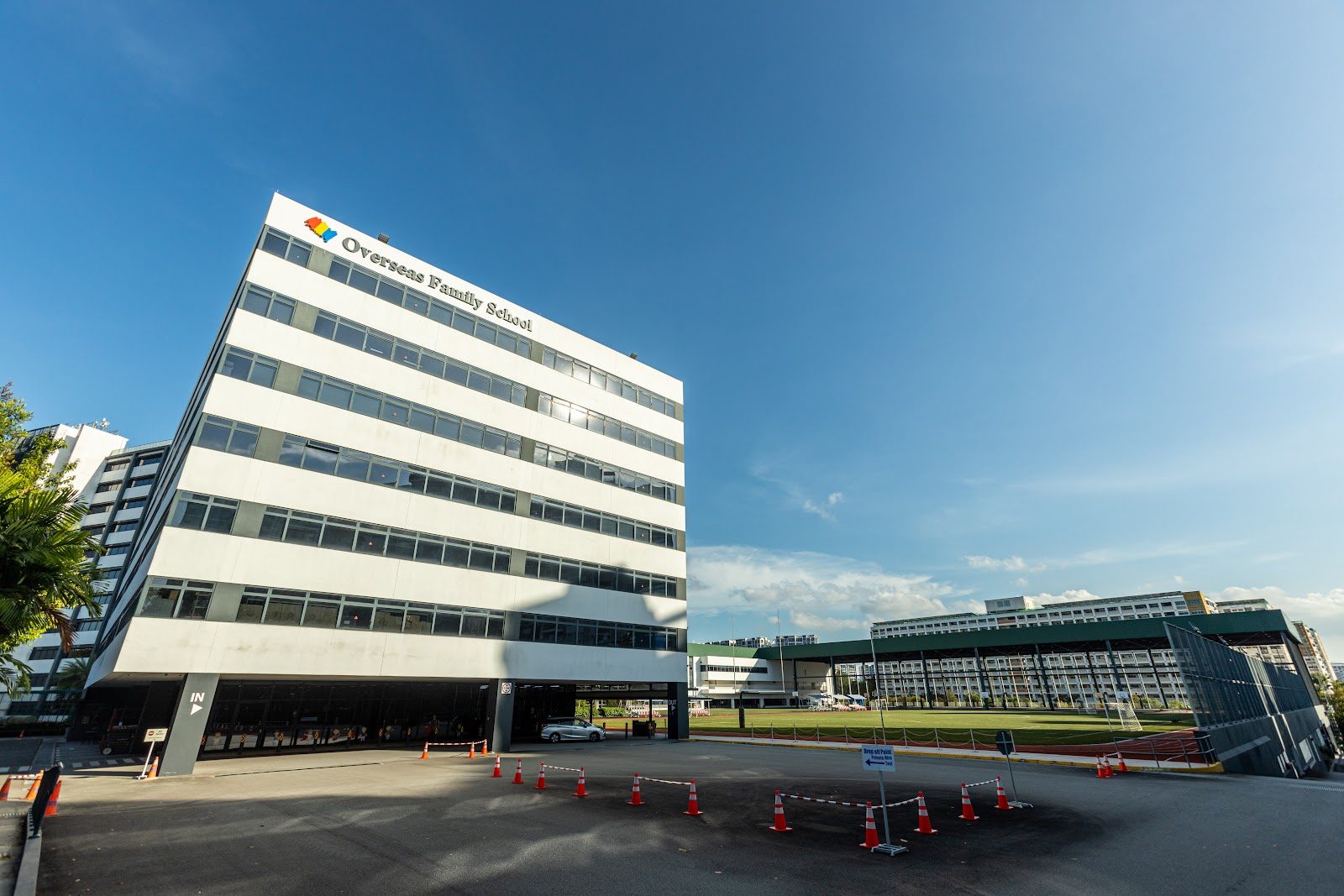
Open-access IB Diploma policy admits every student, no preselection, inside a 70-nation Pasir Ris campus.
Chatsworth International School
Singapore · Singapore
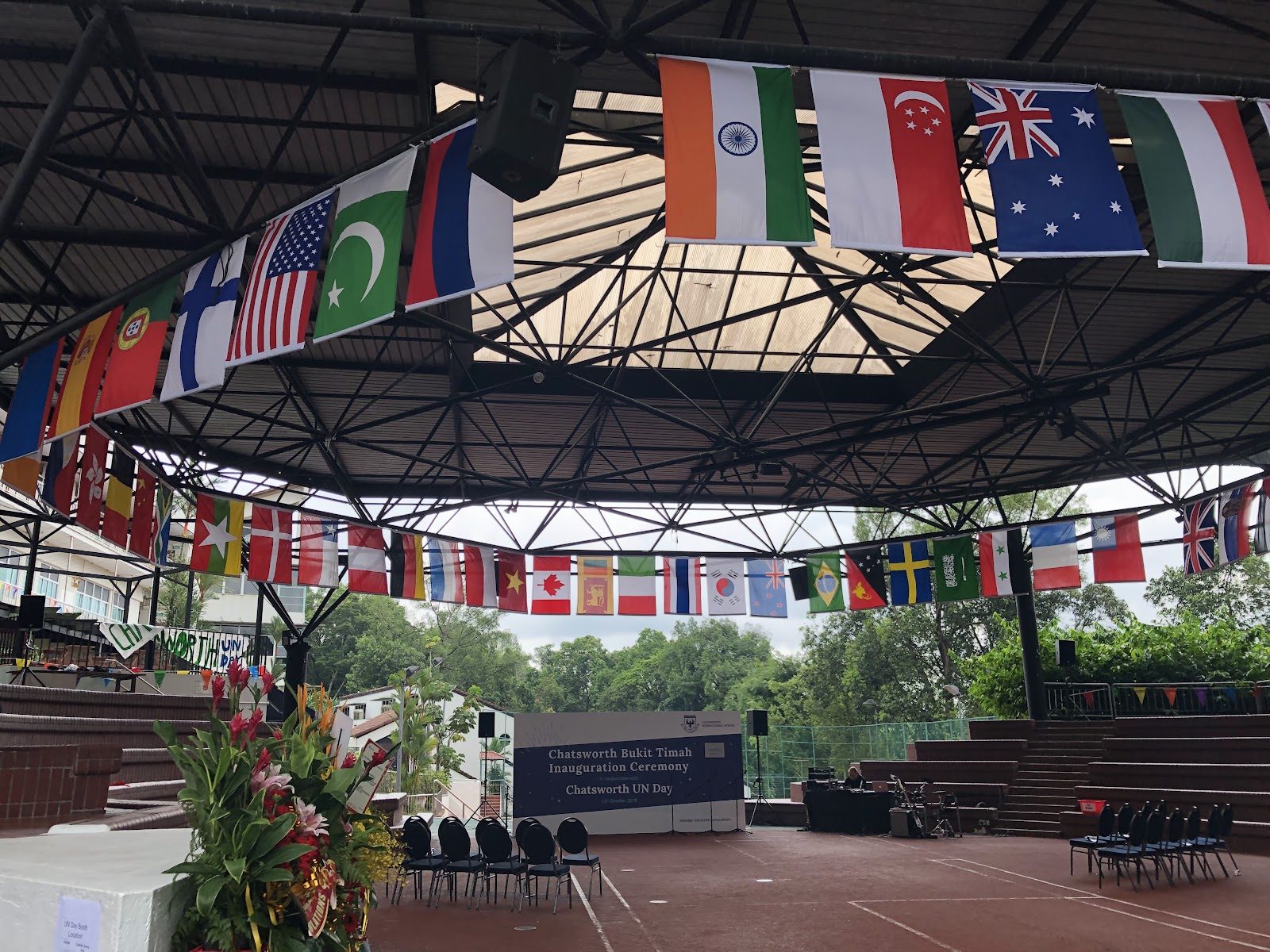
Set beside Singapore's only tropical rainforest, a non-selective full IB continuum runs through a close-knit, village-like community.

Singapore American School
Singapore · Singapore
A 36-acre Woodlands campus with a rainforest classroom and AP breadth, run on an American blueprint with IB rigor at the edges
Tanglin Trust School
Singapore · Singapore
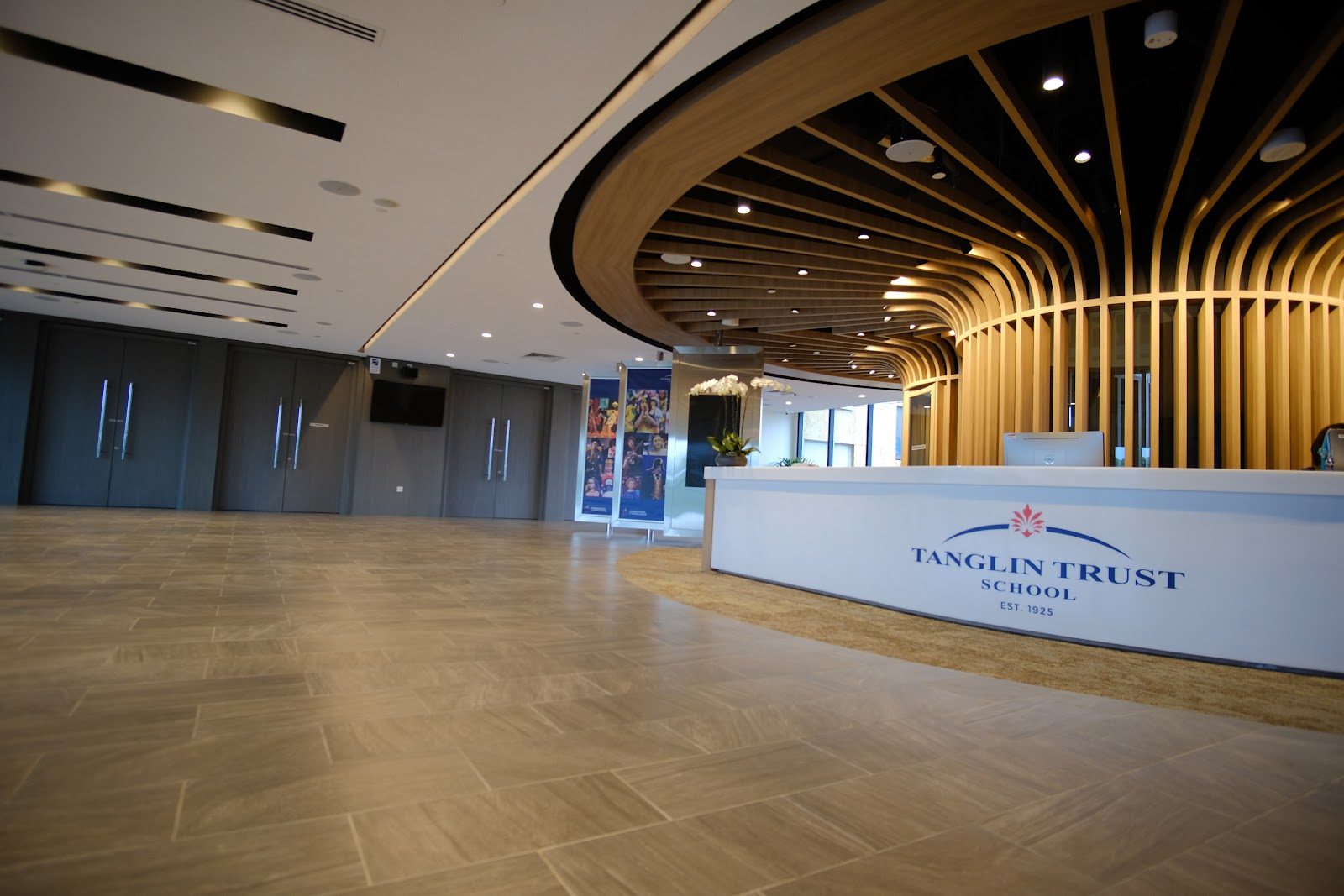
Southeast Asia's oldest British school pairs IB with A-Levels, then sends every Year 9 to the Australian bush for five weeks.
Same country and curriculum — closest matches within ±10 points either way