
Indiana
Culver Academies
low confidence· 1/6 cats · 3 avg sourcesOn the shores of Lake Maxinkuckee, cadets in the storied Black Horse Troop have ridden in presidential inaugural parades since 1913.

Photo © Culver Academies via Google Maps
Type
Both
Ages
13–18
Curriculum
American
Qualifications
AP
Ratio
6:1
The Verdict
Editor's commitment
Right for
Boarders aged 13–18 who want a disciplined American education with a 1:5 ratio and leadership drilled into daily life.
Wrong for
Families wanting a loose, progressive culture; Culver, founded in 1894, runs on duty, honour, service and structured student life.
Watch out for
Boarding and day both sit inside a proudly traditional system; NAIS accreditation matters less than whether your child can stomach it.
Ranking breakdown
Culver Academies · # of 1591
Composite score 64.3. 8 weighted criteria.
By criterion
Academic Outcomes
Weight 20%
#1002
of 1529 scored
University Placement
Weight 16%
#793
of 1529 scored
Prestige & Heritage
Weight 12%
#135
of 1571 scored
Alumni Network
Weight 12%
#1283
of 1530 scored
Facilities
Weight 12%
#4
of 1534 scored
Transparency & Communications
Weight 8%
#870
of 1532 scored
Peer & Industry Review
Weight 10%
#26
of 1548 scored
Admissions Selectivity & Demand
Weight 8%
#1156
of 1529 scored
Peer & Industry Review
How Culver Academies is regarded in the sector
82
Strong · medium confidence
Culver Academies occupies a distinctive niche among elite boarding schools: it is rarely grouped with the Northeastern "old money" prep circuit (Andover, Exeter, Deerfield) but is consistently cited in TABS (The Association of Boarding Schools) circles and Niche/Boarding School Review rankings as a top-tier military-honor institution, prized for its Black Horse Troop, aviation program, and leadership curriculum. Admissions officers at service academies (West Point, Annapolis) and Midwestern flagships (University of Michigan, Indiana University, Northwestern) regard Culver graduates as unusually disciplined and mission-ready, a reputation reinforced by its ROTC-affiliated Naval and Army programs. Independent education press coverage, including Niche's A+ boarding school rating and periodic features in Indianapolis Business Journal and regional outlets, emphasizes its unique blend of military structure and traditional college-prep rigor rather than Ivy-feeder statistics. Peer heads of school describe it less as a competitor to Northeastern boarding powerhouses and more as a category leader in character-based, leadership-focused education, a distinction that shapes its niche but strong standing in national boarding-school comparisons.
Award

Elite Sport 80
World's Top School · The Global Ranking
Culver Academies is featured on our Global Top 80 ranking at #36. This seal is available for the school's marketing team to use on their website, prospectus and social channels.
- George Steinbrenner — Owner/Businessman, New York Yankees
- William Proxmire — U.S. Senator, Politics
- Robert Urich — Actor, Film/TV
Editors' overview
Culver Academies occupies a narrow, durable niche in the US boarding market: a full American college-preparatory education fused with regimented student life, explicit character formation and a scale of tradition that few peers can match. Founded in 1894 and set on the shores of Lake Maxinkuckee, it combines day and boarding provision for ages 13–18 with parallel boys’ and girls’ schools under one institutional umbrella. The defining feature is not a generic “whole-person” claim but the machinery behind it: units, dorms, leadership structures, codes of duty and service, and a campus culture that expects students to carry responsibility early. The result is high structure, ceremonial seriousness and a school identity that runs deeper than branding.
What marks Culver out is the way it binds academic life to institutional ritual and personal discipline. The school talks openly about duty, honour, truth and service, and those values are built into daily life rather than left on a wall. That will attract some families and repel others. Parents who want a loose, student-led progressive environment should look elsewhere. Culver suits adolescents who benefit from clear expectations, adult oversight and visible standards of conduct; it also suits families who value leadership training in concrete form, not as a slogan. The published 1:5 student-teacher ratio strengthens that case: students are hard to lose here, whether in class, in dorm life or in co-curricular commitments. Institutional confidence, old-school discipline and collective belonging define the experience.
The school’s special cachet lies in its blend of military heritage, boarding tradition and broad co-educational ecosystem. Culver Military Academy for boys dates to the founding; Culver Girls Academy opened in 1971; summer programmes have operated since 1902. The famous Black Horse Troop gives Culver a piece of pageantry that many American boarding schools cannot imitate, and the school’s lakeside setting adds real physical range to student life. This is not a school for teenagers who want anonymity, low stakes or casual participation. It is for students with energy, stamina and tolerance for scrutiny; for riders, athletes, joiners and ambitious adolescents who thrive when a school asks a lot of them. On a shortlist, Culver earns its place for one reason above all: it offers a fully inhabited boarding culture with moral seriousness and unmistakable tradition, not a diluted version of either.
An Elite Sport 80 school
Culver Academies in Indiana is at rank thirty-six on the Elite Sport 80 because it is the world's leading combined equestrian and ice-hockey school and has an alumni base — from Olympic dressage and eventing riders to NHL professionals — that few other American schools can equal. Its historic Black Horse Troop and Equestriennes are among the most distinctive ceremonial and competition equestrian units of any school on the planet.
The specialisms are equestrian (dressage, jumping, eventing and polo, run at Olympic-development standard with an on-site 100-plus horse stable and a full US Equestrian Federation partnership), ice hockey (with an on-site arena and USA Hockey pipeline to NCAA D1 and the NHL), boys' rowing, girls' lacrosse and boys' football. Sailing, riflery and fencing all run as strong secondary programmes drawn from the school's military-academy heritage.
Notable alumni across codes include Olympic equestrians such as George Morris (US show-jumping legend), Beezie Madden (Olympic gold medallist), John French, and — in ice hockey — dozens of NHL and NCAA D1 alumni. In football, notable NFL figures such as Bill Krisher and various NCAA D1 players are part of the tradition.
International openness is high and structurally central. Culver is a co-ed boarding school with approximately 30% international enrolment, with strong feeder pipelines from Mexico, Colombia, Brazil, China, South Korea, Germany and Canada. F-1 visas are processed in-house, ESL is embedded, and admissions is a standard application process plus sport-specific reference and academic testing. Tuition and boarding sit around US$65,000-70,000, with athletic aid available. For a family with an equestrian or ice-hockey oriented child looking for a US high-school diploma combined with an Olympic-development riding or NHL-track hockey pathway, Culver is one of the two or three most obvious global destinations, and remains the only major school in the world where dressage and ice hockey both run at genuine national-team-feeder standard on the same campus.
Academic Performance
Culver does not publish the exam data that would let parents place it cleanly against top US boarding peers. We have not seen aggregate SAT or ACT profiles, AP score distributions, mean scores, subject entry patterns, or matriculation data broken down in a way that exposes academic strength rather than institutional confidence. That matters. In the American independent-school market, the strongest college-preparatory schools either disclose enough hard data to show where they sit or publish university destinations with enough detail to let families infer academic range. Culver leaves that picture frustratingly opaque. For a school with a published 1:5 staffing ratio and an insistence on rigorous intellectual formation, the absence of public outcome measures is a clear weakness in how academic performance is evidenced.
That does not place Culver in the weak academic tier; it places it in the category of schools whose reputation rests more on formation, structure and breadth of programme than on publicly demonstrated exam dominance. Relative to peers, this reads as serious but unproven at the top end. Families looking for a boarding school where external results drive the story will find sharper disclosure elsewhere. Families choosing Culver for its high-accountability environment, leadership culture and full residential apparatus will care less — but they still deserve cleaner academic reporting. As it stands, the school asks parents to trust the model more than the numbers.
Facilities
Facilities are one of Culver’s strongest selling points, because the campus infrastructure supports the school’s insistence on organised, supervised, all-day life. The important distinction is not one signature building but a fully built residential machine: dorms and unit spaces tied to student leadership structures, athletic fields woven into daily routine, and enough institutional footprint to sustain parallel boys’ and girls’ schools alongside a substantial summer operation. The lakeside setting matters in practical terms, not just postcard terms; it gives the school physical breadth and outdoor range that cramped New England campuses cannot match. Add the equestrian and ceremonial apparatus around the Black Horse Troop and you get facilities with a rarely replicated identity. Against peer boarding schools, this is a campus designed for high-control, high-participation schooling rather than casual use of shared amenities.
What we do not have is the level of published technical detail that would let parents benchmark every category cleanly. The school does not publish the kind of hard facilities inventory that top comparison-minded families now expect: no clear public count of specialist labs, performance venues, studio provision or boarding-house capacity. That limits precision. Even so, the broad picture is clear. Culver competes strongly on land, residential infrastructure, athletics and tradition-heavy programme facilities; it is less legible on the finer grain of academic plant. For families drawn to ceremonial seriousness, visible structure and a campus that can absorb a teenager’s entire week, the physical provision is a major asset.
Culver does not publish the exam data that would let parents place it cleanly against top US boarding peers
Prestige
Culver carries real prestige, but it is a specific kind of prestige. This is not the prestige of published exam dominance or Ivy-heavy public scoreboards; the school does not disclose enough outcome data for that claim. Its standing rests instead on institutional distinctiveness, endurance and cultural recognition. Few American schools have a student life structure as ceremonial, as disciplined or as historically codified. The split between Culver Military Academy and Culver Girls Academy, the formal emphasis on duty, honour, truth and service, and the school’s famous equestrian tradition give it a profile that is instantly legible in the US boarding market. The published 1:5 student-teacher ratio adds weight: parents read that as resource, supervision and access, not just marketing gloss.
That places Culver in the upper tier of name recognition among traditional American boarding schools, but not in the narrow band whose prestige rests first on transparent academic outcomes. Its reputation is strongest with families who value institutional seriousness, leadership formation and a high-control residential culture. The Black Horse Troop, with appearances in presidential inaugural parades since 1913, deepens that aura of national symbolism and old American pageantry. For some families, that is a major draw; for others, it is too tradition-bound and too public in its moral code. The verdict is clear: Culver is prestigious because it is distinctive, old, and hard to imitate — not because it publishes the clearest academic proof.
Relative to peers, this reads as serious but unproven at the top end
Communications
Culver communicates with parents in the same register that defines the school itself: formal, values-heavy and institution-first. The public-facing message is clear about what the school expects of students — duty, honour, service, leadership, responsibility to unit, dorm and community — and that clarity helps families understand the culture before enrolment. There is little ambiguity about the moral code or the kind of adolescence Culver wants to shape. That is a strength. Schools with a demanding residential culture need crisp expectation-setting, and Culver does that well. The low 1:5 staffing ratio also points to a system where parent contact has scope to be personal rather than purely administrative. In a school built around supervision and structured student life, parents can reasonably expect adults to know their child in detail.
The limitation is different: clarity of ethos does not equal transparency of operation. Culver publishes a great deal about mission and character formation, but far less that helps parents judge day-to-day academic communication or outcome reporting. We have not seen the kind of public academic dashboard, detailed results breakdown or finely grained performance disclosure that reassures data-minded families. That makes the communications model strong on philosophy and weaker on evidence. For parents who want a school to state its values plainly, Culver is confident and coherent. For parents who want regular hard proof of academic delivery, the school is less forthcoming than it should be.
Uniqueness
What no rival reproduces cleanly is Culver’s combination of parallel boys’ and girls’ schools, a live military inheritance, and a residential culture that turns student responsibility into daily practice rather than occasional rhetoric. The school’s values are not decorative. Duty, honour, truth and service run through units, dorms, athletics and formal leadership structures, so adolescents live inside a system of expectation from morning to night. That creates a high-pressure, high-accountability environment in which conduct, self-command and contribution to the group matter as much as talent. The Black Horse Troop sharpens that identity further: this is not generic tradition but public ritual, equestrian discipline and institutional theatre with real continuity.
For students, the gain is clear. Teenagers who thrive with loose supervision will find Culver constraining; teenagers who grow through structure gain unusual maturity, confidence and stamina. The published 1:5 ratio strengthens that model because adults have little excuse to lose track of a student’s effort, habits or drift. The co-educational umbrella also matters: students do not sit in a narrow single-school silo, but in a broader community with distinct identities under one institution. Add the summer-school machinery and Culver feels less like a standard boarding school than a self-contained world. That is its real distinction: a school where leadership is organised, visible and tested every day, not left as a brochure phrase.
Its standing rests instead on institutional distinctiveness, endurance and cultural recognition
Student Profile
Culver suits students who do not just tolerate structure but draw energy from it. The best fit is an adolescent who can live inside rules, routines and public expectations without constant resentment: organised, coachable, resilient, and willing to be held to account by adults and peers. This is a school for joiners. Students need the appetite to commit to dorm or unit life, athletics, leadership roles and the collective duties that hold a residential community together. Teenagers who like ceremony, hierarchy and visible standards of conduct will find real traction here. So will riders, athletes and students who want leadership training in concrete daily form rather than classroom theory. The published 1:5 ratio reinforces that intensity: quiet disengagement is hard to hide.
The weaker fit is just as clear. A highly independent teenager who wants to negotiate every rule, protect a large private sphere or drift anonymously through school life will struggle. Culver asks for stamina, self-command and readiness to participate in a culture that is highly supervised, tradition-heavy and at times unforgiving of passivity. Students who bristle at uniforms of behaviour, moral language or institutional ritual need a different environment. Those who thrive here tend to value belonging, duty and measurable responsibility; they do not need a school to flatter them with freedom before they have earned it. For the right student, that produces real growth; for the wrong one, it produces friction from the first term.
The verdict is clear: Culver is prestigious because it is distinctive, old, and hard to imitate — not because it publishes the clearest academic proof
Co-curricular strengths
Arts & sport, on a separate axis
Overall 9.62/10
Scored 0-10 from the school's own published evidence. This axis is editorial-only — it does not feed the main WTS ranking.
Strengths
- +Sits on a 1,850-acre campus with 44 buildings, and holds a $540 million endowment (2022), among the larger financial cushions of any US secondary school.
- +The school's Black Horse Troop and Equestriennes have ridden in presidential inaugural parades, including the 2025 parade for President Trump and Vice President Vance, a distinctive extracurricular tradition rare among prep schools.
- +Reports a 6:1 student-to-faculty ratio with an average class size of 14, allowing closer academic attention than many larger boarding schools.
- +The diverse student body includes representatives from 24 countries and 40 states, giving the campus genuine international texture despite its rural location.
- +81% of students in the Class of 2025 enrolled at a college or university ranking in the "most competitive" or "highly competitive" tier according to Barron's Profile of American Colleges.
Considerations
- −Boarding tuition is reported at roughly approximately $61,000 for boarding students to $67,000 in 2024, which typically includes tuition, boarding fee, student management fee and a few other fees, placing Culver at the higher end of US boarding fees.
- −Culver Academies sits on 1,800 acres along Lake Maxinkuckee, about 2 hours north of Indianapolis, a rural Midwest location that adds travel time and cost for families flying in from overseas.
- −The historic military track means Culver Military Academy operates alongside Culver Girls Academy, offering the choice between full military immersion or rigorous prep-school academics without uniforms, with CMA cadets having additional military drill and physical training requirements, a structure that will not suit every family or student temperament.
- −Admission is meaningfully selective, with one tracking source citing an Acceptance Rate: 49% and requirements including school transcript, recommendation letter, application essay, and interview (often optional, but highly recommended).
Availability
Primary entry gate & tests
SSAT/ISEE + interview
Gallery
Photo © Culver Academies via Google Maps
Photo © Yuriy Freewind via Google Maps
Photo © Culver Academies via Google Maps
Photo © Culver Academies via Google Maps
Photo © Culver Academies via Google Maps
Parent reviews
Have you sent your child here?
Voice reviews carry the strongest trust badge — we transcribe them for you to tidy up before they go live. Prefer to type? A written review is fine too.
Add your voice
In 60 seconds, tell other parents: what's the best thing about Culver Academies, and what surprised you when your child joined?
We ask for a Google sign-in so every review has a real face behind it — no anonymous drive-by attacks on schools, and no faked positive reviews. Your email is never shown publicly.
Send this profile to a friend
International parents rely on word-of-mouth. Share this review with someone weighing the same decision.
Schools with places
Similar schools to Culver Academies with places available now.
Princeton Day School
Princeton · United States
- 2026-27
- CLOSEDRegular cycle closed
- 2027-28
- OPENS SOONOpens Sept '26
Head-Royce School
Oakland · United States
- 2026-27
- CLOSEDRegular cycle
- 2027-28
- OPENS SOONOpens Sept '26
The Buckley School
New York City · United States
- 2026-27
- CLOSEDConfirmed full
- 2027-28
- OPENS SOONOpens post-Labor Day '26
Greenwich Academy
Greenwich · United States
- 2026-27
- CLOSEDRegular cycle closed
- 2027-28
- OPENS SOONOpens Sept '26
Availability first, then country, area, curriculum, price, co-curricular
Consider also
Also worth looking at alongside Culver Academies.
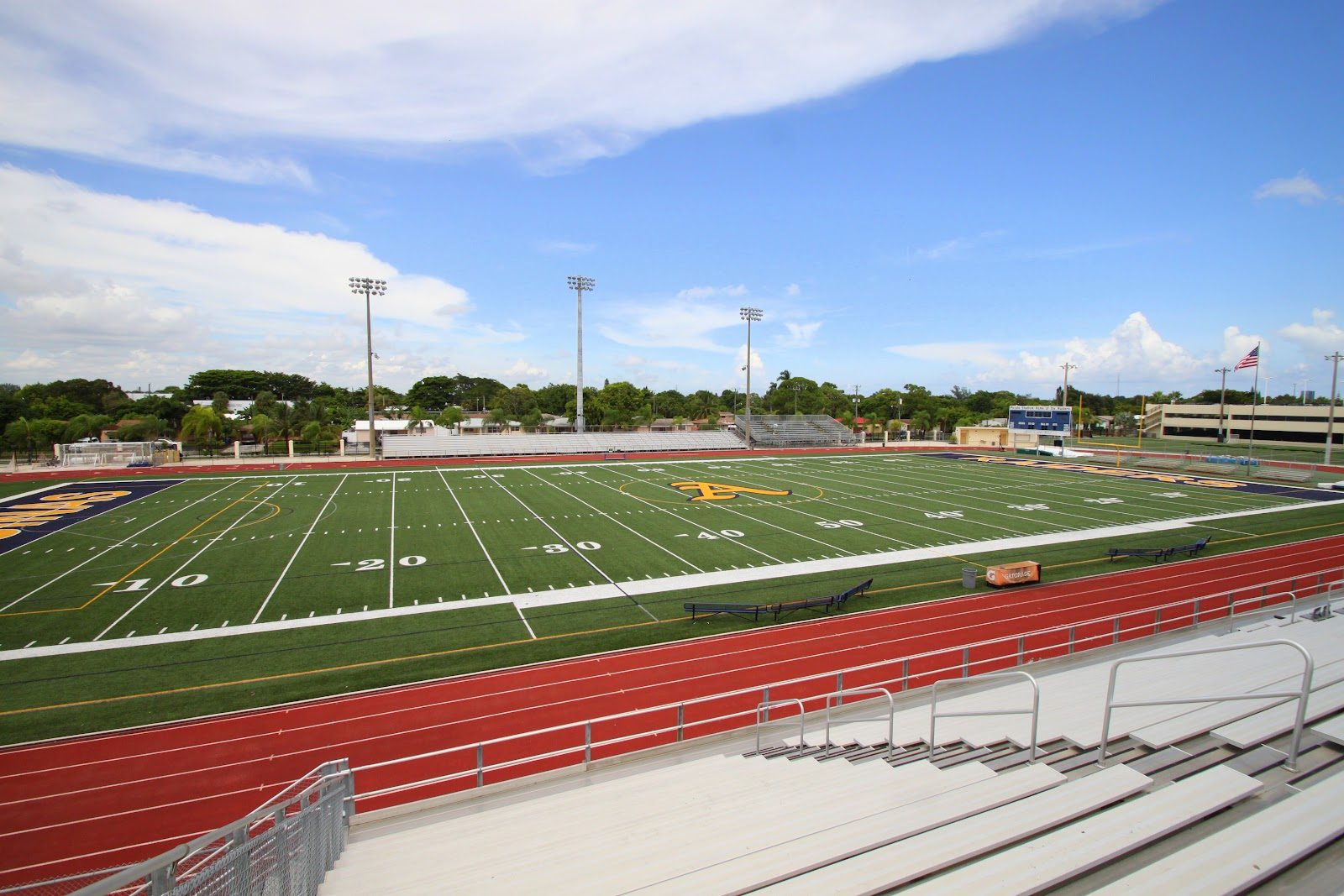
St. Thomas Aquinas High School
Fort Lauderdale, FL · United States
Fort Lauderdale Catholic prep melding AP rigor with a Cambridge International curriculum, backed by nationally ranked football.

St. Xavier High School Cincinnati
Cincinnati, OH · United States
Since 1831, a Jesuit brotherhood on Cincinnati's west side forges 'Men for Others' through rigorous AP coursework.

IMG Academy
Bradenton, FL · United States
From a 1978 tennis academy to 600 acres of AP classrooms, drawing student-athletes from 60-plus countries.

St. John Bosco High School
Bellflower, CA · United States
A Salesian all-boys brotherhood in Bellflower pairs three national football titles with dual-enrollment STEM pathways.
Same specialism, country and curriculum — closest matches within ±10 points either way