
Sharjah
Wesgreen International School
low confidence· 2/6 cats · 2 avg sourcesFounded by Sharjah's royal family in 1991, it runs separate boys' and girls' secondary campuses under a British Cambridge curriculum.
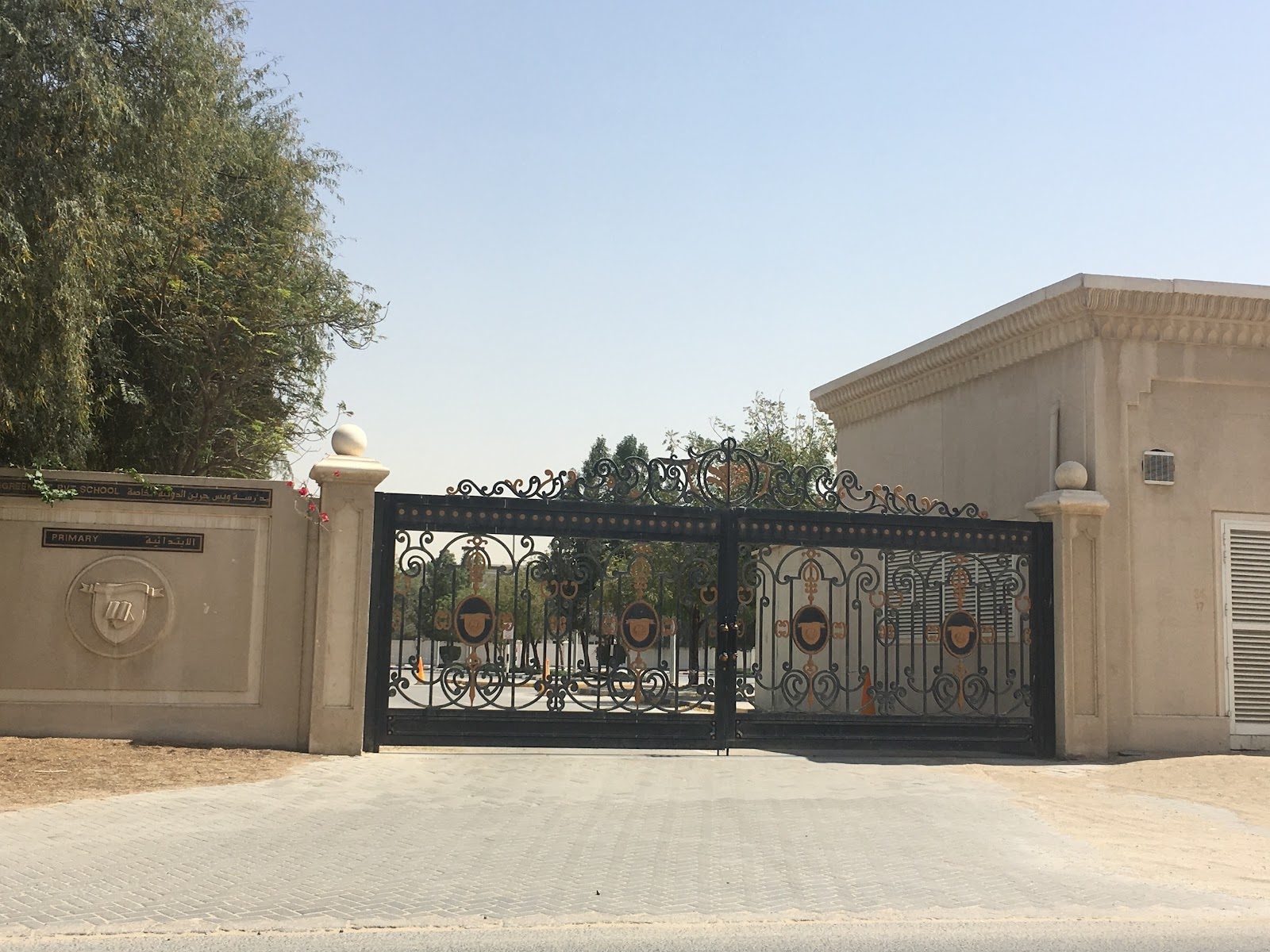
Photo © Ranjith Chemmad CHEMMADAN via Google Maps
Type
Day
Ages
3–18
Curriculum
British
Qualifications
IGCSE · A-Level
Ratio
—
The Verdict
Editor's commitment
Right for
Families in Sharjah wanting a British day school founded in 1991, with English teaching and separate boys' and girls' secondary campuses.
Wrong for
Parents who expect a polished digital front door: wesgreen.com is listed for sale, which undercuts confidence in a BSO-accredited school.
Watch out for
The average annual day fee is AED 32,961 across ages 3–18, but the school does not publish usable website information here beyond a dead domain.
Ranking breakdown
Wesgreen International School · # of 1591
Composite score 60.0. 8 weighted criteria.
By criterion
Academic Outcomes
Weight 20%
#959
of 1533 scored
University Placement
Weight 16%
#1015
of 1529 scored
Prestige & Heritage
Weight 12%
#1279
of 1580 scored
Alumni Network
Weight 12%
#991
of 1530 scored
Facilities
Weight 12%
#717
of 1540 scored
Transparency & Communications
Weight 8%
#553
of 1547 scored
Peer & Industry Review
Weight 10%
#1416
of 1564 scored
Admissions Selectivity & Demand
Weight 8%
#1467
of 1529 scored
Peer & Industry Review
How Wesgreen International School is regarded in the sector
58
Credible · medium confidence
Wesgreen International School holds a solid, if unspectacular, standing among Sharjah's British curriculum schools, anchored by GEMS Education's 2017 acquisition of what WhichSchoolAdvisor calls a historically selective institution founded by the Sharjah Royal Family. WhichSchoolAdvisor's independent review praises the school for making exam results public, unusual for the emirate, and notes its SPEA rating improved from Acceptable to Good between 2017-18 and 2022-23. SchoolsCompared tracks Wesgreen regularly in its UAE sector news, most recently reporting a 16 percentage point rise in A*-A grades among GEMS' 2025 A-level cohort, and quoting Principal James McDonald on term-time scheduling decisions. This is a credible, improving school with growing sector visibility rather than one yet cited among the region's top-tier benchmark institutions.
Editors' overview
The first thing a parent will notice is a problem: the school’s website is down, and the wesgreen.com domain is listed for sale. For any school, that is a serious credibility lapse. It matters more here because Wesgreen International School runs a full 3–18 operation in Sharjah, founded in 1991, under a British curriculum, and clear communication is not optional at that scale. When the front door is missing, parents lose a basic route to current information on leadership, academic results, university destinations and day-to-day school life. That opacity belongs in the assessment.
Set that aside, and Wesgreen occupies a distinct place in the Sharjah market. It is a day school with English as the language of instruction, it carries BSO accreditation, and it covers the full age range from nursery through sixth form. The editorial tagline also points to one of its defining structural features: separate boys’ and girls’ secondary campuses. That arrangement will suit families who want a British Cambridge-style education with clearer division in the senior years, and who prefer Sharjah to Dubai’s more inflated fee market. The average annual day fee across the full ladder is AED 32,961, which places Wesgreen in the value end of the international-school sector rather than the premium tier.
What is special about Wesgreen is not polish. It is reach, longevity and price. A school founded by Sharjah’s royal family in 1991 carries local standing; a British curriculum from age 3 to 18 offers continuity; and the fee level keeps it on the shortlist for parents who want an English-medium education without paying Dubai premiums. What parents do not get, at least publicly right now, is enough hard evidence on outcomes. The school does not publish that evidence on a working website, and that leaves a material gap in due diligence.
The right pupil for Wesgreen is not chasing boutique facilities or a high-gloss expatriate experience. This is a school for families who want a full British pathway, a Sharjah location, sex-segregated senior provision, and fees that stay within reach across thirteen school years. It suits students who do well in a more traditional, structured environment and families prepared to ask direct questions before enrolling. Until the school restores a functioning public presence, it stays on the shortlist as a practical, cost-conscious option rather than a transparent one.
Academic Performance
Academic performance is where the lack of a functioning public presence does the most damage. We have not seen published GCSE or A-level pass rates, top-grade distributions, average point scores, value-added data, or university destination lists. That leaves parents without the basic benchmarks needed to place Wesgreen against Sharjah’s stronger British schools or Dubai’s better-documented competitors. In a market where serious schools publish exam outcomes as routine, that silence is a real weakness. It blocks any claim to proven academic strength and forces families to rely on direct questioning rather than evidence in the public domain.
That does not make the school weak academically; it makes it opaque. Those are different problems, and parents should treat them differently. A lower-fee, long-established school can deliver solid results for a broad intake, but it still needs to show them. Until Wesgreen discloses cohort outcomes, subject-level performance and post-16 destinations, it sits in the value-driven but unverified tier rather than the academically visible one. Any family considering it should ask for the last 3 years of external examination results, grade breakdowns at the top end, and destination data for leavers. If the school can produce a consistent set of numbers, the picture sharpens quickly; without them, comparison with peers remains frustratingly incomplete.
Facilities
Facilities are the hardest area to assess because the school has no functioning public window onto them. We have not seen a current campus map, specialist-room list, theatre, pool, sports provision, lab inventory or photography that would let parents judge the estate properly. That alone puts Wesgreen behind better-run peers in Sharjah and Dubai, where even mid-market schools publish enough to show whether science, sport, performing arts and sixth-form study are adequately housed. Here, parents are left with an information vacuum. In practical terms, that means no public proof of whether facilities are merely serviceable or genuinely competitive.
What can be inferred from the school’s scale and structure is limited but useful. A full age-range operation spread across separate secondary provision for boys and girls needs science labs, computing rooms, libraries, indoor teaching space and outdoor sport at a baseline standard; without them, the model does not function. That is the minimum, not a distinction. Against peer schools at an average fee of AED 32,961, the benchmark is not luxury but breadth: decent specialist rooms, workable sports areas, and enough maintenance to keep a large daily operation running without visible fray. Wesgreen may clear that bar, but it does not publish the evidence. Until it does, facilities sit in the credible but unverified category rather than the clearly strong one.
We have not seen published GCSE or A-level pass rates, top-grade distributions, average point scores, value-added data, or university destination lists
Prestige
Prestige here rests on longevity, local roots and accessibility, not on elite signalling. This is not the Sharjah school parents cite for social cachet, glossy branding or hard-to-access selectivity. It serves a different function: a full British pathway at an average annual fee of AED 32,961, which places it in the mass-market end of the international sector. That matters. Schools at this price point can carry strong community trust and broad local recognition, but they do not command the aura of the emirate’s most aspirational names unless they back it with public outcomes, university placements and a confident public presence. Wesgreen does not do that. The absent website strips away one of the basic markers of institutional competence and leaves the school with a credibility problem that drags directly on prestige.
That is why the rating sits in the middle-to-lower range rather than at the top. Families may value the school’s royal-family origins and its long-standing place in the market; both confer local standing. But prestige in this sector is built on visible results, consistent communications and a reputation that travels beyond immediate community networks. Wesgreen does not publish the evidence that converts familiarity into status. The result is a school with practical standing rather than elite distinction: known, established and affordable, but not coveted. For parents who prize substance over polish, that may suffice. For parents buying status as well as schooling, it does not.
Any family considering it should ask for the last 3 years of external examination results, grade breakdowns at the top end, and destination data for leavers
Communications
Parent communication is where Wesgreen fails the first basic test. Its public website does not function; the domain is listed for sale at $11,995. That is not a minor technical lapse but a serious operational fault. For a school running a full age-range operation, the website is the default channel for term dates, leadership contacts, policies, exam information, transport details, complaints routes and admissions updates. Without it, parents cannot verify even routine facts independently. That forces communication into narrower, closed channels and leaves new families at a disadvantage from the outset. It also tells parents something unwelcome about administrative grip: if the front-facing platform has been allowed to collapse, confidence in the day-to-day discipline of communications drops with it.
Inside the parent body, the school may still rely on circulars, direct messaging, email lists or app-based notices; many schools do. But Wesgreen gives no public evidence of how those systems work, how quickly queries are handled, or whether policies and handbooks stay current. That makes effectiveness impossible to validate from the outside, and that in itself is a weakness. Good school communication is not just about sending notices; it is about traceability, clarity and trust. Wesgreen currently offers none of those in its public-facing communications. Parents considering the school need to test this hard in person: ask who answers queries, how absences are logged, where policies sit, and how academic reporting reaches home. Right now, communications look fragile rather than robust.
Uniqueness
What sets Wesgreen apart is not rarity in the abstract but a very specific operating model: a full through-school at a cost-conscious price point, with separate boys’ and girls’ secondary provision built into the structure. That combination is unusual in this segment of the market. Many lower-fee schools offer access; fewer offer that kind of organisational distinction across the senior years. For students, that can bring a clearer sense of stage and identity as they move up the school, with pastoral and academic routines shaped around a more defined secondary setting rather than a generic all-through format. Families who want continuity from the early years to sixth form, but do not want a high-status price tag, get that package here for an average annual fee of AED 32,961.
Its other point of difference is social rather than architectural. This is a school with deep local roots and broad reach, not a boutique import built around expatriate churn. That matters for children. Schools with that profile can offer a more grounded community, steadier parental expectations and less of the performative gloss that dominates parts of the international sector. The trade-off is plain: students gain accessibility and continuity, but not the shiny institutional theatre or public-facing confidence that stronger operators project. For the right child, that brings a school experience centred on routine, affordability and permanence rather than prestige.
In practical terms, that means no public proof of whether facilities are merely serviceable or genuinely competitive
Student Profile
The best fit here is the family that wants continuity, structure and cost control, and is prepared to do more of the verification work itself. This is not a school for parents who expect polished hand-holding, instant transparency or a slick expatriate package. It suits children who thrive in a straightforward, rule-bound setting and do not need a boutique culture built around individual curation. The separate senior provision will also matter: some families actively want that division in the secondary years, and some pupils settle better in it. Others will find it too traditional or too segmented. At an average annual fee of AED 32,961, the intake is bound to be broader than at Sharjah’s premium-priced schools, which usually means a less rarefied social mix and a more practical parental mindset.
The pupil who fits best is resilient, adaptable and happy to get on with school without much institutional theatre around them. This does not read as a place for the status-conscious child or for families buying a brand as much as an education. It fits better for households that value routine, community familiarity and a long runway through the school years, and that can tolerate public-facing disarray if day-to-day teaching and care are sound. Parents of very ambitious high-fliers need harder evidence before committing. Parents with grounded expectations, a firm budget and a taste for substance over gloss will find the proposition easier to accept.
That is why the rating sits in the middle-to-lower range rather than at the top
Co-curricular strengths
Arts & sport, on a separate axis
Overall 6.8/10
Scored 0-10 from the school's own published evidence. This axis is editorial-only — it does not feed the main WTS ranking.
Sports
8/10
Multiple sports—Football, Basketball, Cricket, Swimming, Athletics and Badminton—showing a solid multi-sport extracurricular offering.
Drama
6/10
Drama club is explicitly named in the extracurricular list, but there is no further detail on productions, facilities, staff or programme depth.
Dance
6.5/10
Music
6.5/10
School choir is explicitly named in the extracurricular list, but there is no further detail on ensembles, facilities, specialist staff or performances.
Visual Arts
7/10
Art club is explicitly named in the extracurricular list, but there is no further detail on studios, exhibitions, specialist staff or breadth of provision.
Editor first-pass · editor-reviewable · 7/27/2026
Official inspection · Sharjah
SPEA report · 2023/24
Official · SPEAInspectorate
Sharjah Private Education Authority
Sharjah's private-school regulator; Irtiqa'a six-standard framework.
Curriculum
British
Held vs previous cycle
Full report
SPEA private-school directoryRating history
Strengths
- +British curriculum (English National Curriculum through IGCSE and A Level)
- +Publishes GCSE and A-Level results through independent channels
- +All-through provision covering ages 3–18 on one campus
- +KHDA inspection rating of Good
- +Outstanding co-curricular sport (8.0)
- +Backed by GEMS Education, the UAE's largest school group
Considerations
- −Academic outcomes are solid rather than exceptional (2025 A-Level: 14% A*)
- −Overall parent satisfaction appears modest.
- −University destinations and cohort trends are not clearly published
Availability
Primary entry gate & tests
CAT4 / Assessment
Gallery
Photo © athul surendran via Google Maps
Photo © athul surendran via Google Maps
Recommended reading
Independent write-ups of this school from editorial outlets we trust.
- Wesgreen International School, SharjahWhichSchoolAdvisor
Parent reviews
Have you sent your child here?
Voice reviews carry the strongest trust badge — we transcribe them for you to tidy up before they go live. Prefer to type? A written review is fine too.
Add your voice
In 60 seconds, tell other parents: what's the best thing about Wesgreen International School, and what surprised you when your child joined?
We ask for a Google sign-in so every review has a real face behind it — no anonymous drive-by attacks on schools, and no faked positive reviews. Your email is never shown publicly.
Send this profile to a friend
International parents rely on word-of-mouth. Share this review with someone weighing the same decision.
Schools with places
Similar schools to Wesgreen International School with places available now.
Raffles International School
Dubai · United Arab Emirates
- 2026-27
- PLACES OPENApps open / space-dependent
- 2027-28
- WAITPOOL2027/28 timetable TBC
GEMS Royal Dubai School
Dubai · United Arab Emirates
- 2026-27
- PLACES OPENApps open / space-dependent
- 2027-28
- WAITPOOL2027/28 timetable TBC
South View School
Dubai · United Arab Emirates
- 2026-27
- PLACES OPENApps open / space-dependent
- 2027-28
- WAITPOOL2027/28 timetable TBC
Sunmarke School
Dubai · United Arab Emirates
- 2026-27
- PLACES OPENApps open / space-dependent
- 2027-28
- WAITPOOL2027/28 timetable TBC
Availability first, then country, area, curriculum, price, co-curricular
Consider also
Also worth looking at alongside Wesgreen International School.
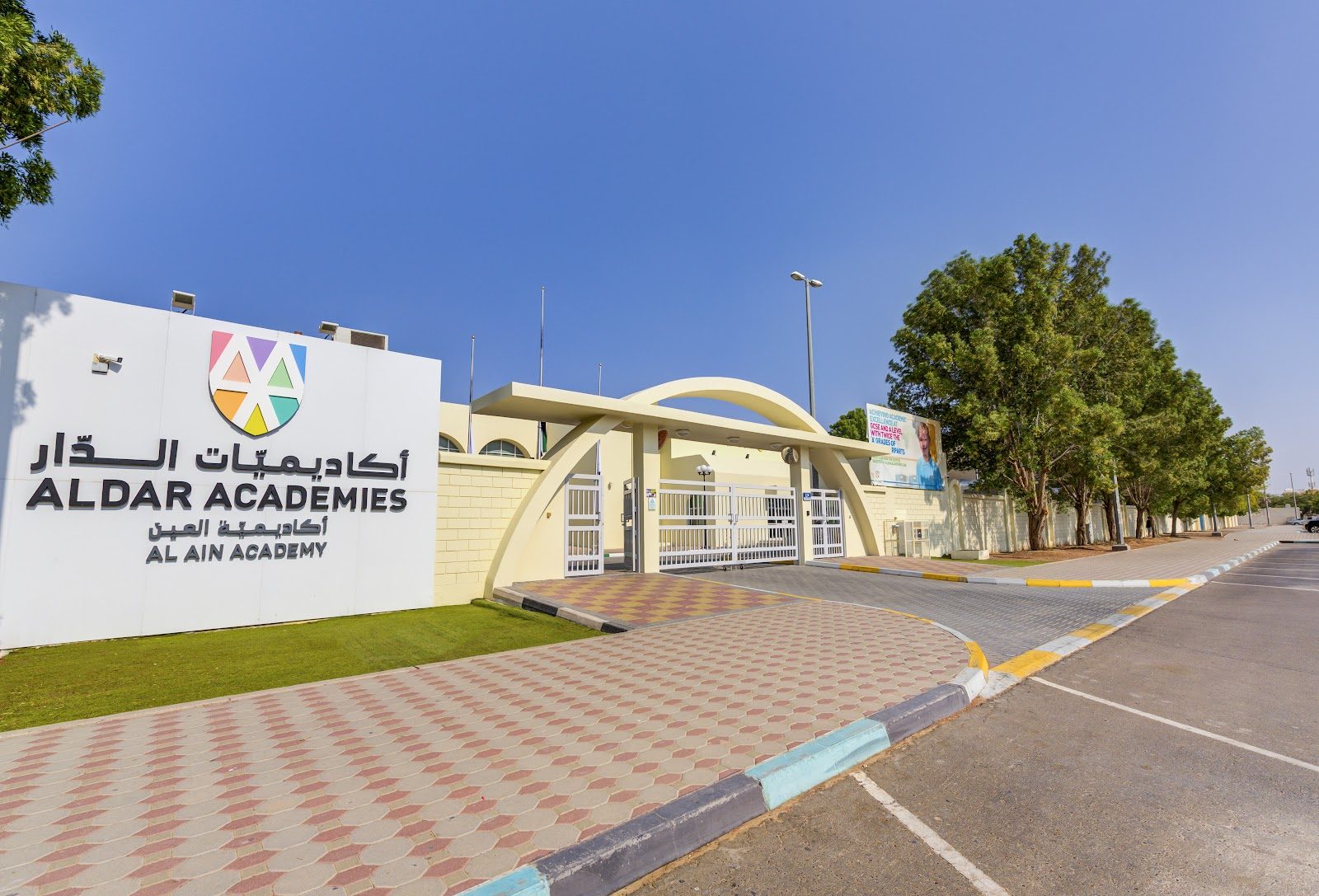
Aldar Academies at Al Ain
Al Ain · United Arab Emirates
The only Aldar campus in Al Ain, blending the English National Curriculum with Duke of Edinburgh awards and Microsoft Showcase status.
The Sheffield Private School
Sharjah · United Arab Emirates
On the Dubai-Sharjah border, Al Nahda's campus pairs affordable fees with a notably broad range of IGCSE and A-Level subjects.
Al Yasmina Academy
Abu Dhabi · United Arab Emirates
Tucked into Khalifa City's Al Raha Gardens, a STEAM-driven British curriculum has earned one of only nine ADEK Outstanding ratings city-wide.
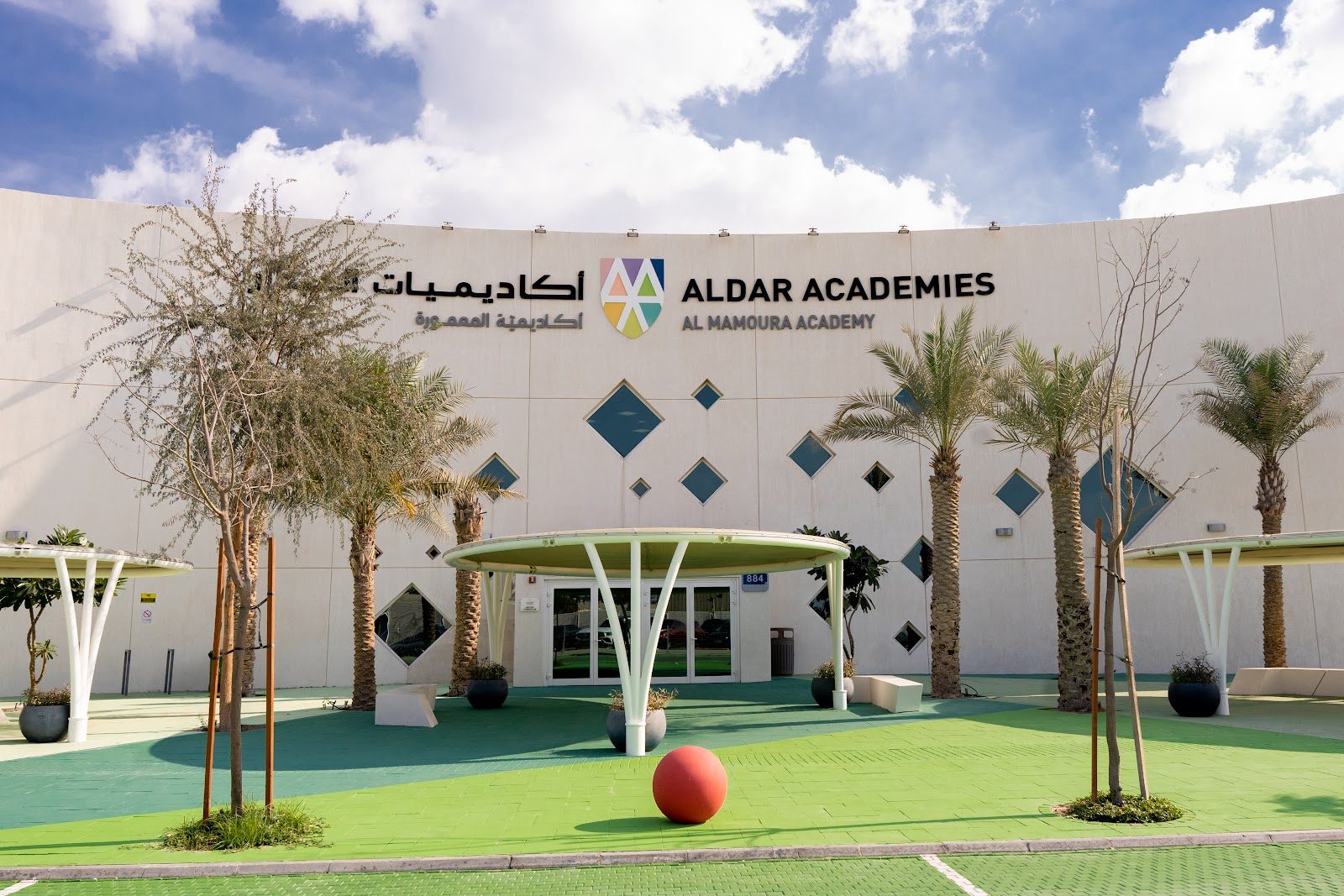
Al Mamoura Academy
Abu Dhabi · United Arab Emirates
Structured industry partnerships with the Louvre Abu Dhabi and Khalifa University run from nursery through sixth form.
Same country and curriculum — closest matches within ±10 points either way