
New York
Xavier High School (NYC)
low confidence· 1/6 cats · 3 avg sourcesIn Chelsea, a Jesuit boys' school pairs AP coursework with a JROTC regiment repeatedly named a Gold Star honor unit.
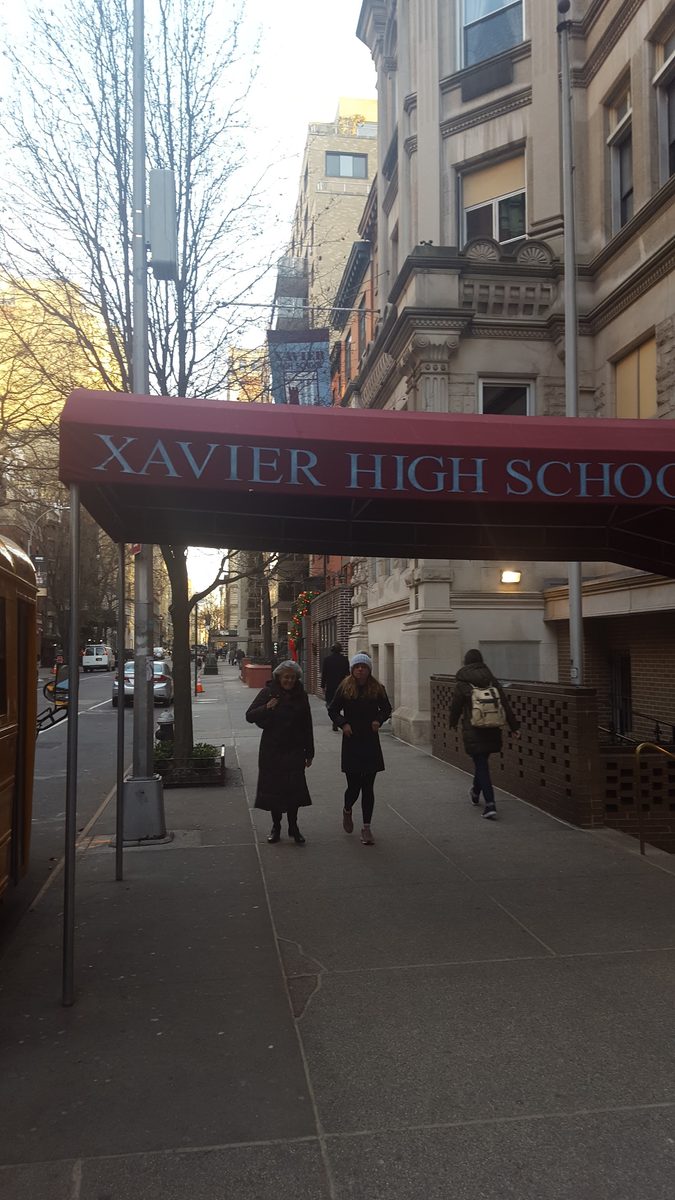
Photo © nick wargo via Google Maps
Type
Day
Ages
14–18
Curriculum
American (US High School Diploma) · AP (Advanced Placement)
Ratio
11:1
The Verdict
Editor's commitment
Right for
Boys who want a Catholic Jesuit education in Chelsea, AP options, 20-pupil classes and an 11:1 student-teacher ratio.
Wrong for
Girls, boarders and families wanting a secular or co-educational school; Xavier is a day-only Jesuit boys' school founded in 1847.
Watch out for
At an average $27,000 a year, Xavier undercuts many Manhattan independents, but NAIS accreditation tells you little about academic outcomes.
Ranking breakdown
Xavier High School (NYC) · #1037 of 1591
Composite score 61.6. 8 weighted criteria.
By criterion
Academic Outcomes
Weight 20%
#586
of 1529 scored
University Placement
Weight 16%
#584
of 1529 scored
Prestige & Heritage
Weight 12%
#446
of 1571 scored
Alumni Network
Weight 12%
#1455
of 1530 scored
Facilities
Weight 12%
#732
of 1533 scored
Transparency & Communications
Weight 8%
#594
of 1532 scored
Peer & Industry Review
Weight 10%
#604
of 1548 scored
Admissions Selectivity & Demand
Weight 8%
#607
of 1529 scored
Peer & Industry Review
How Xavier High School (NYC) is regarded in the sector
68
Respected · medium confidence
Xavier High School, a Jesuit all-boys military prep school in Manhattan, has a solid regional reputation reinforced by consistent coverage in Niche.com's Catholic/Jesuit school rankings and mentions in NYC private school guides (e.g., Insideschools.org) as a respected college-prep option with a strong Jesuit network. Its notable alumni network (including figures in law, media, and public service) is referenced in press profiles, though it lacks the broader national 'best schools' recognition seen with elite non-religious NYC prep schools like Trinity or Dalton.
Evidence sources
- Vince Lombardi — NFL Head Coach, Sports
- Hamilton Fish III — U.S. Congressman, Politics
- Frank McCourt — Author, Literature
Editors' overview
Xavier High School occupies a rare niche in New York: a Catholic Jesuit boys’ school in Chelsea with real institutional age, a clear religious identity and a disciplined, urban, no-frills sense of purpose. Founded in 1847, it is not trading on novelty. It offers an American high school diploma with AP courses, teaches in English, and runs as a day school for boys aged 14 to 18. The average annual fee across the full high-school ladder is $27,000. In Manhattan terms, that places Xavier in a serious-fee bracket, but not the stratosphere occupied by the city’s most expensive independents. The student-teacher ratio of 11:1 and average class size of 20 point to access to teachers that many large Catholic schools do not manage.
What marks Xavier out is the combination of Jesuit formation, masculine institutional culture and a long-standing military strand through its JROTC regiment, which the school has tied closely to its identity. That mix is unusual, and parents need to be clear-eyed about it. This is not a loose, lifestyle version of Catholic education. The school’s own language stresses service, moral formation, resilience and care for the whole person. For the right boy, that produces a strong sense of belonging, adult expectations and a serious moral framework. For the wrong boy, it will feel constraining. Xavier suits students who do well with structure, who can handle a clearly defined code, and who want school to ask something of their character as well as their intellect.
Academically, the attraction is not novelty but solidity: AP coursework inside a school with a long alumni network and a stable sense of mission. The published ratio of 11:1 matters here; so does the fact that Xavier remains a focused 14–18 school rather than a sprawling all-through institution. Its market position is clear. Xavier is for families who want disciplined ambition without the cultural looseness of many secular independents, and without the scale and unevenness that can weaken big diocesan options. It belongs on a shortlist for parents seeking high-accountability schooling, a Catholic frame that still takes academics seriously, and a boys’ environment where tradition is not decorative but operational.
Academic Performance
Xavier does not publish the exam data that would let parents place it cleanly against New York’s stronger independent schools. We have not seen aggregate AP score distributions, subject-by-subject pass rates, mean SAT or ACT results, National Merit counts, or college-matriculation breakdowns by selectivity. That is a real gap. In a market where academically ambitious schools use outcomes data to prove their case, Xavier asks families to trust institutional reputation, classroom culture and alumni loyalty instead. For some parents, that will read as old-school confidence; for others, as unhelpful opacity.
That does not make the academic picture weak. It makes it hard to verify. The school’s structure points to a serious, tightly run sixth-form equivalent, with manageable class sizes and a staffing ratio that supports oversight. The AP offering signals access to external benchmarked courses, but without published score data, there is no basis for calling Xavier an exam powerhouse alongside the city’s most transparently academic independents. Relative to peers, Xavier fits best in the camp of mission-driven, disciplined schools where formation and institutional culture carry as much weight as measurable output. Parents who want hard performance evidence need to ask directly for AP results, SAT/ACT ranges and recent university destinations before treating Xavier as a top-tier academic bet.
Facilities
Xavier’s facilities matter less for spectacle than for fit. This is an urban, street-front school in Chelsea, not a country estate or a glassy campus built to impress on tour. Parents comparing it with New York’s wealthiest independents need to calibrate expectations: Xavier does not compete on acreage, architectural drama or leisure-heavy amenities. It competes on functional density, institutional discipline and the fact that boys work in a compact setting where movement, supervision and school culture stay tight and deliberate. The military strand also shapes the physical life of the school in a way few peers can match. A JROTC regiment repeatedly recognised as a Gold Star honour unit is not an ornamental add-on; it implies drill space, storage, routines and a visible ceremonial presence that give the campus a distinctive, regimented character.
Against peer Catholic boys’ schools and mid-priced Manhattan independents, that profile holds up well if a family values seriousness over shine. What we have not seen is a published facilities case strong enough to place Xavier among the city’s best-resourced schools for science, performing arts or sports. That silence matters. Families with a boy who needs elite studio, theatre or athletics infrastructure should ask hard questions and visit with a cold eye. For students who thrive in a no-frills, high-accountability environment, Xavier’s premises fit the mission. For those wanting expansive grounds and showpiece amenities, they do not.
In a crowded city market, that combination gives Xavier a distinctive civic profile
Prestige
Xavier carries real local prestige, but it is a specific kind of prestige rather than the universal social cachet attached to New York’s most gilded independents. Its standing rests on three things: institutional age, a durable Jesuit identity, and a disciplined old-boys network that has produced visible public figures across law, politics, business and writing. In a crowded city market, that combination gives Xavier a distinctive civic profile. It does not trade on progressive fashion, glossy facilities rhetoric or international-brand sheen. It trades on seriousness, continuity and the claim that boys leave with habits of service and self-command. The fee level, at an average of $27,000, also matters here: expensive enough to signal commitment, but still below the level where prestige is simply purchased through scarcity pricing.
Why not rate it at the absolute top? Because Xavier’s prestige is powerful but bounded. It is strongest among Catholic families, Jesuit-school circles, alumni networks and New Yorkers who value institutional grit over polish. The military strand sharpens that identity further: for some families it adds rare distinction; for others it narrows appeal. Academic prestige also stops short of the city’s most formidable exam-driven names because the school does not publish the outcome data that elite peers use to reinforce reputation. So the verdict is clear: Xavier offers high-trust, tradition-heavy prestige with genuine ballast, not the broad, undisputed metropolitan dominance of the very top tier.
That weakens trust at the point where communication stops being about ethos and starts being about proof
Communications
Xavier communicates with parents in the same key it uses with students: formal, mission-led and institution-first. The public voice is confident, ceremonial and saturated with Jesuit language about formation, service and duty. That has strengths. Parents do not need to decode what the school stands for; the message is clear-edged, old-school and unmistakably values-driven. The tone also fits a school with a strong alumni culture and a visible chain of authority. Nothing in the school’s presentation reads casual or child-centred. For families who want warmth packaged as constant reassurance, that will feel austere. For families who value clarity, hierarchy and adult seriousness, it will feel efficient.
Effectiveness depends on what a parent needs from communication. As a statement of identity, Xavier is highly disciplined and strong. As a practical information service, the picture is less convincing. We have not seen the kind of hard academic disclosure that ambitious parents now expect: no published aggregate AP outcomes, no standardised-test summary, no detailed university-results table. That weakens trust at the point where communication stops being about ethos and starts being about proof. The school also frames itself through long institutional memory and loyalty, which can strengthen belonging but also encourage a closed-circle feel for newcomers. In plain terms: Xavier communicates culture very well; it communicates performance less well. Parents who are comfortable with that trade-off will cope. Others will need to ask more questions than they should.
Uniqueness
What makes Xavier distinctive is not any single feature but the way its elements lock together: a Jesuit boys’ education, an explicitly formative mission, and a cadet regiment that gives discipline a daily public form. Many schools talk about character. Xavier builds it into ritual, hierarchy, dress, service and expectation. The school’s own language centres care for the whole person, but this is not soft-focus pastoral branding. At Xavier, care sits beside command. The result is a high-structure adolescent culture that asks boys to carry themselves with more restraint, punctuality and self-possession than most urban day schools demand. The JROTC strand matters here. A regiment repeatedly recognised as a Gold Star honour unit is a rare institutional signature, and it gives the school a ceremonial seriousness few peers can match.
For students, that brings clear gains and clear limits. Boys who need firm edges, visible standards and belonging through shared identity can do very well here. The school offers a coherent model of manhood rooted in service, duty and moral purpose rather than adolescent drift. In a city where many schools fragment into subcultures, Xavier supplies one culture and expects boys to join it. That can be powerfully stabilising. It can also feel rigid to a student who wants room for experimentation, looser social codes or a less prescriptive version of faith and masculinity. Xavier’s uniqueness, then, lies in its refusal to dilute itself. For the right family, that is the draw.
Xavier’s uniqueness, then, lies in its refusal to dilute itself
Student Profile
The boy who fits Xavier is not searching for an open-ended adolescence. He can take correction, live with rules and function inside a culture where authority is visible rather than disguised. He does not need endless pastoral hand-holding, but he does need adults who keep a close watch; the low staffing ratio of 11:1 and classes of 20 support that kind of oversight. He is comfortable in an all-boys environment with a pronounced Catholic frame and a public code of conduct. He may enjoy ceremony, team identity and the sharpened sense of belonging that comes from shared routines. Boys who like clear standards, steady pressure and a high-accountability atmosphere will find traction here. Boys who bristle at hierarchy, resist uniform expectations or want school to feel socially loose will not.
This is also a school for families who value formation as much as credentials. Xavier suits students with a service instinct, a tolerance for structure and a willingness to be shaped, not merely taught. The JROTC presence strengthens that profile. For some boys, it adds rare focus, public discipline and pride in collective effort; for others, it feels too regimented. The school’s culture rewards consistency more than self-display. Parents considering Xavier need to ask a blunt question: does their son want freedom from adult demands, or does he grow under them? At Xavier, the second type does well. The first will chafe.
It offers an American high school diploma with AP courses, teaches in English, and runs as a day school for boys aged 14 to 18
Co-curricular strengths
Arts & sport, on a separate axis
Overall 8.28/10
Scored 0-10 from the school's own published evidence. This axis is editorial-only — it does not feed the main WTS ranking.
Sports
9.5/10
Families expecting extensive playing fields or a purpose-built athletics complex may be disappointed, but it does not actually describe Xavier's sports programme, teams, or facilities in enough detail to score responsibly.
Drama
9/10
Dance
4.5/10
Music
9.2/10
Visual Arts
9.2/10
Editor first-pass · editor-reviewable · 8/2/2026
Notable alumni · Wikidata
11notable alumni
Includes
3 historic (born pre-1930) · 1 modern (born post-1970)manual-editorial:2026-08-02 How we source this
Strengths
- +Founded in 1847, Xavier is one of four Jesuit high schools in New York City, giving it a long-established Catholic college-preparatory tradition.
- +The school offers 123 courses including 18 AP classes, with an 11:1 student-faculty ratio and 81% of faculty holding advanced degrees.
- +Extracurricular breadth is wide, with 20 varsity sports and 65 clubs and activities, plus a historic JROTC regiment dating back more than 125 years.
- +Financial support is substantial: about 40% of students receive aid, with an average award of $11,288 alongside separate merit scholarships.
- +Location in Union Square/Chelsea gives easy access via multiple subway lines and the PATH train, drawing students from all five boroughs and surrounding counties.
Considerations
- −Xavier is a single-sex, boys-only school, which rules it out for families wanting coeducation.
- −Tuition is set at $27,915 for 2026-27 plus a $350 registration fee, with additional costs for books and sports team fees.
- −The average student commute is 55 minutes, reflecting a wide catchment area across NYC boroughs, New Jersey, and nearby counties rather than a neighborhood-based intake.
- −Admission requires the TACHS entrance exam and an essay, and unlike its more famous Jesuit neighbor Regis High School (which is tuition-free), Xavier charges full tuition to most families.
Availability
Primary entry gate & tests
HSPT + Interview (Boys)
Gallery
Photo © ann m via Google Maps
Photo © Jacob Laslo via Google Maps
Photo © udacha11691@yahoo.com via Google Maps
Parent reviews
Have you sent your child here?
Voice reviews carry the strongest trust badge — we transcribe them for you to tidy up before they go live. Prefer to type? A written review is fine too.
Add your voice
In 60 seconds, tell other parents: what's the best thing about Xavier High School (NYC), and what surprised you when your child joined?
We ask for a Google sign-in so every review has a real face behind it — no anonymous drive-by attacks on schools, and no faked positive reviews. Your email is never shown publicly.
Send this profile to a friend
International parents rely on word-of-mouth. Share this review with someone weighing the same decision.
Schools with places
Similar schools to Xavier High School (NYC) with places available now.
Marymount School of New York
New York City · United States
- 2026-27
- CLOSEDConfirmed full
- 2027-28
- PLACES OPENApplications opened 1 Aug '26
Poly Prep Country Day School
Brooklyn · United States
- 2026-27
- CLOSEDRegular cycle closed
- 2027-28
- OPENS SOONOpens Sept '26
The Browning School
New York City · United States
- 2026-27
- CLOSEDConfirmed full
- 2027-28
- OPENS SOONOpens 25 Aug '26; appointments from 8 Sep
The Buckley School
New York City · United States
- 2026-27
- CLOSEDConfirmed full
- 2027-28
- OPENS SOONOpens post-Labor Day '26
Availability first, then country, area, curriculum, price, co-curricular
Consider also
Also worth looking at alongside Xavier High School (NYC).
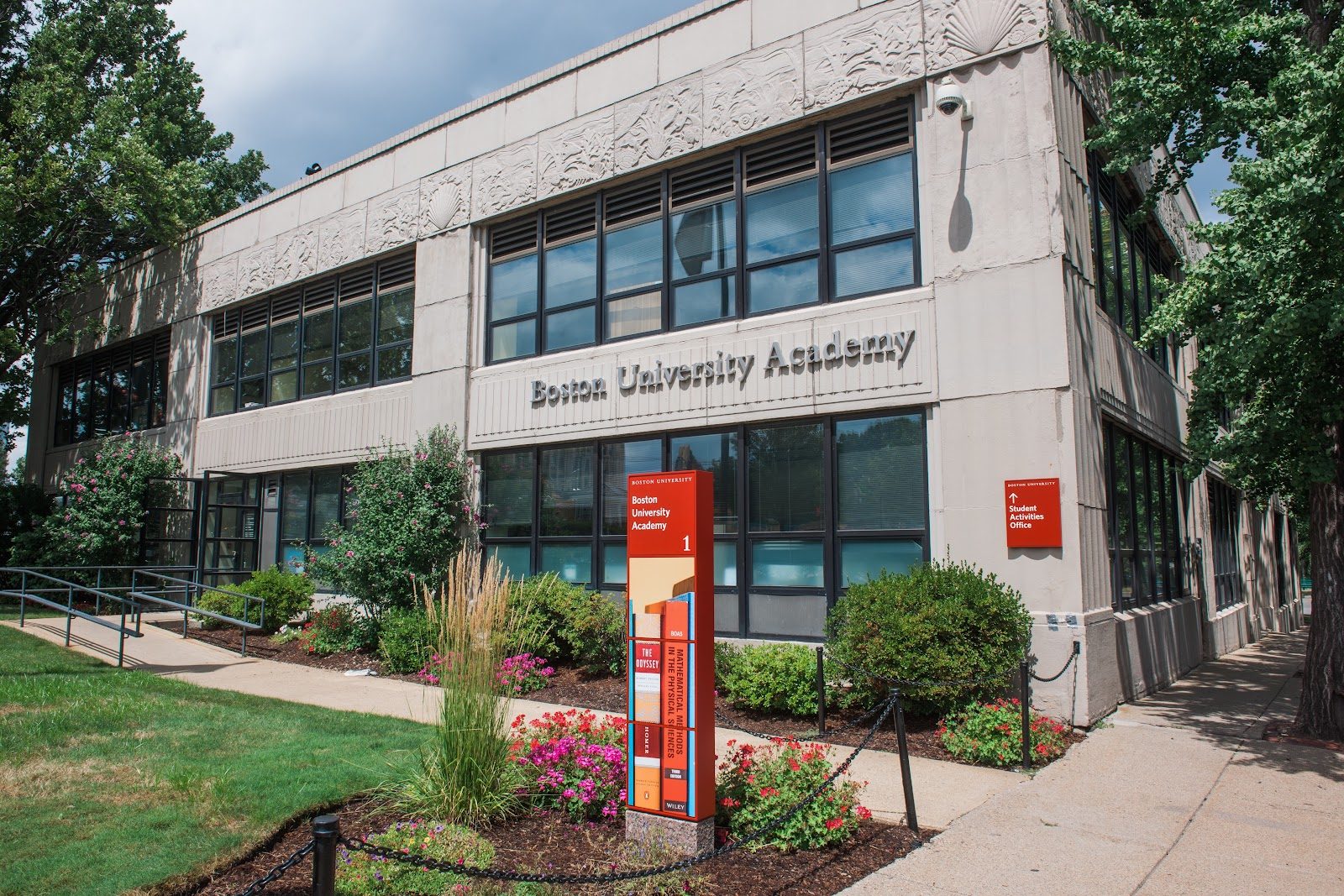
Boston University Academy
Boston · United States
Upperclassmen trade study halls for Boston University lecture halls, banking college credit before graduation.
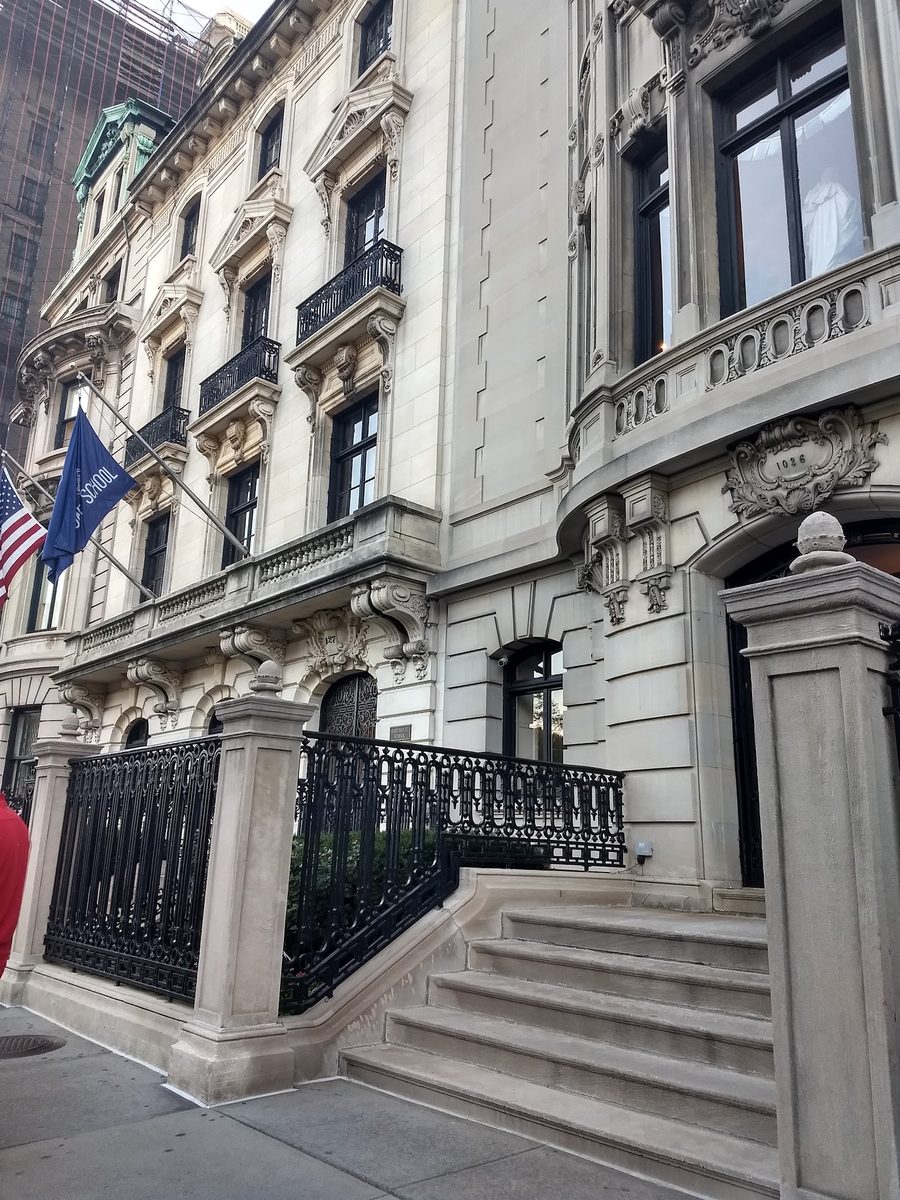
Marymount School of New York
New York City · United States
On Fifth Avenue, landmark mansions give way to Bloomberg terminals and classrooms inside the Met.
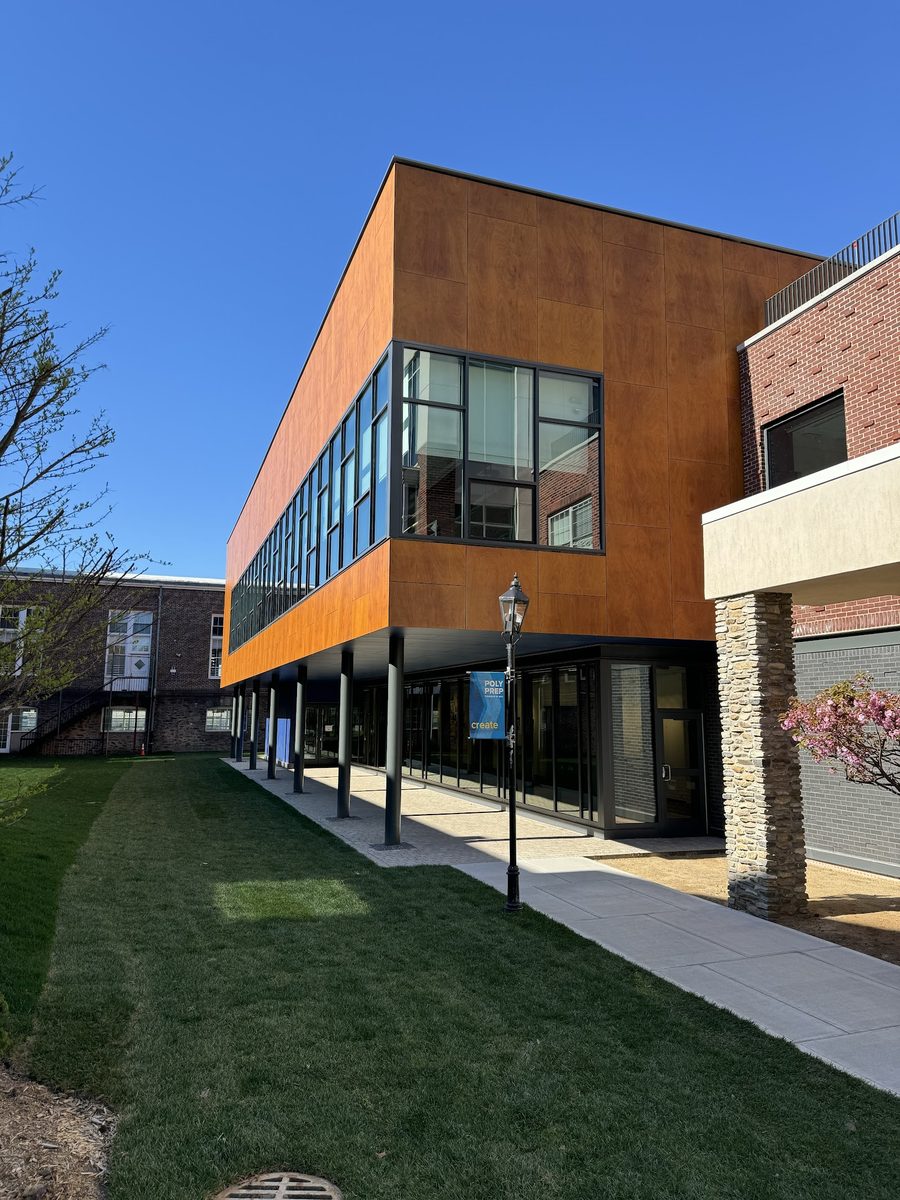
Poly Prep Country Day School
Brooklyn · United States
Founded in 1854 as Brooklyn's first boys' school, this day school pairs a Prospect Park mansion with a 25-acre Dyker Heights campus.

Germantown Friends School
Philadelphia · United States
Rooted in an 1845 Quaker meeting in historic Germantown, where juniors design a month-long independent study of their own.
Same country and curriculum — closest matches within ±10 points either way