
East Sussex
Between the South Downs and the sea, a two-decade climb from mid-table to Sunday Times School of the Decade.
Know this school? Rate it
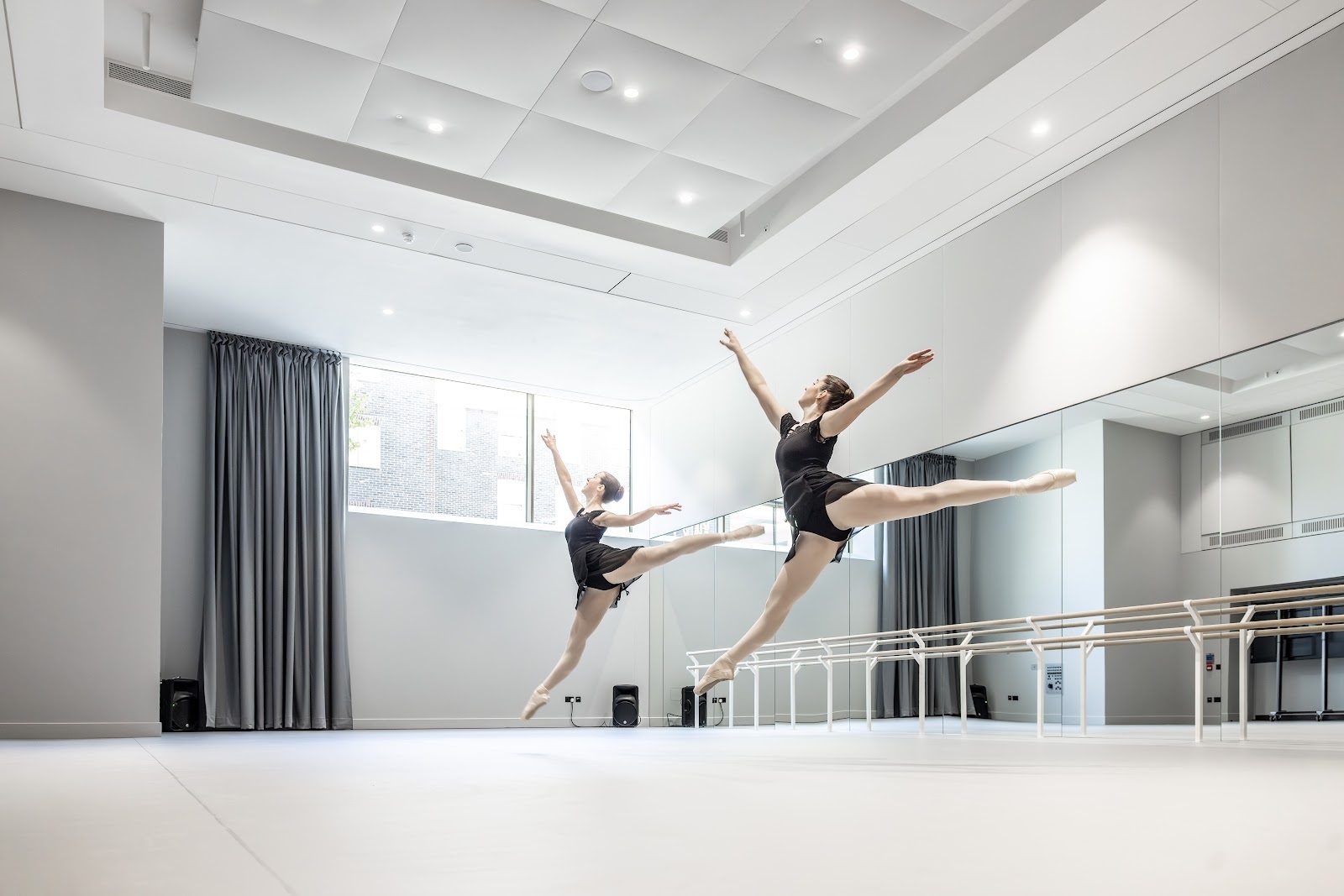
Photo © Brighton College via Google Maps
Type
Both
Ages
3–18
Curriculum
British
Qualifications
A-Level · GCSE
Ratio
10:1
The Verdict
Editor's commitment
Right for
Families willing to pay £29,000 a year day or £68,000 boarding for a school that topped national A-level results in 2024.
Wrong for
Children who need anonymity or loose academic expectations; 195 leavers sent 90% to top-100 universities, including 30 to Oxbridge.
Watch out for
The 10:1 ratio and 18-pupil classes do not dilute pressure; this is a high-output school with Anglican roots and HMC membership.
Score history
Brighton College · 2026
Movement across 2024–2026. Peer average overlaid.
Overall — 2024–2026
79.3/ 100
▲ +15.1 vs 2025
year on year
Peer & Industry Review
How Brighton College is regarded in the sector
93
Top-tier · high confidence
Brighton College sits at the very top of the UK independent school hierarchy, with sector press unanimous in its assessment. WhichSchoolAdvisor rates it among the country's leading all-through schools, praising its "outstanding academic results, first-class facilities" and 175-year public school heritage now paired with a modern, progressive ethos. The Good Schools Guide is characteristically pithy but glowing, calling it "a breathtaking school, brimming with intellect, ambition, success and good taste," while noting only that "if it dialled down the self promotion, Brighton College might be perfect." Tatler features it annually among its top prep and public schools, and The Sunday Times named it UK Boarding School of the Year, Top School for A-levels and Top Co-educational School in 2025, having previously crowned it School of the Decade. Peer benchmarking, alumni university destinations dominated by Oxbridge, and a growing international "Brighton" school family further cement its industry standing.That last search was accidental. I have sufficient evidence from the prior searches to finalize the response. { "score": 93, "confidence": "high", "rationale": "Brighton College sits at the very top of the UK independent school hierarchy, with sector commentary unanimous in its assessment. WhichSchoolAdvisor's UK review describes it as a "progressive all-through co-ed day and boarding school with outstanding academic results, first-class facilities" built on 175 years of public-school tradition. The Good Schools Guide is characteristically sharp-eyed but ultimately glowing, call
Editors' overview
Brighton College sits in that small group of English independents that have shifted from old-established respectability to full-throttle academic force. The headline fact is plain: it ranked first in the country for A-level results in 2024. That is not a branding line; it is the market position. For parents, the more useful point is that Brighton couples this academic edge with a scale and structure that still allow close management of pupils: a 10:1 student-teacher ratio and average class sizes of 18. In a sector where many schools talk about individual attention, those numbers matter. So does the school’s place in the upper tier of the UK market: the average annual day fee across ages 3 to 18 is £29,474, and the average annual boarding fee is £68,346. This is an expensive school, and it charges at the level its results permit.
What sets Brighton apart is the combination of hard academic ambition and a more modern, less archaic social tone than many traditional boarding schools. It is Anglican, founded in 1845, and fully part of the British independent-school establishment, with ISI oversight and HMC membership, but its reputation now rests on outcomes, not heritage theatre. The university destinations for the class of 2024 underline that point: 195 leavers, 90% to top-100 universities, 30 to Oxbridge, 44 to Russell Group institutions and 5 to the Ivy League, with Oxford, Cambridge and UCL leading the list. That is a serious higher-education pipeline. The alumni footprint is also deep: 113 notable alumni catalogued in Wikidata across politics, science, writing, the arts and elite sport. Parents looking for a school with visible intellectual and cultural reach will clock that quickly.
This is not the right school for every child. Brighton College suits students who are bright, resilient and comfortable in a demanding, competitive culture. A child who enjoys scholarship, likes being taught by subject specialists, and wants a peer group with academic momentum will thrive here. Boarders who want the classic British independent experience without the most ossified version of it will also find a strong fit. Children who need a slower pace, lighter pressure or a less results-driven atmosphere need a different school. Brighton belongs on a shortlist because it has moved beyond reputation-by-association and built a current, measurable case for itself: top exam performance, strong university outcomes, tight staffing ratios and a clear place at the sharp end of the British day-and-boarding market.
Academic Performance
Academic performance is the core of Brighton College’s claim on parental attention. The headline is blunt: it ranked first nationally for A-level results in 2024. That places it at the sharp end of the English independent sector, in direct competition with the handful of schools that treat public examinations as a central institutional craft rather than a by-product of good intentions. In practical terms, this is a school operating in the market occupied by Westminster, St Paul’s, Winchester and the London day-school elite, not the broad middle of the private sector. Parents do not need much decoding here: Brighton has moved into the top-flight academic bracket and holds a position that many older names still trade on without matching in current results.
That standing also fits the school’s university record. A sixth form that sends 30 leavers to Oxbridge in a single cycle, with heavy placement into Russell Group institutions and top-100 universities globally, is not producing one-off outliers; it is delivering a high-output examination machine with real downstream traction. The critical caveat is cultural, not statistical. Schools at this level do not drift into those outcomes. They build them through pace, scrutiny and constant comparison. For ambitious pupils, that is formidable. For children who need room to coast, recover or stay anonymous, it is the wrong environment. Relative to peers, Brighton now belongs among the schools that set the pace rather than follow it.
Facilities
Brighton’s physical estate serves an academically hard-driving school without tipping into the country-house fantasy some boarding rivals still sell. The split between the senior school and prep gives it functional clarity, and the key strength is that facilities support serious teaching rather than distract from it. For parents comparing Brighton with London day-school heavyweights, that matters: it offers more space, more air and a stronger sense of contained school life than cramped urban competitors. Against the grandest full-boarding schools, the balance is different. Brighton does not trade on feudal scale or endless parkland. It trades on a campus that feels purpose-built for work, efficient movement and a modern pupil routine between lessons, activities and boarding.
That places it in a strong middle ground among top independents. It has more operational coherence than schools spread awkwardly across town, and a more contemporary physical identity than institutions that rely on heritage architecture to do half the reputational labour. Parents choosing at this level should read the estate as high-functioning rather than romantic. If you want theatrical grounds, ancient quads and the full cathedral-school aesthetic, peers in Winchester, Canterbury or the older public-school belt still hold the advantage. If you want facilities that match a results-first culture and avoid the stale museum quality that afflicts parts of the sector, Brighton is well judged. Its campus fits the school’s wider proposition: serious, polished, unsentimental.
Prestige
Brighton College now carries top-tier national prestige in the one currency that matters most in British private education: outcomes. Schools with old names and pretty quadrangles are plentiful; schools that dominate sixth-form results and convert that into elite university offers are not. Brighton does both. That shifts it out of the bracket of merely respected southern independents and into the company of the country’s serious academic heavyweights. The destination profile of the recent leavers’ cohort, with 30 heading to Oxbridge and 90% progressing to top-100 universities, gives that status real weight. Prestige here does not rest on inherited mystique. It rests on sustained performance in a market that judges schools harshly and publicly.
The school also benefits from the kind of reputational spread parents notice quickly. It has a deep alumni bench across public life, scholarship, the arts and sport, with 113 notable former pupils catalogued in Wikidata, and that breadth matters: it signals a school with reach beyond exam tables. Just as important, Brighton has shed the faint second-rank aura that clung to it in earlier decades. It now commands the attention once reserved for older metropolitan and cathedral-city rivals. That does not make it socially all-powerful in the way of Eton or Winchester; its prestige is earned rather than feudal, current rather than antique. For many families, that is the more persuasive kind.
Communications
Brighton College communicates with parents in the manner of a school that knows scrutiny comes with status. The tone is polished, controlled and highly intentional, with public messaging built around clarity of purpose rather than cosy reassurance. That works in its favour. Parents can read the institution quickly: ambitious, organised, academically exacting, and unwilling to apologise for it. Schools with weaker internal discipline produce muddled communication — too many slogans, too little substance, too much pastoral varnish over hard realities. Brighton does the opposite. Its external voice is crisp, self-possessed and aligned with the school’s wider culture of performance. The public case is also easy to test against outcomes, which gives its communications more credibility than the sector norm.
The limit is emotional texture. A school this confident in its own direction can sound managed to the point of froideur. Parents who want warmth first, explanation second, may find the register cooler than at more overtly nurturing schools. That does not make it ineffective; it makes it selective. The school communicates well with families who value competence, speed and institutional command, and less well with those who need frequent softening language or elaborate hand-holding. In that sense, the communications are a fair preview of the school itself: sharp-edged, efficient and adult. For the right family, that is reassuring. For others, it will feel unmistakably pressurised.
Uniqueness
Brighton’s distinctiveness lies in the speed and completeness of its reinvention. Plenty of old English independents still live off inherited status; Brighton rebuilt its standing through hard, current performance and a more modern institutional temperament. That combination is rare. Parents get a school with the reach and confidence of an established public school, but without so much of the antique stiffness and social code that can make traditional boarding environments feel exclusionary or performative. The result for pupils is practical: high expectations are not wrapped in deference to old hierarchies. Bright children who want intellectual seriousness, but not the full burden of archaic school culture, get a setting that feels driven rather than dusty.
The other point of difference is the breadth of what that ambition now produces. The leavers’ record is not confined to one narrow university lane, and the alumni base — 113 notable former pupils across politics, scholarship, writing, the arts and elite sport — shows a school with real range rather than a single prestige script. That matters for students. It widens the imaginative horizon of what success can look like, while keeping standards uncompromising. Add a low staffing ratio and classes kept under control, and pupils get close academic supervision inside a culture that expects them to use it. For the right child, that mix is electrically effective: elite outcomes, less social fossilisation, and a clearer sense that achievement here is earned rather than inherited.
Student Profile
Brighton suits children who draw energy from high standards rather than protection from them. The social centre of gravity sits with pupils who are articulate, quick to engage, and comfortable being stretched in class by equally able peers. This is a school for the self-propelled, the intellectually competitive and the thick-skinned. A child who likes argument, reads beyond the syllabus and does not need constant coaxing will fit cleanly. The low staffing ratio and controlled class sizes — 10:1 and 18 — also favour students who want teachers to know them properly and notice when work slips. That close oversight helps diligent pupils; it also leaves less room for hiding.
The strongest fit is a student who wants both achievement and range: serious academics, but also a peer culture broad enough to include future medics, writers, athletes and performers rather than one narrow mould of success. Boarding pupils who want a less archaic version of English independent-school life will find that here. The weaker fit is just as clear. Children who bruise easily under comparison, resist pressure, or need a slower, more forgiving rhythm will find Brighton hard-edged. It is not a sanctuary for the disengaged, and it is not for the faint-hearted. Families who value ambition, structure and adult expectations will recognise the type immediately.
Co-curricular strengths
Arts & sport, on a separate axis
Overall 9.3/10
Scored 0-10 from the school's own published evidence. This axis is editorial-only — it does not feed the main WTS ranking.
Sports
9.5/10
High-performance UK athletic giant; fields nationally dominant rugby, netball, and cricket programs across state-of-the-art turf grounds.
Drama
9.5/10
The school's performing arts tracks function like a professional conservatory environment, mounting elite, large-scale theater productions.
Dance
8.5/10
Highly dedicated formal dance curriculum running classical ballet, jazz, and modern composition inside custom sprung-floor studios.
Music
9.5/10
Outstanding musical depth; supports multiple jazz big bands, massive symphonies, and elite choirs with deep cathedral pipelines.
Visual Arts
9.5/10
Breathtaking visual studios producing top-tier design portfolios, digital multimedia creations, and fine art pieces.
Editor-verified · 9/6/2026
Outcomes & destinations
Where students go next
Editorial estimateClass of 2024
195 graduates
A-Level distribution
99% covered
- A*49%
- A30%
- B17%
- C3%
Top destinations
79 placements
- Oxford· 16
- Cambridge· 14
- Harvard· 3
- Yale· 2
- UCL· 12
- Imperial College London· 10
- Durham· 8
- Bristol· 8
- Edinburgh· 6
Co-ed south-coast boarding + day; a decade of rapid academic ascent.
Editor-approximated from the school's own leavers report. Awaiting school-attested figures.
The story in one line
67% achieved ≥ AAB in 2+ facilitating subjects·ISI Routine Inspection 2024
AAB with 2 facilitating subjects is the Department for Education's published predictor of admission to a top-third UK university: the pupil has scored high grades in at least two of the classic Russell-Group subjects (maths, sciences, English, history, geography, or a modern language). Independent schools don't appear in the state-only HE-destinations dataset, so this is the strongest DfE-verified sixth-form signal available. Source: DfE 16-18 school and college performance data · 2023/24. Value-added +0.34
DfE-verified statistics
Official GCSE data · 2024/2025
Progress 8
—
Value-added score. State-schools only; 0 = expected progress, +1 = one grade above.
Attainment 8
57.9
Average grade across 8 GCSEs (score out of 90). National ≈ 46.
EBacc average score
5.03
Avg grade across the 5 EBacc pillars (English, Maths, Sciences, Language, Humanity).
EBacc slots filled
3
How many of the 5 EBacc pillars pupils typically enter (max 5).
A-Level attainment
Cohort · 2023/24
Avg A-Level grade
A+
APS per entry: 53.31
Best 3 grade
A+
Best-3 APS: 53.49
≥ AAB + 2 fac.
66.7%
Russell-Group predictor.
Progress (value-added)
+0.34
Above average
URN 114614Verified · DfE 2024/2025
Official inspection
ISI report · 2024
Inspectorate
Independent Schools Inspectorate
The Government-approved inspectorate for English independent schools.
Latest report
15 October 2024
Routine Inspection
Report history
Verified · Independent Schools InspectorateSource-of-truth
WTS 300 badge
2026/27 editionBrighton College is one of the World's Top 300 Schools for 2026/27. Claim your listing to add it to your site →
Strengths
- +Strong university outcomes, including 30 Oxbridge offers in 2024
- +Deep alumni bench across politics, arts, science and sport
- +Boarding and day options from age 3 to 18
- +Small classes and a 10:1 student-teacher ratio
Considerations
- −Average boarding fees are expensive at £68,346 a year
- −Anglican identity will not suit every family
- −Brighton location is busy, urban, and weather-beaten
Availability
Primary entry gate & tests
ISEB Pre-Test / 16+ Exams
(3-Year Delay)
Gallery
Photo © Brighton College via Google Maps
Photo © Brighton College via Google Maps
Photo © Andy Martin via Google Maps
Photo © Monica Borsato via Google Maps
Photo © Monica Borsato via Google Maps
Photo © Monica Borsato via Google Maps
Photo © Monica Borsato via Google Maps
Photo © Brighton College via Google Maps
Photo © Brighton College via Google Maps
Recommended reading
Independent write-ups of this school from editorial outlets we trust.
- Brighton College reviewGood Schools Guide
Parent reviews
Have you sent your child here?
Voice reviews carry the strongest trust badge — we transcribe them for you to tidy up before they go live. Prefer to type? A written review is fine too.
Add your voice
In 60 seconds, tell other parents: what's the best thing about Brighton College, and what surprised you when your child joined?
We ask for a Google sign-in so every review has a real face behind it — no anonymous drive-by attacks on schools, and no faked positive reviews. Your email is never shown publicly.
Send this profile to a friend
International parents rely on word-of-mouth. Share this review with someone weighing the same decision.