
China
CAFA Affiliated High School of Fine Art
Type
Ages
—
Curriculum
—
Ratio
—
The Verdict
Editor's commitment
Right for
Families in China who want an arts-focused day school and can stomach an average annual fee of RMB 60,000.
Wrong for
Parents who need published curriculum detail, boarding, or any clear academic data beyond the China location and RMB 60,000 fee.
Watch out for
For CAFA Affiliated High School of Fine Art, the public picture is thin: China, day school, RMB 60,000, and little else.
Ranking breakdown
CAFA Affiliated High School of Fine Art · #1406 of 1591
Composite score 51.8. 8 weighted criteria.
By criterion
Academic Outcomes
Weight 20%
No data yet
1529 of 1591 scored
University Placement
Weight 16%
No data yet
1529 of 1591 scored
Prestige & Heritage
Weight 12%
#965
of 1571 scored
Alumni Network
Weight 12%
No data yet
1530 of 1591 scored
Facilities
Weight 12%
No data yet
1534 of 1591 scored
Transparency & Communications
Weight 8%
No data yet
1532 of 1591 scored
Peer & Industry Review
Weight 10%
No data yet
1548 of 1591 scored
Admissions Selectivity & Demand
Weight 8%
No data yet
1529 of 1591 scored
Peer & Industry Review
How CAFA Affiliated High School of Fine Art is regarded in the sector
Insufficient peer signal
We couldn't find enough independent third-party evidence to score this school's peer & industry standing with confidence. It doesn't mean the school isn't well regarded — only that public reputation sources we trust don't yet cover it. This axis is left blank for now and the composite score is median-imputed from the other six categories.
Award
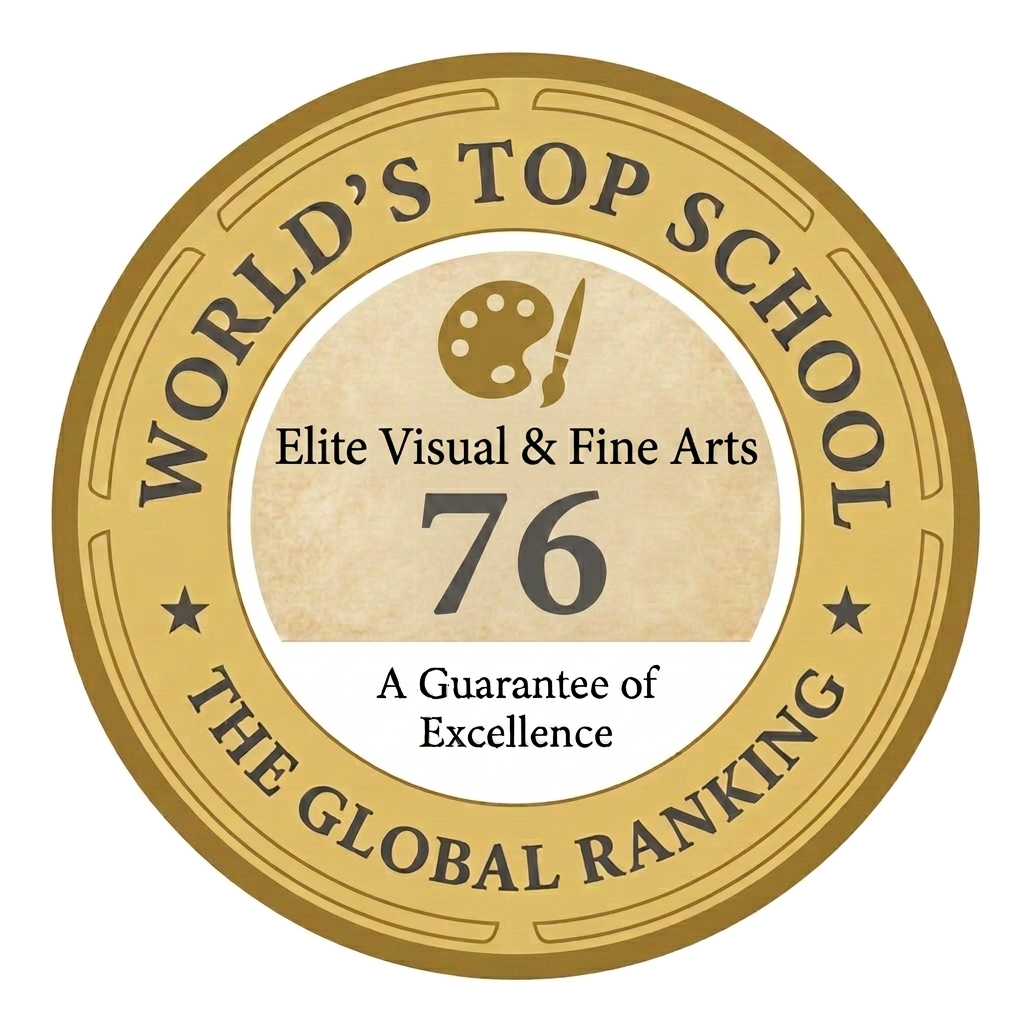
Elite Visual & Fine Arts 76
World's Top School · The Global Ranking
CAFA Affiliated High School of Fine Art is featured on our Global Top 76 ranking at #3. This seal is available for the school's marketing team to use on their website, prospectus and social channels.
Editors' overview
CAFA Affiliated High School of Fine Art sits in a narrow and demanding niche: pre-university arts training inside the orbit of one of China’s best-known fine arts institutions. That matters more than glossy claims about “creativity”. For the right student, the point of the school is clear: concentrated preparation for art and design study, not a broad, all-purpose international education. Parents weighing it against conventional academic schools need to be clear-eyed about that trade. This is a specialist route, deliberately narrow in focus, with an average annual fee of RMB 60,000.
What puts it on a shortlist is that specialism. A teenager who already draws obsessively, wants serious studio practice, and intends to build a competitive portfolio for higher study in fine art, design or adjacent creative fields will find the school’s core proposition far more relevant than a standard generalist secondary. A student who wants equal weight across sciences, humanities, languages and the arts needs a different school. CAFA’s attraction lies in immersion, discipline and artistic peer culture: the chance to work in an environment shaped around visual art rather than treating it as an extracurricular add-on. That is a real distinction in a market full of schools that advertise creativity but organise themselves around exam breadth.
The market position is straightforward. At RMB 60,000 a year on average, it is not priced like an ultra-premium expatriate international school; it sits in a more targeted segment, where the value rests in specialist mission rather than sprawling facilities or a long menu of pathways. The school is in China, operates as a day school, and its public identity is tied to fine art. Those are concrete strengths if your child has both talent and stamina. They are also limits. This is not for the undecided, and it does not suit families who want maximum flexibility at 16 or 18. It suits the student who already knows that art is not a hobby but the centre of the plan, and who will thrive in a serious, portfolio-driven environment rather than a broad school with a strong art department.
An Elite Visual & Fine Arts 76 school
CAFA Affiliated High School of Fine Art, based on the Central Academy of Fine Arts' Yanjiao campus in Sanhe, Hebei, just east of Beijing, sits at rank three on the Elite Visual & Fine Arts 76. Its anchor credential is unambiguous: it is the only secondary fine-arts school in China placed directly under the Ministry of Education, founded in 1953 under the personal direction of painter Xu Beihong, CAFA's first president, and Jiang Feng, making it the country's original modern art-secondary institution and the formal feeder school for the Central Academy of Fine Arts itself.
The specialism is a four-year foundation-style track built around three professional strands: zaoxing jichu (foundation drawing and modelling), design foundation, and Chinese painting foundation, layered onto Beijing's standard senior-high liberal-arts curriculum. Since 2005 the school has also run an International Department offering a three-year AIP curriculum aimed squarely at UK and US art-university admission, taught partly by staff trained at European and American art schools, alongside IELTS-focused English instruction. The Yanjiao campus, rebuilt in 2006 and expanded again in 2017, houses open-studio workshops, dedicated professional classrooms and a library holding roughly 100,000 volumes and over 200 specialist periodicals.
Notable alumni include printmaker Tan Quanshu, who graduated from the affiliated school in 1957 before becoming a professor and head of CAFA's printmaking department; oil painter Ai Xuan, a 1967 graduate known for his Tibet-themed canvases; Sun Weimin, also a 1967 graduate who became a CAFA oil-painting professor and a leading figure in China's academic realist school; and painter Xia Junna, who graduated in 1991 with a top creative-work honour before progressing directly into CAFA's oil-painting faculty.
International openness runs through a dedicated admissions channel: overseas and study-abroad-track applicants sit the same professional exam (colour, sketch, quick sketch) plus a culture and interview round, administered alongside Ministry of Education and Beijing enrolment authorities. Boarding is standard on the Yanjiao campus, and domestic tuition is nominal - about RMB 8,000 per year plus RMB 750 for boarding - though the international AIP track carries separately quoted, higher program fees not standardised in public materials, so families should request a current schedule directly from the international office. Visa and entry-test timing should be initiated at least a year ahead. For a family seeking rigorous, exam-proven Chinese academic art training with a genuine bridge to Western art-school admission, this school is one of the most credible entry points in China.
Academic Performance
Academic performance here needs judging by the standards of specialist art schools, not by the usual battery of IB or A-level league-table metrics. The problem for parents is that the school does not publish a clear set of external examination outcomes in the public domain. No aggregate pass rates, destination breakdowns, portfolio success figures or year-on-year comparative data are disclosed in a form that allows serious benchmarking against peer schools. That makes any hard verdict on attainment frustratingly opaque. In a sector where schools with strong results publish them prominently, silence counts against confidence.
That does not make the school academically weak; it makes it hard to verify. Its value rests in specialist training and progression into art and design study, and families should interrogate that point closely. Ask for admissions outcomes to higher art institutions, portfolio assessment practices, teacher credentials in studio disciplines, and the balance between general academic teaching and intensive art preparation. Against broader international schools, CAFA’s academic picture is narrower, tougher and more vocational. Against other specialist conservatoire-style art routes, the key question is simple: how many students convert years of training into credible post-school offers? Until the school publishes that evidence, its performance sits in the category of serious but unproven rather than demonstrably leading.
Facilities
For a specialist art school, the core facilities question is simple: do students get enough serious making space, with the right equipment, for sustained studio practice? That matters more here than theatres, Olympic pools or a long list of lifestyle extras. The school’s public identity points firmly to fine-art training within the CAFA orbit, so parents should expect studios, drawing rooms and workshop space to sit at the heart of campus life. Against broad international schools, that is a clear advantage for a young artist: fewer decorative “creative” spaces, more rooms built for daily practice. Against direct peers in specialist visual-arts education, the benchmark is tougher. Families need to see whether workspaces are spacious, heavily used and technically equipped, or more modest than the brand implies.
What is missing in the public domain is the detail that separates a serious production environment from a school with a strong name and limited physical depth. No published inventory sets out printmaking facilities, sculpture workshops, kiln provision, digital labs, photography studios, exhibition areas or specialist making spaces. That absence matters. Strong art schools show the infrastructure because the infrastructure is the education. At an average annual fee of RMB 60,000, parents are not paying for luxury campus spectacle; they are paying for access to disciplined specialist spaces and expert supervision inside them. The right comparison is not with full-service premium international campuses but with other pre-conservatoire art schools. On that measure, CAFA’s facilities read as *plausibly strong but insufficiently evidenced*.
Until the school publishes that evidence, its performance sits in the category of serious but unproven rather than demonstrably leading
Prestige
The school carries real prestige within a narrow field. The CAFA name has weight in Chinese art education, and that affiliation gives the high school a level of institutional credibility that a standalone private arts school cannot match. For families inside the art-and-design track, that matters. It signals access to a serious studio culture, stricter artistic expectations and a peer group selected for commitment rather than casual interest. This is not mass-market prestige of the kind attached to famous international-school brands; it is disciplinary prestige, strongest among people who know fine art training and weaker among families hunting a broad academic badge. That distinction matters. Outside specialist circles, the name carries less instant social currency than an elite all-round school with globally legible exam pathways.
The rating stops short of the top tier because prestige without transparent outcomes has limits. The school benefits from the halo of a major arts institution, but prestige holds best when a school also publishes hard evidence of where students go and how consistently they get there. Here, that public proof is thin. Parents therefore buy into a serious specialist reputation rather than a fully evidenced record of post-school success. At an average annual fee of RMB 60,000, that equation remains attractive for a young artist who wants focused preparation and accepts a narrow, high-commitment route. For families who prize brand recognition across the wider university market, the prestige is strong but bounded.
The rating stops short of the top tier because prestige without transparent outcomes has limits
Communications
Parent communication looks functional rather than polished. The school’s public-facing identity is tightly tied to its specialist mission, but the parent-facing information architecture lacks the depth and clarity that demanding families need when making a high-stakes choice. Basic institutional signals are easy enough to grasp; the harder questions are not answered cleanly. There is no strong public habit of publishing the kind of practical detail that builds confidence over time: clear academic reporting structures, regular outcome data, detailed pastoral information, or a granular picture of day-to-day school life. For a specialist school asking families to commit early and decisively, that thinness is a serious weakness. Parents do not need brand atmosphere; they need timetables, expectations, points of contact, and evidence of how the school handles progress, pressure and student support.
That does not make communication poor in every respect. In specialist Chinese schools, direct teacher-family contact and tightly managed internal messaging often do more work than glossy English-language websites, and CAFA may rely on that model. For enrolled families, communication may be more disciplined than visible. For prospective parents, though, effectiveness is easier to judge: the school does not disclose enough in the public domain to count as transparent. At around 60,000 RMB a year, families are entitled to clear, exact, unsentimental answers. Here, too much remains implicit. That suits insiders. It does not serve newcomers well.
Uniqueness
What makes this school distinct is not “creativity” in the diluted, all-schools-use-it sense, but early professional formation. It treats adolescent art students less like general secondary pupils with a strong elective and more like young practitioners in training. That changes the rhythm of school life. Work is judged through output, repetition, critique and stamina; talent on its own carries little weight. For the student who wants that, the benefit is unusually focused development: stronger portfolios, sharper visual discipline, and daily exposure to peers who take drawing and making seriously. In a market crowded with broad schools that bolt on art prestige at the edges, this is a rarer proposition — a school built around the art student rather than asking the art student to fit around everything else.
The affiliation also gives students something harder to manufacture than facilities or branding: proximity to an institutional culture with real artistic gravity. That can lift expectations, vocabulary and ambition. Teenagers learn early that art is not only self-expression; it is technique, history, criticism and competitive selection. The trade-off is obvious and important. A school this specialised narrows the road earlier than most families are used to, and that makes it demanding by design. For the right child, that narrowness is the advantage. It removes distraction, normalises hard studio work, and places artistic seriousness at the centre of adolescence for an average annual fee of RMB 60,000.
CAFA Affiliated High School of Fine Art sits in a narrow and demanding niche: pre-university arts training inside the orbit of one of China’s best-known fine arts institutions
Student Profile
The right student here has chosen art before the school chooses them. Fit starts with single-minded commitment: a teenager who draws compulsively, tolerates criticism, repeats work without complaint and gains energy from long hours of practice. They do not need a school to “discover” their interest; they arrive with it. They also need resilience. Specialist art training at secondary level can be intense, competitive and emotionally exacting, especially for students whose sense of self is tied to their output. A child who wants broad co-curricular variety, keeps multiple future pathways open, or needs constant external reassurance will find this environment constricting. A child who wants technical discipline, peer comparison and a clear artistic track will fit far better.
Socially, the school suits students who are comfortable in a tribe built around making rather than mainstream school status. The strongest fit is not the flashy “creative” child but the workmanlike young artist: observant, self-editing, patient and prepared to be judged on results. That also means maturity matters. Students need to handle uneven progress, harsh feedback and the fact that talent does not protect anyone from routine. For families paying an average of RMB 60,000 a year, the key question is not whether a child likes art, but whether they want a demanding, narrow, portfolio-driven adolescence. If the answer is yes, this school has a clear audience. If the answer is anything softer, look elsewhere.
For the right student, the point of the school is clear: concentrated preparation for art and design study, not a broad, all-purpose international education
Co-curricular strengths
Arts & sport, on a separate axis
Overall 5.94/10
Scored 0-10 from the school's own published evidence. This axis is editorial-only — it does not feed the main WTS ranking.
Sports
4.5/10
Drama
5.5/10
Dance
4.5/10
Music
5.5/10
Visual Arts
9.7/10
Parent reviews
Have you sent your child here?
Voice reviews carry the strongest trust badge — we transcribe them for you to tidy up before they go live. Prefer to type? A written review is fine too.
Add your voice
In 60 seconds, tell other parents: what's the best thing about CAFA Affiliated High School of Fine Art, and what surprised you when your child joined?
We ask for a Google sign-in so every review has a real face behind it — no anonymous drive-by attacks on schools, and no faked positive reviews. Your email is never shown publicly.
Send this profile to a friend
International parents rely on word-of-mouth. Share this review with someone weighing the same decision.
Schools with places
Similar schools to CAFA Affiliated High School of Fine Art with places available now.
Yew Chung International School of Chongqing
Chongqing · China
- 2026-27
- WAITPOOLSpace-dependent
- 2027-28
- WAITPOOLRolling / space-dependent
International School of Tianjin
Tianjin · China
- 2026-27
- WAITPOOLSpace-dependent
- 2027-28
- PLACES OPENRolling
Beijing City International School
Beijing · China
- 2026-27
- WAITPOOLSpace-dependent
- 2027-28
- PLACES OPENRolling
Utahloy International School Guangzhou
Guangzhou · China
- 2026-27
- WAITPOOLSpace-dependent
- 2027-28
- PLACES OPENRolling
Availability first, then country, area, curriculum, price, co-curricular
Consider also
Also worth looking at alongside CAFA Affiliated High School of Fine Art.
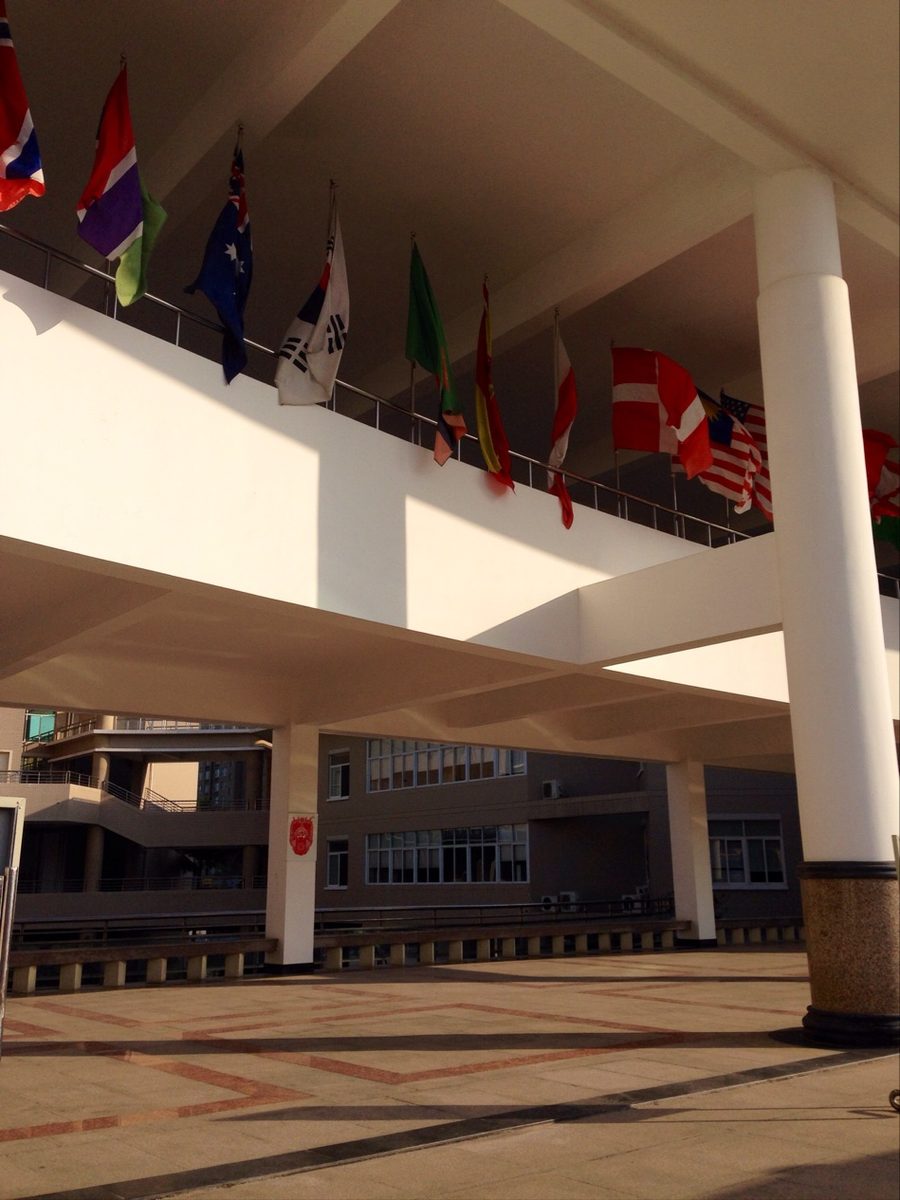
Xiamen International School
Xiamen · China
Grown from Xiamen's 1990s Kodak-era boom, this Fujian pioneer graduates seniors with bilingual IB diplomas at nearly triple the global rate.
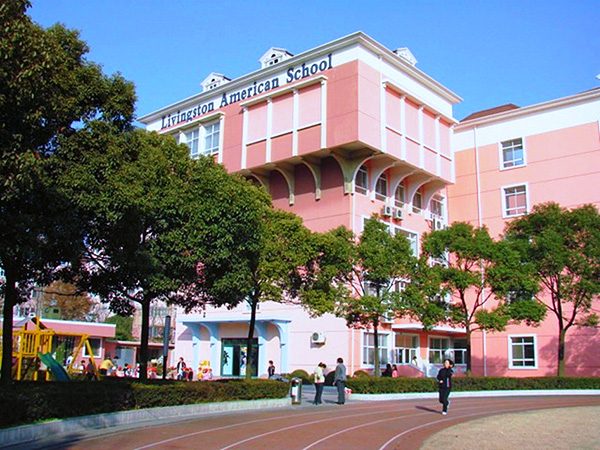
Livingston American School Shanghai
Shanghai · China
Founded by a former US congressman, this Changning day school pairs a California-aligned curriculum with AP rigor for Shanghai's expat families.
Concord College Beijing
Beijing · China
Tongzhou's pioneering joint boarding college pairs a British-style house system with Round Square expeditions and global exchange terms.
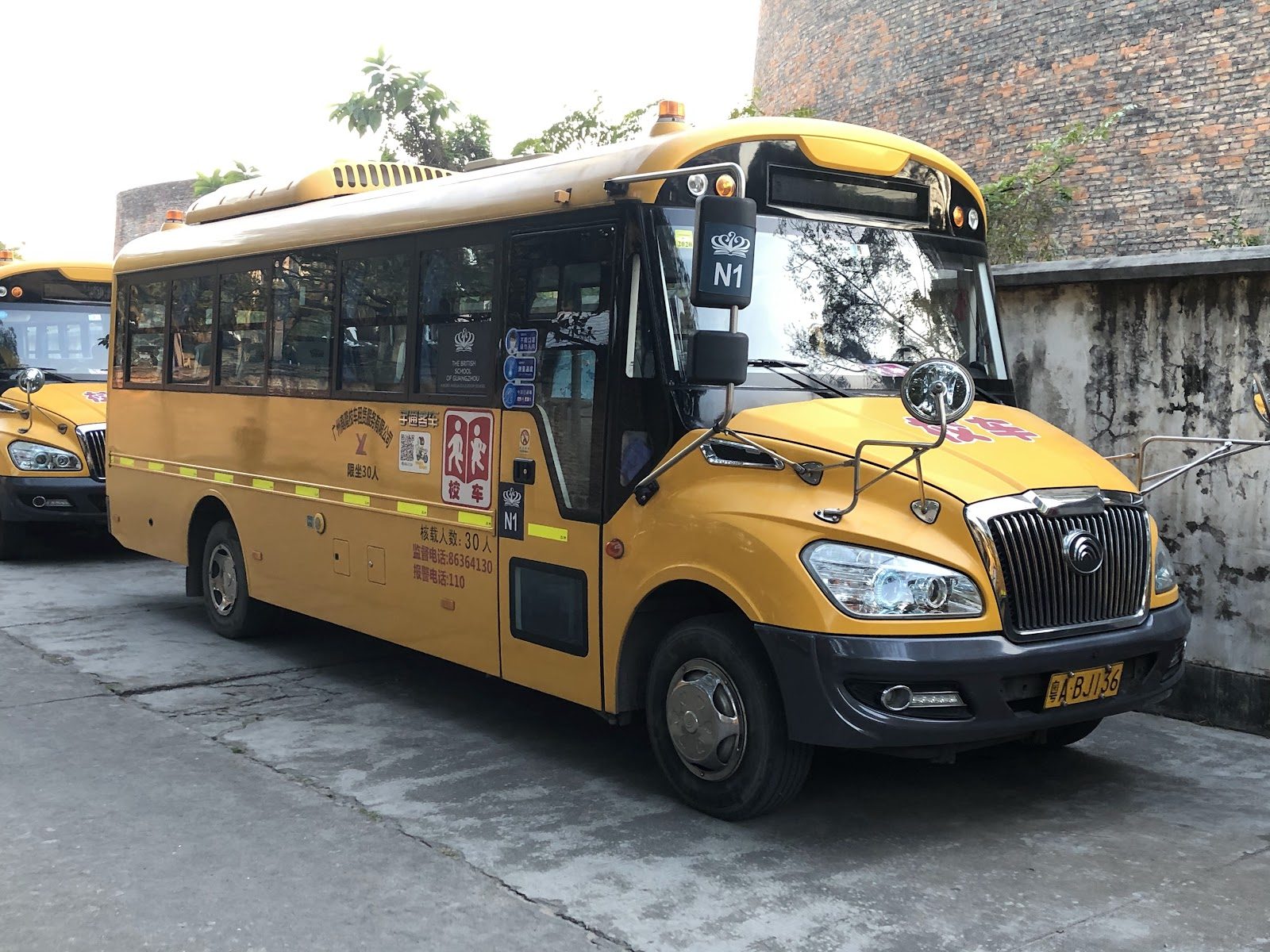
The British School of Guangzhou
Guangzhou · China
On the shores of South Lake, Guangzhou's longest-running British school pairs English curriculum rigour with a Juilliard-designed arts programme.
Same country and curriculum — closest matches within ±10 points either way