
Lima
Founded in 1946 by British expatriates, this Lima day school pairs house traditions with a bilingual IB-British curriculum.
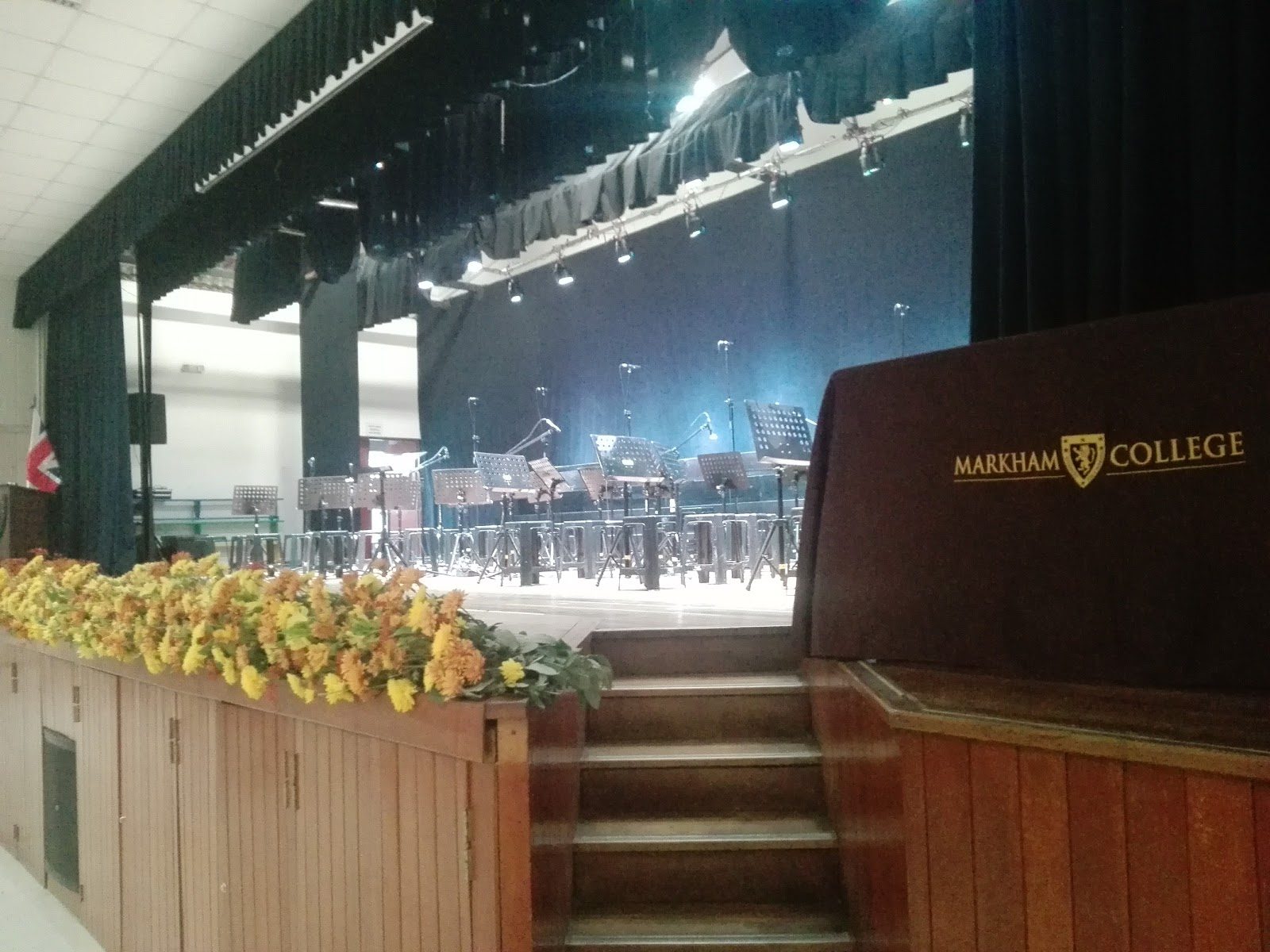
Photo © Antonio Marcelo Bautista Palacios via Google Maps
Type
Day
Ages
3–18
Curriculum
British · IB
Ratio
—
The Verdict
Editor's commitment
Right for
Families wanting a bilingual English-Spanish education from age 3 to 18, with British and IB frameworks under one non-profit school.
Wrong for
Anyone wanting boarding, a small campus culture, or a single-site school: Markham runs three sections and serves about 2,000 pupils.
Watch out for
The average annual day fee is $18,000, and the three-site Lima footprint now includes a new Monterrico primary campus opened in 2024.
Ranking breakdown
Markham College · #830 of 1591
Composite score 64.7. 8 weighted criteria.
By criterion
Academic Outcomes
Weight 20%
#450
of 1529 scored
University Placement
Weight 16%
#459
of 1529 scored
Prestige & Heritage
Weight 12%
#377
of 1571 scored
Alumni Network
Weight 12%
#1316
of 1530 scored
Facilities
Weight 12%
#489
of 1533 scored
Transparency & Communications
Weight 8%
#554
of 1532 scored
Peer & Industry Review
Weight 10%
#604
of 1548 scored
Admissions Selectivity & Demand
Weight 8%
#369
of 1529 scored
Score history
Markham College · 2026
Movement across 2024–2026. Peer average overlaid.
Overall — 2024–2026
64.7/ 100
▲ +12.3 vs 2025
year on year
Peer & Industry Review
How Markham College is regarded in the sector
65
Respected · medium confidence
Markham College is consistently named among the top British-curriculum schools in Lima in expat-parent forums (e.g., InterNations, Expat Exchange discussions on relocating to Lima) and appears in general 'best schools in Peru' round-ups aimed at expatriate families, reflecting a solid regional reputation and long-established (est. 1946) alumni network among Lima's professional and diplomatic community. However, it lacks the level of specialist press coverage seen for schools featured in Tatler or full Good Schools Guide International write-ups, and its recognition is largely confined to the Peru/Latin America expat and local elite circuit rather than global peer benchmarking.
Evidence sources
- Gaston Acurio — Chef and Restaurant Founder, Culinary Business
- Juan Diego Florez — Opera Singer, Performing Arts
- Mario Testino — Fashion Photographer, Photography
Editors' overview
Markham sits in a rare position in Lima: a long-established British-founded school that has kept a clear institutional identity while operating as a bilingual, secular day school for ages 3 to 18. Founded in 1946 by British expatriates, it now educates about 2,000 students across three sections in Miraflores and Santiago de Surco, with a new primary campus opened in Monterrico in May 2024. The draw is not novelty but structure: British school habits, house traditions and an English-Spanish academic life, paired with an IB-British curriculum. That combination puts it in the serious end of the Lima market. The average annual day fee across the full age range is $18,000, which places it firmly in the premium bracket for Peru.
What is special here is the blend. Many schools claim to be international; Markham has the older, more rooted version of that idea. It is independent, non-profit, co-educational and non-religious, and the bilingual model matters because Peru-based families often want genuine fluency in both English and Spanish without giving up local relevance. The British influence gives the school shape and continuity; the IB gives it an outward-facing academic framework. That mix will appeal to families who want a child educated for mobility without turning them into a stranger in their own country. The alumni footprint adds weight: Wikidata catalogues 22 notable alumni, spanning politics, business, scholarship, writing and the arts. That is not a guarantee of outcomes, but it is hard evidence of reach.
The caveat is straightforward. A school of this scale and reputation will not suit families looking for intimacy, looseness or a progressive free-form culture. Markham reads as a high-expectation, well-drilled institution with a strong sense of self. The best fit is a student who can handle structure, move comfortably between two languages and make use of a large-school ecosystem. Children who thrive on clear standards, established traditions and an academically ambitious peer group will find plenty to work with here. Those who need a smaller, softer or more experimental environment will feel the weight of the place.
Academic Performance
Markham’s academic reputation is strong, but the school does not publish the exam data that would let parents test that reputation properly. We have not seen aggregate IB diploma results, cohort averages, subject-level scores, A-level outcomes or GCSE/IGCSE summaries in the public domain. That matters. In a market where serious schools use external results to prove academic quality, opaque reporting is a weakness. Parents are left to infer standards from institutional standing, selectivity and alumni reach rather than from hard attainment data. For a school with this profile, that is a conspicuous gap.
Even with that caveat, Markham sits in Lima’s top tier academically. The school has scale, a long-established identity and the kind of social and professional alumni footprint that points to sustained academic seriousness rather than short-cycle marketing success. Wikidata records 22 notable alumni across politics, business, scholarship, writing and the arts; that does not replace exam statistics, but it does show that the school has produced graduates with real-world weight. Relative to peers, Markham belongs in the group parents examine first for ambitious university trajectories. The limitation is plain: without published headline results, it is harder to judge whether it leads that group, matches it, or trades on legacy and reputation. For exacting families, prestige without disclosed outcomes is not enough.
Facilities
Facilities are spread across 3 sections rather than concentrated on one flagship site, and that shapes the experience. The practical advantage is age-appropriate space: younger children are not squeezed into a senior-school footprint, and the newer primary campus points to recent capital investment rather than institutional drift. For parents, the trade-off is obvious. A multi-site school can feel less unified than a single-campus rival, and daily logistics matter more. What Markham offers in return is capacity and range. A school serving about 2,000 pupils does not function on goodwill and a few repurposed rooms; it needs serious teaching space, organised movement and infrastructure that can absorb scale without descending into chaos. Against Lima peers, that puts it in the big-school, full-service category.
The limitation is disclosure. The school does not publish the kind of detailed facilities breakdown that would let families judge specialist provision with precision: no clear public inventory of science labs, theatres, sports venues, design spaces or performing-arts infrastructure. That leaves parents relying on the school’s long-standing reputation and physical expansion rather than on a transparent room-by-room case. Compared with top international competitors that document every studio, pitch and lab, that is a real weakness. Still, the combination of multiple sections and a newly opened campus places Markham above cramped, older urban schools operating on constrained sites. It has the footprint of a serious institution, even if the public detail is thinner than it should be.
Even with that caveat, Markham sits in Lima’s top tier academically
Prestige
Markham carries genuine social and educational prestige in Peru. This is not the flash-in-the-pan status of a new premium school with polished branding; it is the older kind, built through continuity, selectivity and the durable confidence of families who know the institution’s place in the local hierarchy. The scale matters here: with roughly 2,000 pupils spread across multiple sections, Markham has the visibility and network effects that smaller schools cannot match. Its graduates have moved into public life, business, scholarship and the arts in numbers that give the school real elite reach. Wikidata alone records 22 notable alumni, which is enough to show that a Markham education carries recognition well beyond the school gate.
That prestige does not rest on one thing. It comes from a combination of academic seriousness, a long-rooted British institutional inheritance and a student body drawn into influential circles. In Lima, that mix gives Markham establishment weight. Parents choosing it are not buying novelty; they are buying access to a school with standing, social credibility and a name that travels well in professional and university-facing environments. The restraint is clear too: prestige here exceeds transparency. The school’s status is easier to verify than its current academic output, because the public exam picture remains undisclosed. That weakens the case for calling it academically dominant, but it does not dent the fact that Markham remains one of the city’s most socially powerful school names.
Facilities are spread across 3 sections rather than concentrated on one flagship site, and that shapes the experience
Communications
Markham communicates like an old, high-status institution: with confidence, structure and an assumption that parents will keep up. The school’s public face is serviceable rather than expansive. Core facts are easy to grasp — age range, school character, multi-section organisation — but the communication style does not indulge the modern habit of over-explaining every process. That has strengths. Parents who value orderly administration, clear institutional boundaries and a school that does not chatter at them will welcome it. It also has a cost. Families comparing schools in forensic detail will hit gaps fast, because Markham does not disclose enough publicly on outcomes, facilities or operational detail. For a school of roughly 2,000 pupils, that is a serious communications weakness.
The internal parent experience matters more than the website, and here scale cuts both ways. A school this large needs disciplined systems, consistent messaging and year-group coordination; otherwise confusion spreads quickly across families and sections. Markham’s long-standing institutional coherence works in its favour: nothing in the public picture points to a chaotic or improvised operation. But effective communication is not just about control; it is about candour. On that test, the school is too guarded. Parents get identity and stature clearly enough. They do not get the full data picture with the same clarity. That makes Markham a better fit for families comfortable with institutional trust than for those who expect granular transparency before committing to an average annual fee of $18,000.
Uniqueness
What sets Markham apart is not a single selling point but a hard-to-copy institutional blend: an old British-school spine inside a Peruvian setting, delivered through a genuinely bilingual daily life rather than token international gloss. Plenty of schools borrow British ceremony or import IB branding. Far fewer have built a durable culture where local rootedness and outward academic ambition sit together without one cancelling the other out. That gives students something valuable: they do not have to choose between global mobility and national fluency. They are educated to move confidently in both worlds, which matters in a city where many “international” schools drift either into expatriate detachment or local conventionality. Markham avoids both traps.
Its other point of difference is scale with continuity. A pupil enters a school that is big enough to generate serious range in friendships, activities and peer competition, but not so generic that identity disappears into a chain-school template. The house ethos and established traditions give shape to that experience; the non-profit structure gives it a different feel from the slicker commercial end of the market. For students, the result is a school life with real internal coherence: strong expectations, a clear sense of belonging and access to a network that extends well beyond graduation. That combination carries weight. Few schools in Peru offer the same mix of prestige, bilingual competence and institutional self-confidence at this scale of roughly 2,000 pupils and across 3 sections.
Compared with top international competitors that document every studio, pitch and lab, that is a real weakness
Student Profile
The students who thrive at Markham are the ones who can carry high expectations without needing constant hand-holding. This is not a loose, pastoral-first environment built around endless reassurance. It suits children who are organised, socially confident and able to operate inside a school culture with clear standards, established routines and a strong internal pecking order. In a large day school of about 2,000 pupils, a child needs enough self-possession to find their place, enough resilience to handle comparison with able peers, and enough maturity to use the scale of the school rather than get lost in it. Families who want a serious peer group and a student body with drive, polish and ambition will find that here.
The best fit is a pupil who can move comfortably between different social and cultural settings without treating that as a performance. Markham suits internationally minded local families, returnees and children growing up with one foot in Peru and another in a wider world. It will also work for academically strong students who like structure more than experimentation and who value belonging to a school with real social weight. It is a weaker fit for children who need a small, intimate setting, a highly individualised pace or a deliberately soft-edged atmosphere. The social environment has pull, but it also has pressure. Students who dislike competition or bridle at institutional discipline will find the place demanding.
The draw is not novelty but structure: British school habits, house traditions and an English-Spanish academic life, paired with an IB-British curriculum
Co-curricular strengths
Arts & sport, on a separate axis
Overall 8.6/10
Scored 0-10 from the school's own published evidence. This axis is editorial-only — it does not feed the main WTS ranking.
Sports
9/10
Football, rugby, basketball, volleyball, swimming and athletics, and the external evidence adds football, hockey, cricket and rugby plus Sports, Exercise and Health Science, showing a solid multi-sport offering but no named facility, specialist staff or competitive honours.
Drama
9/10
Drama is evidenced as both an extracurricular through drama productions and an academic pathway through IGCSE Drama and IB Theatre Arts, and Wikipedia also cites multiple notable acting and theatre alumni.
Dance
7/10
Music
9/10
School orchestra and choir, while Music taught at both IGCSE and IB Higher Level, indicating a structured and visible programme without named facilities, staff or major honours.
Visual Arts
9/10
Art & Design at IGCSE and Visual Arts at IB Higher Level, and the editorial review mentions dedicated arts areas, supporting a solid programme but without a named facility, department or standout recognition.
Editor first-pass · editor-reviewable · 7/28/2026
Notable alumni · Wikidata
22notable alumni
0 historic (born pre-1930) · 5 modern (born post-1970)wikidata:2026-07-28 How we source this
Strengths
- +Markham is an independent, non-profit, co-educational, bilingual, secular, day school of approximately 2,000 students aged 3-18, giving families a single institution spanning the whole of school life.
- +The school's British heritage and international nature are integral to its holistic formation of students, and it has adapted the British curriculum to respect its distinct Peruvian context, culminating in IGCSEs and the IB Diploma.
- +In 2024, Markham has an IB average of 32, a score the school notes sits above the global IB average.
- +The school is affiliated with the Round Square network and Duke of Edinburgh's International Award scheme, per Wikipedia's summary of its Affiliation: Round Square G20 Schools Group ADCA UDCA Latin American Heads Conference International Baccalaureate Programme University of Cambridge International Examinations Duke of Edinburgh's International Award.
- +Alumni include Pedro Pablo Kuczynski Godard, former President of Peru, indicating a track record of producing figures in national public life.
Considerations
- −Tuition is a significant financial commitment by local standards: published figures show the 2019 annual College tuition fee for Nursery is $10,640 USD and for all other year groups is $13,300 USD, plus a separate one-time entrance fee that in past years reached $17,500 USD for years Nursery to Primary 5.
- −The school operates across separate sites for different ages, with 3 different sections located in Miraflores and Santiago de Surco in Lima, meaning families may face different commute logistics as a child progresses through the school.
- −With roughly 2,000 pupils on roll, class and cohort sizes are large by international-school standards, which can mean less individualised pastoral attention than at smaller schools.
- −Entry outside the earliest years is constrained: most pupils are admitted into the Early Years Section, and admissions evaluations to all other year groups are held at scheduled times throughout the year, pending the availability of spaces, so mid-primary or secondary transfers for relocating families are not guaranteed.
Availability
Primary entry gate & tests
Academic Record + Assessment
Gallery
Photo © Antonio Marcelo Bautista Palacios via Google Maps
Photo © Daniel Guillen via Google Maps
Photo © Oscar Lozano Lozano via Google Maps
Photo © Oscar Lozano Lozano via Google Maps
Photo © Oscar Lozano Lozano via Google Maps
Photo © Oscar Lozano Lozano via Google Maps
Photo © Oscar Lozano Lozano via Google Maps
Photo © Antonio Marcelo Bautista Palacios via Google Maps
Photo © Antonio Marcelo Bautista Palacios via Google Maps
Parent reviews
Have you sent your child here?
Voice reviews carry the strongest trust badge — we transcribe them for you to tidy up before they go live. Prefer to type? A written review is fine too.
Add your voice
In 60 seconds, tell other parents: what's the best thing about Markham College, and what surprised you when your child joined?
We ask for a Google sign-in so every review has a real face behind it — no anonymous drive-by attacks on schools, and no faked positive reviews. Your email is never shown publicly.
Send this profile to a friend
International parents rely on word-of-mouth. Share this review with someone weighing the same decision.
Schools with places
Similar schools to Markham College with places available now.
Availability first, then country, area, curriculum, price, co-curricular
Consider also
Also worth looking at alongside Markham College.
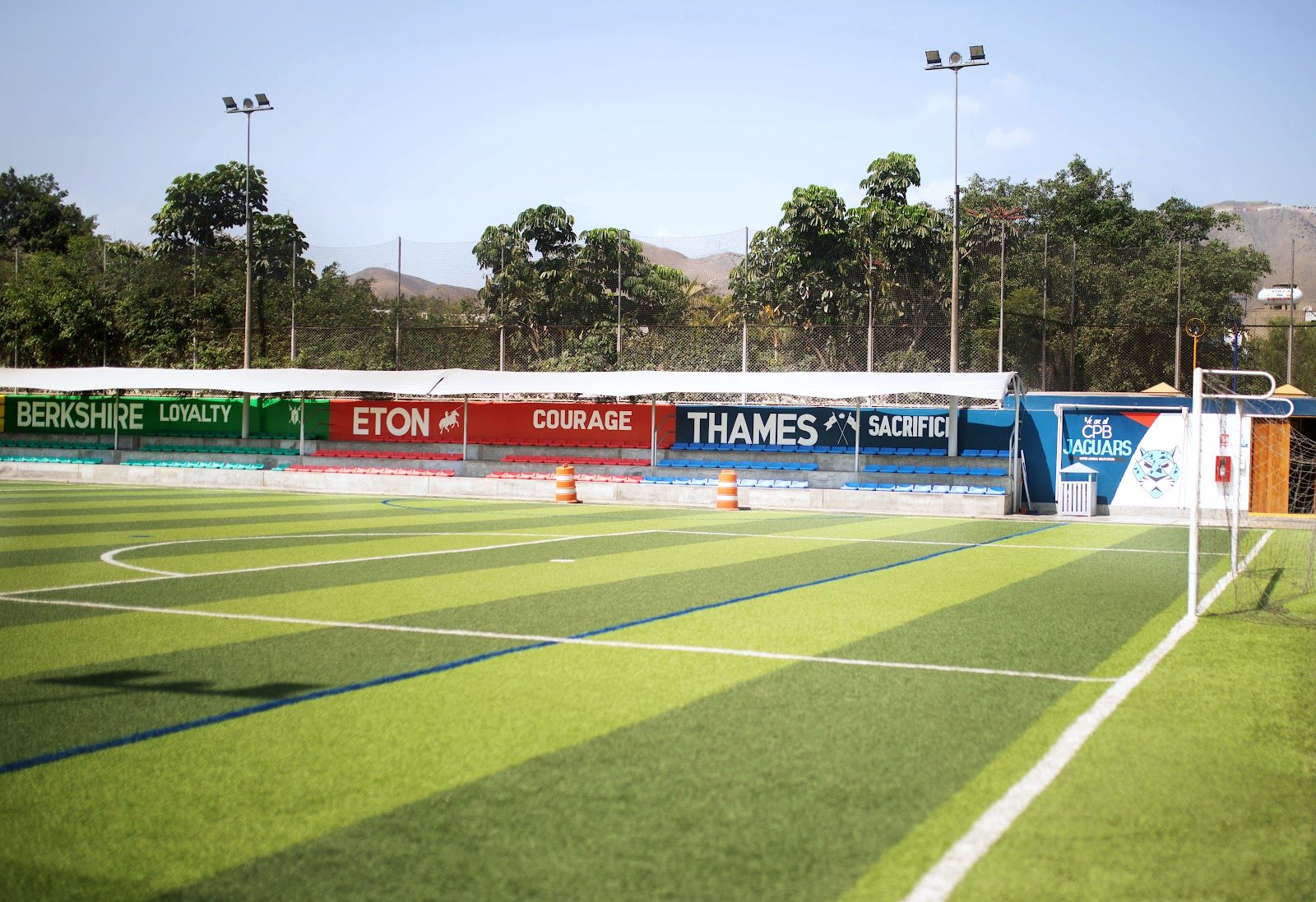
Colegio Peruano Británico
Lima · Peru
Trilingual since 1963, this Monterrico campus blends a Juilliard-shaped arts curriculum with IB rigor as Nord Anglia's first Peruvian school.
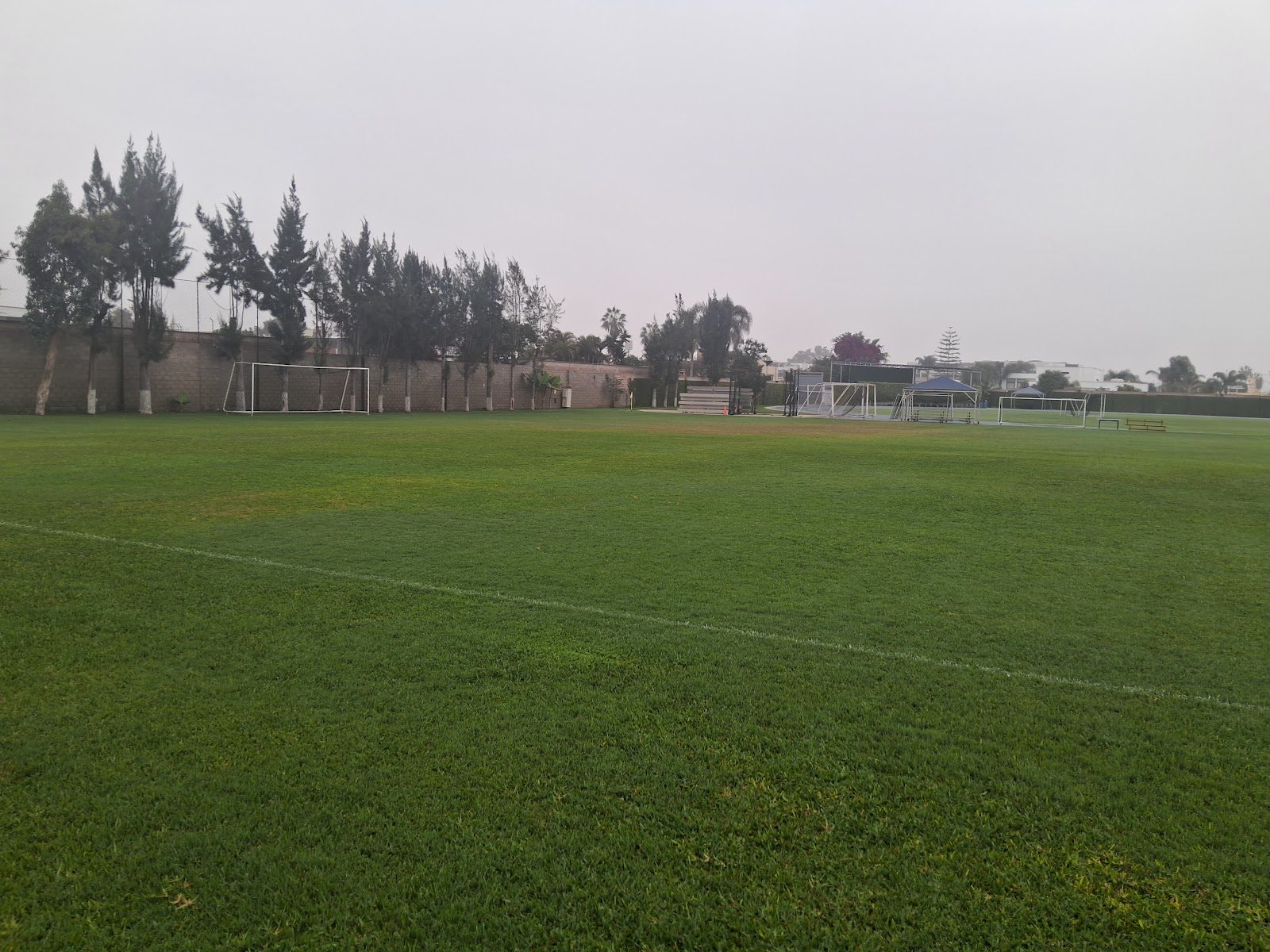
Colegio Roosevelt — The American School of Lima
Lima · Peru
Named for a wartime American president, this La Molina campus layers an FDR diploma with IB and Peru's own official credential.
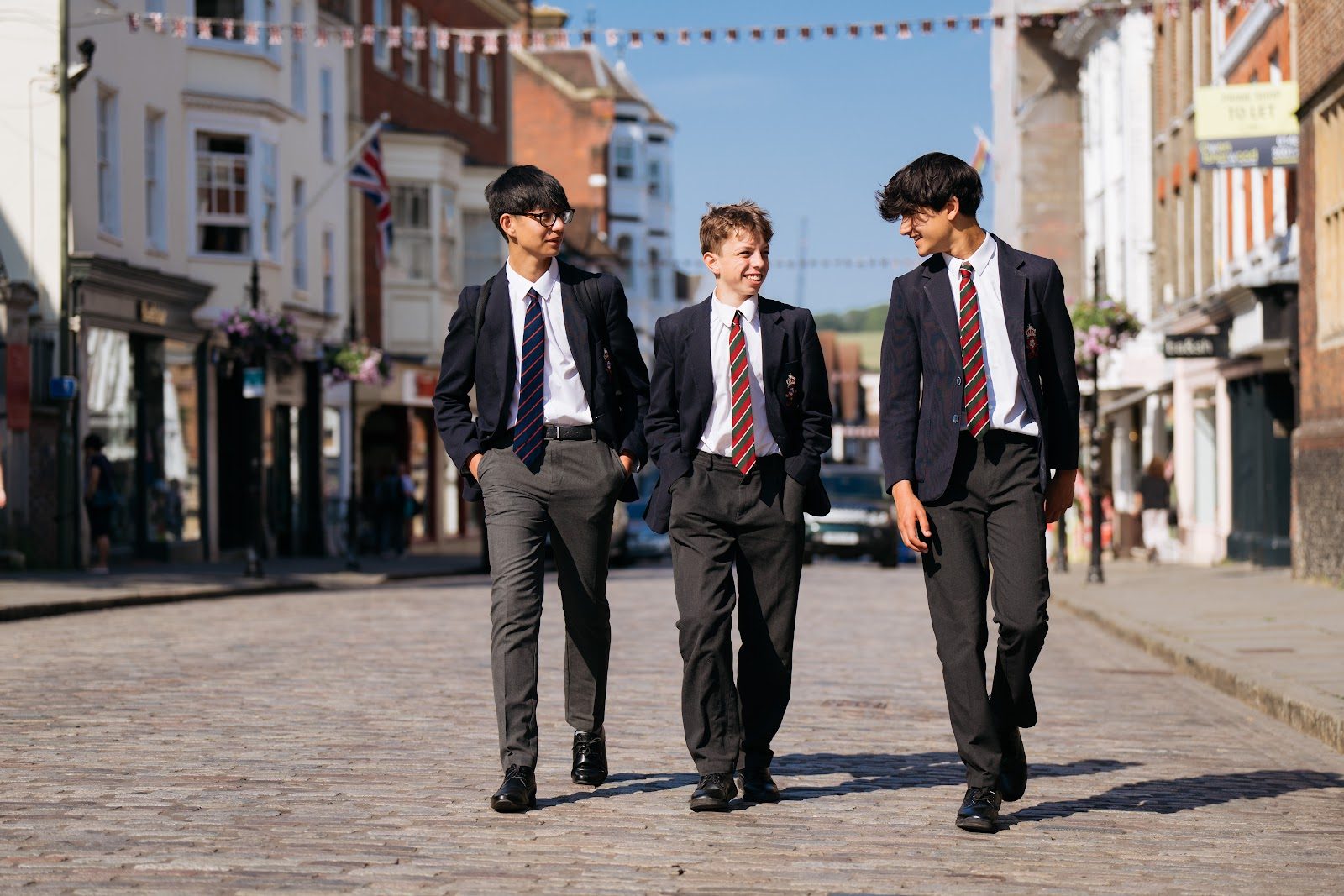
Royal Grammar School, Guildford
Guildford · United Kingdom
A working chained library inside a Grade I Tudor schoolroom anchors a 1509 foundation's steady march toward Oxbridge offers.
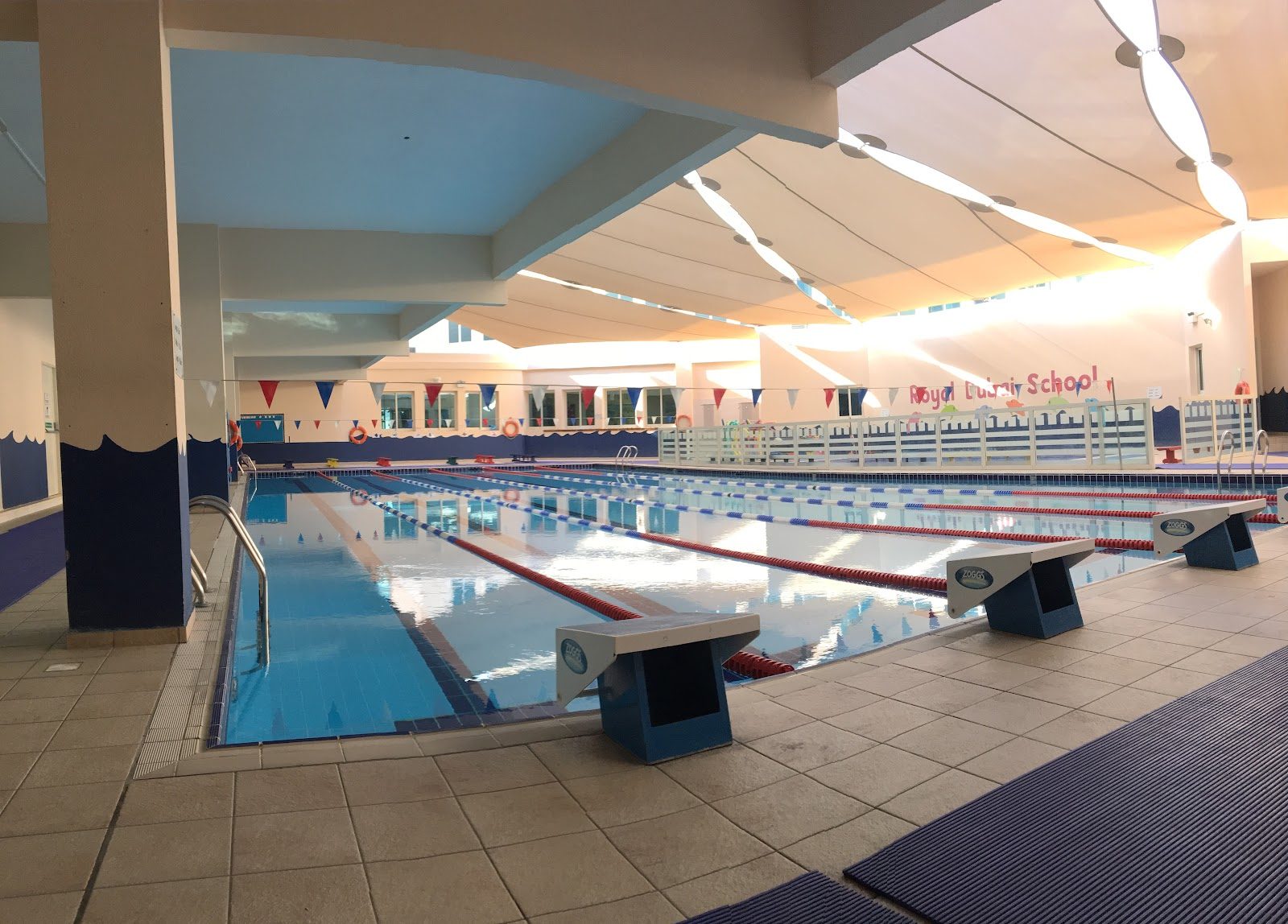
GEMS Royal Dubai School
Dubai · United Arab Emirates
A Very Good-rated British day school in Mirdif, educating pupils from Early Years through an expanding Secondary phase.
Same country and curriculum — closest matches within ±10 points either way