
Bangkok
Bangkok Patana School
medium confidence· 6/6 cats · 1.56 avg sourcesThailand's first British school, running since 1957, blends English curriculum grounding with IB breadth across a 17-hectare Bang Na campus.
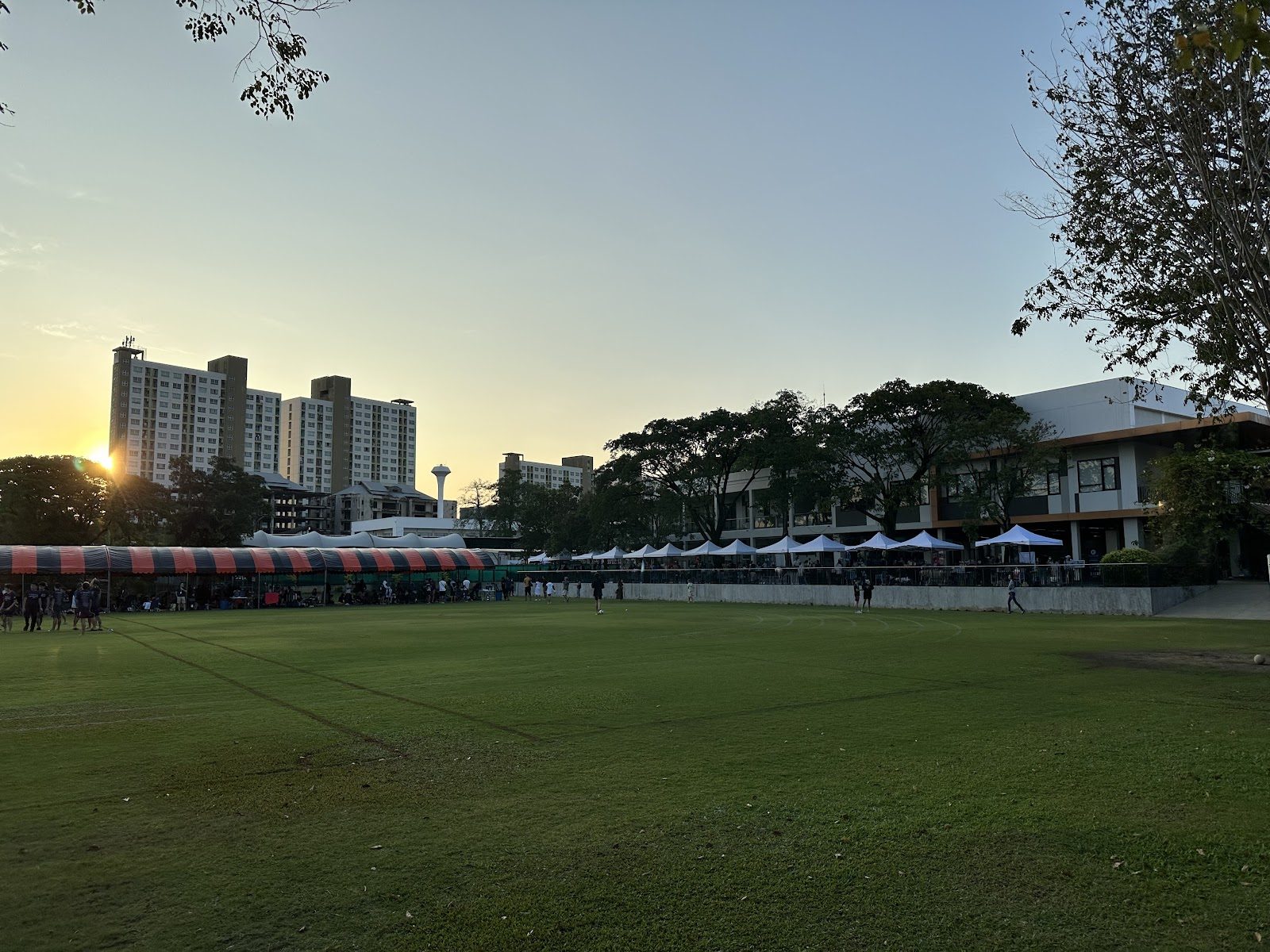
Photo © Puvanai Dardarananda via Google Maps
Type
Day
Ages
3–18
Curriculum
IB · British
Qualifications
IB Diploma
Ratio
—
The Verdict
Editor's commitment
Right for
Families who want Bangkok’s longest-running British school, founded in 1957, with an English-medium British-to-IB path from age 3 to 18.
Wrong for
Parents who want boarding, religious framing or a cheaper market segment; this is a day school at an average 760,083 THB a year.
Watch out for
The 17-hectare Bang Na campus and 121-leaver Class of 2024 deliver scale and destinations, but intimacy is not the offer.
Ranking breakdown
Bangkok Patana School · #349 of 1591
Composite score 72.4. 8 weighted criteria.
By criterion
Academic Outcomes
Weight 20%
#293
of 1529 scored
University Placement
Weight 16%
#305
of 1529 scored
Prestige & Heritage
Weight 12%
#273
of 1529 scored
Alumni Network
Weight 12%
#207
of 1529 scored
Facilities
Weight 12%
#269
of 1529 scored
Transparency & Communications
Weight 8%
#388
of 1529 scored
Peer & Industry Review
Weight 10%
#387
of 1529 scored
Admissions Selectivity & Demand
Weight 8%
#1326
of 1529 scored
Score history
Bangkok Patana School · 2026
Movement across 2024–2026. Peer average overlaid.
Overall — 2024–2026
72.4/ 100
▲ +18.0 vs 2025
year on year
Peer & Industry Review
How Bangkok Patana School is regarded in the sector
90
Top-tier · high confidence
Bangkok Patana is consistently cited as the leading British international school in Thailand, regularly featured in Tatler Thailand's school guides and expat-parent forums (e.g., ExpatDen, ISC Research) as the largest and most established international school in Bangkok. It holds strong accreditation from COBIS and CIS, and is frequently used as the benchmark against which other Bangkok international schools (e.g., NIST, Harrow Bangkok, Shrewsbury) are compared in specialist education press and relocation guides.
Evidence sources
Editors' overview
Bangkok Patana’s central advantage is structural: this is Thailand’s first British school, established in 1957, with the scale and maturity that newer international schools cannot fake. The school runs from age 3 to 18, teaches in English, stays non-religious, and combines British curriculum grounding with the IB in the senior years. That matters. Parents get a school with a clear academic spine rather than a grab-bag of programmes, and students get breadth at the top end without losing the discipline of a British framework lower down. The 17-hectare Bang Na campus also sets it apart. Big campuses can be wasteful; this one makes sense for a school that puts serious weight on sport, arts and extracurricular life, with dedicated football, gymnastics, swimming and tennis academies alongside dance and a substantial activities programme. This is a full-service international school, not a compact urban school trying to pass limited space off as intimacy.
The market position is clear: Bangkok Patana sits in the top tier of Bangkok’s international day-school sector, with an average annual fee of 760,083 THB across the full age range. That price buys institutional depth, long-standing name recognition and a broad student experience, not boutique coddling. The school’s published values put unusual emphasis on well-being, safeguarding, learning and global citizenship; many schools print the same words, but Patana also shows the operational machinery behind them in plain sight, from pastoral support and inclusion to university and careers support and “classrooms without walls”. The academic case has substance too. For the Class of 2024, the school reports 121 leavers, with destinations including Imperial College London, University College London and the London School of Economics and Political Science. Those are credible outcomes from a large cohort, not cherry-picked anecdotes.
Who thrives here? Students who want range, pace and options. This is a strong fit for children who will use a big campus properly, join teams, take the arts seriously, and benefit from the social and academic mix of a large established international school. It suits internationally mobile families who want continuity in English and a school with institutional heft. It suits ambitious sixth formers who want the IB and serious university guidance without boarding. It is a weaker fit for families chasing a small, hand-held environment or a school with a distinct religious or ideological identity. Bangkok Patana’s appeal lies elsewhere: scale, credibility and breadth, delivered by a school old enough to know what it is.
Academic Performance
Bangkok Patana publishes enough headline data to justify a strong verdict, even if the picture is not fully open-book. At IGCSE, 65% of grades landed at the top band and 85% at the next broad tier up, which puts the school in serious academic company among large British international schools. Those figures do not place it in the tiny group that posts near-blanket top grades, but they do mark a school with real depth of attainment across a substantial cohort rather than a niche operator riding a handful of star students. The school’s secondary messaging also stresses academic rigour and pastoral support in tandem; in this case, the results back that up.
The IB data is solid rather than dazzling: a 99% diploma pass rate, an average score of 36, and 22% of candidates at 40 points or above. In Bangkok terms, that keeps Patana firmly in the top tier. Internationally, it sits below the ultra-selective exam factories that push average scores into the high 30s and beyond, but comfortably above the broad middle of the market. That distinction matters. Patana offers high-functioning, dependable academic performance at scale, not a narrowly curated results machine. One caveat: the school publishes headline outcomes, not the fuller distribution data that would let parents judge subject strength, cohort spread and year-on-year consistency with more precision.
Facilities
Facilities are a core reason families pay top-tier money here. Patana runs as a full-scale operational campus, not a school squeezed into a tower block with a few specialist rooms bolted on. The standouts are the sports estate and the co-curricular infrastructure around it: dedicated football, gymnastics, swimming and tennis academies, plus dance, a large theatre and a deep extracurricular programme. For a school of over 2,300 students, that breadth matters. Big numbers without big infrastructure produce timetabling bottlenecks and thin access; Patana has built enough to support mass participation as well as serious performance. The inclusion of “Classrooms Without Walls”, home languages support and school services in the public-facing structure also points to a campus designed for day-to-day use across the whole age range, not just headline tours.
Against Bangkok peers, this is upper-tier provision with the advantage of maturity. Many rival international schools can field strong pools, pitches or theatres; fewer can combine all three with specialist academies and the organisational depth to keep them busy. That does not make Patana intimate. It does the opposite. The place is large-scale, busy and systematised, which suits children who want room to move and options after lessons. Families looking for boutique nurture or a quieter physical setting will read the campus differently. Families who want serious sport, credible performing arts and enough space for a big school to function properly will find Patana stronger than most.
Facilities are a core reason families pay top-tier money here
Prestige
Bangkok Patana carries real cachet in Bangkok’s international-school market because its reputation rests on substance, not novelty. This is a school with the social capital that flows from longevity, scale and consistent delivery. Families know the name; universities know the school; employers in Bangkok’s international and diplomatic circles know what a Patana education signals. The leavers’ profile reinforces that standing: a graduating cohort of 121 with multiple offers landing at institutions such as Imperial, UCL and LSE points to a school that produces credible, repeatable outcomes, not a one-off headline student. The notable-alumni record matters too. Wikidata already captures 12 alumni across film, television and music, which gives the school a visible cultural footprint beyond the usual university-placement conversation.
I rate its prestige as high, but not mythic. Patana sits in the class of established flagship day schools that families target when they want breadth, status and dependable academic traction in one place. Its fees alone place it in expensive territory, and the market reads that price as a claim to top-tier standing. Still, this is not a hermetic, ultra-selective brand built on scarcity or intimidation. Its prestige comes from institutional weight, strong outcomes and deep roots in the expatriate and international Thai community. That makes it more durable than fashionable — a better kind of prestige, and harder for rivals to copy.
Patana sits in the class of established flagship day schools that families target when they want breadth, status and dependable academic traction in one place
Communications
Parent communication is one of Patana’s stronger operational habits. The school does not hide behind a glossy homepage and a generic enquiry form; it runs a visible communications stack for current families through separate parent, student, staff and alumni portals, a regular Patana News stream, resources and publications, and clearly signposted admissions and school-information pages. That matters in a large institution. Big schools generate complexity — timetables, pastoral issues, co-curricular sign-ups, safeguarding, transport, policy updates — and Patana acknowledges that complexity instead of pretending everything fits into a single brochure page. The public site also keeps practical routes easy to find, including phone contact, visit booking and application guidance for different family categories. That is competent, adult communication, not marketing fog.
The tone is the more mixed part. Patana talks a lot about well-being, belonging and community, and the site carries a steady flow of internal news. That builds reassurance, but it also produces a busy, institutional feel rather than a warm, personal one. Families who like structure, frequency and visible systems will rate that highly. Families who want intimate head-of-school letters and a hand-held parent experience will read it as corporate. My verdict: effective, because the school has built channels that match its scale and publishes real outcome data, not just lifestyle imagery. The trade-off is style. Patana communicates with professional clarity and serious organisational discipline; it does not communicate with charm.
Uniqueness
What makes Patana distinct is not a single programme or glossy facility. It is the combination of age, scale and operational confidence. In Bangkok, many international schools offer one or two of those; Patana has all three, and that changes the student experience. A school serving over 2,300 students can feel anonymous when the systems are weak. Here, the public structure points the other way: dedicated strands for inclusion, home languages, pastoral support, university guidance, safeguarding, sustainability and “Classrooms Without Walls” sit in plain view, not buried as afterthoughts. That gives students access to a broad, organised ecosystem rather than a narrow academic lane. The result is a school that can absorb different kinds of child — sporty, artistic, academic, internationally mobile — without forcing everyone into the same mould.
Its other point of difference is cultural durability. This is institutionally settled, with enough history to know its own methods and enough breadth to keep renewing them. Students benefit from that in practical ways: a serious co-curricular culture, visible routes into leadership and service, and a community large enough to expose them to many perspectives without turning the school into a free-for-all. The leavers’ cohort of 121 underlines that Patana prepares students for life after school at meaningful scale, not through boutique hand-holding. For the right child, that brings confidence, range and resilience. For families who want intense intimacy or a highly curated social environment, it brings less comfort.
Its fees alone place it in expensive territory, and the market reads that price as a claim to top-tier standing
Student Profile
This school suits children who are comfortable in a large, high-functioning ecosystem and ready to use it. The student who thrives here is not waiting for a school to manufacture an identity for them; they will join teams, productions, clubs and service work, make use of specialist support when needed, and cope with the pace of a campus serving over 2,300 students. Patana talks openly about inclusion, home languages, pastoral support and safeguarding, which points to a student body with genuine range rather than a narrow academic type. That breadth is a strength. It gives confident all-rounders room to stretch and gives quieter students multiple entry points into school life beyond the classroom. The social fit, though, depends on tolerance for scale. Children who need constant adult orchestration or a small-circle atmosphere will find the place less forgiving.
It is also a strong fit for internationally mobile families and globally minded local families who want a student community broader than a single social tribe. The school’s own language around belonging and global citizenship is not decorative; it reflects the demands of a big international day school with many moving parts and many perspectives. Sixth form students with serious university ambitions will benefit from that environment, but so will children whose strengths sit in sport, performance or leadership rather than pure exam competition. This is *not a hothouse for fragile perfectionists. It works best for students with energy, self-direction and social confidence* — or the capacity to build those traits over time.
The school runs from age 3 to 18, teaches in English, stays non-religious, and combines British curriculum grounding with the IB in the senior years
Co-curricular strengths
Arts & sport, on a separate axis
Overall 9.4/10
Scored 0-10 from the school's own published evidence. This axis is editorial-only — it does not feed the main WTS ranking.
Sports
9.5/10
Extensive athletics facilities and strong aquatics provision, while external evidence adds three swimming pools, an indoor sports centre, tennis courts, sports fields, a new sports hall, and regular competition in BISAC, SEASAC and FOBISIA tournaments, which supports a purpose-built, large-scale sports programme.
Drama
9.5/10
Drama productions and mentions arts and performance spaces, and external evidence adds a Theatre plus an Arts Centre and multiple notable acting alumni, giving both dedicated facilities and recurring productions.
Dance
9.5/10
Music
9.3/10
Orchestra as an extracurricular, and external evidence adds an Arts Centre plus several notable music alumni.
Visual Arts
9.2/10
Arts spaces, and external evidence states the school is home to an Arts Centre, which is clear evidence of dedicated visual-arts facilities.
Editor first-pass · editor-reviewable · 7/28/2026
Outcomes & destinations
Where students go next
Class of 2024
121 graduates
Top destinations
198 placements
- Imperial College London· 6
- London School of Economics and Political Science· 2
- University College London· 4
- University of Aberdeen· 1
- University of Bath· 5
- University of Bristol· 2
- University of Cambridge· 2
- University of Dundee· 1
- University of Edinburgh· 3
- University of Exeter· 3
- University of Glasgow· 1
- University of Liverpool· 1
- University of Manchester· 3
- University of Nottingham· 3
- University of Oxford· 2
- University of Reading· 3
- University of Sheffield· 1
- University of St Andrews· 1
- University of Warwick· 1
- University of the West of England· 1
- Babson College· 4
- Boston University· 9
- Bowdoin College· 1
- Brown University· 1
- California Polytechnic State University, San Luis Obispo· 1
- Carnegie Mellon University· 1
- Clark University· 1
- Cornell University· 2
- Fordham University· 1
- Franklin & Marshall College· 1
- Harvey Mudd College· 1
- Haverford College· 1
- Middlebury College· 2
- New York University· 7
- Northeastern University· 2
- Northwestern University· 4
- Otis College of Art and Design· 1
- Pomona College· 2
- Pratt Institute· 3
- Purdue University· 4
- Rice University· 1
- San Jose State University· 1
- Savannah College of Art and Design· 1
- Stanford University· 1
- The New School· 1
- The University of Texas at Austin· 1
- Tufts University· 1
- University of California, Davis· 1
- University of California, Irvine· 1
- University of California, Los Angeles· 3
- University of California, San Diego· 3
- University of Colorado Boulder· 1
- University of Illinois at Urbana Champaign· 1
- University of Pennsylvania· 2
- University of Southern California· 3
- University of Virginia· 1
- University of Washington· 2
- University of Wisconsin, Madison· 4
- Utah State University· 2
- Virginia Polytechnic Institute and State University· 1
- Wake Forest University· 1
- KU Leuven· 1
- Solvay Brussels School - Economics & Management· 1
- Business Academy Southwest in Denmark· 1
- Sciences Po, Dijon· 1
- Constructor University· 1
- Trinity College Dublin· 1
- Instituto Marangoni· 1
- Maastricht University· 2
- Tilburg University· 1
- University College Roosevelt· 1
- University of Amsterdam· 4
- BI Norwegian Business School· 1
- IE University· 1
- University of Navarra· 1
- McGill University· 3
- McMaster University· 1
- The University of British Columbia, Vancouver· 10
- University of Calgary· 1
- University of Guelph· 1
- University of Toronto St. George· 9
- Western University· 2
- York University· 1
- Asian Institute of Hospitality Management· 1
- ISME School of Management and Entrepreneurship, Atlas SkillTech University· 1
- Korea Advanced Institute of Science & Technology· 1
- Mahidol University· 1
- National University of Singapore· 1
- Sogang University· 1
- Srinakharinwirot University· 1
- Thammasat University· 1
- University of Tsukuba· 1
- Waseda University· 1
- Monash University· 2
- The University of Sydney· 1
- University of Melbourne· 9
- University of New South Wales· 1
- University of Queensland· 1
Reported by the school. Confirm with admissions.
Notable alumni · Wikidata
12notable alumni
0 historic (born pre-1930) · 10 modern (born post-1970)wikidata:2026-07-28 How we source this
British Schools Overseas · Official inspection
BSO inspection · 2022
Inspectorate
Penta International
Inspected under the UK Department for Education's British Schools Overseas (BSO) scheme against the Independent School Standards.
Latest report
15 November 2022
Standard Inspection
Read it in full
Provider pageVerified · Penta InternationalSource-of-truth
Strengths
- +Founded in 1957 as Thailand's first British international school, giving it a 60-plus-year track record and deep institutional stability in Bangkok.
- +Accredited by the Council of International Schools (reaffirmed May 2022) and recognised as an IB World School, with membership in ISAT.
- +Its 2025 IB Diploma cohort of 128 students achieved a 99% pass rate and an average score of 35 points, well above the global average of 30.58, despite non-selective admissions.
- +The same 2025 cohort received 441 university offers from 172 universities across 16 countries, including 239 offers from world top-100 institutions.
- +Spans the full 2-to-18 age range on one 17-hectare (48-acre) Bang Na campus with three swimming pools, an arts centre, science centre and theatre, avoiding the need to switch schools.
Considerations
- −Fees sit in Bangkok's premium tier, with tuition running roughly THB 495,000 to 975,000 a year plus a THB 250,000 entrance fee for a first child.
- −The Bang Na campus location means a daily commute of 30-90 minutes for families based in central Sukhumvit, a real quality-of-life factor given Bangkok traffic.
- −Despite an officially non-selective admissions policy, Year 1-6 and Year 7 places fill quickly and waiting lists are common, so entry is not guaranteed on demand.
- −Bangkok Patana does not offer in-house academic scholarships, unlike some competitor schools.
Availability
Primary entry gate & tests
Academic Record (Nationality Lanes)
Gallery
Photo © watcharachai wilaichit via Google Maps
Photo © Kalyan Kalpathy via Google Maps
Photo © Peerawas Keesiri via Google Maps
Photo © Bangkok Patana School via Google Maps
Photo © Bangkok Patana School via Google Maps
Photo © Bangkok Patana School via Google Maps
Photo © J C via Google Maps
Photo © J C via Google Maps
Photo © J C via Google Maps
Recommended reading
Independent write-ups of this school from editorial outlets we trust.
- Bangkok Patana School — review on WhichSchoolAdvisorWhichSchoolAdvisor
Parent reviews
Have you sent your child here?
Voice reviews carry the strongest trust badge — we transcribe them for you to tidy up before they go live. Prefer to type? A written review is fine too.
Add your voice
In 60 seconds, tell other parents: what's the best thing about Bangkok Patana School, and what surprised you when your child joined?
We ask for a Google sign-in so every review has a real face behind it — no anonymous drive-by attacks on schools, and no faked positive reviews. Your email is never shown publicly.
Send this profile to a friend
International parents rely on word-of-mouth. Share this review with someone weighing the same decision.
Schools with places
Similar schools to Bangkok Patana School with places available now.
NIST International School
Bangkok · Thailand
- 2026-27
- WAITPOOLSpace-dependent
- 2027-28
- PLACES OPENRolling
Shrewsbury International School Bangkok
Bangkok · Thailand
- 2026-27
- WAITPOOLSpace-dependent
- 2027-28
- PLACES OPENRolling
International School Bangkok
Bangkok · Thailand
- 2026-27
- WAITPOOLSpace-dependent
- 2027-28
- OPENS SOONOpens Sept '26
Availability first, then country, area, curriculum, price, co-curricular
Consider also
Also worth looking at alongside Bangkok Patana School.

NIST International School
Bangkok · Thailand
Founded in 1992 with United Nations backing, Thailand's first not-for-profit IB World School sits amid downtown Sukhumvit.
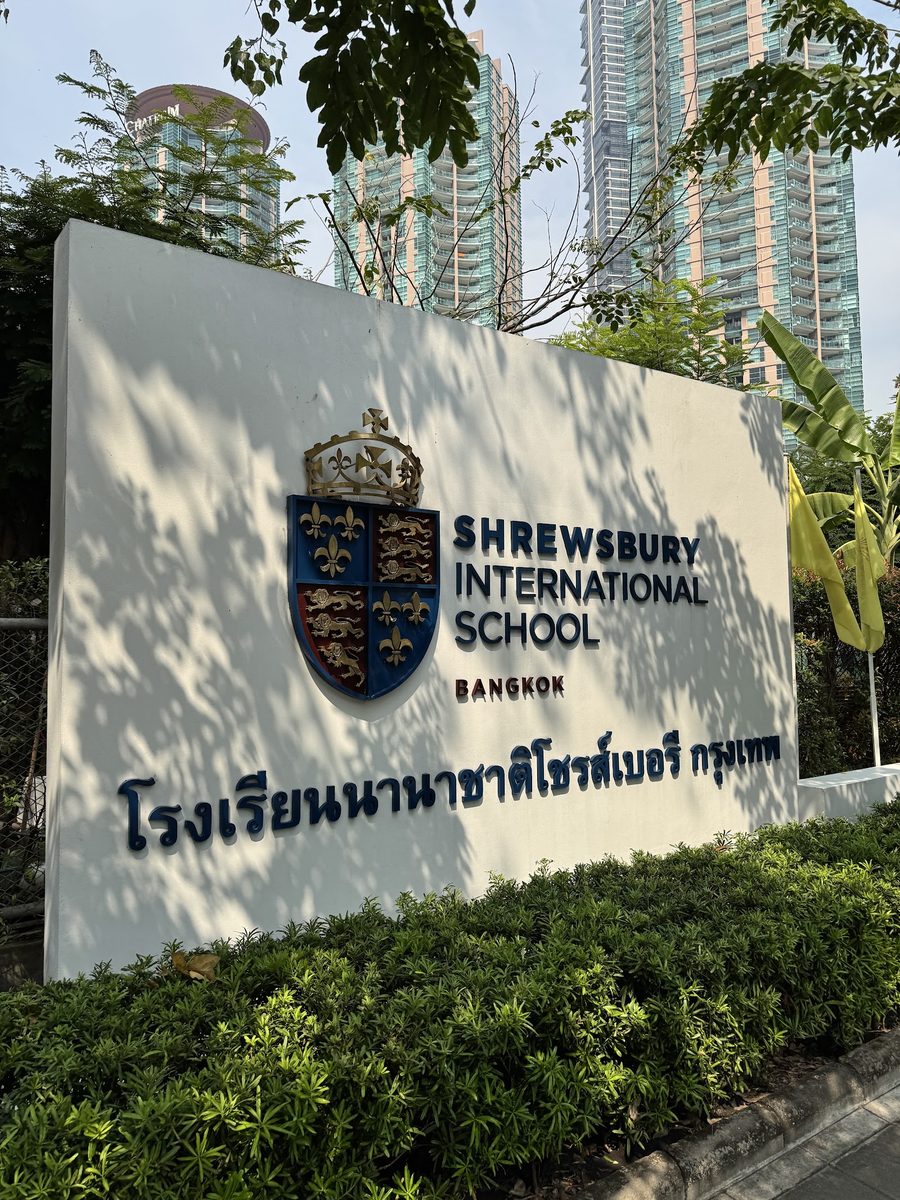
Shrewsbury International School Bangkok
Bangkok · Thailand
A 1552 English public-school pedigree anchors a Chao Phraya riverside campus reachable by its own school boat.
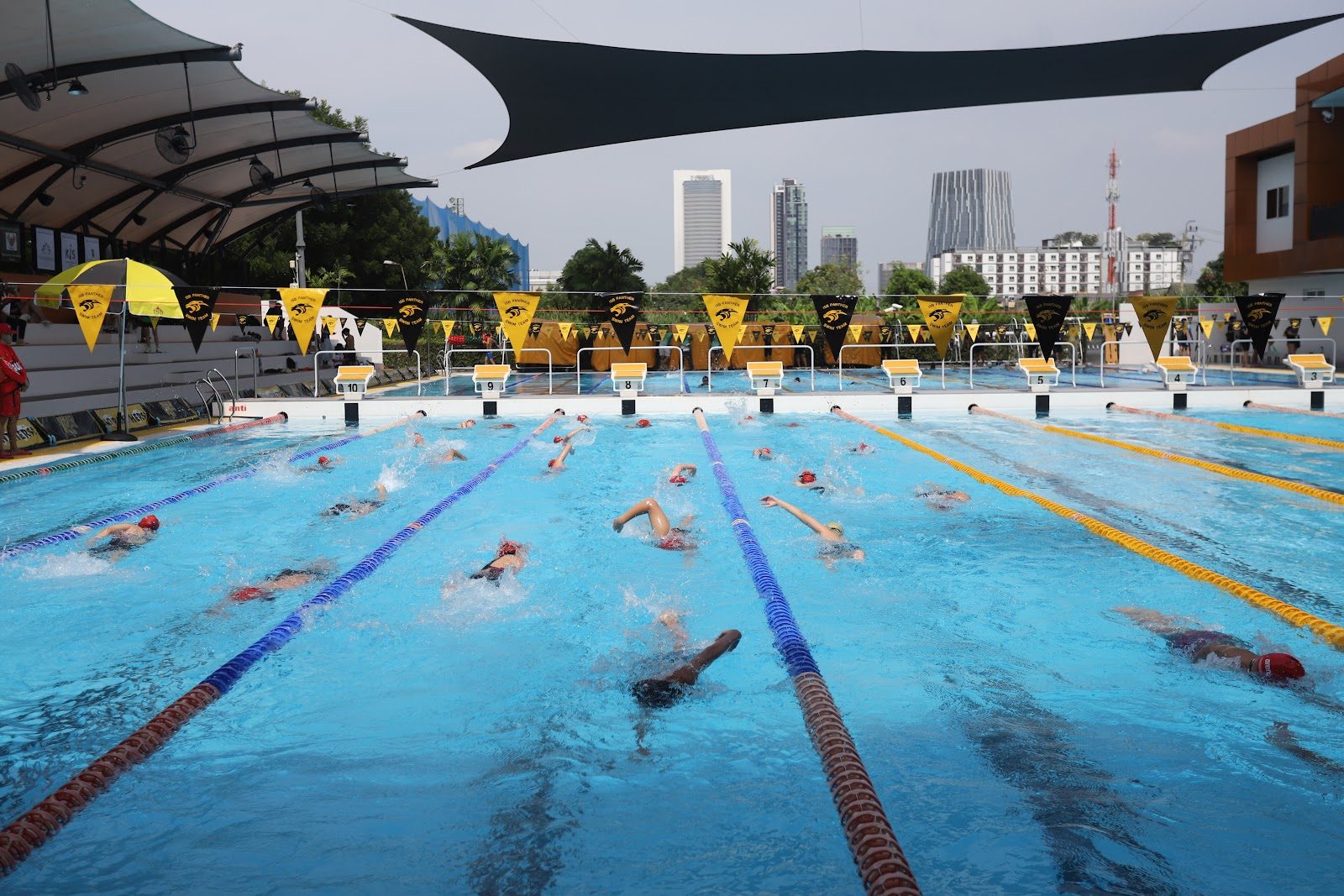
International School Bangkok
Bangkok · Thailand
Opened in 1951 as Thailand's first international school, it pioneered the country's IB Diploma and runs a wilderness campus in Phetchaburi.
Collège Jean-de-Brébeuf
Montreal · Canada
Once a Jesuit seminary, now a secular Francophone college spanning secondary school and CEGEP, IB-authorized since 1982.
Same country and curriculum — closest matches within ±10 points either way