
Île-de-France
Founded by a Resistance veteran, this Left Bank lycee teaches core subjects bilingually and has topped France's rankings for a decade.
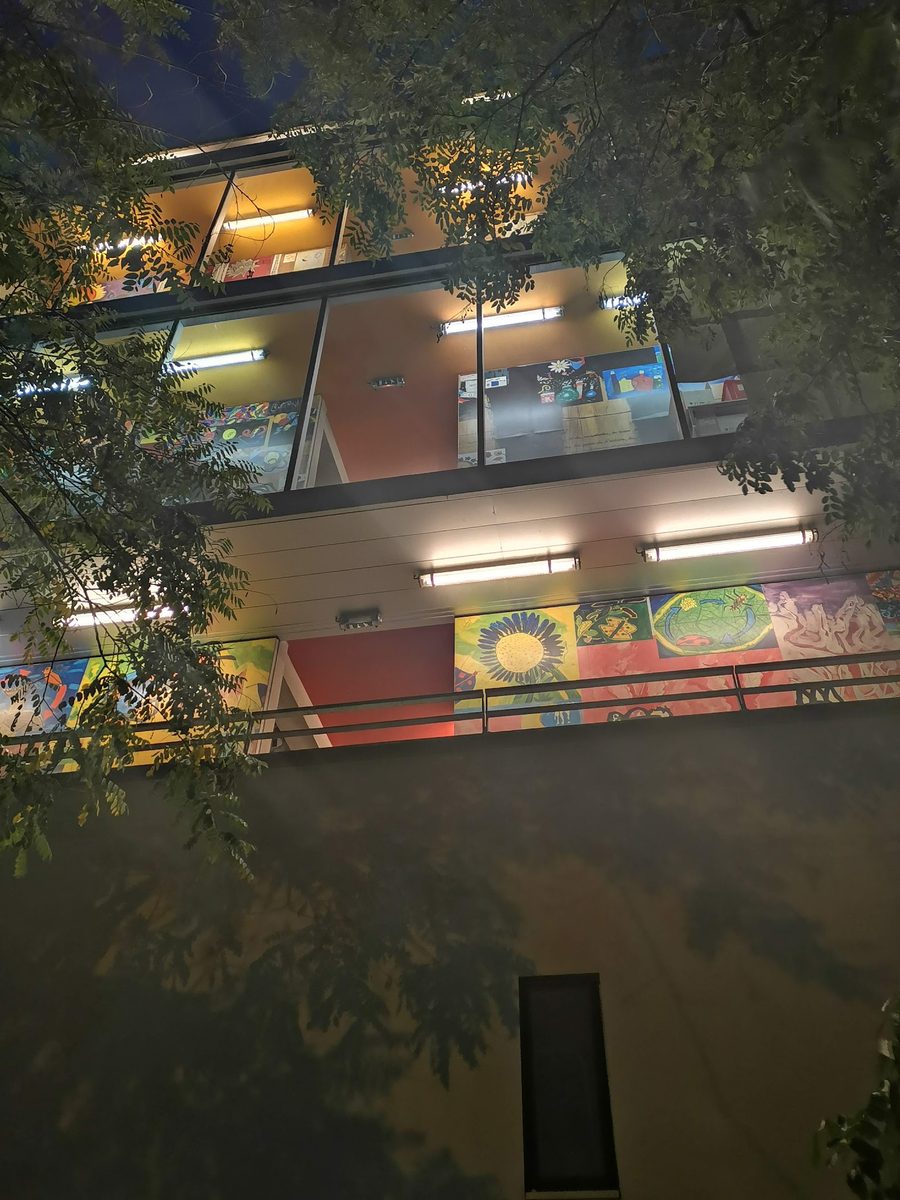
Photo © Zig Zagueur via Google Maps
Type
Day
Ages
3–18
Curriculum
IB · French Baccalaureate
Ratio
—
The Verdict
Editor's commitment
Right for
Families who want French and English used for core learning, with both the French Baccalaureate and IB under one roof.
Wrong for
Parents seeking low-cost Paris schooling: average annual day fees are €14,500, classes average 25, and this is a day school only.
Watch out for
This 1954 Left Bank institution sells bilingual internationalism hard; check whether your child wants that intensity, not just Amherst or Barnard destinations.
Ranking breakdown
École Jeannine Manuel · #238 of 1591
Composite score 74.5. 8 weighted criteria.
By criterion
Academic Outcomes
Weight 20%
#147
of 1529 scored
University Placement
Weight 16%
#136
of 1529 scored
Prestige & Heritage
Weight 12%
#307
of 1529 scored
Alumni Network
Weight 12%
#306
of 1529 scored
Facilities
Weight 12%
#867
of 1529 scored
Transparency & Communications
Weight 8%
#457
of 1529 scored
Peer & Industry Review
Weight 10%
#338
of 1529 scored
Admissions Selectivity & Demand
Weight 8%
#229
of 1529 scored
Score history
École Jeannine Manuel · 2026
Movement across 2024–2026. Peer average overlaid.
Overall — 2024–2026
74.5/ 100
▲ +19.0 vs 2025
year on year
Peer & Industry Review
How École Jeannine Manuel is regarded in the sector
82
Strong · medium confidence
École Jeannine Manuel is regularly featured in Good Schools Guide International and Tatler coverage as a leading bilingual/international school in Paris, praised for academic rigor and strong university placement into elite institutions including Oxbridge and Ivy League schools. It has a well-documented international alumni network and is frequently cited in expat parent forums (e.g., Message Board, French-property forums) as one of the top international school choices in Paris, though it is somewhat less universally referenced than the American School of Paris or International School of Paris in broader 'best of France' lists.
Evidence sources
Editors' overview
What marks École Jeannine Manuel out in Paris is not just bilingualism, but the way it sits inside the French system without surrendering an international outlook. Founded in 1954, it teaches in French and English, runs from ages 3 to 18, and offers both the French Baccalaureate and the IB. That combination matters: parents do not have to choose between French academic rigour and an outward-facing university trajectory. The school’s long-standing claim on attention rests on exactly that blend, and on a model built for families who want children to move comfortably between languages, intellectual cultures and higher-education systems. It is also not a boutique operation dressed up as global. CIS and IBO accreditation give it external ballast, and an average class size of 25 places it in the serious, full-scale day-school category rather than the hyper-selective seminar model.
This is a fiercely academic school with a clear idea of what educated fluency looks like: strong command of language, comfort with demanding content, and readiness for selective universities in more than one country. The website puts higher-education guidance at the centre of the proposition, and the recent destinations listed in the context, including Amherst, Babson and Barnard, fit that pattern. The admissions language is also telling. The school says it admits pupils who can benefit from its enriched bilingual course. That is not code for soft inclusivity; it points to a school that expects students to keep pace. Children who thrive here will be intellectually quick, linguistically agile and happy in a high-pressure environment where academic identity matters. Families looking for a gentle, highly individualised school with small classes and a loose culture will find better fits elsewhere.
Its market position is straightforward: elite Paris day school, international in orientation, French at its core, and expensive at an average annual fee of €14,500 across the full age range. That fee does not buy vast classes or a vague “global citizen” pitch; it buys access to a bilingual French education with genuine international reach and a substantial alumni network. The notable alumni footprint is real, with 23 catalogued in Wikidata across politics, scholarship, writing, film and music. For the right child, this is a formidable shortlist school: cosmopolitan, academically exacting, and built for students who want to operate at ease in both Paris and the wider world. It is not for the faint-hearted.
Academic Performance
École Jeannine Manuel puts exam performance front and centre, and with reason. The school publishes a dedicated “Baccalauréats et résultats” section and is happy to advertise its latest baccalauréat outcomes and its standing in French league tables. That matters in a market where many international schools talk endlessly about ethos and disclose little. Jeannine Manuel does the opposite: it trades on results, and its public messaging ties academic credibility directly to external examination success. The headline claim here is not subtle: it wants families to read the school as a top-flight academic institution, not a socially polished bilingual option with middling outcomes.
Relative to peers, that places it in the elite end of the Paris and French international-school market. The site states that the Paris school has topped the Palmarès des Lycées Français de l’Étranger, and the editorial context notes a decade at the summit of France’s rankings. That is a serious distinction, not decorative marketing copy. It puts Jeannine Manuel above the large group of bilingual schools that offer international orientation without matching selective exam strength. The missing piece is hard aggregate data for the IB: we have not seen a published school-wide IB average or points distribution here. For the French baccalauréat, though, the school’s confidence is justified. This is a results-driven school whose exam profile sits with the country’s academic heavyweights.
Facilities
Facilities are not the headline story here in the way they are at purpose-built suburban internationals with acres of land and a sports-led sell. Jeannine Manuel is an urban school, and parents should read the estate through that lens. What the school itself foregrounds is less theatre, turf and glass, more the infrastructure around teaching, student life and transition: extracurricular provision, student committees, safeguarding, child-protection charters, wellbeing programming, university counselling and support for families arriving from abroad. That points to a campus set-up designed for serious academic use and dense daily life, not for show. The school also trades heavily on its alumni network and on extension activity through the Jeannine Manuel Academy, including test preparation and language programmes, which adds another layer of institutional resource beyond the standard school day.
Against peers, that puts it in a distinct category. It does not read like a Paris school trying to mimic a vast Anglo-American campus. It reads like a *high-functioning metropolitan institution* where the most important facilities are the ones that support bilingual study, student support and onward progression. The published picture leaves gaps: we have not seen a clear public inventory of specialist science labs, arts spaces, performance venues or sports provision, and that opacity matters because many competitors now itemise these in detail. The strongest concrete facilities fact on the public record is social rather than architectural: pupils on the Paris site come from 80 nationalities. That gives the school a *genuinely international daily environment. Parents seeking spectacle and sprawl* should look elsewhere; parents seeking an intellect-first urban campus will understand the appeal.
It is not for the faint-hearted. École Jeannine Manuel puts exam performance front and centre, and with reason
Prestige
Prestige here rests on a rare combination of social standing, academic credibility and institutional distinctiveness. In Paris, many schools can claim one of those assets; very few hold all three at once. Jeannine Manuel occupies that upper tier. It has a long-established place in the city’s educated, internationally minded families, and its intake of 80 nationalities gives it a reach that goes beyond the usual Parisian grande bourgeois circuit. That matters because prestige in this market is not just about old French status; it is about access to serious bilingual education without giving up intellectual ambition or international mobility. The school’s association with selective overseas university destinations strengthens that profile. So does an alumni base that extends into politics, scholarship, publishing and the arts. This is real prestige, not borrowed gloss from a brand-name chain or a newly polished campus.
The reason for the high rating is simple: the school has built a reputation that carries weight with both French and international families, and it has sustained that reputation under scrutiny. The founder’s biography adds moral seriousness rather than decorative heritage; “Resistance veteran” is not a marketing flourish. The public emphasis on examination results, higher-education counselling and demanding admissions reinforces the same message: this is a school for families who value intellectual status as much as social cachet. At an average annual fee of €14,500, it is expensive, but not priced in the stratosphere of some international competitors. That strengthens its standing further. It reads as high-status, hard-earned and culturally serious.
That gives the school a genuinely international daily environment
Communications
Parent communication is structured around a clear set of practical channels: admissions meetings, school visits, FAQs, fee information, student-life pages, safety and wellbeing pages, parent and alumni associations, and dedicated guidance for families preparing an arrival in France. That architecture is purposeful and parent-facing. It covers the questions international families actually ask, from admissions procedure to university counselling and settling in. The site navigation also splits content cleanly between parents, pupils, staff and alumni, which matters at a school with a complex, mobile community drawn from 80 nationalities. This is not a school hiding behind glossy rhetoric and making families dig for basics. It publishes the essentials in a usable order and gives parents multiple points of entry into the institution.
The tone, though, is institutional rather than intimate. Communication reads as formal, controlled and geared to families who are comfortable operating inside a demanding school culture. There is plenty on mission, pedagogy, wellbeing and future planning; less on the everyday mechanics that anxious parents often want spelled out in detail. The same pattern runs through the broader public messaging: strong on direction, lighter on granular disclosure. We have not seen a rich public picture of day-to-day parent communications such as newsletters, portal use or class-level reporting rhythms. So the verdict is clear. Jeannine Manuel communicates competently and with serious intent, but not with much softness. Parents who value clarity and institutional confidence will rate that highly; parents who want hand-holding will not.
Uniqueness
What is distinctive here is not bilingual teaching on its own. Paris has other schools with strong English. Jeannine Manuel’s edge lies in the fact that it welds bilingualism to a French academic spine and then pushes both towards international higher education with unusual discipline. The school’s own language is revealing: it talks about “understanding internationale”, “brassage des cultures” and a duty to prepare pupils seriously for university choices. That produces a student experience that is *less decorative internationalism, more intellectual dual fluency*. Pupils do not just accumulate good English and a French diploma; they learn to think, write and argue across two educational cultures, in classrooms shaped by 80 nationalities. That is a rare operating model in a city where many schools force a choice between French establishment schooling and an international track.
The benefit for students is concrete. They leave with a wider range of academic and cultural reference points, and with less friction when moving between French institutions and Anglophone universities. The school’s higher-education advising matters here, but so does the founder’s original ambition: education as preparation for participation in the world, not insulation from it. That gives the place a serious moral centre as well as an academic one. The result is a school that produces students who are linguistically agile, culturally alert and comfortable under pressure. For families who want an easy, local, socially cosy education, that mix is excessive. For families who want children trained to cross borders — intellectual as much as geographic — it is the point.
Prestige here rests on a rare combination of social standing, academic credibility and institutional distinctiveness
Student Profile
The students who fit here are bright, verbal, fast-processing and comfortable with pressure. This school suits children who like ideas, can switch registers between home, classroom and the outside world, and do not need constant reassurance to keep going. Its own admissions language is selective in spirit: it wants pupils who will benefit from an enriched bilingual course, and that has consequences for the peer group. Expect classmates who read well, argue confidently, absorb demanding content at speed and treat academic performance as part of their identity. With pupils drawn from 80 nationalities, the social environment is genuinely international rather than tokenistic. That mix favours adaptable children who enjoy difference, tolerate ambiguity and can make friends across cultures without drama.
The less suitable candidate is just as clear. A child who needs a slow pace, heavy pastoral cushioning or a low-stakes classroom culture will struggle. So will pupils who are strong in one language but resistant to the discipline of operating seriously in two. This is not the place for coasting, nor for families who want a socially polished school that asks little in return. The best fit is intellectually ambitious, self-propelled and resilient: children who are happy being stretched every day, and parents who value substance over hand-holding. For that group, Jeannine Manuel offers a hard-driving, cosmopolitan peer set with real academic force.
What is distinctive here is not bilingual teaching on its own
Co-curricular strengths
Arts & sport, on a separate axis
Overall 8/10
Scored 0-10 from the school's own published evidence. This axis is editorial-only — it does not feed the main WTS ranking.
Sports
7.5/10
Drama
8/10
Drama is explicitly listed in extracurriculars, including two verified star-tier drama alumni—Charlotte Gainsbourg and Academy Award winner Sophia Loren—which anchors this dimension at at least 8.
Dance
8/10
Music
8/10
Music is offered.
Visual Arts
8.5/10
Arts provision, and one verified star-tier visual arts laureate, Sophia Loren with the Praemium Imperiale, which anchors the dimension at at least 7.
Editor first-pass · editor-reviewable · 7/28/2026
Outcomes & destinations
Where students go next
Top destinations
617 placements
- Amherst College· 1
- Babson College· 1
- Barnard College· 1
- Bates College· 1
- Boston College· 1
- Brown University· 6
- Bryn Mawr College· 1
- Chapman University· 1
- College of William & Mary· 1
- Columbia University· 16
- Cornell University· 2
- Dartmouth College· 1
- Duke University· 2
- Emory University· 1
- Fordham University· 1
- Georgetown University· 5
- Harvard University· 2
- Middlebury College· 1
- New York University· 9
- Northeastern University· 3
- Northwestern University· 2
- Pomona College· 1
- Purdue University· 2
- Scripps College· 1
- Stanford University· 3
- The New School· 1
- Tufts University· 1
- Tulane University· 2
- University of California, Berkeley· 1
- University of California, Los Angeles· 4
- University of Charleston· 1
- University of Chicago· 5
- University of Illinois· 3
- University of Maryland· 1
- University of Miami· 2
- University of Michigan· 1
- University of North Carolina· 2
- University of Notre Dame· 1
- University of Pennsylvania· 4
- University of Southern California· 4
- University of Virginia· 2
- Vanderbilt University· 1
- Washington University· 1
- Williams College· 1
- Wellesley College· 2
- Wesleyan University· 2
- Yale University· 7
- University College London· 80
- University of the Creative Arts· 1
- Durham University· 8
- University of Edinburgh· 18
- University of Essex· 2
- University of Exeter· 7
- University of Glasgow· 1
- University of Kent· 1
- University of Leeds· 1
- University of Liverpool· 1
- University of Manchester· 7
- University of Nottingham· 2
- University of Oxford· 17
- University of St Andrews· 21
- University of Southampton· 4
- University of Surrey· 1
- University of Sussex· 2
- University of Warwick· 11
- BIMM Institute· 1
- University of Cambridge· 9
- Central Saint Martins· 2
- City University· 1
- Falmouth University· 1
- Goldsmiths, University of London· 3
- Guildhall School· 1
- Imperial College London· 17
- King’s College London· 40
- London School of Economics· 21
- Liverpool Institute of Performing Arts· 1
- Met Film School· 1
- Queen Mary University· 8
- Royal Holloway University· 1
- SOAS· 5
- The Scottish Association for Marine Science· 1
- University of the Arts· 5
- University of Bath· 9
- University of Bristol· 9
- University of Cardiff· 1
- Concordia University· 14
- McGill University· 50
- University of Toronto· 6
- University of British Columbia· 1
- Amsterdam University College· 4
- Erasmus University Rotterdam· 7
- Leiden University· 3
- Maastricht University· 1
- Tilburg University· 1
- TU Delft· 4
- University of Amsterdam· 8
- University of Gröningen· 1
- Utrecht University· 2
- EPFL· 18
- Ecole Hôtelière de Lausanne· 4
- Les Roches· 1
- ESADE· 14
- IE University· 14
- Universidad Europea de Madrid· 2
- Luiss Guido Carli· 2
- Università Bocconi· 22
- Università Cattolica del Sacro Cuore· 1
Reported by the school. Confirm with admissions.
Notable alumni · Wikidata
23notable alumni
1 historic (born pre-1930) · 11 modern (born post-1970)wikidata:2026-07-28 How we source this

WTS 300 badge
2025/26 editionÉcole Jeannine Manuel is one of the World's Top 300 Schools for 2025/26. Claim your listing to add it to your site →
Strengths
- +Ranked first among French high schools, state and private, for ten consecutive years by L'Internaute for overall academic performance.
- +Strong dual-track results: IB average of 38 with a 100% pass rate and over a third of students scoring 40+, alongside a 100% BFI pass rate.
- +UNESCO-associated school and one of the first IB World Schools, with additional accreditation from CIS and NEASC.
- +Genuinely international intake of around 80 nationalities, with the school population split roughly a third French, a third international and the rest mixed.
- +Dedicated Adaptation Program brings in over 100 non-French-speaking pupils each year with intensive, tailored French immersion support.
Considerations
- −Admission is highly selective, with reported application-to-place ratios around 7:1 for a limited number of entry points.
- −Fees are substantial and rise steeply by grade, reportedly ranging from around 7,500 EUR to nearly 25,000 EUR per year depending on level.
- −No boarding option on the Paris campuses; boarding is only available at the separate Lille site, so relocating families must arrange their own housing.
- −The school is large (well over 2,000 pupils in Paris alone), spread across three linked sites, which may not suit families seeking a small, single-campus community.
Availability
Primary entry gate & tests
Academic Dossier + Language
Gallery
Photo © Flying Ecosystem via Google Maps
Photo © Anatole H via Google Maps
Photo © Anatole H via Google Maps
Photo © École Jeannine Manuel via Google Maps
Parent reviews
Have you sent your child here?
Voice reviews carry the strongest trust badge — we transcribe them for you to tidy up before they go live. Prefer to type? A written review is fine too.
Add your voice
In 60 seconds, tell other parents: what's the best thing about École Jeannine Manuel, and what surprised you when your child joined?
We ask for a Google sign-in so every review has a real face behind it — no anonymous drive-by attacks on schools, and no faked positive reviews. Your email is never shown publicly.
Send this profile to a friend
International parents rely on word-of-mouth. Share this review with someone weighing the same decision.
Schools with places
Similar schools to École Jeannine Manuel with places available now.
International School of Paris
Paris · France
- 2026-27
- WAITPOOLSpace-dependent
- 2027-28
- PLACES OPENRolling
The British School of Paris
Paris · France
- 2026-27
- WAITPOOLSpace-dependent
- 2027-28
- PLACES OPENRolling
Ermitage International School
Maisons-Laffitte · France
- 2026-27
- WAITPOOLSpace-dependent
- 2027-28
- FUTURE CYCLEDates TBC
Availability first, then country, area, curriculum, price, co-curricular
Consider also
Also worth looking at alongside École Jeannine Manuel.
École Alsacienne
Paris · France
Founded by Alsatian refugees in 1874, a Left Bank laboratory for secular, progressive pedagogy that shaped France's republican school system.
École Saint-Louis de Gonzague
Paris · France
Jesuit since 1894 on the Chaillot hill, still teaching Ignatian rigor into France's top-ranked lycee and its elite prep classes.
Collège Stanislas de Paris
Paris · France
In Montparnasse since 1804, this Catholic day school channels rigorous bac prep straight into France's grandes ecoles pipeline.
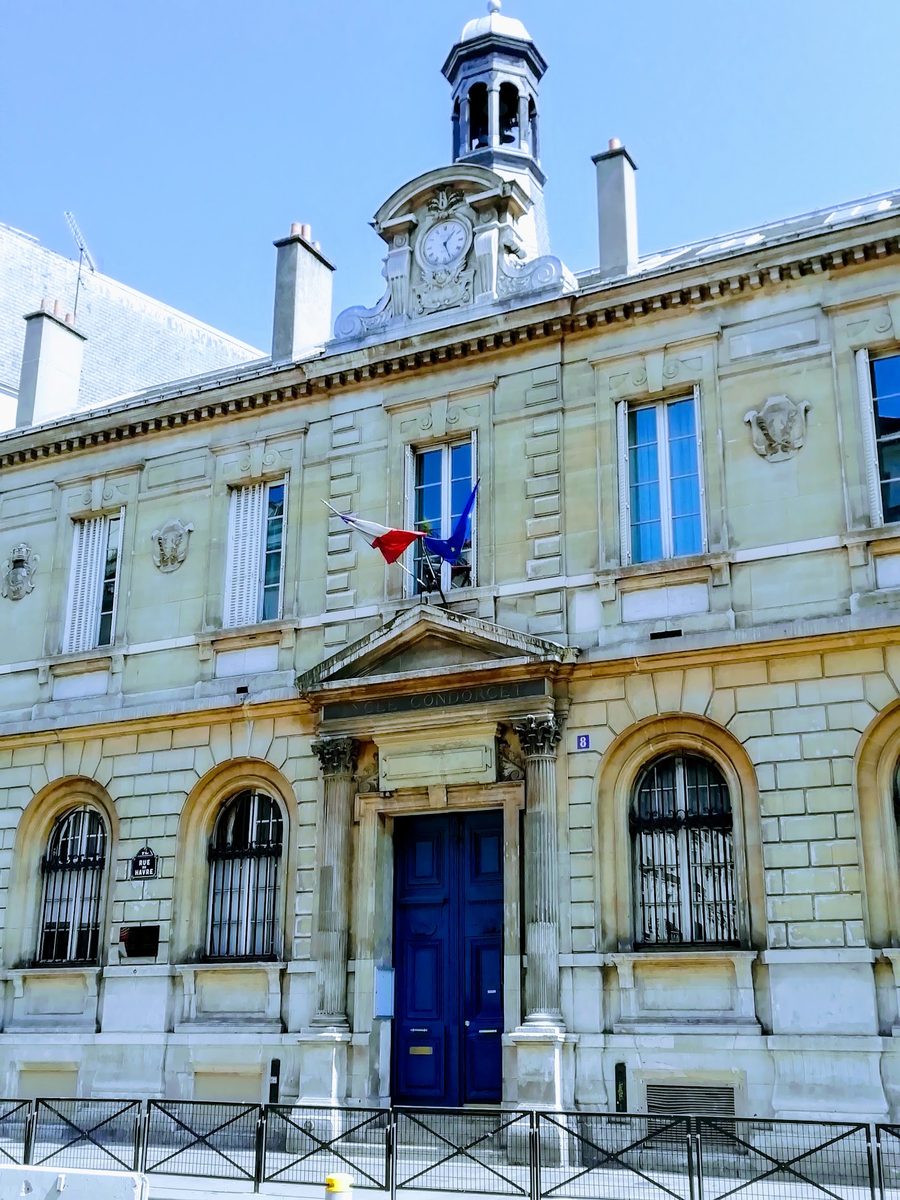
Lycée Condorcet
Paris · France
Housed in a former Capuchin cloister near Saint-Lazare, this boarding-free lycee still funnels day students into France's elite prep classes.
Same country and curriculum — closest matches within ±10 points either way