
Beijing
High School Affiliated to Renmin University of China
Set in the heart of Beijing's education precinct, this Renmin University affiliate has nurtured Olympiad champions since gifted classes began in 1978.
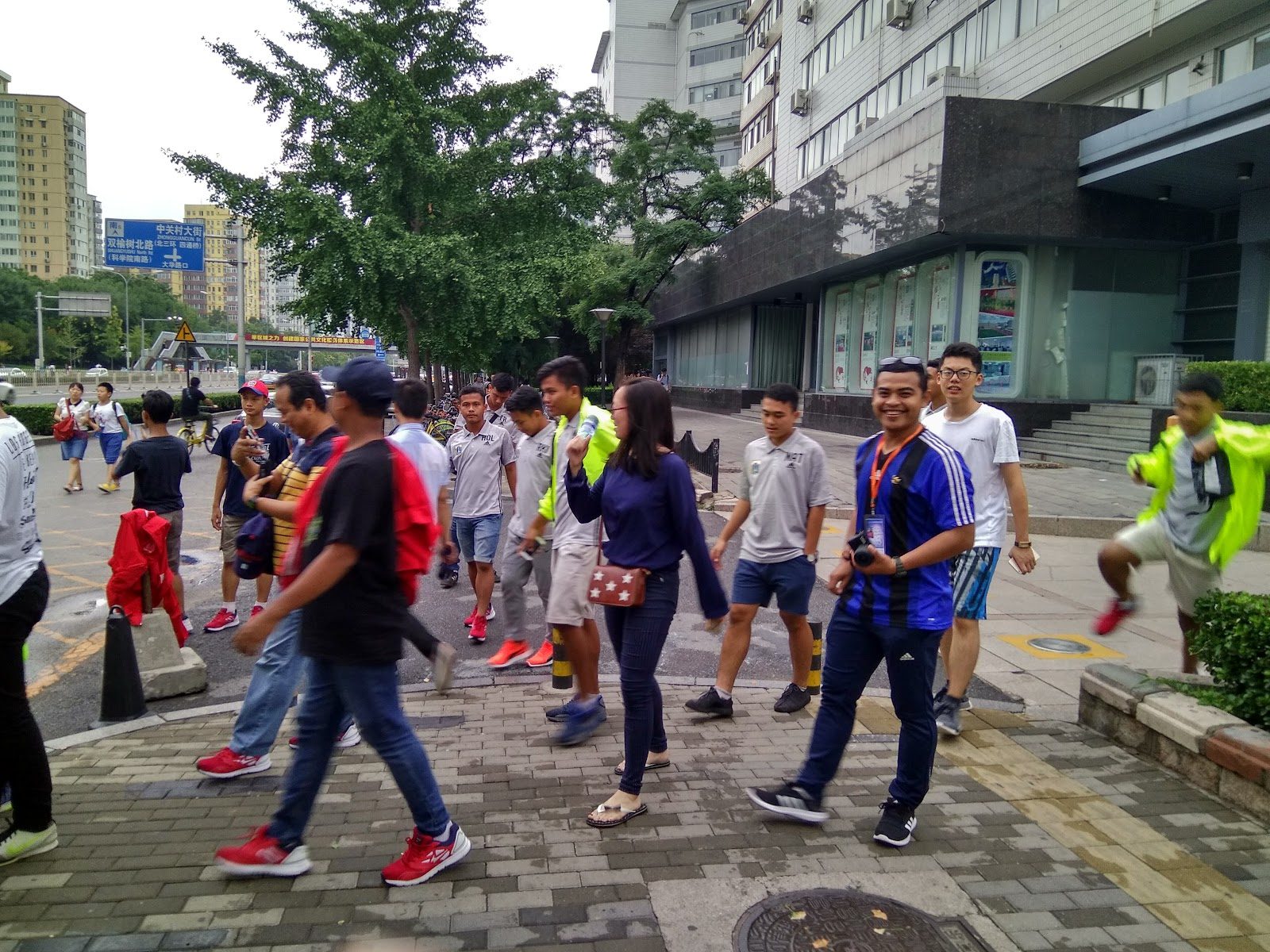
Photo © MS COACH via Google Maps
Type
Day
Ages
12–18
Curriculum
Chinese National
Qualifications
Gaokao · AP
Ratio
—
The Verdict
Editor's commitment
Right for
Ambitious 12–18 pupils who want Beijing, a 1950-founded day school, and a Chinese National curriculum with serious Olympiad depth.
Wrong for
Families wanting boarding, a non-Chinese curriculum, or a softer ethos than a non-religious Beijing school that prizes competition and discipline.
Watch out for
Chinese and English are the teaching languages, but the school does not publish aggregate exam results; Olympiad headlines are not a full academic picture.
Ranking breakdown
High School Affiliated to Renmin University of China · #225 of 1591
Composite score 73.8. 8 weighted criteria.
By criterion
Academic Outcomes
Weight 20%
#10
of 1529 scored
University Placement
Weight 16%
#5
of 1529 scored
Prestige & Heritage
Weight 12%
#9
of 1571 scored
Alumni Network
Weight 12%
#1270
of 1530 scored
Facilities
Weight 12%
#329
of 1534 scored
Transparency & Communications
Weight 8%
#943
of 1532 scored
Peer & Industry Review
Weight 10%
#66
of 1548 scored
Admissions Selectivity & Demand
Weight 8%
#11
of 1529 scored
Peer & Industry Review
How High School Affiliated to Renmin University of China is regarded in the sector
80
Strong · medium confidence
RDFZ is consistently grouped with Beijing No. 4 High School and Beijing No. 101 Middle School as one of the capital's 'Big Four' academic powerhouses, a classification repeated across Chinese education media (Xinhua, China Daily, Sina Education) whenever gaokao and competition results are tallied. Its dominance in national and international science olympiads (IMO, IPhO, IChO, IOI) is frequently cited by Ministry of Education-linked commentary as a benchmark for STEM training quality, and rival Beijing schools reference its curriculum and coaching model when justifying their own competition programs. Tsinghua and Peking University admissions data, published annually in Chinese press rankings, routinely show RDFZ among the top feeder schools nationally, reinforcing its standing with mainland university gatekeepers. Its international division is also tracked by US/UK-focused counselling networks as a reliable pipeline to selective Western universities, though Western independent-school commentary (WhichSchoolAdvisor, Good Schools Guide) covers it far less than domestic outlets, reflecting its primary orientation toward China's own elite academic ecosystem rather than the international boarding-school circuit.
Award
Elite Science & Research 58
World's Top School · The Global Ranking
High School Affiliated to Renmin University of China is featured on our Global Top 58 ranking at #38. This seal is available for the school's marketing team to use on their website, prospectus and social channels.
Award
Elite Computing & AI 60
World's Top School · The Global Ranking
High School Affiliated to Renmin University of China is featured on our Global Top 60 ranking at #56. This seal is available for the school's marketing team to use on their website, prospectus and social channels.
Award
Elite Mathematics 60
World's Top School · The Global Ranking
High School Affiliated to Renmin University of China is featured on our Global Top 60 ranking at #22. This seal is available for the school's marketing team to use on their website, prospectus and social channels.
- Wang Xiaochuan — Founder/CEO of Sogou, business
- Chen Jining — Mayor of Beijing, politician
- Yao Chen — Actress, entertainment
Editors' overview
High School Affiliated to Renmin University of China sits near the top of Beijing’s state-school hierarchy. Founded in 1950, it is a public day school for ages 12–18, teaching the Chinese National curriculum in Chinese and English. Its distinguishing feature is not pastoral warmth or boutique international polish; it is an entrenched culture of academic selection, competition and elite performance. The school’s own record foregrounds Olympiad achievement with blunt consistency: international biology gold, international maths gold, and a historic best 3 gold and 4 silver at the national informatics Olympiad in 2026 alone. This is a school built for intellectual intensity, competitive stretch and serious academic ambition.
What puts it on a shortlist is the scale and depth of its talent pipeline. The editorial tagline points to gifted classes dating back to 1978, and the current school site backs that up with a heavy emphasis on innovation talent cultivation, research activity, STEAM and AI programmes, engineering education, and a large internal apparatus for teacher development. The result is a school that treats high attainment not as an enrichment extra but as core business. Parents who want a conventional rounded school with modest pressure levels should look elsewhere. Parents who want access to one of Beijing’s strongest environments for mathematically and scientifically gifted pupils should pay close attention. The campus life on show also includes arts, sport and international exchange, but those sit alongside the academic engine, not above it. The tone is driven, disciplined and unapologetically institutional.
The right student for RDFZ is bright, resilient and comfortable in a fast field. This suits pupils who enjoy hard problems, formal academic training and measurable standards; pupils who want to test themselves against top peers; and pupils who thrive in systems with clear expectations and little hand-holding. It also suits families that value public-sector prestige, academic seriousness and strong links to Beijing’s education establishment. It will not suit children who need a gentle pace, high personal latitude or a school identity detached from state priorities. The school’s published life includes strong ideological education and patriotic programming as well as scholarship, so parents need to be clear-eyed about the full package. For the right child, that package offers relentless rigour and rare academic firepower.
An Elite Science & Research 58 school
The High School Affiliated to Renmin University of China, in the Zhongguancun science district of Haidian, Beijing, sits at rank thirty-eight on the Elite Science & Research 58. The anchor fact: when China named its 2023 national teams for the five subject Olympiads - mathematics, physics, chemistry, biology and informatics - all six Beijing seats went to RDFZ students, sweeping every discipline the city qualified for. That result sits inside an Early Development for Top Innovative Talent programme built, since its 2010 founding, on signed research agreements with the Chinese Academy of Sciences and the Chinese Academy of Social Sciences.
The specialism is systematic identification feeding mentored research, not generic AP/IB breadth relabelled as elite. RDFZ runs more than 150 elective courses across science, engineering, humanities and the arts, feeding twice-weekly, self-selected research seminars for the Early Development cohort and the International Curriculum Center. The same structure runs a synthetic-biology team, RDFZ-China, gold medallist in the high-school track of the 2022 iGEM Jamboree, and produced Liao Yubo's perfect 42-point IMO gold in 2022. In December 2023 RDFZ was named to Beijing's first Youth Top Innovative Talent Training Base cohort, and in October 2024 it launched a project pooling research mentors across its RDFZ United network.
Notable alumni include Hengyun (Harry) Zhou, RDFZ's 2012 International Physics Olympiad gold medallist, now a Harvard PhD graduate from Mikhail Lukin's group and a research scientist at QuEra Computing and Harvard University working on fault-tolerant quantum computing. Xin Qi, a 2013 first-prize winner at the National Youth Science and Technology Innovation Competition, went on to qualify for Intel ISEF. Shi Yimeng, admitted for her entomology research, later won an Intel ISEF first prize.
International openness runs through the ICC International Curriculum Center, Beijing's first public IBDP centre, alongside Cambridge A-Level (since 2004) and AP (since 2010) streams, with alumni now at Harvard, Yale, Stanford, Princeton, Cambridge and Oxford. A separate international office admits foreign-passport holders aged 12-16 via a written Chinese/maths/English exam and interview plus a Beijing guardian; RDFZ also holds friendship ties with Thomas Jefferson High School for Science and Technology, Phillips Andover and Eton. It is fundamentally a day school; tuition runs roughly RMB100,000/year for A-Level and RMB120,000/year for AP or IB. Families targeting the research-active ICC cohort should apply nine to twelve months ahead and arrange guardian housing separately from the academic file.
An Elite Computing & AI 60 school
The High School Affiliated to Renmin University of China, in Beijing's Haidian district, sits at rank fifty-six on the Elite Computing & AI 60 because its informatics program produced two individual world champions at the International Olympiad in Informatics within three years. Deng Mingyang won IOI 2021 with a perfect score, and two years later Xu Tingqiang repeated the feat, topping the 351-competitor field with 580 points as China's team swept all four golds and took the team title.
The specialism sits inside RDFZ's Chinese National curriculum track rather than its international department, built on a genuine multi-year pipeline, not a bolt-on club. Pupils destined for the national squad train together in a shared computer lab, moving through provincial NOIP qualifiers, a fifty-strong national training camp, a thirty-student candidate round, and a four-person national-team selection that can take up to two years. Teacher Ye Jinyi coaches students through this process, and RDFZ's Early Development Program, running since the late 1970s, feeds computationally gifted pupils into the pathway from junior grades.
Notable alumni include Deng Mingyang, IOI 2021's individual world champion with a perfect score and a 2019 IMO gold medallist, who received an offer from MIT while still a pupil at RDFZ, and Xu Tingqiang, IOI 2023's individual world champion, who earned direct admission (baosong) into Tsinghua University's computer science program without sitting the gaokao. Xu trained in the same school computer lab where Deng, by then an alumnus, returned to mentor younger teammates, illustrating how the pipeline compounds across cohorts rather than resetting each year.
International openness runs through a distinct international department rather than the informatics track itself: roughly 200 foreign-passport pupils from 20-plus countries follow Cambridge A-Level, IB Diploma or AP/US pathways, with annual fees near RMB 90,000-100,000 for IB, RMB 126,000-258,000 for A-Level and RMB 172,000-192,000 for AP. The wider campus is a day school, though the international department keeps modest dormitory rooms for out-of-town or overseas pupils aged twelve to sixteen, who need a valid passport, visa and Beijing-based guardian. Families targeting the informatics pipeline itself should treat it as a Chinese National-track opportunity requiring strong Mandarin, and should plan a Beijing base at least a year ahead, since the international office -- not the coaching staff -- controls entry and curriculum choice.
An Elite Mathematics 60 school
The High School Affiliated to Renmin University of China (RDFZ), in Beijing, sits at rank twenty-two on the Elite Mathematics 60 because of an unusually consistent run of individual IMO gold medals. Most recently, RDFZ's Peng Zhenqian won gold as China swept all six golds and finished first with 232 points at the 67th IMO in 2026, and he enters Peking University this autumn. That result follows earlier RDFZ IMO golds from Deng Mingyang (2019), Yi Jia (2020), a perfect-score gold from Liao Yubo (2022), and a gold-silver pair from Wang Xianbang and Ye Yuxing (2024).
The pipeline runs on dedicated competition coaching rather than a repackaged AP or IB syllabus. Competition coach Li Hansong guided Peng Zhenqian through China's two-round national selection, while RDFZ's Sino-foreign cooperative programme offers an "Advanced College Math" course for pupils who exhaust AP Calculus BC. The real differentiator is breadth: in the 2024 national squad selection RDFZ placed six students across all five Olympiad subjects - math, physics, chemistry, biology, informatics - winning four golds and a silver, sweeping Beijing's entire allocation. Published cohort-penetration figures for the advanced stream are not released.
Notable recent alumni include Peng Zhenqian (2026 IMO gold, Peking University-bound), Wang Xianbang and Ye Yuxing (gold and silver, 2024 IMO), Liao Yubo (2022 IMO perfect-score gold), Yi Jia (2020 IMO gold on China's first-place team), and Deng Mingyang, whose 2019 IMO gold was followed by a top-four finish at the International Olympiad in Informatics - proof that RDFZ's strongest pupils are rarely confined to one subject.
International openness runs through a parallel structure, not the domestic competition track. RDFZ's international department enrols over 200 foreign-passport students from 20-plus countries, taught by 60-plus international staff, across AP, IB, A-Level and beginner-Chinese pathways. Applicants need a valid passport, a Chinese student visa and a Beijing-based guardian, with entry by written test plus interview. RDFZ is primarily a day school, but dedicated dormitory apartments exist for overseas applicants who request them in advance. Fees run roughly RMB 90,000-120,000 a year across AP, A-Level and IB. Over 85 percent of the international department's graduates progress to Peking, Tsinghua or Renmin University, so this is a route into China's domestic system. Apply a full year ahead; treat the international department, not the closed training-camp track, as the realistic entry point.
Academic Performance
RDFZ’s published academic record is strongest where China’s most selective schools separate themselves from the pack: Olympiad mathematics, biology and informatics. The school does not publish aggregate gaokao data, mean subject scores or university placement tables, so any parent looking for a clean statistical dashboard will find real opacity there. What it does publish, prominently and repeatedly, is elite competition performance. The recent list is hard to ignore: an international biology gold with a world ranking of 2, an international maths gold, and a national informatics tally of 3 gold and 4 silver medals. That is not routine enrichment. It is high-end academic production.
Relative to peers, this places RDFZ in the top Chinese bracket for pupils operating at the sharpest academic edge, especially in STEM. The school’s own emphasis on innovation talent cultivation, research, engineering education and specialist science activity aligns with those outcomes; the results match the institutional machinery behind them. That said, Olympiad success is not the same thing as broad whole-cohort transparency. For a mathematically gifted or competition-minded student, RDFZ offers serious firepower and access to an exceptionally demanding peer group. For families who want published schoolwide examination data across the full ability range, the school leaves an obvious gap. In plain terms: among China’s exam-heavy elite, RDFZ looks formidable at the top end and guarded about the middle.
Facilities
RDFZ does not market itself through glossy campus inventory, and that matters. The website foregrounds what the school uses buildings for: course construction, research, engineering education, STEAM and AI inquiry, arts groups, sport, and large-scale staff training. The clearest facility signals sit in those functions. There is enough infrastructure to run serious science and technology activity, support substantial arts ensembles, and host internal professional development at scale. A 7.5 km campus run also points to a site with real physical breadth rather than a cramped urban footprint. Compared with Beijing’s top state-school peers, that places RDFZ in the camp of heavily utilised institutional campuses: less boutique than premium international schools, more geared to throughput, competition training and organised academic extension.
The same pattern runs through its public events. The school hosts visiting delegations, sends an arts group across multiple US cities, recruits for arts societies across its wider school network, and advertises a joint science-innovation foundation programme with high-level research bodies. That points to facilities built for serious programme delivery, not decorative showpieces. Parents should still note the gap: the school does not publish the kind of room-by-room breakdown an international school would use to sell design, specialist labs or theatre specifications. Against polished independent-school peers, the estate is less theatrically presented and more workmanlike. Against academically selective public-school rivals, it reads as well-equipped, busy and aligned with the school’s core mission of high-performance teaching and talent cultivation.
High School Affiliated to Renmin University of China sits near the top of Beijing’s state-school hierarchy
Prestige
An education at RDFZ carries first-rank domestic prestige inside China’s state-school ecosystem. The Renmin University affiliation matters, but the school’s standing rests on more than borrowed institutional glow. It has the social weight that attaches to a top public school in Haidian: hard entry, a dense concentration of high-performing pupils, and a record of producing winners in the academic contests that Chinese families and universities treat as serious signals of intellectual rank. The school’s own public life reinforces that standing with relentless emphasis on advanced talent cultivation, research, specialist programmes and staff development. When a school can point to 78 countries at an international biology Olympiad, a world ranking of 2 for one of its pupils, and a national informatics haul of 3 golds, prestige stops being symbolic and becomes earned authority.
That prestige is strongest for families who value competitive academic status, STEM distinction and admission to the most selective Chinese universities. It is weaker if your benchmark is the global independent-school circuit, with polished overseas counselling, published destination lists and a brand built for expatriate mobility. RDFZ’s status is deeply local and nationally legible, not boutique-international. It commands respect because it is selective, demanding and visibly tied to elite outcomes at the sharp end. It also carries the prestige of the Chinese education establishment itself: public, disciplined, ambitious and close to the country’s academic centre of gravity.
Relative to peers, this places RDFZ in the top Chinese bracket for pupils operating at the sharpest academic edge, especially in STEM
Communications
RDFZ communicates like a large, disciplined public institution, not a concierge school. The website is active, dense and highly structured, with separate streams for admissions, recruitment, news, notices, teaching research, moral education, parent-school-community work and international exchange. That breadth matters: parents can track the school’s priorities in real time, from staff training and science programmes to arts recruitment and visiting delegations. The volume of updates is high, and the cadence is steady. A school that can surface a campus run tied to its 75th anniversary, publicise exchanges involving 19 Hong Kong schools and 110 visiting teachers and students, and post recruitment notices for teachers and postdoctoral roles is running a *serious institutional communications machine*. It does not hide its agenda. On that front, it is strikingly candid.
Effective, then, for families who want clarity on ethos, direction and official activity. Less effective for parents who want granular operational detail about everyday student life. The site tells you a great deal about ideology, honours, talent programmes and formal events; it tells you far less about the mundane but decisive questions parents ask repeatedly: response times, pastoral escalation routes, who handles concerns, how academic progress is reported, or how home and school coordinate when a pupil is struggling. The presence of a home-school-community section signals intent, but the public-facing communication remains top-down, institution-heavy and thin on practical parent guidance. In plain terms: strong at broadcasting, weaker at human-scale reassurance.
Uniqueness
What marks RDFZ off from many top schools is the way it fuses elite secondary education with the institutional habits of a major public system: research language, teacher training, political education, talent pipelines and network reach all sit inside the same machine. This is not a school that treats gifted pupils as an add-on. It has a dedicated architecture for “innovation talent cultivation”, engineering education, STEAM × AI inquiry, and joint programmes with high-level research bodies. It also operates as part of a wider affiliated-school structure, recruiting across member schools for arts groups and training new teachers at scale. For students, that brings access to a high-pressure meritocracy with serious intellectual sorting from an early stage. The upside is clear: hard academic stretch, fast peers, and a school culture that treats exceptional performance as normal rather than rare.
The second point of difference is ideological candour. RDFZ does not hide the role of party building, moral formation, patriotic education and national-security programming in school life; it publishes them openly alongside Olympiad wins, engineering education and international exchange. That combination is distinctly Chinese establishment rather than internationally sanitised. Students gain from that if they want a route through the country’s most competitive academic and civic systems, with institutional confidence and status to match. They lose room for looseness, eccentric drift or lightly structured adolescence. In that sense, RDFZ is not a rounded finishing school but a disciplined production house for able, durable, highly trainable young people.
For a mathematically gifted or competition-minded student, RDFZ offers serious firepower and access to an exceptionally demanding peer group
Student Profile
The pupils who fit here are the ones who do not flinch at pressure. This school suits students with serious academic appetite, strong self-discipline and a high tolerance for comparison with equally able peers. The published life of the school points to children who are willing to train hard in formal subjects, pursue competition work beyond the normal timetable and treat intellectual difficulty as part of daily life rather than an occasional challenge. STEM-focused pupils will find the clearest lane, but the larger requirement is temperament: resilience, concentration and the ability to keep going inside a demanding meritocracy. A child who needs constant emotional cushioning, loose structures or freedom from rank and standards will struggle.
There is also a civic and institutional fit. Students need to be comfortable in a school that gives real weight to collective values, moral formation and organised public life alongside scholarship. That does not leave much room for casual dissent, soft ambition or performative individualism. The right pupil is highly trainable, competitive without becoming chaotic, and mature enough to handle a school culture where excellence is public and expectations are explicit. The arts, sport and exchanges widen the experience, but they do not soften the core identity. This is not for the faint-hearted. It is for bright adolescents who want to measure themselves against top peers and who find that environment energising rather than bruising, whether their ambitions point to Olympiad work, selective universities or the school’s wider network across 19 visiting Hong Kong schools and 110 participants in one exchange programme.
In plain terms: among China’s exam-heavy elite, RDFZ looks formidable at the top end and guarded about the middle
Co-curricular strengths
Arts & sport, on a separate axis
Overall 6.4/10
Scored 0-10 from the school's own published evidence. This axis is editorial-only — it does not feed the main WTS ranking.
Sports
7.5/10
Drama
6/10
Dance
5/10
Music
7/10
Visual Arts
6.5/10
WTS 300 badge
High School Affiliated to Renmin University of China is one of the World's Top 300 Schools. Claim your listing to add it to your site →
Strengths
- +Founded in 1950 and directly affiliated with Renmin University of China, giving it academic pedigree and strong ties to a leading national university.
- +Sits on a 142-acre Haidian campus with facilities including a 50m indoor pool, full-size orchestra rehearsal room, 400m track and an 800-seat auditorium.
- +Reported to place more graduates into Peking University and Tsinghua University than any other Chinese school, reflecting deep gaokao-track strength.
- +Runs a long-standing Early Development Program (from the late 1970s) for identifying and nurturing academically gifted students at an early stage.
- +Students have won awards in international mathematical olympiads and national innovation competitions, indicating depth in STEM extracurriculars.
Considerations
- −As a public school under Chinese Ministry of Education jurisdiction, mainstream Chinese-curriculum places are geared to local hukou families, with non-local applicants required to supply extensive residency documentation.
- −A 2012 New York Times article alleged the school was among several accepting bribes for admission, a claim the school denied; the episode nonetheless remains part of its public record.
- −Admission to the school's separate international department (ICC) requires a demanding written and interview entrance exam on top of zhongkao scores, adding a second competitive hurdle for expat-track families.
- −The academic culture is intensely exam-focused and geared toward gaokao/elite-university outcomes, which may not suit families prioritizing a broader, less pressured curriculum.
Availability
Primary entry gate & tests
Beijing Zhongkao Exam
Gallery
Photo © MS COACH via Google Maps
Photo © MS COACH via Google Maps
Photo © MS COACH via Google Maps
Photo © MS COACH via Google Maps
Photo © MS COACH via Google Maps
Photo © Kai Tian via Google Maps
Photo © Kai Tian via Google Maps
Parent reviews
Have you sent your child here?
Voice reviews carry the strongest trust badge — we transcribe them for you to tidy up before they go live. Prefer to type? A written review is fine too.
Add your voice
In 60 seconds, tell other parents: what's the best thing about High School Affiliated to Renmin University of China, and what surprised you when your child joined?
We ask for a Google sign-in so every review has a real face behind it — no anonymous drive-by attacks on schools, and no faked positive reviews. Your email is never shown publicly.
Send this profile to a friend
International parents rely on word-of-mouth. Share this review with someone weighing the same decision.
Schools with places
Similar schools to High School Affiliated to Renmin University of China with places available now.
International School of Beijing
Beijing · China
- 2026-27
- WAITPOOLSpace-dependent
- 2027-28
- PLACES OPENRolling
Western Academy of Beijing
Beijing · China
- 2026-27
- WAITPOOLSpace-dependent
- 2027-28
- PLACES OPENRolling
Dulwich College Beijing
Beijing · China
- 2026-27
- WAITPOOLSpace-dependent
- 2027-28
- PLACES OPENRolling
Yew Chung International School of Beijing
Beijing · China
- 2026-27
- WAITPOOLSpace-dependent
- 2027-28
- PLACES OPENRolling
Availability first, then country, area, curriculum, price, co-curricular
Consider also
Also worth looking at alongside High School Affiliated to Renmin University of China.
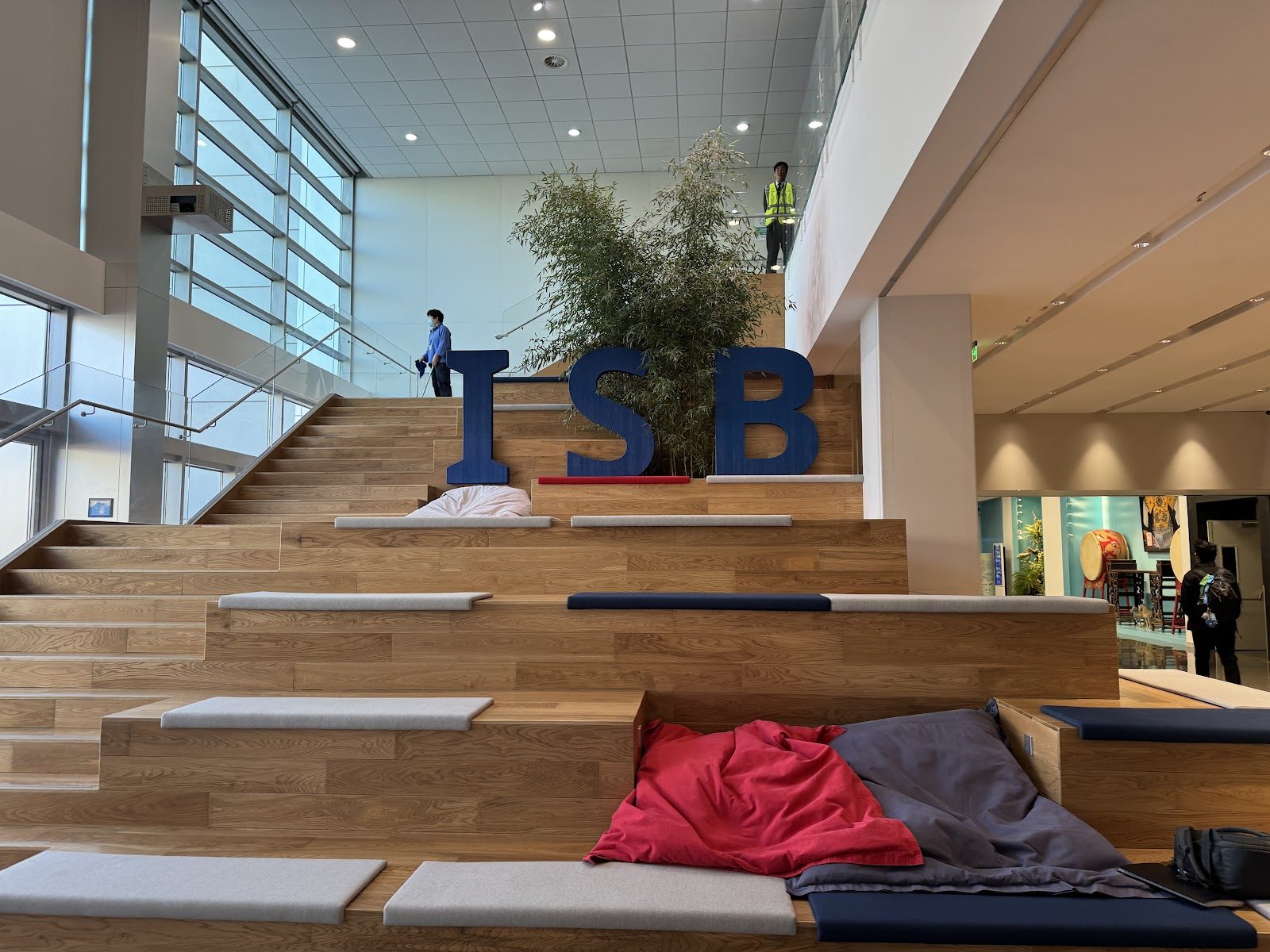
International School of Beijing
Beijing · China
Founded in 1980 by five embassies, this Shunyi day school pairs a US diploma track with IB rigor and dual-language classes from early years.
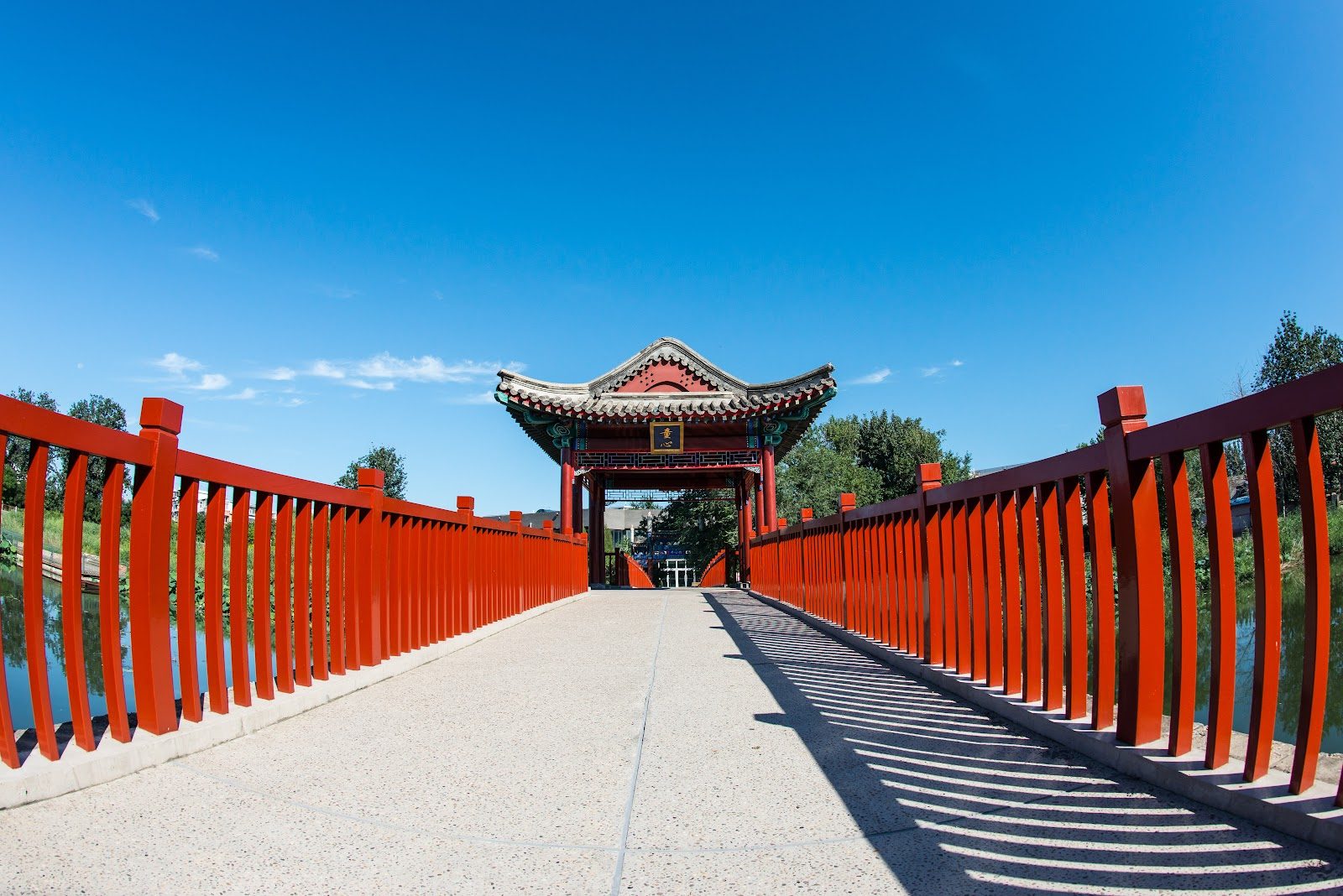
Western Academy of Beijing
Beijing · China
Running the full IB continuum since 1994 from a Chaoyang campus once named a Beijing Olympic model school
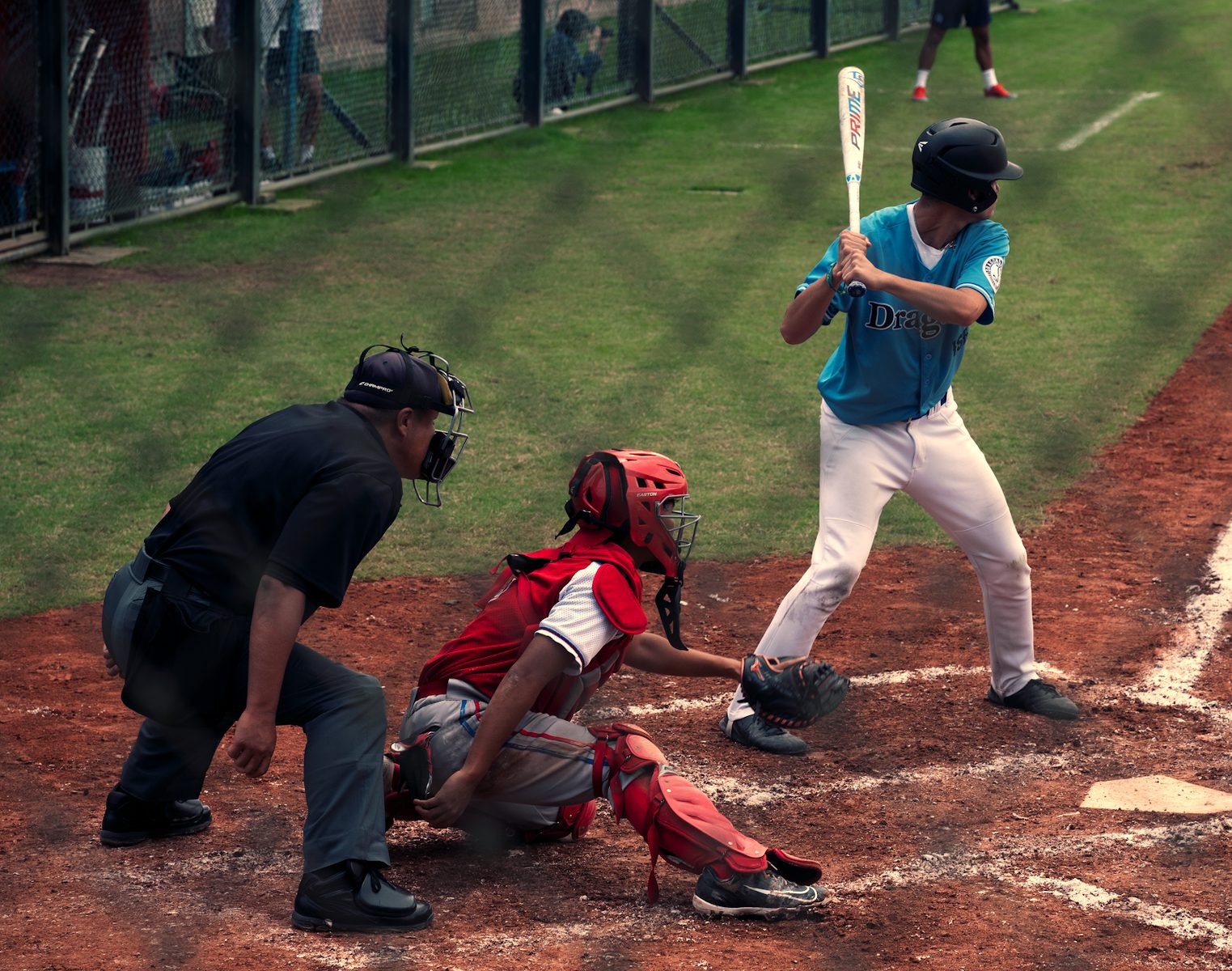
Shanghai American School
Shanghai · China
A century-old Shanghai institution since 1912, running AP and IB in parallel across two sprawling campuses
Keystone Academy
Beijing · China
Five houses named for the Chinese elements anchor a bilingual boarding culture on Beijing's Shunyi plain, near the Great Wall.
Same country and curriculum — closest matches within ±10 points either way