
Dubai
Ambassador School Dubai
low confidence· 4/6 cats · 0 avg sourcesOne of Dubai's rare CISCE schools, offering a Humanities stream alongside Science and Commerce in the heart of Mankhool.
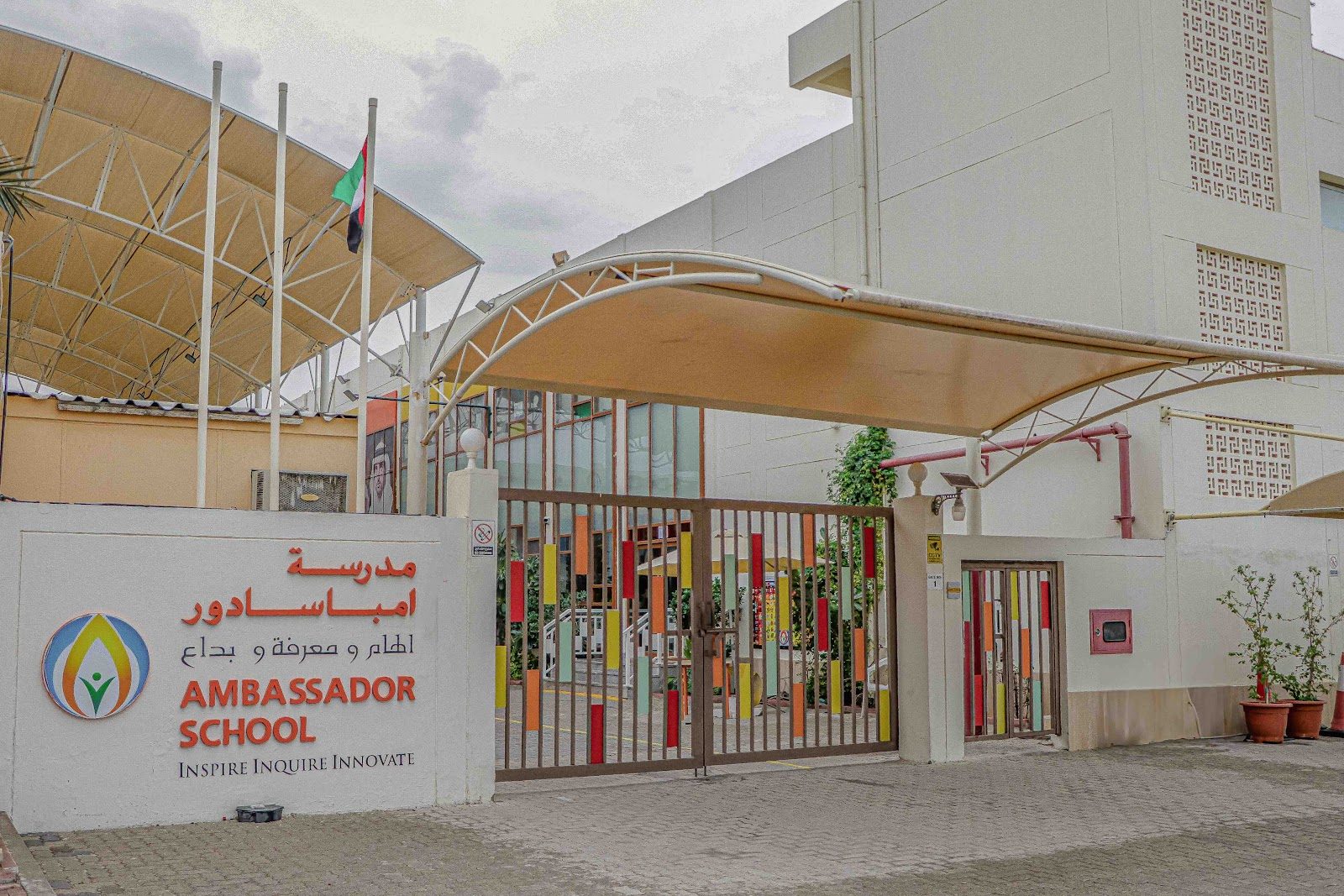
Photo © Ambassador School via Google Maps
Type
Day
Ages
4–18
Curriculum
Indian National
Ratio
—
The Verdict
Editor's commitment
Right for
Families in Mankhool who want an Indian day school, ages 4–18, with CISCE rarity in Dubai and a KHDA Very Good rating.
Wrong for
Parents chasing boarding, low fees or a non-Indian curriculum; this is day-only, English-medium and averages AED 30,956 a year.
Watch out for
Founded in 2010, it lacks old-school heft; inspect sixth-form depth carefully if the Humanities, Science or Commerce stream matters.
Ranking breakdown
Ambassador School Dubai · #950 of 1591
Composite score 63.0. 8 weighted criteria.
By criterion
Academic Outcomes
Weight 20%
#746
of 1529 scored
University Placement
Weight 16%
#848
of 1529 scored
Prestige & Heritage
Weight 12%
#1150
of 1571 scored
Alumni Network
Weight 12%
#835
of 1530 scored
Facilities
Weight 12%
#808
of 1533 scored
Transparency & Communications
Weight 8%
#554
of 1532 scored
Peer & Industry Review
Weight 10%
#1319
of 1548 scored
Admissions Selectivity & Demand
Weight 8%
#1370
of 1529 scored
Peer & Industry Review
How Ambassador School Dubai is regarded in the sector
66
Respected · high confidence
Ambassador School Dubai has carved out a genuinely respected niche as one of the UAE's few CISCE curriculum providers, with WhichSchoolAdvisor noting the school is clearly on the way up, having now secured three Very Good ratings from the KHDA, and describing it as one of the top-rated Indian schools in the city. SchoolsCompared corroborates this trajectory, tracking KHDA records showing Ambassador School moving from Acceptable to Good and then to Very Good across successive inspection cycles, and its sister news coverage rates it, alongside GEMS Modern Academy, as one of the top performing Indian curriculum schools in Dubai. Parent sentiment is solid rather than exceptional, with WhichSchoolAdvisor's survey of over 450 parents having provided their views, with an overall rating of 4.1/5 - a positivity rating of 82%. Its standing is real but bounded by curriculum niche rather than city-wide prestige.
Editors' overview
Ambassador School Dubai occupies a narrow niche in a city dominated by CBSE schools and premium British brands. It runs an Indian curriculum, teaches in English, covers ages 4 to 18, and sits in Mankhool rather than on one of Dubai’s newer education clusters. What sets it apart is simple: this is one of Dubai’s rare CISCE options, and the school’s own tagline points to the decisive distinction within that framework — a Humanities stream alongside Science and Commerce. For families who want an Indian education without forcing every senior student down a STEM-heavy route, that is a genuinely useful differentiator. The KHDA’s Very Good rating for 2023/24 gives it regulatory credibility, and the average annual day fee of AED 30,956 places it in the mid-market sweet spot rather than the premium tier.
That combination gives Ambassador a clear market position. It is not the school for parents chasing brand prestige, sprawling campuses on the city fringe, or imported Anglo-American polish. It is for families who want an academically serious Indian school in Dubai with a broader senior-phase choice than the market usually offers, and who care about substance more than spectacle. Founded in 2010, it is not an old institution by Dubai standards, but it has had enough time to establish itself while staying accessible on price. The website extract is thin and untidy, which matters: communication and public-facing clarity are weaker than they should be for a school competing in a crowded market. Parents will need to ask direct questions rather than rely on polished published detail.
The pupil who will thrive here is one who wants structure, clear academic direction and an Indian-curriculum pathway through to age 18, but does not want to be boxed into the standard Science-or-Commerce binary. That makes Ambassador a more interesting proposition for articulate humanities-minded students than many schools in the same bracket. It also suits families living in older central Dubai neighbourhoods who value convenience and fee discipline over cachet. Put it on a shortlist if you want a distinctive curricular angle, a regulator rating that holds up, and a price point that remains grounded. Leave it off if you want heavy disclosure, glossy communications, or the social signalling of Dubai’s costlier school brands.
Academic Performance
Academic performance is the point where Ambassador’s public case weakens. We have not seen published aggregate board results, subject-by-subject outcomes, university destinations, or multi-year trend data. For a school that trades on a clear sixth-form differentiator, that lack of disclosure matters. Parents comparing it with stronger Indian-sector operators in Dubai will find less hard evidence here than they need. The school flags SAT updates and admissions activity on its site, but that is not the same as publishing examination performance. In editorial terms, this is an opaque results picture.
That does not mean weak outcomes; it means unproven ones in the public domain. Relative to peers, Ambassador sits behind the better-documented Indian schools that release cohort averages, top scores and progression detail after each exam cycle. It sits ahead of schools that say nothing at all only by virtue of its regulatory standing elsewhere, not because of transparent academic reporting. For families, the implication is straightforward: treat academic quality here as credible but insufficiently evidenced until the school produces board data. Ask for recent ICSE and ISC results, stream-wise performance, destination lists, and the size of each graduating cohort. Without those basics, any claim of strong academic delivery rests on trust rather than proof.
Facilities
Facilities are the hardest area to judge because the school publishes almost nothing of substance beyond prompts to book a tour and a reference to a virtual tour. That is a weakness in itself. In a market where peers lay out labs, libraries, sports provision, arts spaces and specialist rooms in forensic detail, Ambassador asks parents to infer quality from sparse marketing and direct enquiry. The central Mankhool location points to a more compact, urban campus model rather than the sprawling edge-of-city estates common in newer Dubai schools. That usually means tighter footprints, less spectacle and a stronger need for efficient, well-run internal space. At an average annual fee of AED 30,956, parents should expect functional science rooms, a library, indoor teaching spaces that support senior subject choice, and basic sports provision; they should not expect showpiece theatres, Olympic-scale aquatics or the luxury-campus arms race seen further up the fee ladder.
Against mid-market Indian-sector peers, that places Ambassador in the credible but under-documented bracket on facilities. The school’s case rests less on visible capital spend than on whether classrooms, labs and shared spaces are organised well enough to support daily academic life without friction. For Humanities students in the senior years, that matters: the school needs reading, research and discussion spaces that are more than token add-ons. We have not seen a published facilities inventory, so parents need to inspect the library, science labs, computing rooms, sports areas and circulation space for themselves. On facilities, this is a school to verify in person, not one to buy on brochure gloss.
Ambassador School Dubai occupies a narrow niche in a city dominated by CBSE schools and premium British brands
Prestige
Ambassador’s prestige is bounded and functional, not expansive. In Dubai’s school market, status attaches either to long-entrenched academic heavyweights or to expensive international brands with polished communications, deep facilities marketing and a strong social signal. Ambassador sits outside both camps. Its standing comes from a narrower source: it serves a specific parental brief well, and the regulator has judged it securely above the crowded middle of the market. That gives it solid local credibility with families who know the Indian sector and care more about fit than cachet. It does not carry the automatic prestige premium that opens doors at a dinner party, and the untidy website does nothing to sharpen its image.
That said, prestige is not a synonym for price, and Ambassador has a real claim on substance. A school charging an average of AED 30,956 a year and holding a Very Good KHDA grade occupies a respectable position in a city where many schools cost far more than their inspection profile justifies. The distinctive senior-phase breadth also gives it more intellectual identity than many direct peers. My rating stays in the middle rather than the top tier because public proof of outcomes is thin, brand power is limited, and the school’s presentation lacks institutional polish. For informed parents, this is serious rather than glamorous prestige: earned within its niche, not projected across the whole market.
For families who want an Indian education without forcing every senior student down a STEM-heavy route, that is a genuinely useful differentiator
Communications
Ambassador’s parent communication is functional, but it lacks finish. The public site gives the essentials — phone numbers, admissions email, enquiry prompts, online application and a virtual tour link — so a family can make contact without friction. That said, the execution is messy. One contact line points to a Sharjah email address while the Dubai admissions address sits elsewhere on the same extract, and that kind of cross-campus slippage weakens confidence fast. In a competitive market, parents read those details as a test of institutional discipline. Here, the test is passed on accessibility and failed on editorial control. The school is easy to reach; it is not careful enough in how it presents itself.
That matters because communication is not just about answering the phone. It is also about publishing the information parents need before they enquire: academic results, facilities detail, senior subject pathways, routines, policies and day-to-day clarity. On that front, Ambassador is thin, reactive and too dependent on direct contact. The site pushes “book a tour” harder than it explains the school. For some families, that human route will suit a relationship-driven admissions process. For others, it creates avoidable opacity and extra work. My read is straightforward: communication with parents is available and responsive at the first-touch level, but the school’s wider information culture is underpowered. A school asking families to commit an average annual fee of AED 30,956 needs cleaner, tighter, more complete parent-facing communication than this.
Uniqueness
Ambassador’s distinctiveness sits in one precise place: subject breadth at the senior end within a part of the market that too often narrows pupils into predictable lanes. The school’s own line about offering Humanities alongside Science and Commerce is not a decorative extra; it is the point. In Dubai, Indian schools frequently treat post-16 choice as a practical sorting mechanism, with prestige flowing hardest toward mathematically heavy routes. Ambassador breaks that pattern. For students whose strengths lie in writing, analysis, debate, social sciences or interdisciplinary study, that creates a genuinely broader academic identity. It gives able teenagers room to build a sixth-form pathway that fits their minds rather than one that satisfies parental orthodoxy. In a city crowded with standardised school propositions, that is a real curricular distinction.
What does that bring in practice? It gives students a school environment where Humanities is part of the main structure, not a token afterthought. That matters for confidence as much as subject choice. Pupils who do not want their ambitions measured against engineering, medicine or accountancy get institutional permission to take another route seriously. The central, older-neighbourhood setting also sharpens the school’s profile: this is a workmanlike urban school serving families who value access, clarity and academic direction over spectacle. Add the regulator grade and the restrained fee level — an average of AED 30,956 — and Ambassador stands out as a niche school with a usable difference, not an inflated one.
Put it on a shortlist if you want a distinctive curricular angle, a regulator rating that holds up, and a price point that remains grounded
Student Profile
The best fit here is a student who values structure, steady expectations and a school culture that treats academic choices as serious decisions rather than lifestyle accessories. This is not a place for children who need endless novelty, ultra-polished social theatre or the prestige glow of a marquee brand. It suits pupils from families who want clear routines, direct accountability and a workmanlike school day in an older urban setting. The child who settles fastest will be comfortable in a more grounded environment, willing to ask teachers for clarity, and unbothered by the fact that the school’s public face lacks sparkle. For parents, the fee level — AED 30,956 on average across the full ladder — places the school in reach of families who want discipline on cost as well as academics.
Where Ambassador sharpens into focus is at the senior end. It fits students who want room to pursue humanities subjects without being treated as second-tier beside science-minded peers. That makes it a strong match for articulate readers, writers and debaters, as well as for commercially minded students who want a conventional academic framework without the STEM-only tunnel vision that dominates parts of this market. It is less convincing for children who need abundant public evidence, heavy hand-holding or a campus experience built around spectacle over substance. The student who thrives here is self-directed, academically purposeful and content with a school that asks to be judged on daily usefulness rather than image.
The distinctive senior-phase breadth also gives it more intellectual identity than many direct peers
Co-curricular strengths
Arts & sport, on a separate axis
Overall 7.48/10
Scored 0-10 from the school's own published evidence. This axis is editorial-only — it does not feed the main WTS ranking.
Sports
7.8/10
The extracurriculars explicitly list multiple sports—Cricket, Football, Basketball, Swimming, and Table Tennis—showing a structured multi-sport offering.
Drama
7.5/10
Drama appears explicitly in the extracurriculars list.
Dance
7.2/10
Dance is explicitly listed as an activity.
Music
7.4/10
Music is explicitly named in the extracurriculars list, but there is no further evidence of ensembles, facilities, specialist staff, or performances.
Visual Arts
7.5/10
Art Club is explicitly listed, which is enough to confirm visual arts provision, but the profile gives.
Editor first-pass · editor-reviewable · 7/27/2026
Official inspection · Dubai
KHDA report · 2023/24
Official · KHDAInspectorate
Knowledge & Human Development Authority
Dubai's mandatory education regulator; annual DSIB inspections.
Curriculum
Indian
Improved vs previous cycle
Full report
KHDA report finderRating history
Strengths
- +KHDA rated Very good in 2023/24
- +Indian curriculum KHDA-attested
- +Full through-school for ages 4 to 18 within one system
- +English medium of instruction
Considerations
- −We could not independently verify published examination outcomes
- −Primary sources give little academic detail
- −Admissions messaging highlights only some year groups, so continuity across all years needs checking
Availability
Primary entry gate & tests
CAT4 / Assessment
Gallery
Photo © Ambassador School via Google Maps
Photo © Ambassador School via Google Maps
Parent reviews
Have you sent your child here?
Voice reviews carry the strongest trust badge — we transcribe them for you to tidy up before they go live. Prefer to type? A written review is fine too.
Add your voice
In 60 seconds, tell other parents: what's the best thing about Ambassador School Dubai, and what surprised you when your child joined?
We ask for a Google sign-in so every review has a real face behind it — no anonymous drive-by attacks on schools, and no faked positive reviews. Your email is never shown publicly.
Send this profile to a friend
International parents rely on word-of-mouth. Share this review with someone weighing the same decision.
Schools with places
Similar schools to Ambassador School Dubai with places available now.
The Indian High School
Dubai · United Arab Emirates
- 2026-27
- PLACES OPENApps open / space-dependent
- 2027-28
- WAITPOOL2027/28 timetable TBC
Delhi Private School, Dubai
Dubai · United Arab Emirates
- 2026-27
- PLACES OPENApps open / space-dependent
- 2027-28
- WAITPOOL2027/28 timetable TBC
Availability first, then country, area, curriculum, price, co-curricular
Consider also
Also worth looking at alongside Ambassador School Dubai.

The Millennium School Dubai
Dubai · United Arab Emirates
Dubai's only day-boarding CBSE campus, blending GEMS-backed academics with Round Square's ethos of service and self-reliance.
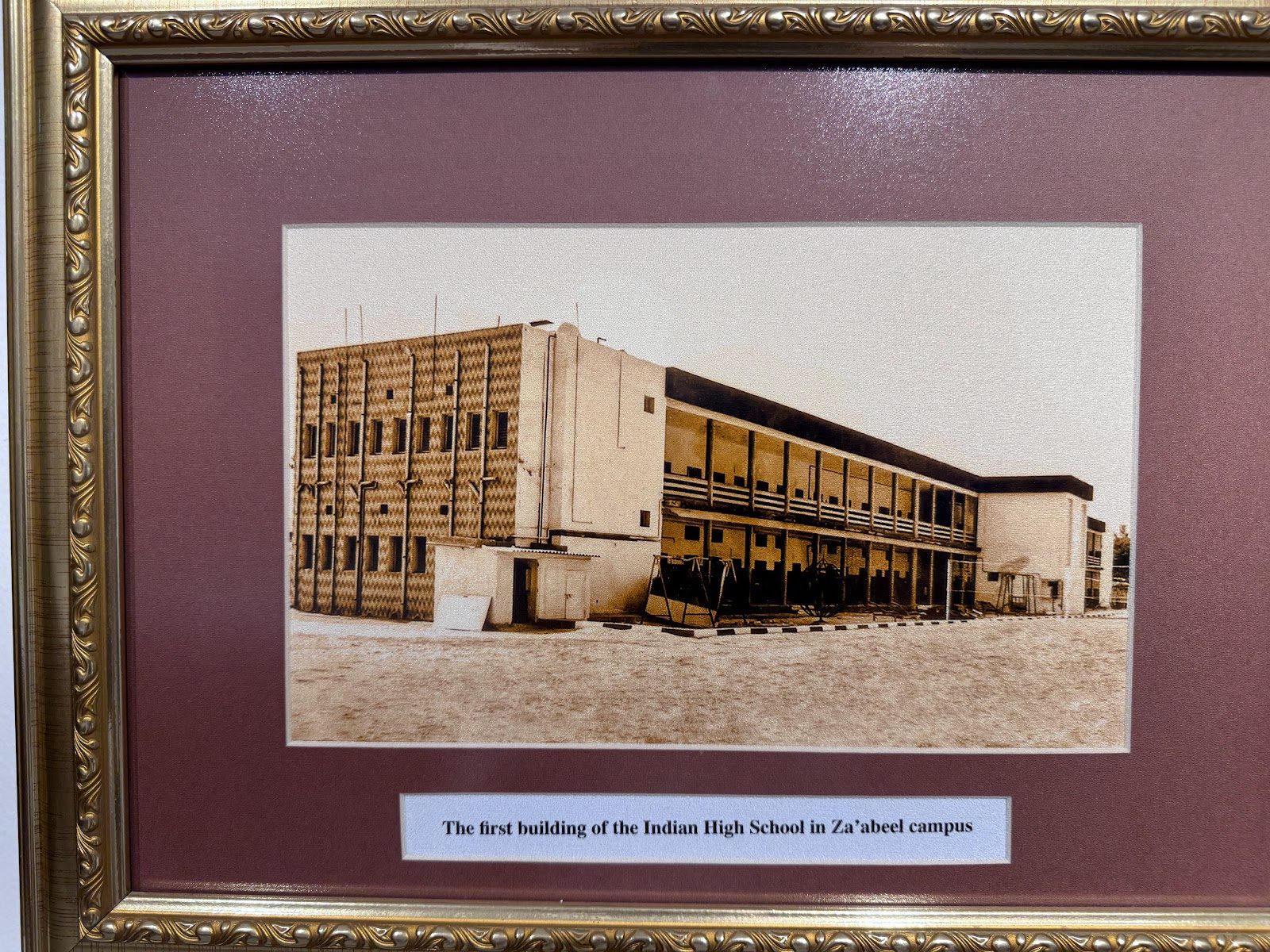
The Indian High School
Dubai · United Arab Emirates
Founded a decade before the UAE itself, this CBSE pioneer has grown into the Gulf's largest Indian-curriculum community.

Delhi Private School, Dubai
Dubai · United Arab Emirates
Amid Jebel Ali's Gardens district, a CBSE stalwart pairs board-topping exam results with a house-system creed of service before self.
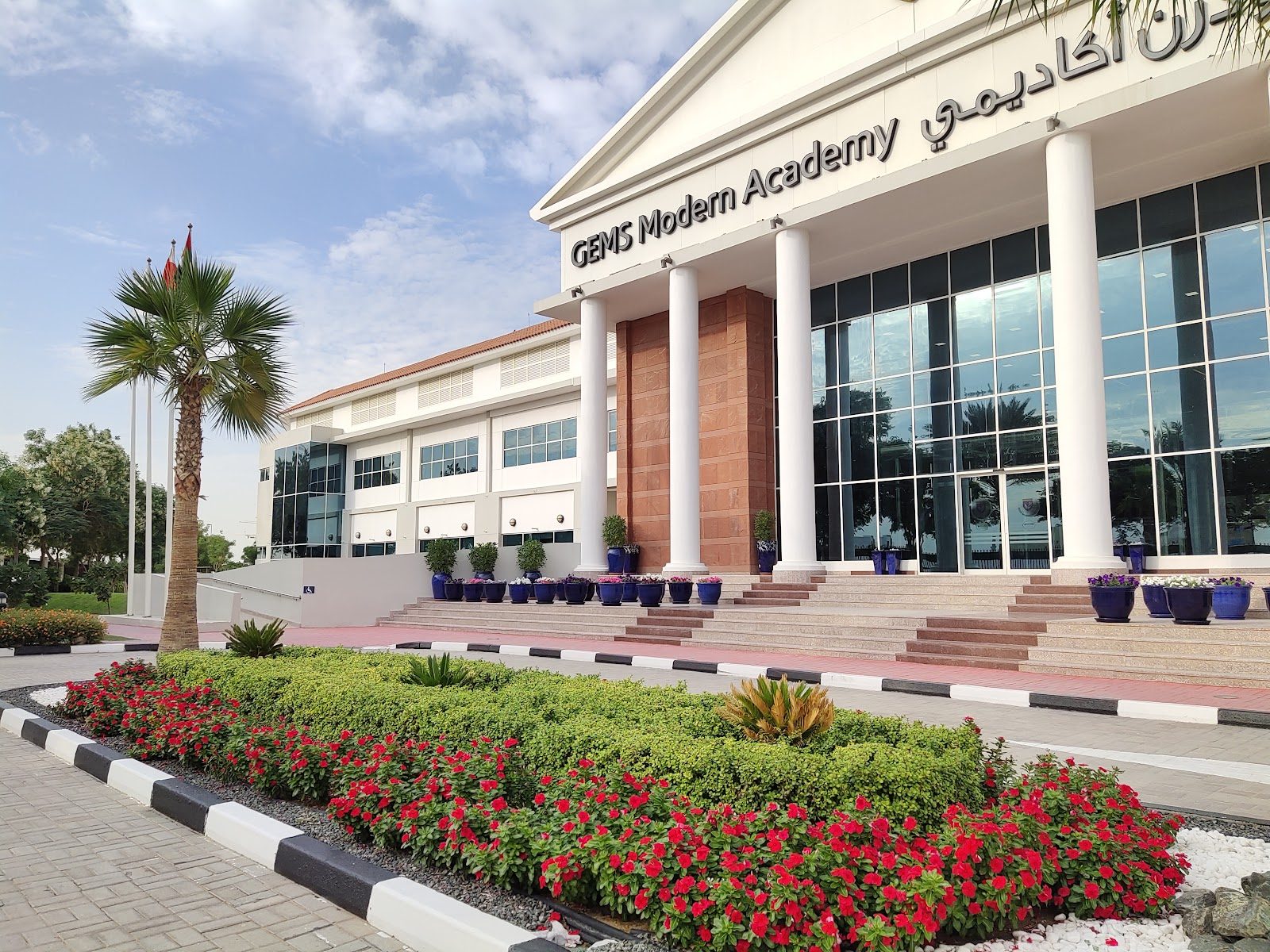
GEMS Modern Academy
Dubai · United Arab Emirates
Where the CISCE curriculum and the IB Diploma share one campus, and the only Indian-curriculum school in Dubai rated Outstanding by KHDA.
Same country and curriculum — closest matches within ±10 points either way