
Hong Kong
Red-brick and Neo-classical, this Bonham Road monument has schooled Hong Kong's boys since 1926, surviving war and requisition alike.
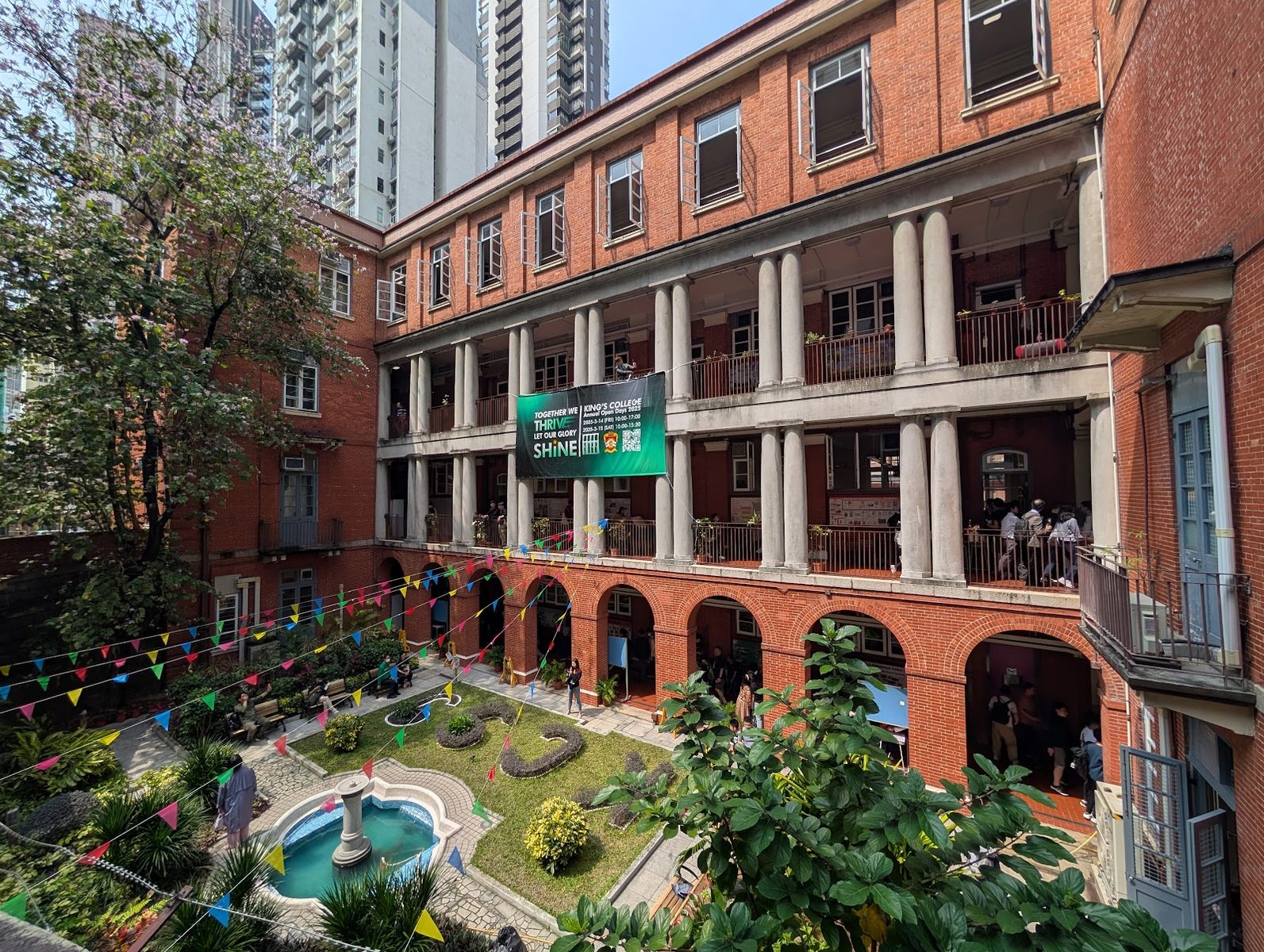
Photo © Donald Tsang via Google Maps
Type
Day
Ages
12–18
Curriculum
HKDSE
Qualifications
HKDSE
Ratio
—
The Verdict
Editor's commitment
Right for
Boys aged 12–18 who want a historic Sai Ying Pun day school with HKDSE, English and Cantonese, and a serious extracurricular machine.
Wrong for
Families wanting girls, boarding, or an IB track: King’s College is boys-only, day-only, founded in 1926, and teaches HKDSE.
Watch out for
HKEAA accreditation confirms the exam route, not the outcomes; the school does not publish aggregate HKDSE results on its website.
Ranking breakdown
King's College · #1092 of 1591
Composite score 58.8. 8 weighted criteria.
By criterion
Academic Outcomes
Weight 20%
#959
of 1533 scored
University Placement
Weight 16%
#649
of 1529 scored
Prestige & Heritage
Weight 12%
#138
of 1580 scored
Alumni Network
Weight 12%
#1227
of 1530 scored
Facilities
Weight 12%
#1245
of 1540 scored
Transparency & Communications
Weight 8%
#1173
of 1547 scored
Peer & Industry Review
Weight 10%
#1330
of 1564 scored
Admissions Selectivity & Demand
Weight 8%
#686
of 1529 scored
Peer & Industry Review
How King's College is regarded in the sector
62
Respected · medium confidence
King's College is viewed within Hong Kong's education sector as a solid, traditional Band 1 government boys' school rather than a headline-grabbing international campus, so it sits outside the WhichSchoolAdvisor/Good Schools Guide ecosystem that covers Hong Kong's private and international sector. Its standing rests on local benchmarks: consistent placement in the Education Bureau's top banding tier alongside long-established grammar schools such as Queen's College and La Salle College, and steady progression of DSE graduates into University of Hong Kong, CUHK and PolyU, which local admissions counsellors regard as evidence of stable academic delivery rather than elite selectivity. Its 1920s campus holds Grade 1 historic building status from the Antiquities Advisory Board, and heritage-focused coverage in outlets like the South China Morning Post has centred on conservation and community history rather than academic league-table rankings. Among peer heads in Hong Kong's aided-school sector it is respected as a stable, well-governed institution with strong alumni loyalty, but it lacks the international benchmarking, IB/A-level comparative data, or global university feeder profile that would place it in cross-border rankings alongside Hong Kong's top-tier international schools.
- Vincent Lo — Chairman, Shui On Group, Business
- Ronald Arculli — Businessman and Politician
- Rayson Huang — Vice-Chancellor, University of Hong Kong, Academic
Editors' overview
King’s College holds a rare position in Hong Kong: a government boys’ secondary school with real institutional weight, housed in a declared monument on Bonham Road and carrying a history that stretches back to 1926 on the present site. The physical setting matters. This is not a polished new campus in the suburbs but a red-brick landmark with civic presence, war damage in its past, and a centenary in view. The school’s own history records wartime requisition, post-war rebuilding, the later opening of its West Wing, and the listing of major parts of the campus as a monument. That gives King’s College a sense of permanence that many newer schools cannot match. It also runs on a serious academic frame: HKDSE, day school, ages 12–18, with English and Cantonese as languages of instruction.
What puts it on a shortlist is not glossy branding but the combination of old-government-school discipline, visible student life, and a long habit of institutional self-renewal. The history timeline is unusually concrete: Computer Studies entered the curriculum early, IT in education was pushed hard, cross-curricular project learning was launched, and compulsory instrument classes for Secondary One were introduced under the “one person, one instrument” scheme. The current site also shows a school that still does things at scale: athletics, swimming, cross country, scouting, social service, careers programming, inter-school activity, and a dense clubs-and-societies structure. This is a school for families who value earned reputation over marketing talk and who want a boy to be formed inside a culture with standards, ritual and continuity. The caveat is clear. Parents looking for a soft-edged pastoral environment or boutique-style handholding are shopping in the wrong market.
The student who will want King’s College is academically able, comfortable with competition, and ready to work within a long-established school culture rather than expecting the culture to bend around him. He will gain from structure, public occasions, house identity, and the expectation that he will contribute beyond the classroom. He does not need a co-educational social atmosphere; this is a boys’ school, even if girls were historically admitted to matriculation classes. He does need resilience and a degree of self-direction. For the right family, that is the attraction: scholarly gravitas, institutional memory, a disciplined mainstream and a campus that feels tied to Hong Kong’s own history rather than detached from it.
Academic Performance
King’s College does not publish headline HKDSE outcome data on its public site: no subject pass rates, no level distribution, no count of top scorers, and no territory comparison tables. That opacity matters. In Hong Kong, schools with genuinely strong public-exam performance tend to say so plainly and repeatedly. Here, the public emphasis falls elsewhere: centennial programming, student activities, achievements in competitions, and the architecture of school life. None of that is trivial, but it does not answer the question parents actually ask about an academically selective government secondary school: how many students convert ability into top-end external results? On that core point, the school is under-disclosing.
That does not place King’s College in the weak tier. The school’s long-standing reputation, dense co-curricular structure and obvious culture of expectation point to a serious academic environment with students who are used to competition and public standards. The issue is positioning, not credibility. Relative to Hong Kong peers that publish sharp HKDSE evidence, King’s College sits in a *data-light upper-middle to strong traditional* bracket rather than the transparently top-performing group. Parents who prize hard outcomes over institutional prestige need to ask for recent HKDSE summaries, subject-by-subject results, and progression destinations before treating the school as an exam-results standout.
Facilities
The campus itself is the defining facility. King’s College occupies a declared monument rather than a purpose-built contemporary school plant, and that cuts both ways. You get architectural gravitas, a setting with real presence, and spaces that carry institutional memory. You do not get the slick, glass-and-steel sports and performing-arts complexes that top-fee independents now treat as standard. The school’s own history points to practical expansion and renewal — the opening of the West Wing, post-war rebuilding, and the protected status of the east, south and north wings plus the walled area — but it does not publish the kind of room-by-room facilities inventory that strong competitor schools now provide. There is no public showcase of specialist labs, black-box theatre, design suites or elite training amenities. That absence matters.
What is visible points to a campus built for serious mainstream schooling rather than spectacle. The calendar supports that reading: annual athletic meet, swimming gala, cross-country run, visual arts exhibition, instrument teaching from the lower years, scouting, workshops, careers activity and a dense club structure. Those programmes need functioning sports provision, music spaces, assembly capacity and classrooms that can handle a busy student culture. Against peer government and aided schools, that is solid. Against Hong Kong’s best-funded private campuses, it is plainly less lavish. Parents choosing King’s are choosing substance over shine, with a heritage campus that carries weight but not luxury.
In Hong Kong, schools with genuinely strong public-exam performance tend to say so plainly and repeatedly
Prestige
King’s College carries real public-school prestige within Hong Kong, but it is a specific kind of prestige. This is not fee-driven exclusivity or imported-brand glamour. It rests on institutional age, government-school selectivity, a monument campus, and the social weight that attaches to a long-entrenched boys’ school with a recognisable old-boy network. The school’s own public face reinforces that standing: centennial events run across the calendar, the alumni association has durable visibility, and the campus itself functions as part of the school’s reputation. Prestige here is tied to civic stature, historical continuity and a culture of standards, ceremony and memory. For families who understand Hong Kong’s education landscape, that carries more substance than polished marketing.
I rate that prestige as high, though not untouchable. The school has earned name-recognition and serious establishment cachet, but it does not back that status with the kind of published results data that would place it beyond dispute among the territory’s most academically transparent elite. That distinction matters. King’s has the aura, the architecture and the institutional confidence of a top traditional school; it also has the opacity that asks parents to trust reputation more than hard public metrics. For many local families, that reputation still counts heavily. For internationally mobile parents who want prestige to rest on visible outcomes as well as history, the case is impressive but incomplete.
You do not get the slick, glass-and-steel sports and performing-arts complexes that top-fee independents now treat as standard
Communications
King’s College communicates in the manner of an old public institution: information-heavy, formal and centralised. The website carries a deep navigation tree for parents, students and alumni, with dedicated notice pages, calendars, admissions links, publications, reports and plans, organisational information, and a running stream of school events, achievements and school-life updates. That breadth counts in its favour. Parents can see the rhythm of the year, the school’s public occasions, and the machinery around student leadership, committees and support structures. Contact details are easy to find, and the school does not hide behind glossy branding. The tone is institutional, brisk and workmanlike.
Effectiveness is mixed. For day-to-day visibility, the school does a competent job: event notices are frequent, centennial activity is prominent, and the site gives a clear sense that the place is busy and tightly run. For parent decision-making, communication is weaker. The site says far more about ceremonies, activities and heritage than about academic outcomes, teaching approach, or how the school handles pastoral issues in practice. The navigation is also dense enough to feel bureaucratic rather than parent-friendly; families must work to extract the essentials. That imbalance tells you something important about the school’s priorities. King’s communicates best when announcing public life and internal order. It communicates less well when parents want hard answers on performance and student support.
Uniqueness
What marks King’s College out is the way institutional history still governs daily school life rather than sitting in a framed timeline. This is a government boys’ school whose identity has been shaped by requisition, destruction, rebuilding and preservation, and students inherit that sense of continuity every time they walk through the place. The school has an old-boy structure, a student union, a prefect body, house traditions, a parents’ association and a centennial programme substantial enough to fill a public calendar. That produces a thick civic culture, not a thin academic service. Boys are educated inside a community with ceremony, expectation and memory, where belonging carries duties as well as privileges. The result for students is formation through institution: they learn to locate themselves inside something older, stricter and more durable than their own cohort.
The second point of difference lies in the school’s refusal to narrow itself to exams alone. Public school life here is dense: scouting, social service, careers programming, visual arts, journalism training, marathons, accounting workshops, job shadowing, inter-school literary activity and the long-running “one person, one instrument” approach in the junior years. That breadth does not read as decorative enrichment. It reads as a school insisting that boys perform in public, organise themselves, and acquire competence beyond the classroom. For the right student, that is deeply character-building. For the wrong one, it is unforgiving. King’s offers boys a high-pressure, tradition-bound education in responsibility, not a customised adolescence.
This is not a polished new campus in the suburbs but a red-brick landmark with civic presence, war damage in its past, and a centenary in view
Student Profile
The boy who fits King’s College is able, self-propelled and comfortable in a school that rewards discipline more than self-expression. He does not need coaxing to meet deadlines, turn up prepared or submit to a chain of authority that includes prefects, committees and house structures. He will cope well with public scrutiny, inter-class comparison and the expectation that school life extends beyond lessons into service, sport, music and formal occasions. A student who enjoys being busy will thrive here; the calendar points to a culture with plenty to absorb him. The Secondary 1 intake also meets a school that has treated music as part of formation, not an optional extra. This suits boys who can tolerate pressure and routine without constant negotiation. It is structured, demanding and not for the faint-hearted.
The weaker fit is easy to identify. Boys who need a soft pastoral buffer, informal adult-student boundaries or a highly personalised learning environment will find the institutional tone hard-edged. So will students who resist ceremony, shared standards or compulsory participation in the life of the school. This is a strong match for families who want a son shaped by expectation, responsibility and old-school civic habits rather than protected from them. It also suits boys who take pride in belonging to something bigger than themselves and who are willing to earn status inside it. For the right student, that produces deep loyalty, serious maturity and a forged rather than curated adolescence.
That gives King’s College a sense of permanence that many newer schools cannot match
Co-curricular strengths
Arts & sport, on a separate axis
Overall 7.76/10
Scored 0-10 from the school's own published evidence. This axis is editorial-only — it does not feed the main WTS ranking.
Sports
8/10
Drama
8.1/10
Dance
6.5/10
Music
8.6/10
Visual Arts
7.6/10
Strengths
- +The school building has been a declared monument of Hong Kong since 2 December 2011, giving pupils a rare purpose-built 1920s red-brick Neo-classical campus rather than a modern block.
- +The school traces its roots to the government Saiyingpun School established in 1879, later moved to a larger Pokfulam Road site in 1891, making it one of Hong Kong's oldest continuously operating government schools.
- +Big Exam's independent analysis estimates the school as Band 1A, indicating it draws heavily from Hong Kong's strongest Primary Six leavers under the local allocation system.
- +Alumni include former Chief Executive Leung Chun-ying and, the 'father of OLED' Ching W. Tang, reflecting a long record of graduates reaching senior public and academic roles.
- +In the 2022 HKDSE results, King's College was one of eight schools nationwide to produce a top scorer, and it again produced a 'super top scorer' in the 2026 results, showing a recurring pattern of elite exam outcomes.
Considerations
- −It is a boys'-only government-operated secondary school, so it is not an option for families wanting co-education.
- −The school follows only the local Hong Kong curriculum provided by the education bureau, with Cantonese as a compulsory subject, with no IB or A-level track for families planning to repatriate into other systems.
- −Entry runs through Hong Kong's Secondary School Places Allocation process rather than a standalone international-style application, which structurally favours pupils already schooled locally through Primary Six.
- −The campus occupies a heritage building at 63A Bonham Road in Mid-levels, a dense urban site whose historic fabric constrains the kind of large modern facilities purpose-built international campuses can offer.
Availability
Primary entry gate & tests
HK Central Allocation / Exam (Boys)
Gallery
Photo © Sue Chau via Google Maps
Photo © Henry Man via Google Maps
Photo © Albert Sig via Google Maps
Photo © Sunny Hiker via Google Maps
Photo © Henry Man via Google Maps
Photo © E. N. via Google Maps
Photo © E. N. via Google Maps
Parent reviews
Have you sent your child here?
Voice reviews carry the strongest trust badge — we transcribe them for you to tidy up before they go live. Prefer to type? A written review is fine too.
Add your voice
In 60 seconds, tell other parents: what's the best thing about King's College, and what surprised you when your child joined?
We ask for a Google sign-in so every review has a real face behind it — no anonymous drive-by attacks on schools, and no faked positive reviews. Your email is never shown publicly.
Send this profile to a friend
International parents rely on word-of-mouth. Share this review with someone weighing the same decision.
Schools with places
Similar schools to King's College with places available now.
Availability first, then country, area, curriculum, price, co-curricular
Consider also
Also worth looking at alongside King's College.
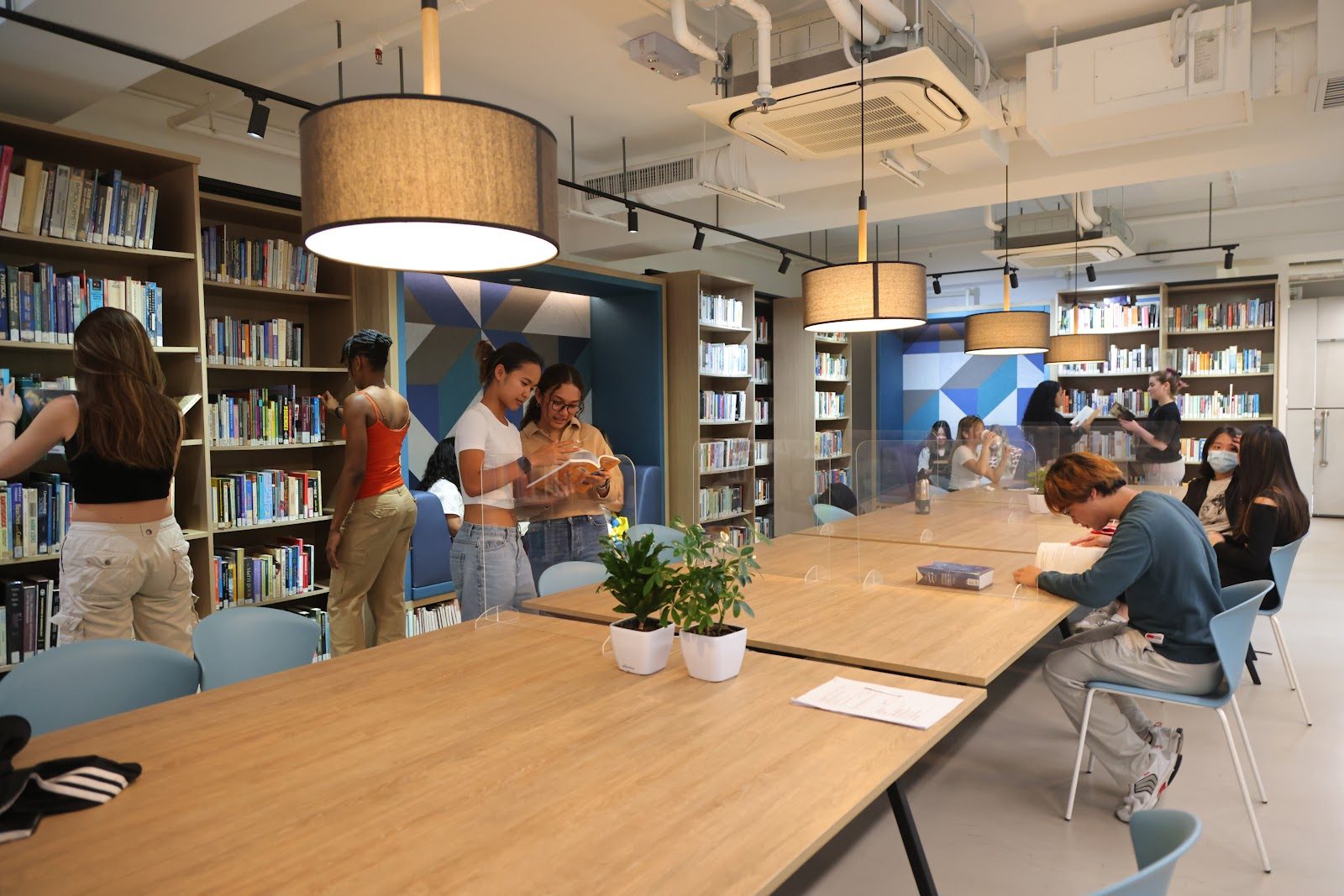
Li Po Chun United World College of Hong Kong
Hong Kong · Hong Kong
Perched above Tolo Harbour, this United World College gathers scholars from 90 nations for a service-driven IB Diploma.
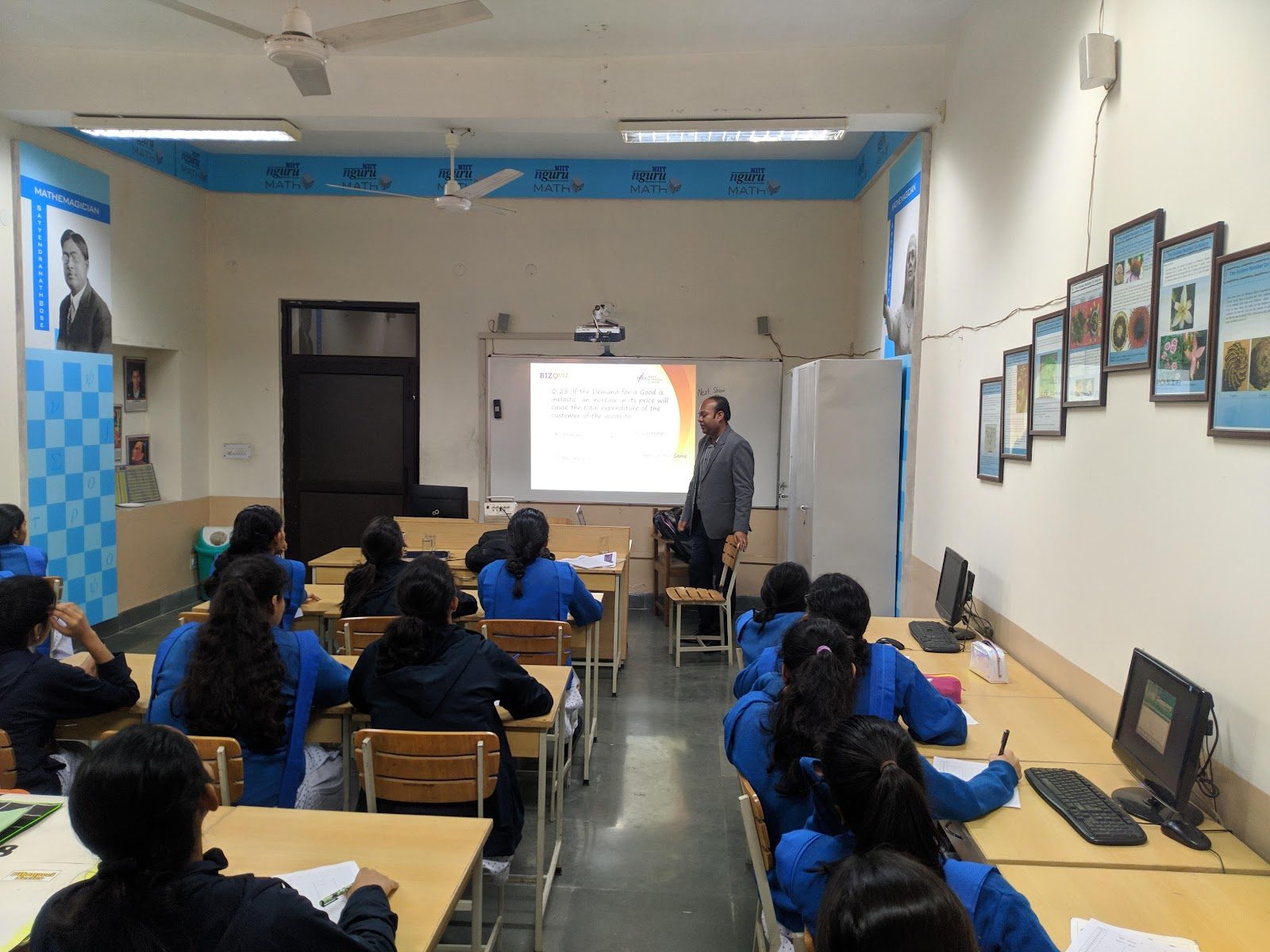
Welham Girls' School
Dehradun · India
Founded in 1957 as a bold counterpart to boys-only boarding, with bird-named houses and a legacy museum honoring the women who dared.
Colegio Ánimas
Montevideo · Uruguay
A compact IB day school threading Montevideo's academic scene with the full Diploma Programme on offer.
Saint George's College Santiago
Santiago · Chile
A Holy Cross foundation in Vitacura since 1936 that has quietly seeded a third of Chile's top-200 corporate boardrooms.
Same country and curriculum — closest matches within ±10 points either way