
California
Since 1967, a Bay Area laboratory for gifted minds, pairing design thinking with the country's first dedicated social-emotional learning curriculum.
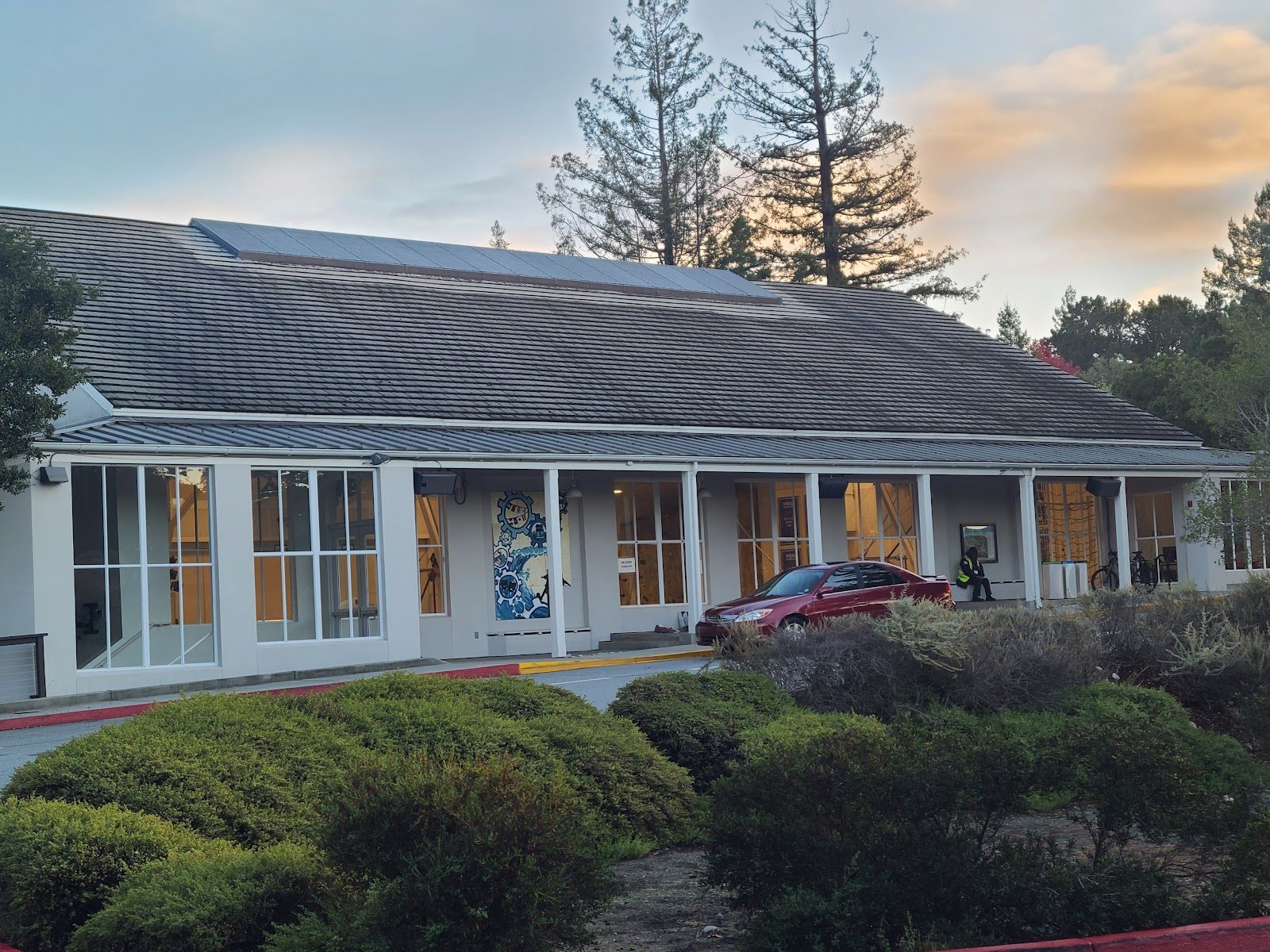
Photo © LeonRomantico12 via Google Maps
Type
Day
Ages
3–18
Curriculum
American
Qualifications
AP
Ratio
—
The Verdict
Editor's commitment
Right for
Gifted children aged 3–18 who want an American day school founded in 1967, with project-based learning and explicit social-emotional education.
Wrong for
Families wanting a conventional, teacher-led school, boarding, or a broader intake than a Hillsborough day school built for gifted students.
Watch out for
At an average $54,211 a year, Nueva is expensive; NEASC and NAIS membership do not compensate for opaque public exam outcomes.
Ranking breakdown
The Nueva School · #50 of 1591
Composite score 79.3. 8 weighted criteria.
By criterion
Academic Outcomes
Weight 20%
#66
of 1529 scored
University Placement
Weight 16%
#41
of 1529 scored
Prestige & Heritage
Weight 12%
#212
of 1571 scored
Alumni Network
Weight 12%
#142
of 1530 scored
Facilities
Weight 12%
#193
of 1533 scored
Transparency & Communications
Weight 8%
#84
of 1532 scored
Peer & Industry Review
Weight 10%
#134
of 1548 scored
Admissions Selectivity & Demand
Weight 8%
#113
of 1529 scored
Score history
The Nueva School · 2026
Movement across 2024–2026. Peer average overlaid.
Overall — 2024–2026
79.3/ 100
▲ +27.2 vs 2025
year on year
Peer & Industry Review
How The Nueva School is regarded in the sector
75
Strong · medium confidence
The Nueva School is widely recognized in gifted-education and progressive-education circles as a leading innovator in project-based, design-thinking curricula, frequently cited in education press (e.g., Edutopia, KQED MindShift) and referenced by peer independent schools in the Bay Area as a benchmark for social-emotional learning integration. It regularly appears in discussions of top independent schools for gifted learners in California, though it has less mainstream global name recognition compared to elite college-prep institutions like Harvard-Westlake or Phillips Exeter.
Evidence sources
Award
Elite Computing & AI 60
World's Top School · The Global Ranking
The Nueva School is featured on our Global Top 60 ranking at #49. This seal is available for the school's marketing team to use on their website, prospectus and social channels.
Editors' overview
Nueva’s defining proposition is not generic “gifted education” but a full PreK–12 school built around it, with social-emotional learning treated as core architecture rather than pastoral garnish. Founded in 1967 in Hillsborough, it runs an American curriculum in English for ages 3 to 18 and remains day-only, which matters: this is an academically intense Bay Area school without the boarding buffer that can soften pressure-cooker cultures. The school’s own language is heavy on “learn by doing” and “learn by caring”, and the important point sits beneath the slogan: project-based work, deep inquiry and permission for students to “fail forward” are embedded in the model. Parents looking for orthodox, teacher-led instruction and conventional academic signalling need to register that early.
What puts Nueva on a serious shortlist is the combination of intellectual stretch and a long-standing commitment to emotional literacy. Its editorial tagline points to the country’s first dedicated social-emotional learning curriculum, and that still reads as central to the school’s identity rather than legacy branding. For bright children who are intensely curious, highly verbal, inventive, or impatient with routine classroom pace, that mix can be genuinely distinctive. The accreditation profile is solid rather than flashy — NEASC and NAIS — but the stronger signal is institutional coherence: gifted education, design thinking, interdisciplinary work and explicit attention to how children relate to one another all pull in the same direction.
The school’s market position is clear. At an average annual day fee of $54,211, Nueva sits in the expensive tier of US private education, and parents are paying for specialism, not old-school prestige theatre. The alumni floor recorded in Wikidata — 12 notable alumni, including figures across film and music, with 1 star-tier drama laureate — gives at least some evidence that the school has produced graduates who convert precocious talent into public achievement. Still, this is not the school for every high achiever. The best fit is a student who wants challenge without constant rank-ordering, enjoys making things as much as mastering content, and can thrive among other bright, intense peers. Children who want a more conventional competitive ladder, or who prefer clear external structure over customised, inquiry-heavy learning, will find Nueva demanding in the wrong way.
An Elite Computing & AI 60 school
The Nueva School, spread across campuses in Hillsborough and San Mateo, California, sits at rank forty-nine on the Elite Computing & AI 60 on the strength of an unusually early formal machine-learning sequence: Nueva has offered a two-semester machine learning course sequence in addition to its required and elective computer science classes since 2016, years before most American secondary schools treated the subject as anything more than an elective add-on.
The architecture behind that claim is real but modest in scale rather than Olympiad-driven. The machine-learning sequence was built by computer science teacher Jen Selby after a group of students used machine learning to build a sophisticated spellchecker as an independent-study project, prompting the school to formalize the tools in a structured course. Beyond this, Nueva's Wikipedia-documented program provides a vast selection of advanced STEM electives, with several elective computer science courses layered on top of the machine-learning sequence, housed alongside the school's Innovation Labs for engineering and design-thinking work. What the school does not publicly document is a competitive-programming pipeline: there is no verifiable IOI, USACO Platinum, or ICPC record tied to Nueva, so this is a curriculum-depth story rather than a medal-table one.
Notable alumni skew toward media, music, and athletics more than computing, but the clearest computer-science lineage runs through Will Harvey, who attended Nueva for middle school before earning a B.S., M.S., and Ph.D. in computer science from Stanford and founding the virtual-world companies There, Inc. and IMVU, having first gained fame writing Music Construction Set for Electronic Arts as a teenager. He remains a Nueva board trustee. Beyond Harvey, notable alumni in computing are still emerging from the newer upper-school cohorts.
International openness is limited by design: Nueva is a day school only, with no boarding houses on either campus, so families relocating from abroad must arrange local housing or guardianship themselves rather than relying on an on-site residential system. Admissions runs on a single rolling international-friendly track through the Ravenna platform, with January deadlines, no ISEE/SSAT or IQ testing required for the Upper School, and instruction entirely in English with no dedicated ESL program. Upper School tuition for 2025-26 runs at $66,960, with the school confirming additional management fees apply specifically for international enrollees. Families should treat this as a relocation-first decision — securing Bay Area housing and applying by the January deadline nine to twelve months ahead of the target intake — rather than a boarding-school shortcut into Silicon Valley's computing culture.
Academic Performance
Nueva does not publish aggregate AP, SAT, ACT or university-matriculation outcome tables in the public domain. That matters. For a school serving highly able students, external results are one of the cleanest ways to test whether an intellectually ambitious model converts into measurable attainment at scale. Here, the picture is opaque by choice. Parents can infer a demanding academic culture from the school’s explicit commitment to deep inquiry, project work and customised learning, but inference is not the same as disclosure. Against US independent-school peers that issue detailed score distributions, subject results and college destinations, Nueva gives families less hard data than it should.
That does not place the school in a weak academic bracket; it places it in a hard-to-benchmark one. Specialist schools for gifted students often resist reductive score culture, and Nueva’s philosophy plainly prioritises intellectual independence over drill. That can produce exceptionally strong students, especially those who thrive on interdisciplinary work rather than constant test rehearsal. It also leaves outsiders without the usual proof points. Relative to peers, then, Nueva fits the camp where reputation, selectivity and educational design carry more weight than published exam tables. For some families, that is a confident refusal to play the numbers game. For others, it is a serious reporting gap.
Facilities
The physical estate matters here because Nueva’s teaching model asks for more than standard classrooms. A school built around project work, deep inquiry and hands-on exploration needs spaces that let students make, test, discuss and iterate. The public facts confirm a 2-campus structure, with lower and middle years in one location and the upper school in another. That split is common enough among urban and suburban independents, but here it carries more weight: it allows age-appropriate environments rather than forcing very young children and older teenagers into one all-purpose site. For peer schools serving highly able students, that is a serious operational advantage. It supports a deliberately developmental journey instead of a single campus trying to do everything at once.
What is missing is just as important. Nueva does not publish a clear public-facing inventory of specialist facilities in the way many rival schools do. There is no easy, school-level roll call of theatres, labs, maker spaces, sports provision or standout arts venues in the public domain. For a school whose identity depends on learning by doing, that lack of specificity is a weak point. Parents are entitled to expect hard detail about where students build, perform, experiment and train. Against peer schools that document every studio and science suite, Nueva asks families to trust the educational philosophy before it fully documents the physical plant. That is less transparent than it should be, especially at this price point.
For bright children who are intensely curious, highly verbal, inventive, or impatient with routine classroom pace, that mix can be genuinely distinctive
Prestige
Nueva carries real intellectual prestige, but it is a specialist form of prestige, not the old American independent-school version built on dynasty, athletic mythology or relentless publication of outcome tables. Its reputation rests on serving gifted children across the full age range and doing so with a coherent educational doctrine rather than a loose enrichment offer. The two-campus structure also matters: this is not a small junior programme bolted onto a senior school, but a full institution with separate lower/middle and upper-school sites. In practice, that gives Nueva standing among families who want a serious home for advanced learners and who value educational ideas as much as brand inheritance. The verified alumni floor — 12 notable names, including work in the performing arts and 1 star-tier laureate — adds some public proof that talent developed here does not stay private.
The limit to that prestige is clear. Nueva commands high regard in the right circles, especially in the Bay Area’s technology, academic and professional class, but it does not trade on the broad, instantly legible status of the biggest East Coast boarding names. Its public academic reporting is also too opaque for a school of this calibre, which restrains prestige with families who want hard comparative evidence, not just confidence in the model. My rating stays high because the school has a distinctive, defensible identity and a parent body that understands what it is buying. It stops short of the top prestige tier because the signal is concentrated, not universal.
That can produce exceptionally strong students, especially those who thrive on interdisciplinary work rather than constant test rehearsal
Communications
Nueva’s parent communication has one clear strength: named accountability. The public-facing leadership page does not hide behind generic inboxes and glossy slogans; it lists senior staff, division heads and functional leads across admissions, finance, teaching and learning, college counselling, equity and communications. That matters. In practical terms, parents can see who runs what and where responsibility sits. For a school serving children with intense academic and social needs, that kind of organisational visibility is more than administrative polish; it is basic institutional discipline. The presence of a dedicated communications director and a broad leadership bench also points to a school that takes message control seriously rather than treating parent contact as an afterthought.
The weakness sits in the gap between warmth and evidence. Nueva talks fluently about care, community and student growth, and the tone is coherent, deliberate and culturally self-assured. What it does not do with equal clarity is publish enough hard operational detail for exacting parents who want to inspect the school, not absorb its ethos. The same pattern runs through public communications more widely: strong language around mission, thinner disclosure on outcomes, facilities and other concrete proof points. That makes communication persuasive but selective. Families already sold on the model will read that as confidence. More sceptical parents will read it as controlled opacity. The school communicates its values well; it communicates its evidence base less well, and at an average annual fee of $54,211, that restraint is hard to excuse.
Uniqueness
Nueva’s real distinction lies in the way it treats gifted education as a whole-school operating system, not a selective admissions filter plus harder classes. The school is explicit that its students are taught through “learn by doing” and “learn by caring”, with project-based work, deep inquiry, hands-on exploration and room for “failing forward”. That combination is still rare in the market. Plenty of schools talk about challenge; far fewer build challenge and emotional literacy into the same daily structure. For gifted children, that matters. Bright students do not only need faster pacing. They need adults and peers who can handle intensity, perfectionism, sensitivity and intellectual restlessness without flattening them into either prizes or problems. Nueva’s long association with dedicated social-emotional learning gives it a clearer psychological model than most academically ambitious schools.
The benefit for students is a form of stretch that is less mechanical and more human. In a community built specifically for advanced learners across the full age range, children are less exposed to the deadening experience of being the odd one out in every room. They get academic challenge, but also explicit permission to experiment, make mistakes and rebuild their thinking. That can be liberating for inventive students who dislike routine compliance and thrive when ideas cross subject boundaries. The trade-off is equally clear: this is not a school for families who want constant external proof, rigid hierarchy or narrow exam drilling. Nueva’s uniqueness serves students who want to think hard, make things, and do it among intellectual peers, not those who want a conventional trophy factory.
My rating stays high because the school has a distinctive, defensible identity and a parent body that understands what it is buying
Student Profile
Nueva is built for children who are intellectually quick, intensely curious and comfortable in the company of other bright peers. The school states plainly that it serves gifted students, and that matters for fit. A child who has felt under-stretched, impatient with routine pacing, or frustrated by classrooms calibrated to the middle will find more traction here. So will the student who likes ideas with edges: deep questions, cross-disciplinary work, designing and making, testing an answer, then revising it. This is a strong match for self-propelled learners who enjoy inquiry more than repetition and who can handle an environment where many classmates are equally able. In that sense, Nueva is not a refuge from intensity; it is a community that concentrates it.
The social profile matters just as much as the academic one. Nueva’s language around care, support and learning from mistakes points to a school that values emotional intelligence alongside raw horsepower. The best fit is a child with serious mental range who also wants humane adult guidance, not just acceleration. Students who relish agency, collaboration and constructive feedback will do well. Students who need constant external ranking, tightly scripted instruction or a conventional reward ladder will chafe. So will children who want to be the singular standout in every room. With an average annual fee of $54,211 and a full age range of 3–18, Nueva asks families to buy into a demanding, idea-driven culture early and stay with it for the long haul.
It stops short of the top prestige tier because the signal is concentrated, not universal
Co-curricular strengths
Arts & sport, on a separate axis
Overall 7.36/10
Scored 0-10 from the school's own published evidence. This axis is editorial-only — it does not feed the main WTS ranking.
Sports
6.5/10
Wikipedia gives a structured multi-season athletics programme across middle and upper school with numerous named sports plus a gymnasium/performance space, a Hillsborough gym/multipurpose room, and a named Director of Athletics and Physical Education.
Drama
8.3/10
Theatre productions, and this is strengthened by a gymnasium/performance space plus a verified star-tier drama alumnus, Shemar Moore, a Daytime Emmy winner, which anchors drama at least at 7.
Dance
6/10
An alumna who competed at the international Prix de Lausanne dance competition, and such a high-level dance alumnus pedigree overrides profile silence and supports a notable score.
Music
8/10
A jazz ensemble, plus the named Menuhin-Dowling Music Program, established by Sir Yehudi Menuhin and Helen Dowling, which indicates specialist, clearly structured music provision.
Visual Arts
8/10
Visual arts, while external evidence adds art studios and the Innovation Lab maker-studio with 3D printers, laser cutters, and construction tools, showing dedicated specialist spaces.
Editor first-pass · editor-reviewable · 7/28/2026
Notable alumni · Wikidata
12notable alumni
0 historic (born pre-1930) · 10 modern (born post-1970)wikidata:2026-07-28 How we source this
WTS 300 badge
2025/26 editionThe Nueva School is one of the World's Top 300 Schools for 2025/26. Claim your listing to add it to your site →
Strengths
- +Nueva's internationally recognized social-emotional learning program has been fundamental to the school's commitment to nurture the whole child since its founding in 1967, and the SEL curriculum was highlighted by Daniel Goleman in his book Emotional Intelligence.
- +Student to teacher ratio is 6.5:1, allowing significant differentiation for academically advanced learners across small classes of 15-18 students.
- +Niche's 2026 rankings place Nueva 1 of 1,218 for Best High Schools for STEM in California and 2 of 209 for Best Private K-12 Schools in California.
- +Graduates regularly attend Brown, Columbia, Cornell, Harvard, Princeton, UPenn, Dartmouth, Yale, MIT, Stanford, Caltech, UChicago, Duke, and Northwestern, per third-party school-profile reporting.
- +The academic approach integrates project-based learning, social-emotional development, design thinking, and environmental citizenship, alongside a distinct music program; Nueva's Menuhin program, teaching musical theory and practice to selected students in grades one through eight, was established by Sir Yehudi Menuhin and Helen Dowling.
Considerations
- −Fees are among the highest in the Bay Area day-school market: tuition for grades 9-12 is listed at $63,720, before additional fees or expected giving.
- −The acceptance rate is low, and admission is very competitive, as the school seeks to admit highly motivated students who can take on its challenging curriculum, meaning families should expect a rigorous, assessment-heavy process focused on identified giftedness rather than general academic fit.
- −Assessment style is non-traditional: Nueva students do not have a GPA until grade 10, children usually do not take exams, and instead projects replace final exams, which can be an adjustment for families expecting conventional grading benchmarks.
- −The school operates across two sites rather than one contiguous campus, and about half of Hillsborough students ride buses to get to school regularly, though not quite as many at the high school given its proximity to free Caltrain, implying real commute logistics for many families.
Availability
Primary entry gate & tests
IQ Test + ISEE/SSAT
Gallery
Photo © The Nueva School Hillsborough Campus via Google Maps
Photo © The Nueva School Hillsborough Campus via Google Maps
Photo © The Nueva School Hillsborough Campus via Google Maps
Parent reviews
Have you sent your child here?
Voice reviews carry the strongest trust badge — we transcribe them for you to tidy up before they go live. Prefer to type? A written review is fine too.
Add your voice
In 60 seconds, tell other parents: what's the best thing about The Nueva School, and what surprised you when your child joined?
We ask for a Google sign-in so every review has a real face behind it — no anonymous drive-by attacks on schools, and no faked positive reviews. Your email is never shown publicly.
Send this profile to a friend
International parents rely on word-of-mouth. Share this review with someone weighing the same decision.
Schools with places
Similar schools to The Nueva School with places available now.
Polytechnic School
Pasadena · United States
- 2026-27
- CLOSEDRegular cycle
- 2027-28
- OPENS SOONOpens Oct '26
The Thacher School
Ojai · United States
- 2026-27
- CLOSEDRegular cycle
- 2027-28
- OPENS SOONOpens 1 Sept '26
Cate School
Carpinteria · United States
- 2026-27
- CLOSEDRegular cycle
- 2027-28
- PLACES OPEN
The Bishop's School
La Jolla · United States
- 2026-27
- CLOSEDConfirmed full
- 2027-28
- OPENS SOONOpens Sept '26
Availability first, then country, area, curriculum, price, co-curricular
Consider also
Also worth looking at alongside The Nueva School.
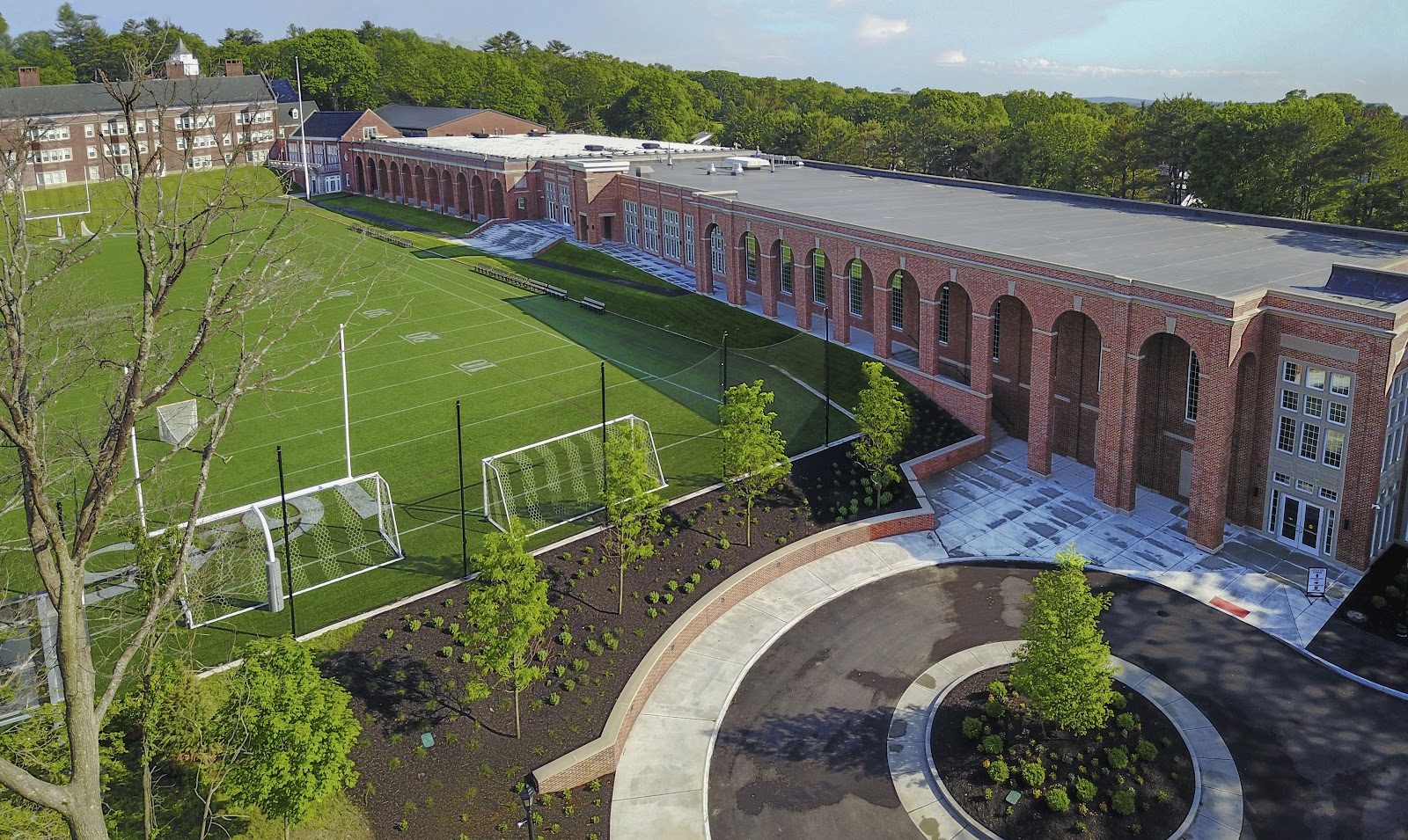
The Roxbury Latin School
Boston · United States
In West Roxbury, a boys' day school founded in 1645 has run continuously ever since, prizing 6:1 mentorship over scale.
Boston Latin School
Boston · United States
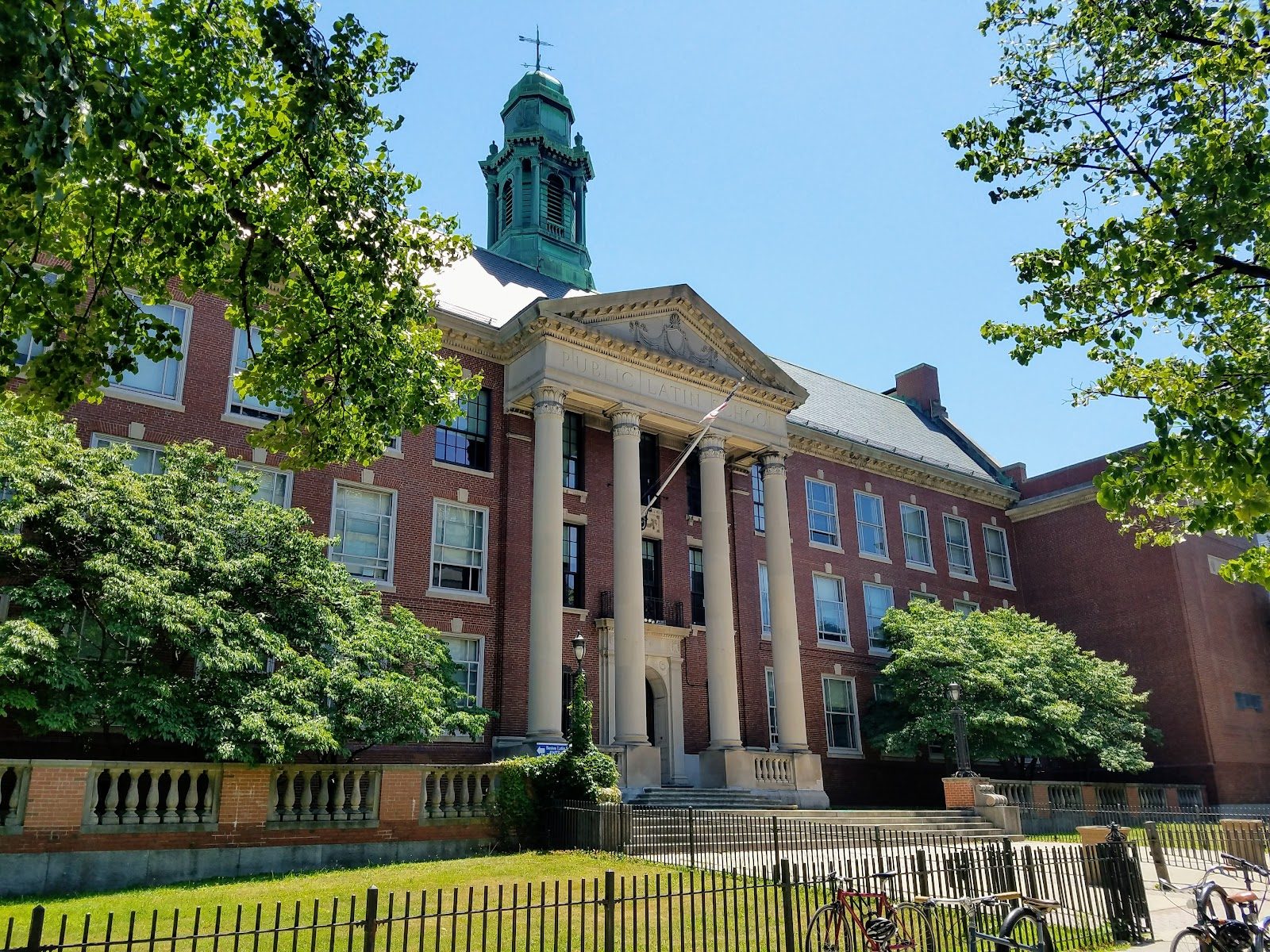
Founded in 1635, America's first public school still tests every applicant, predating Harvard by more than a year.
Milton Academy
Milton · United States
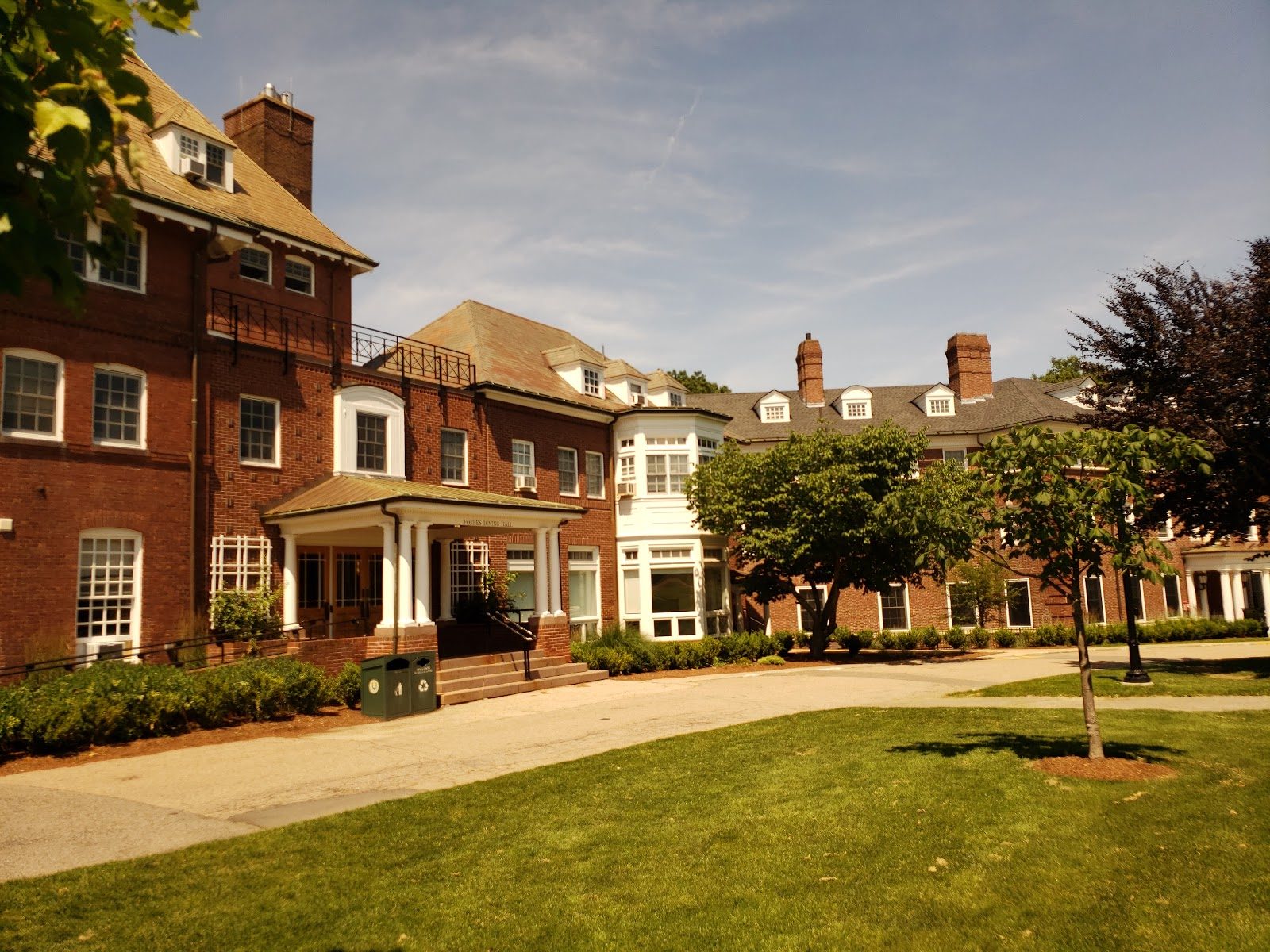
Eight miles from Boston, a 1798 charter still runs on Harkness-table debate rather than lecture halls.
Horace Mann School
New York City · United States
Born as Columbia Teachers College's 1887 experiment, now a Riverdale hilltop campus that swaps AP exams for homegrown advanced courses
Same country and curriculum — closest matches within ±10 points either way