
Xochimilco + Lomas Verdes
Colegio Alemán Alexander von Humboldt
low confidence· 4/6 cats · 1 avg sourcesFounded in 1894 and now the largest German school outside Germany, running a trilingual Abitur across three Mexico City campuses
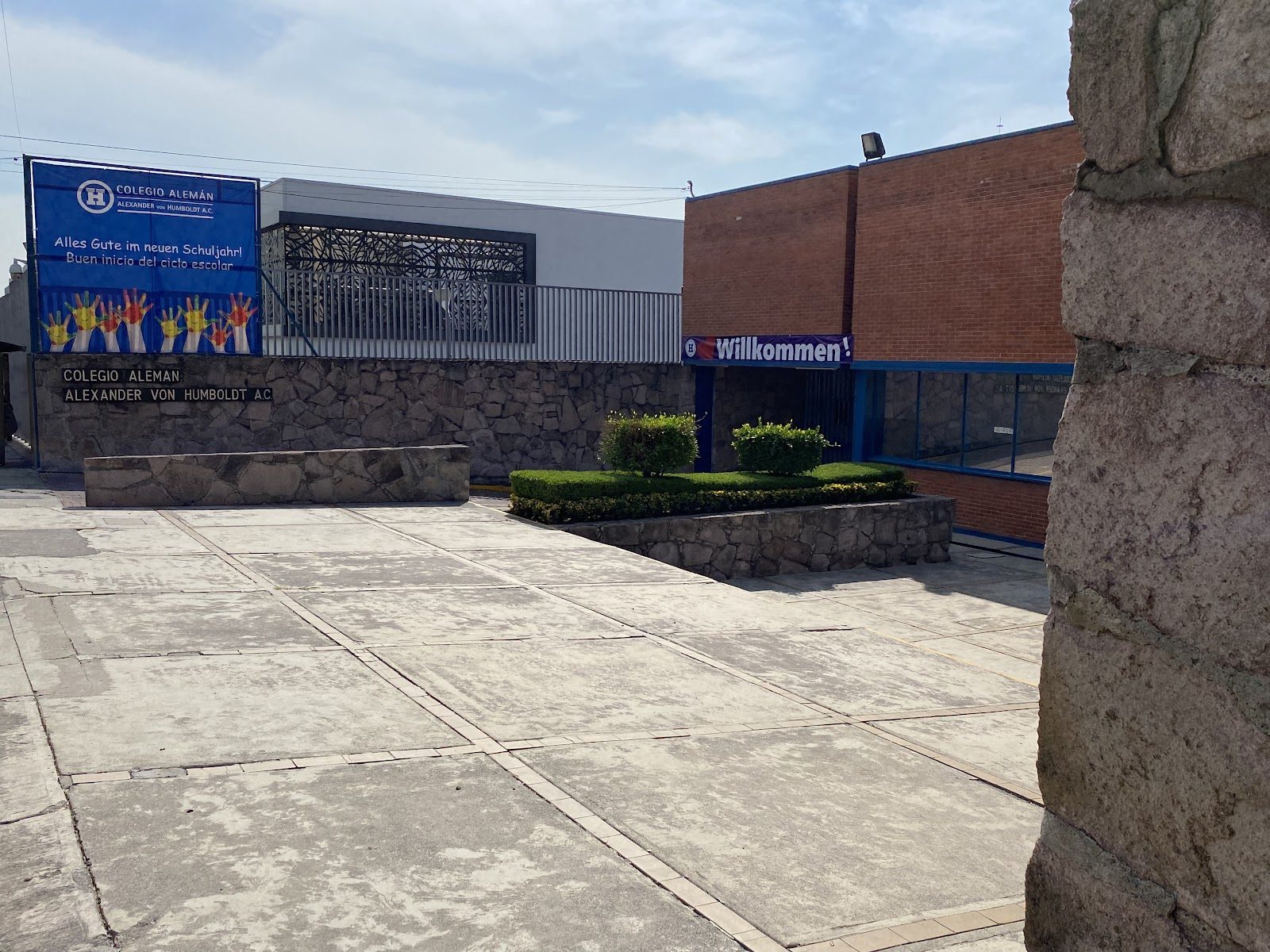
Photo © Isabel Loya via Google Maps
Type
Day
Ages
3–18
Curriculum
German Abitur · Mexican
Ratio
—
The Verdict
Editor's commitment
Right for
Families in Mexico City who want a day school, ages 3–18, with German Abitur and Mexican curricula taught in German, Spanish and English.
Wrong for
Anyone wanting boarding, a single-campus school or a lighter linguistic load; this 1894 institution runs three Mexico City campuses and a trilingual programme.
Watch out for
Deutsche Auslandsschule, KMK and SEP accreditation anchor credibility, but the school does not publish aggregate academic outcomes in the public domain.
Ranking breakdown
Colegio Alemán Alexander von Humboldt · #506 of 1591
Composite score 69.0. 8 weighted criteria.
By criterion
Academic Outcomes
Weight 20%
#586
of 1529 scored
University Placement
Weight 16%
#584
of 1529 scored
Prestige & Heritage
Weight 12%
#608
of 1571 scored
Alumni Network
Weight 12%
#394
of 1530 scored
Facilities
Weight 12%
#666
of 1533 scored
Transparency & Communications
Weight 8%
#688
of 1532 scored
Peer & Industry Review
Weight 10%
#645
of 1548 scored
Admissions Selectivity & Demand
Weight 8%
#438
of 1529 scored
Peer & Industry Review
How Colegio Alemán Alexander von Humboldt is regarded in the sector
65
Respected · medium confidence
The Colegio Alemán Alexander von Humboldt is a long-established, large German international school in Mexico City that has been recognized in past cycles by Germany's Federal Foreign Office/ZfA as an 'Exzellente Deutsche Auslandsschule' (Excellent German School Abroad), a third-party governmental quality distinction awarded to top-performing German schools worldwide. It is also frequently referenced positively in expat-parent forums (e.g., InterNations, Internations Mexico City threads) and German-Mexican chamber of commerce (CAMEXA) materials as a preferred choice for German and bicultural families, though it receives little coverage in English-language prestige rankings like Tatler or Good Schools Guide, which focus on British/American international curricula.
Evidence sources
Editors' overview
Colegio Alemán Alexander von Humboldt occupies a rare position in Mexico City: a 1894 foundation with real institutional weight, German oversight through Deutsche Auslandsschule and KMK, and Mexican recognition through SEP. The defining feature is the academic model itself — a trilingual education in German, Spanish and English, culminating in the German Abitur alongside the Mexican programme. That combination puts it in a narrow category. Parents looking for a school that can carry a child deep into European academic culture, without losing Mexican grounding, will find Humboldt hard to ignore. Its scale also matters: this is the largest German school outside Germany, spread across 3 campuses, which gives it reach, name recognition and a degree of permanence that newer international schools cannot match. The attraction is not polish for its own sake, but serious academic intent, institutional depth and cross-border credibility.
Its market position is clear. This is not a boutique international school selling lifestyle. It is an old, structured, academically demanding day school with a strong bicultural mandate and a clear educational identity. The trilingual model is the differentiator, but it also sets the terms: students need stamina for a language-heavy curriculum and families need commitment to a school that asks more than casual internationalism. For the right child, that produces intellectual range, linguistic confidence and a *clear route into German-speaking higher education*. For the wrong child, the same structure will feel rigid and overbearing. Parents should shortlist Humboldt if they want a school with academic seriousness rather than performative global branding, and if they value continuity from early years to age 18 within one established system.
The best fit is a student who thrives on structure, can handle sustained academic expectations, and gains energy from moving between languages and cultural frames every day. Children from internationally minded, academically ambitious families will get the most from it, especially those with a genuine interest in German language and the options the Abitur opens. It also suits families who want Mexico City rootedness without surrendering international mobility. It does not suit parents chasing a loose, progressive atmosphere or a school built around soft pastoral language. Humboldt’s appeal rests elsewhere: discipline, breadth and a model that has held its ground for well over 100 years.
Academic Performance
Public exam performance is the key unanswered question. Humboldt offers the German Abitur and the Mexican programme, but the school does not publish aggregate Abitur outcomes, average grades, pass rates, subject distributions or university placement data in the public domain. That absence matters. In a school with this level of academic ambition, parents need hard numbers: cohort size, grade bands, distinctions, and destination patterns over at least 3 to 5 years. Without them, external judgement rests on institutional reputation rather than verified performance. That is a real weakness in an otherwise serious academic proposition, and it places Humboldt behind the best-run international schools, which publish results with precision and consistency.
Relative to peers, Humboldt still sits in a strong bracket by virtue of its academic structure and the demands of the Abitur itself. Schools that sustain that pathway at scale do not operate as soft options. The question is not whether standards are high; the question is how high, and how consistently students convert that rigour into top examination outcomes. Until the school discloses aggregate results, it remains a high-credibility but opaque performer: credible because of the framework it works within, opaque because parents cannot test the school’s claims against published attainment data. For data-minded families, that makes Humboldt a school to inspect closely, not one to take on trust.
Facilities
The practical advantage here is scale. A school spread across 3 campuses has room to build subject-specific space rather than forcing everything through a single generic plant, and that matters in a programme with serious academic and linguistic demands. Parents can expect the core essentials of a mature all-through school network: science laboratories, libraries, sports areas, arts rooms and age-appropriate early years provision. What we have not seen is a clear, consolidated public account of those facilities campus by campus, with floor plans, specialist provision, or any hard detail on theatre, design technology, indoor sport or high-performance music infrastructure. That gap matters because strong facilities are not interchangeable across a multi-site school. One campus can be well-equipped while another is merely functional.
Against peer schools in the upper reaches of the Mexico City market, Humboldt’s facilities profile reads as solid rather than theatrical. The school’s appeal does not rest on showpiece architecture or lifestyle amenities; it rests on whether the physical environment supports disciplined teaching across a long academic journey. For many families, that is enough. For others, especially those comparing it with newer international campuses built to impress on the tour, the public picture feels too opaque. The school has the institutional heft to publish a sharper facilities case. Until it does, the estate registers as *credible, serviceable and under-explained* rather than sector-leading on evidence.
The question is not whether standards are high; the question is how high, and how consistently students convert that rigour into top examination outcomes
Prestige
Humboldt carries real prestige, but it is a specific kind of prestige. This is not the glossy status of a hotel-like international school with easy social cachet. Its standing rests on institutional seriousness, the German school tradition, and the force of a model that asks a great deal of students over many years. Being the largest German school outside Germany, spread across 3 campuses, gives it weight in both educational and social terms: families know the name, universities know the system, and the school occupies a durable place in Mexico’s German-Mexican world. That matters. So does the fact that its reputation has been built over generations rather than manufactured through branding. In the local market, Humboldt sits in the upper tier for families who value academic depth, cultural substance and a school identity with genuine backbone.
The limitation is clear. Prestige without published outcome data has a ceiling. Humboldt benefits from institutional authority and from the scarcity value of its educational offering, but prestige today also depends on transparent proof of performance. On that front, the school is still too guarded. Parents can infer standards from the structure and the demands placed on students, yet inference is not evidence. That keeps Humboldt in a high-status but not fully evidenced category: impressive, established and respected, but not as empirically convincing as schools that publish results, destinations and year-on-year attainment in full.
Until it does, the estate registers as credible, serviceable and under-explained rather than sector-leading on evidence
Communications
Parent communication reads as functional rather than polished. The school has the advantage of an established institutional identity and a large parent body, which pushes schools towards routine, systematised messaging rather than boutique hand-holding. That can work well when calendars, academic requirements, events and administrative processes are laid out with discipline. It works badly when information is scattered by campus, year group or platform. Humboldt sits in the middle. Families can expect regular operational communication and a clear sense that the school runs on process, but we have not seen the level of public-facing precision that marks out the best communicators: no especially sharp parent information architecture, no obvious culture of radical transparency, and no published data habits that build trust beyond the immediate practicalities. For a school of this scale across 3 sites, that leaves communication serviceable, institutionally competent and less open than it should be.
That matters because demanding schools need tight parent-school alignment. When expectations are high, communication cannot stop at reminders and notices; it needs to explain workload, progression, subject choices, support routes and who decides what. Humboldt’s public profile does not project warm, high-touch responsiveness. It projects structure. Some families will value that and read it as serious and adult. Others will find it stiff or hard to navigate, especially if they want a school that over-explains itself. The verdict: effective enough on operations, weaker on transparency, and not strong on giving outsiders a full view of how the school speaks to its community.
Uniqueness
What sets Humboldt apart is not generic “international” positioning but a dense bicultural compact that very few schools sustain with conviction. This is a German school in Mexico, not a Mexico City school with some German attached. That distinction matters. The school’s network structure across 3 sites gives it unusual reach and continuity, but the deeper point is cultural and intellectual: students work inside two national education frames at once, with Germany’s external academic oversight and Mexico’s official recognition pulling in parallel rather than in competition. For pupils, that creates a more exacting identity than the usual expatriate-school blend. They do not just sample another culture; they learn to operate within it, academically and socially, for years.
The gain for students is real intellectual stretch. A trilingual education at this scale builds fluency of thought, not just competence in classroom languages, and it trains children to switch register, context and expectation with precision. That has practical value for university access, but its greater value lies in habits of mind: discipline, adaptability and comfort inside demanding cross-border environments. The trade-off is clear. This model does not flatter every child. It rewards resilience, consistency and families who want a school with institutional gravity rather than educational theatre. For students who fit that brief, Humboldt offers something rare: a school life anchored in Mexico yet shaped by a serious European academic culture from the ground up.
Parents looking for a school that can carry a child deep into European academic culture, without losing Mexican grounding, will find Humboldt hard to ignore
Student Profile
The best fit is a student who can live with pressure without needing constant emotional cushioning. Humboldt suits children who are academically durable, linguistically agile and comfortable in institutions that value order over self-expression. They do well when they can absorb correction, keep up with sustained written and verbal demands, and move between different cultural expectations without fuss. This is a strong environment for pupils from families with German ties, bicultural households, or parents who want a child educated inside more than one national frame with real seriousness. It also suits students who like clarity: rules, routines, progression and adults who expect them to meet the standard.
The weaker fit is just as clear. Children who need a soft-edged, highly personalised atmosphere, or who wilt under formal academic pressure, will find the school hard work. So will families who want an easy social version of international education rather than one that asks for commitment over many years. Humboldt rewards resilience, consistency and intellectual stamina; it does not organise itself around constant affirmation. The social mix will include local families, internationally oriented households and students with a direct connection to German culture, but the unifying trait is not background. It is willingness to work inside a demanding, structured school culture that does not bend itself to every child. For the right student, that produces real depth. For the wrong one, it produces friction.
The attraction is not polish for its own sake, but serious academic intent, institutional depth and cross-border credibility
Co-curricular strengths
Arts & sport, on a separate axis
Overall 7.5/10
Scored 0-10 from the school's own published evidence. This axis is editorial-only — it does not feed the main WTS ranking.
Sports
8.2/10
Drama
7.5/10
Dance
6.5/10
Music
7.5/10
Visual Arts
7.8/10
Editor first-pass · editor-reviewable · 7/30/2026
Strengths
- +Offers the German International Abitur (DIAP) alongside the Mexican Bachillerato, giving graduates recognized dual-country university entry qualifications.
- +One of the oldest and largest German schools abroad, founded in the late 19th century with an established alumni network in Mexico City.
- +Operates multiple campuses across Mexico City, allowing families some choice of location within the same school system.
- +Recognized by Germany's Central Agency for Schools Abroad (ZfA) as an official German school, subject to periodic German inspection standards.
- +Bilingual German-Spanish instruction from early grades supports genuine biliteracy rather than superficial language exposure.
Considerations
- −Day school only, with no boarding option, so it is not viable for families seeking full boarding provision.
- −German-language immersion from the outset can be demanding for children arriving with no prior German exposure.
- −As a large multi-campus institution, families should expect sizeable cohorts rather than a small, intimate school community.
- −Private-school fees apply and are not published in detail on the school's public site, making budgeting comparisons harder for prospective expat families.
Availability
Primary entry gate & tests
Academic Record / German Pathway
Gallery
Photo © Isabel Loya via Google Maps
Parent reviews
Have you sent your child here?
Voice reviews carry the strongest trust badge — we transcribe them for you to tidy up before they go live. Prefer to type? A written review is fine too.
Add your voice
In 60 seconds, tell other parents: what's the best thing about Colegio Alemán Alexander von Humboldt, and what surprised you when your child joined?
We ask for a Google sign-in so every review has a real face behind it — no anonymous drive-by attacks on schools, and no faked positive reviews. Your email is never shown publicly.
Send this profile to a friend
International parents rely on word-of-mouth. Share this review with someone weighing the same decision.
Schools with places
Similar schools to Colegio Alemán Alexander von Humboldt with places available now.
Availability first, then country, area, curriculum, price, co-curricular
Consider also
Also worth looking at alongside Colegio Alemán Alexander von Humboldt.
The American School Foundation
Mexico City · Mexico
Founded in 1888, the oldest continuously operating American school outside the U.S., blending IB rigor with bilingual roots in Mexico City.

Greengates School
Mexico City · Mexico
Since 1951 in Naucalpan, the only Mexico City school requiring every sixth-former to sit the full IB Diploma, with results to match

Puebla American School Foundation
Puebla · Mexico
Since 1942, this bilingual Puebla day school became the city's first to run the full IB continuum, from PYP to Diploma.
German International School Dubai
Dubai · United Arab Emirates
In Dubai's Academic City, a Thuringia-curriculum campus channels German engineering spirit into STEM excellence en route to the Abitur.
Same country and curriculum — closest matches within ±10 points either way