
Texas
Houston Ballet Academy
Inside America's largest professional dance facility, Vaganova-rooted training pipelines students straight into Houston Ballet's company.

Photo © Jazzy Jenn via Google Maps
Type
Day + Boarding
Ages
3–18
Curriculum
—
Ratio
—
The Verdict
Editor's commitment
Right for
Dancers aged 3–18 who want serious ballet training inside Houston Ballet Centre for Dance, tied directly to Houston Ballet.
Wrong for
Families seeking a conventional academic school, broad subject choice or a faith setting; this is a secular Houston ballet academy.
Watch out for
The published day-fee average is US$3,226, which reads low for Houston; confirm what tuition, boarding and performance costs cover.
Ranking breakdown
Houston Ballet Academy · #1006 of 1591
Composite score 60.5. 8 weighted criteria.
By criterion
Academic Outcomes
Weight 20%
#1517
of 1529 scored
University Placement
Weight 16%
#1528
of 1529 scored
Prestige & Heritage
Weight 12%
#803
of 1571 scored
Alumni Network
Weight 12%
#427
of 1530 scored
Facilities
Weight 12%
#3
of 1534 scored
Transparency & Communications
Weight 8%
#1099
of 1532 scored
Peer & Industry Review
Weight 10%
#145
of 1548 scored
Admissions Selectivity & Demand
Weight 8%
#120
of 1529 scored
Peer & Industry Review
How Houston Ballet Academy is regarded in the sector
88
Strong · medium confidence
Houston Ballet Academy occupies a distinct niche as a vocational arts institution rather than a conventional college-prep school, so peer regard is best measured against other major American ballet training pipelines (School of American Ballet, San Francisco Ballet School, Boston Ballet School) rather than traditional independent-school leagues. Within the dance world it is consistently grouped with these top-tier company-affiliated academies because of its status as the training arm of Houston Ballet, one of the five largest ballet companies in the US, giving students direct visibility into professional casting and company placement. Its graduates' trajectories into Houston Ballet II and other regional and international companies, plus regular student participation at Youth America Grand Prix, are the concrete signals used within dance-education circles to benchmark it. Because it operates outside mainstream K-12 rankings, it receives limited coverage in outlets like Good Schools Guide or WhichSchoolAdvisor, and its standing rests more on professional dance press and company reputation than on university admissions commentary or newspaper league tables.
Award

Elite Dance 50
World's Top School · The Global Ranking
Houston Ballet Academy is featured on our Global Top 50 ranking at #40. This seal is available for the school's marketing team to use on their website, prospectus and social channels.
Editors' overview
Houston Ballet Academy trades on one advantage that ordinary performing-arts schools cannot match: it sits inside the Houston Ballet Center for Dance and feeds directly from training into a major professional company environment. That matters. For a serious young dancer, daily life inside America’s largest professional dance facility is not a decorative extra; it sets the standard, the rhythm and the level of expectation. The academy takes students from ages 3 to 18, teaches in English, and runs as a secular day and boarding school in Houston. The affiliation is the point. Parents looking for a broad liberal-arts school with strong dance on the side should look elsewhere. This is a specialist pipeline.
What sets it apart is the clarity of purpose. The academy is rooted in the Ben Stevenson tradition and, by your own framing, in Vaganova-influenced training. That gives it a hard-edged vocational identity that many arts schools blur. Students are not buying a campus fantasy; they are entering a disciplined ballet institution attached to a professional house. The age span, 3–18, also tells parents that this is not only a pre-professional upper school but a long training ladder, with room for early technical formation and sustained progression. The published average annual day fee of $3,226 is strikingly low for a US specialist private institution, so we would not use price as the main signal here; the real value lies in access to serious training infrastructure and proximity to a company-standard working culture.
The right child for Houston Ballet Academy is focused, physically resilient and happy inside a narrow brief. This is not for the hesitant dabbler. A student who wants intensive ballet training, accepts hierarchy, repetition and correction, and measures progress in technique rather than in a broad menu of school experiences will find a natural fit. A teenager who wants a conventional American independent-school life with expansive extracurricular choice will not. Houston Ballet Academy belongs on a shortlist for families who want a vocational ballet education with a direct institutional link to Houston Ballet, boarding as an option, and a school structure built around dance first, not dance as enrichment.
A Global Elite 50 Dance school
Houston Ballet Academy sits in Band 32-50 of our Global Elite 50 Dance Schools 2026 because it meets the standard for inclusion within the Global Elite 50 — public evidence supports its elite professional-conversion status, but does not currently allow a definitive one-place distinction against its band peers.
The Global Elite 50 Dance Schools methodology is deliberately aggressive: half of the 100 available points are directly tied to professional conversion between 2016 and 2026 — main-company contracts, elite junior-company positions, apprenticeships and second companies. Beautiful campuses, historic alumni and impressive facilities cannot compensate for weak contemporary professional conversion, and are not scored independently.
Because this school currently publishes limited cohort-level data, no evidence-confidence grade is attached to its position at this stage. As with all band-32-50 schools, the exact ordering will be revised when materially better 2016-2026 destination evidence enters the public domain.
International openness is a defining feature. Boarding or residential arrangements are standard, and overseas dancers apply on a rolling international audition + video pre-screen basis without residency, federation or citizenship gates. Student visas are handled by the school or its host-family partner. This is one of the internationally-open pipelines on the Global Elite 50 Dance Schools list that a relocating family can consider directly. Prospective families are advised to begin overseas application conversations early in the calendar year, with detailed audition and boarding logistics arranged 12-18 months ahead of the intended entry point. Prospective families are advised to begin overseas application conversations early in the calendar year, with detailed audition and boarding logistics arranged 12-18 months ahead of the intended entry point. Prospective families are advised to begin overseas application conversations early in the calendar year, with detailed audition and boarding logistics arranged 12-18 months ahead of the intended entry point. Prospective families are advised to begin overseas application conversations early in the calendar year, with detailed audition and boarding logistics arranged 12-18 months ahead of the intended entry point.
Academic Performance
Houston Ballet Academy does not publish the kind of external examination data parents expect from a conventional school review: no GCSEs, no A levels, no IB averages, no AP profile, no university-entry tables. That absence is not a minor omission; it defines how this school must be judged. It is a *specialist conservatoire-style training institution*, not a broad academic school competing on standard academic metrics. Any parent trying to benchmark it against mainstream independent schools will hit an immediate wall of academic opacity. The published average annual day fee of $3,226 reinforces the point: this sits in a different market segment, with a different core promise.
Relative to peers, the more relevant comparison group is pre-professional ballet training attached to a major company, where success is measured in progression, technical standard, performance readiness and entry into the profession, not in public exam league-table data. The academy’s direct affiliation with Houston Ballet gives it a serious vocational advantage in that narrower field. But parents still need to confront the trade-off plainly. If you want auditable academic outcomes and a clear external-exam track record, this school does not supply them in the public domain. If you want single-minded professional preparation inside a company-linked ballet environment, that is the real measure here.
Facilities
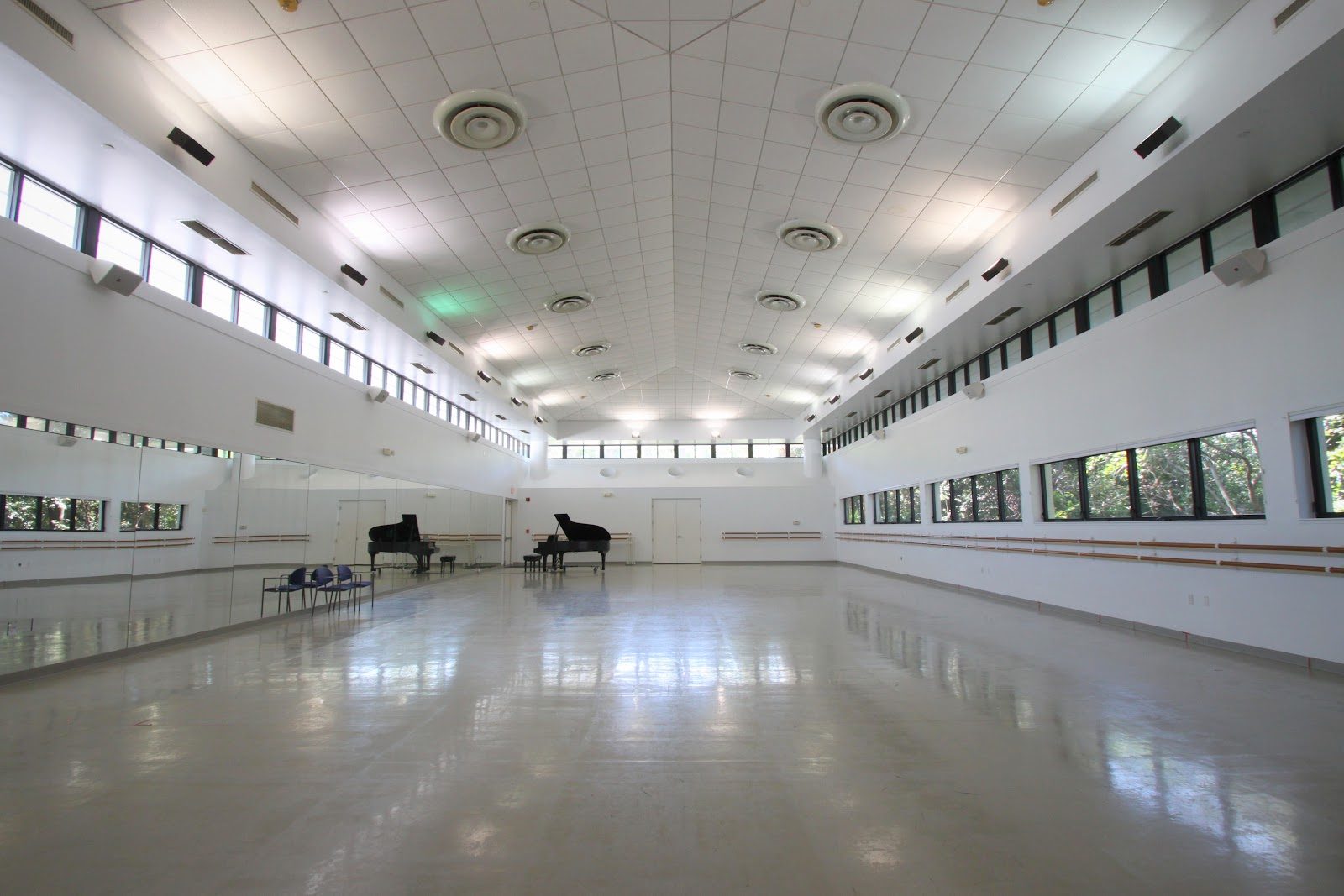
The decisive facility here is the building itself: the academy sits inside the Houston Ballet Center for Dance, not in a school campus that rents studio space after hours. For a specialist ballet school, that is a serious structural advantage. Students train in a setting built for professional dance rather than adapted for it, and that changes the daily standard. Floors, studio provision, rehearsal culture and circulation around the building all serve one purpose. Against peer schools, that matters more than glossy extras. Many pre-professional programmes offer strong teaching but operate with thinner physical infrastructure or weaker institutional integration. Houston Ballet Academy benefits from being embedded in America’s largest professional dance facility, and that gives it a hard vocational edge.
The limitation is just as clear: parents should not expect the facilities profile of a full-spectrum independent school. The attraction here is not libraries, science labs, expansive playing fields or a broad co-curricular plant. It is dance-specific space and immediate proximity to a working company environment. For the right student, that is exactly the point. For anyone wanting a more rounded campus experience, it is a narrow bargain. The published average annual day fee of $3,226 also reframes expectations: this is not a luxury-campus proposition but a function-first training base with access to elite professional infrastructure that peer conservatoire-style schools struggle to match.
The right child for Houston Ballet Academy is focused, physically resilient and happy inside a narrow brief
Prestige
Houston Ballet Academy carries real prestige within its own lane, and that lane is narrow. The name that matters here is not a general private-school brand but the direct tie to Houston Ballet and the fact that training sits inside the company’s own dance centre. In ballet, that institutional proximity counts. It places students in a serious professional ecosystem rather than in a school that borrows prestige from occasional masterclasses, visiting teachers or a glossy theatre. The academy’s standing rests on vocational credibility, daily exposure to company standards and a training identity rooted in the Ben Stevenson tradition. For families who care about ballet first, that gives the school genuine specialist cachet.
The limit is just as clear. This is not prestige in the Westminster, Andover or Sevenoaks sense of broad academic status, social signalling or elite university placement. It does not trade in that market, and parents should not misread the badge. Its published average annual day fee of $3,226 strips away any fantasy that price itself confers exclusivity; the status here comes from access, discipline and professional alignment. That makes Houston Ballet Academy high-prestige in a conservatoire sense and thinly credentialled outside it. For the committed young dancer, that is enough. For families chasing a famous all-round school with dance attached, it is the wrong proposition.
Houston Ballet Academy benefits from being embedded in America’s largest professional dance facility, and that gives it a hard vocational edge
Communications
Houston Ballet Academy communicates with parents as a specialist training institution, not a conventional school trying to narrate every corner of campus life. That has strengths and limits. The core message is clear and disciplined: this is ballet-first, tied directly to Houston Ballet, and housed inside the company’s dance centre. Parents do not have to decode the school’s purpose. The website makes the institutional relationship legible and keeps the public-facing story tightly aligned with that vocational brief. For families who value focus over gloss, that reads as refreshingly direct. The low published average annual day fee of $3,226 also raises obvious practical questions about what sits inside that figure and what sits outside it, and communication needs to answer those cleanly.
That is where the picture toughens. We have not seen the depth of public academic disclosure, pastoral explanation or outcome reporting that parents expect from a broader independent-school review. Communication works best when it stays on training identity and professional context; it is thinner when families want a fuller account of day-to-day school life, non-dance provision, or hard evidence on student pathways. For a family already committed to elite ballet training, that may be enough. For a parent making a first move into boarding or specialist education, it leaves too much unsaid. In editorial terms, the academy communicates its mission with hard-edged clarity and its wider school proposition with marked opacity.
Uniqueness
Houston Ballet Academy is unusual because the school and the profession are not kept at arm’s length. Students train inside the same institution as a major ballet company, under the same roof as working dancers, rehearsals and the daily mechanics of a professional art form. That creates a rare degree of institutional continuity between first lessons and advanced training. Plenty of dance schools promise industry exposure; this one builds it into the fabric of the week. For a child with real ballet ambition, that brings early technical seriousness, sharper standards of conduct and a clearer understanding of what the profession actually demands. The age span from 3–18 also matters: students can enter young and progress through a long, coherent ladder rather than stitching together separate local programmes.
Its distinctiveness also lies in what it refuses to be. This is not a conventional private school with dance added as an enrichment track, and that single-track identity benefits the right student. Training gains intensity, correction gains consistency, and talent is judged against professional expectations rather than school-show enthusiasm. The payoff is high-value vocational immersion at an average annual day fee of $3,226, which is striking for this kind of specialist access. The cost of that uniqueness is obvious too: breadth narrows, and the environment suits students who thrive on repetition, hierarchy and physical discipline. For the committed dancer, that is not a drawback. It is the whole point.
Houston Ballet Academy carries real prestige within its own lane, and that lane is narrow
Student Profile
The right student here is not a generalist child who wants to keep several doors open. Houston Ballet Academy suits the young dancer whose identity already centres on ballet, or is moving there fast, and who accepts that progress depends on repetition, correction and physical rigour. The age range, 3–18, matters because it allows early starters to settle into a long technical formation rather than treating dance as a late add-on. Older students need a vocational cast of mind: disciplined in class, resilient under scrutiny and comfortable in an environment where standards are set by the profession, not by school-show enthusiasm. Children who need constant variety, broad extracurricular choice or a softer pace will find the brief too narrow.
Socially and temperamentally, this school fits students who do not need a conventional campus identity to feel secure. They need focus more than breadth, seriousness more than spectacle, and enough self-possession to work inside a hierarchical training culture. Boarding extends the reach beyond local families, which matters for committed dancers prepared to organise life around studio hours rather than a standard school rhythm. The standout attraction is not a classic school experience but access to a demanding professional pipeline at an average annual day fee of $3,226. For the child who wants ballet at the centre of daily life, that is a clear, hard bargain.
That makes Houston Ballet Academy high-prestige in a conservatoire sense and thinly credentialled outside it
Co-curricular strengths
Arts & sport, on a separate axis
Overall 10/10
Scored 0-10 from the school's own published evidence. This axis is editorial-only — it does not feed the main WTS ranking.
Sports
—
Drama
—
Dance
10/10
Music
—
Visual Arts
—
Strengths
- +Serves as the official training academy of Houston Ballet, one of the larger ballet companies in the United States, giving strong dancers visibility for company-track roles.
- +Based at the Houston Ballet Center for Dance, a purpose-built facility with multiple studios shared with the professional company.
- +Faculty includes instructors with professional company backgrounds, working under artistic director Stanton Welch.
- +Offers a structured multi-level pathway from children's classes through a Pre-Professional/Trainee division for older students.
- +Provides a supervised residence option for out-of-town students enrolled in upper-level programs.
Considerations
- −Academic schooling is not delivered in-house; families must arrange and coordinate separate academic enrollment around the dance schedule.
- −Admission is audition-based and becomes increasingly selective at upper levels, limiting access for less advanced dancers.
- −Single-discipline focus on classical ballet offers no broader arts or academic curriculum for families wanting a more rounded program.
- −Boarding capacity and residential support appear limited to specific older-student divisions, and precise fee and capacity figures are not publicly detailed.
Gallery
Photo © Suzanne Driskill via Google Maps
Photo © Na Li (娜爷 大圣国际传媒有限公司) via Google Maps
Photo © Suzanne Driskill via Google Maps
Photo © Na Li (娜爷 大圣国际传媒有限公司) via Google Maps
Photo © Na Li (娜爷 大圣国际传媒有限公司) via Google Maps
Photo © Jason Michael Rosado via Google Maps
Photo © Jason Smith via Google Maps
Parent reviews
Have you sent your child here?
Voice reviews carry the strongest trust badge — we transcribe them for you to tidy up before they go live. Prefer to type? A written review is fine too.
Add your voice
In 60 seconds, tell other parents: what's the best thing about Houston Ballet Academy, and what surprised you when your child joined?
We ask for a Google sign-in so every review has a real face behind it — no anonymous drive-by attacks on schools, and no faked positive reviews. Your email is never shown publicly.
Send this profile to a friend
International parents rely on word-of-mouth. Share this review with someone weighing the same decision.
Schools with places
Similar schools to Houston Ballet Academy with places available now.
Availability first, then country, area, curriculum, price, co-curricular
Consider also
Also worth looking at alongside Houston Ballet Academy.

Boston Ballet School Professional Division (Walnut Hill Partnership)
Boston / Natick, MA · United States
A Natick boarding campus where company-level pointe work shares the daily timetable with a full college-prep diploma

ABT Jacqueline Kennedy Onassis School
New York, NY · United States
Pre-professional ballet training on ABT's National Training Curriculum, feeding dancers straight into the company's own ranks
The HARID Conservatory
Boca Raton, Florida · United States
Tuition-free, audition-only ballet conservatory where teenage dancers train full days for professional company careers
UNCSA School of Dance, High School
Winston-Salem, NC · United States
At the nation's first public arts conservatory, teenage dancers train daily alongside college company members bound for professional stages.
Same specialism, country and curriculum — closest matches within ±10 points either way