
New South Wales
A Jesuit boys' school on the Lane Cove River, where the boatshed sits on campus and rowing has raced since 1882
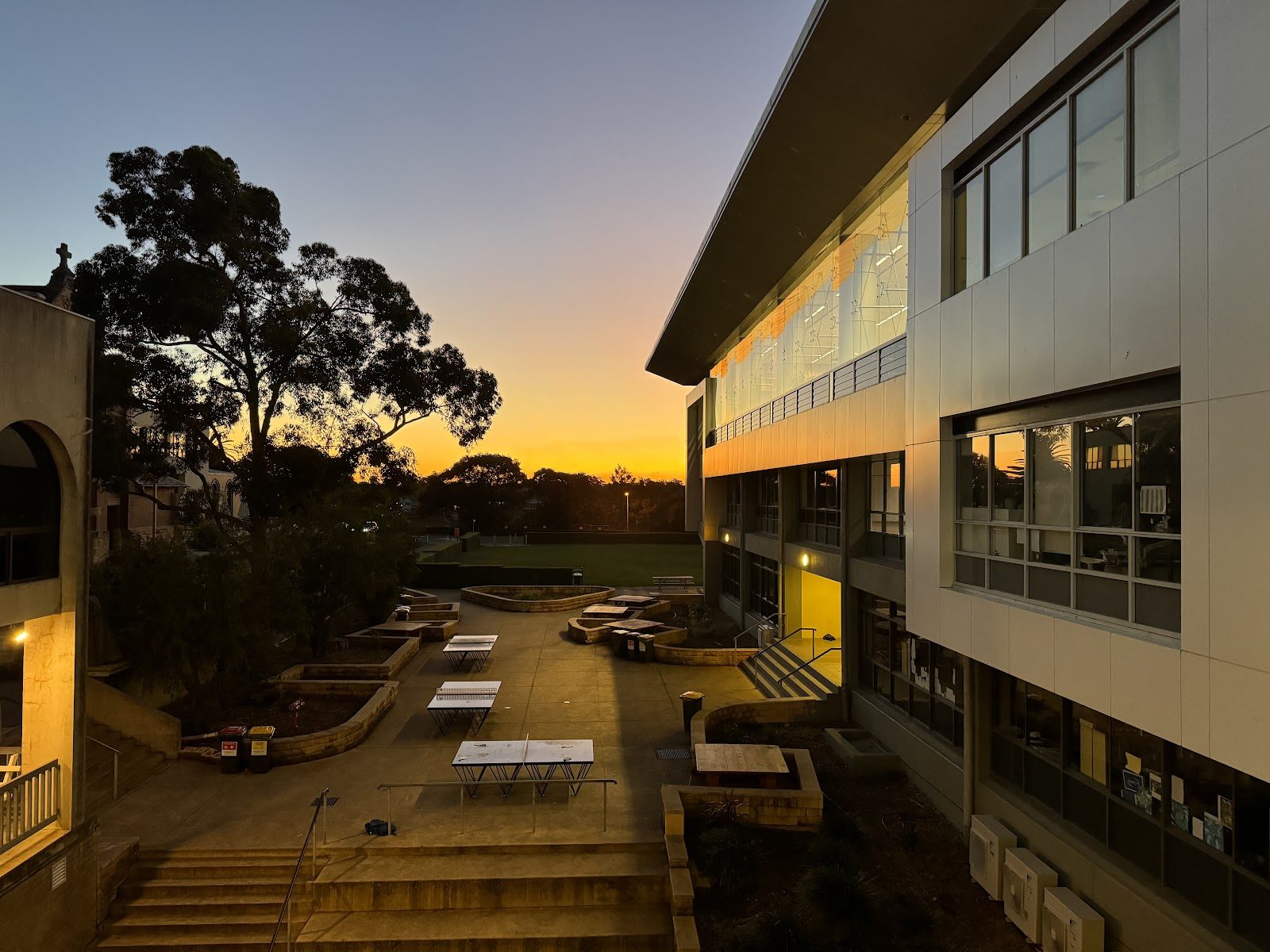
Photo © Marlon via Google Maps
Type
Both
Ages
11–18
Curriculum
Australian HSC
Ratio
11:1
The Verdict
Editor's commitment
Right for
Boys 11–18 who want Australian HSC, boarding or day, and a 11:1 ratio in a Jesuit school on Sydney’s river.
Wrong for
Families wanting co-education, a secular setting, or girls: Riverview is boys-only, Catholic, and boarding starts within a Years 5–12 structure.
Watch out for
The 22-pupil average class size is efficient, not intimate; faith is central, and rowing culture runs deep on a campus founded in 1880.
Ranking breakdown
Saint Ignatius' College Riverview · #161 of 1591
Composite score 75.4. 8 weighted criteria.
By criterion
Academic Outcomes
Weight 20%
#334
of 1529 scored
University Placement
Weight 16%
#354
of 1529 scored
Prestige & Heritage
Weight 12%
#122
of 1571 scored
Alumni Network
Weight 12%
#42
of 1530 scored
Facilities
Weight 12%
#71
of 1533 scored
Transparency & Communications
Weight 8%
#204
of 1532 scored
Peer & Industry Review
Weight 10%
#300
of 1548 scored
Admissions Selectivity & Demand
Weight 8%
#760
of 1529 scored
Peer & Industry Review
How Saint Ignatius' College Riverview is regarded in the sector
85
Strong · medium confidence
Saint Ignatius' College Riverview is consistently regarded as one of Sydney's most prestigious GPS (Greater Public Schools) Catholic boys' schools, frequently featured in Australian Financial Review and Sydney Morning Herald coverage of elite private schools alongside Sydney Grammar, Scots College, and Kings School. Its alumni network includes prominent figures in law, politics, and business, and it is regularly benchmarked against other GPS schools in rowing, rugby and academic league tables reported in Australian press. It lacks the truly global brand recognition of a Sydney Grammar or Kings, keeping it just below the top tier internationally, but within Australian peer and specialist education press it holds a strong, well-established reputation.
Evidence sources
Editors' overview
Saint Ignatius' College Riverview occupies a distinct corner of the Sydney market: an old, full-scale boys’ school with day and boarding provision, a Jesuit frame, and a riverfront campus that gives sport and school life unusual physical coherence. Founded in 1880, it trades on continuity and ritual as much as on academics. The appeal is not hard to locate. This is a school built for families who want a strong sense of tradition, formal pastoral structures, and a broad co-curricular life that carries real weight. The boatshed on campus and a rowing history running back to 1882 are not decorative details; they tell you what sort of place this is — physically active, institutional, competitive, and deeply invested in belonging.
What marks Riverview out is the combination of scale, structure and identity. It is a boys’ school for ages 11–18, with the Australian HSC, English as the language of instruction, boarding as a real part of the school rather than a token add-on, and a published student-teacher ratio of 11:1 with average classes of 22. The school talks in the language of holistic education, pastoral care and service, and in this case the message aligns with the architecture of the place: house-based support, a long-established boarding community, and an all-through culture that starts well before the senior years. Parents who want a narrowly transactional academic factory will find other Sydney schools more direct in that ambition. Riverview’s proposition is wider: education of the heart, institutional confidence, serious co-curricular breadth, and a formation model rooted in discipline, service and shared codes.
That same clarity of identity is the reason it belongs on a shortlist — and the reason it will not suit everyone. Riverview fits boys who thrive in a structured environment, value team sport, and want a school with visible community rituals and a powerful old-school rhythm. Boarders, country families and families drawn to a strongly values-led education will find a mature, coherent offer here. Boys who resist convention, dislike single-sex settings, or want a more informal, individualised culture may find the place too codified. In market terms, Riverview sits among Sydney’s heavyweight traditional boys’ schools, but with a Jesuit emphasis on pastoral care and service that gives it a different flavour from a pure academic hothouse. For the right student, that mix of spiritual seriousness, institutional memory and everyday activity on the river is compelling.
Academic Performance
Riverview’s public story about academics is values-first rather than data-first, and that matters. The school talks at length about scholarship, intellect and pastoral support, but it does not publish the basic external-performance metrics that allow a clean judgement against Sydney’s strongest HSC competitors. We have not seen aggregate ATAR data, median ATAR, band distribution tables, subject-by-subject HSC outcomes, or a consistent run of state-rank disclosures in the public domain. For parents comparing elite boys’ schools, that is a real gap. Schools with hard academic ambition tend to show their workings. Riverview does not.
That does not place it outside the top tier of expectation; it places it in a different part of that tier. The school’s academic offer sits inside a broader Jesuit formation model in which service, faith, co-curricular life and pastoral structures carry equal institutional weight. That mix suits families who want more than an exam machine. It also means Riverview is harder to rank precisely against the city’s most overtly results-driven schools, because the school declines to make exam performance the centre of its public case. The market reading is clear: this is a *serious but not transparently benchmarked* academic environment, with standards that need testing through direct questions on HSC outcomes, university destinations, top-subject results and the share of leavers reaching the most selective courses.
Facilities
The defining facility here is the riverfront sporting estate. Few Sydney schools can match an on-campus boatshed tied so directly into daily school life, and that matters because it turns rowing from an add-on into part of the institution’s physical core. For families who care about water sport, Riverview sits in a rare bracket. The same goes for boarding: the school treats it as a full part of the campus rather than a detached side operation, with routines and recreation built into the week. Add the Riverview Academy after-school study provision, and the picture is of a school designed to keep boys on site for long stretches of the day in a highly managed, all-encompassing environment. Against peer schools, that level of integration is a strength. Not every traditional boys’ school achieves it.
The rest of the public picture is thinner than it should be. The school talks confidently about sport, performing arts, clubs, pastoral care and houses, but it does not publish a clear, parent-friendly inventory of specialist teaching spaces, arts venues, science provision, design facilities or sixth-form-style study areas. That weakens comparison with peers that show their laboratories, theatres, workshops and libraries in practical detail. The low staffing ratio and average class size point to serious resourcing, but resourcing is not the same as published facility depth. So the verdict is mixed: Riverview has genuine physical distinction in sport and campus cohesion, especially for rowing and boarding, but a less transparent public account of its academic and arts infrastructure than the best benchmark schools.
That does not place it outside the top tier of expectation; it places it in a different part of that tier
Prestige
Riverview carries high prestige in the Sydney market because it combines three forms of status that parents recognise instantly: old institutional weight, selective social cachet, and a campus life with its own rituals and codes. This is not prestige built on glossy novelty or aggressive self-promotion. It rests on entrenched reputation. The school’s river setting, on-campus boatshed, Jesuit identity, boarding presence and large-scale co-curricular machine create a world that feels self-contained and socially legible. Families know what Riverview stands for before they visit: boys’ education with structure, sport, faith, service and a strong internal culture. The published 11:1 staffing ratio and average class size of 22 reinforce that sense of serious provision rather than mass-market scale.
I rate it highly because prestige here runs deeper than raw exam publicity. Riverview has the kind of standing that produces loyalty, intergenerational attachment and immediate name recognition across independent-school circles. That status is strongest among families who value traditional male schooling, rowing and team sport, house identity, and a disciplined pastoral framework. It is weaker among parents who define prestige by public academic data alone, because the school does not publish enough hard outcomes to dominate on that front. So the verdict is clear: Riverview is *top-tier in social and institutional prestige, less convincing in academic transparency*, and powerful precisely because it does not need to explain its place in the market at every turn.
Founded in 1880, it trades on continuity and ritual as much as on academics
Communications
Riverview communicates with parents in the voice of an institution that knows exactly what it is. The website is orderly, easy to navigate and heavy on core themes: Jesuit mission, pastoral care, service, houses, co-curricular life and enrolment process. Key practical gateways are visible from the main navigation — calendar, term dates, transport information, sports results and fixtures, uniform shop, login portals and campus map — which tells you the school understands that parent communication is not only about ethos; it is also about logistics. That functional spine matters in a school with day and boarding families, a large co-curricular load and a campus culture that keeps boys on site for long stretches. The tone, though, is institutional, values-saturated and carefully controlled. Parents get a strong sense of the school’s code; they get less plain-speaking detail on what daily academic performance looks like.
That is the strength and the weakness. Riverview is effective at communicating identity, expectations and belonging. It is less effective at communicating measurable outcomes and operational texture. The school publishes the tools parents need to stay connected, and the public-facing structure feels disciplined rather than chaotic. But it also relies heavily on broad language about holistic education, faith and formation. For families already sold on the model, that reads as coherent and reassuring. For hard-nosed comparators, it reads as guarded. The published class size of 22 and staffing ratio of 11:1 signal close oversight; the communications style matches that ethos: organised, confident and not especially transparent where scrutiny bites hardest.
Uniqueness
What sets Riverview apart is not one feature but a tight alignment of place, faith, routine and masculine school culture. Plenty of old boys’ schools trade on tradition; fewer fuse that tradition so completely into the daily mechanics of school life. The Jesuit frame is not decorative branding. It shapes the school’s language of scholarship, service, pastoral care and moral formation, and it gives Riverview a more interior, conscience-driven identity than schools built mainly around results or networking. Add the riverfront setting, the on-campus boatshed and a boarding community that draws students from beyond the immediate suburb, and the result is a school with a strong enclosed world of its own. Boys are not just taught here; they are absorbed into a system of houses, mentors, shared rituals and institutional expectations.
For students, that brings real advantages. A low staffing ratio of 11:1 and average classes of 22 support a more supervised, personal version of large-school life than the stereotype of the sprawling traditional boys’ school. The co-curricular offer also carries unusual force because it is embedded in the campus rather than bolted on after lessons. That breadth can build confidence, discipline and durable friendships. The trade-off is clear. Riverview suits boys who want structure, collective identity and a school that asks for commitment across the full week. It is highly codified, intensely communal and not a loose fit for students who want to keep school at arm’s length.
This is a school built for families who want a strong sense of tradition, formal pastoral structures, and a broad co-curricular life that carries real weight
Student Profile
The boys who thrive here are the ones who want to belong to something bigger than themselves and do not resent the obligations that come with it. Riverview suits students who respond well to structure, accept adult oversight, and are prepared to throw themselves into the full life of the school rather than dip in and out. The pastoral language is not cosmetic; the place is built around mentoring, house belonging and a clear moral code. That makes it a strong fit for boys who value routine, team loyalty and a school culture with firm edges. It also suits boarders and day boys who want a high-involvement week, with study, sport, service and community life pulling in the same direction. The published 11:1 staffing ratio and average classes of 22 support that closely held model.
The less comfortable fit is just as clear. Boys who dislike collective expectations, resist religious framing, or want a more anonymous, low-pressure school life will chafe here. This is a tradition-heavy, male-coded environment in which sport, shared rituals and institutional allegiance carry real weight. Independent spirits can still do well, but only if they can live inside the system without fighting it every day. Families need to ask a blunt question: does their son want freedom from school, or immersion in it? Riverview is for the second group. For the right boy, that produces deep loyalty and durable confidence. For the wrong one, it feels constricting.
What marks Riverview out is the combination of scale, structure and identity
Co-curricular strengths
Arts & sport, on a separate axis
Overall 8.38/10
Scored 0-10 from the school's own published evidence. This axis is editorial-only — it does not feed the main WTS ranking.
Sports
9.4/10
Absolute athletic powerhouse with massive acreage in Sydney; fields historic, fiercely competitive AAGPS league rugby, rowing, and cricket programs.
Drama
8.8/10
High-quality seasonal theater tracker staging complex, technically demanding productions inside their modern theater spaces.
Dance
6/10
Treated primarily as an auxiliary component for house arts festivals and theatrical physical training rather than an independent elective.
Music
9.2/10
Outstanding musical depth; features the renowned college choir alongside active jazz ensembles and symphonic bands.
Visual Arts
8.5/10
Exceptional art school infrastructure running top-tier advanced studios for architecture, fine oil painting, and high-end digital media.
Editor-verified · 8/6/2026
WTS 300 badge
Saint Ignatius' College Riverview is one of the World's Top 300 Schools. Claim your listing to add it to your site →
Strengths
- +Saint Ignatius' College has a non-selective enrolment policy and currently caters for approximately 1,560 students from Years 5 to 12, including 335 boarders, making it one of the largest boarding schools in New South Wales.
- +Notable alumni include former Prime Minister of Australia Tony Abbott, former Deputy Prime Minister Barnaby Joyce, former Chief Justice of New South Wales Tom Bathurst, the current Archbishop of Sydney Anthony Fisher, former NSW Premier Nick Greiner, seventeen former Wallabies, nine Olympians and eight Rhodes Scholars.
- +The 2025 HSC cohort achieved a median ATAR of 87.45, with 41% of students scoring above 90, and the Dux graduated with an ATAR of 99.7.
- +The school occupies spacious grounds covering over 110 acres on Burns Bay and the Lane Cove River, close to central Sydney.
- +Boarders are organised across three purpose-built houses by age group, from Fr Charles Fraser House (Years 6-8) through to Kevin Fagan House (Years 11-12), allowing pastoral structures to match developmental stage.
Considerations
- −The school is single-sex, enrolling boys only across Years 5-12, so it is not an option for families wanting co-education.
- −2026 Year 12 tuition is set at $42,660, with a separate boarding fee from $29,565, and additional levies for camps, music tuition and equipment typically apply on top.
- −Although academic entry is non-selective, admissions priority is given first to boys baptised into the Catholic faith and to families actively involved in a parish community, which can disadvantage secular or other-faith applicants in oversubscribed intakes.
- −Like a number of long-established Australian Catholic boarding schools, Riverview has a historical record of child sexual abuse allegations against Jesuit staff in the 1970s and 1980s, with two cases resulting in criminal convictions.
Availability
Primary entry gate & tests
Academic Record + Interview (Boys)
Gallery
Photo © Saint Ignatius' College Riverview via Google Maps
Photo © Terence Kelly via Google Maps
Photo © K Fan via Google Maps
Photo © K Fan via Google Maps
Photo © Stefan Pulpitel via Google Maps
Photo © Stefan Pulpitel via Google Maps
Photo © Sophie Lu via Google Maps
Photo © Michael via Google Maps
Photo © Funeral Video Australia via Google Maps
Parent reviews
Have you sent your child here?
Voice reviews carry the strongest trust badge — we transcribe them for you to tidy up before they go live. Prefer to type? A written review is fine too.
Add your voice
In 60 seconds, tell other parents: what's the best thing about Saint Ignatius' College Riverview, and what surprised you when your child joined?
We ask for a Google sign-in so every review has a real face behind it — no anonymous drive-by attacks on schools, and no faked positive reviews. Your email is never shown publicly.
Send this profile to a friend
International parents rely on word-of-mouth. Share this review with someone weighing the same decision.
Schools with places
Similar schools to Saint Ignatius' College Riverview with places available now.
The King's School (Parramatta)
Parramatta · Australia
- 2026-27
- WAITPOOLVacancy-dependent
- 2027-28
- PLACES OPEN
Sydney Grammar School
Sydney · Australia
- 2026-27
- WAITPOOLYr 7 closed; Yrs 8-11 enquire
- 2027-28
- WAITPOOLYr 7 closed; Yrs 8-11 enquire
Ascham School
Sydney · Australia
- 2026-27
- WAITPOOLVacancy-dependent
- 2027-28
- PLACES OPEN
Pymble Ladies' College
Sydney · Australia
- 2026-27
- WAITPOOLVacancy-dependent
- 2027-28
- PLACES OPEN
Availability first, then country, area, curriculum, price, co-curricular
Consider also
Also worth looking at alongside Saint Ignatius' College Riverview.
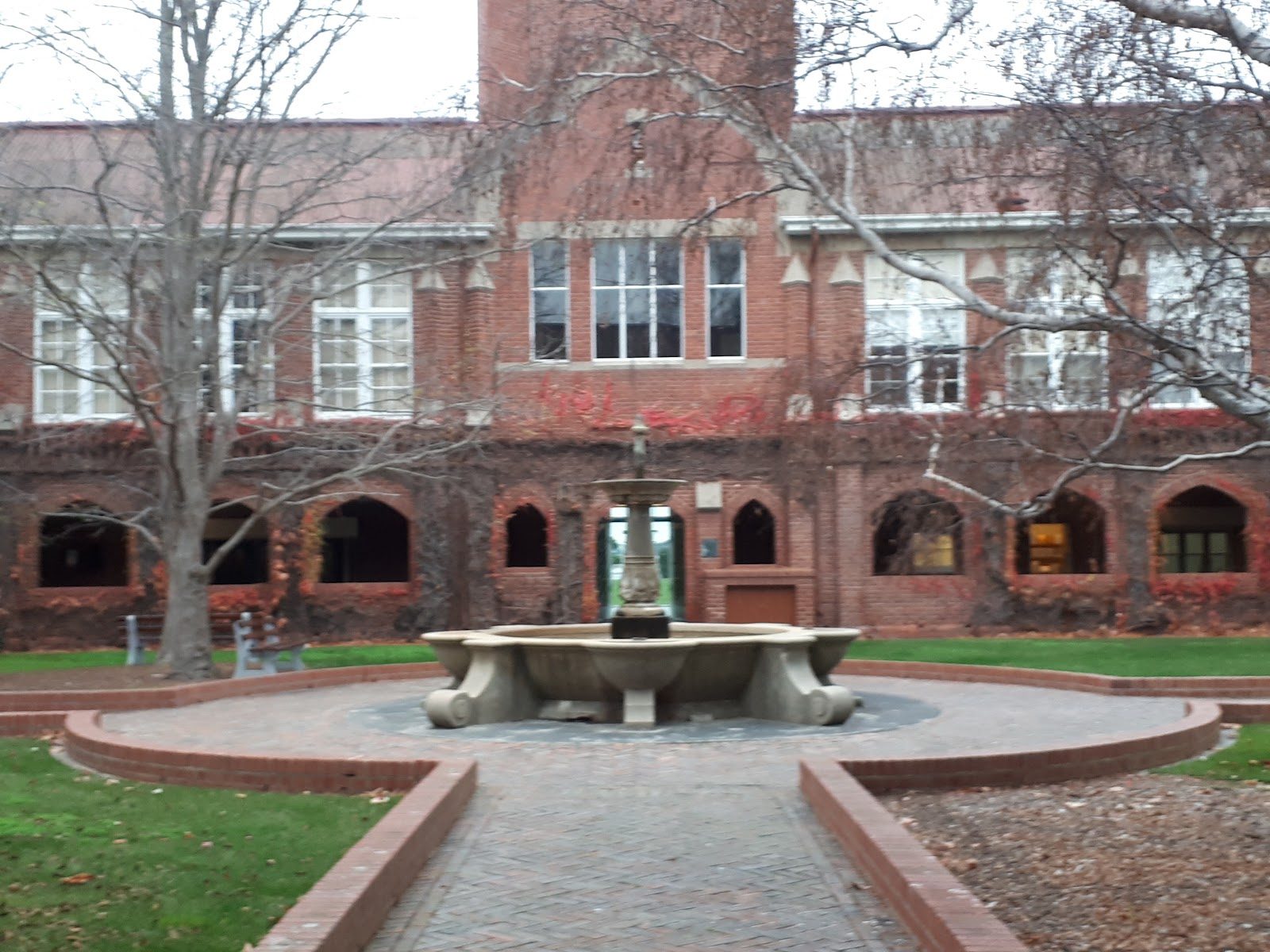
Geelong Grammar School
Corio, Victoria · Australia
Sends every Year 9 to a remote alpine campus, then blends IB and VCE with the wellbeing model it pioneered.
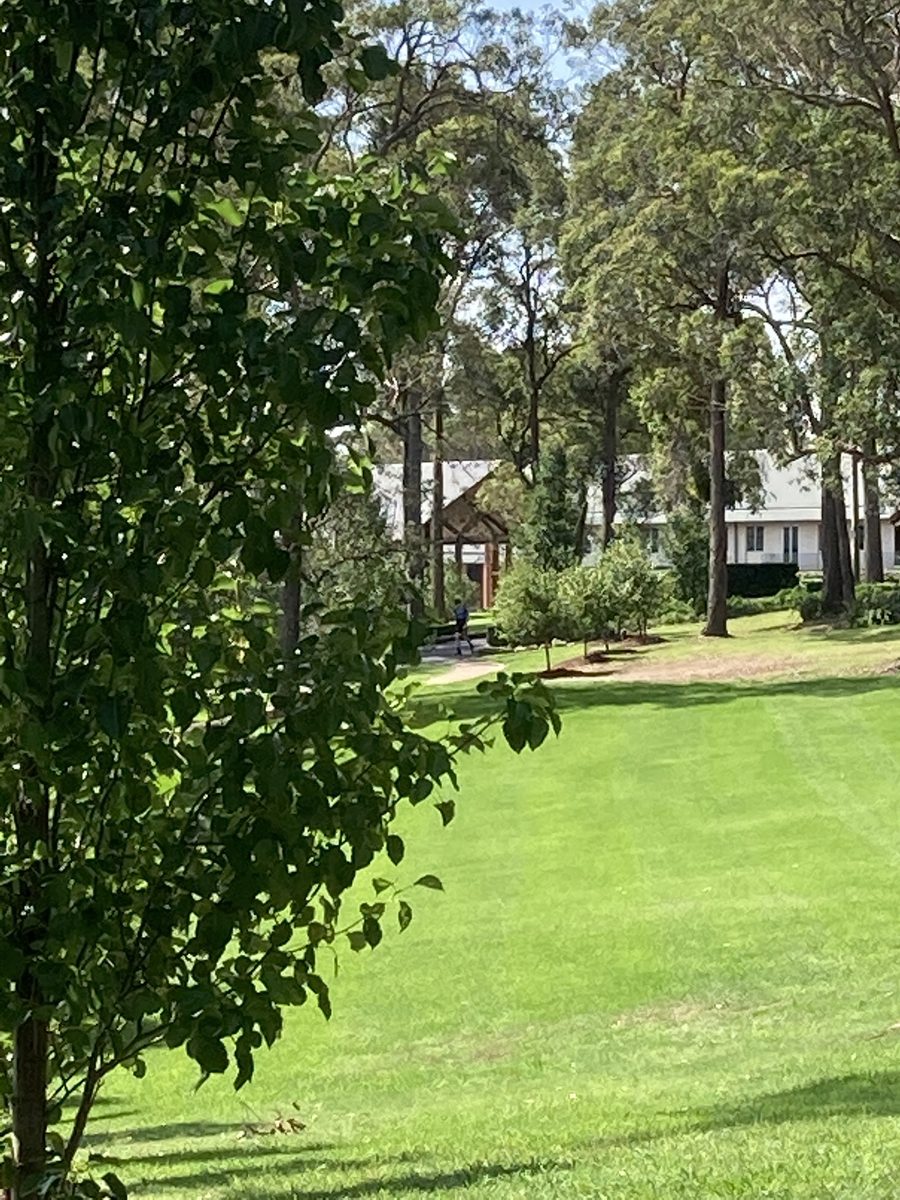
The King's School (Parramatta)
Parramatta · Australia
Australia's oldest independent school, where an 1831 foundation still marches in the country's oldest surviving military uniform and cadet corps.
Methodist Ladies' College
Melbourne · Australia
First school worldwide to put laptops in every student's hands in 1990, now pairing deep VCE-IB choice with an eight-week Marshmead wilderness term.
Wesley College
Melbourne · Australia
Runs the full IB continuum alongside VCE across three Melbourne campuses, reaching all the way to a studio school in the Kimberley outback.
Same country and curriculum — closest matches within ±10 points either way