
KwaZulu-Natal
Glenwood High School
A century-old Durban boys' school where sport is prized as 'the other half' of an education, not an afterthought
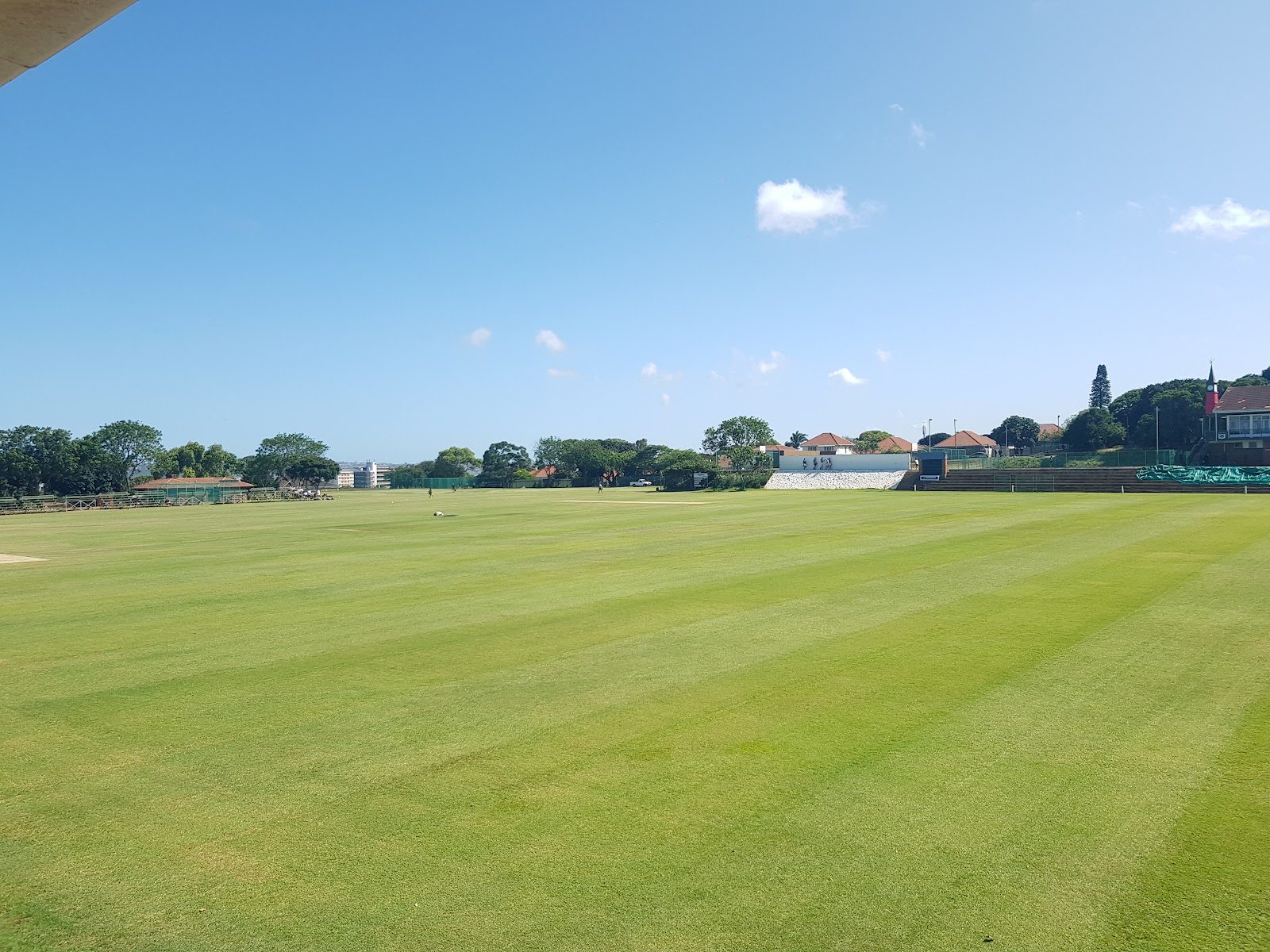
Photo © Keyuren Maharaj via Google Maps
Type
Day + Boarding
Ages
13–18
Curriculum
National Senior Certificate
Ratio
—
The Verdict
Editor's commitment
Right for
Boys aged 13–18 who want English-medium schooling in Durban, with boarding available and sport treated as a core part of school life.
Wrong for
Families wanting co-education, a religious ethos, or anything beyond South Africa’s National Senior Certificate will need another school.
Watch out for
Glenwood is a boys’ day-and-boarding school in Durban; the school does not publish public academic outcome data in the sources we have seen.
Ranking breakdown
Glenwood High School · #1213 of 1591
Composite score 57.8. 8 weighted criteria.
By criterion
Academic Outcomes
Weight 20%
#1220
of 1529 scored
University Placement
Weight 16%
#1332
of 1529 scored
Prestige & Heritage
Weight 12%
#1054
of 1571 scored
Alumni Network
Weight 12%
#785
of 1530 scored
Facilities
Weight 12%
#1110
of 1533 scored
Transparency & Communications
Weight 8%
#1098
of 1532 scored
Peer & Industry Review
Weight 10%
#164
of 1548 scored
Admissions Selectivity & Demand
Weight 8%
#1506
of 1529 scored
Peer & Industry Review
How Glenwood High School is regarded in the sector
78
Strong · medium confidence
Glenwood High School holds strong regional standing among KwaZulu-Natal's traditional boys' schools, regularly mentioned alongside Durban High School, Northwood and Kearsney College in derby fixtures and provincial rugby festivals, contexts in which rival coaches and sports media discuss it as a fixture of the province's competitive schoolboy landscape. As a quintile-5 public school, it appears consistently in KwaZulu-Natal Department of Education matric pass-rate and distinction tables, and local outlets such as The Mercury and IOL cover its academic results and first-team rugby seasons. University-facing feedback centres on UKZN, University of Pretoria and Stellenbosch, which draw Glenwood matriculants into engineering, commerce and sport-science programmes. Because international guides like the Good Schools Guide and WhichSchoolAdvisor concentrate on independent schools, they do not profile South African government schools in depth, limiting formal global press visibility. Domestically, Glenwood's reputation rests on derby competitiveness, disciplined culture and an old-boy network feeding provincial and professional rugby structures, rather than on inclusion in international league tables.
Award

Elite Sport 80
World's Top School · The Global Ranking
Glenwood High School is featured on our Global Top 80 ranking at #79. This seal is available for the school's marketing team to use on their website, prospectus and social channels.
Editors' overview
Glenwood High School occupies a clear niche in Durban: a long-established boys’ school for families who want the National Senior Certificate in a setting where organised sport carries real weight. The school’s own framing matters here. Sport is not a decorative extra; it sits at the centre of school life as “the other half” of an education. That gives Glenwood its shape in the market. This is not the choice for parents hunting a progressive, softly structured model of schooling. It is the choice for parents who value tradition with backbone, competitive energy and a school culture built around routine, loyalty and public participation.
What puts Glenwood on a shortlist is that clarity of identity. Many schools promise “balance”; Glenwood defines balance in harder terms: academic study through the National Senior Certificate, day and boarding provision, and a strong expectation that boys will involve themselves beyond the classroom. For the right child, that produces a strong sense of belonging and purposeful adolescence. For the wrong one, it can feel narrow. Parents need to be honest about that. A school with this profile suits boys who enjoy team environments, respond to structure and gain confidence from visible standards. It suits families who want English-medium schooling in Durban for ages 13–18, with boarding as an option rather than the whole proposition.
The student who will want Glenwood is not difficult to identify. He is energised by busy school days, house or team loyalties, and the social charge of an all-boys environment. He will value earned camaraderie, institutional pride and the daily rhythm of a school that has been doing this for more than 100 years. A quieter, more self-directed child who wants a looser culture, broader curricular branding or a co-educational atmosphere has stronger options elsewhere. Glenwood’s appeal lies in focus. It knows what it is, and that makes it easier for parents to judge: if your son wants discipline, sport, fraternity and a school with old-school momentum, Glenwood deserves serious attention.
An Elite Sport 80 school
Glenwood High School in Durban sits at rank seventy-nine on the Elite Sport 80 because it is one of KwaZulu-Natal's most productive boys' state schools across rugby and cricket, with a sustained Springboks and Proteas pipeline across generations. The Glenwood 1st XV rugby squad is a national schoolboy finals fixture, and the 1st XI cricket squad regularly supplies KZN Dolphins and Proteas representatives.
The specialisms are rugby union (with a formal academy model, professional coaching and links to the Sharks Super Rugby franchise and KZN Rugby), cricket (a Dolphins and Proteas pipeline through KZN Cricket), athletics, hockey and swimming. Water polo, basketball and rowing run at high schoolboy standard.
Notable alumni across codes include Butch James (Springbok World Cup winner), Keegan Daniel, several current Sharks Super Rugby regulars and Springbok representatives, and — in cricket — a rolling roster of Proteas and Dolphins franchise players. In athletics, multiple South African representative sprinters and jumpers have come through, and the school's swimming programme has produced multiple national age-group representatives.
International openness is genuine but modest. The school admits pupils from neighbouring African countries and, in smaller numbers, from Europe, Australasia and the Americas, and runs a full boarding house on-site. Fees are extremely modest by international-boarding standards, sitting around ZAR 90,000-115,000 including boarding, making Glenwood one of the highest value-for-money elite-sport schools on this list. Language of instruction is English. Overseas admissions go through the normal application process plus a rugby or cricket trial. For a family relocating from a rugby- or cricket-strong nation to Durban and targeting a genuine Springbok or Proteas pathway alongside South African NSC academic pathways, Glenwood is one of the most efficient KZN state-school boarding options. Overseas boarding families typically begin conversations 12-18 months before the intended entry point, particularly for the Grade 8 (Standard 6) intake where competition for house places is at its highest.
Academic Performance
Glenwood does not publish external examination data in the public domain in any form that lets parents judge academic strength with confidence. We have not seen aggregate National Senior Certificate pass rates, bachelor’s pass rates, subject distinctions, or any multi-year trend data. That is a real weakness. In a market where serious academic schools put headline outcomes front and centre, this leaves Glenwood’s exam profile opaque, hard to benchmark and open to assumption. Parents are left to infer academic seriousness from the school’s institutional reputation and from the wider discipline of the place, but inference is not evidence.
Relative to peers, that lack of disclosure matters. Schools competing for academically ambitious families in this segment need to show whether results are merely solid or genuinely high-performing. Glenwood does not make that case publicly. That does not mean weak outcomes; it means unproven outcomes. For a family choosing the school for its culture, structure and extracurricular weight, that gap may be acceptable. For a family choosing primarily on measurable academic return, it is a material handicap. The school’s stance on publication places it behind more transparent competitors and makes it harder to separate earned confidence from institutional habit. Until Glenwood publishes clear NSC data — ideally over 3–5 years with subject-level detail — its academic standing remains under-evidenced.
Facilities
The school’s facilities matter because the whole proposition rests on organised participation, and Glenwood’s physical plant needs to support that. The public record here does not give parents a detailed, school-issued inventory of specialist spaces, which is a gap. We have not seen a published master list of sports venues, performance spaces, laboratories or boarding amenities. That puts Glenwood behind peers that map their campuses clearly and let families judge what is on offer. Still, the school’s identity points in one direction: sport infrastructure is central, not incidental. In this segment, that usually means fields and training spaces carry more weight than glossy innovation centres or boutique sixth-form common rooms. Parents choosing Glenwood for competitive school life will care more about whether boys can train, play and represent consistently than about architectural theatre.
Against peer boys’ schools, that gives Glenwood a familiar strengths-and-limits profile. If your benchmark is a traditional South African school where games drive rhythm and status, Glenwood fits the model. If your benchmark is a campus that advertises state-of-the-art STEM suites, polished arts complexes and exhaustive public detail on every facility, Glenwood is less convincing. The absence of clear published campus information makes the school harder to assess on hard infrastructure terms. That does not erase the school’s serious sporting intent; it does weaken confidence in the breadth and finish of the wider estate. For parents, the practical conclusion is simple: inspect in person, and interrogate the boarding provision, sports venues and subject-specific rooms with care.
Schools competing for academically ambitious families in this segment need to show whether results are merely solid or genuinely high-performing
Prestige
Glenwood carries real local standing in the part of the market that values heritage, male camaraderie and competitive school life. Its prestige does not rest on published academic dominance; the school does not supply that proof. It rests on something older and more social: recognisable name value, a durable place in Durban’s boys’ school landscape, and a culture that treats participation, discipline and representation as marks of status. For many families, that still counts. In South African terms, this is established traditional prestige rather than the polished global prestige of an international brand or the harder-edged prestige of a school that leads with public examination data.
That distinction matters. Glenwood’s reputation has weight with families who prize institutional character and the confidence that comes from a school with a settled identity. Boys who thrive in public-facing, team-driven environments gain a form of social capital here that extends beyond the classroom. But prestige has layers, and Glenwood’s ceiling is clear. Without transparent outcomes, it cannot claim the academic authority that the strongest schools use to convert reputation into measurable advantage. So the rating here is solid rather than exalted: credible, well-known and still respected, but not untouchable. Its prestige is cultural and communal before it is intellectual, and parents need to decide whether that hierarchy suits their son.
What makes Glenwood distinctive is not innovation, breadth or academic transparency
Communications
Glenwood’s parental communication does not project the polished, data-rich discipline of the best-run independent schools. The school website establishes identity more clearly than it delivers practical transparency. Families can grasp the ethos quickly; they get far less help on the operational detail that matters once a child is enrolled or shortlisted. We have not seen published academic outcome data, a full facilities inventory, or the kind of granular parent-facing information that answers routine questions before they need to be asked. That matters because communication is not only about tone. It is about whether a school respects parents’ need for clear evidence, timely detail and usable information. On that test, Glenwood feels institutionally confident but not parent-convenient.
That does not make the communication weak across the board. Schools with a strong internal culture often communicate best with families already inside the system: expectations are embedded, traditions are known, and much is carried through routine rather than explanation. For existing parents, that can work. For prospective parents, it is less satisfactory. A school asking families to commit to a major adolescent environment needs to publish more than atmosphere and loyalty. It needs to show how the place works day to day, how boys are supported, and how standards are measured. Glenwood communicates its tribal identity with force. It communicates the finer grain of school life with less rigour. The result is credible but incomplete: strong on character, weaker on proof.
Uniqueness
What makes Glenwood distinctive is not innovation, breadth or academic transparency. It is the force of a single idea: a boys’ school where organised sport carries moral as well as recreational weight. The school’s own phrase, “the other half” of an education, is unusually revealing. At Glenwood, games are not a timetabled extra to be fitted around school life; they help define status, routine, friendship and self-respect. That gives boys a clear social script. They know what participation means, what representing the school means, and where esteem sits. For the right student, that creates strong tribal belonging, visible standards and a daily culture with real competitive charge. In an era when many schools blur their identity, Glenwood’s is stubbornly old-school.
That distinctiveness brings obvious gains and obvious limits. Boys who thrive on structure, team membership and public commitment will get more than exercise here; they get a framework for confidence, loyalty and resilience. An all-boys setting with this kind of communal intensity can produce tight fraternity and a durable sense of place. It can also flatten boys who do not want to perform belonging through teams, houses and collective rituals. Glenwood’s uniqueness, then, lies in its refusal to dilute its core offer. It gives students a school life with backbone, pace and shared purpose. It does not give every type of boy equal room to disappear into the background or define success on wholly private terms.
The school’s own phrase, “the other half” of an education, is unusually revealing
Student Profile
The boy who fits Glenwood is easy to picture. He wants a school life with visible standards, public loyalties and a clear pecking order of effort, contribution and representation. He is comfortable being known by his peers rather than disappearing into anonymity. He gains energy from teams, fixtures, assemblies, house identity and the daily rhythm of a busy boys’ school. He does not need endless choice or a softly personalised culture; he responds to structure, routine and collective expectation. For that student, Glenwood can be forming, confidence-building and socially adhesive across the full 13–18 age span.
The misfit is just as clear. A boy who dislikes competitive atmospheres, resists institutional tradition or wants his interests validated without public participation will find the culture constricting. This is not the natural home for a teenager who wants a quiet, low-friction passage through school, or who needs a setting built around introspection, fluid identity and minimal social theatre. An all-boys environment with this much emphasis on belonging rewards boys who can join in, hold their ground and accept scrutiny. Parents of a sensitive, highly individual or non-sporting son need to test that fit hard before committing. Glenwood suits boys who want fraternity with edges, not boys who want to drift.
That distinctiveness brings obvious gains and obvious limits
Co-curricular strengths
Arts & sport, on a separate axis
Overall 6.8/10
Scored 0-10 from the school's own published evidence. This axis is editorial-only — it does not feed the main WTS ranking.
Strengths
- +Established in 1911, Glenwood High School has more than a century of continuous operating history in Durban.
- +As a public (government-funded) school, tuition fees are considerably lower than those of independent schools in the region.
- +The school has a long-standing rugby tradition and is regarded within KwaZulu-Natal as a competitive rugby-playing school.
- +Offers both day and boarding options, giving flexibility to families living outside Durban or relocating internationally.
- +Follows the National Senior Certificate (NSC), the standard South African matriculation qualification recognised for local university entry.
Considerations
- −Single-sex boys' school, which will not suit families seeking co-educational schooling.
- −As a government school, it is subject to state funding levels and provincial Department of Education resourcing, which can vary year to year.
- −No independent inspection or international accreditation body rating is publicly available to benchmark academic quality against peer schools.
- −Being a well-regarded local public school, demand for places can exceed availability, particularly for boarding and out-of-zone applicants.
Gallery
Photo © Keyuren Maharaj via Google Maps
Photo © Mbusi Makhanya via Google Maps
Photo © Mbusi Makhanya via Google Maps
Photo © Mbusi Makhanya via Google Maps
Photo © Keyuren Maharaj via Google Maps
Photo © Keyuren Maharaj via Google Maps
Photo © Glenwood High School via Google Maps
Parent reviews
Have you sent your child here?
Voice reviews carry the strongest trust badge — we transcribe them for you to tidy up before they go live. Prefer to type? A written review is fine too.
Add your voice
In 60 seconds, tell other parents: what's the best thing about Glenwood High School, and what surprised you when your child joined?
We ask for a Google sign-in so every review has a real face behind it — no anonymous drive-by attacks on schools, and no faked positive reviews. Your email is never shown publicly.
Send this profile to a friend
International parents rely on word-of-mouth. Share this review with someone weighing the same decision.
Schools with places
Similar schools to Glenwood High School with places available now.
Availability first, then country, area, curriculum, price, co-curricular
Consider also
Also worth looking at alongside Glenwood High School.

South African College Schools (SACS)
Newlands, Cape Town · South Africa
Founded in 1829 beneath Devil's Peak, the Cape Town institution whose academic wing became the University of Cape Town.

Grey College Bloemfontein
Bloemfontein · South Africa
Since 1855, this parallel-medium Free State boarding school has produced more Springboks than any other in South Africa.

Paul Roos Gimnasium
Stellenbosch · South Africa
Beside the Eerste River, a rugby dynasty that has produced more Springboks than any other school meets rigorous IEB scholarship.
Maritzburg College
Pietermaritzburg · South Africa
Since 1863, KwaZulu-Natal's oldest boys' school has turned Victorian-era tradition into a rugby pedigree few provincial rivals can match.
Same specialism, country and curriculum — closest matches within ±10 points either way