
Bavaria
Munich International School
medium confidence· 4/6 cats · 3.08 avg sourcesHoused in a former 1875 castle on Lake Starnberg, this Bavarian campus channels nearly every senior into the full IB Diploma.
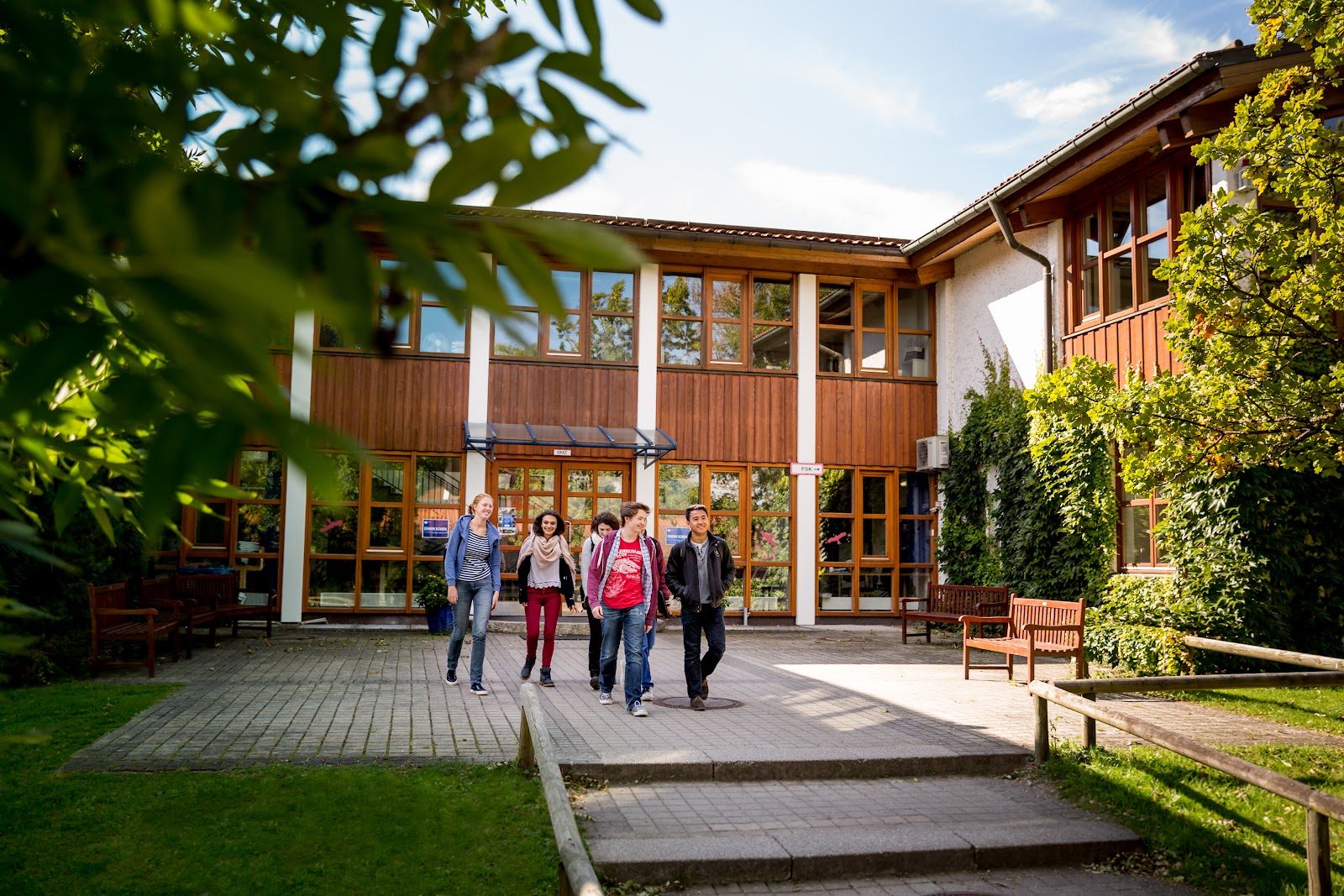
Photo © Munich International School via Google Maps
Type
Both
Ages
3–18
Curriculum
IB
Ratio
—
The Verdict
Editor's commitment
Right for
Families wanting a full IB school from ages 3–18, with CIS and IBO accreditation and a Lake Starnberg campus in a former 1875 castle.
Wrong for
Parents chasing broad university outcomes data beyond three named destinations — City, Durham and Goldsmiths — or a non-IB route after age 16.
Watch out for
This is expensive by German standards: average annual day fees are €25,000 and boarding averages €50,000, with instruction in English and German.
Ranking breakdown
Munich International School · #446 of 1591
Composite score 71.1. 8 weighted criteria.
By criterion
Academic Outcomes
Weight 20%
#585
of 1529 scored
University Placement
Weight 16%
#459
of 1529 scored
Prestige & Heritage
Weight 12%
#462
of 1529 scored
Alumni Network
Weight 12%
#579
of 1529 scored
Facilities
Weight 12%
#83
of 1529 scored
Transparency & Communications
Weight 8%
#83
of 1529 scored
Peer & Industry Review
Weight 10%
#387
of 1529 scored
Admissions Selectivity & Demand
Weight 8%
#1326
of 1529 scored
Score history
Munich International School · 2026
Movement across 2024–2026. Peer average overlaid.
Overall — 2024–2026
71.1/ 100
▲ +21.0 vs 2025
year on year
Peer & Industry Review
How Munich International School is regarded in the sector
68
Respected · low confidence
Munich International School (MIS), founded in 1966, is widely regarded among expat parent communities (e.g., Toytown Munich forums, InterNations discussions) as one of the longest-established and most respected international schools in Germany, often mentioned alongside Frankfurt International School as a benchmark IB institution. It holds CIS and NEASC accreditation, which are frequently referenced in international-school directories, but it lacks the kind of dedicated coverage found in UK-centric guides like Tatler or the Good Schools Guide, limiting verifiable independent press signal.
Evidence sources
Editors' overview
The former 1875 castle on Lake Starnberg is not a gimmick here; it is the setting for a mature, internationally minded school with a clear academic spine. Munich International School opened in 1966 and now runs from age 3 to 18, teaching in English and German and accredited by both the IBO and CIS. The school’s defining feature is its commitment to the IB all the way through, in a German market where many international schools hedge their bets with parallel senior pathways. That gives MIS a cleaner academic identity than many rivals. Parents who want one curriculum philosophy from the early years to Grade 12 will value that coherence. Parents who want A-levels, APs or a more exam-drilled national route should look elsewhere.
The attraction is not only the campus, though the Alpine views and lakeside setting are genuinely distinctive. MIS is a boarding and day school, which widens its catchment beyond Munich’s commuter belt and gives it a different social mix from city-centre expatriate day schools. The average annual fee is €25,000 for day pupils and €50,000 for boarders, placing it in the premium bracket without touching the extreme end of Swiss-style pricing. The school also has real international depth: the source material points to a student body drawn from many nationalities, and that matters at IB level, where classroom discussion, writing and inquiry-based learning benefit from a broad mix of backgrounds.
This is a strong shortlist school for families who want an unmistakably international education rather than a national system in English. It will suit self-directed, academically serious students who thrive in discussion, coursework and the long arc of the IB Diploma, not children who need constant external pressure or a narrow test-prep culture. The known university destinations are modestly stated rather than inflated: City, Durham and Goldsmiths each appear in the recent list with 1 student apiece. That does not tell you everything about outcomes, but it does tell you the school avoids the boastful destination theatre common in this sector. MIS looks strongest for mobile international families, bilingual or multilingual children, and students who will make full use of a rarely matched setting without needing a school to manufacture prestige around them.
Academic Performance
MIS has a sharper academic profile than many international schools because it commits fully to the IB through the senior years rather than diluting the offer with multiple exit routes. The school also pushes a strikingly high share of its senior cohort into the full Diploma: the site’s own references to Grade 11 IB students and repeated public emphasis on MYP and Diploma work point to a coherent, all-through IB culture, not a token senior programme. That matters. Schools with one dominant pathway tend to teach with more consistency and advise with more conviction. MIS also publicises strong Middle Years outcomes, including its “Exceptional Success” headline for the 2026 Grade 10 MYP cohort, which indicates serious attention to externally benchmarked assessment before the Diploma years.
The gap is transparency at the top end. We have not seen aggregate Diploma points, pass rates, bilingual diploma rates, subject highs, or multi-year trends. Without those figures, MIS cannot claim the same evidential weight as European peer schools that publish hard IB outcomes annually and let parents judge against the regional pack. So where does it fit? On structure and academic seriousness, it sits in the upper tier of Germany’s IB-led international schools. On published proof of final results, it is less open than the best-run competitors. Parents who value clean academic direction will find a lot to like; parents who want forensic disclosure of sixth-form outcomes will want more than celebratory news items.
Facilities
The campus is the headline facility and, in this case, it earns the billing. A former lakeside castle with protected Alpine views gives MIS a physical setting few European international schools can match, but the more important point is what sits around the postcard image: dedicated arts space, a newly built junior school gym, library provision across the school, makers’ spaces, and the school’s Learning NeXus, its hub for student-centred learning support and extension. That mix puts MIS above the many international schools that still treat design, making and research as add-ons tucked into spare classrooms. The arts infrastructure also has visible public use, with exhibitions, performances and specialist project work feeding into school life rather than sitting idle. This is a serious working campus, not a pretty backdrop.
Sport and access are also stronger than at the average semi-rural school. The school runs a substantial bus network reaching around 80% of the areas where pupils live, which matters because remote campuses can become logistically punishing for families. Athletics has clear profile, and the range of clubs and after-school activities points to facilities that stay active beyond lessons. Peer schools in German cities often win on urban convenience and quick public transport; MIS wins on space, setting and breadth. The trade-off is obvious: if you want dense city-campus energy, this is not it. If you want room, specialist spaces and a genuinely memorable environment with real day-to-day utility, MIS is better equipped than most.
Munich International School opened in 1966 and now runs from age 3 to 18, teaching in English and German and accredited by both the IBO and CIS
Prestige
Munich International School carries real prestige in the German international-schools market, but it is a specific kind of prestige. It does not trade on old-boy mythology, elite university chest-beating or branded global-chain gloss. Its standing rests on three harder assets: longevity, a serious all-through academic model, and a campus that parents and students remember instantly. The former castle setting on Lake Starnberg gives MIS visual distinction that few rivals can match, and the school’s reach is wider than a neighbourhood day school because families can draw on a substantial bus network covering 80% of the areas where students live. Add a student body drawn from 68 nationalities and you get the kind of genuinely international social environment that carries weight with mobile professional families and multinational employers.
That prestige has limits, and they matter. MIS has strong market standing and clear social credibility, but not the public exam transparency or destination firepower that would place it in Europe’s topmost echelon. The recent university list is restrained rather than dazzling, and the school does not publish the hard senior outcomes that turn reputation into proof. Prestige here comes from institutional substance, setting and community mix, not from relentless performance signalling. For many parents that is a virtue: MIS feels secure in its status and does not need to shout. For families chasing the most aggressively selective, results-forward brand of international schooling, it stops short of that level.
The attraction is not only the campus, though the Alpine views and lakeside setting are genuinely distinctive
Communications
MIS communicates with parents with more structure than flair. The site carries the usual operational spine — calendar, transport, fees, contact routes, parent essentials and a steady stream of school news — but the stronger point is how many channels feed the parent body in practical ways. Parent-Principal Forums and PTV coffee mornings are built into the rhythm of school life, and the latter run in 22 languages. That matters in an international community: it lowers the social and linguistic barrier to entry for new families and widens access beyond the confident English-speaking parent cohort that can dominate many international schools. The transport update around the BatOnRoute pilot also signals attention to logistics, which parents notice fast on a campus outside the city. This is useful communication, not brand theatre.
Effectiveness looks strongest at the community and day-to-day level, less so at the strategic one. MIS publishes a high volume of stories, event notices and student activity coverage, which keeps families close to the life of the school and gives a lively, open-window view of what children are doing. The weakness is balance. There is more celebration than hard reporting, and that leaves gaps where parents of older pupils want firmer disclosure on outcomes, university placement patterns and top-level academic performance. So the verdict is clear: communication is *warm, multilingual and operationally competent; it is not ruthlessly transparent* where scrutiny matters most.
Uniqueness
What sets MIS apart is not one flashy feature but an unusual alignment of place, scale and educational culture. The school occupies a rarely duplicated setting: a historic lakeside estate that gives children daily access to open space, water, views and room to move, rather than the fenced-off urban footprint common in international schooling. That has practical value, not just visual appeal. Younger children get a campus that supports outdoor learning and a less compressed school day; older students get an environment that suits independent study, arts work and the long-form demands of IB coursework. Add a community drawn from 68 nationalities and parent networks running in 22 languages, and MIS offers a genuinely multinational social world rather than a school that merely uses the word “international” in its prospectus.
The other distinctive feature is the school’s refusal to fragment into competing internal identities. MIS runs one educational logic from the early years to graduation, and students benefit from that unusually coherent through-line. The Learning NeXus, makers’ spaces, multilingual read-alouds, mathematics competitions, student exhibitions and service work all point in the same direction: inquiry, articulation, independence and public presentation. That creates a more intellectually consistent experience than schools that bolt enrichment onto a conventional exam factory. It will suit children who like to think, discuss, make and reflect. It will not suit families who want a high-pressure hothouse built around constant ranking and external display.
Munich International School carries real prestige in the German international-schools market, but it is a specific kind of prestige
Student Profile
The best fit at MIS is the child who is comfortable in an international crowd and gains energy from it. With pupils drawn from 68 nationalities, the social life is not organised around one dominant local clique or one imported expat tribe. Students who are curious, adaptable and happy switching between cultures will settle faster than children who want a more uniform peer group. This also suits families who value community participation rather than simple drop-off convenience: the school’s parent network runs in 22 languages, and that breadth feeds into the tone of the place. The student profile is globally fluent, socially mixed and more outward-looking than performative.
Personality matters here. MIS suits students who can handle independence, discussion and project work without needing a school to drive them through every step with constant pressure. The public life of the school points to children who join in: maths competitions, exhibitions, athletics, service initiatives, multilingual reading events and student-led activities all reward pupils who contribute rather than coast. It is a good school for self-propelled, thoughtful children with a genuine appetite for school life beyond the timetable. It is weaker for students who want a hard-edged pecking order, relentless exam drilling or a socially narrow environment built around one national culture. In plain terms: this is a school for internationally mobile families, independent learners and children who thrive in a busy, participatory community.
If you want room, specialist spaces and a genuinely memorable environment with real day-to-day utility, MIS is better equipped than most
Co-curricular strengths
Arts & sport, on a separate axis
Overall 9.08/10
Scored 0-10 from the school's own published evidence. This axis is editorial-only — it does not feed the main WTS ranking.
Sports
9.2/10
High-performance international school competitor, fielding highly competitive varsity soccer, tracking, and basketball squads across extensive grounds.
Drama
9/10
Ambitious theater tracking staging complex contemporary plays and student-written works inside modern theater spaces.
Dance
9/10
Offered as a popular co-curricular activity providing core choreography assets for seasonal school showcases.
Music
9.2/10
Robust private vocal and instrumental infrastructure feeding active jazz big bands and full chamber symphonies.
Visual Arts
9/10
Highly structured fine art layout leaning heavily toward technical design, digital graphics, and portfolio mastery.
Editor-verified · 8/6/2026
Outcomes & destinations
Where students go next
118 graduates
Top destinations
100 placements
- City University London· 1
- Durham University· 1
- Goldsmiths University of London· 1
- Imperial College London· 1
- King’s College London· 1
- London School of Economics· 1
- Loughborough University· 1
- Queen Mary University of London· 1
- Royal Holloway University· 1
- SOAS University of London· 1
- University College London· 1
- University of Bath· 1
- University of Birmingham· 1
- University of Bristol· 1
- University of Cambridge· 1
- University of Dundee· 1
- University of Edinburgh· 1
- University of Exeter· 1
- University of Glasgow· 1
- University of Kent· 1
- University of Manchester· 1
- University of Nottingham· 1
- University of Oxford· 1
- University of Reading· 1
- University of St. Andrews· 1
- University of Stirling· 1
- University of Sussex· 1
- University of Warwick· 1
- American University of Paris· 1
- Bocconi University· 1
- Dalarna University· 1
- Ecole hôtelière de Lausanne· 1
- Erasmus University Rotterdam· 1
- ESADE· 1
- ETH Zurich· 1
- IE University· 1
- International Christian University· 1
- Institut Français de la Mode· 1
- Ludwig-Maximilians-Universität München· 1
- National College of Art & Design· 1
- Parsons School of Design· 1
- Semmelweis University· 1
- Shiv Nadar University· 1
- Technische Universität München· 1
- Trinity College Dublin· 1
- University College Utrecht· 1
- University of Amsterdam· 1
- University of Groningen· 1
- University of Kassel/Southhampton Medicine· 1
- University of Maastricht· 1
- University of Melbourne· 1
- University of St. Gallen· 1
- University of Vienna· 1
- Utrecht University of Applied Sciences· 1
- Vrije Universiteit Amsterdam· 1
- Boston University· 1
- Columbia University· 1
- Dartmouth College· 1
- Drexel University· 1
- Duke University· 1
- Emory University· 1
- George Washington University· 1
- Georgia Institute of Technology· 1
- Georgetown University· 1
- Johns Hopkins University· 1
- Massachusetts Institute of Technology· 1
- McGill University· 1
- New York University· 1
- Northeastern University· 1
- Ohio State University· 1
- Pennsylvania State University· 1
- Princeton University· 1
- Purdue University· 1
- Rennsselaer Polytechnic Institute· 1
- Savannah College of Art and Design· 1
- Stanford University· 1
- Syracuse University· 1
- Texas A&M University· 1
- University of British Columbia· 1
- University of California, Berkeley· 1
- University of California, Davis· 1
- University of California, Irvine· 1
- University of California, Los Angeles· 1
- University of California, San Diego· 1
- University of California, Santa Barbara· 1
- University of Colorado, Boulder· 1
- University of Florida· 1
- University of Illinois, Urbana-Champaign· 1
- University of Michigan· 1
- University of Minnesota· 1
- University of Pennsylvania· 1
- University of Pittsburgh· 1
- University of Southern California· 1
- University of Texas· 1
- University of Toronto· 1
- University of Wisconsin· 1
- University of Washington· 1
- Vanderbilt University· 1
- Vassar College· 1
- Virginia Tech· 1
Reported by the school. Confirm with admissions.
Notable alumni · Wikidata
9notable alumni
0 historic (born pre-1930) · 7 modern (born post-1970)wikidata:2026-07-28 How we source this
Strengths
- +Founded in 1966, MIS was one of the earliest international schools in Germany and has been an authorised IB World School since 1980.
- +The Class of 2025 recorded a 95% IB Diploma pass rate with an average score of 35 points, above the 2025 world average of 31.
- +Sits on a 55-acre forested campus near the Starnberger See with facilities including an Olympic-sized eight-lane track, performing arts centre and makers' laboratory.
- +Fully accredited by the Council of International Schools (CIS) and the New England Association of Schools and Colleges (NEASC), and recognised by the Bavarian Ministry of Education.
- +Draws a genuinely international community of roughly 1,200-1,300 students from more than 55 nationalities across Early Childhood to Grade 12.
Considerations
- −Curriculum pathway runs almost exclusively through the IB continuum (PYP-MYP-DP), offering little in the way of alternative exit qualifications such as A-Levels for families wanting flexibility.
- −Campus is located in Starnberg, roughly 20km southwest of central Munich, with public transport access limited, making many families reliant on the school's fee-based bus network or a car.
- −Fee structure is substantial for a day school, with 2026/27 annual tuition ranging from EUR 13,590 to EUR 27,583, plus a EUR 9,421 first-year entrance fee per child.
- −As a single, well-established campus rather than a multi-site network, options for switching locations within Germany are not available, unlike some larger international school groups.
Availability
Primary entry gate & tests
Academic Record
Gallery
Photo © Munich International School via Google Maps
Photo © Munich International School via Google Maps
Photo © Munich International School via Google Maps
Photo © Munich International School via Google Maps
Photo © Munich International School via Google Maps
Photo © Munich International School via Google Maps
Photo © Munich International School via Google Maps
Photo © MIS Youtube via Google Maps
Photo © Munich International School via Google Maps
Parent reviews
Have you sent your child here?
Voice reviews carry the strongest trust badge — we transcribe them for you to tidy up before they go live. Prefer to type? A written review is fine too.
Add your voice
In 60 seconds, tell other parents: what's the best thing about Munich International School, and what surprised you when your child joined?
We ask for a Google sign-in so every review has a real face behind it — no anonymous drive-by attacks on schools, and no faked positive reviews. Your email is never shown publicly.
Send this profile to a friend
International parents rely on word-of-mouth. Share this review with someone weighing the same decision.
Schools with places
Similar schools to Munich International School with places available now.
Availability first, then country, area, curriculum, price, co-curricular
Consider also
Also worth looking at alongside Munich International School.
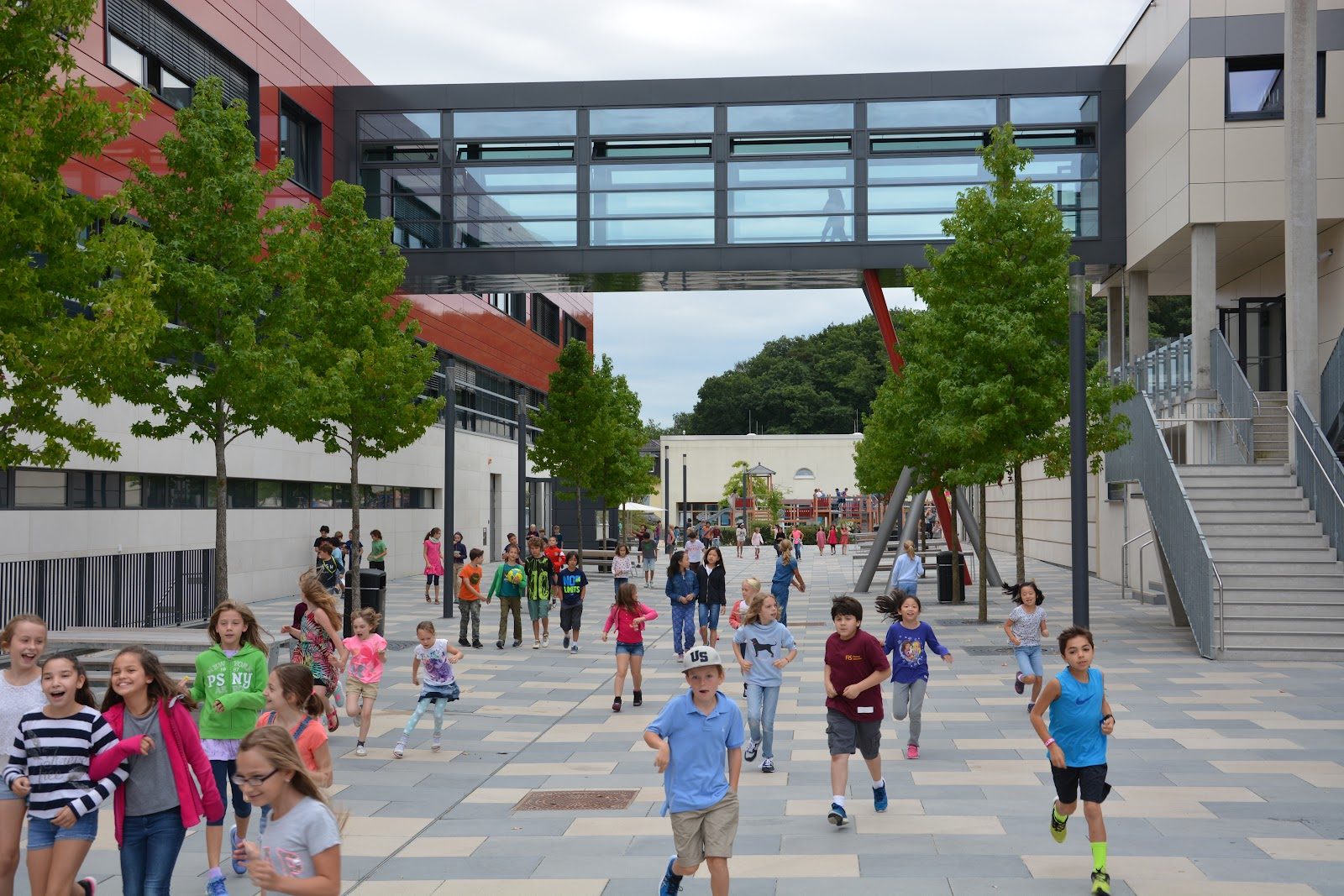
Frankfurt International School
Frankfurt · Germany
A founding member of the International Baccalaureate since the 1960s, still shaping the diploma from its Taunus forest campus.
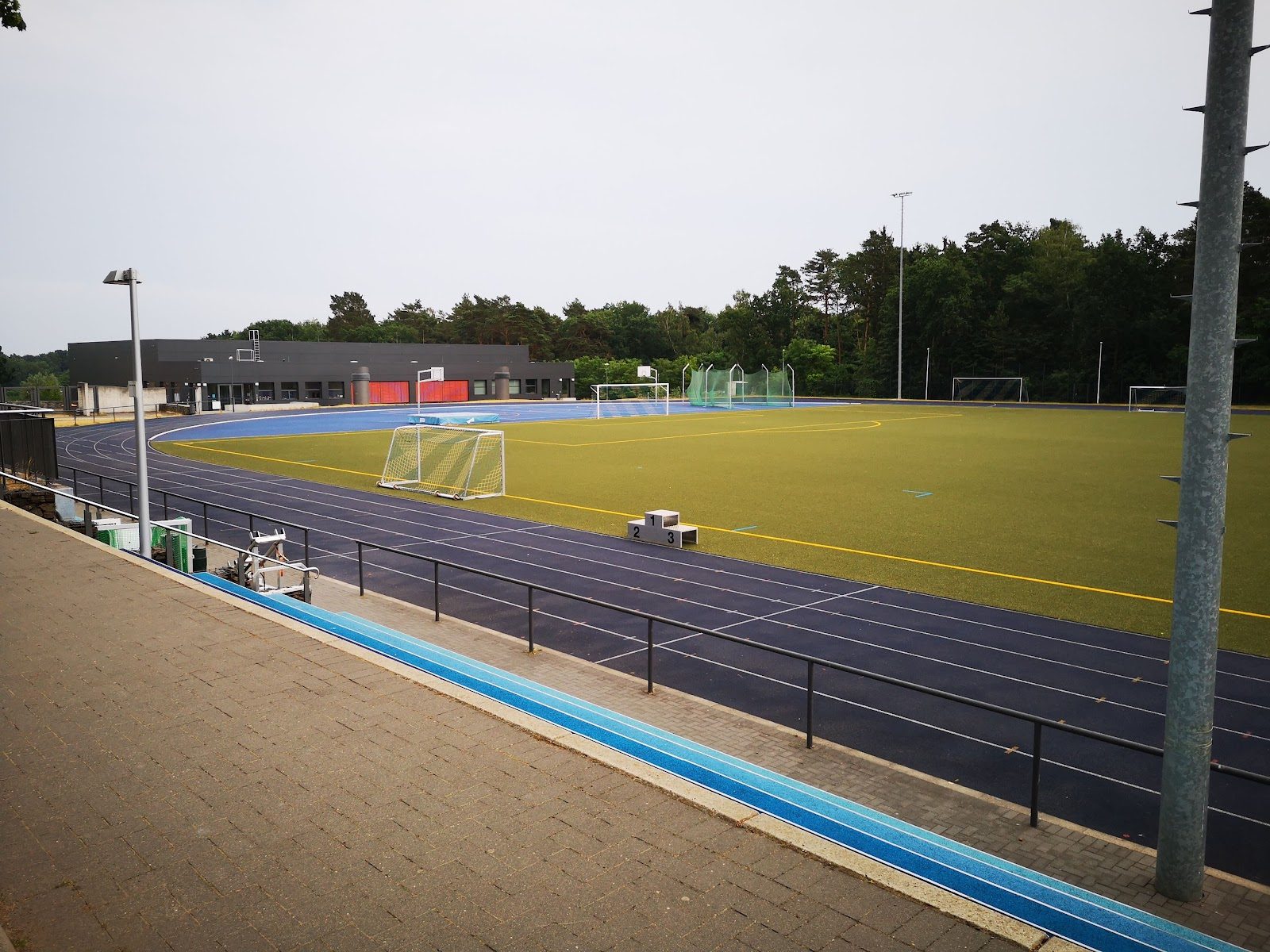
Berlin Brandenburg International School
Kleinmachnow · Germany
Set on a forested campus between Berlin and Potsdam, this day school runs the full IB continuum for students from 60-plus nations.
International School of Hamburg
Hamburg · Germany
Germany's first international school since 1957, still the only CIS-accredited IB continuum campus in the port city of Hamburg.
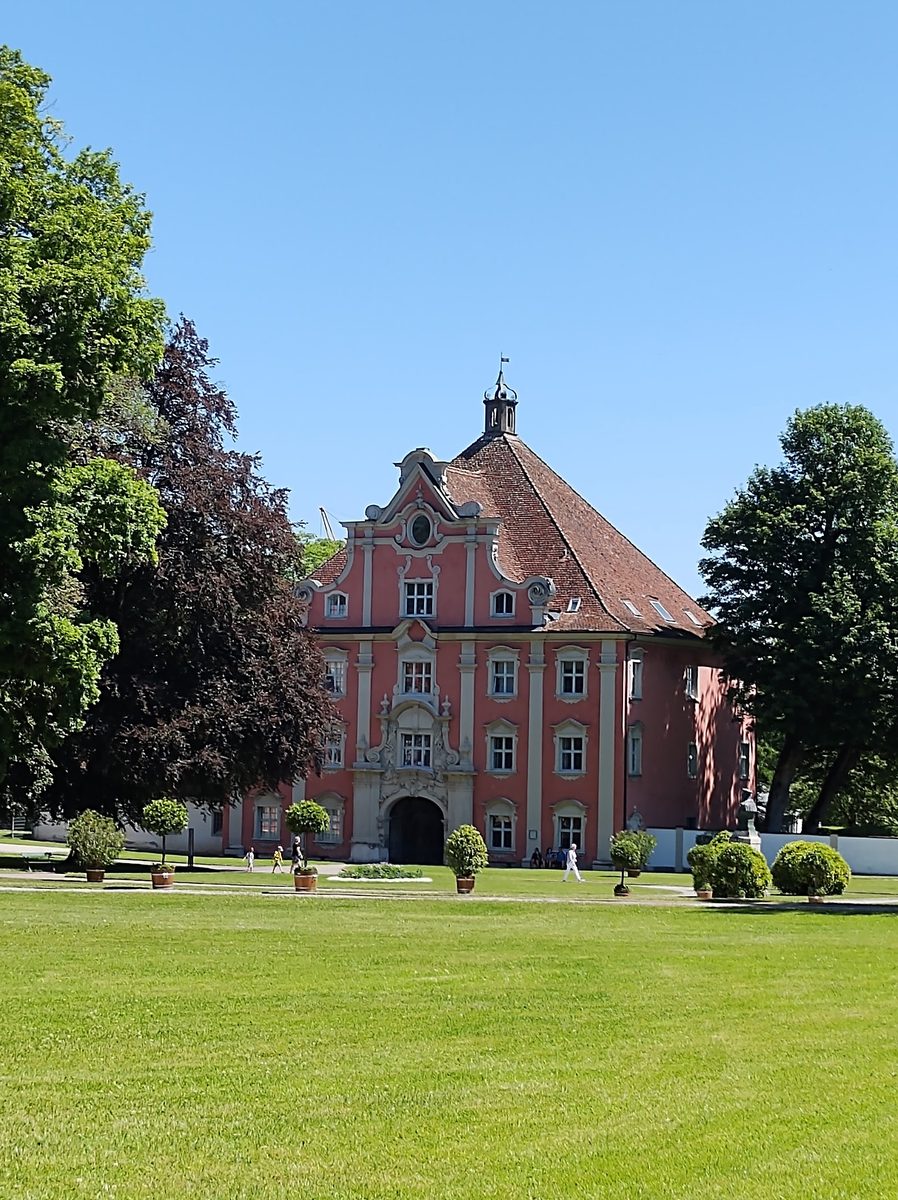
Schule Schloss Salem
Salem · Germany
Kurt Hahn's founding creed of head, heart and hand still means mandatory fire-brigade duty inside a former Cistercian monastery on Lake Constance.
Same country and curriculum — closest matches within ±10 points either way