
New Hampshire
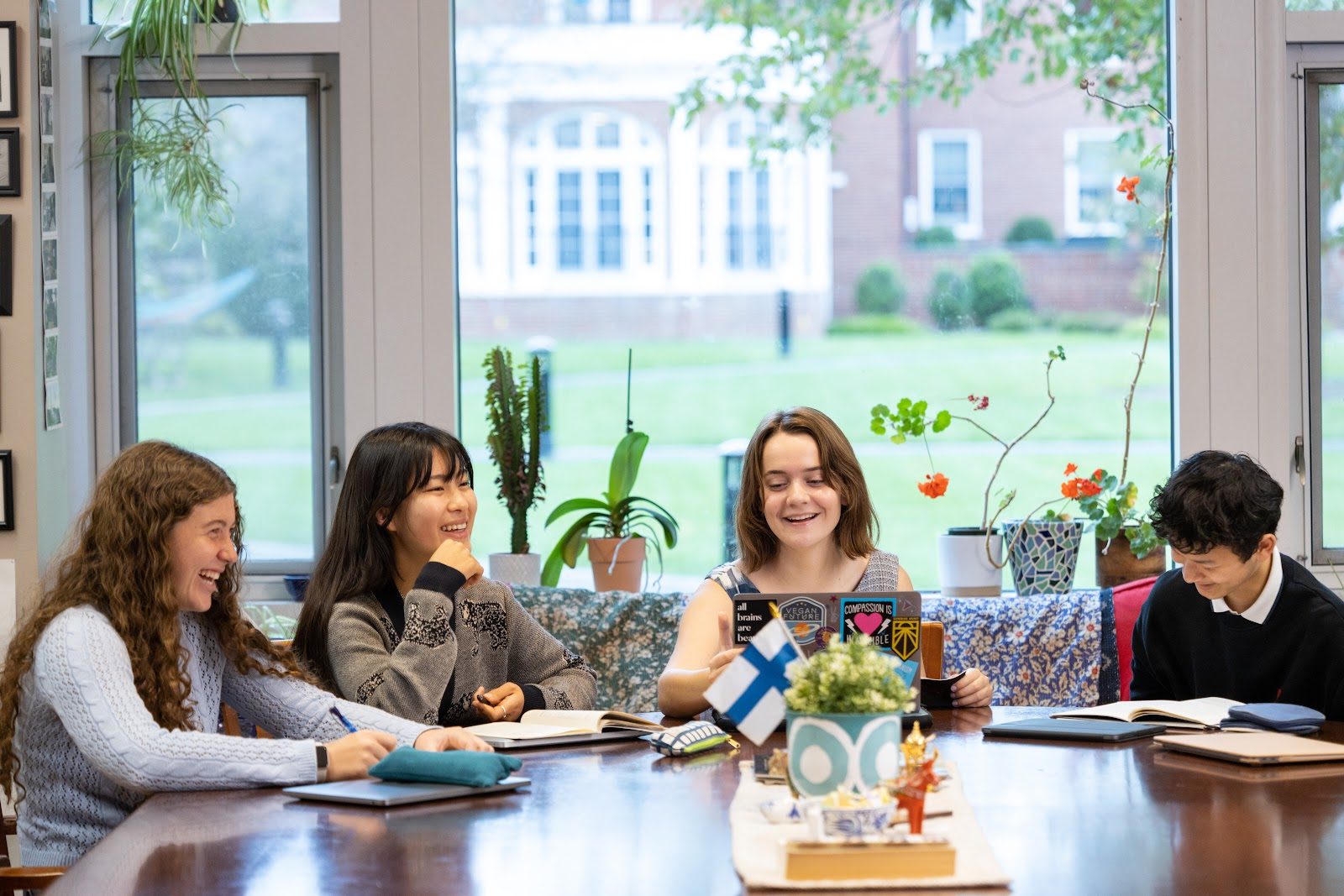
Every class gathers around the same oval table Edward Harkness endowed in 1930, still central to Exeter's discussion-driven classrooms.
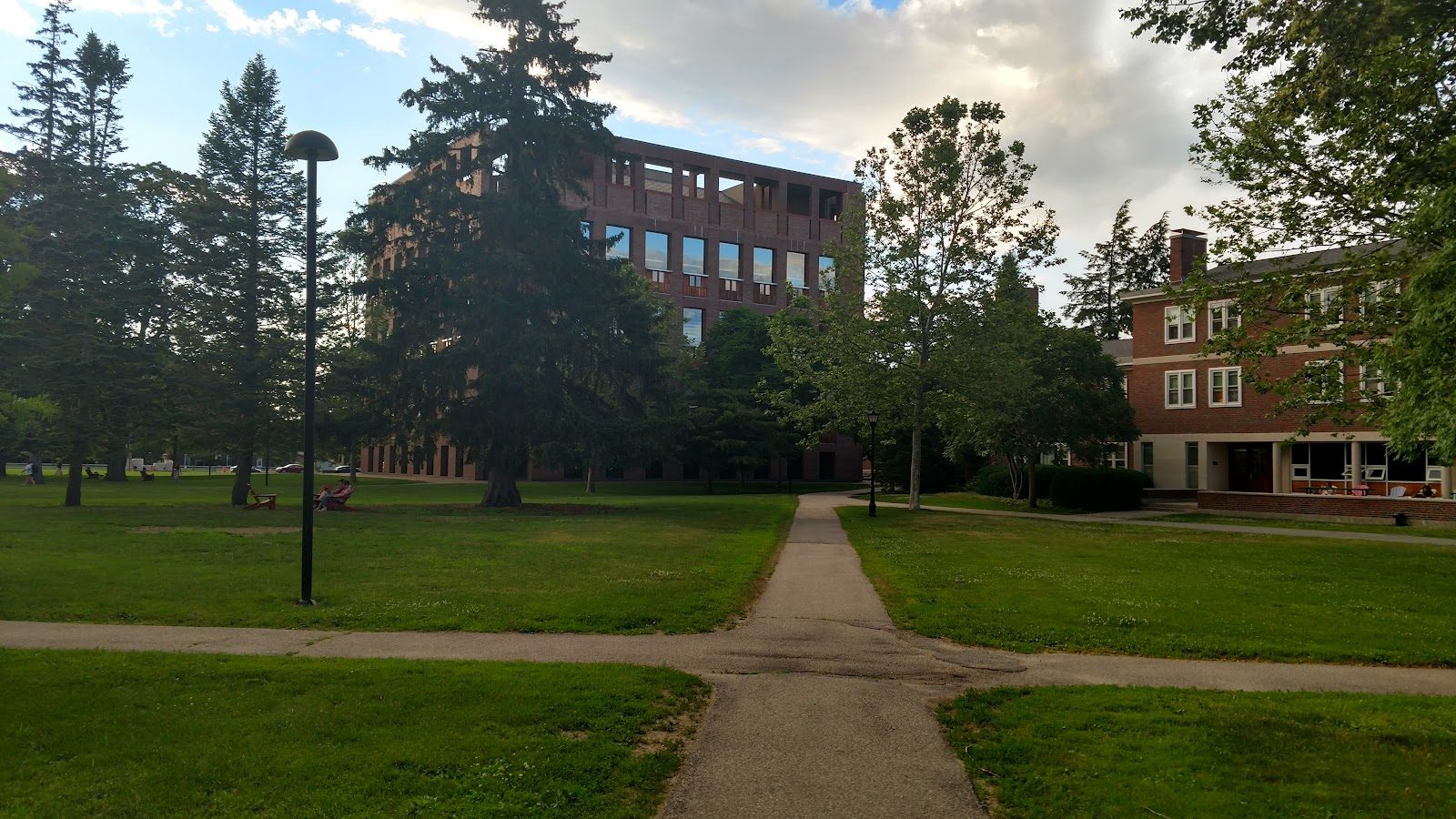
Photo © Stephen Chu via Google Maps
Type
Both
Ages
14–18
Curriculum
American
Ratio
5:1
The Verdict
Editor's commitment
Right for
Pupils who thrive in discussion-led classes of 12, a 5:1 student-teacher ratio, and a serious American college-prep boarding school.
Wrong for
Anyone wanting anonymity, loose academic expectations, or a lower-cost option: day fees average US$56,077 and boarding averages US$71,797.
Watch out for
Exeter enrols about 1,100 students aged 14–18; that scale brings reach and alumni heft, but it is not an intimate hothouse.
Ranking breakdown
Phillips Exeter Academy · #2 of 1591
Composite score 82.9. 8 weighted criteria.
By criterion
Academic Outcomes
Weight 20%
#118
of 1529 scored
University Placement
Weight 16%
#104
of 1529 scored
Prestige & Heritage
Weight 12%
#6
of 1529 scored
Alumni Network
Weight 12%
#4
of 1529 scored
Facilities
Weight 12%
#48
of 1529 scored
Transparency & Communications
Weight 8%
#16
of 1529 scored
Peer & Industry Review
Weight 10%
#49
of 1529 scored
Admissions Selectivity & Demand
Weight 8%
#153
of 1529 scored
Score history
Phillips Exeter Academy · 2026
Movement across 2024–2026. Peer average overlaid.
Overall — 2024–2026
82.9/ 100
▲ +11.9 vs 2025
year on year
Peer & Industry Review
How Phillips Exeter Academy is regarded in the sector
97
Top-tier · high confidence
Phillips Exeter Academy is consistently cited alongside Andover and a handful of elite boarding schools as a top-tier US secondary institution, referenced extensively in Chronicle of Higher Education coverage, Forbes and Business Insider 'best boarding schools' rankings, and Niche.com's top national ranking lists. Its alumni network includes numerous Pulitzer winners, tech founders (Mark Zuckerberg attended briefly before transferring), and political figures, generating substantial independent press coverage. Peer institutions and college admissions offices routinely benchmark against Exeter's Harkness teaching method, which is widely cited in education press as an influential pedagogical model.
Evidence sources
Award
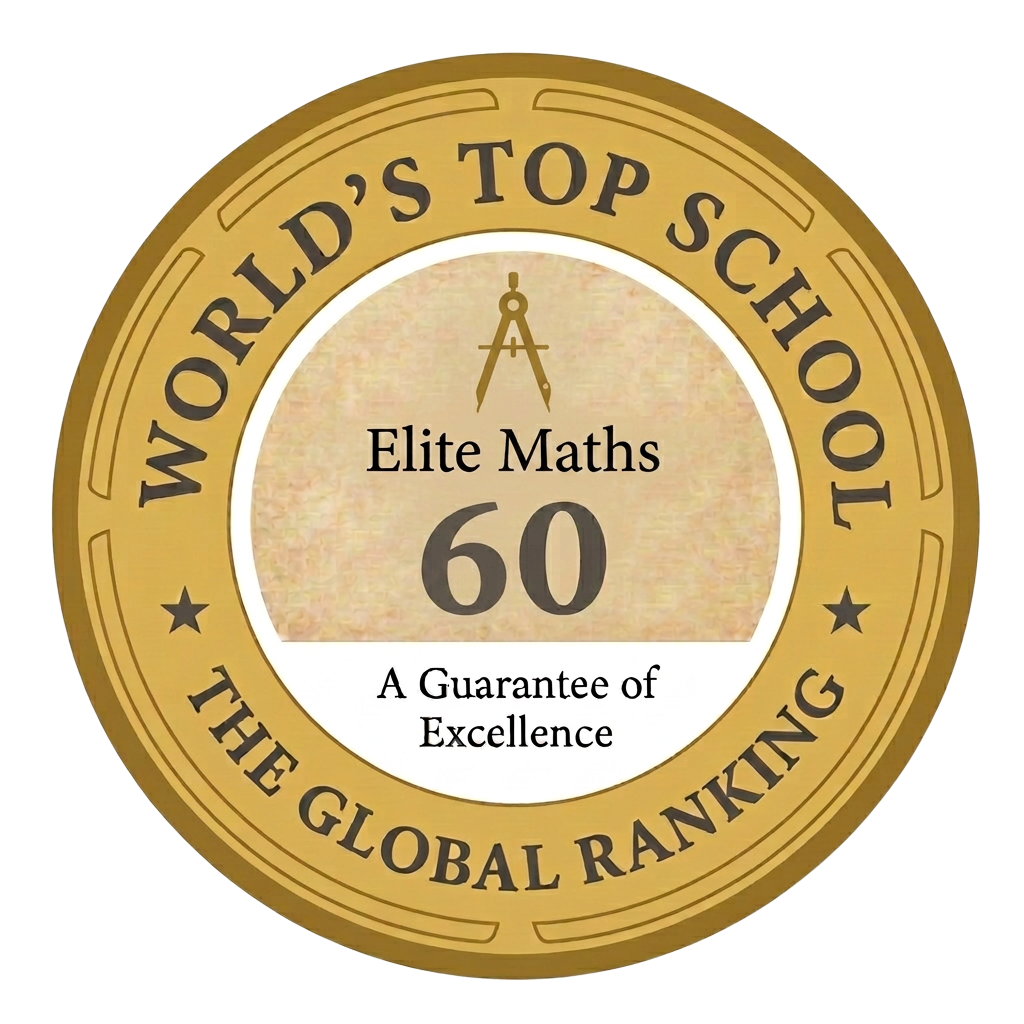
Elite Mathematics 60
World's Top School · The Global Ranking
Phillips Exeter Academy is featured on our Global Top 60 ranking at #41. This seal is available for the school's marketing team to use on their website, prospectus and social channels.
Award

Elite Entrepreneurship, Economics & Finance 60
World's Top School · The Global Ranking
Phillips Exeter Academy is featured on our Global Top 60 ranking at #3. This seal is available for the school's marketing team to use on their website, prospectus and social channels.
Editors' overview
Every class at Exeter still revolves around the Harkness table, and that is not a decorative quirk. It shapes the school’s whole academic culture: students are expected to think aloud, argue cleanly, listen hard and carry the lesson with the teacher rather than sit back and absorb it. That makes Phillips Exeter Academy a fiercely intellectual proposition even by American boarding-school standards. The numbers support that seriousness: a 5:1 student-teacher ratio and an average class size of 12 give the school the staffing to run discussion-led teaching properly, not as a slogan. Founded in 1781, Exeter is also one of the oldest schools in the United States, and it still trades on that depth of institutional confidence.
Its market position is clear. Exeter sits in the top tier of US college-preparatory boarding schools: highly selective, academically demanding, and expensive. The average annual fee is $71,797 for boarders and $56,077 for day students across grades 9 to 12. Parents are paying for intensity, close teaching and a serious peer group, not glossy frills. The school is co-educational, non-religious, teaches in English and carries NEASC and NAIS accreditation. Its alumni footprint is enormous even on a conservative count, with 898 notable alumni catalogued in Wikidata across politics, business, science, writing and the arts. That breadth matters because it points to a school with real cultural and intellectual reach, not a narrow finishing school for one profession or social set.
Why shortlist it? Because Exeter offers a very specific kind of education and does it with unusual clarity. This is a school for adolescents who want to be stretched hard by teachers and peers, who can handle classrooms where silence counts against you, and who enjoy ideas enough to do the heavy lifting themselves. It suits the self-propelled, the verbally agile and the seriously ambitious. It does not suit every bright child. Students who need constant hand-holding, who prefer highly structured didactic teaching, or who want a softer, less pressurised atmosphere will find Exeter demanding to the point of bruising. For the right pupil, though, that pressure is the point.
An Elite Mathematics 60 school
Phillips Exeter Academy in Exeter, New Hampshire sits at rank forty-one on the Elite Mathematics 60 because it produced Zhuo Qun "Alex" Song, class of 2015, who remains the most highly decorated International Mathematical Olympiad contestant ever, with five gold medals and one bronze. That result did not emerge from a vacuum: Exonians have helped the United States win the IMO seven times, and Kevin Cong, class of 2022, took gold at the 2022 Olympiad in Oslo, scoring 36 of 42 points on his way to Harvard.
The specialism is built into the architecture of the Math Department itself. Exeter uses no textbooks; instead students work from a bank of more than 3,700 faculty-written problems, discussed around Harkness tables under the current guidance of department chair Gwyn Coogan, a number theorist by training. Beyond the core sequence, pupils can move into 500- and 600-level electives -- linear algebra, multivariable calculus, number theory, abstract algebra, game theory, and a dedicated Foundations of Abstract Mathematics course explicitly built as a bridge into proof-based real analysis and set theory. This penetrates well past a handful of stars: the Phillips Exeter Academy Red Lion (PEARL) math club, developed over three decades under longtime coach Zuming Feng, produced more than 45 USAMO winners and 27 IMO gold medals for its members between 2000 and 2022, and the school also hosts its own nationally competitive middle-school tournament, the Exeter Math Club Competition.
Beyond Song and Cong, James Lin, class of 2018, turned in one of only two perfect scores among 594 competitors at the 2018 IMO, steering the U.S. team to victory. Notable alumni also route heavily into elite STEM universities, with Exeter graduates regularly matriculating in double figures each year to MIT, Princeton, and Harvard.
International openness is genuine but selective. Overseas applicants apply through the standard January 15 deadline with SSAT or ISEE testing, and TOEFL, IELTS, or Duolingo is encouraged for non-native English speakers; boarding is the default for international students, and Exeter does not begin issuing Form I-20 visa documents until early May for a September start. Admission is need-blind, with 100% of demonstrated need met and free tuition for families earning under $125,000; boarding tuition otherwise runs approximately $69,500 a year. Given the I-20 timing constraint, overseas families should apply in the autumn before their intended entry and be prepared to move quickly once accepted in the spring.
An Elite Entrepreneurship, Economics & Finance 60 school
Phillips Exeter Academy in Exeter, New Hampshire, sits at rank three on the Elite Entrepreneurship, Economics & Finance 60 because it produces the strongest national economics competition record of any American boarding school right now: its team secured a three-peat at the Northwestern Economics Tournament, taking first place in the Econ Bowl and winning the Advanced Power Round for the first time, while junior Eli Orbach was one of only 23 competitors worldwide to earn a gold medal at the 2026 International Economics Olympiad in Shenzhen, also claiming fourth overall individually.
The specialism is built on genuine infrastructure rather than a single AP class. Exeter's economics program spans dedicated microeconomics and macroeconomics courses beyond the introductory term, run through the Harkness discussion method rather than lecture format. The student-run Exeter Investment Society, founded in 2021, describes itself as the country's premier high school investment club, fielding competition teams that have twice reached the Wharton Global High School Investment Competition semifinals, as Chimera Capital in 2022 and Phillips Exeter Lions in 2023. A separate, highly competitive economics club, advised by history instructor Aykut Kilinc, feeds the school's Olympiad pipeline, and the curriculum is supplemented by two international trips focused specifically on business and entrepreneurship.
Notable alumni anchor the finance and founder track record: Mark Zuckerberg (Facebook founder), Tim Draper (venture capitalist and founder of Draper Fisher Jurvetson), Tom Steyer (billionaire hedge fund manager), David Goel (founder of Matrix Capital Management), Stephen Mandel (hedge fund manager, Dartmouth '78), Andrew Yang (entrepreneur), and Rohan Pavuluri (founder of Upsolve) collectively span venture capital, hedge funds, and founder-led startups.
International openness is real but selective. Applications run through Gateway to Prep Schools with SSAT or ISEE required, boarding is standard for the roughly 10-15% of students drawn from over 35 countries, and TOEFL, IELTS or Duolingo scores are strongly recommended, though not mandatory, for non-native English speakers; there is no dedicated ESL program, so a high level of English proficiency is expected from day one. Exeter is need-blind and meets full demonstrated need for admitted international families, with boarding tuition around $69,537 for 2024-25. Families should begin the Gateway application by the previous July, secure SSAT/TOEFL testing early, and treat the January admissions deadline as fixed, since the 13-18% acceptance rate leaves little room for late applications.
Academic Performance
Exeter’s academic reputation sits at the hard end of the American college-preparatory market, but the school does not publish the kind of clean, aggregate external-exam data that would let parents benchmark it neatly against peers. No school-wide AP or SAT profile is in public view here, and that limits direct comparison on raw outcomes. What is clear is the operating model behind the results: small classes, a discussion-led pedagogy and a student body selected for intellectual stamina. In practice, that places Exeter in the same conversation as the most academically exacting US boarding schools, where the real differentiator is not exam drilling but the level of classroom argument, writing and independent reading expected from teenagers.
That distinction matters. Exeter is not built around headline score-marketing; it is built around a high-pressure scholarly culture that feeds selective university admissions and produces a deep bench of accomplished alumni. For families who want published league-table style metrics, the opacity is a weakness. For families who understand the upper tier of American boarding schools, Exeter’s standing is already established by selectivity, teaching method and the intellectual calibre of its cohort. Put plainly: this is an elite academic institution with a formidable reputation, but one that asks parents to trust institutional standing more than published exam statistics. In a market where some rivals disclose more, Exeter’s restraint reads as confidence, but it still leaves a factual gap.
Facilities
Facilities at Exeter carry the same message as its teaching: substance first, display second. The standout asset is the Harkness classroom itself, still organised around the oval table that defines how lessons run. That matters more than a glossy innovation lab because it shapes daily academic life across the school, not as a special feature but as the default. Beyond that signature, Exeter has the breadth parents expect at this level: a full boarding-school campus with the space and infrastructure to support serious study, arts, sport and residential life for an adolescent population of roughly 1,100. Against direct peers in the top American boarding tier, that places it in the fully equipped, no excuses bracket. Students do not lack for rooms, resources or specialist settings; the question at Exeter is not access, but whether a child will use them well.
What Exeter does not trade on is architectural theatre. Some rival schools push a more overt luxury signal through newer showcase buildings, spa-like athletics centres or resort-grade boarding houses. Exeter’s advantage lies elsewhere: facilities tied tightly to an intellectually hard-driving school culture rather than a lifestyle pitch. That gives the campus a serious, workmanlike authority that many families will value and some teenagers will find austere. In peer comparison, the provision is unquestionably top-rank; the tone is less pampering, more purpose.
That makes Phillips Exeter Academy a fiercely intellectual proposition even by American boarding-school standards
Prestige
Exeter carries top-tier prestige in American independent education because its name functions as a shorthand for intellectual seriousness, selectivity and social reach. This is not prestige built on branding alone. It rests on a teaching model that has become inseparable from the school’s identity, a long-entrenched place in the US boarding-school hierarchy, and an alumni network with real weight across public life, finance, scholarship, writing and the arts. The sheer breadth of that network matters: 898 notable alumni catalogued in Wikidata is an exceptional floor, not a flattering anecdote. Few schools produce that level of cross-sector visibility over time. For university admissions offices, employers and educated American families, Exeter is a blue-chip name.
That said, prestige here has a specific character. Exeter projects intellectual status more than polish, charm or social ease. Its cachet comes from academic force and institutional gravitas, not from a manicured lifestyle pitch. The Harkness method strengthens that reputation because it gives the school a recognisable academic signature rather than a generic claim to excellence. I rate Exeter so highly because it combines elite standing with a distinct internal culture that outsiders recognise instantly. Many schools are famous; fewer are definitive. Exeter sits in that narrower group: a school whose name carries immediate international recognition among the globally mobile, highly educated families who shop at the sharp end of the market.
Exeter sits in the top tier of US college-preparatory boarding schools: highly selective, academically demanding, and expensive
Communications
Exeter communicates with the same confidence that runs through its classrooms: it expects parents to keep up. The essentials are clear enough — fees, admissions structure, academic philosophy and the broad shape of school life — and the school’s identity is communicated with unusual precision. There is no confusion about what Exeter values. The Harkness method, the intellectual tone and the level of student responsibility are all explained plainly. That clarity matters more than slickness. Parents are not being sold a warm bath of generic pastoral language; they are being told, in effect, that this is a demanding, high-seriousness institution and that not every child will enjoy it. At this price point — $71,797 for boarding on average, $56,077 for day places — that candour counts in its favour.
Where the communication is weaker is in outcome transparency. Exeter gives parents a strong sense of ethos and expectation, but a weaker factual grip on aggregate academic results than some direct competitors. That is a real limitation for families trying to compare schools on hard data rather than reputation. The school’s stature means it can get away with that, and many families will accept the trade. Others will find the picture too controlled and insufficiently granular. My judgement: communications are authoritative and effective on culture, standards and institutional identity; less effective on the measurable proof that more exacting parents want before writing very large cheques.
Uniqueness
Exeter’s real point of difference is that its signature teaching method is not a branding device bolted onto a conventional school. It governs the daily experience. The Harkness table forces students to do the intellectual work in public: frame an argument, test it against opposition, recover after being challenged, and move the discussion forward without hiding behind the teacher. In a school with a 5:1 staffing ratio and classes averaging 12, that method has room to operate properly. The result is a high-expectation, talk-your-way-through-the-idea culture that trains habits many schools only claim to value: precision, confidence under pressure, close listening and the discipline to change your mind when the evidence demands it.
What students gain is more than confidence in speaking. They learn how to carry academic responsibility themselves, which is a different and harder skill. Exeter turns class participation into an intellectual duty, not a personality trait, so even quieter pupils must learn how to enter the room with substance. That produces a distinctive kind of maturity: students leave better at seminars, interviews, writing, disagreement and independent judgement. The trade-off is plain. This is not a gentle education. Teenagers who thrive on clear authority, passive note-taking or constant reassurance will find the model exposed and exhausting. For pupils who want to be sharpened by peers as much as by teachers, Exeter offers something genuinely hard to replicate.
Against direct peers in the top American boarding tier, that places it in the fully equipped, no excuses bracket
Student Profile
The Exeter student is not just bright. The school wants adolescents who can think in public, tolerate correction and keep their footing when a classmate dismantles a lazy point. In practice, that means strong readers, strong writers and, above all, students with real verbal courage. The low staffing ratio and seminar-style teaching leave nowhere to hide; a teenager who prefers to sit quietly, absorb the lesson and hand over polished work later will struggle. So will the child who needs constant praise or heavy adult scaffolding. Exeter suits the self-propelled, the argument-ready and the thick-skinned: pupils who enjoy scrutiny, can cope with intellectual friction and do not mistake challenge for hostility. At a school of roughly 1,100 students, peer quality matters enormously, and Exeter’s peers set a brisk, unforgiving pace.
Fit also depends on temperament. This is a strong match for academically ambitious teenagers who like ideas for their own sake and gain energy from competitive, high-level conversation. It also works for quieter students with substance, provided they can learn to claim space and speak with precision. It is a weaker fit for children whose talents sit outside the classroom but who want school to meet them on gentler terms. Exeter has room for artists, athletes and eccentric minds, but they still need to function inside a high-pressure academic culture. Put bluntly: if your child wants to be stretched hard by both teachers and peers, Exeter fits. If they want comfort, it does not.
In peer comparison, the provision is unquestionably top-rank; the tone is less pampering, more purpose
Co-curricular strengths
Arts & sport, on a separate axis
Overall 9.1/10
Scored 0-10 from the school's own published evidence. This axis is editorial-only — it does not feed the main WTS ranking.
Sports
9.2/10
Fields massive, historic athletic infrastructure including the largest indoor secondary school track facility in the United States.
Drama
9.3/10
The Goel Center for Theater and Dance acts as a state-of-the-art conservatory space for classical and technical stagecraft.
Dance
9.1/10
Greatly elevated by the Goel Center's modern studios, offering strong technical tracks in modern alignment.
Music
9.1/10
Massive department featuring the Forrestal-Bowld Music Center, supporting dozens of chamber ensembles and elite concert bands.
Visual Arts
8.8/10
Deep, studio-intensive fine arts focus housed within the historic Lamont Gallery, prioritizing classical technical craft.
Editor-verified · 8/6/2026
Notable alumni · Wikidata
898notable alumni
Includes
- Claudine Gay(1970)
539 historic (born pre-1930) · 73 modern (born post-1970)wikidata:2026-07-28 How we source this

WTS 300 badge
2025/26 editionPhillips Exeter Academy is one of the World's Top 300 Schools for 2025/26. Claim your listing to add it to your site →
Strengths
- +Uses the Harkness method campus-wide, with discussion-based classes of roughly 12 students seated around an oval table rather than lecture format.
- +Need-blind admissions with financial aid that meets 100% of demonstrated need; tuition is free for families with incomes under $125,000 (rising to $150,000 from 2027 admission).
- +Houses the world's largest high school library and maintains a low student-to-faculty ratio of around 5:1.
- +Strong college matriculation outcomes, with roughly one in five recent graduates going on to Harvard, Yale, Princeton, Stanford or MIT.
- +Long-established institution founded in 1781, with a substantial endowment supporting facilities, faculty and financial aid programs.
Considerations
- −Highly selective, with acceptance rates reported in the low-to-high teens (estimates range roughly 9-18% depending on source and year), making admission uncertain even for strong applicants.
- −Boarding tuition runs close to $70,000 a year before additional costs such as books, travel and personal expenses, a significant commitment for families not qualifying for aid.
- −The Harkness discussion format rewards verbal confidence and may not suit every learning style, particularly students who prefer traditional lecture-based instruction.
- −Located in small-town New Hampshire, roughly 50 minutes from Boston, which means limited access to a major city compared with some urban day-school alternatives.
Availability
Primary entry gate & tests
SSAT/ISEE + Interview
Gallery
Photo © Roman Pope via Google Maps
Photo © Leon Verhagen via Google Maps
Photo © Rachel Whelton via Google Maps
Photo © Jonas Fulda via Google Maps
Photo © Jason M. Russell via Google Maps
Photo © Jason M. Russell via Google Maps
Photo © Jason M. Russell via Google Maps
Photo © Jason M. Russell via Google Maps
Photo © Lexi Hunt via Google Maps
Parent reviews
Have you sent your child here?
Voice reviews carry the strongest trust badge — we transcribe them for you to tidy up before they go live. Prefer to type? A written review is fine too.
Add your voice
In 60 seconds, tell other parents: what's the best thing about Phillips Exeter Academy, and what surprised you when your child joined?
We ask for a Google sign-in so every review has a real face behind it — no anonymous drive-by attacks on schools, and no faked positive reviews. Your email is never shown publicly.
Send this profile to a friend
International parents rely on word-of-mouth. Share this review with someone weighing the same decision.
Schools with places
Similar schools to Phillips Exeter Academy with places available now.
Davidson Academy of Nevada
Reno · United States
- 2026-27
- PLACES OPENApplications still open
- 2027-28
- OPENS SOONOpens late summer '26
Loomis Chaffee School
Windsor · United States
- 2026-27
- WAITPOOLLate/Rolling Space Available
- 2027-28
- OPENS SOONOpens 1 Sept '26
Riverdale Country School
New York City · United States
- 2026-27
- WAITPOOLLate application possible
- 2027-28
- OPENS SOONOpens 8 Sept '26 (Noon ET)
Ethical Culture Fieldston School
New York City · United States
- 2026-27
- WAITPOOLLimited late availability
- 2027-28
- OPENS SOONOpens post-Labor Day '26
Availability first, then country, area, curriculum, price, co-curricular
Consider also
Also worth looking at alongside Phillips Exeter Academy.

Phillips Academy
Andover · United States
Founded in 1778 as the nation's oldest incorporated boarding school, its Harkness tables still turn lectures into conversation.
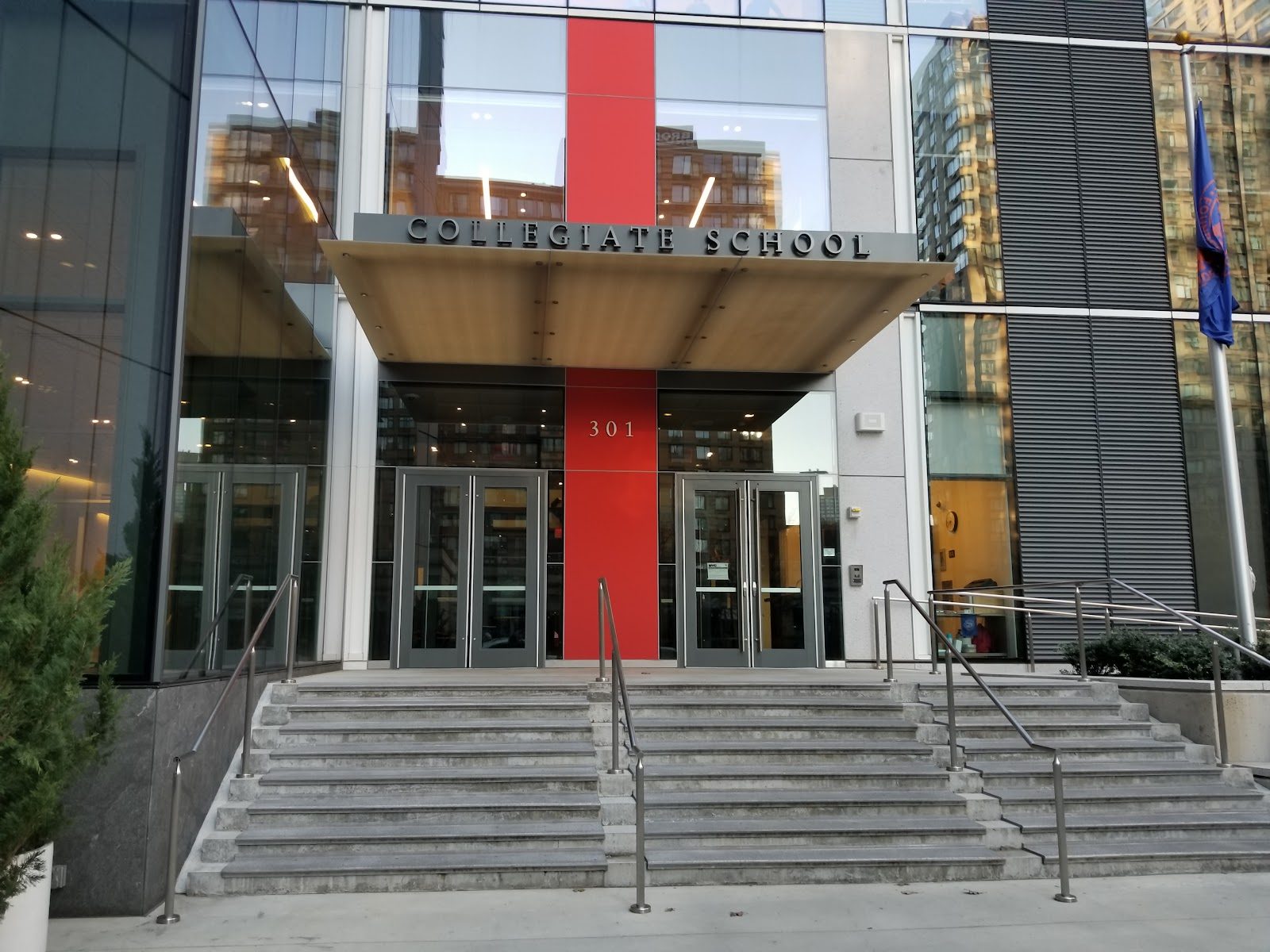
Collegiate School
New York City · United States
Tracing its roots to 1628 in New Amsterdam, this Upper West Side all-boys day school claims the title of America's oldest independent school.
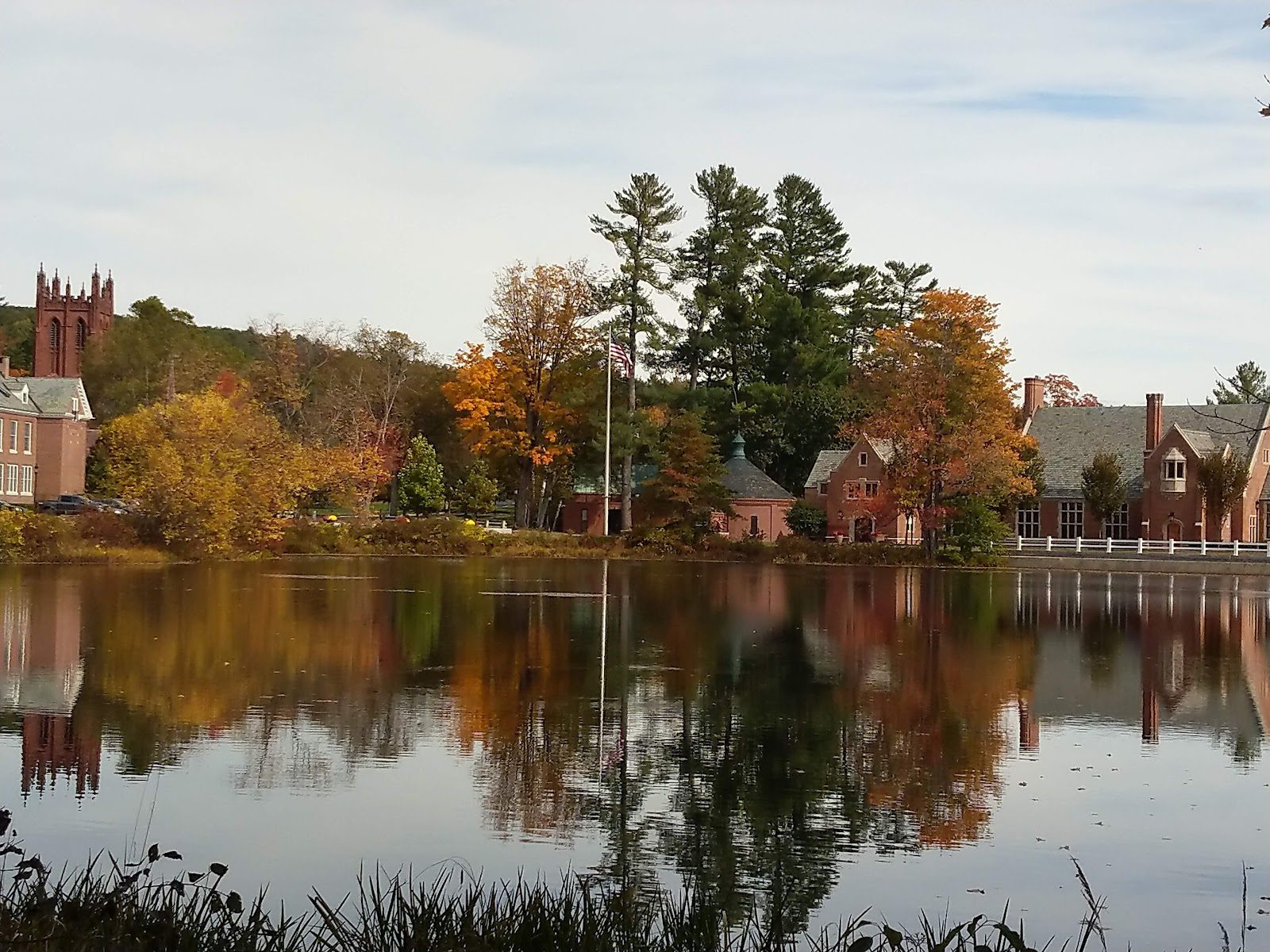
St. Paul's School
Concord · United States
On a 2,000-acre Concord campus where American ice hockey was born in 1883, boarding life still shapes every house and classroom.
The Lawrenceville School
Lawrenceville · United States
Since 1936, oval Harkness tables replace lectures with discussion, while a century-old House system anchors campus life
Same country and curriculum — closest matches within ±10 points either way