
New York
A single exam and a sub-3-percent acceptance rate feed a Battery Park City engine for math, science and technology talent.
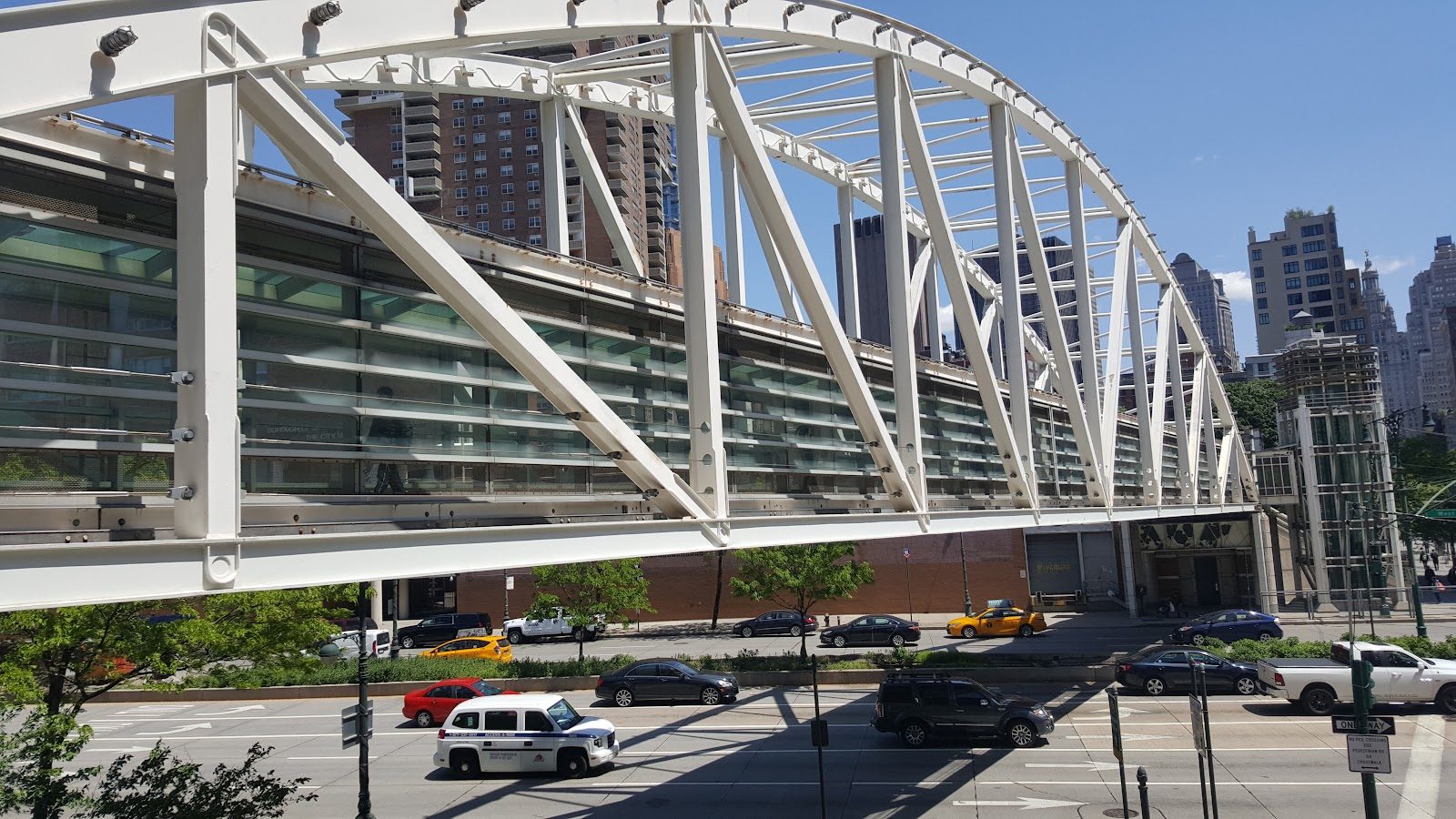
Photo © Jason Lindelof via Google Maps
Type
Day
Ages
14–18
Curriculum
American
Qualifications
AP
Ratio
10:1
The Verdict
Editor's commitment
Right for
New York families chasing a ruthless academic filter: founded in 1904, American curriculum, 10:1 ratio, classes averaging 18.
Wrong for
Anyone wanting a gentler adolescence; Stuyvesant serves ages 14–18 and openly centres students with special academic talents.
Watch out for
Admission is the whole game: one exam gates entry, and NEASC/NAIS accreditation does nothing to soften that barrier.
Ranking breakdown
Stuyvesant High School · #48 of 1591
Composite score 79.7. 8 weighted criteria.
By criterion
Academic Outcomes
Weight 20%
#20
of 1529 scored
University Placement
Weight 16%
#41
of 1529 scored
Prestige & Heritage
Weight 12%
#144
of 1529 scored
Alumni Network
Weight 12%
#144
of 1529 scored
Facilities
Weight 12%
#976
of 1529 scored
Transparency & Communications
Weight 8%
#36
of 1529 scored
Peer & Industry Review
Weight 10%
#100
of 1529 scored
Admissions Selectivity & Demand
Weight 8%
#35
of 1529 scored
Score history
Stuyvesant High School · 2026
Movement across 2024–2026. Peer average overlaid.
Overall — 2024–2026
79.7/ 100
▲ +20.1 vs 2025
year on year
Peer & Industry Review
How Stuyvesant High School is regarded in the sector
95
Top-tier · high confidence
Stuyvesant High School is consistently ranked among the top public high schools in the US by U.S. News & World Report and Niche.com, and is frequently cited in national press (New York Times, Wall Street Journal) for its elite specialized admissions test (SHSAT) and STEM focus. Its alumni network includes multiple Nobel laureates, prominent scientists, and public figures, and it is a perennial benchmark in discussions of NYC specialized high schools and academic rigor. Coverage in Chronicle of Higher Education and college counseling literature regularly references Stuyvesant as a top feeder school to elite universities.
Evidence sources
Award

Elite Science & Research 58
World's Top School · The Global Ranking
Stuyvesant High School is featured on our Global Top 58 ranking at #36. This seal is available for the school's marketing team to use on their website, prospectus and social channels.
Award
Elite Computing & AI 60
World's Top School · The Global Ranking
Stuyvesant High School is featured on our Global Top 60 ranking at #35. This seal is available for the school's marketing team to use on their website, prospectus and social channels.
Award
Elite Mathematics 60
World's Top School · The Global Ranking
Stuyvesant High School is featured on our Global Top 60 ranking at #45. This seal is available for the school's marketing team to use on their website, prospectus and social channels.
Award

Elite Entrepreneurship, Economics & Finance 60
World's Top School · The Global Ranking
Stuyvesant High School is featured on our Global Top 60 ranking at #7. This seal is available for the school's marketing team to use on their website, prospectus and social channels.
Editors' overview
A single admissions exam, a sub-3-percent acceptance rate and a Battery Park City address define Stuyvesant more clearly than any mission statement. This is New York’s most selective public academic machine: a non-religious day school for ages 14 to 18, founded in 1904, teaching an American curriculum in English. The attraction is plain. Stuyvesant concentrates bright, fast, competitive teenagers in one place and builds around their appetite for hard intellectual work, with a 10:1 student-teacher ratio and an average class size of 18. The school’s own language is revealing: it exists to “nurture and enhance the special academic talents” of the students it admits. That is not a broad church. It is a high-pressure meritocracy built for pupils who want pace, depth and peers who can match them.
What marks Stuyvesant out is the combination of civic status and intellectual yield. It is a public school with a *private-school level of academic intensity*, and its alumni record is formidable: 341 notable alumni catalogued in Wikidata, including 114 scientists and scholars, 69 writers and journalists, 50 actors and directors, and 25 politicians or statespersons. That spread matters. Stuyvesant has the standard reputation for maths, science and technology, and the school motto, Pro Scientia Atque Sapientia, underlines that emphasis, but the alumni footprint shows a broader cultural and professional reach than the stereotype allows. NEASC and NAIS accreditation add external credibility, though parents should note that the public-facing material we have seen says little about outcomes in granular, publishable terms. If you want aggregate exam data, university destination lists or polished institutional storytelling, Stuyvesant does not trade in that style.
It belongs on a shortlist for families who value serious academic selection over polish, prestige signalling or pastoral hand-holding. The student who thrives here is bright, self-propelled, resilient and happy in a room full of other high achievers. This is not for the faint-hearted and not ideal for a child who needs extensive individual reassurance to keep steady. It suits teenagers who enjoy mathematics, science and analytical subjects, or who simply want a school culture where intellectual ambition is normal rather than concealed. Parents considering it need to want the same thing: not a curated boutique experience, but a demanding urban academic engine with a long record of turning able adolescents into adults of consequence.
An Elite Science & Research 58 school
Stuyvesant High School in Lower Manhattan, New York City, sits at rank thirty-six on the Elite Science & Research 58. The anchoring fact is that this single tuition-free public school has produced four Nobel laureates -- Joshua Lederberg, Roald Hoffmann, Robert Fogel, and Richard Axel -- and for decades New York City's specialized schools have led the nation in Intel/Westinghouse Science Talent Search semifinalists, with Stuyvesant and Bronx Science trading the top two spots year after year, once finishing 17 to 16 in the same competition.
The differentiator is not Stuyvesant's AP roster, which is generic, but its Regeneron Research Program, run by science teacher Jason Econome, who places students such as Nina Shin into laboratory internships like the Lin Lab and connects Research Club members with mentored, publication-track projects. A parallel entry point is the Medical Human Genetics elective, where students write formal research proposals before pursuing independent lab work. This pipeline is elective rather than universal, and alumni volunteers now openly acknowledge a real decline from the school's 1990s peak, when four Stuyvesant seniors reached the STS finals in a single year -- yet the machinery still produces national scholars almost every season, including 2024, 2025, and 2026 Regeneron STS Scholars working on projects spanning muscle-gene activation, Hopf algebra structures, and astrocyte signaling pathways.
Alumni credibility runs deep in the sciences: Eric Lander won a silver medal on the first U.S. International Mathematical Olympiad team in 1974 before leading the Human Genome Project at MIT; physicists Brian Greene and Lisa Randall built careers in string theory and particle physics; Paul Cohen won the 1966 Fields Medal for his work on the continuum hypothesis; and Richard Axel earned the 2004 Nobel Prize in Physiology or Medicine for his olfactory-receptor research.
International openness here requires an honest caveat: Stuyvesant is a New York City Department of Education public school, offering tuition-free instruction with no boarding and no ESL track, and admission runs solely through the Specialized High Schools Admissions Test, open only to students who are legal New York City residents in eighth or ninth grade. There is no visa route, application fee, or overseas admissions channel -- a family must relocate and establish genuine NYC residency before their child can even sit the exam, typically scoring in the top two to three percent citywide. For parents seriously considering this path, the realistic recommendation is to relocate to New York City at least a full year before the SHSAT and begin rigorous test preparation immediately, since residency, not merit alone, is the gating requirement.
An Elite Computing & AI 60 school
Stuyvesant High School in New York City sits at rank thirty-five because it built, entirely from scratch inside a free public exam school, what one 2012 profile called the only rigorous computer science sequence in the city's public schools and one of the few in the country. With roughly 950 offered seats out of about 27,000 applicants each year on the Specialized High Schools Admissions Test, it channels the city's single most math-and-science-selective adolescent cohort straight into that pipeline.
The curriculum architecture was built teacher-by-teacher rather than handed down by a district mandate: Mike Zamansky, a former Goldman Sachs engineer turned teacher, started the CS program in the mid-1990s from a single AP section, then built a sophomore-to-senior sequence with colleagues JonAlf Dyrland-Weaver and Samuel Konstantinovich. The offering now runs from Introduction to Computer Science through AP Computer Science and Software Development, plus an elective AI course covering decision trees and logistic and linear regression. That work also spawned CSTUY, a nonprofit extending Saturday hacking sessions and mentoring beyond the school day, and the program has fed interns directly into firms like Morgan Stanley. Individual students have qualified through USACO for the national IOI team, including one competitor who trained for a gap year before representing the US in Kazan, Russia.
Bram Cohen, class of 1993, wrote the BitTorrent protocol and founded the company built around it. Ben Uretsky, class of 1999, co-founded and led DigitalOcean as CEO through its growth into a major cloud infrastructure provider. Alongside them sits a steady stream of engineers and founders tracked by the school's own alumni association tech panels, evidence of a pipeline that runs from Stuyvesant classrooms into Silicon Valley and NYC tech alike.
International openness here is genuinely limited and families should know this going in: Stuyvesant is a tuition-free New York City public school with no boarding and no visa sponsorship, and admission requires legal NYC residency at the time of the SHSAT, open only to city eighth and ninth graders. There is no separate international admissions track and no fee schedule to budget against, because there is no path in without residency. For a family serious about this school, the only realistic route is relocating to one of the five boroughs at least a year before the November SHSAT sitting and preparing rigorously for the exam itself, since scores alone determine the roughly 950 places awarded from tens of thousands of applicants.
An Elite Mathematics 60 school
Stuyvesant High School in Lower Manhattan, New York City, sits at rank forty-five on the Elite Mathematics 60 because it produces national-level olympiad depth almost every single year and has done so since well before most schools on this list existed. The clearest anchor is Milan Haiman, class of 2019, the first Stuyvesant student in more than twenty years to compete at the International Mathematical Olympiad, where he won gold with a score of 40 out of 42, finishing eighth in the world.
The specialism is built on volume as much as peaks. Beyond AP Calculus, Stuyvesant offers Multivariable Mathematics, a full-year post-AP elective fusing higher-dimensional calculus with linear algebra, a genuine step toward university material rather than a relabeled AP course. The engine behind competition results is the school's math team, run by Stanislav Kats and Brian Sterr, which typically sends 80 to 90-plus students to the AIME each year and has produced four to seven USAMO or USAJMO qualifiers in most recent seasons, at times making Stuyvesant the only New York City school represented at that level. Its top squad, nicknamed Tin Man, has placed second at ARML and won the Princeton University Mathematics Competition outright, and the school now writes and hosts its own contests, including the Downtown Mathematics Invitational and the New York City Team Competition. With an enrollment above 3,300, this is a minority pursuit within the building, but the AMC-to-AIME-to-USAMO funnel reaches dozens of pupils a year, not just a handful of stars.
Alumni include Paul Cohen, class of 1950, awarded the 1966 Fields Medal for proving the independence of the continuum hypothesis, and Elias Stein, class of 1949 and a former captain of the Stuyvesant math team, who won the 1999 Wolf Prize in Mathematics for his work in harmonic analysis. Milan Haiman's 2019 IMO gold renewed that lineage after a two-decade gap on the world stage.
International openness is limited by the school's public status. Stuyvesant is tuition-free and operated by the New York City Department of Education; admission is decided solely by the Specialized High School Admissions Test, open only to New York City residents entering eighth or ninth grade, with no boarding, no separate international pathway and no dedicated ESL admissions track. Overseas families cannot apply directly — a child must first establish legal NYC residency, typically through a parent's relocation, before sitting the SHSAT. There are no tuition fees, though ordinary New York City living costs apply. Families genuinely pursuing this route should plan to relocate and settle residency at least a full year ahead of the autumn SHSAT sitting, since the exam itself, not an application file, is the only gate.
An Elite Entrepreneurship, Economics & Finance 60 school
Stuyvesant High School in Lower Manhattan, New York City, sits at rank seven because its students do not just study markets, they beat the field on the world's largest stage for them: in 2026, Stuyvesant's student-run team FigCapital was named Global Champions of the Wharton Global High School Investment Competition, topping finalists from Brazil, India, the UK and across the United States in a field that drew more than 6,300 registered teams that season.
The architecture here is honest rather than manufactured. Economics is a single required semester (general Economics or AP Micro/Macroeconomics), and a dedicated Personal Finance elective, built by math teacher David Peng after student advocacy, remains capped near 68 seniors a term. Stuyvesant DECA has posted strong regional results, with competitors regularly placing in the top three of their categories and advancing to states. There is no publicly documented Bloomberg terminal, real-money student fund, or standalone Business department; the differentiator is a self-organized investment club culture capable of producing back-to-back Wharton semifinalist and finalist teams (Big Apple Investment, then FigCapital) culminating in the 2026 global title.
Notable alumni anchor the tradition in economics and enterprise rather than just finance headlines: Robert Fogel (1944), who won the 1993 Nobel Memorial Prize in Economic Sciences for his work in cliometrics; Bram Cohen (1993), creator of the BitTorrent protocol and a CodeCon co-founder; Amol Sarva (1994), a technology entrepreneur who co-founded Virgin Mobile USA and Peek; and Saul B. Katz, co-founder and president of Sterling Equities and former president of the New York Mets.
International openness is limited, and families should know this plainly. Stuyvesant is a tuition-free New York City public school; admission is decided entirely by the Specialized High Schools Admissions Test and is legally restricted to New York City residents across the five boroughs, with roughly 800 seats filled from over 25,000 applicants. There is no boarding, no visa-sponsorship route, and no separate international admissions channel. Overseas families genuinely interested must relocate to NYC and establish residency well before their child's 8th or 9th grade year, then prepare intensively for the SHSAT, where a top 2-3% score is typically required.
Academic Performance
Stuyvesant’s external exam picture is strong where the school chooses to publish it, and thin where a serious comparator would want more. The headline indicators are hard to ignore: 31 AP courses, an average SAT of 1510 and an average ACT of 34. In any American context, those are elite numbers. They place the school in the top academic tier with the country’s strongest public magnets and many selective independents. The AP menu is broad enough to support genuine depth across the sixth-form equivalent years, not just a narrow clutch of showcase subjects, and the testing averages confirm a cohort operating at a very high academic ceiling.
The limitation is transparency. Stuyvesant does not publish aggregate AP score distributions, pass rates by subject, or a university destinations list in the public domain. That leaves parents with a high-level picture rather than a forensic one. Even so, the broad conclusion is clear. Relative to peers, this is a results-heavy, exam-confident school with a student body that performs at a level few schools reach. What it does not offer is the polished accountability culture many fee-charging schools use to market themselves. Families comfortable reading between the lines will rank it among New York’s strongest academic propositions; families who want every outcome tabulated and packaged will find the disclosure austere.
Facilities
The most important facility story at Stuyvesant is breadth tied to academic use, not landscaped luxury. The school advertises 31 AP courses and 112 electives, which points to the kind of timetable and room stock a serious urban academic school needs: multiple science labs, specialist classrooms, substantial maths capacity and enough technical infrastructure to run advanced teaching at scale. The site also supports a functioning student media and activity culture, with links for the library, student union, newspaper and activities hub all given real prominence. That matters. At many strong public schools, clubs exist on paper and compete for corners; here the infrastructure for student-led life looks embedded, high-volume and hard-working. The pool and multi-gym athletics provision also lift it above the baseline for a city public school.
Against selective independent peers, the facilities picture is strong in the areas that drive daily use and thinner in the areas that sell brochures. 43 PSAL teams and 200 clubs tell you there is real capacity for sport and co-curricular life, but the school does not trade on theatres, design studios, maker spaces, conservatory-grade music suites or manicured outdoor acreage in the way wealthy private campuses do. This is a dense, urban, academically loaded plant, built for throughput and intensity. Families expecting country-house polish or resort-level sports grounds will not get them. Families who care more about laboratories, libraries, competition spaces and rooms that stay busy from morning to evening will judge the provision serious and fit for purpose.
They place the school in the top academic tier with the country’s strongest public magnets and many selective independents
Prestige
Stuyvesant carries rare public-sector prestige. In New York, and far beyond it, the name signals a teenager who cleared one of the city’s hardest academic gates and then survived a culture of relentless comparison. That matters. Selective universities, employers and informed parents all know that admission is not bought, inherited or polished into being through boutique coaching on campus; it is won through a brutal civic sorting mechanism and then sustained by performance. The school’s reputation rests less on glossy institutional branding than on a durable external consensus: Stuyvesant is where the city sends a slice of its most academically forceful adolescents. The scale of extracurricular provision reinforces that status. 200 clubs and activities, 43 PSAL sports teams and 112 electives point to a school with the breadth and internal energy of a serious intellectual republic, not a narrow test-prep factory.
The prestige also has depth. The alumni bench is not a handful of headline names wheeled out for effect; it is a broad professional network across scholarship, public life, business, media and the arts, with 341 notable alumni catalogued in Wikidata. That gives the school institutional weight and a recognisable place in America’s meritocratic imagination. There is, though, a hard edge to this prestige. It is earned prestige, not warm prestige. Families looking for social ease, pastoral softness or curated charm will not find the Stuyvesant name especially comforting. Its status comes from intellectual filtration, pressure and output. For the right student, that is first-rank academic capital.
What makes Stuyvesant distinctive is not just selectivity but the mechanism of selection
Communications
Stuyvesant communicates like a hard-working public institution, not a concierge school. The website does the essentials: news sits front and centre; the calendar is live; parent events are dated and timed; and practical links for the library, student union, activities, the Parents Association and the student newspaper are easy to find. Orientation for incoming families is signposted, college information for seniors is scheduled, and the athletics notices are exacting about forms, deadlines, locations and consequences. That level of procedural clarity matters in a school running at this pace. The scale also tells its own story: 200 clubs and activities and 43 sports teams generate moving parts, and the communication style reflects that reality. It is functional, high-volume and low-frills.
The weakness is polish and synthesis. Parents get notices, links and instructions; they do not get a beautifully edited narrative of school life or a refined dashboard of outcomes and strategy. Important information exists, but it is dispersed across portals, sub-pages and affiliated channels, including an external athletics site. That makes the system serviceable rather than elegant. For organised families, it works: key dates, required paperwork and school structures are visible, and the prominence of the Parents Association points to an engaged parent layer. For families used to white-glove communication from expensive independents, this will feel blunt, decentralised and occasionally administratively clunky. The school communicates to keep a large, busy academic machine moving. It does that job well enough.
Uniqueness
What makes Stuyvesant distinctive is not just selectivity but the mechanism of selection. Entry turns on a single citywide admissions test, after which the school gathers a cohort already trained to compete, absorb pace and cope with comparison. That produces a culture unlike the rounded, managerially balanced atmosphere many parents associate with top schools. Stuyvesant is a meritocratic pressure chamber: pupils are sorted early, surrounded by intellectual equals and then stretched again through a timetable built for advanced study. The scale of student life sharpens that effect rather than softening it. With 200 clubs and activities, 43 PSAL teams and a student newspaper prominent enough to sit among the school’s key links, academic intensity does not crowd out initiative; it channels it.
For students, the gain is clear. They get peers who treat hard work as normal, not eccentric, and a school culture where mathematics, science and analytical ambition carry real status. That matters for able teenagers who are bored by mixed-ability pacing or tired of being the only serious student in the room. They also get access to a serious civic network: a public institution with a long alumni reach across scholarship, politics, media and the arts. The trade-off is just as clear. Stuyvesant offers earned confidence, intellectual momentum and independence; it does not offer much cushioning. Students who thrive on challenge can be transformed here. Students who need continual reassurance face a harder landing.
That produces a culture unlike the rounded, managerially balanced atmosphere many parents associate with top schools
Student Profile
The student who fits Stuyvesant is bright, fast, self-directed and entirely comfortable being measured against other able teenagers all day. This is not a school for children who need to be coaxed into effort or protected from comparison. It suits pupils who enjoy solving problems for their own sake, who can handle a heavy workload without theatrical collapse, and who treat deadlines, tests and selection as part of the deal. The school’s own emphasis on nurturing “special academic talents”, its menu of 31 AP courses and the visible weight given to maths, science and technology all point in the same direction: this is a home for the restlessly academic, the competition-hardened and the intellectually ambitious.
Fit also depends on temperament. A teenager can be brilliant and still dislike this environment. The pace is unforgiving; the peer group sets a high bar; and the culture rewards independence more than hand-holding. Students who relish clubs, student journalism, teams and a crowded timetable will find plenty of outlets, but they need the organisation to navigate a school with 200 activities and constant moving parts. The strongest match is a pupil who wants serious classmates, hard classes and room to stretch without apology. The weaker match is a child who wants a gentler social atmosphere, more adult buffering or a school identity built around pastoral softness. Stuyvesant works best for teenagers with intellectual stamina, thick skin and a clear appetite for pressure.
A single admissions exam, a sub-3-percent acceptance rate and a Battery Park City address define Stuyvesant more clearly than any mission statement
Co-curricular strengths
Arts & sport, on a separate axis
Overall 8.4/10
Scored 0-10 from the school's own published evidence. This axis is editorial-only — it does not feed the main WTS ranking.
Sports
8.8/10
32 varsity teams across many sports plus dedicated facilities including a swimming pool, five gymnasiums and a home football field at Pier 40, which shows both breadth and named facilities.
Drama
8.9/10
Stuyvesant has explicit theatre provision through theater productions, a yearly theater competition and auditoria, and its 9 verified star-tier drama alumni including Oscar and Tony winners anchor this dimension at at least 8.
Dance
7.7/10
Wikipedia names multiple dance groups—Step, Hip-Hop, Swing, Modern, Bolly, Flow, Tap and Latin—showing a structured dance offering beyond a bare mention, though no dedicated dance facility or elite recognition is cited.
Music
8.7/10
Dedicated music spaces and extracurricular Jazz band and Orchestra, and two verified Grammy-level alumni provide pedigree that settles music at no lower than 7.
Visual Arts
7.9/10
Art rooms and the external evidence notes introductory art plus an on-campus commissioned public artwork, while two verified Praemium Imperiale-level visual arts alumni establish strong programme pedigree.
Editor-verified · 8/6/2026
Notable alumni · Wikidata
341notable alumni
Includes
- Robert Zimmer(1947)
93 historic (born pre-1930) · 54 modern (born post-1970)wikidata:2026-07-28 How we source this
WTS 300 badge
2025/26 editionStuyvesant High School is one of the World's Top 300 Schools for 2025/26. Claim your listing to add it to your site →
Strengths
- +Admission is based solely on the Specialized High Schools Admissions Test (SHSAT), a single, transparent, race-neutral exam rather than subjective essays or interviews.
- +As a New York City public school, Stuyvesant charges no tuition fees, making it accessible to any qualifying resident regardless of family income.
- +The school offers a wide range of Advanced Placement courses alongside required NY State coursework, with strong emphasis on mathematics, science and technology.
- +Alumni include multiple Nobel laureates and figures such as former US Attorney General Eric Holder and physicist Brian Greene, reflecting a long record of producing high-achieving graduates.
- +The school has operated continuously since 1904 and has been coeducational since 1969, giving it over a century of institutional history in Manhattan.
Considerations
- −Admission is extraordinarily competitive: only a few hundred students out of roughly 25,000-30,000 SHSAT test-takers each year secure a place, with cutoff scores requiring close to 90 percent accuracy.
- −Entry depends entirely on one high-stakes standardized test taken at age 13-14, with no allowance for portfolios, interviews, or holistic review, which some families find high-pressure and narrow.
- −Student demographics are heavily skewed toward Asian and white students; Black and Hispanic students together make up only a small single-digit percentage of admitted freshmen most years, a pattern that has drawn sustained public criticism.
- −Because it is a zoned New York City public school for residents of the five boroughs, it is not an option for international or out-of-district families seeking a day-school place from abroad.
Availability
Primary entry gate & tests
SHSAT (NYC Residents Only)
Gallery
Photo © Brian Lam via Google Maps
Photo © Sam Liu via Google Maps
Photo © Brian Lam via Google Maps
Photo © mamrak s via Google Maps
Photo © Philipp Klöckner via Google Maps
Photo © Dawn A. Traveler via Google Maps
Photo © rena A via Google Maps
Photo © Sony via Google Maps
Photo © chihlan Lu via Google Maps
Parent reviews
Have you sent your child here?
Voice reviews carry the strongest trust badge — we transcribe them for you to tidy up before they go live. Prefer to type? A written review is fine too.
Add your voice
In 60 seconds, tell other parents: what's the best thing about Stuyvesant High School, and what surprised you when your child joined?
We ask for a Google sign-in so every review has a real face behind it — no anonymous drive-by attacks on schools, and no faked positive reviews. Your email is never shown publicly.
Send this profile to a friend
International parents rely on word-of-mouth. Share this review with someone weighing the same decision.
Schools with places
Similar schools to Stuyvesant High School with places available now.
Riverdale Country School
New York City · United States
- 2026-27
- WAITPOOLLate application possible
- 2027-28
- OPENS SOONOpens 8 Sept '26 (Noon ET)
Ethical Culture Fieldston School
New York City · United States
- 2026-27
- WAITPOOLLimited late availability
- 2027-28
- OPENS SOONOpens post-Labor Day '26
Saint Ann's School
Brooklyn · United States
- 2026-27
- WAITPOOLLate / attrition-dependent
- 2027-28
- OPENS SOONOpens 8 Sept '26
Friends Seminary
New York City · United States
- 2026-27
- WAITPOOLLate/held pending openings
- 2027-28
- OPENS SOONExpected Sept '26
Availability first, then country, area, curriculum, price, co-curricular
Consider also
Also worth looking at alongside Stuyvesant High School.
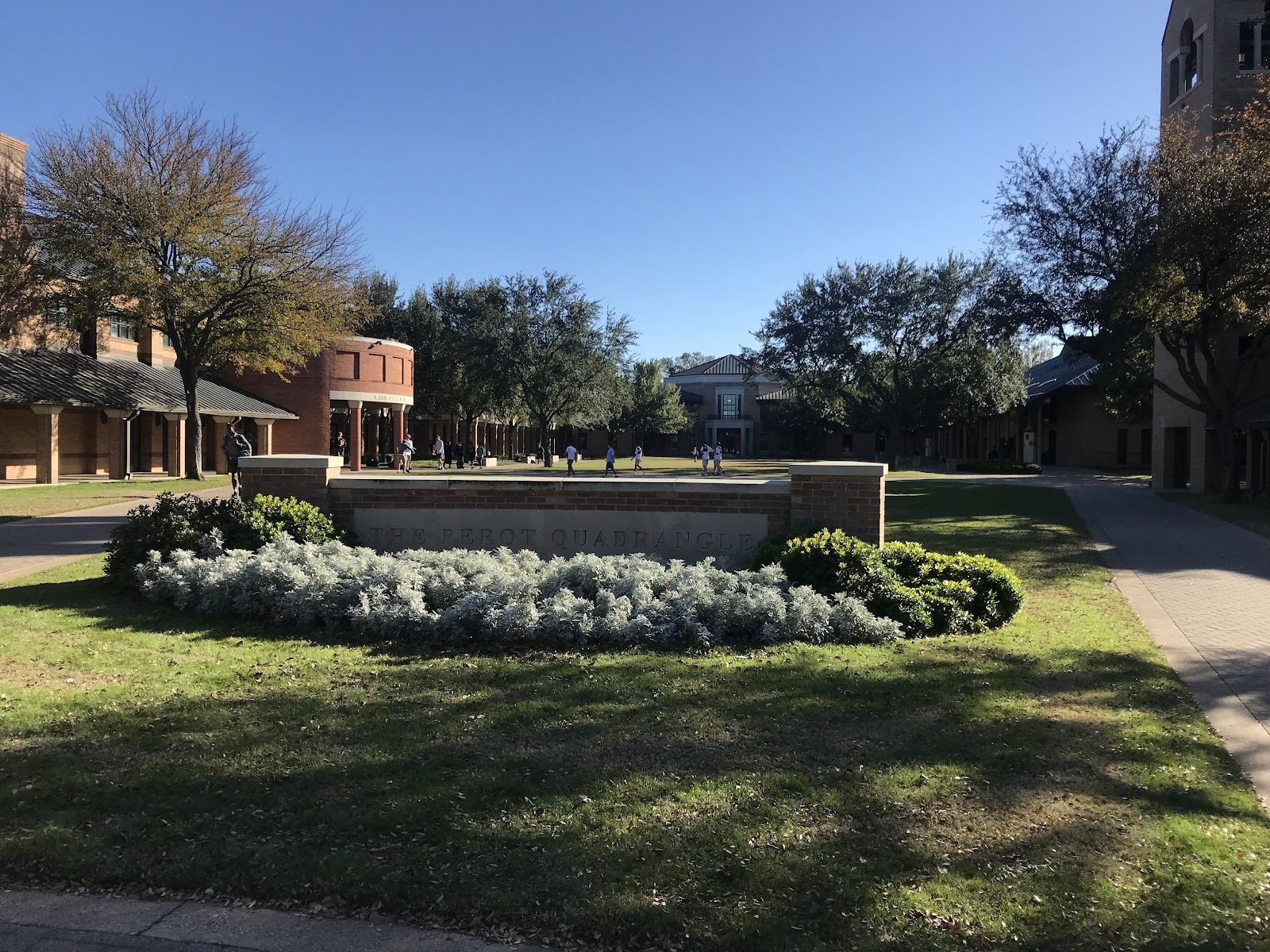
St. Mark's School of Texas
Dallas · United States
An all-boys Dallas day school where ninth graders trade classrooms for a 12-day trek through the Pecos wilderness
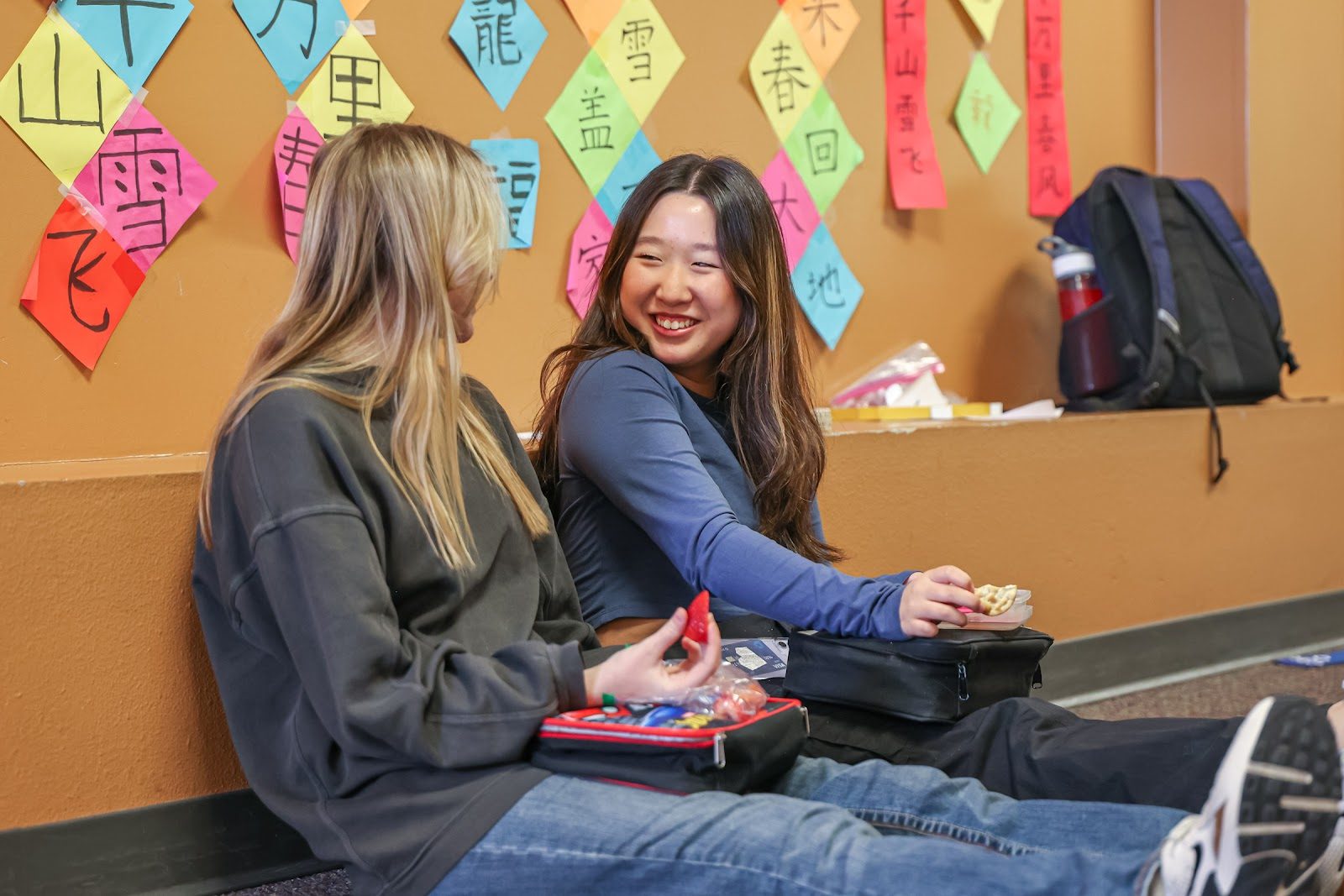
Davidson Academy of Nevada
Reno · United States
America's first tuition-free public school for profoundly gifted students, embedded on a university campus in Reno.
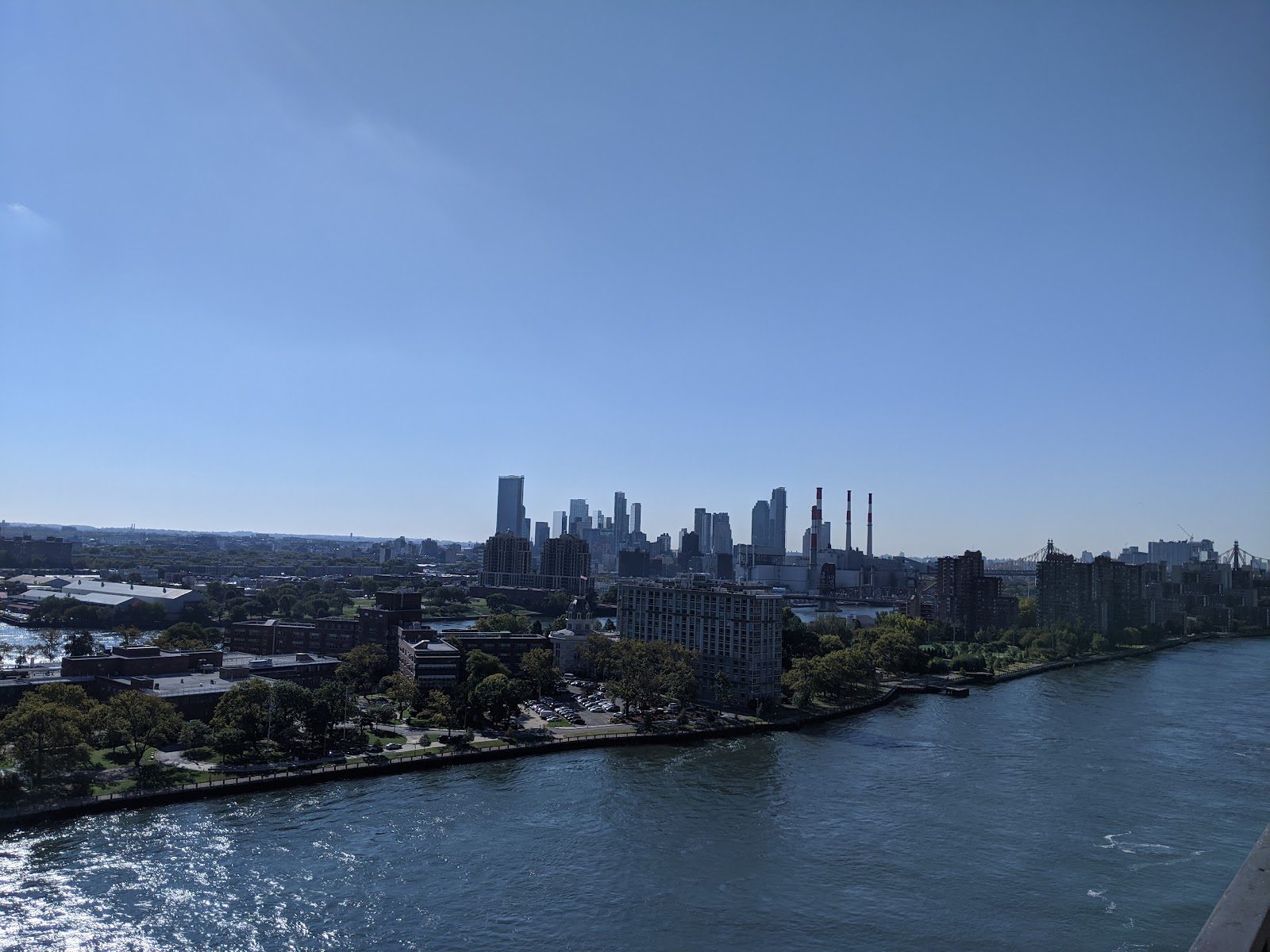
The Brearley School
New York City · United States
Founded in 1884 to match boys' schools in rigor, this Upper East Side day school still leads girls' education in humanities and Ivy placement.

The Nueva School
Hillsborough · United States
Since 1967, a Bay Area laboratory for gifted minds, pairing design thinking with the country's first dedicated social-emotional learning curriculum.
Same country and curriculum — closest matches within ±10 points either way