
Hampshire
Portsmouth Grammar School
low confidence· 2/6 cats · 2.67 avg sourcesIn Old Portsmouth's naval quarter, a school founded in 1732 still lets the Second Sea Lord help choose its governors
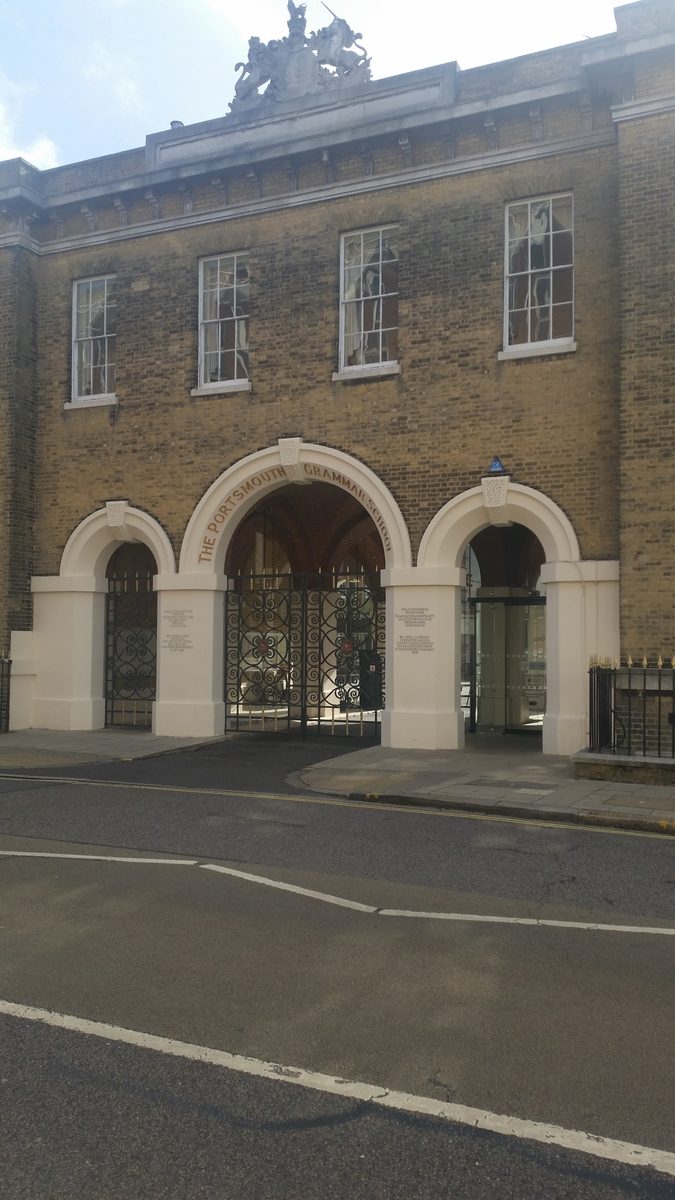
Photo © Paul Lautman via Google Maps
Type
Day
Ages
2–18
Curriculum
British
Qualifications
A-Level · GCSE
Ratio
—
The Verdict
Editor's commitment
Right for
Families wanting a British 2–18 day school in Portsmouth, founded in 1732, with English teaching and HMC membership.
Wrong for
Boarding families, faith-led households, or parents wanting published exam data: this Portsmouth day school is non-religious and discloses none here.
Watch out for
The average annual fee is £21,470 across ages 2–18; old-city location and pedigree do not spare you independent-school pricing.
Ranking breakdown
Portsmouth Grammar School · # of 1591
Composite score 59.0. 8 weighted criteria.
By criterion
Academic Outcomes
Weight 20%
#793
of 1533 scored
University Placement
Weight 16%
#793
of 1529 scored
Prestige & Heritage
Weight 12%
#812
of 1580 scored
Alumni Network
Weight 12%
#1315
of 1530 scored
Facilities
Weight 12%
#923
of 1540 scored
Transparency & Communications
Weight 8%
#841
of 1547 scored
Peer & Industry Review
Weight 10%
#1002
of 1564 scored
Admissions Selectivity & Demand
Weight 8%
#725
of 1529 scored
Peer & Industry Review
How Portsmouth Grammar School is regarded in the sector
65
Respected · medium confidence
Among Hampshire's independent schools, PGS is regarded as a serious but not top-tier player, typically discussed alongside Portsmouth High School (GDST) and Churcher's College rather than Winchester College or the hyper-selective London day schools. Its HMC membership signals recognition within the wider independent sector, but it rarely features prominently in Sunday Times or Telegraph national league tables, which skew heavily toward London and the Home Counties. Good Schools Guide-style commentary on PGS has generally emphasised pastoral care, breadth of extracurricular provision and value-added teaching, while noting more moderate academic selectivity than nationally elite competitors. University admissions staff would likely view PGS as a reliable feeder of solid Russell Group candidates rather than a high-volume Oxbridge pipeline. Independent education press coverage remains modest and regional rather than national, consistent with its standing as a respected but locally-oriented school rather than a nationally prominent brand.
- Alan Whicker — Broadcaster/Journalist, Media
- Simon Case — Cabinet Secretary, UK Civil Service
- Donald Wolfit — Actor, Theatre
Editors' overview
Portsmouth Grammar School occupies a rare niche: a 1732 foundation in the old naval quarter, on Portsmouth High Street, with the continuity and civic weight that newer independents cannot manufacture. This is a co-educational independent day school for ages 2–18, taught in English, with the full British through-line from pre-school to sixth form. The proposition is plain. PGS offers a long-established, academically serious education in the middle of a working city, not on a country estate behind gates. That matters. For families who want urban energy, historic setting and a school woven into its surroundings, PGS has a distinct identity.
What sets it apart is not novelty but combination: deep institutional history, broad age range, and a city-centre day model that keeps pupils connected to ordinary life outside school. The school gives equal prominence to academics, pastoral care, performing arts, sport, outdoor learning and co-curricular activity, which signals a full-service independent education rather than a narrow exam factory. Its ISI and HMC affiliations place it firmly in the established British independent sector. The old governance tradition in the tagline — the Second Sea Lord helping choose governors — adds a note of institutional heft and naval inheritance that few schools can match. This is a school with real civic texture, not a polished abstraction.
Parents should shortlist Portsmouth Grammar School if they want academic ambition without boarding, continuity from early years to sixth form, and a school whose location shapes its character. The day format will suit families who want children at home, not sent away, and who value access to a substantial co-curricular programme inside a structured independent framework. It will appeal to pupils who thrive in busy environments, can handle the rhythm of a city school, and want more than classrooms alone: stage, pitch, clubs and leadership all have a visible place here. Children who need acres of rural campus or a secluded boarding atmosphere should look elsewhere.
The best fit is the student who is bright, engaged and ready to participate. PGS suits families who value tradition but do not want a museum piece; the school’s age is part of the offer, but the practical attraction is a complete day education in a central Portsmouth setting. In market terms, this is a serious local heavyweight: a school for ambitious Portsmouth-area families, naval and professional households, and parents relocating to the south coast who want a known independent name with clear structure and long roots.
Academic Performance
PGS gives academics prominent billing, but the school does not publish headline external examination results on the pages we have seen. There is an “Exam Results” section in the site navigation, yet no aggregate GCSE or A-level figures are quoted in the source extracts here. That matters. In the independent day-school market, serious academic operators publish clean headline data: top grades, pass rates, destination patterns and year-on-year context. Without that, parents cannot place PGS with confidence against fiercely selective competitors or against the stronger HMC day schools on the south coast. The school’s academic intent is clear; its public results disclosure is not.
That leaves PGS in an opaque position relative to peers. It has the structure of a school that wants to be read as academically substantial — senior school, sixth form, university and careers messaging, and a visible emphasis on life beyond the classroom — but market standing in academic performance rests on published outcomes, not institutional tone. Until the school puts robust examination data into the public domain, the honest verdict is incomplete, not flattering. Parents comparing options at this level should ask for the latest GCSE and A-level grade distributions, subject-level strength, and university destinations before treating PGS as a proven top-tier academic choice.
Facilities
The school’s most important facility is not a single building but the whole urban setting: a High Street site in the old quarter, used for a full age range from pre-school to sixth form. That gives PGS something many independent day schools lack: real daily contact with the city, not a self-contained suburban plot. The website also points to a broad operational offer around that core — dedicated sections for performing arts, sport, outdoor learning, catering, transport and facilities hire. That menu matters because it signals a school with more than classrooms and a hall. There is enough infrastructure here to support a full-service day-school life. What we do not have is the detail parents need to judge scale: no published theatre specifications, no sports-centre inventory, no pool details, no estate map, no hard numbers on specialist labs or creative spaces.
Against peer schools, that leaves PGS in a mixed position. The central site brings character and convenience, and for some families that beats the bland sprawl of edge-of-town campuses. The trade-off is obvious. Schools on larger grounds can point to extensive playing fields, purpose-built sports complexes and cleaner separation between age groups. PGS does not publish enough public detail to prove that its facilities match the stronger physical provision in that bracket. So the verdict is clear: the school offers a well-rounded institutional platform for a day pupil, but not a publicly documented estate that outguns rivals. Parents should ask for a proper tour and pin down exactly where sport, performance and outdoor activity happen before treating facilities as a decisive strength.
Portsmouth Grammar School occupies a rare niche: a 1732 foundation in the old naval quarter, on Portsmouth High Street, with the continuity and civic weight that newer independents cannot manufacture
Prestige
PGS carries real local prestige and a measure of national recognition, but this is not the same thing as elite British boarding-school cachet. Its standing rests on age, continuity, location on the High Street, HMC membership, and the residue of old civic and naval connections. That gives the school institutional weight in its own region. Families in Portsmouth and the wider south coast market will read the name as established, serious and socially legible. The unusually old governance link in your tagline sharpens that impression: it signals a school tied into older structures of authority, not a recent entrant trading on branding. For a day school outside the London super-premium circuit, that matters.
The limit to its prestige is public proof. Prestigious schools do not rely on history alone; they publish outcomes that defend their reputation. PGS does not do that clearly in the public domain we have seen, and that weakens the claim. So the rating lands at high-status locally, credible in the independent sector, but short of the nationally dominant bracket occupied by schools whose academic results and university destinations are impossible to ignore. In plain terms: this is a school with social heft and a strong inherited name, not one that commands automatic deference across the whole country. Its prestige is genuine, but it is bounded.
This is a co-educational independent day school for ages 2–18, taught in English, with the full British through-line from pre-school to sixth form
Communications
PGS communicates in the standard independent-school way: a polished public website, a busy top-level navigation, direct calls to visit and apply, a calendar, notices, events, policies, reports and practical parent information such as fees, transport, catering, uniform and term dates. That breadth matters. It tells parents where the school puts its effort: not just front-end recruitment, but routine operational messaging too. The site architecture is clear, serviceable and built for regular use by existing families as well as prospects. Separate sections for wellbeing, pastoral care, additional educational needs, digital learning, university and careers, and the different school phases also help parents find the right lane without wading through generic copy. For a school serving ages 2–18, that organisation is not a luxury; it is basic competence.
The weakness is depth. PGS publishes plenty of routes through the site, but less hard information than the strongest schools provide when parents need to judge quality, not just logistics. Communications are orderly and professionally managed at the practical level, yet guarded where scrutiny matters most. The absence of clearly published headline exam data is not an academic issue alone; it is a communications issue, because it tells parents how candid the school is when evidence counts. So the verdict is mixed but firm: day-to-day parent communication looks competent and accessible, while strategic communication about outcomes lacks proper transparency. Families who value plain dealing should ask direct questions and expect direct answers.
Uniqueness
What makes PGS distinct is the tension it keeps intact: old institutional gravity on one hand, a daily life rooted in an ordinary working port city on the other. Many independent schools trade on separation — long drives, gates, acreage, insulation. PGS does the opposite. Pupils move through a school set in a historic urban quarter, with the harbour city close at hand and no attempt to hide from it. That produces a different kind of education. It is less cloistered, more civically grounded, and harder to mistake for a polished enclave built to flatter parental fantasy. Add the age span from 2–18, and the school offers unusual continuity: children can grow up inside one institutional culture without repeated transitions between unrelated schools.
There is also a specific local inheritance here that few schools can copy. PGS carries real naval residue and old-governance seriousness, not as decorative branding but as part of its civic identity. For students, that brings something concrete: a school culture with institutional memory, clear expectations, and a stronger sense that they belong to a place with obligations as well as privileges. The benefit is not romance. It is steadiness, belonging and perspective. Children who thrive here will value substance over spectacle, and will gain an education that feels embedded rather than manufactured. Families wanting a secluded, country-house version of independent schooling will not get it here; families wanting a school with urban character and durable local roots will.
PGS offers a long-established, academically serious education in the middle of a working city, not on a country estate behind gates
Student Profile
The pupil who fits PGS is bright, organised and ready to join in. This is not a school for children who want anonymity or a narrow classroom-only life. The public face of the school gives equal space to academics, pastoral care, performing arts, sport, clubs, outdoor learning, leadership and pupil agency. That points to a student body expected to carry a full week and to do it without drama. The best match is a child who can move comfortably between lessons, rehearsals, fixtures and commitments beyond the timetable; who accepts structure; and who does not need the school to be soft-edged or low-pressure. At the youngest end, entry starts at 2, and the through-school model suits families who value continuity and want a child to grow inside one culture rather than reset at each stage.
Socially, PGS will suit families who are comfortable with a traditional independent-school code but do not want a hermetically sealed world. The school’s setting and civic inheritance point to pupils who can handle a busier, more public daily rhythm than children on enclosed country campuses. That makes it a strong fit for self-possessed, engaged students who enjoy being part of something established and visible. Less suited are children who need a highly informal atmosphere, large amounts of emotional hand-holding, or a deliberately alternative school culture. PGS reads as a place for pupils who are prepared to meet expectations, not negotiate them.
For families who want urban energy, historic setting and a school woven into its surroundings, PGS has a distinct identity
Co-curricular strengths
Arts & sport, on a separate axis
Overall 8.94/10
Scored 0-10 from the school's own published evidence. This axis is editorial-only — it does not feed the main WTS ranking.
Sports
9/10
Drama
9.2/10
Dance
8.2/10
Music
9.3/10
Visual Arts
9/10
Strengths
- +Founded 1732; unusually long-established Portsmouth school.
- +All-through day school for ages 3–18; one continuous pathway.
- +British curriculum with A Levels in sixth form.
- +World-class provision in sport, music, drama and visual arts.
- +Publishes examination results and leaver destinations via its Key Information area.
Considerations
- −No boarding; unsuitable for families needing residential provision.
- −English-medium teaching may limit non-fluent entrants.
- −Non-religious school offering British pathways only; no IB or faith route.
- −Limited national brand recognition relative to its quality.
Availability
Primary entry gate & tests
Written Exams + Interview
Gallery
Photo © Paul Lautman via Google Maps
Photo © Jack F via Google Maps
Photo © Jack F via Google Maps
Photo © Gordon Pasha via Google Maps
Photo © petr pilar via Google Maps
Parent reviews
Have you sent your child here?
Voice reviews carry the strongest trust badge — we transcribe them for you to tidy up before they go live. Prefer to type? A written review is fine too.
Add your voice
In 60 seconds, tell other parents: what's the best thing about Portsmouth Grammar School, and what surprised you when your child joined?
We ask for a Google sign-in so every review has a real face behind it — no anonymous drive-by attacks on schools, and no faked positive reviews. Your email is never shown publicly.
Send this profile to a friend
International parents rely on word-of-mouth. Share this review with someone weighing the same decision.
Schools with places
Similar schools to Portsmouth Grammar School with places available now.
St Swithun's School
Winchester · United Kingdom
- 2026-27
- CLOSEDStandard route closed
- 2027-28
- PLACES OPENCloses Nov '26
Winchester College
Winchester · United Kingdom
- 2026-27
- CLOSEDStandard route
- 2027-28
- WAITPOOL13+ Std Closed; Registrar Route
Availability first, then country, area, curriculum, price, co-curricular
Consider also
Also worth looking at alongside Portsmouth Grammar School.
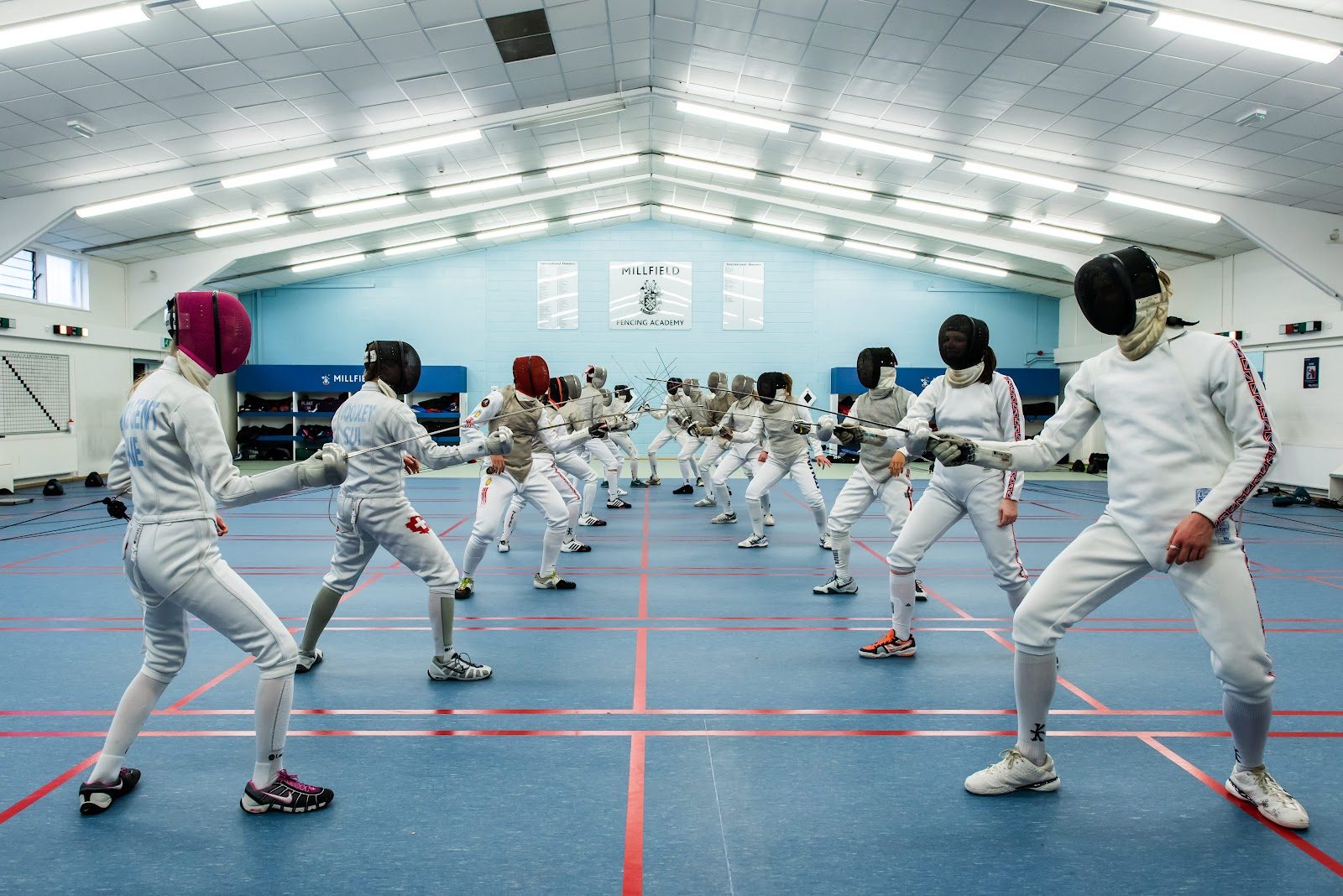
Millfield School
Street · United Kingdom
Sixty-plus sports and an Olympic-length pool anchor a 240-acre Somerset campus built for athletes and scholars alike.
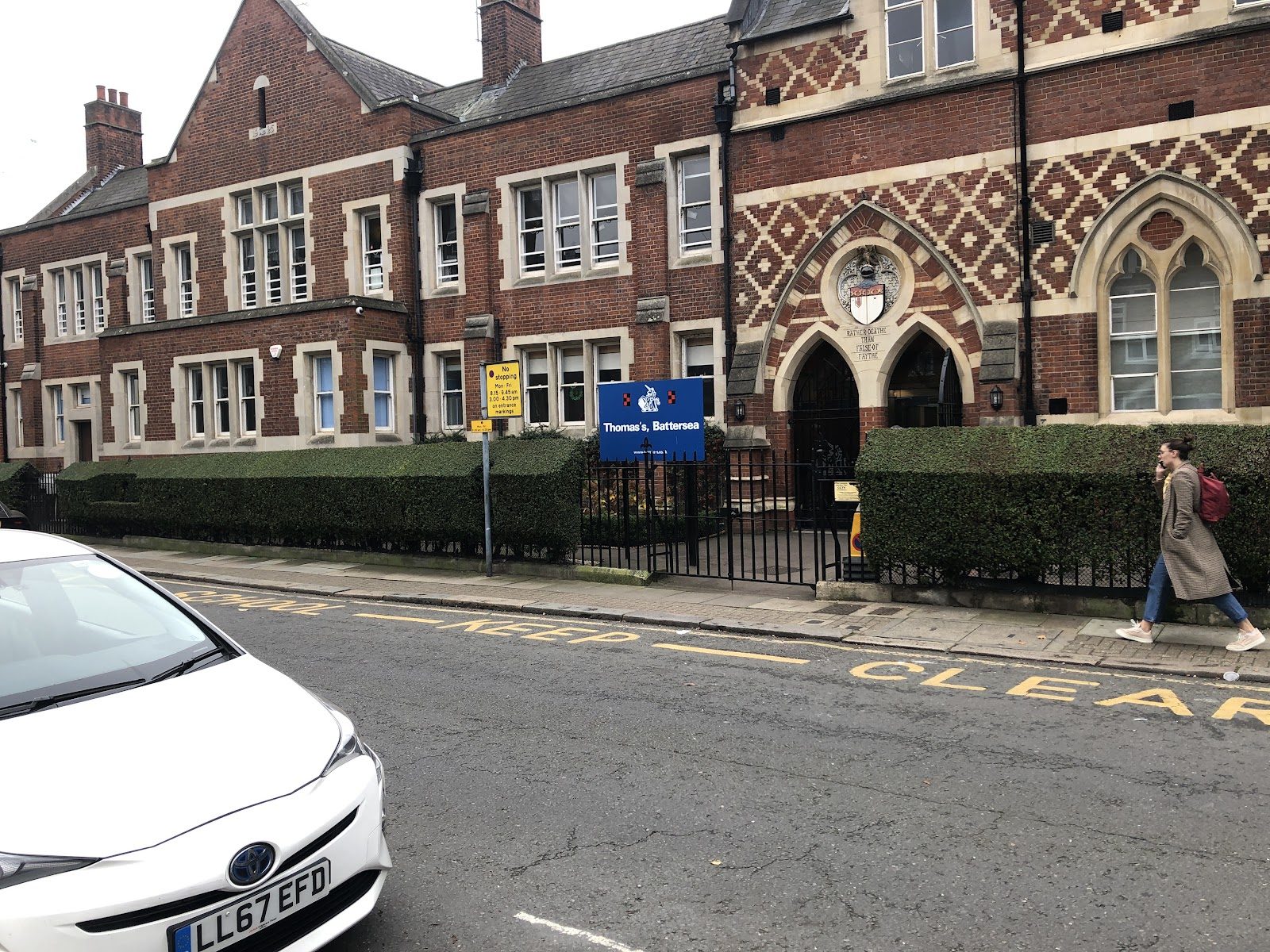
Thomas's Battersea
London · United Kingdom
In a former Victorian art school, an 'enquiry mindset' and a 'Be Kind' ethos feed London's top senior schools.
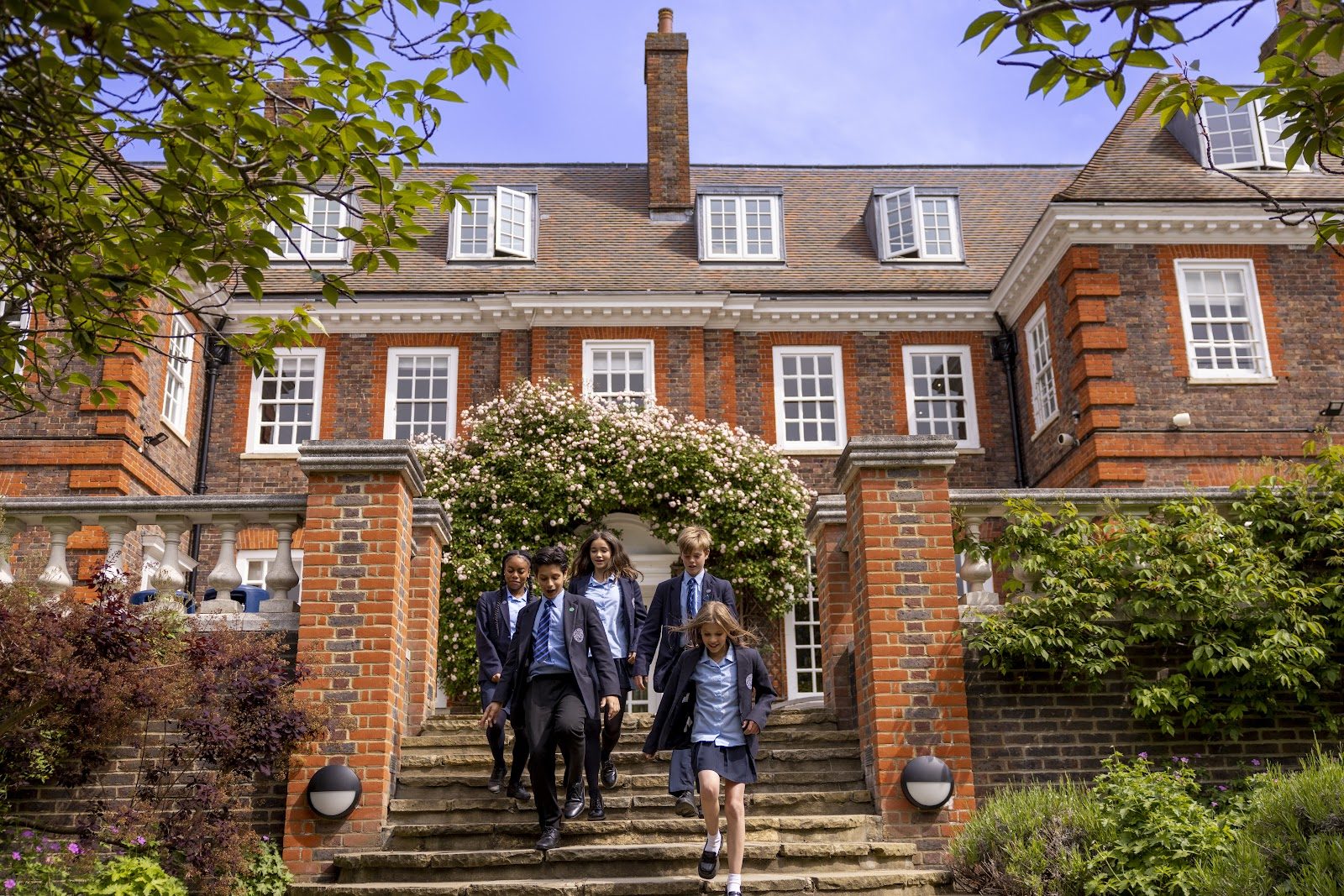
Ibstock Place School
London · United Kingdom
On the fringe of Richmond Park, a Froebel-founded day school has championed co-education since 1894.
Downe House School
Cold Ash · United Kingdom
Rooted in Charles Darwin's former home, now a 110-acre Berkshire estate where science thrives and Oxbridge ambition runs deep.
Same country and curriculum — closest matches within ±10 points either way