
Poland
Państwowe Liceum Sztuk Plastycznych im. Leona Wyczółkowskiego, Bydgoszcz
New · 2026/27Type
Ages
—
Curriculum
—
Ratio
—
The Verdict
Editor's commitment
Right for
Students set on specialist visual-arts training at Państwowe Liceum Sztuk Plastycznych im. Leona Wyczółkowskiego in Bydgoszcz, not a generic academic route.
Wrong for
Families wanting published IB, A-Level or boarding options; this Bydgoszcz school publishes none of them in the verified context.
Watch out for
The verified context gives only the name and Poland location; curriculum, fees, outcomes and accreditations are not published here.
Ranking breakdown
Państwowe Liceum Sztuk Plastycznych im. Leona Wyczółkowskiego, Bydgoszcz · # of 1591
Composite score 56.2. 8 weighted criteria.
By criterion
Academic Outcomes
Weight 20%
No data yet
1529 of 1591 scored
University Placement
Weight 16%
No data yet
1529 of 1591 scored
Prestige & Heritage
Weight 12%
#1
of 1571 scored
Alumni Network
Weight 12%
No data yet
1530 of 1591 scored
Facilities
Weight 12%
No data yet
1534 of 1591 scored
Transparency & Communications
Weight 8%
No data yet
1532 of 1591 scored
Peer & Industry Review
Weight 10%
No data yet
1548 of 1591 scored
Admissions Selectivity & Demand
Weight 8%
No data yet
1529 of 1591 scored
Peer & Industry Review
How Państwowe Liceum Sztuk Plastycznych im. Leona Wyczółkowskiego, Bydgoszcz is regarded in the sector
Insufficient peer signal
We couldn't find enough independent third-party evidence to score this school's peer & industry standing with confidence. It doesn't mean the school isn't well regarded — only that public reputation sources we trust don't yet cover it. This axis is left blank for now and the composite score is median-imputed from the other six categories.
Award
Elite Visual & Fine Arts 76
World's Top School · The Global Ranking
Państwowe Liceum Sztuk Plastycznych im. Leona Wyczółkowskiego, Bydgoszcz is featured on our Global Top 76 ranking at #66. This seal is available for the school's marketing team to use on their website, prospectus and social channels.
Editors' overview
Państwowe Liceum Sztuk Plastycznych im. Leona Wyczółkowskiego in Bydgoszcz sits in a narrow but important segment of the Polish school market: the state art secondary school for students whose education needs to revolve around making, designing and studio practice, not treating art as an extracurricular add-on. Its distinction is structural. This is not a general academic school with a strong arts department; it is an art school by identity and purpose. For families with a teenager who already works with intensity, wants long hours in workshops, and needs peers with the same commitment, that matters. The appeal is serious artistic formation, daily creative discipline and a school culture that gives visual arts first claim on time and attention.
What puts it on a shortlist is that specialisation. In a market crowded with schools promising “all-round” development, this school serves a different child: the student who does not want breadth marketed at the expense of depth. Parents looking for a conventional university-prep atmosphere with equal weight across sciences, languages and sport should look elsewhere. Parents looking for focused training, craft-based learning and an adolescent environment where artistic ambition is normal, not eccentric, should pay attention. As a state institution in Poland, it also occupies a more accessible position than many private specialist schools, though the school does not publish the key headline figures international parents often want, such as class sizes, student-teacher ratios or destination data. That opacity weakens its case for overseas families and forces parents to ask harder questions before applying.
The right student for this school is clear. This is for a teenager with a portfolio instinct, patience for repetition, tolerance for critique and a strong preference for drawing, design or applied visual work over a standard academic routine. It suits the child who wants the pressure of standards, the satisfaction of making and a peer group with the same obsession. It does not suit the uncertain dabbler who likes art but wants to keep every option open, or the student who needs a broad co-curricular spectacle to stay engaged. On a shortlist, then, this school earns its place not through breadth or polished international packaging, but through purpose: a specialist state art education in Bydgoszcz for students who already know that art is not a hobby but the centre of their school life.
An Elite Visual & Fine Arts 76 school
Panstwowe Liceum Sztuk Plastycznych im. Leona Wyczolkowskiego in Bydgoszcz, Poland sits at rank sixty-six on the Elite Visual & Fine Arts 76 on the strength of an unbroken eighty-year lineage as one of Poland's founding state art schools: it began life in 1945 as the Wolne Studium Artystyczne under founder Marian Turwid and was formalised into a state liceum plastyczne in the early 1960s, a history the school itself marked with an 80th-anniversary jubilee in 2025 attended by Bydgoszcz's mayor. That continuity, run directly by the Ministry of Culture and National Heritage rather than a municipal board, is the anchor fact behind its ranking.
The specialism is delivered through a five-year Liceum Sztuk Plastycznych cycle that ends in both the matura and a vocational plastyk diploma, with extended coursework in history of art alongside a choice of English or mathematics. Pupils choose specialist tracks in graphic design (projektowanie graficzne), multimedia publications, and artistic design (wzornictwo artystyczne), taught in workshop studios the school and outside profiles describe as unique on a national scale. Admission runs outside Poland's standard electronic school-matching system and instead requires a dedicated oral and practical entrance examination assessing artistic sensitivity and aptitude, a portfolio-and-exam culture closer to a foundation course than a generalist secondary school.
Notable alumni include Stanislaw Lejkowski, honoured in Bydgoszcz's Avenue of Autographs as the designer behind interiors ranging from the city's Savoy building to its Millennium monument, alongside professor Marian Stepak, now a painting professor at Nicolaus Copernicus University in Torun, and Jan Kaja, Jacek Solinski and Marek Iwinski, the current city plastic artist (plastyk miasta) of Bydgoszcz. The matriculation record verified here runs into Polish state academies of fine arts rather than a documented pipeline into RCA, Slade or Central Saint Martins-level institutions, and that domestic-first trajectory should be understood plainly rather than oversold.
International openness is limited and should be approached with clear eyes. Instruction is in Polish throughout, with no dedicated ESL track identified, and the entrance exam itself is conducted in Polish. Boarding is genuinely available: an on-site internat at Chwytowo 16-18 houses up to 109 pupils in two- and three-person rooms with a canteen, gym and study rooms. As a public school under the Ministry of Culture, Polish and EU nationals are not charged tuition; non-EU families should confirm residence, visa and fee status directly with the school, since no published international-applicant fee schedule exists. For a family committed to full Polish-language immersion and a genuine state art-school workshop culture rather than an anglophone pathway, this is a credible destination - but admissions timing and language readiness should be confirmed with the school at least a full academic year ahead of entry.
Academic Performance
Academic performance is hard to judge because the school does not publish the external exam data parents need. We have not seen aggregate matura results, subject-by-subject score distributions, value-added measures, university destination lists or any ranked comparison against other Polish secondary schools. That leaves a serious gap in the public case for the school. For a specialist art lycée, the crucial question is not only whether students pass general examinations, but whether they do so while sustaining demanding studio work. On that point, the public record is thin and frustratingly opaque.
That opacity also makes peer comparison difficult. Against mainstream academic licea, this school does not sell itself on league-table dominance; its claim rests on specialist formation. Against other Polish art schools, parents still need hard evidence: exam pass rates, results in art-diploma components, progression into academies of fine arts, architecture, design and related fields, and distinctions in external competitions. Without that, the school sits in the category of purpose-built specialist institutions whose value is easy to grasp but whose measurable outcomes are not. For local families already committed to an art pathway, that may suffice. For international parents making a high-stakes move, it does not. The school needs to publish exam outcomes, destination figures and comparative benchmarks if it wants to make a credible academic case beyond reputation and specialism.
Facilities
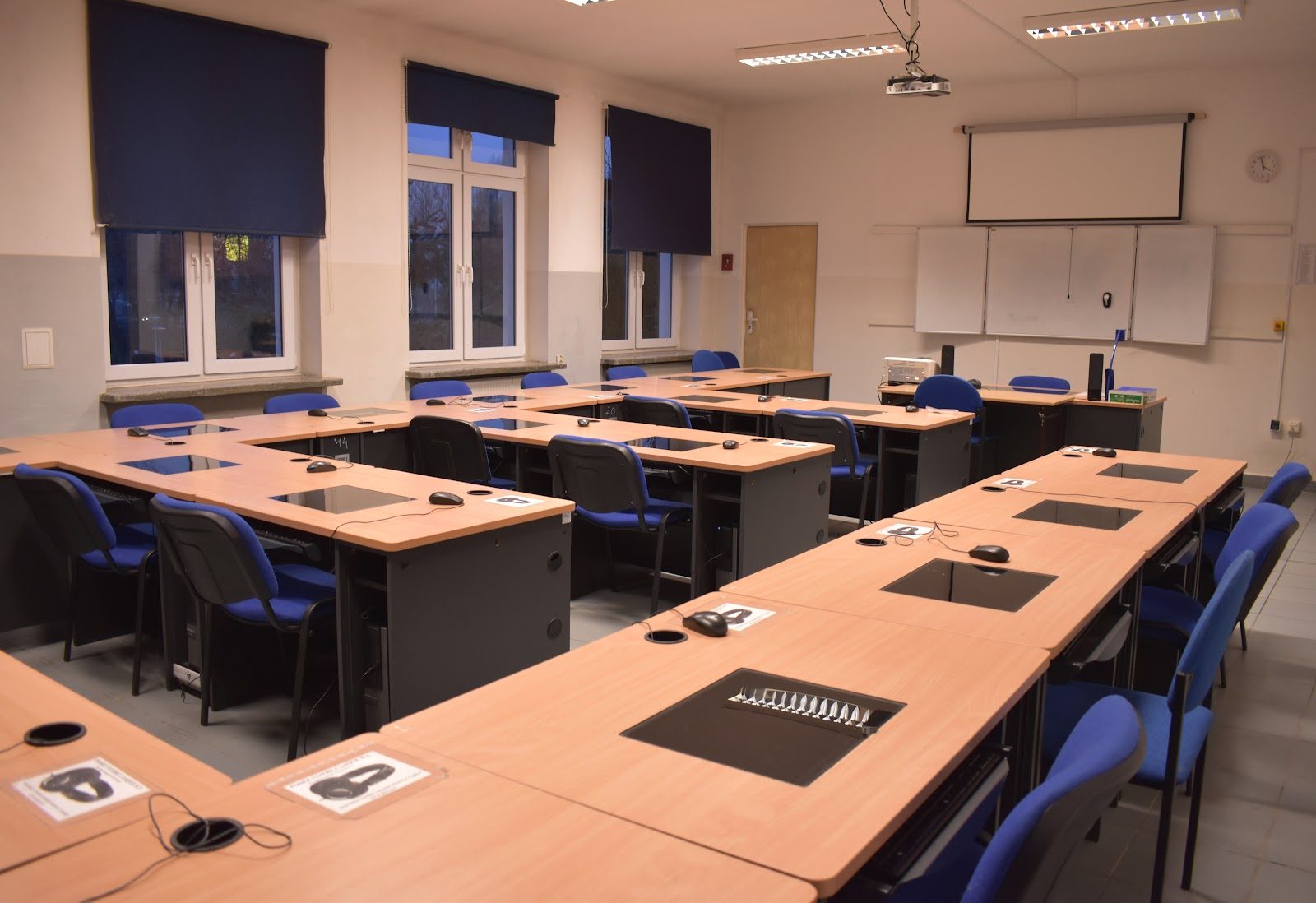
Public detail on the physical plant is thin, which matters in a specialist art school because facilities are not decorative; they are the working core of the education. We have not seen a clear, consolidated inventory of studios, workshops, specialist rooms or technical equipment, and that weakens scrutiny. For parents, the essential question is simple: does the school give students enough space, tools and supervised access to make serious work every day? At specialist fine arts lycées, the benchmark is clear: dedicated drawing and painting studios, sculpture or form workshops, design spaces, exhibition areas and disciplined technical support. Without a published breakdown, this school’s facilities case stays opaque, hard to verify and more dependent on an in-person visit than it should be.
That does not put the school behind by default, but it does stop it claiming advantage. Peer institutions in this segment do not need glossy campuses; they need usable specialist rooms, durable equipment and a timetable that protects long studio blocks. The strongest schools also show student work well, maintain workshops that feel busy rather than ceremonial, and keep materials processes central rather than improvised. If this school meets that standard, it sits where it needs to. If facilities are cramped, outdated or shared too thinly, the specialist promise weakens fast. Parents should ask to see every practical space in operation, not empty corridors and display boards. In a school like this, the studios are the school.
That does not put the school behind by default, but it does stop it claiming advantage
Prestige
The school’s prestige is specialist rather than broad. In Poland, a state fine arts lycée carries weight inside the art-and-design track because entry, training and peer culture all revolve around sustained practical work, not casual enrichment. That matters for students aiming at academies of fine arts, design courses or architecture-adjacent pathways. Outside that lane, the name does not command the instant recognition of an elite general academic lycée, and parents should not confuse artistic seriousness with social cachet. This is earned prestige, tied to discipline, portfolio development and workshop credibility, not the status theatre that surrounds expensive private schools.
That distinction drives the rating. For the right student, the school offers a high-value specialist identity: a place where artistic commitment is normal and where visual practice sits at the centre of school life. That gives it real standing among families who know the Polish arts-education landscape. The limits are just as clear. The school does not publish the public proof that would turn specialist respect into wider authority: no destination record, no consolidated exam data, no visible benchmark against peer institutions. Prestige without transparent outcomes stays narrow and profession-facing. In editorial terms, this is a school with serious niche credibility and weak broader prestige.
This is not a general academic school with a strong arts department; it is an art school by identity and purpose
Communications
Parent communication looks functional rather than strategic. The school has the standard channels a public specialist school needs, but not the polished, high-frequency communications operation international families now expect. That matters because this type of education depends on constant practical organisation: timetable changes, materials requirements, exhibition dates, assessments, portfolio milestones and day-to-day studio logistics all need clear, disciplined communication. We have not seen evidence of a rich parent-information culture built around published handbooks, transparent academic reporting, detailed calendar planning or bilingual guidance for families arriving from outside Poland. The result is a communications profile that feels domestic in focus, serviceable for local families and thin for outsiders.
Effectiveness, then, depends heavily on who the parents are. Families already fluent in the Polish state-school system will manage the rhythms and decode what matters. International parents, or any family expecting a school to anticipate questions before they are asked, face a more cumbersome experience. The school does not publish enough operational detail to inspire confidence at a distance, and that weakens trust before a visit has even happened. In a specialist setting, communication is not a soft extra; it is part of the educational machinery. Here, that machinery does the basics, but it does not project openness, precision or institutional sharpness. Parents need direct answers on reporting, response times, key contacts and how practical-course information reaches home.
Uniqueness
What makes this school distinct is not a branded “creative ethos” but a hard structural fact: it is built for adolescents who need art to dominate the week. In most schools, visual art sits at the edge of the timetable and competes with everything else. Here, it takes the centre. That changes the student experience in practical ways. Work can deepen beyond quick assignments into sustained making, revision, correction and portfolio-building. Peer standards also change. A teenager with serious commitment to drawing, design or studio practice does not have to explain that commitment or carry it alone; the surrounding culture normalises obsession, technical discipline and the long, repetitive labour that strong work requires. For the right student, that is liberating.
The second point of difference is the school’s place inside the public system. Specialist arts training often comes wrapped in private-school pricing or diluted inside generalist schooling. This school offers a different route: a state institution with a narrowly defined artistic purpose. That gives students access to serious vocational identity early, without the soft-focus language many schools use to market “creativity”. The gain is clarity. Students test, while still young, whether they can live with critique, deadlines, exacting craft and the monotony that sits behind good visual work. That is not for dabblers. It is valuable precisely because it is demanding, selective in temperament, and honest about what an art-centred education asks of a teenager.
For families with a teenager who already works with intensity, wants long hours in workshops, and needs peers with the same commitment, that matters
Student Profile
The students who fit here are the ones already living like young artists before the school formalises it: sketchbooks full, tolerance for correction, patience for repetition, and no need for constant reassurance. This is a good environment for teenagers who work best through making rather than through classroom discussion alone, and who can handle the bluntness that serious practical training brings. They need stamina, self-organisation and a high boredom threshold for technical drills. They also need a strong enough academic base to keep the general school side of life from collapsing under the weight of studio demands. The wrong student is easy to identify: anyone treating art as a preference rather than a commitment, anyone still undecided between multiple school identities, or anyone needing a broad social spectacle to stay motivated. This is not a safety-first environment for the half-committed.
Socially, the best fit is a teenager comfortable in a peer group organised around output, critique and comparison. Students who flourish here tend to accept that other people’s work will be better on some days, and that improvement depends on discipline rather than self-expression alone. There is also a temperamental point parents should not miss: specialist schools attract intensity. That can be energising for focused students and wearing for those who need more balance built into the day. Families should ask hard questions about workload, assessment pressure and how the school handles students whose technical promise is strong but whose resilience is still fragile.
The appeal is serious artistic formation, daily creative discipline and a school culture that gives visual arts first claim on time and attention
Co-curricular strengths
Arts & sport, on a separate axis
Overall 5.7/10
Scored 0-10 from the school's own published evidence. This axis is editorial-only — it does not feed the main WTS ranking.
Sports
4.5/10
Drama
5/10
Dance
4.5/10
Music
5/10
Visual Arts
9.5/10
Parent reviews
Have you sent your child here?
Voice reviews carry the strongest trust badge — we transcribe them for you to tidy up before they go live. Prefer to type? A written review is fine too.
Add your voice
In 60 seconds, tell other parents: what's the best thing about Państwowe Liceum Sztuk Plastycznych im. Leona Wyczółkowskiego, Bydgoszcz, and what surprised you when your child joined?
We ask for a Google sign-in so every review has a real face behind it — no anonymous drive-by attacks on schools, and no faked positive reviews. Your email is never shown publicly.
Send this profile to a friend
International parents rely on word-of-mouth. Share this review with someone weighing the same decision.
Schools with places
Similar schools to Państwowe Liceum Sztuk Plastycznych im. Leona Wyczółkowskiego, Bydgoszcz with places available now.
Availability first, then country, area, curriculum, price, co-curricular
Consider also
Also worth looking at alongside Państwowe Liceum Sztuk Plastycznych im. Leona Wyczółkowskiego, Bydgoszcz.
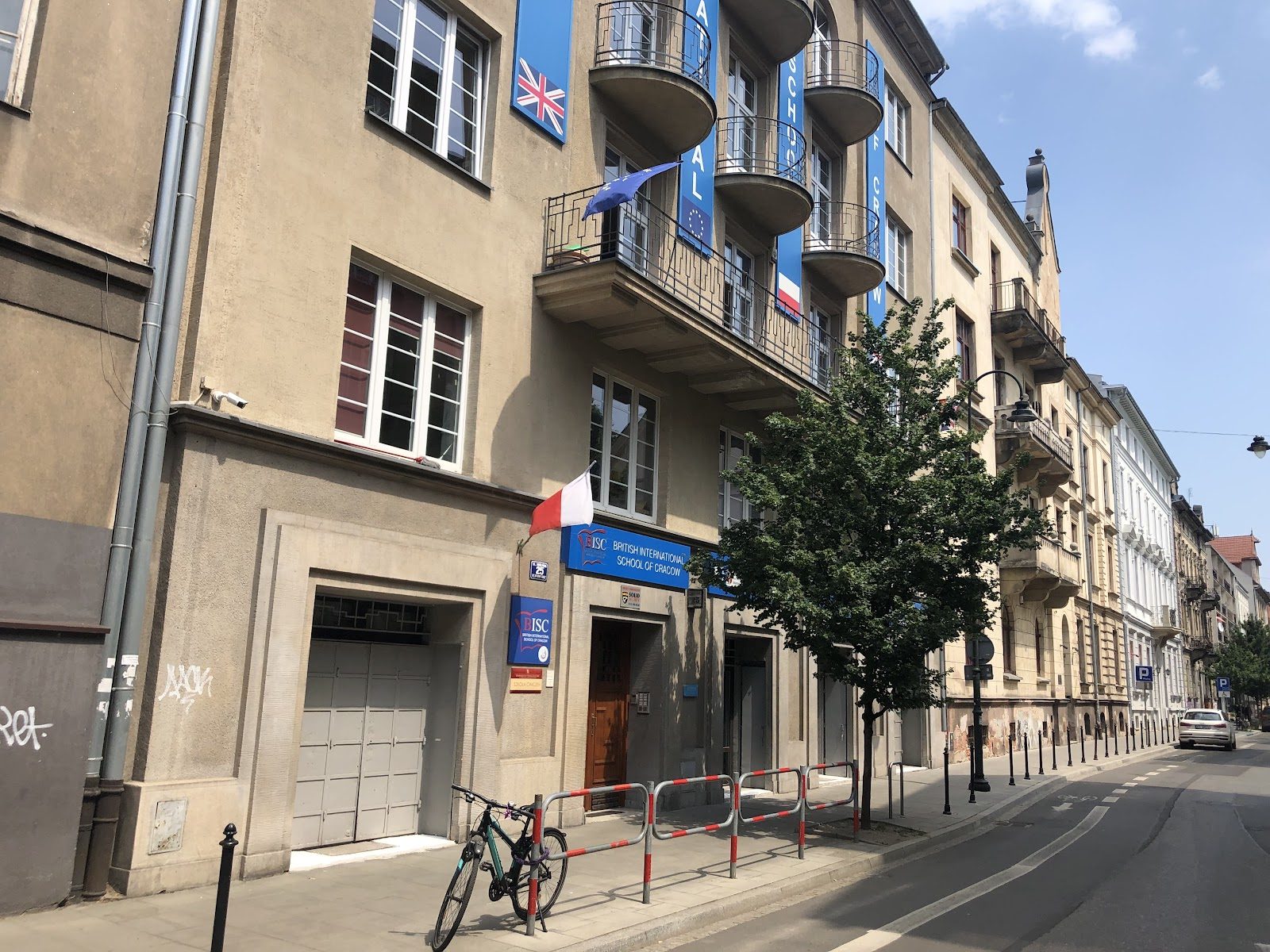
British International School of Cracow
Kraków · Poland
In Krakow's Old Town, three decades of British schooling meet the IB Diploma, small classes, and Tatra ski-week traditions.
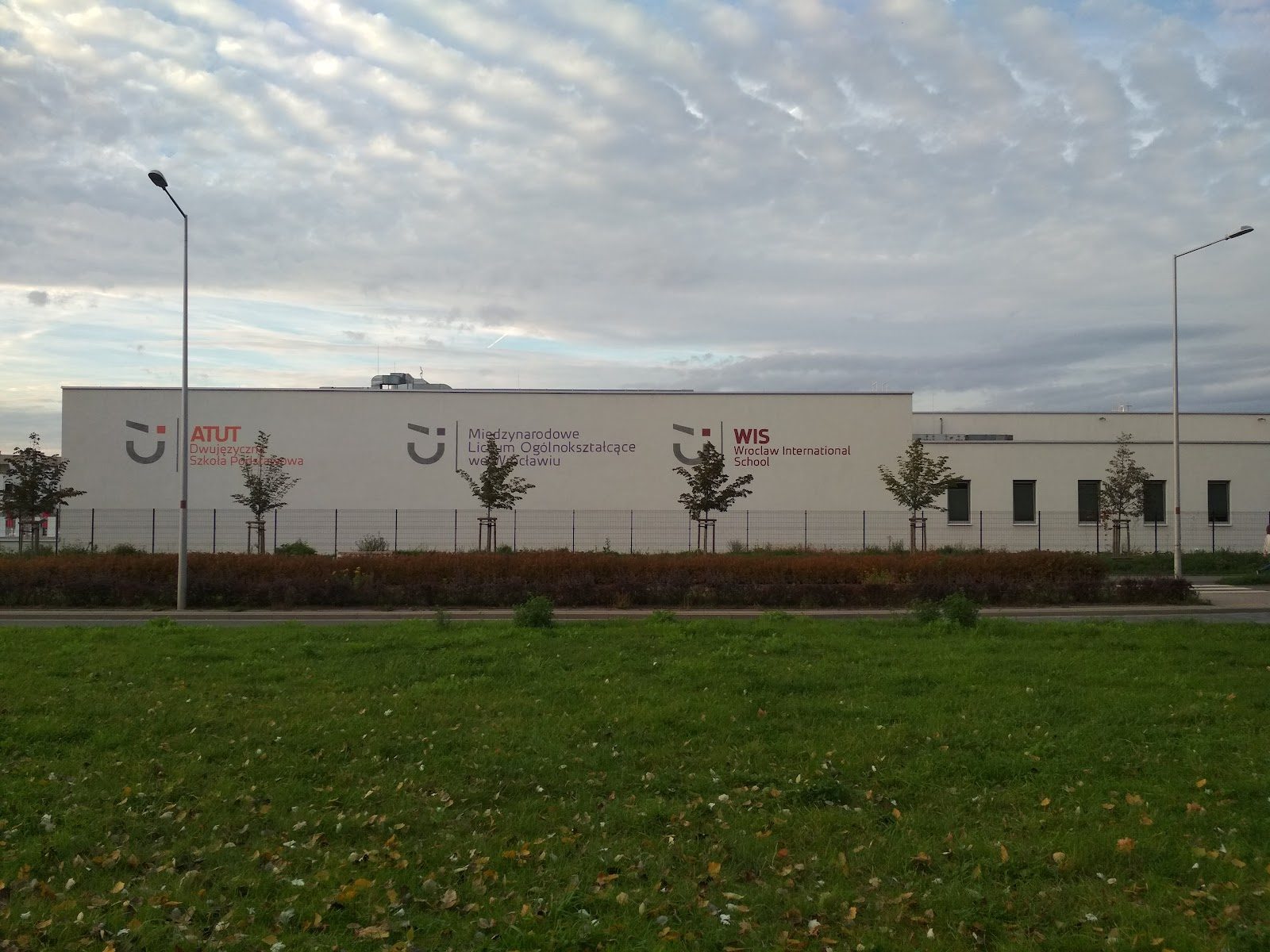
Wrocław International School
Wrocław · Poland
Lower Silesia's inquiry-led IB pioneer, the first in Poland authorised for both the Primary and Middle Years Programmes.
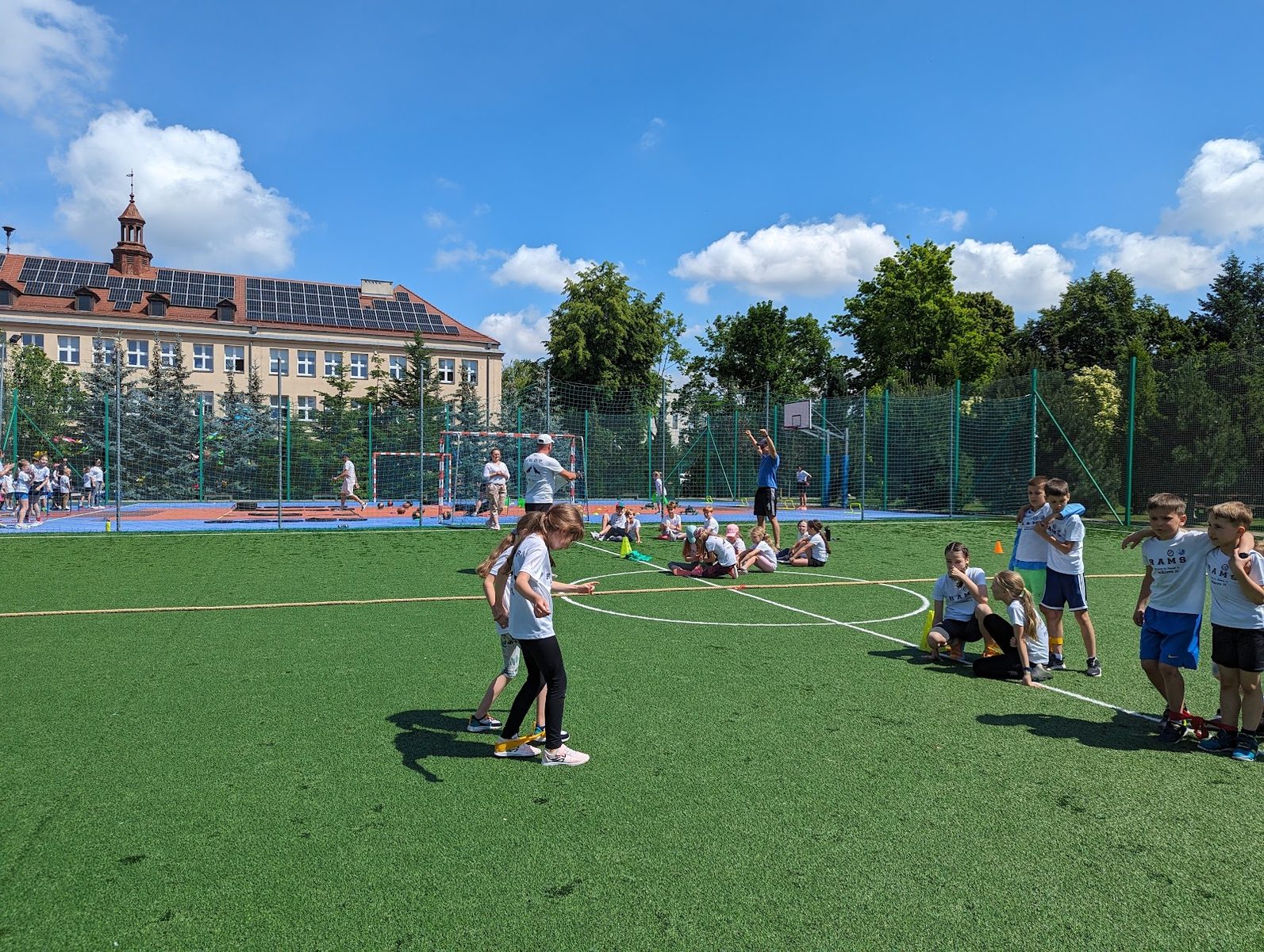
International School of Poznań
Poznań · Poland
Poznan's original IB Diploma authorization, now closing in on a full PYP-MYP-DP continuum via its own induction year for newcomers.
Lycée Français de Varsovie
Warsaw · Poland
Founded in 1919 as a diplomatic bridge between Paris and a newly independent Poland, its Baccalaureate classrooms still run on trilingual rigor.
Same country and curriculum — closest matches within ±10 points either way