
Nottinghamshire
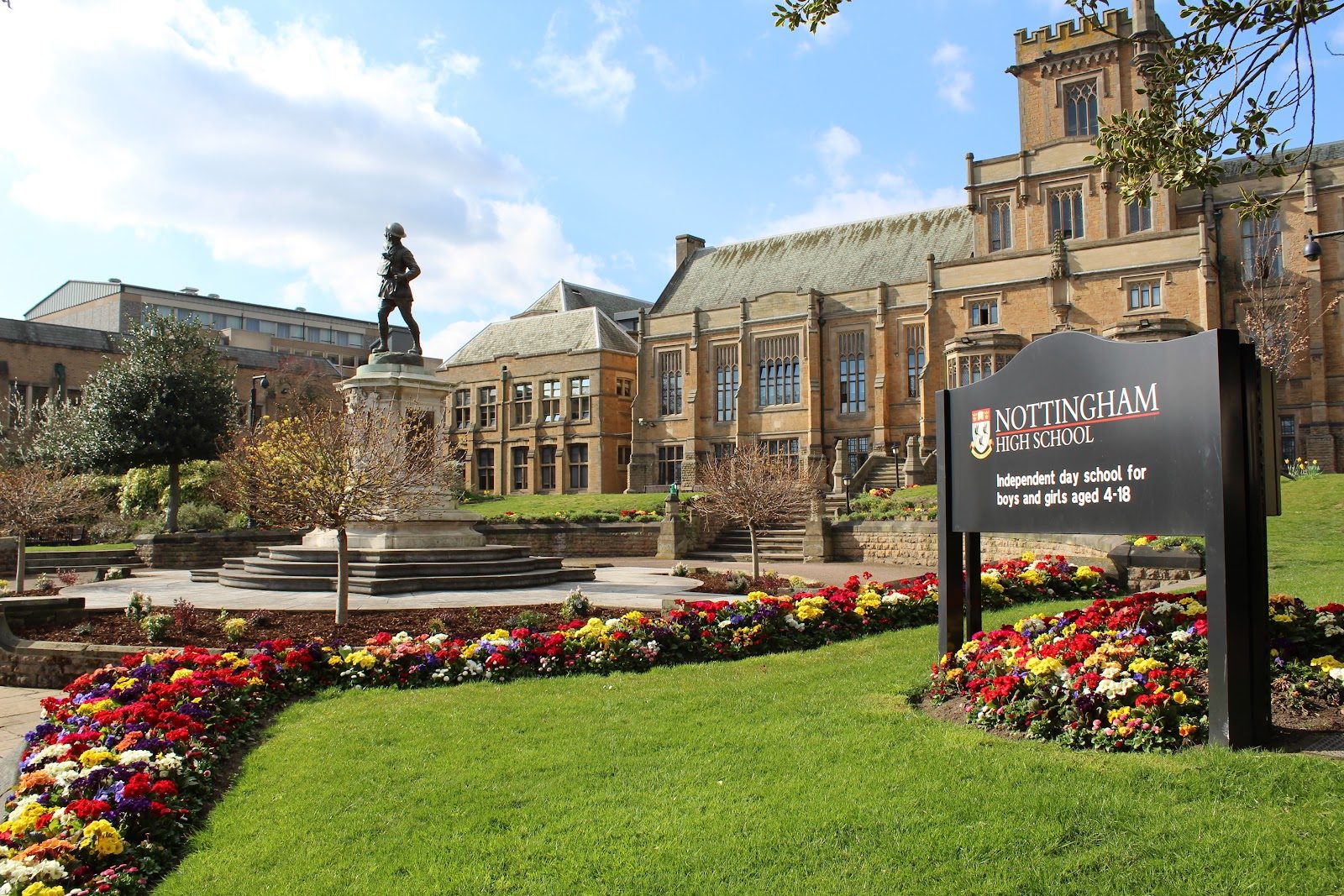
Nottingham High School
low confidence· 2/6 cats · 3 avg sourcesA 1513 royal charter still anchors this Nottingham day school, whose GCSE and A-level results now rank among England's top 2 percent.
Type
Day
Ages
3–18
Curriculum
British
Qualifications
A-Level · GCSE
Ratio
—
The Verdict
Editor's commitment
Right for
Families wanting a 3–18 English-medium day school with HMC membership and results that now sit in England’s top 2 percent.
Wrong for
Parents wanting boarding, a religious ethos, or a non-British pathway; Nottingham High is non-religious, day-only, and school-declared British.
Watch out for
The 1513 pedigree is real, but the harder fact is performance: 87% of 2026 GCSE grades reached 7+, with 65% A-level A*/A.
Ranking breakdown
Nottingham High School · # of 1591
Composite score 62.2. 8 weighted criteria.
By criterion
Academic Outcomes
Weight 20%
#513
of 1533 scored
University Placement
Weight 16%
#584
of 1529 scored
Prestige & Heritage
Weight 12%
#529
of 1580 scored
Alumni Network
Weight 12%
#1310
of 1530 scored
Facilities
Weight 12%
#717
of 1540 scored
Transparency & Communications
Weight 8%
#595
of 1547 scored
Peer & Industry Review
Weight 10%
#636
of 1564 scored
Admissions Selectivity & Demand
Weight 8%
#547
of 1529 scored
Peer & Industry Review
How Nottingham High School is regarded in the sector
68
Respected · medium confidence
Among East Midlands independent schools, Nottingham High is generally regarded as a strong second-tier player, spoken of alongside Nottingham Girls' High School (GDST) and Trent College rather than in the same breath as national boarding powerhouses. It is a long-standing HMC member with a regular presence at HMC regional gatherings, lending it institutional credibility among peer heads. Good Schools Guide coverage has praised its academic rigour and pastoral care while noting its co-educational transition, dating to 2015, is still maturing in areas such as girls' sport provision. Rankings such as Sunday Times Parent Power typically place it mid-table nationally but near the top regionally for East Midlands day schools. University admissions tutors regard it as a reliable, if not headline, feeder for Russell Group courses, including medicine and engineering, with a modest but consistent Oxbridge intake each year. National press attention beyond local Nottingham Post coverage remains limited.
- Jesse Boot — Founder, Boots plc - Business
- D.H. Lawrence — Novelist, Literature
- Peter Mansfield — Nobel Laureate, Physics
Editors' overview
Nottingham High School trades on something many schools claim and few can prove: institutional depth. The 1513 foundation is not decorative; it gives the place a seriousness that still shapes the offer. This is a non-religious, English-medium day school for ages 3–18, with nursery through sixth form on one continuum and HMC membership reinforcing its position in the independent-school mainstream. The academic case is hard to ignore. The school publishes 87% of GCSE results at grade 7 or above in 2026, 58% of pupils with nothing below grade 7, and A-level results with 65% at A*/A. Those are elite numbers by any sensible measure. For parents who want a school with academic steel, deep roots and a full age-range structure, Nottingham High belongs on the shortlist.
What distinguishes it from other academically strong day schools is breadth without drift. The school pushes “So Much More” hard; the useful part behind the slogan is concrete: 120+ clubs, visible investment in sport and performing arts, and a Student Wellbeing Centre that the school has chosen to foreground publicly. That matters. High attainment at this level can produce a narrow, exam-drilled culture; Nottingham High works to avoid that trap. It also has a modern coeducational identity layered onto a long history as a boys’ grammar school, which gives it an interesting mix of old-school discipline and current social confidence. The recent creation of the Nottingham High School Education Group adds another signal of institutional ambition, though parents should treat that as strategic context, not a reason in itself to choose the school.
The right student for Nottingham High is bright, industrious and comfortable in a culture where strong results are normal, not exceptional. This suits children who enjoy intellectual competition, will use the clubs and arts offer rather than hide from it, and want a busy school with serious expectations and visible opportunity beyond the classroom. It also suits families who want one school journey from early years to sixth form, in a day-school format, without a religious frame. It is less attractive for children who need a softer-paced environment, a more progressive academic culture, or a school that defines success in looser terms. Nottingham High is for families who value proven academic output, civic heft and a school culture that still expects pupils to get on with the job.
Academic Performance
Nottingham High’s external results place it in the serious end of the English independent day-school market. The school’s published A-level profile is strong across the distribution, not just at the very top: 88% of grades at A*/A/B, a clean 100% pass rate, and a substantial cohort of students securing top-grade combinations. That matters more than a few headline stars. It points to a school that gets a large share of its sixth form to high university-entry territory, not a school living off a handful of exceptional candidates. The GCSE picture tells the same story. When more than half of a year group records nothing below the upper grades, the standard is relentlessly high across subjects.
Relative to peers, this is elite but not opaque. Some academically ambitious independents publish selective fragments designed to flatter; Nottingham High gives enough detail to show real depth in the middle and upper bands. The result is a performance profile that sits comfortably among England’s stronger private day schools and inside the top-tier conversation for regional academic outcomes. Parents should read those numbers alongside the school’s all-through structure and busy co-curricular life: these are not the results of a thin, exam-factory operation. They are the results of a school with high expectations, a sizeable sixth form, and a culture in which strong public exam outcomes are treated as the baseline rather than the exception.
Facilities
The school pushes breadth hard, and the facilities profile backs that up in the areas parents notice first: sport, performance and pupil support. The public emphasis on outstanding facilities is not empty rhetoric when set against the visible range of school life — a theatre culture strong enough to stage full productions, sports provision robust enough to support whole-school events, and a dedicated Student Wellbeing Centre given unusual prominence in the school’s public identity. Add 120+ clubs and the picture is of a campus built for a busy, high-output day school rather than a narrow academic hothouse. The nursery-to-sixth-form structure also matters operationally: families get specialist spaces across age phases instead of one generic site trying to serve everyone badly.
Against peer independent day schools, this is a strong all-round facilities offer rather than a trophy-campus one. We have not seen the kind of published detail that would let parents judge lab stock, design technology workshops, music practice-room provision or indoor sports capacity against the best-resourced rivals. That gap matters, because top schools now publish those specifics. Still, the school’s visible investment lands in the right places. The wellbeing centre is a serious marker of priorities, and the arts and sports footprint looks substantial enough to support pupils who want more than lessons and exam preparation. Parents hunting for flashy architectural theatre will find stronger showpieces elsewhere; parents wanting facilities that serve a demanding day-school routine will find this credible and well judged.
Nottingham High School trades on something many schools claim and few can prove: institutional depth
Prestige
Nottingham High carries real regional clout and a level of academic prestige that extends well beyond its immediate catchment. In the independent day-school market, prestige rests on three things: durable institutional reputation, entry into recognised professional circles, and results that hold up under scrutiny. This school has all three. HMC membership matters; it places Nottingham High inside a national peer group that parents and universities recognise. Its long grammar-school inheritance still gives the place cultural weight in the city, and the move to coeducation has modernised the proposition without stripping out the seriousness that built its name. The school’s own published outcomes — from 88% of A-level grades at A*/A/B to 120+ clubs — support a profile that is not merely scholarly, but high-status and full-spectrum.
I rate its prestige highly because it combines old-established authority with current performance, rather than relying on nostalgia. That said, this is not the same prestige category as the most famous London public schools or the tiny handful of globally branded British names. Its reputation is strong, not mythic. For many families, that is an advantage: the school offers substance over social theatre. The recent creation of an education group adds institutional confidence and signals leadership ambition, but prestige here still rests on the core product — demanding academics, visible co-curricular breadth, and a school name that carries force in the East Midlands and respect further afield.
The right student for Nottingham High is bright, industrious and comfortable in a culture where strong results are normal, not exceptional
Communications
Nottingham High communicates with parents through a standard independent-school mix of website, news posts, open events and social media, and it does the job best when it sticks to hard information. The website is easy to navigate by age phase, which matters in an all-through school with nursery, junior, senior and sixth-form audiences pulling in different directions. Admissions calls to action are clear, open events are easy to find, and the school keeps a steady public drumbeat around exam results, productions, wellbeing content and community news. The recent announcement of the Nottingham High School Education Group also shows a leadership team willing to communicate institutional change openly rather than bury it. That is competent, orderly and parent-facing.
The weakness is tone. A lot of the social output leans on boosterish cheerleading, heavy exclamation marks and the “So Much More” line, which flattens distinction instead of sharpening it. Parents choosing a school at this level need more than enthusiasm; they need operational detail. We have not seen much public specificity on the mechanics that matter once a child is enrolled: reporting rhythm, parent portal functionality, response standards, timetable communication, or how pastoral concerns are escalated. The school publishes headline outcomes well — including 120+ clubs and standout public exam figures — but communications still lean promotional where they need to be precise. Effective for first impressions, then. Less convincing as evidence of a disciplined parent-information culture.
Uniqueness
What marks Nottingham High out is the way old civic grammar-school DNA still drives a fully modern all-through school. Plenty of historic independents trade on legacy; fewer convert it into a clear day-to-day proposition for families with children starting in nursery and staying through sixth form. Here, that continuity matters. Pupils grow up inside one institutional culture rather than navigating repeated school changes, and the school can set expectations early, then raise them steadily. The coeducational shift also gives the place a distinct texture: it keeps the hard-edged academic seriousness of a long-established academic school, without the social narrowness that can cling to older single-sex institutions. For students, that brings consistency, confidence and a stronger sense that school life extends beyond a single exam stage.
The other point of difference is scale of activity around the academic core. A school advertising 120+ clubs is making a concrete claim about how pupils spend their time, and Nottingham High backs that with visible emphasis on performance, sport and wellbeing. The Student Wellbeing Centre is a telling signal: this is a high-pressure school that acknowledges pressure rather than pretending it does not exist. Add the recent formation of an education group, and you get a school with institutional momentum, not one preserving itself in amber. The gain for pupils is straightforward: they get a demanding, high-expectation education in a setting that still leaves room for leadership, creative work, community life and personal support.
It points to a school that gets a large share of its sixth form to high university-entry territory, not a school living off a handful of exceptional candidates
Student Profile
The pupils who thrive here are bright, organised and happy in a school where academic pressure is woven into daily life. This is not a refuge for the disengaged or the chronically under-motivated. The results profile, the scale of the co-curricular offer and the school’s public emphasis on aspiration all point to a student body that works hard, signs up, turns up and keeps going. Children who like structure, respond well to clear expectations and want their peers to take school seriously will fit. So will students with range: the sort who want strong grades, but also want the stage, the sports field, leadership roles or a packed club timetable from a menu of 120+ options. There is a high-output rhythm to the place and a competitive but not joyless student culture.
The less suitable fit is easy to define. A child who needs a loose, low-pressure environment or resists comparison with able peers will find this school hard-edged. The same goes for students who want anonymity: in a busy all-through day school with a clear institutional identity, participation carries weight. The public prominence of the wellbeing centre matters because schools with this level of performance need proper pastoral ballast, and families should read that as a sign that the school knows its own demands. The best fit, then, is a pupil with genuine academic drive, decent self-management and enough confidence to make use of opportunities rather than shrink from them.
That gap matters, because top schools now publish those specifics
Co-curricular strengths
Arts & sport, on a separate axis
Overall 7.9/10
Scored 0-10 from the school's own published evidence. This axis is editorial-only — it does not feed the main WTS ranking.
Sports
8.5/10
Powerful UK independent day athletic pipeline, fielding dominant varsity teams in rugby, hockey, and cricket across expansive grounds.
Drama
8.5/10
The school's theater complexes operate at an exceptionally high standard, cultivating creative and performance tech tracks.
Dance
5.5/10
Kept primarily as an ensemble component to support physical performance blocks inside their large-scale theater tracks.
Music
8.8/10
Outstanding musical depth; supports multiple jazz big bands, massive symphonies, and elite choirs with deep civic pipelines.
Visual Arts
8.2/10
Highly structured fine art layout leaning heavily toward technical drawing, digital graphics, and portfolio mastery.
Strengths
- +Founded in 1513 by Dame Agnes Mellers, giving it over 500 years of continuous history and HMC membership.
- +Strong published examination outcomes: in the 2025 GCSE cohort 67.3% of grades were at the equivalent of grades 8-9 and 85% at grade 7 or above, while at A-level 92% of grades were A*/A/B, 69% A*/A and 30% A*.
- +Its two most recent ISI inspections both awarded the highest rating of Excellent for pupils' academic achievements and personal development.
- +Means-tested bursary support at Year 7: 16.5% of new Year 7 pupils were awarded a bursary, all receiving assistance of 50% or more of fees, with an average award of 87%.
- +A single all-through campus spanning nursery to Sixth Form, co-educational since 2015 after five centuries as a boys' school.
Considerations
- −Fees are significant, with senior day fees of roughly £22,400 a year, sitting close to the regional independent-sector ceiling.
- −Entry is competitive at every stage, by assessment involving reasoning tests, English and Maths papers and, for many candidates, an interview.
- −Financial assistance is narrowly targeted: bursaries and scholarships are available only to pupils joining in Year 7, with no support for entrants in other year groups.
- −As a day school, families outside the immediate area face real commuting demands, despite the school drawing pupils from across Nottinghamshire, Derbyshire, Lincolnshire and Leicestershire.
- −Co-education, in place since 2015, is still bedding in, with full parity of provision, particularly in sport, described as a work in progress.
Availability
Primary entry gate & tests
11+ Written Exams / 16+ Exams
Gallery
Parent reviews
Have you sent your child here?
Voice reviews carry the strongest trust badge — we transcribe them for you to tidy up before they go live. Prefer to type? A written review is fine too.
Add your voice
In 60 seconds, tell other parents: what's the best thing about Nottingham High School, and what surprised you when your child joined?
We ask for a Google sign-in so every review has a real face behind it — no anonymous drive-by attacks on schools, and no faked positive reviews. Your email is never shown publicly.
Send this profile to a friend
International parents rely on word-of-mouth. Share this review with someone weighing the same decision.
Schools with places
Similar schools to Nottingham High School with places available now.
Badminton School
Bristol · United Kingdom
- 2026-27
- CLOSEDStandard route closed
- 2027-28
- PLACES OPENCloses Oct/Nov '26
Christ's Hospital
Horsham · United Kingdom
- 2026-27
- CLOSEDStandard route closed
- 2027-28
- PLACES OPEN2027 entry assessment timetable active
St Swithun's School
Winchester · United Kingdom
- 2026-27
- CLOSEDStandard route closed
- 2027-28
- PLACES OPENCloses Nov '26
Thomas's Battersea
London · United Kingdom
- 2026-27
- CLOSEDStandard route closed
- 2027-28
- PLACES OPENRegistration open for Sept 2027 and beyond
Availability first, then country, area, curriculum, price, co-curricular
Consider also
Also worth looking at alongside Nottingham High School.
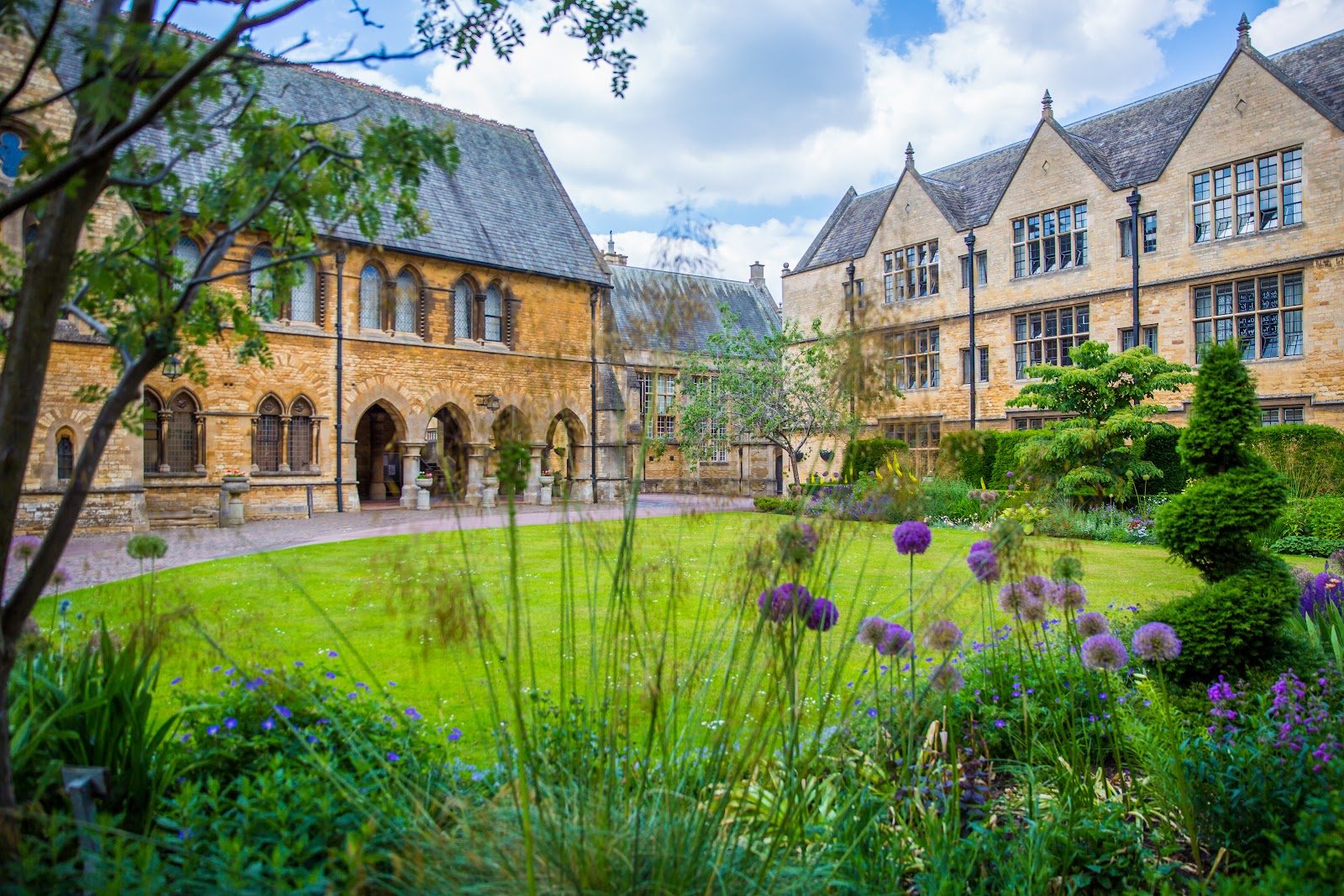
Uppingham School
Uppingham · United Kingdom
A Rutland boarding school where Thring's music-first Victorian philosophy still shapes seven-day house life today
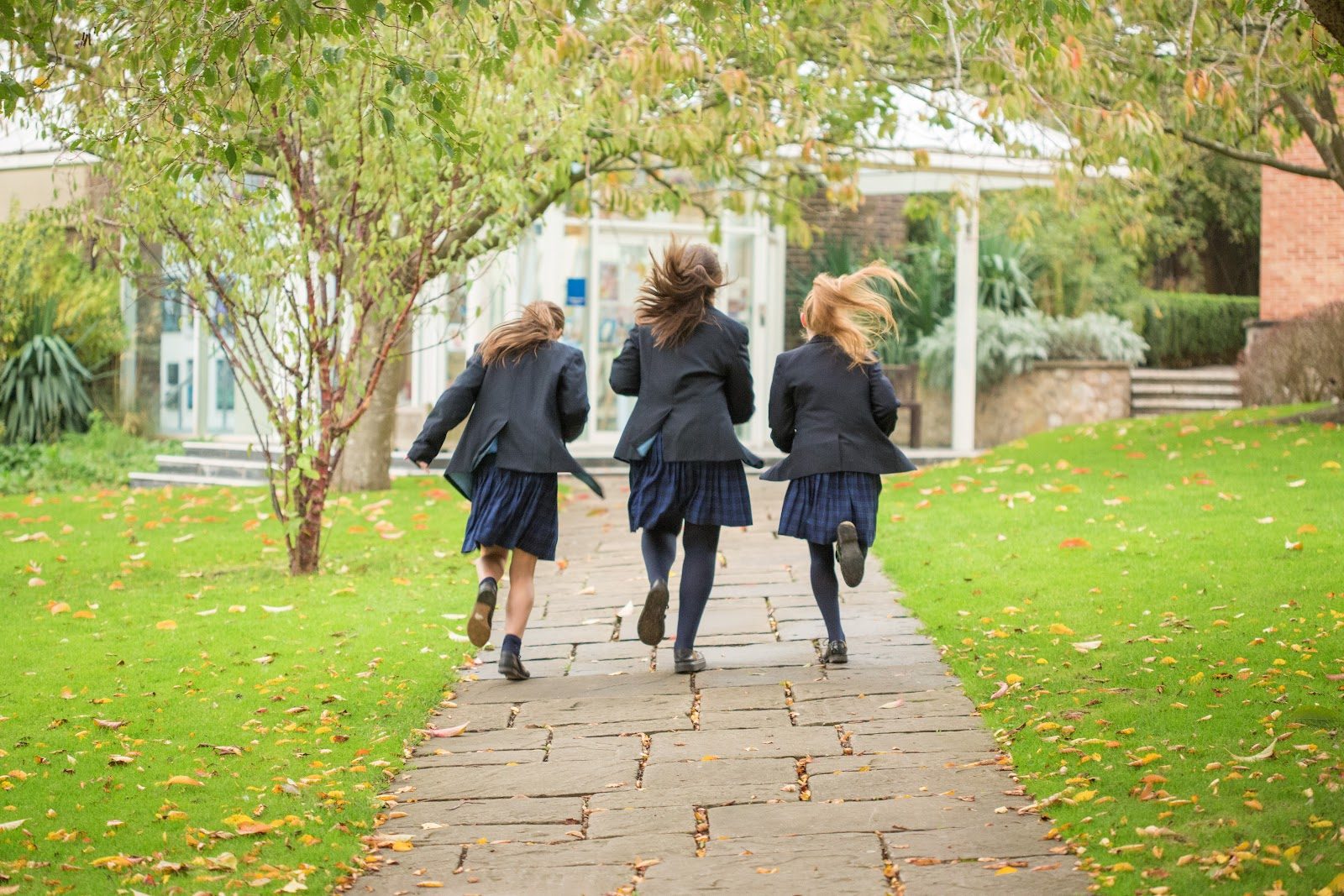
Badminton School
Bristol · United Kingdom
On a Bristol campus where girls have played cricket since 1858, science labs for women followed decades ahead of the curve

Lady Eleanor Holles School
Hampton · United Kingdom
Since 1710 on a 24-acre Hampton site, a Thames boathouse has bred record-holding rowing eights alongside Oxbridge-track academics.
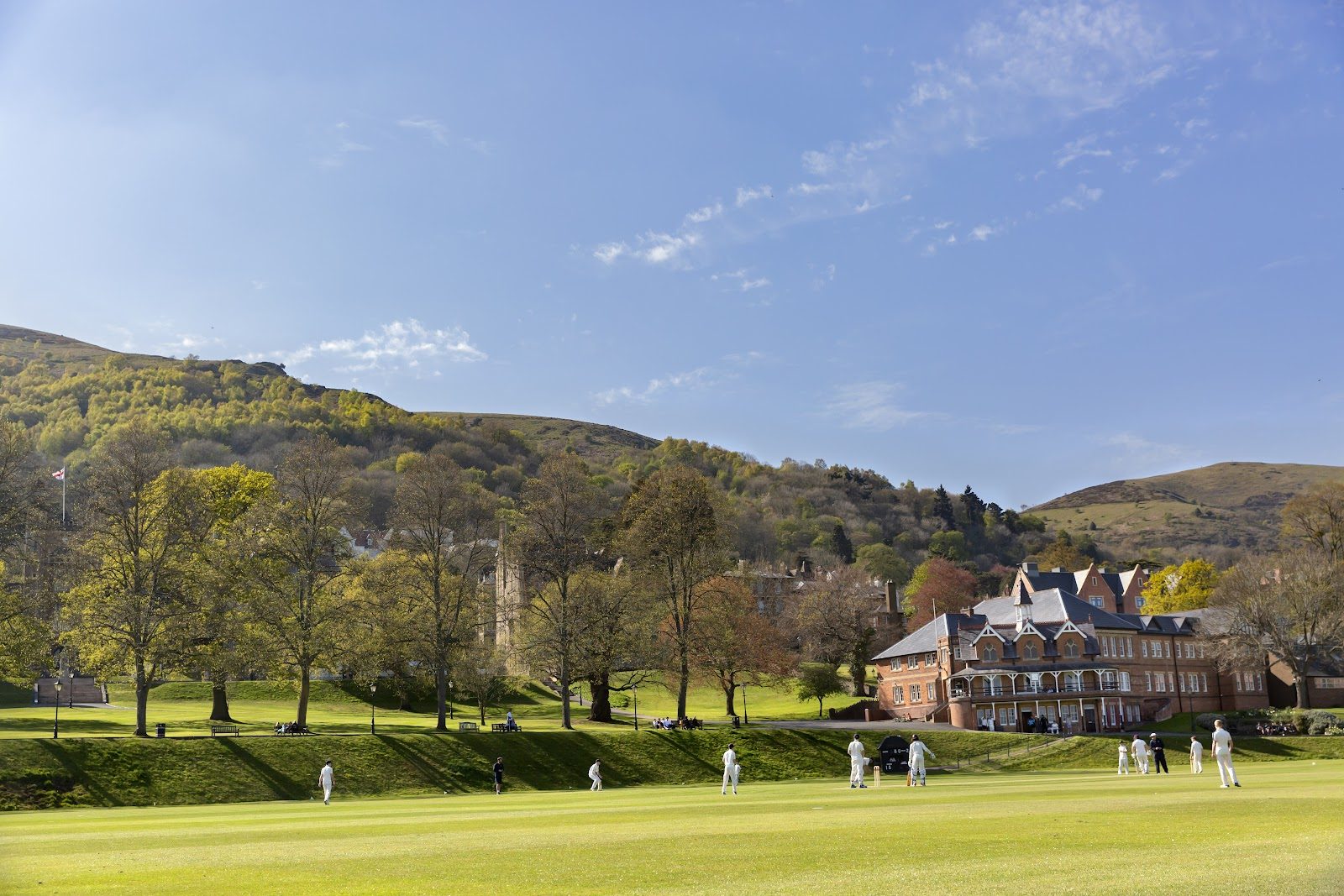
Malvern College
Malvern · United Kingdom
Beneath the Malvern Hills, a campus that once housed wartime radar research has produced four Nobel Prize winners.
Same country and curriculum — closest matches within ±10 points either way