
Dubai
Jumeirah College
high confidence· 5/6 cats · 3 avg sourcesSecondary-only in Al Safa, holding Dubai's top inspection grade every year since 2010, with A-Levels ranked in the global top 1 percent.
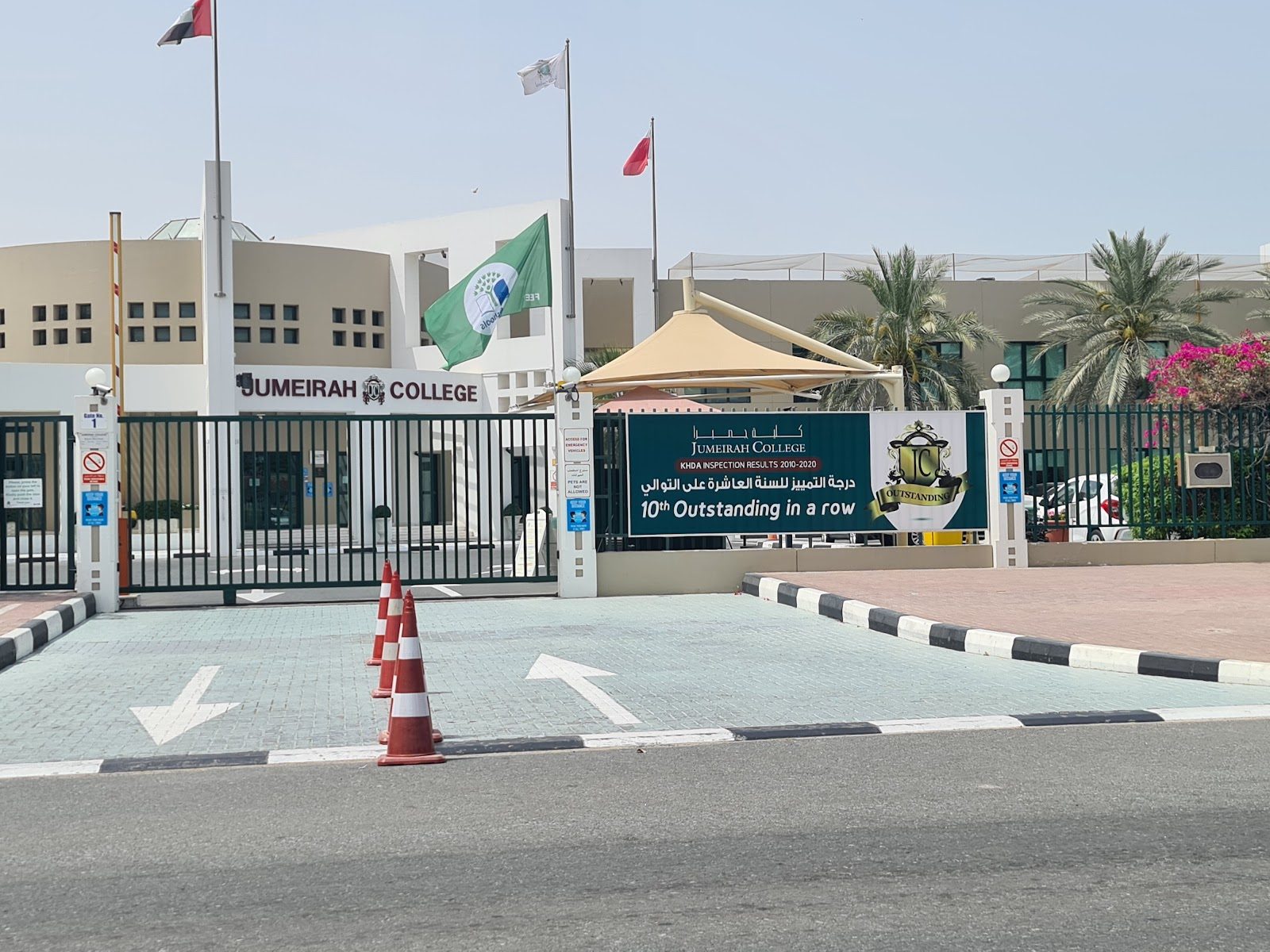
Photo © Ahmed Juma alfalasi via Google Maps
Type
Day
Ages
3–18
Curriculum
IB
Ratio
10:1
The Verdict
Editor's commitment
Right for
Families wanting KHDA-attested British schooling with an IB accreditation, a 10:1 ratio, and KHDA Outstanding every year since 2010.
Wrong for
Parents expecting a cheap GEMS option: the average annual fee is AED 87,404, and Academy of Live Technology is no universal destination.
Watch out for
The listing says ages 3–18, but Jumeirah College is branded secondary-only; clarify the actual entry points before banking on continuity to Bath.
Ranking breakdown
Jumeirah College · # of 1591
Composite score 71.7. 8 weighted criteria.
By criterion
Academic Outcomes
Weight 20%
#260
of 1529 scored
University Placement
Weight 16%
#263
of 1529 scored
Prestige & Heritage
Weight 12%
#678
of 1571 scored
Alumni Network
Weight 12%
#623
of 1530 scored
Facilities
Weight 12%
#172
of 1534 scored
Transparency & Communications
Weight 8%
#204
of 1532 scored
Peer & Industry Review
Weight 10%
#412
of 1548 scored
Admissions Selectivity & Demand
Weight 8%
#943
of 1529 scored
Score history
Jumeirah College · 2026
Movement across 2024–2026. Peer average overlaid.
Overall — 2024–2026
71.7/ 100
▲ +38.2 vs 2025
year on year
Peer & Industry Review
How Jumeirah College is regarded in the sector
79
Strong · high confidence
Jumeirah College has built one of Dubai's most consistent academic reputations, holding a KHDA Outstanding rating in effectively every inspection cycle since 2010, a feat SchoolsCompared notes only a handful of Emirates schools can claim. WhichSchoolAdvisor calls it "one of the most academically successful schools in Dubai," citing Outstanding-rated English, Maths and Science progress and rising parent satisfaction scores (now 4.2/5). SchoolsCompared draws a direct peer comparison to Dubai College, describing JC as an "academic powerhouse" whose Sixth Form now "rivals Dubai College, JESS Arabian Ranches, and DESC," though it notes the school's reputation has historically been narrower and exam-focused rather than multi-pillar. A period of leadership turnover briefly unsettled the school's standing, but recent A-Level results, among the strongest in GEMS' UAE cluster, have restored confidence.
Editors' overview
Jumeirah College earns attention for two hard facts that cut through the noise in Dubai: it has held the KHDA’s top grade, Outstanding, every year since 2010, and its A-Levels sit in the global top 1 percent. That is serious academic territory, not branding. The school is in Al Safa, runs as a day school, and charges an average annual fee of AED 87,404 across its age range. With a 10:1 student-teacher ratio, parents are paying for a level of access and oversight that fits the premium end of Dubai’s British-curriculum market.
There is, however, a point of clarification that matters. The regulator attests the curriculum as British, while the school also declares IB and holds IBO accreditation. Parents need the school to explain that mix with precision: where the British pathway dominates, where IB sits, and which pupils take which route. That does not cancel out the attraction; it sharpens the questions for admissions. In market terms, this is a high-pressure, high-output school for families who want inspection consistency, external validation and a clear academic spine, not a looser progressive model.
The type of child who thrives here is straightforward to identify. This suits students who are comfortable being stretched, who value strong teacher access, and who want a secondary environment where academic performance is central, visible and non-negotiable. It also suits internationally mobile families who want English-language teaching with Arabic in the mix, and parents who watch destinations closely: recent leavers went to the University of Bath (9), the University of Bristol, and the Academy of Live Technology. For a child who wants a softer, more experimental or less exam-driven school life, this is the wrong fit. For the ambitious, self-directed student who wants a proven route through a top Dubai school, Jumeirah College belongs on the shortlist.
Academic Performance
Academic performance is the core of Jumeirah College’s case. The school’s A-Level results sit in the global top 1 percent, which places it in elite exam territory by any sane measure. In Dubai’s British-school market, that shifts it out of the crowded band of schools with respectable passes and into the smaller group that deliver genuinely rarefied outcomes. The KHDA’s repeated top judgement matters here not as decoration but as corroboration: inspection praise without hard exam performance is common in this market; sustained inspection strength alongside top-end external results is much harder to find. For academically ambitious families, that combination carries weight.
There is, however, a limit to the public picture. We have not seen a full set of aggregate external exam figures broken down across A-Levels, GCSEs or any IB pathway the school declares. That opacity matters, because serious comparison between peers depends on detail: grade distributions, cohort size, subject spread and consistency across years. Even with that caveat, the broad conclusion is clear. This is a high-output, results-driven school operating at the sharp end of Dubai’s premium academic sector, and it competes with the city’s strongest British-style schools on outcomes rather than ambience. Parents who want exhaustive data need to press for it; parents who want proof of serious academic muscle already have the headline evidence.
Facilities
Jumeirah College’s facilities profile is harder to verify than its academic record. The school does not publish a clear, detailed campus inventory, floor plan or specialist-space breakdown, which leaves parents without the basics they need for proper comparison: science lab count, theatre standard, sports provision, design and technology capacity, or the scale of sixth-form study space. For a school at this price point, that is a weak spot. Premium secondary schools in Dubai’s top bracket usually make their physical offer legible because facilities are part of the proposition. Here, the public picture is oddly thin. That does not mean the campus is weak; it means the school has not done the work of showing it properly.
What can be said with confidence is narrower. This is a day school serving a full age range, with a low staffing ratio and a regulatory record that points to organised delivery rather than logistical strain. That usually correlates with functional teaching spaces, competent specialist provision and a campus that supports serious academic work. But against direct peers, “functional” is not enough. Families comparing top-fee schools expect visible depth: strong laboratories, convincing performing arts rooms, proper indoor and outdoor sport, and communal spaces that do not feel compressed or afterthought. Jumeirah College may have those assets; the school does not publish enough to prove the point. In facilities terms, the verdict is high-trust, low-transparency.
For the ambitious, self-directed student who wants a proven route through a top Dubai school, Jumeirah College belongs on the shortlist
Prestige
Jumeirah College carries real prestige in Dubai because it has the markers parents and universities both recognise: sustained regulatory validation, hard academic output, and entry into a premium fee bracket that filters its market. Plenty of schools claim high standards; fewer hold the top local inspection grade year after year and pair that with external results at the sharp end of international competition. That combination gives the school serious standing among British-style schools in the emirate. The average annual fee of AED 87,404 reinforces the point: this is not an aspirational mid-market school trading on branding, but a top-tier purchase in a city where price and perceived status track closely.
Its prestige also rests on selectivity of reputation rather than old-world heritage. This is not the kind of school that draws cachet from centuries of history, grand tradition or a famous alumni mythology. Its status is performance-built. Parents rate it because it delivers measurable outcomes, because the regulator has kept it at the summit, and because it sits inside the GEMS orbit without relying on the group name as a substitute for school-level quality. That matters. Chain affiliation can open doors; it does not confer earned prestige on its own. Jumeirah College has the stronger form of standing: the kind won through results, consistency and a reputation among ambitious families for being demanding and worth it.
Jumeirah College’s facilities profile is harder to verify than its academic record
Communications
Jumeirah College communicates like a school that expects parents to keep up. The tone is formal, high-control and geared to an audience that wants clarity on performance, routines and next steps rather than warm prose. That suits the school’s wider character. Families buying into a premium, high-pressure secondary environment do not need charm; they need timely notices, clean process and confidence that pastoral or academic concerns reach the right person fast. The low staffing ratio matters here, because it usually allows tighter contact between home and school than a more crowded model can sustain. The school also benefits from sitting inside a large operator with established systems, which tends to make routine communications more standardised and less ad hoc than at smaller independents.
The weakness is not day-to-day contact but selective transparency. Public communication does the institutional essentials, yet it leaves important questions under-explained. The academic model needs crisper explanation, and the same goes for practical detail that experienced parents use to compare schools properly. We have not seen the kind of granular, parent-facing disclosure that top-fee schools use to remove ambiguity before it turns into inbox traffic. That limits trust. In other words, communication is competent where the school wants control and thinner where scrutiny gets sharper. For many families, that will be enough. For exacting parents paying an average of AED 87,404 a year, it is a real irritation, not a small flaw.
Uniqueness
What sets Jumeirah College apart is the combination of inspection permanence and exam credibility. Plenty of Dubai schools have one or the other. Very few hold the regulator’s top judgement year after year and also produce sixth-form outcomes strong enough to register on a global scale. That gives students something concrete: a school culture where high performance is not an occasional spike or a marketing claim, but the house standard. The low staffing ratio, at 10:1, sharpens that offer. In practice, students get tighter academic oversight, faster intervention when performance slips, and less room to drift anonymously through the senior years. For the child who wants to be pushed, that is a serious advantage; for the child who resists pressure, it is a demanding fit.
The other distinctive point is the school’s unusual positioning between a regulator-attested British pathway and an IB declaration. That mix is not common, and it matters because it creates a more complex academic identity than the average premium secondary school. If the school explains the routes cleanly, students benefit from a more nuanced set of options and a broader intellectual frame than a single-track institution offers. If it does not, confusion follows. Either way, Jumeirah College is not memorable because of heritage, spectacle or sprawling campus mythology. It is memorable because it is high-accountability, results-first and expensive at AED 87,404 a year on average — a school built for families who value measurable output over sentiment.
Jumeirah College may have those assets; the school does not publish enough to prove the point
Student Profile
The best fit is the student who wants a school to set a hard pace and keep it there. This is not a place for the child who needs constant cushioning, loose structure or endless second chances. It suits pupils who are organised, competitive enough not to be rattled by strong peers, and comfortable in classrooms where expectations are plainly high and performance is closely watched. The low staffing ratio of 10:1 matters because it cuts both ways: students get more access to teachers, but they also get less room to hide. A self-directed teenager who likes clear standards, brisk feedback and academic stretch will do well here. A student who wilts under scrutiny or resents pressure will find the culture hard-edged.
Socially, this fits families who value discipline, momentum and measurable progress over pastoral theatre or a hand-holding school experience. Parents paying an average of AED 87,404 a year are not buying a relaxed adolescence; they are buying a demanding environment with strong adult oversight and a peer group shaped by ambition. The school also suits internationally minded families who want serious university preparation without sacrificing a broad, mixed community. The wrong fit is easy to spot: a child who needs a gentler emotional tempo, a more experimental classroom culture, or a school willing to let adolescence unfold at its own pace. Jumeirah College works best for the driven, the resilient and the goal-conscious.
Jumeirah College communicates like a school that expects parents to keep up
Co-curricular strengths
Arts & sport, on a separate axis
Overall 8.24/10
Scored 0-10 from the school's own published evidence. This axis is editorial-only — it does not feed the main WTS ranking.
Sports
9/10
Football, Netball, Swimming and Basketball, indicating a solid multi-sport co-curricular offer, but provides no named facilities, specialist staff or competitive results.
Drama
9/10
Drama is evidenced both by 'Drama productions' in the extracurriculars and by 'specialist spaces for art, music and drama' in the facilities section, which clears the notable-strength band through a dedicated specialist space plus recurring productions.
Dance
5.5/10
Music
9.2/10
The school lists a School orchestra and Choir and also mentions specialist spaces for music, giving explicit ensembles plus a dedicated specialist space.
Visual Arts
8.5/10
'specialist spaces for art', which is sufficient evidence of a dedicated visual-arts space even though no exhibitions, departments or results are described.
Editor-verified · 8/5/2026
Outcomes & destinations
Where students go next
Class of 2024
Top destinations
140 placements
- Academy of Live Technology· 1
- University of Bath· 9
- University of Bristol· 2
- University of Cambridge· 3
- Cardiff University· 3
- City, University of London· 2
- University of Dundee· 1
- University of Edinburgh· 2
- University of Exeter· 4
- University of Glasgow· 1
- University of Kent· 1
- King's College London· 7
- Lancaster University· 1
- University of Leeds· 3
- Leeds Beckett University· 2
- Loughborough University· 2
- London School of Economics· 3
- University of Manchester· 2
- Middlesex University· 1
- Newcastle University· 1
- University of Nottingham· 1
- University of Oxford· 1
- University of Portsmouth· 1
- Queen Mary University of London· 1
- University of Reading· 3
- University of Sheffield· 1
- SOAS University of London· 2
- University of Southampton· 1
- St. George’s University of London· 1
- University of the Arts London· 5
- University College London· 5
- University of Central Lancashire· 1
- University of Warwick· 4
- Babson College· 1
- Brown University· 1
- University of California San Diego· 4
- University of California, Irvine· 2
- California Polytechnic State University· 1
- Carnegie Mellon University· 3
- The Citadel· 1
- Duke University· 1
- Emory University· 1
- Georgetown University· 2
- Georgia Institute of Technology· 1
- Northeastern University· 3
- University of Pennsylvania· 1
- The Pennsylvania State University· 1
- Purdue University· 2
- Syracuse University· 1
- Trinity College· 1
- University of Illinois Urbana-Champaign· 4
- Union College· 1
- University of Southern California· 1
- The University of Texas at Austin· 1
- The University of Texas at Dallas· 1
- Virginia Tech· 2
- University of Wisconsin-Madison· 1
- University of Toronto· 8
- The University of British Columbia· 1
- University of Waterloo· 1
- Western University· 1
- Campus Bio-Medico University of Rome· 1
- University of Groningen· 1
- Utrecht University· 1
- Willem de Kooning Academie· 1
- Esade· 1
- IE University· 2
- Universidad Europea Madrid· 1
- Deakin University· 1
- The University of Melbourne· 2
- American University of Sharjah· 1
- University of Wollongong in Dubai· 1
Reported by the school. Confirm with admissions.
Official inspection · Dubai
KHDA report · 2023/24
Official · KHDAInspectorate
Knowledge & Human Development Authority
Dubai's mandatory education regulator; annual DSIB inspections.
Curriculum
British
Held vs previous cycle
Full report
KHDA report finderRating history
Strengths
- +KHDA rates the school Outstanding overall.
- +Published examination data is strong: The 2025 A Level cohort achieved 15% A* and 40% A*–A, and the 2025 GCSE cohort 67% at grades 9–7 and 99% at grades 9–4.
- +The 2024 leaving cohort secured places at the University of Oxford, the University of Cambridge, University College London, King's College London and Georgia Institute of Technology, with sizeable clusters at Bath, Toronto and the London School of Economics.
- +Co-curricular provision is exceptional, with world-class sport, music and drama and elite visual arts on the fact-anchor scores.
- +As a GEMS Education school it draws on group-level resources such as curriculum development support and a centralised admissions function.
Considerations
- −It is a secondary-only school (Years 7 to 13) with no primary phase, so families must arrange primary schooling separately, and Year 7 places go overwhelmingly to pupils already at GEMS' own feeder primaries.
- −Fee reporting is inconsistent between sources: WSA places the school in its ultra-premium band (annual average AED 87,500), so families should confirm the current fee schedule directly.
- −The school follows a British GCSE and A Level pathway, so families specifically seeking an IB Diploma route should look elsewhere.
- −It is a day school only, with no boarding option.
Availability
Primary entry gate & tests
CAT4 / Assessment
Gallery
Photo © Jaap Moerland via Google Maps
Photo © Yaz via Google Maps
Photo © Haitham Bashir via Google Maps
Recommended reading
Independent write-ups of this school from editorial outlets we trust.
- Jumeirah College — review on SchoolsComparedSchoolsCompared
Parent reviews
Have you sent your child here?
Voice reviews carry the strongest trust badge — we transcribe them for you to tidy up before they go live. Prefer to type? A written review is fine too.
Add your voice
In 60 seconds, tell other parents: what's the best thing about Jumeirah College, and what surprised you when your child joined?
We ask for a Google sign-in so every review has a real face behind it — no anonymous drive-by attacks on schools, and no faked positive reviews. Your email is never shown publicly.
Send this profile to a friend
International parents rely on word-of-mouth. Share this review with someone weighing the same decision.
Schools with places
Similar schools to Jumeirah College with places available now.
North London Collegiate School Dubai
Dubai · United Arab Emirates
- 2026-27
- WAITPOOLSpace-dependent
- 2027-28
- OPENS SOONOpens Sept '26
Dubai International Academy Emirates Hills
Dubai · United Arab Emirates
- 2026-27
- WAITPOOLSpace-dependent
- 2027-28
- PLACES OPENRolling
Nord Anglia International School Dubai
Dubai · United Arab Emirates
- 2026-27
- WAITPOOLSpace-dependent
- 2027-28
- OPENS SOONOpens Sept '26
Dubai English Speaking College
Dubai · United Arab Emirates
- 2026-27
- CLOSEDStandard route
- 2027-28
- OPENS SOONOpens Sept '26
Availability first, then country, area, curriculum, price, co-curricular
Consider also
Also worth looking at alongside Jumeirah College.
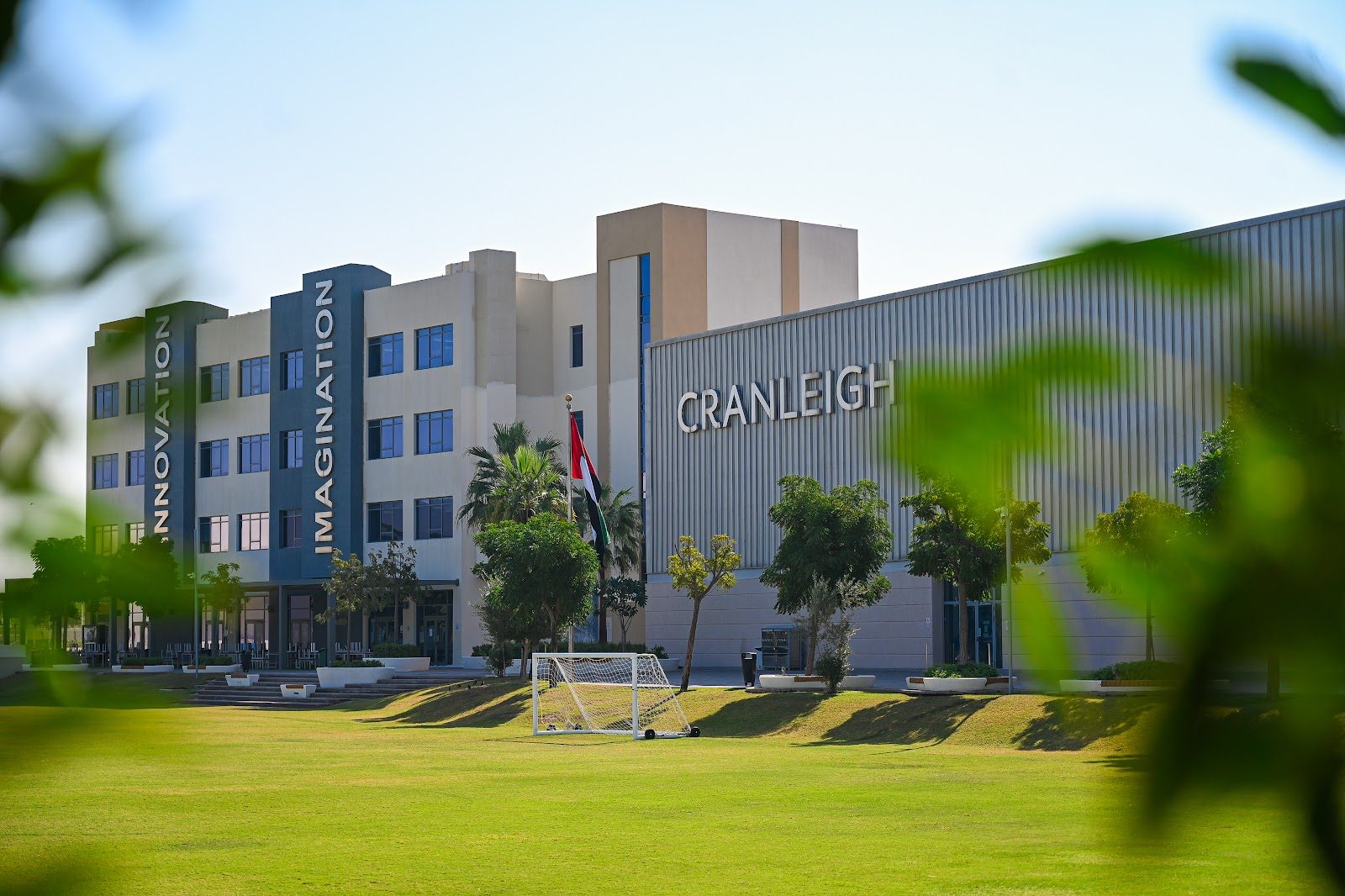
Cranleigh Abu Dhabi
Abu Dhabi · United Arab Emirates
On Saadiyat's museum mile, sixth-formers debate round Harkness tables before choosing A-Levels or the IB Diploma
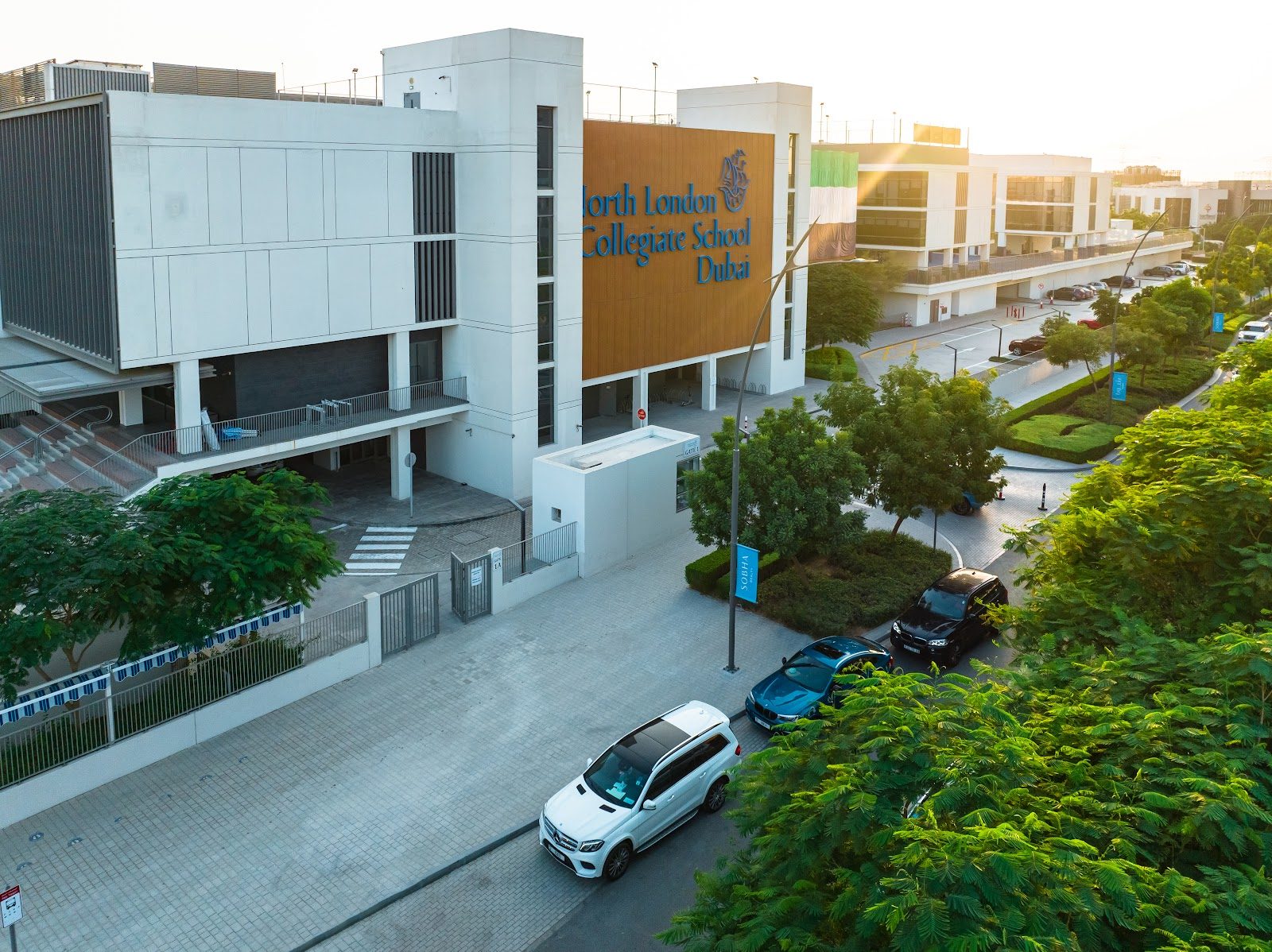
North London Collegiate School Dubai
Dubai · United Arab Emirates
A 170-year London academic lineage transplanted to Sobha Hartland, where the IB Diploma average has topped the region
Dubai International Academy Emirates Hills
Dubai · United Arab Emirates
Launched the UAE's first full IB continuum in 2005, and the only Dubai school to win back its top KHDA rating after losing it
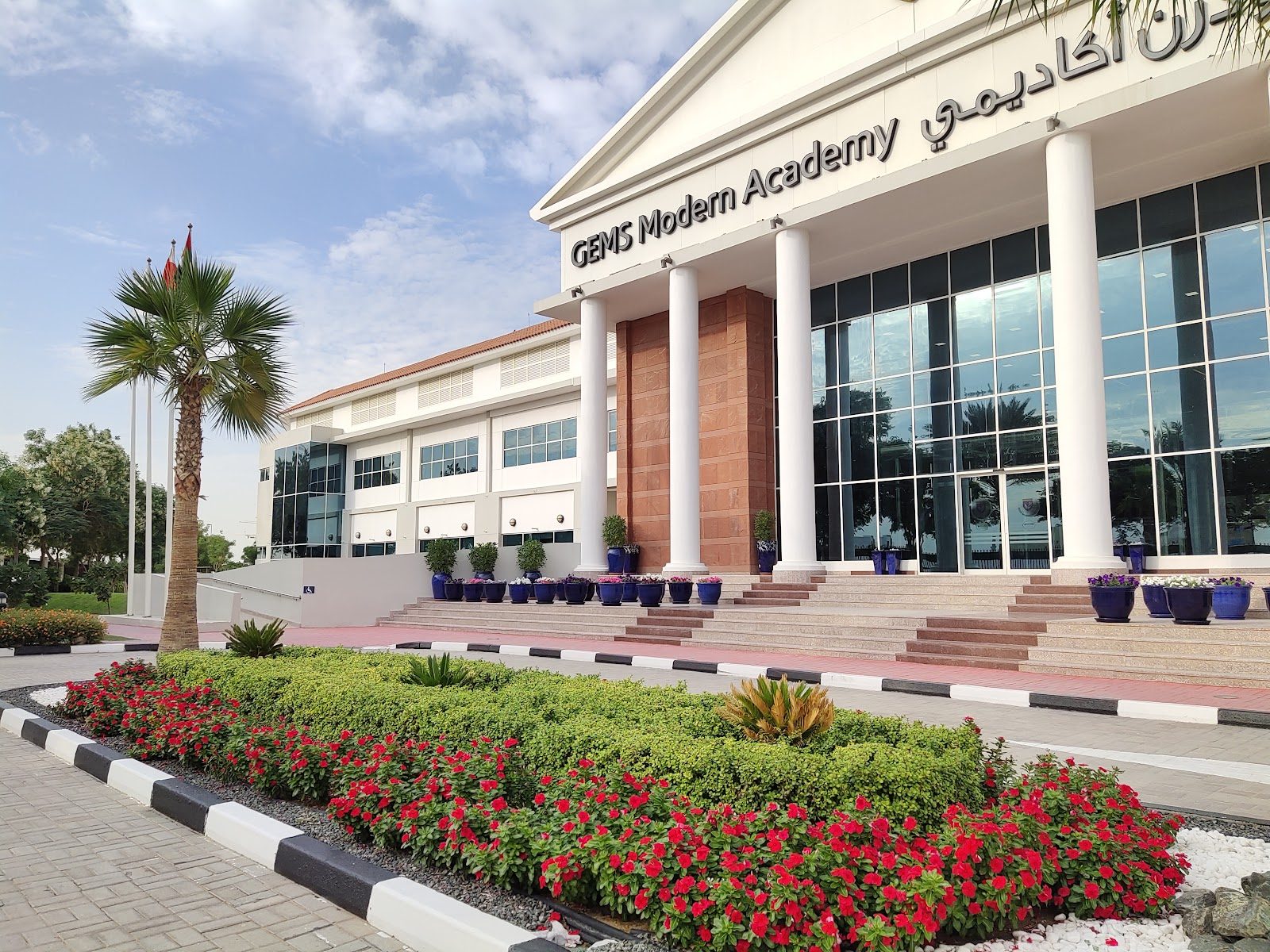
GEMS Modern Academy
Dubai · United Arab Emirates
Where the CISCE curriculum and the IB Diploma share one campus, and the only Indian-curriculum school in Dubai rated Outstanding by KHDA.
Same country and curriculum — closest matches within ±10 points either way